
Key Takeaways
1. Trauma is not destiny; resilience is a natural human process.
Our history does not determine our destiny.
Inherent capacity. Resilience is the remarkable human ability to overcome traumatic events and thrive, rather than succumb to misfortune. It's not a miraculous triumph over suffering, but a natural process of adaptation and metamorphosis. From a young age, individuals hurt by life begin to dream of a better future, linking pleasure with painful reality to withstand adversity.
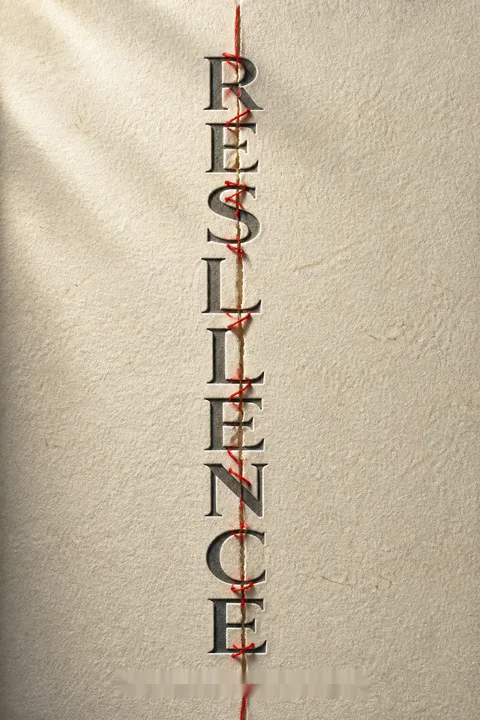
Knitting ourselves. This process involves actively "knitting" oneself using ecological, emotional, and verbal environments. Even if a single stitch is dropped, the possibility of starting anew remains as long as one stitch holds. This perspective challenges the deterministic view that trauma inevitably leads to lifelong suffering, emphasizing instead the dynamic interplay between internal strength and external support.
Beyond astonishment. While we are often astonished by children who overcome immense misfortune, this amazement often pre-interprets their experience. True understanding comes from recognizing that the demoralized child, though hurt, is still hopeful, and that the meaning of "triumph" is often constructed much later, looking back at the scars. Resilience is a testament to the human spirit's capacity for transformation.
2. The inner world of the wounded is an oxymoron of conflicting emotions.
An oxymoron expresses how suffering can be transformed into a work of art.
Contradictory coexistence. Wounded individuals often experience an inner world structured like an oxymoron, where conflicting emotions such as pain and hope, or guilt and pride, coexist. This is not mere ambivalence, but a profound adaptation where a hurt part of the personality suffers, while another, better-protected part, harnesses the energy of despair to find happiness and meaning.
The price of victory. This internal division allows for survival, transforming oppressive tragedy into mild euphoria, or gangrene into beauty. For instance, Holocaust survivors often displayed a strange inner serenity, a "morbid courage" born from having faced death and triumphed. This victory, however, comes at a cost, often tinged with survivor's guilt and a constant need to prove one's right to live.
Beyond simple feelings. The oxymoron reveals a complex psychological landscape where suffering is not simply overcome, but integrated and transformed. It's the "black sun of melancholy" or "dazzling misfortunes of life," where each term highlights the other, emphasizing both the wound and the enduring spirit. This internal alchemy allows individuals to adapt and find happiness "despite everything."
3. Our environment and social connections are crucial for knitting resilience.
Resilience is a sweater knitted from developmental, emotional and social strands of wool.
External scaffolding. Resilience is not solely an internal trait but a dynamic process heavily influenced by external factors. The quality of social, emotional, and cultural environments acts as a crucial scaffolding, providing the "strands of wool" necessary for an individual to "knit" their selfhood and cope with adversity.
Protective factors. Studies, like the longitudinal research on children in Kawai or those in foster care, consistently show that while early deprivation creates vulnerability, emotional and social encounters can either heal or worsen it. Key protective factors include:
- Stable attachment figures
- Social support networks
- Opportunities for meaningful engagement
- Cultural rituals and shared narratives
The power of connection. The presence of a supportive environment, whether a confident mother during the London Blitz or a teacher turning a hostage situation into a game, can profoundly alter a child's experience of trauma. Conversely, isolation and lack of support are significant risk factors, demonstrating that human connection is fundamental to navigating and recovering from life's blows.
4. Memory is a reconstructed story, not a fixed record of the past.
Adults invent their past because they think but cannot see, whereas the memory of a child, which is impressed by men wearing dark glasses at night, is more specific than that of adults, who are deceived by their own theories.
Dynamic reconstruction. Human memory is not a static archive but a dynamic, reconstructive process. Adults often "invent" their past, shaping narratives based on current understanding and intentions, while children's memories are often impressed by specific, emotionally charged details that may seem illogical to adults.
Contextual meaning. An event's meaning is not inherent but acquired through social reconstruction and personal interpretation. For example, a child's memory of an Adam's apple bobbing during an arrest might be more vivid than the threat of death, because it triggered a powerful, immediate emotion. Later, social context and the need for truth can reframe these details.
Narrative identity. Our autobiographical memories are constantly revised and given coherence by the stories we tell ourselves and others. This narrative identity allows us to integrate past events into a meaningful life trajectory. Without this ability to contextualize and narrate, memories can remain tangled, specific images devoid of broader meaning, as seen in children moved frequently between institutions.
5. The power of narrative and speech transforms suffering into healing.
All sorrows can be borne if you can put them into a story.
Verbal alchemy. The act of transforming personal suffering into a coherent story, whether spoken or written, is a powerful mechanism for healing and self-integration. This narrative process allows individuals to control overwhelming emotions, give meaning to senseless pain, and reconcile conflicting aspects of their identity.
Beyond silence. When direct expression is difficult or socially unacceptable, the urge to speak finds other outlets, such as creative arts, activism, or even subtle "para-speech" through objects or behaviors. This "butterfly effect of speech" suggests that the very act of preparing to articulate one's experience can bring relief and a sense of lightness, contrasting with the "leaden" feeling of unspoken trauma.
The listener's role. The effectiveness of storytelling depends heavily on the listener's empathy and willingness to engage. Confiding in someone creates an intimate bond, allowing the speaker to feel accepted for their whole self, including their wounds. However, if the listener is dismissive or exploits the story, the act of disclosure can be re-traumatizing, highlighting the delicate balance in sharing one's deepest pains.
6. Societal perception and discourse profoundly shape a victim's recovery.
The less we know, the stronger our convictions are.
Cultural lens. How society perceives and discusses trauma profoundly impacts a victim's healing journey. When a culture denies or trivializes suffering, victims are often silenced, forcing them to internalize their pain or express it in ways that are misunderstood or condemned.
Normalizing the abnormal. Historically, practices now considered abusive—like child labor, severe corporal punishment, or infanticide—were "normal" and therefore not recognized as trauma. It was only through cultural shifts and the efforts of resilient individuals that concepts like "child abuse" became conceivable and legally addressed.
The politics of memory. Collective memory is often a "conventional discourse" shaped by political and social agendas. This can lead to:
- Negationism: Deliberate denial of past atrocities to serve current interests.
- Mythologizing: Transforming grim realities into heroic narratives that reinforce group identity.
- Silencing: Suppressing inconvenient truths that challenge prevailing myths or cause discomfort.
This manipulation of history can re-traumatize survivors whose authentic experiences are dismissed or distorted.
7. Creativity and imagination are vital defenses against despair.
It is loss, absence and mourning that force the wounded to fill the void with representations to avoid feeling anxious about death and nothingness, zero and infinity.
Filling the void. When reality is terrifying or desolate, creativity and imagination become essential defense mechanisms. Daydreams, art, and writing provide a refuge, allowing wounded souls to construct inner worlds of beauty and hope, even amidst external horror. This is not mere escape, but an active process of filling the existential void left by loss and trauma.
The artist's journey. Many creative individuals, particularly writers and artists, have experienced early loss or trauma. This "take-off of creativity" often follows the death of a parent or a period of intense suffering, as the individual is compelled to create images and narratives to replace what is lost and make sense of their pain.
- Balzac, Nerval, Hugo, Baudelaire, Dumas, Stendhal are cited as examples.
- Creativity is seen as a "suture," stitching together torn aspects of personality.
Beyond happiness. While Freud suggested happy individuals don't need to dream, Cyrulnik argues that for the traumatized, dreaming and creating are vital for survival. They allow for an "overinvestment in a world of wonders," splitting reality into a desolate external world and a warm, colorful internal one, enabling them to find happiness on a "knife edge."
8. Mentors and supportive relationships act as guiding stars for the wounded.
Somewhere in the social environment of those migrants’ children who do well at school, there is a figure who plays the “mentor” role.
Crucial connections. For children navigating trauma or adversity, the presence of a mentor or a supportive relationship acts as a "guiding star," providing essential direction and emotional support. These figures, whether a teacher, an older sibling, or a kind neighbor, can profoundly influence a child's developmental trajectory.
Simple gestures, profound impact. Often, it's not grand interventions but simple, consistent acts of kindness and attention that make a difference. A gardener patiently answering a boy's questions, or a teacher's single word of admiration, can awaken a dormant mind and ease pain, offering a lifeline in a chaotic world.
The power of identification. Deprived children are often eager to identify with positive figures, and a mentor provides a healthy role model. This identification helps them to:
- Develop self-esteem
- Channel their energies constructively
- Formulate future plans
- Learn to trust and connect with others.
These relationships are vital for knitting resilience, especially when traditional family structures are absent or damaged.
9. Resilience comes at a price, demanding constant adaptation and effort.
One does not become normal with impunity.
The cost of survival. Resilience is not a free gift; it demands a high price. The process of adapting and bouncing back from trauma often involves complex emotional trade-offs and continuous effort. Survivors, while appearing "normal" or even "victorious," carry indelible marks and often engage in costly life strategies.
Hidden burdens. This cost can manifest as:
- Guilt: Survivors often feel guilty for living when others died.
- Overinvestment: A bulimic need for affection or social success, leading to intense emotional or professional commitments.
- False self: Constructing an inauthentic persona to cope with past wounds or societal expectations.
- Chronic anxiety: A heightened state of alert, even in peaceful environments, due to past trauma.
A new philosophy of life. Despite the burdens, the experience of having faced death and survived often triggers a profound shift in perspective. Life is seen as "something extra," a precious gift to be savored. This new philosophy, born from suffering, encourages a deeper appreciation for existence and a determination to make the most of every moment, transforming fragility into strength.
10. Understanding trauma requires shifting focus from individual pathology to cultural context.
If we want the wounded to feel less pain, we must treat not them but our culture.
Beyond individual blame. To truly address suffering and foster resilience, the focus must shift from individual pathology to the broader cultural and social context. Blaming victims or viewing trauma solely as an individual's problem overlooks the profound influence of societal narratives, institutions, and collective responses.
Cultural responsibility. A culture that silences victims, denies historical atrocities, or stigmatizes survivors perpetuates trauma. Conversely, a culture that provides spaces for expression, validates experiences, and offers support can facilitate healing. This implies a collective responsibility to:
- Listen to diverse narratives
- Challenge negationism and harmful myths
- Create inclusive environments
- Support reparative social structures.
The "right patient." Cyrulnik argues that often, "we are treating the wrong patient." The anxiety and pain experienced by individuals and even subsequent generations are frequently rooted in a cultural inability to process and integrate traumatic events. Therefore, true healing requires a cultural shift that allows for open dialogue, empathy, and a re-evaluation of how society constructs its past and present.
Review Summary
Resilience receives mixed reviews, averaging 3.80/5 stars. Readers find the subject matter on childhood trauma and recovery interesting and thought-provoking, but many criticize the book's structure and writing style. Common complaints include lack of organization, overly poetic prose, superficial case studies, and disjointed narratives that make it hard to follow. Some appreciate the insightful content despite presentation issues, while others find it redundant or disappointing. The translation quality is also noted as occasionally clumsy. Overall, readers value the concepts but wish for clearer structure and deeper analysis.
People Also Read









Download PDF
Download EPUB
.epub digital book format is ideal for reading ebooks on phones, tablets, and e-readers.








































