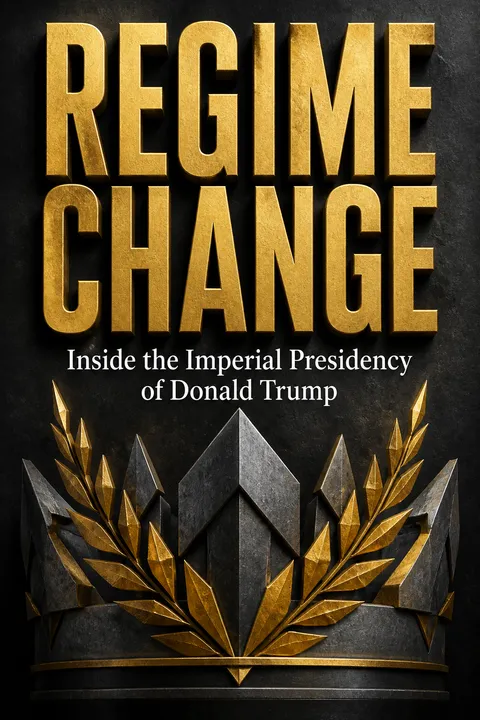

Key Takeaways
1. Unprecedented consolidation of executive power replaces traditional checks and balances.
He has altered the very nature of the presidency and changed what people living in this country and all over the world think of when they picture the American President.
A transformed presidency. In his second term, Donald Trump successfully dismantles the institutional guardrails that previously limited executive authority. Unlike his first term, which was marked by internal resistance from establishment figures, this administration operates with a singular, unchecked focus on the President's personal agenda.
Bypassing traditional bureaucracy. The administration relies heavily on emergency declarations and unilateral executive orders to bypass Congress and the courts. By establishing alternative legal review teams and ignoring judicial setbacks, the White House centralizes all decision-making power within the Oval Office.
Key structural changes:
- Issuing over 140 executive orders in the first hundred days to enact sweeping policy shifts.
- Utilizing broad presidential immunity granted by the Supreme Court to shield executive actions from prosecution.
- Reducing Congress to a compliant body that rarely challenges unilateral executive decrees.
2. Absolute loyalty becomes the primary litmus test for federal appointments.
Trump had learned vital lessons during his years in and out of power... Trump had four years to assemble a team of true loyalists.
The loyalty test. The second-term cabinet and administrative appointments are defined entirely by personal fidelity to Trump, particularly regarding their stance on the 2020 election and the events of January 6. Traditional qualifications and expertise are discarded in favor of individuals who will execute presidential directives without hesitation or legal second-guessing.
Purging the establishment. Former officials who expressed skepticism or prioritized constitutional norms over personal loyalty are systematically excluded or fired. This creates an administrative culture of compliance, where officials view their primary duty as serving the President rather than the public or the law.
Key personnel dynamics:
- Appointing loyalists like Pete Hegseth, Pam Bondi, and Kash Patel to lead critical national security and law enforcement agencies.
- Using the Office of Presidential Personnel, led by trusted aides, to vet candidates for ideological alignment.
- Replacing career civil servants with political appointees to ensure a compliant bureaucracy.
3. The Justice Department is systematically weaponized to execute personal retribution.
Domestically, there would be no peace. 'I was the hunted, and now I’m the hunter,' Trump told reporters on the White House lawn in June 2025.
A campaign of revenge. The administration openly utilizes the Department of Justice to target political opponents, prosecutors, and critics who challenged Trump during his years out of power. By appointing personal defense attorneys to top DOJ posts, the President effectively merges his personal legal interests with federal law enforcement.
Targeting legal and political foes. The DOJ initiates investigations and indictments against high-profile figures, including former FBI Director James Comey and New York Attorney General Letitia James. Even white-shoe law firms and universities that aided investigations against Trump face severe regulatory and financial retaliation.
Examples of retribution:
- Indicting James Comey and Letitia James on politically motivated charges.
- Targetting law firms like Paul Weiss and Covington & Burling with executive orders to restrict their federal business.
- Suspending security clearances and initiating investigations against former administration critics like Chris Krebs and Miles Taylor.
4. Domestic immigration enforcement is transformed into a highly visible, militarized campaign.
Viral videos made for viral fear—a powerful deterrent to migrants who might consider coming to the U.S.
Militarized mass deportation. Under the direction of Stephen Miller and Tom Homan, the administration launches the largest domestic deportation operation in American history. The campaign relies on highly visible, aggressive tactics designed to generate public spectacle and deter future migration through fear.
Bypassing due process. The administration utilizes obscure wartime statutes, such as the Alien Enemies Act of 1798, to summarily deport individuals without judicial hearings. This aggressive approach frequently results in administrative errors, including the wrongful deportation of U.S. citizens and legal residents.
Key enforcement tactics:
- Deploying masked, heavily armed ICE and Border Patrol agents to conduct high-profile workplace and community raids.
- Utilizing military assets, including National Guard troops and helicopters, to assist in domestic immigration enforcement.
- Bypassing judicial oversight by treating long-term undocumented residents as if they were apprehended at the border.
5. Unilateral tariff policies disrupt global trade and challenge economic stability.
The very next day, he signed three documents—Executive Orders 14193, 14194, and 14195—invoking emergency powers under the International Emergency Economic Powers Act (IEEPA).
The tariff weapon. Embracing a Gilded Age economic philosophy, Trump declares himself a "Tariff Man" and imposes sweeping import duties on America's top trading partners. These unilateral tariffs are used not only as economic protectionism but as blunt political weapons to coerce foreign governments.
Global economic shock. The sudden imposition of high tariffs on Canada, Mexico, and China triggers immediate retaliation, disrupts complex global supply chains, and causes severe volatility in the financial markets. Despite warnings from economists and corporate leaders, the President remains committed to using tariffs as his primary economic tool.
Impact of tariff policies:
- Imposing a baseline 10% tariff on all global imports, with an additional "reciprocal" tariff calculated through a volatile formula.
- Triggering a massive sell-off in the stock and bond markets, forcing a temporary ninety-day pause on non-China tariffs.
- Using the threat of tariffs to force concessions from foreign leaders on non-economic issues like immigration and drug trafficking.
6. The independence of regulatory institutions, particularly the Federal Reserve, is aggressively eroded.
In defending the Federal Reserve’s independence, Powell had set himself on a collision course with the President.
Challenging the central bank. The administration wages an aggressive campaign to undermine the statutory independence of the Federal Reserve and its chairman, Jerome Powell. Trump seeks to directly influence monetary policy, demanding low interest rates to juice short-term economic growth regardless of inflation risks.
Unprecedented executive overreach. When Powell resists political pressure, the President attempts to bypass the Fed's legal protections by summarily firing Board Governor Lisa Cook. The administration also uses obscure regulatory bodies, like the National Capital Planning Commission, to harass the Fed by targeting its headquarters renovation.
Key actions against the Fed:
- Attempting to fire Fed Governor Lisa Cook for "cause" based on unproven allegations of mortgage fraud.
- Using the National Capital Planning Commission to launch a hostile review of the Fed's $2.5 billion headquarters renovation.
- Publicly berating Jerome Powell and threatening to replace him with loyalists like JD Vance or Kevin Warsh.
7. Corporate America and tech giants capitulate to avoid regulatory and financial ruin.
No President in modern memory has so openly used the powers of the office to pressure into alignment the major pillars of civil society and the private sector, from the largest tech companies to the most venerable news organizations to Big Law and the Ivy League universities.
Corporate submission. The administration utilizes the threat of regulatory action, tax penalties, and public humiliation to force major corporations and tech giants into compliance. Fearing the loss of federal contracts or devastating tariffs, prominent CEOs make public pilgrimages to Mar-a-Lago to pledge their loyalty.
Exploiting corporate vulnerability. Tech billionaires like Mark Zuckerberg and Jeff Bezos distance themselves from previous criticisms of Trump and align their companies with his agenda. The administration also directly intervenes in the private sector, forcing companies like Intel to hand over equity stakes in exchange for federal funding.
Examples of corporate capitulation:
- Tech CEOs making pilgrimages to Mar-a-Lago and paying millions in legal settlements to resolve past disputes.
- Forcing Intel to hand over a 10% ownership stake to the U.S. government in exchange for accelerated federal grants.
- Securing massive financial contributions from corporate leaders to fund Trump's political operations and presidential library.
8. Foreign policy shifts toward unilateral military intervention and aggressive regime change.
By the end of his first year back in office, the institutional architecture that American Presidents had spent eight decades building and maintaining had been, for all practical purposes, dismantled.
Dismantling the global order. The administration abandons traditional alliances, international law, and multilateral institutions in favor of a transactional, unilateral foreign policy. Trump treats NATO partners as adversaries to be coerced and dismisses international bodies like the United Nations.
Aggressive military action. The White House launches high-stakes, unilateral military operations, including the covert seizure of Venezuelan dictator Nicolás Maduro and direct airstrikes against Iran's nuclear facilities. These actions are executed with little regard for international law or the potential for long-term regional instability.
Key foreign policy actions:
- Executing a covert Delta Force operation to capture and remove Venezuelan President Nicolás Maduro.
- Launching "Operation Midnight Hammer," a joint U.S.-Israeli bombing campaign that targeted Iran's nuclear and military infrastructure.
- Establishing the "Board of Peace," a U.S.-controlled alternative to the UN to oversee postwar reconstruction in Gaza.
9. Cultural and educational institutions are systematically targeted to dismantle progressive influence.
The President and his team were determined to also neuter the institutions that had defied him.
The cultural takeover. The administration wages a systematic campaign against elite universities, museums, and cultural institutions, accusing them of being "ideologically captured" by progressive and "woke" philosophies. The White House leverages federal funding and regulatory power to force these institutions to align with its conservative agenda.
Targeting elite institutions. Harvard University faces a massive federal onslaught, including the freezing of billions in research grants and threats to its tax-exempt status, after resisting administration demands to eliminate diversity programs. Similarly, the Smithsonian Institution and the Kennedy Center are subjected to direct executive intervention to police their artistic and historical content.
Examples of cultural intervention:
- Freezing $2.6 billion in federal research grants to Harvard University and threatening to revoke international student visas.
- Forcing the resignation of the National Portrait Gallery director and censoring controversial artistic exhibitions.
- Taking over the board of the Kennedy Center and renaming it to include Trump's name alongside John F. Kennedy.








































