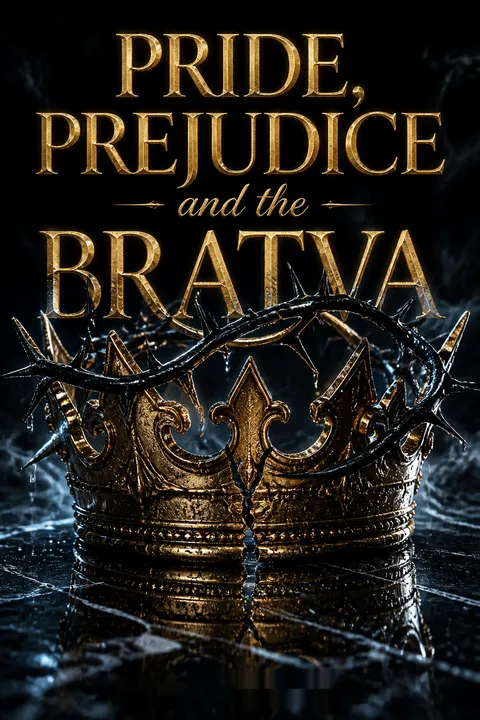

Plot Summary
Shattered Vows, Shattered Lives
Elena's wedding day is a disaster before it begins. Fired from her job for refusing her boss's advances, she arrives late, battered, and with a traumatized child she's just saved from abduction. Her fiancé, Harris, publicly humiliates her, calling off the wedding in front of both families. In the aftermath, the boy promises to find her a new groom—and summons his father, Ruslan Baranov, a feared mafia king. Ruslan, haunted by the murder of his pregnant wife and convinced Elena is complicit, is forced into an arranged marriage with her. The ceremony is cold, the vows a sentence, and Elena's life is upended in a single, shattering day.
The Ghosts We Inherit
Ruslan's world is shaped by trauma: a CIA black-ops past, the brutal murder of his wife Maria, and the loss of his unborn child. He blames Elena, or at least her family, for his suffering. Elena, meanwhile, is marked by her own ghosts—her sister's betrayal, her father's criminal legacy, and the violence that stole her hearing and voice. Both are prisoners of inherited pain, unable to escape the shadows of those who came before them. Their marriage is not a union, but a collision of wounds, each seeing in the other the echo of their deepest fears.
A Wedding of Enemies
The wedding is a spectacle of power and humiliation. Elena, bloodied and in a ruined dress, stands beside Ruslan, who radiates cold authority. The ceremony is conducted under duress, with Elena's consent extracted through intimidation and the silent pleading of the boy, Yannis. The families watch, calculating alliances and betrayals. Ruslan's acceptance is not a promise of protection, but a declaration of ownership and intent to punish. Elena's only comfort is the child who clings to her, the only one to see her as more than a pawn.
The King's Cage
Elena is brought to Ruslan's fortress-like mansion, a place of marble, glass, and ancient Greek grandeur. She is given a room, but not freedom. Every movement is watched, every interaction controlled. Ruslan's presence is both a threat and a strange source of safety—he is the only barrier between her and the world, but also her jailer. The house is filled with reminders of his lost wife and the life Elena can never replace. She is isolated, her attempts at communication stifled by trauma and Ruslan's refusal to listen.
The Boy and the Bride
Yannis, Ruslan's mute son, becomes Elena's anchor. Traumatized by his mother's murder, he finds solace in Elena's gentle care and shared silence. Their bond grows in stolen moments—bedtime stories, sign language, small acts of comfort. For Yannis, Elena is a lifeline; for Elena, he is a reason to endure. Ruslan watches this connection with a mix of jealousy, suspicion, and longing, unable to bridge the gap between himself and his son. The child's trust in Elena is both her shield and her curse.
The Price of Mercy
Ruslan's rage is relentless. He accuses Elena of crimes she did not commit, punishing her with coldness, threats, and calculated cruelty. He burns her mother's ashes before her, forces her to endure the elements, and ultimately sends her to prison on fabricated charges. Each act is justified in his mind as justice for Maria, but beneath the surface is a man unraveling, haunted by doubt and the possibility that he is destroying an innocent woman. Elena's endurance is not forgiveness, but survival.
Rain, Blood, and Ashes
In a night of rain and violence, Ruslan enacts his most brutal punishment. He forces Elena to stand among open graves, pours her mother's ashes into the mud, and leaves her to freeze. Her pleas go unheard, her body pushed to the brink. When her old abuser appears, Ruslan's violence turns outward, killing the man in a fit of vengeance that is both justice and confession. The storm becomes a baptism of pain, washing away the last illusions of mercy between them.
The Silence Between Us
Imprisoned, Elena loses more than her freedom—she loses her voice entirely. The trauma of abuse, isolation, and betrayal renders her mute, her attempts to speak resulting only in blood and pain. Ruslan, upon her release, is confronted with the full extent of what he has done. The woman he once saw as an enemy is now a ghost, her silence a mirror of his own emptiness. The cost of his vengeance is laid bare, and for the first time, he is forced to reckon with the possibility that he has become the monster he feared.
The Diary's Confession
Ruslan discovers Elena's diary, a chronicle of her suffering, longing, and unspoken love. Through her words, he sees the truth he refused to acknowledge: she loved him, not as a savior, but as a man. Her loneliness is palpable, her hope fragile, her endurance heroic. The diary is a confession and a condemnation, forcing Ruslan to confront the reality that he destroyed the only person who ever saw him as more than a weapon. The pages are stained with tears, each entry a wound that will never fully heal.
The Prisoner's Lament
Elena's time in prison is a descent into another kind of violence. She is targeted by guards and inmates alike, her body and spirit battered by a system designed to break her. The trauma compounds, her silence deepening, her hope flickering but not extinguished. She survives through sheer will, clinging to memories of Yannis and the faint possibility of rescue. The world outside moves on, indifferent to her suffering, while inside, every day is a battle for dignity and survival.
The Monster's Regret
As the truth of Elena's innocence emerges, Ruslan is consumed by regret. His empire, once built on discipline and fear, begins to unravel. He is haunted by nightmares, unable to find solace in power or violence. The realization that he has destroyed the woman he might have loved is a wound that will not close. He becomes a ghost in his own house, his authority undermined by the knowledge that he is the architect of his own misery. Redemption seems impossible, forgiveness out of reach.
The Cost of Survival
Elena's survival is not a victory, but a testament to her resilience. She endures humiliation, violence, and loss, emerging from prison scarred but unbroken. Her silence is both a wound and a weapon, a refusal to give her tormentors the satisfaction of her pain. She is rescued by her foster brothers, the Voss family, who offer her a chance at safety and belonging. Ruslan, left behind, is forced to confront the reality that he may never see her again.
The Empire Unravels
Ruslan's world collapses in Elena's absence. His criminal empire, once unassailable, is beset by enemies and betrayal. The alliances he forged through fear begin to fracture, his men question his judgment, and his own heart is a battlefield of guilt and longing. The power that once defined him is revealed as empty, incapable of filling the void left by Elena's departure. He is a king without a kingdom, a man without a future.
The Truth Unveiled
Through relentless investigation, Ruslan uncovers the truth: Elena was framed by her sister and her ex-fiancé, Harris. The evidence that damned her was manufactured, the betrayal orchestrated by those closest to her. The revelation is both a relief and a new torment—he has punished the innocent and let the guilty go free. The knowledge does not absolve him; it only deepens his sense of failure and loss.
The Last Betrayal
Ruslan orchestrates Elena's release, but the damage is done. She emerges from prison a shadow of herself, her voice gone, her spirit battered, her child lost. The reunion is not a reconciliation, but a reckoning. Elena is claimed by her foster brothers, the Voss family, who shield her from further harm. Ruslan is left alone, kneeling in the rain, begging for forgiveness that may never come. The cost of his vengeance is total.
The Rescue That Wasn't
Ruslan's efforts to make amends are met with silence. Elena, surrounded by those who truly love her, is beyond his reach. The power that once made him untouchable is useless in the face of her pain. He is forced to watch as she is taken away, her absence a wound that will never heal. The possibility of forgiveness is a distant dream, the reality of his actions an unending nightmare.
The End of Forgiveness
The story ends not with reconciliation, but with the acknowledgment that some wounds cannot be healed. Ruslan is left to mourn the life he destroyed, Elena to rebuild from the ashes of her suffering. Their love, if it ever existed, is buried beneath layers of pain, betrayal, and loss. The future is uncertain, the past inescapable. The only certainty is that forgiveness, if it comes, will be hard-won and incomplete.
The Beginning of War
As Elena is taken by her brothers, a new enemy strikes. The Voss family is ambushed, and Elena disappears once more—this time into the hands of an unknown faction. Ruslan, broken but not defeated, vows to find her, to burn the world if necessary. The cycle of violence and vengeance begins anew, the story of pride, prejudice, and the bratva far from over.
Analysis
Pride, Prejudice and the Bratva is a dark, emotionally charged exploration of trauma, vengeance, and the possibility—however faint—of redemption. At its core, the novel is a meditation on the ways in which violence begets violence, and how the wounds of the past shape the present. Through the intertwined stories of Elena and Ruslan, the book interrogates the limits of forgiveness, the corrosive power of guilt, and the human need for connection even in the face of betrayal. The use of dual narratives and shifting perspectives invites the reader to empathize with both victim and perpetrator, blurring the lines between hero and villain. The recurring motifs of silence, voice, and the diary underscore the difficulty of being heard in a world that punishes vulnerability. Ultimately, the novel offers no easy answers—only the hard truth that survival is an act of resistance, and that love, when it exists, is as much a source of pain as it is of hope. The ending, unresolved and fraught with new dangers, suggests that healing is a journey without end, and that the scars of the past are never fully erased.
Review Summary
Pride, Prejudice and the Bratva receives overwhelmingly negative reviews, averaging 3.01/5 from 1,480 readers. Most critics cite severe continuity errors, inconsistent character traits, an incoherent timeline, and a rushed romance as major flaws. Common complaints include a deaf protagonist who inexplicably regains hearing, a mute child who suddenly becomes a prodigy, and plot threads abandoned mid-story. Many suspect AI involvement in the writing. A small number of readers enjoyed the dark mafia romance premise despite its flaws.
Characters
Elena Vasquez
Elena is the heart of the story—a woman forged in trauma, defined by resilience, and haunted by the sins of others. Deaf and often mute from past abuse, she is both vulnerable and unbreakable. Her relationship with Ruslan is a crucible, exposing her deepest wounds and her capacity for endurance. She loves fiercely, even when it is dangerous, and her bond with Yannis reveals her nurturing spirit. Elena's journey is one of survival, not victory; she endures humiliation, violence, and loss, emerging scarred but not destroyed. Her silence is both a wound and a weapon, a refusal to be defined by those who would use her as a pawn.
Ruslan Baranov
Ruslan is a man shaped by violence, loss, and the relentless pursuit of control. Once a CIA operative, now a mafia king, he is haunted by the murder of his wife and unborn child—a crime he wrongly attributes to Elena. His love is twisted by suspicion, his power undermined by regret. Ruslan's relationship with Elena is a battleground, his need for vengeance warring with a longing for connection he cannot admit. He is both protector and destroyer, capable of great tenderness and greater cruelty. His arc is one of self-destruction, as the empire he built becomes a prison of his own making.
Yannis Baranov
Yannis is Ruslan's mute son, traumatized by his mother's murder and his father's emotional distance. He finds solace in Elena, whose gentleness and understanding offer him a lifeline. Yannis's silence is a mirror of Elena's, their bond a fragile hope in a world of violence. He is both a victim and a catalyst, his needs driving the actions of the adults around him. Through Yannis, the story explores the intergenerational cost of trauma and the possibility of healing.
Maria Baranov
Maria, Ruslan's late wife, is present only in memory, but her murder is the axis around which the story turns. Her death is both a mystery and a wound, her absence a source of endless grief for Ruslan and Yannis. Maria's legacy is one of love and loss, her presence felt in every act of vengeance and every moment of regret. She is both victim and symbol, the embodiment of innocence destroyed by the sins of others.
Elena Senior (Elena's Sister)
Elena's older sister is the shadow behind the story's central crime. A former CIA operative, she is both victim and perpetrator, her actions driven by desperation and a twisted sense of loyalty. Her betrayal is the catalyst for Elena's suffering, her absence a wound that refuses to heal. Elena Senior is a reminder that the greatest harm often comes from those closest to us, and that the line between victim and villain is never clear.
Harris Thompson
Harris is the embodiment of privilege and resentment. Spurned by Elena, he orchestrates her downfall, framing her for Maria's murder in collusion with Elena Senior. His actions are motivated by wounded pride and a desire for control, his cruelty masked by charm. Harris is both a rival to Ruslan and a symbol of the dangers of unchecked power. His betrayal is personal, his punishment yet to come.
Petros
Petros is Ruslan's right hand, a man of discipline and loyalty. He is both enforcer and confidant, carrying out orders with precision but not without doubt. Petros's relationship with Elena is one of wary respect; he recognizes her suffering and questions the justice of her punishment. He is a witness to Ruslan's unraveling, his own loyalty tested by the cost of obedience.
The Voss Brothers
The Voss brothers are Elena's foster siblings, powerful figures in the New York underworld. They offer her sanctuary when Ruslan's protection becomes a threat, their loyalty to her unwavering. The brothers are both shield and sword, willing to go to war to keep Elena safe. Their presence introduces new alliances and new dangers, setting the stage for the next chapter of the story.
Officer Harlan
Harlan is the embodiment of institutional violence—a man who abused Elena in her youth and continues to torment her in prison. His authority is a weapon, his cruelty unchecked by conscience or consequence. Harlan's presence in Elena's life is a reminder that the greatest threats often come from those meant to protect us, and that survival is an act of defiance.
Detective Ramirez
Detective Ramirez is the investigator who processes Elena's arrest and imprisonment. Professional, detached, and ultimately powerless to prevent the miscarriage of justice, she is both a cog in the machine and a witness to its failures. Ramirez's interactions with Elena highlight the indifference of the system to individual suffering, and the ease with which innocence is sacrificed for expedience.
Plot Devices
Dual Narratives and Shifting Perspectives
The story unfolds through the alternating perspectives of Elena and Ruslan, each chapter peeling back layers of misunderstanding, pain, and longing. This structure allows the reader to inhabit both the victim and the perpetrator, to see the same events through eyes clouded by trauma and vengeance. The shifting viewpoints create dramatic irony, as the reader knows the truth long before the characters do, heightening the tension and emotional stakes.
Misdirection and False Evidence
Central to the plot is the use of forged evidence and manipulated testimony to frame Elena for Maria's murder. This device not only propels the narrative but also explores themes of power, corruption, and the fragility of justice. The revelation of the true culprits—Elena's sister and Harris—comes too late, underscoring the irreversible damage caused by lies and the ease with which innocence is destroyed.
Symbolism of Silence and Voice
Elena's muteness is both a literal and metaphorical device, representing the ways in which trauma silences victims and the difficulty of being heard in a world that refuses to listen. Her struggle to speak, and the eventual loss of her voice, is a recurring motif, mirrored by Yannis's own silence. The diary becomes her true voice, a record of pain and love that outlives words.
The Diary as Confession
Elena's diary serves as both a plot device and a symbol of her inner life. Through its pages, Ruslan—and the reader—discover the truth of her feelings, her suffering, and her endurance. The diary is a confession, a love letter, and an indictment, forcing Ruslan to confront the reality of what he has done. It is the key to understanding, but also a source of unhealable regret.
The Child as Catalyst
Yannis is more than a passive victim; his presence shapes the choices of both Elena and Ruslan. His trust in Elena is the only thing that stays Ruslan's hand, his suffering a mirror of the adults' failures. The child's innocence and vulnerability are a constant reminder of what is at stake, and his eventual rescue by Elena's foster brothers signals a possible path to healing.
Foreshadowing and Circular Structure
The narrative is structured to echo itself—weddings that become funerals, rescues that become betrayals, silences that breed violence. The story ends where it began: with Elena in danger, Ruslan desperate to save her, and the future uncertain. This circularity reinforces the themes of inescapable trauma and the difficulty of breaking free from cycles of pain.
Download PDF
Download EPUB
.epub digital book format is ideal for reading ebooks on phones, tablets, and e-readers.








































