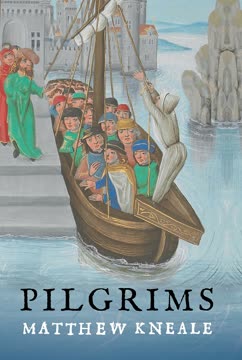
Plot Summary
Grief and Ruin
In 1264, Motte's ordinary morning erupts into tragedy, reflecting the precarious life of a Jewish woman in medieval London. Unable to keep her family safe, she frantically searches for her sister Rosa, only to return and find her home reduced to ashes, her children and kin gone, consumed by violence and anti-Semitic hatred. The chaotic political climate turns personal: survival is luck, not virtue. Motte's anguish etches the opening emotional register, her sense of powerlessness and loss driving her with guilt and fear. This trauma foreshadows the haunting of many characters—shaping their future choices, their drive for expiation, the tangled burden of history they all bear.
Cat in Purgatory
Twenty-five years later, Tom—known in his village as Simple Tom—grieves for his lost companion, a beloved cat named Sammy. Obsessed by dreams of Sammy trapped in purgatory, Tom becomes convinced the only remedy is pilgrimage—to pray for the cat's soul. Guided by Father Will and accompanied by his practical Aunt Eva, Tom's journey begins in the familiar, earthy rhythms of rural medieval life, where the supernatural blurs with everyday fears and desires. Tom's naiveté and loyalty set the tone for pilgrim motivations: their quests for forgiveness and wholeness are as oddly personal as his, exposing the porous medieval boundary between the human, the animal, and the divine.
Pilgrims Assemble
Tom joins up with a diverse band: Hugh and Margaret, a comically bickering, class-conscious farming couple; Oswald, the seasoned, badge-collecting professional pilgrim; Jocelyn, a tormented advocate whose lust and guilt drive him toward absolution; and Mary with her enigmatic daughter Helena. The group is soon joined by others—Sir John, a brittle knight doing penance; Constance with her sickly, inexplicably afflicted boy Paul and her loyal sister Joan; and Warin with his daughter Beatrix, who claims to speak for God. These disparate souls, each haunted by sins, shames, or losses, trudge toward Rome, lured by hopes of healing and forgiveness, and driven by the inescapability of their pasts.
Confessions on the Road
As they walk, pilgrims share stories both to confess and to entertain. Constance unveils a tale of illicit love, guilt, and her son's mysterious illness—believing her sin has cursed Paul. Jocelyn confesses his lethal lust, while Oswald reveals he peregrinates for pay, praying vicariously for the dead. Warin's daughter is channeled as God's prophet, warning of the world's end; others reveal superstitions, resentments, dreams. There are moments of kindness—a hand reached in the dark, a story told to stave off fear—but also petty jealousies, sharpened suspicions, and a sense that confession, though ritualized, cannot always cleanse. Healing proves more elusive than faith would promise.
Revelations and Delusions
Matilda Froome, a woman who believes herself chosen by Christ, joins the narrative with her weeping, roaring, and proclamations. Lucy de Bourne—a wealthy noblewoman fleeing disastrous marriages, seeking solace from scandal and violence—brings her entire retinue, finding herself in a will-they-won't-they romance with the mysterious Lionel. As the group mingles, divides, and bickers, their delusions and aspirations play off one another: visions become weapons, revelations further isolation, and each step is fraught with the paradox of seeking holiness on a journey through folly and human weakness. Despite the supposed godliness of the road, sin and misunderstanding fester.
The Long Trek South
Passing through France, the Alps, and northern Italy, the pilgrims face not only physical hardship—hunger, cold, and storms—but also deepening mistrust and the slow poisoning of relationships. Quarrels break out over money, food, and suspicion of heresy; Tom loses his meager fortune. Encounters with wild men and beggars provoke curses, while the group's progress is slowed by in-fighting and bad luck. A wild storm during the Channel crossing exemplifies the precariousness of their journey: their fate is shaped less by virtue than by chance and endurance. Still, occasional acts of generosity and forgiveness—from guiding one another, to sharing warmth or bread—prevent total dissolution.
Storms, Curses, and Division
The roads and mountains amplify anxiety and desperation. The curse of the wild man in Oxford echoes as accidents and losses mount: boots are lost, money vanishes, tempers fray. Beatrix's pronouncements as God's mouthpiece sow paranoia, especially after she accuses Mary and Helena of hiding a dark secret. The group wrestles with fear of hidden Jews and heretics within their ranks. Under the pressure of the Alps' winter, hunger and exhaustion force the pilgrims to cast two members—Mary and Helena—out into the snow, a collective act of cowardly scapegoating. Several break ranks to rescue them, shamed by the realization that ritual exclusion only deepens their own spiritual crisis.
Exile and Exclusion
Fears of difference come to a head: Mary and Helena's exclusion reveals the perennial danger for Jews and converts, while Matilda and Iorwerth, lost together in the mountains, face their own reckoning with identity and faith. Each character's background becomes a double-edged sword: the search for belonging results in vulnerability to suspicion, exile, or worse. Yet, in moments of solidarity—Tom, Oswald, Father Tim, and Brigit risking themselves to save the exiles—grace is possible. Matilda's mystical, rollicking religiosity and Iorwerth's battered conscience serve as counterweights, their journeys up and over the mountain emblematic of hope against despair.
Masks and Identities Unveiled
In Rome, identities—so carefully managed—dissolve. Motte and Miri, now Mary and Helena, confront the impossibility of conversion as a shield: exposed for their origins, they are pursued and hounded yet finally find sanctuary among Rome's Jews. Lucy, enchanted and ensnared by Lionel, discovers—through a twist of genealogy and paperwork—that he is not her redeemer but her husband's cousin, sent to betray her. Tom, once cast out and disbelieved, is vindicated; the group's hierarchy unravels. Each revelation recasts the moral reckoning of the whole journey: culpability is tied less to confession than to actions under pressure, and no one's motives are pure.
Forgiveness and New Truths
Paul's mysterious illness, once attributed to his mother's sin, is revealed to be a medical condition—an allergy to wheat—by a Jewish physician. The inextricable blending of faith, superstition, and practical knowledge is laid bare: what prayer and pilgrimage cannot accomplish, a quiet word of rational care does. Motte's contrite honesty and Tom's earnest kindness reframe the group's morality. The possibility of redemption lies less in shrine or ritual than in understanding and empathy. Constance, released from her cycle of guilt, finally declares her family will not press on to Jerusalem. Small acts—a secret kept, a child saved—triumph over spectacle.
Sins, Illness, and Redemption
In Rome and as they begin their return, the group faces the consequences of their choices: fractured kinships, failed marriages, and lost or found reputations. Jocelyn, forever the compulsive confessor and sinner, considers a turn to the church. Matilda, received as a holy curiosity, basks in the rewards of piety—a comfortable life promised by wealthy patrons. Dame Lucy's hard-won divorce is achieved, but only after betrayal by Lionel, her trust misplaced and her illusions shattered. The notion of penance shifts: absolution becomes a matter not of the pope's decrees but of reconciling oneself to truth and the complexities of forgiveness.
Rome's Paradoxes
Rome—goal of their epic trek—is both sanctuary and bazaar, labyrinthine and corrupt, a city of saints, relics, and endless commerce in mercy. The pilgrims circle through crowd, dirt, sellers, and confusing rituals, seeking meaning amid the teeming throngs. Expectations clash with reality: holy sites are underwhelming; relics dubious; indulgences calculated like wages. Violence and piety, compassion and exclusion, coexist in narrow streets. The city's paradoxes mirror the pilgrims' own confusion: healing comes not from grandeur, but from humility, loss, and the unexpected gifts of others, often marginalized or denounced by the official church.
Ushering in Good Fortune
What began in want and suspicion ends in surprising gains. Tom, once "Simple Tom" the village fool, is recognized and rewarded for loyalty and goodness: he wins freedom, a home, and even a touch of upward mobility as Dame Lucy's servant. Matilda returns to England as a rumored saint, Iorwerth finds new purpose translating and advising. Others, like Brigit and Joan, must find their paths alone, their journeys marked by wounds, wisdom, and the shedding of illusions. What the pilgrimage failed to deliver in absolution, it gives in new perspectives and the bittersweet knowledge that the old world—England—will never be quite the same again.
Unraveling the Past
Back in England, the returning pilgrims witness new upheaval. The king, seeking popularity, expels all Jews from England. Tom, now observing from the safety of his new status, watches as Jewish families are mocked, spat upon, and banished. Motte and Miri—no longer welcomed anywhere—are reminders that attempts to escape history and hate are ultimately futile, and that the journey for belonging and peace is never truly complete. The cycle of exile begins again—a coda to the narrative, ensuring that questions of justice, mercy, and identity will echo on.
Farewells and New Beginnings
The former pilgrims are scattered. Tom finds fulfillment in service, escape from poverty, and new friendship. Dame Lucy, fierce and self-reliant, builds a new life, haunted by losses and betrayals but also cheered by new hope. Constance returns home, freed from her fear of curse and sin. For others, partings sting: old wounds and enmities linger, but so do fledgling bonds, kindnesses, and a hard-won tolerance for ambiguity. The pilgrimage—once seen as a bid for miraculous cleansing—is recast as a human enterprise, its failures and transformations encoded in the characters' enduring resilience.
Heaven, Home, and Exile
The emotional arc closes as the characters measure what has truly changed. Tom, no longer "Simple," makes peace with the loss of his cat, his parents, and his past, and finds real reward in the freedom and dignity won through hardship. Matilda dreams of sanctity but is marked more by her eccentricity than by divine favor. Motte, Miri, and their kin become exiles once more—reminders that for many, the promise of heaven or home will remain tantalizingly out of reach. Yet, even for them, moments of solidarity survive, shining as small lights against the dark.
Analysis
Pilgrims is a richly layered meditation on the quest for belonging, forgiveness, and meaning amidst the chaos and cruelty of medieval Europe. Using the episodic structure of the pilgrimage, the novel exposes the fragility of identity—the ease with which it can be lost, masqueraded, or violently erased. Every character is both a penitent and, in another's eyes, a heretic; every sin confessed is also an artifact of survival. Kneale's modern reader finds here a universe in which faith, medicine, love, and violence are tangled, where exclusion is both a weapon and a wound. Through satire and deep empathy, the novel interrogates the medieval church's authority and the allure of ritual penance, only to reveal that redemption is more likely found in small acts of kindness and truth than in the grand theater of shrines and papal courts. The story's end—marked by new exiles, painful partings, but also by the unexpected ascent of Tom, once the lowest—insists, without providing false hope, that justice and belonging are continually deferred by history, but that resilience and small mercies endure.
Review Summary
Pilgrims receives generally positive reviews, averaging 3.8 stars. Readers frequently compare it to Chaucer's Canterbury Tales, praising its well-researched medieval setting, colourful cast of characters, and blend of bawdy humour with serious themes, particularly medieval antisemitism. Fan favourite Tom, son of Tom — a simpleton seeking to free his dead cat from Purgatory — is widely considered the novel's warm heart. Critics note structural weaknesses, including an over-reliance on backstories that slows narrative momentum, and some feel the characters lack authentic medieval sensibility.
People Also Read

Characters
Tom son of Tom
Tom, long disparaged as "Simple Tom," embodies the spirit of hope, trust, and gentle, persistent goodness. Deeply attached to his cat (whose fate in the afterlife obsesses him), he's a blank canvas for the superstitions and anxieties of the age. Though mocked and underestimated, Tom's honesty, trustworthiness, and loyalty wield subtle power. He matures over the journey, learning suffering and resilience. In Rome, his hard-won vindication (when his honesty outlasts suspicion) and subsequent transformation from rural underdog to a trusted servant mark the triumph of innate decency over social status. Tom's character shows how the "simple" often bear wisdom unavailable to the "wise."
Constance
Constance's inner life is shaped by the belief that her son Paul's mysterious illness is divine punishment for past sin—a forbidden dalliance before marriage. Her journey is both physical and spiritual: desperate for a cure, she is wracked by both maternal love and unremitting self-blame. Her story is entwined with her relationship to her resilient sister Joan, whose firmness is both a comfort and a constraint. Ultimately, Constance learns that healing need not come from penance or sainthood but from knowledge, empathy, and the willingness to forgive herself. She is emblematic of the quest for personal redemption in a punitive world.
Lucy de Bourne
Lucy is restless, resourceful, and wounded: a wealthy heiress battered by widowhood, betrayal, violence, and abuse in a succession of disastrous marriages. Fiercely intelligent and capable, she seeks love, autonomy, and dignity, but is repeatedly thwarted by a patriarchal, litigious society. Her entanglement with Lionel—revealed to be an instrument of her husband's schemes—culminates in a betrayal that mirrors her lifelong experiences of exploitation and manipulation. Lucy, however, retains a sharp eye for intrigue, an ability to recover, and a wry sense of humor that make her the group's de facto matriarch and perhaps its most modern sensibility.
Beatrix
Beatrix, daughter of Warin the tailor, is a vessel for God's voice—at least so her father believes. Quiet and overlooked, she becomes the channel for apocalyptic warnings and moral judgments that both unsettle and control the group. Her pronouncements provide momentary order for those desperate for certainty but ultimately reveal the dangers of collective projection and scapegoating. Her arc exposes how women (especially young and powerless ones) could be conscripted into communal fantasies of purity, holiness, or blame. As the mouthpiece of the group's anxieties, she helps catalyze both compassion and cruelty.
Motte / Mary
Motte's story, as a Jewish woman forcibly made a Christian (Mary), then on the run even from her adopted faith, renders visible the precarious tightrope of identity and survival. Her desperate desire to "be good"—for God, for her people, for herself—only creates new vulnerabilities. Mother to Miri/Helena, she models both care and the self-destructive effects of appeasement. Motte's journey details the impossibility of being accepted, no matter how sincere the conversion. Her final choice to return to Judaism is as much resignation as hope, culminating in renewed exile: a reminder that home is not always a place one can return to.
Jocelyn
Jocelyn the advocate is resourceful but irreversibly flawed—a habitual sinner who confesses compulsively but cannot change. His lascivious acts, relapses, and legalistic wrangling parody the era's systems of expiation. Intelligent but self-destructive, he is at once comic and tragic; his inability to reform casts doubt on the promise of pilgrimage as spiritual cure. In Rome, with the Church offering new paths (potentially as a confessor), Jocelyn's endless cycle of sin and confession serves both as social critique and psychological study of addiction, shame, and the limits of ritualized atonement.
Matilda Froome
Based on figures like Margery Kempe, Matilda is driven by a conviction of divine election, chronic ecstasy, and self-abnegation. Her weeping, roaring, and mystical assertions are both inspiring and troubling, blurring the line between sanctity and madness. Matilda endures ridicule, exile, and abjection, yet also wins honor in Rome, where her eccentric piety is adopted as holy. Far more complex than comic relief, she symbolizes the role of performing sanctity in a world that punishes difference but is also hungry for miracles.
Sir John
Sir John is a minor landholder condemned to pilgrimage after violence against the church—a self-righteous, quick-tempered defender of honor and order, unable to adapt to loss. His militarism and suspicion of outsiders fuel discord, and his fixation on enemies and imagined slights leads to repeated conflict. His presence in the group is at once protective and corrosive: he shields his own but wounds the fabric of the party, ultimately highlighting the brittle, fearful masculinity of the age.
Warin
Warin, the tailor of Margate, is both earnest and comically self-important: his elevation as God's "torchbearer" gives him a rare sense of purpose and belonging. He is at once caring father and manipulative manager of Beatrix's status. His trajectory—from insignificant worker to minor religious celebrity—frames questions about the search for significance, the economic anxieties of the medieval working class, and the perils of believing oneself uniquely favored by the divine.
Helena / Miri
As Mary/Motte's daughter, Helena (later Miri) embodies the tensions of dual identity, loss, and longing. Simultaneously shaped by Jewish childhood and forced Christian adolescence, she is perpetually dislocated, caught between her mother's desire for safety and her own need for authenticity and connection. Her reticence and sadness evoke a modern sense of alienation. Her final fate—anonymity and continued exile—underscores the book's tragic insight: that history's victims rarely find resolution, even in stories of pilgrimage and redemption.
Plot Devices
The Polyphonic Pilgrimage
At the heart of the novel is a narrative structure reminiscent of Chaucer: a group of pilgrims, diverse in background, motivation, and moral state, set out for Rome. Each carries a private reason for the journey, and each chapter or voice provides a new perspective—layering confession, self-delusion, comic misadventure, and fleeting enlightenment. The polyphony continually interrupts any single story of redemption or damnation, painting instead a complex mosaic. The result is a world where simple answers are upended by contradictory experience.
Foreshadowing and Doubling
The narrative abounds with doubled fates (Jewish exiles, outcast women, mothers and sons, lost and redeemed animals) and with moments of prophecy (the "curse" of the wild man, Beatrix's auguries, Matilda's visions), which both foreshadow literal dangers and encode the deeper, invisible workings of social exclusion. Minor incidents—lost coins, a spilled pie, a child's illness—reverberate, gathering metaphorical weight and exposing the fragility of security and community in a world suffused with violence and superstition.
Satire and Irony
The narrative's humor—sometimes ribald, often caustic—serves as a plot device to undercut piety and pretension. Pilgrims are undone by greed, lust, or the simple realities of food and shelter. Visions of God, the exoticism of relics, and the mechanics of papal indulgence are shown both as meaningful and as cons, pointing out both the necessity and the absurdity of religious systems.
Hidden Identities and Masking
Recurrent revelations (of Mary and Helena's Jewishness, Lionel's true mission, Lucy's tangled marital status) are achieved through plot devices of papers, mistaken identity, and secrecy. The process of masking—becoming Christian, performing sanctity, playing roles within the group—serves both as shield and trap, ultimately ensuring that all attempts at clean conversion or pure truth fail, replaced by compromise, ambiguity, and further exile.








































