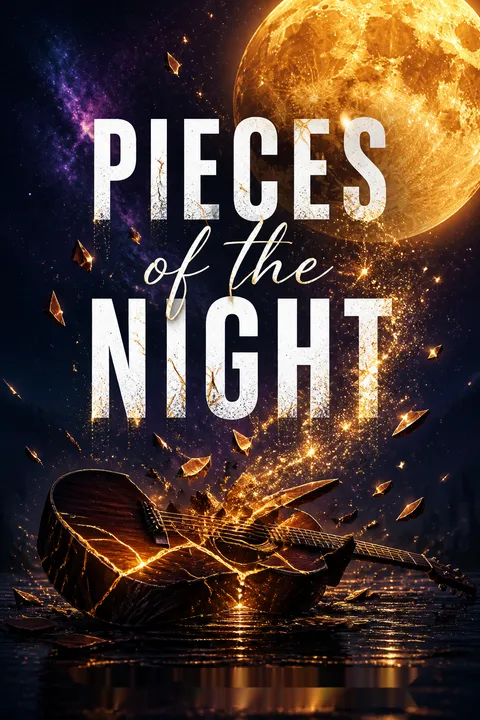

Plot Summary
Night of Broken Glass
Annalise's life fractures in a blizzard-lit Vermont night. A drunken evening ends with her brother's car stolen, a stranger at the wheel, and a gunshot wound bleeding into the upholstery. The chaos is immediate and visceral—fear, confusion, and adrenaline fuse as Annalise realizes she's been kidnapped by a desperate man named Chase. But beneath the panic, something else flickers: empathy. As blood pools and the world tilts, Annalise's instinct is not to run, but to help. This is the night that will echo through every chapter of her life, the night when pain and fate collide, and the first piece of her old self shatters, making room for something new.
Accidental Kidnap, Unlikely Rescue
Trapped in a snowstorm with a wounded stranger, Annalise faces terror and compassion in equal measure. Chase, bleeding and desperate, is no villain—just a man at the end of his rope, stealing dog food for his only companion. Annalise's fear gives way to understanding as she helps him home, bandages his wound, and calls for help. Their connection is immediate, raw, and complicated by guilt and circumstance. In the aftermath, Annalise's world is upended: her boyfriend's suspicion, her brother's anger, and her own confusion swirl. Yet, in the quiet after the storm, a seed of trust is planted between two broken souls, each clinging to hope in the darkness.
Bleeding Hearts, Open Doors
As Chase recovers, Annalise can't shake the memory of his haunted eyes and the way he trusted her with his life—and his dog. She visits his home, tending to Toaster, leaving behind notes and small acts of care. Their lives, once parallel, begin to intertwine. Annalise's relationship with Alex grows strained, his love turning possessive and brittle. Music becomes her solace, her brother Tag her anchor. Meanwhile, Chase, isolated and struggling, finds Annalise's kindness a lifeline. Their tentative friendship deepens, built on shared vulnerability and the unspoken understanding that both are survivors of invisible wars.
Strangers Become Lifelines
Annalise and Chase's connection intensifies through late-night songwriting and shared secrets. Tag, wary but intrigued, invites Chase into their midnight music sessions. The trio's chemistry is undeniable, and a band is born—Honey Moons. As they write and play, Annalise's confidence grows, her voice finding new strength. But shadows linger: Alex's emotional abuse escalates, and Chase's poverty and loneliness threaten to swallow him. Still, in the glow of music and moonlight, hope flickers. Each song is a bridge across their pain, each lyric a promise that broken things can still be beautiful.
Love in the Ruins
The band's first gigs are electric, but Annalise's personal life unravels. Alex's jealousy turns cruel, his grip tightening as Annalise's heart drifts toward Chase. A stolen glance, a lingering touch, a duet that feels like a confession—desire simmers between Annalise and Chase, both terrified of crossing the line. When Annalise finally breaks free from Alex, it's with guilt and grief, haunted by the accident that changed him and the love she can no longer give. Chase, too, is afraid—of his own darkness, of becoming the man who hurt her. Their love is a risk, a rebellion, and a lifeline.
Music, Moonlight, and Hope
Honey Moons finds unexpected success: viral videos, sold-out shows, and a whirlwind tour. The band becomes a found family, each member carrying scars and secrets but united by music. Annalise and Chase's love deepens, tender and fierce, but shadows gather. Chase's headaches worsen, his vision blurs, and fear gnaws at the edges of their happiness. Still, they cling to each other, writing songs in the dark, believing that as long as they have music, they have hope. The world opens before them, but the cost of survival grows steeper with every mile.
The Band Forms, Dreams Ignite
As Honey Moons' star rises, so do the stakes. The band's chemistry is electric, their sound a balm for their wounds. Annalise's lyrics and Chase's guitar become the heartbeat of their success. But fame brings pressure: relentless touring, media scrutiny, and the temptation to run from pain rather than face it. Tag's near-fatal overdose shakes them all, forcing a reckoning with their demons. Annalise and Chase cling to each other, but cracks appear—old guilt, new fears, and the relentless march of time threaten to tear them apart.
Fractures and First Songs
Chase's health deteriorates, his vision fading as a brain tumor steals the world from him piece by piece. He withdraws, terrified of becoming a burden, haunted by his sister's death and the fear that love is not enough. Annalise, desperate to save him, searches for hope in medicine, music, and memory. The band falters, friendships strain, and the future grows uncertain. Yet, in the quiet between songs, Annalise and Chase find moments of grace—proof that even in the ruins, love can still take root.
Torn Between Lovers
Annalise's journey is one of self-discovery and courage. She learns to drive, to stand alone, to choose herself after years of codependency and guilt. Her love for Chase is fierce, but she refuses to let it become another cage. When Chase, believing he's saving her, disappears into the night, Annalise is left with nothing but memories and unfinished songs. The band dissolves, grief settles in, and winter descends. But Annalise refuses to give up—on herself, on music, on the possibility of a new beginning.
The Storm Before the Stage
Months pass in silence. Annalise mourns, the band drifts, and Chase hides in a cabin, waiting for the end. But love is stubborn. Annalise tracks him down, demanding answers, refusing to let him vanish without a fight. Their reunion is raw and painful, a collision of anger, grief, and desperate hope. Together, they face the truth: Chase's tumor is inoperable, his vision gone, but his heart still beats for her. With the help of an old enemy's daughter—a neurology resident—they find a sliver of hope, a chance at more time, and the courage to keep singing, even when the song is broken.
Fame, Fear, and Fallout
Chase's surgery is a miracle of modern medicine and stubborn love. The tumor is reduced, the pressure eased, and though his sight is lost, his life is not. The band reunites, friends and family gather, and music fills the house once more. Annalise and Chase learn to navigate a new world—one where love is not about fixing, but about holding on through the darkness. Together, they build a home, write new songs, and find joy in the pieces of the night that remain.
The Cost of Survival
Annalise's journey is one of reclamation. She forgives herself for the accident that changed Alex, for the years lost to fear, for the love that almost destroyed her. She learns that survival is not enough—she wants to live, to create, to love without apology. Chase, too, finds peace—not in perfection, but in the messy, beautiful reality of being alive. Their love is not a cure, but a promise: to keep singing, to keep fighting, to keep choosing each other, no matter what.
Pieces of the Night
The story comes full circle: from a night of broken glass to a life rebuilt from fragments. Annalise and Chase marry under a honey moon, surrounded by friends, family, and the music that saved them. The band thrives, not because they are whole, but because they are willing to make something beautiful out of pieces. Their love is not perfect, but it is true—a testament to the power of kindness, hope, and the courage to keep singing, even when the night is dark.
The Long Winter
After Chase's disappearance, Annalise endures a season of loss. The band falters, friendships strain, and hope flickers. She learns to live with the ache, to find meaning in small acts of survival, to trust that love can outlast even the longest winter. When spring finally comes, it brings with it the possibility of reunion, of forgiveness, of a new song waiting to be written.
The Return, The Reckoning
Annalise finds Chase, broken but alive, and refuses to let him go. Together, they face the truth of his illness, the limits of hope, and the power of love to heal even the deepest wounds. With the help of friends old and new, they build a life not in spite of their pain, but because of it. Their story is not about happy endings, but about the courage to keep beginning again.
Healing in the Dark
Chase and Annalise learn to live in the aftermath: blindness, uncertainty, and the ever-present threat of loss. But they choose each other, again and again, finding joy in the ordinary, beauty in the broken, and hope in the music they make together. Their love is a rebellion against despair, a promise that even in the dark, there is light.
Second Chances, New Songs
The story ends not with perfection, but with possibility. Annalise and Chase, surrounded by friends and family, step into a new chapter—marriage, music, and the quiet miracle of ordinary days. They know the night will come again, but they are no longer afraid. Together, they have learned to make something beautiful out of pieces, to sing even when the song is unfinished, and to love fiercely, knowing that every moment is a gift.
Analysis
Pieces of the Night is a raw, lyrical exploration of trauma, healing, and the redemptive power of love and art. Jennifer Hartmann crafts a narrative that refuses easy answers, instead embracing the messy, nonlinear reality of survival. The novel's structure—fragmented, musical, and deeply interior—mirrors the experience of its characters: life as a series of broken pieces, each carrying its own weight and meaning. At its core, the book is about the courage to keep singing in the dark, to find hope in the ruins, and to build something beautiful out of what remains. It challenges the myth of the "fixable" person, insisting instead that love is not about rescue, but about presence—about holding on, letting go, and choosing each other again and again, even when the night is long. In a world obsessed with happy endings, Pieces of the Night offers something rarer: the promise that even in the fragments, there is music, and in the music, there is life.
Review Summary
Reviews for Pieces of the Night are largely positive, averaging 4.31/5. Many readers praise Jennifer Hartmann's poetic writing, emotional depth, and the found family dynamic within the band. Chase is widely adored as a swoon-worthy love interest, and the music-driven narrative resonates strongly. Common criticisms include the story spending too much time on the abusive relationship, a rushed ending, and the cheating trope making some uncomfortable. Several readers were emotionally devastated by the title's hidden meaning, while others felt the book lacked the healing arc typical of Hartmann's work.
People Also Read



Characters
Annalise Adams
Annalise is the emotional heart of the story—a woman shaped by trauma, guilt, and the longing to be seen. Her relationship with Alex is a study in codependency and emotional abuse, leaving her doubting her worth and her voice. Music is her salvation, her brother Tag her anchor, and Chase her unexpected lifeline. Annalise's journey is one of reclamation: learning to choose herself, to forgive her past, and to love without apology. Her empathy is both her strength and her vulnerability, drawing her to broken people and making her a healer even as she struggles to heal herself. Through music, friendship, and the courage to face her fears, Annalise transforms from a woman surviving in the shadows to one who dares to step into the light.
Chase Rhodes
Chase is a study in contrasts: tough yet tender, haunted yet hopeful. Scarred by poverty, loss, and the death of his sister, he is a man who has learned to expect disappointment. His love for music is both a refuge and a curse, a reminder of what he's lost and what he still hopes to find. Chase's relationship with Annalise is transformative—she sees him, believes in him, and gives him the courage to fight for more. His struggle with illness, vision loss, and the fear of becoming a burden is deeply human, marked by moments of despair and flashes of grace. Chase's journey is one of learning to accept love, to forgive himself, and to find meaning in the pieces of life that remain.
Tag Adams
Tag is Annalise's older brother, her protector and partner in midnight music sessions. A talented musician with a stubborn streak, Tag is both a source of strength and a mirror for Annalise's struggles. His own battles—with addiction, self-doubt, and the fear of failure—are woven through the band's rise and fall. Tag's love for his sister is fierce, sometimes blinding, leading him to make choices that hurt even as he tries to help. His journey is one of learning to let go, to trust, and to believe that second chances are possible.
Alex Anderson
Alex is Annalise's long-term boyfriend, a man broken by trauma and unable to break the cycle of control and anger. His love is possessive, his pain a weapon, and his presence a shadow over Annalise's life. Their relationship is a study in the slow erosion of self, the way love can become a cage. Alex's arc is one of loss and regret, a cautionary tale about the dangers of loving someone more than you love yourself.
Kenna
Kenna is Annalise's best friend, her confidante and co-conspirator. Outspoken, loyal, and fiercely protective, Kenna is the voice of reason and rebellion. Her own journey—from comic relief to Tag's unexpected love interest—mirrors the story's themes of growth, forgiveness, and the power of found family. Kenna's presence is a reminder that healing is not a solitary act, and that sometimes, the people who know us best are the ones who save us.
Toaster
Toaster, Chase's dog, is more than a pet—he is a symbol of unconditional love, resilience, and the small joys that make survival possible. His presence grounds Chase, offering comfort in moments of despair and reminding both protagonists that even in the darkest times, there is something worth holding on to.
Rock
Rock, the band's drummer, is a stoner philosopher with a heart of gold. His humor masks his own struggles, and his loyalty to the band is unwavering. Rock's journey is one of quiet growth, learning to show up for his friends and to believe in the possibility of something better.
Zach
Zach, the bassist, is the band's anchor—a single father with a calm presence and a deep well of empathy. His experience with addiction and loss gives him a unique perspective, making him both a mentor and a friend. Zach's role is to remind the others that survival is possible, and that healing is a collective act.
Parvati Singh
Parvati, the daughter of the gas station clerk who shot Chase, becomes an unexpected ally. Her own family's trauma and her work as a neurology resident make her uniquely equipped to help Chase. Parvati's presence is a testament to the power of forgiveness, the interconnectedness of lives, and the possibility of redemption even in the wake of tragedy.
Stella Rhodes
Stella, Chase's sister, is both a memory and a guiding force. Her death shapes Chase's guilt and fear, her voice echoing through his dreams and his music. Stella's story is a reminder that grief is not something to be fixed, but something to be carried—and that love, even lost, can still be a source of strength.
Plot Devices
Dual Narration and Shifting Perspectives
The novel alternates between Annalise and Chase's perspectives, allowing readers to inhabit both the pain and hope of each character. This dual narration deepens the emotional resonance, revealing secrets, misunderstandings, and the private battles each faces. The use of time jumps—flashbacks, memories, and glimpses of the future—creates a mosaic structure, mirroring the book's central metaphor: life as a collection of pieces, beautiful even in their incompleteness.
Music as Salvation and Metaphor
Music is both a literal and symbolic force in the novel. It brings characters together, offers solace in suffering, and becomes the language through which Annalise and Chase express what words cannot. The band's rise and fall, the writing of songs, and the recurring motif of "midnights" and "honey moons" all serve as metaphors for healing, hope, and the courage to keep singing even when the night is dark.
Trauma, Healing, and Found Family
The story explores the long shadow of trauma—abuse, addiction, illness, and loss—and the ways in which healing is never linear. Found family is a central theme: the band, friends, and even former enemies become the support system that makes survival possible. The narrative structure uses parallel arcs—Annalise's journey from codependency to selfhood, Chase's from isolation to acceptance—to show that healing is not about erasing pain, but about learning to live with it.
Foreshadowing and Symbolism
The novel is rich with foreshadowing: the opening night of violence and rescue sets the tone for a story about the cost of survival. Symbols abound—broken glass, the honey moon, earthworms with five hearts, and the recurring image of music as both wound and balm. These devices reinforce the book's central message: that life is made of pieces, and that beauty is found not in perfection, but in the willingness to keep going.
Download PDF
Download EPUB
.epub digital book format is ideal for reading ebooks on phones, tablets, and e-readers.








































