
Key Takeaways
1. Microbes: The Unseen Architects of Human Evolution
The realization that we aren’t even in control of our thought processes was, he argued, the “most irritating insult” to “the human mania of greatness.”
Beyond human control. While Freud highlighted the unconscious as a blow to human self-importance, the discovery of the microscopic world of bacteria, viruses, and other microbes delivers an even greater challenge to our species' "mania of greatness." These invisible entities, first observed by Antonie van Leeuwenhoek, are not just ubiquitous but fundamental to life itself, performing vital roles in our planet's ecosystems, our bodies, and even our minds. They remind us that human life, and indeed all complex life, is inconceivable without them.
Evolutionary partners. Humans evolved on a planet already teeming with microbes, and our survival depended on developing defenses against them. Infectious diseases have been one of the strongest forces shaping human evolution, with viruses accounting for 30% of genetic mutations in parts of human cells that interact with them since our divergence from chimpanzees. This struggle for existence was less about "alpha males and apex predators" and more about effective immune systems or mutations that made our cells unusable to pathogens.
Adaptive introgression. The interbreeding between Homo sapiens and other human species like Neanderthals and Denisovans, a process called "adaptive introgression," allowed our ancestors to acquire crucial gene variants that provided immediate immunity to novel pathogens encountered in new environments. This "poison-antidote model" suggests that Neanderthals exposed Homo sapiens to new diseases but also provided the genetic "antidote," accelerating our species' adaptation and eventual dominance.
2. Agriculture's Double-Edged Sword: Population Boom and Pandemic Peril
Epidemiologically, this was perhaps the most lethal period in human history.
Neolithic revolution's impact. The adoption of settled agriculture, beginning 12,000 years ago, allowed for unprecedented population growth, feeding many more mouths on the same land. However, this demographic boom came at a severe cost to human health, as early farmers were often less healthy than hunter-gatherers, suffering from malnutrition and increased exposure to pathogens. This period marked the "first epidemiological revolution," creating conditions ripe for disease.
New disease emergence. Neolithic villages, described as "multispecies resettlement camps," brought humans into close proximity with domesticated animals and parasites like rats, facilitating the jump of zoonotic diseases to humans. Many contemporary infectious diseases, such as hepatitis B, plague, tuberculosis, measles, and malaria, are believed to have emerged or spread widely during this era.
- Hepatitis B: Circulating in Europe for ~7,000 years.
- Plague (Yersinia pestis): Emerged in farming settlements ~6,000 years ago.
- Tuberculosis: Appeared around the same time.
- Measles: Diverged from rinderpest (cattle disease) in the first millennium BCE.
Population replacement. Waves of migration across Europe, such as the Anatolian farmers and later the Steppe Herders, often resulted in the near-total replacement of existing populations. These migrations were unwittingly aided by "virgin soil epidemics," where new pathogens, to which the migrants had some immunity, devastated immunologically naive indigenous communities, fundamentally reshaping the genetic and cultural landscape of the continent.
3. Ancient Plagues: Reshaping Empires and Religions
Nothing did the Athenians so much harm as this, or so reduced their strength for war.
Plagues and power shifts. Ancient civilizations, from Homer's Troy to Thucydides' Athens, were profoundly shaped by devastating epidemics, often interpreted as divine retribution. The Plague of Athens, likely typhus or smallpox, killed a quarter of the population, including Pericles, severely weakening Athens and contributing to Sparta's victory in the Peloponnesian War. This power vacuum eventually paved the way for the rise of Macedon and later the Roman Empire.
Pax Romana's vulnerability. The Roman Empire, during its period of unprecedented stability and affluence (Pax Romana), inadvertently created ideal conditions for pandemics. Its vast trade networks, connecting three continents, and highly urbanized population facilitated the rapid spread of novel pathogens. The Antonine Plague (likely smallpox) and the Plague of Cyprian (possibly viral hemorrhagic fever) caused immense death tolls, collapsing the economy and severely weakening the Roman army.
- Antonine Plague (165 CE): Estimated 10% of empire's population died (7-8 million).
- Plague of Cyprian (249 CE): Alexandria's population fell from 500,000 to 190,000.
Religious transformation. These ancient plagues played a crucial role in the decline of polytheistic paganism and the rise of Christianity. While pagans fled the sick, Christians provided care, reducing mortality among their communities and offering a more reassuring message of hope and redemption in the face of widespread death. This tangible benefit, coupled with a more appealing afterlife narrative, helped transform Christianity from a marginal sect into a major world religion, eventually becoming the official faith of the Roman Empire.
4. The Black Death's Enduring Legacy: From Feudalism to Reformation
Then the plague struck. And it devastated Europe. But in spite of the havoc it wrought, it did a service to the West. It guaranteed that in the generations after 1348 Europe would not simply continue the pattern of society and culture of the thirteenth century.
Europe's great watershed. The Black Death, caused by Yersinia pestis, killed an estimated 60% of Europe's population between 1346 and 1353, fundamentally altering the continent's trajectory. This devastating demographic crash triggered centuries of social, political, and economic upheaval, ensuring that medieval Europe would not simply continue its established patterns. The plague's recurrent nature, striking again and again for centuries, prevented quick recovery and cemented its transformative impact.
Feudalism's demise. The massive loss of life created a severe labor shortage, empowering peasants to demand better conditions and challenging the feudal system where lords controlled land and labor. This struggle, exemplified by the Peasants' Revolt of 1381 in England, ultimately led to the demise of serfdom and the gradual transition to agrarian capitalism. This new economic system, focused on profit maximization and continuous innovation, laid the groundwork for the Industrial Revolution.
Religious and political shifts. The Catholic Church's failure to provide comfort or effective solutions during the Black Death eroded its authority, leading to widespread religious introspection and dissent. Figures like John Wycliffe, the "Morning Star of the Reformation," challenged Church doctrines and corruption, advocating for individual interpretation of the Bible. The invention of the printing press, a response to labor shortages, then allowed Martin Luther's similar ideas to spread rapidly, catalyzing the Protestant Reformation and shattering the Church's spiritual dominance.
5. Colonialism's Silent Weapon: How Germs Conquered the Americas
When the Christians were exhausted from war, God saw fit to send the Indians smallpox, and there was a great pestilence in the city.
Conquest by contagion. The seemingly miraculous Spanish conquests of the vast and sophisticated Mexica and Inca Empires were not primarily due to superior military technology or European ingenuity. Instead, they were overwhelmingly facilitated by Old World pathogens like smallpox, measles, and salmonella, which devastated indigenous populations who had no prior immunity. These "virgin soil epidemics" raced ahead of the conquistadors, weakening and disorganizing societies before direct military engagement.
Demographic catastrophe. The introduction of European diseases led to a catastrophic 90% decline in the indigenous population of the Americas, from approximately 60.5 million in 1500 to 6 million a century later. This demographic collapse had global environmental impacts, including a reduction in atmospheric carbon dioxide due to reforestation. The near-unilateral flow of pathogens from Europe to the Americas, due to Eurasia's greater history of domesticated herd animals, was interpreted by both sides as a sign of divine favor for the Spanish.
Foundation of New Spain. In Mexico, after suffering a resounding defeat during "La Noche Triste," Cortés's forces were saved by a smallpox epidemic that ravaged Tenochtitlan, killing the new emperor and half the population. This allowed the Spanish to return a year later and conquer the enfeebled city. Similarly, smallpox struck the Inca Empire before Pizarro's arrival, killing the emperor and plunging the society into civil war, making its conquest by a small Spanish force possible.
6. Africa's Shield: Mosquitoes and the Limits of European Conquest
But it seems that for our sins, or for some inscrutable judgment of God, in all the entrances of this great Ethiopia that we navigate along, He has placed a striking angel with a flaming sword of deadly fevers, who prevents us from penetrating into the interior to the springs of this garden, whence proceed these rivers of gold that flow to the sea in so many parts of our conquest.
The "white man's grave." Unlike the Americas, tropical Africa proved largely unconquerable for Europeans for centuries. The region was a "white man's grave" due to endemic mosquito-borne diseases, primarily malaria and yellow fever, to which the local adult population had developed immunity but European newcomers had none. Early Portuguese explorers, despite their motivations mirroring the conquistadors, were largely confined to coastal trading posts and failed to establish deep inland colonies.
Epidemiological defense. West Africa's unique epidemiological landscape, characterized by high prevalence of deadly Plasmodium falciparum malaria and Aedes aegypti-transmitted yellow fever, created a formidable "defensive force field" against European penetration. European mortality rates in West Africa were astonishingly high, often 30-70% in the first year, making large-scale settlement or military conquest economically and logistically impossible.
- Malaria: Endemic, high mortality for non-immune adults.
- Yellow Fever: Epidemic, deadly for non-immune adults, transmitted by Aedes aegypti (which thrived in sugar plantations).
Quinine's impact. The "Scramble for Africa" in the late 19th century only became possible with the widespread use of quinine, derived from cinchona bark, which significantly reduced European mortality from malaria. This medical innovation, alongside steamships and automatic firearms, allowed explorers like David Livingstone to penetrate the continent's interior. However, the continued high disease burden for Europeans led to the establishment of "extractive institutions" focused on short-term profit and resource exploitation, rather than settler societies.
7. Industrialization's Paradox: Wealth, Urbanization, and Disease
For the first time in human history, the shackles were taken off the productive power of human societies, which henceforth became capable of the constant, rapid and up to the present limitless multiplication of men, goods and services.
Revolutionary growth, stagnant health. The Industrial Revolution in Britain, fueled by factors like accessible coal, high wages (a legacy of the Black Death), and colonial profits, unleashed unprecedented economic growth and urbanization. However, this era of rapid wealth creation did not automatically translate into improved health for the masses. For much of the 19th century, life expectancy in rapidly growing industrial cities plummeted, often falling below levels seen since the Black Death.
Urban squalor and new plagues. Millions migrated from the countryside to overcrowded, unsanitary industrial towns and cities, creating ideal breeding grounds for infectious diseases. Tuberculosis and waterborne diarrheal diseases were rampant, but cholera became the "classic epidemic disease of Europe in the age of industrialization," striking with terrifying speed and violence.
- Tuberculosis: Airborne, thrived in crowded conditions.
- Waterborne diseases: Spread by contaminated water, exacerbated by lack of sanitation.
- Cholera: Spread via feces-contaminated water, caused explosive diarrhea and rapid death.
Laissez-faire's failure. The initial laissez-faire approach to public health, driven by a "shopocracy" focused on low taxes, meant that basic infrastructure like sewerage and clean water systems were neglected. This exacerbated disease outbreaks and led to widespread social unrest, as the urban poor suspected authorities of poisoning them. The "filth theory of disease," though incorrect about transmission, highlighted the undeniable link between squalor and sickness.
8. The State's Crucial Role: From Sanitation to Global Health
It was not lack of technology or money that stopped society from dealing with the deadly unsanitary conditions in working-class neighborhoods of provincial towns and cities; rather, it was the absence of political will.
Political will for public health. Despite the technological capacity and available wealth, early Victorian Britain initially failed to address the devastating health crisis in its industrial cities due to a lack of political will and the dominance of laissez-faire ideology. It took the "Great Stink of London" and repeated cholera epidemics to force government action, leading to the construction of extensive sewer systems and improved water supplies.
Democratic reforms drive change. The Second Reform Act of 1867, which enfranchised a significant portion of working-class men, fundamentally shifted municipal politics. Newly empowered voters, who did not directly pay local taxes, supported ambitious city leaders like Joseph Chamberlain in Birmingham. These leaders championed "gas and water socialism," investing in public utilities and sanitation infrastructure, funded by long-term loans and profits from municipally owned monopolies.
- Birmingham's model: Low-interest loans for infrastructure, municipally owned utilities (water, gas, electricity, transport) run for profit to repay loans.
- Cross-class alliance: Urban poor and economic elite united against the "shopocracy" to support public health investments.
Health transformation. This shift in political will, coupled with growing scientific understanding (germ theory, John Snow's cholera research), led to a dramatic decline in urban death rates in the last quarter of the 19th century, primarily from waterborne infectious diseases. This demonstrated that state intervention and collective action, rather than just economic growth, were crucial for improving public health and life expectancy.
9. Poverty's Plagues: Persistent Inequalities in a "Healthier" World
The existing gross inequality in the health status of the people, particularly between developed and developing countries as well as within countries, is politically, socially, and economically unacceptable and is, therefore, of common concern to all countries.
Global health disparities. Despite a marked increase in global average life expectancy, vast inequalities persist, with millions in low-income countries dying annually from preventable and treatable infectious diseases that have little impact on high-income nations. These include:
- Waterborne diarrheal diseases: 1.5 million deaths/year (mainly children).
- Tuberculosis: 1.2 million deaths/year (most in low/middle-income countries).
- Malaria: 600,000 deaths/year (most in African children).
- HIV-AIDS: 650,000 deaths/year (despite affordable treatment).
The poverty trap. Infectious diseases create a "poverty trap," where poor health exacerbates poverty, which in turn increases susceptibility to disease, hindering economic growth. Countries afflicted by high disease burdens often have significantly lower GDP per capita, making it difficult to escape this cycle. This helps explain why sub-Saharan Africa remains the poorest region, with relative poverty increasing over decades.
"Kicking away the ladder." China's rapid health transformation (1949-1980) through state-led public health campaigns (mass immunization, barefoot doctors) demonstrated that poverty is not an insurmountable barrier to improving health. However, high-income countries, through colonial legacies and structural adjustment programs, have often "kicked away the ladder" for low-income nations, preventing them from implementing similar state-driven public health strategies and instead promoting an untested, technology-focused approach.
10. COVID-19: A Mirror Reflecting History's Microbial Lessons
This whole thing is not about heroism. It’s about decency. It may seem a ridiculous idea, but the only way to fight the plague is with decency.
Unprecedented, yet familiar. The COVID-19 pandemic, while globally impactful, is not unprecedented in its nature or its historical role. It serves as the latest reminder that humans are vulnerable to pathogens and that epidemics are crucial inflection points in history, accelerating existing trends and altering societal trajectories. The pandemic has underscored Darwin's "darkest truth": humans are just another species, susceptible to microbial threats.
Global and national inequalities. COVID-19 starkly exposed profound inequalities both between and within countries. "Vaccine apartheid," where wealthy nations hoarded doses while low-income countries struggled, highlighted a callous disregard for lives in the Global South. Within high-income countries, the pandemic disproportionately affected the poor and marginalized, revealing a "syndemic" of coronavirus interacting with pre-existing pandemics of poverty and obesity.
- Vaccine hoarding: Wealthy nations stockpiled 1.2 billion doses by end of 2021, enough to vaccinate all adults in sub-Saharan Africa twice.
- Death rates: US death rate >300x China's; UK death rate >250x China's.
- UK poor: 4x more likely to die from COVID-19 than the wealthiest.
The state's imperative. The pandemic demonstrated the critical importance of state intervention in public health. China's "zero Covid" strategy, though costly in terms of individual freedom, achieved remarkably low death rates, contrasting sharply with the disastrous laissez-faire approaches in the US and UK. This highlights that effective pandemic response requires collective action, massive investment in public health infrastructure, and addressing underlying social inequalities.
Review Summary
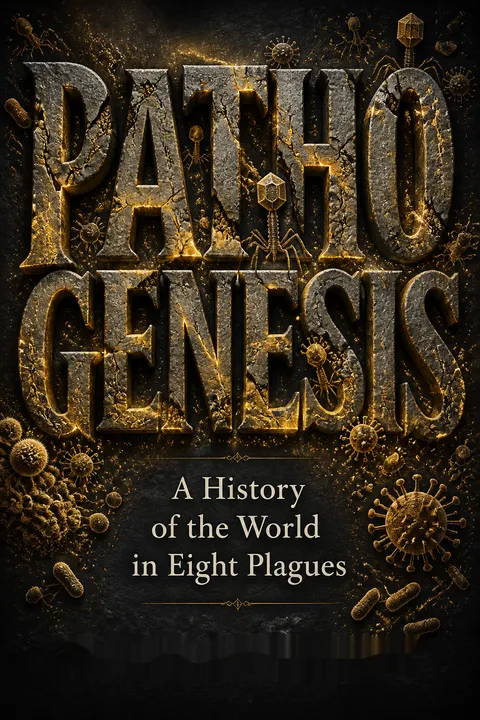
Pathogenesis receives generally positive reviews (3.94/5), with many readers praising its compelling thesis that microbes have shaped human history across eight distinct historical periods. Admirers highlight its accessibility, thorough research, and thought-provoking perspectives on disease's role in civilizational shifts. Critics raise concerns about the author's political bias, excessive Eurocentrism, superficial treatment of some topics, and controversial praise of China's COVID-19 response. Some readers wanted more biological detail, while others felt the historical narrative overshadowed pathogen-specific content.
People Also Read



Download PDF
Download EPUB
.epub digital book format is ideal for reading ebooks on phones, tablets, and e-readers.








































