


Plot Summary
Prologue
A young Halley1 crouches in her family's garage, cradling an injured bunny she found in the driveway, humming to calm its trembling. Her father6 discovers the mess — blood on the concrete — and drags her to the den for ten lashes with his leather belt. He makes her count each strike aloud. Her mother7 sleeps through it, a gin bottle clutched to her chest.
That night, banished to bed without supper, Halley1 smells cooked meat from the kitchen. Her father's6 message is merciless: the rabbit she loved became dinner. He tells her she was never good at doing hard things. She believes him. This cruelty becomes the bedrock of her self-doubt — and the wound that will take years, and one extraordinary love, to heal.
The Girl in the Lake
Halley,1 seventeen but claiming twenty-one, stands ankle-deep in a lake behind a house party when a man in a Soundgarden shirt approaches. Reed,2 thirty-four and searching for his runaway daughter, sits on the sand across from her.
They talk about music, fleeting moments she calls blips, and the hollowness she carries beneath her bravado. The connection is magnetic — they browse CDs at the party, play rock-paper-scissors over an Oasis album, and nearly combust on a borrowed bed.
When Reed2 invites her home, she agrees without hesitation. But her neighbor screams Halley's1 real name and age across the living room. Reed2 goes ashen. He drops the CD, storms through the front door without a word, and leaves her rooted in place with a truth she cannot take back.
Christmas Eve, Aisle Seven
Six months later, Halley1 collides with Reed2 in a grocery store parking lot on Christmas Eve. She's clutching a fifty-dollar tip and a desperate wish to cook her first holiday dinner. He notices the bruise on her jaw — her father's6 handiwork — but she deflects with a staircase lie.
They shop together, filling her cart with perogies and fixings while his stays empty. He tries to pay for her groceries; she wins the dispute through rock-paper-scissors. She buys him holiday-themed Rice Krispies she caught him eyeing.
Wonderwall plays overhead as they part in the snow. That night, alone with cold perogies and a sleeping, drunk mother,7 Halley1 discovers a hundred-dollar bill Reed2 slipped into her coat pocket — the only Christmas gift she receives.
Broken Glass, New Home
Halley's father6 catches her with a hickey and backhands her into a glass coffee table, shattering it and her left arm. She staggers through a January blizzard to the doorstep of her school friend Tara,3 whose warm home and golden retriever, Ladybug,10 have been her only refuge.
Tara's mother, Whitney4 — a social worker — rushes Halley1 to the hospital and vows to keep her safe. Halley's own mother7 arrives with glazed eyes and limp indifference, signing off on the arrangement without a fight. She tells Halley1 to stay with the Stephens family, then leaves.
No hug, no backward glance. The message is merciless: she does not want her daughter. Halley1 moves in permanently, trading a house of violence for one decorated in blue and filled with laughter — setting the stage for a collision she cannot foresee.
Tara's Father Walks In
Whitney4 invites Reed2 over for a family dinner, eager for Halley1 to finally meet Tara's father.2 Reed2 freezes in the kitchen doorway. The girl in the Gin Blossoms tee, now stirring marinara at the stove, is the same girl whose mouth he tasted at a party. They lock eyes for one catastrophic beat. Reed2 manages a strangled greeting; Halley1 turns back to the stove, already resigned.
They agree to bury their history. While doing dishes, Reed2 makes Halley1 promise to keep everything secret for Tara's3 sake. He signs her pink cast with a Sharpie, telling himself it will be the only claim she ever has on him. But Halley1 has already made a devastating discovery: the Beanie Baby Reed2 bought at Christmas wasn't for a girlfriend — it was for Tara.3
Train Me to Fight
Months of loaded glances, a shoulder massage that nearly unravels them, and a video game gift Reed2 tries to refuse have tightened the wire to snapping. When Halley's1 date whispers a nickname her father6 used, she spirals into a full panic attack in a downtown alley.
Reed,2 nearby with his brother Radley,8 finds her clawing at her own throat, hyperventilating. He drops to his knees, takes her hands, and coaches her through breathing exercises from his paramedic training.
Weeks later, Halley1 shows up at his apartment and begs him to train her in self-defense. She never wants to feel helpless again. Reed2 knows the proximity will be dangerous — he can see the warning signs flashing — but her plea is rooted in survival, not seduction, and he cannot refuse.
Two Fingers on His Lips
Over months of training, their bodies have learned each other's rhythms — every dodge, grapple, and pin charged with suppressed desire. On Christmas morning, Reed2 tends Halley's1 wounds after a running fall, his hands tracing her belt scars while she traces his knife scar, until his palm cups her breast and they both stop breathing.
He flees. Training resumes, but the tension only compounds. Then, during a 2 AM sparring session at his apartment, Reed2 pins Halley1 and confesses what he planned the night they met — he would have tasted her before they reached his bedroom.
Halley1 reaches into her own underwear and presses glistening fingers to his parted lips. He takes them into his mouth. Then reality detonates. Reed2 locks himself in his bedroom and cancels all future sessions.
Reed's Fists Speak First
At a family outing to a roller rink, Halley1 skates outside and crashes directly into her father6 — recently released from prison on good behavior. Terror erases every lesson Reed2 taught her. She cannot move, cannot speak.
Reed2 finds her ashen and shaking on the sidewalk, reads the situation in a single glance, and storms past her. His fist connects with her father's6 jaw before anyone can intervene. The beating is swift and calculated — a self-defense expert dismantling a bully with precision.
Whitney4 is livid, screaming that his actions were barbaric and unprovoked. But Reed2 holds firm: that man is a permanent threat. He calls Halley1 and Tara3 his girls, and Tara,3 eavesdropping from the staircase, interprets the slip as nothing more than fatherly love.
Save the Last Dance
On prom night, Halley1 ends up at a house party instead of the dance. When a classmate grabs her arm, her training reflexes fire and she drops him with a knee strike. Shaken, she calls Reed2 for a ride. He parks by the lake where they first met, takes her hand, and holds it — the most deliberate gesture of intimacy he has ever permitted. They kiss, deep and desperate.
He produces a cassette of Harry Nilsson's cover of Save the Last Dance for Me. They sway together in the sand under a canopy of stars, her cheek pressed to his chest, his lips in her hair. Minutes later, driving home, a swerving car nearly kills them. Reed2 shields her as the truck spins. They survive by inches — and their remaining resistance does not.
The Training Mat
Reed2 brings Halley1 to his apartment instead of Whitney's4 house. Standing at the front door, every rational objection collapses under the weight of near-death and two years of restraint. He lifts her against the door and their mouths collide.
Clothes scatter across the living room. They have sex on the blue training mat where he once taught her to be strong — raw, consuming, and over far too quickly. Halley1 asks him to tell her this changes things. Reed2 closes his eyes. His silence is its own verdict.
She dresses, walks barefoot four miles home in the dark, and collapses crying in the front yard. Their summer affair begins in the aftermath — rough, urgent, avoiding eye contact — because tenderness would make the inevitable goodbye impossible to survive.
Morning Glories in Her Pocket
At a backyard barbecue, Reed2 drags Halley1 into the bathroom. They are together again — but this time he holds her gaze throughout, whispering that every moment with her hurts and every moment without her hurts worse. In the trembling aftermath, Halley1 murmurs the three words she cannot retract. The effect is instantaneous. Reed's2 expression shutters.
He refastens his belt in silence, then slips a sprig of blue morning glories — flowers that symbolize unrequited love — into her dress pocket before walking out. Days later, Whitney4 corners Reed2 in the kitchen. She tells him she can see what is happening, or about to happen. She warns him to think long and hard about their daughter.3 The walls are closing in from every direction.
A Thousand Miles Between
Reed2 summons Halley1 to his studio and delivers the verdict: he is moving back to Charleston. A thousand miles is the only distance that can keep them from destroying everyone they love. Halley1 is devastated — she argues, offers to leave instead. He tells her this proximity will annihilate them all. She fires back that loving him is the easiest thing she has ever done.
He does not flinch. That night at his apartment, they make love for the last time — slowly, tenderly, face to face. He tells her he loves her. She asks if he believes she can love again. Before walking out his door, she delivers her answer: as much as a girl can love the next best thing. The door clicks shut behind her like a period at the end of their story.
The Photo Behind the Photo
Before Reed2 can leave town, Tara3 stops by his apartment to swap a photo in a frame. Behind the picture of herself and her father,2 she finds a photograph of Halley1 — flushed, tangled in Reed's2 bed sheets. The truth detonates.
Tara3 accuses Reed2 of grooming her vulnerable best friend, comparing him to a predatory teacher who exploited her childhood friend back in Charleston — a trauma Tara3 has carried in silence for years. Halley1 desperately defends Reed,2 confessing that she pursued him and lied about her age.
But Reed2 makes a devastating choice: he absorbs all blame. He tells Tara3 he manipulated Halley,1 exploited her neediness, fabricated their connection to keep her in his bed. Every word is a lie designed to shield Halley1 from his daughter's3 wrath. The sacrifice shatters all three of them.
Hoppity Arrives by Mail
Halley1 moves to Charleston with Scotty.5 Before leaving Illinois, she pressed a handmade scrapbook into Tara's3 hands — years of photographs and memories — and asked her to try to understand. In South Carolina, she builds a photography business with a spirited woman named Monique9 while working at Reed's2 east-coast studio. She attempts to date Scotty5 but cannot manufacture the spark.
Then a padded envelope arrives with no return address. Inside: a blush-pink Beanie Baby bunny named Hoppity — a callback to the injured rabbit Halley1 tried to save as a child. Reed's2 accompanying letter thanks her for changing him and urges her to fight for her future with love. She grieves hard for one hour. Then she rises, dries her face, and begins again.
Hands in Public, Finally
Two years after their goodbye, Reed2 flies to Charleston for business and appears at the studio while Halley1 is flat on her back from a training mishap. He asks her to dinner — then corrects himself to a walk. On the beach, he takes her hand, and for the first time in their entire history, they hold hands in public.
They eat homemade perogies from a food truck, dance on the sand at sunset, and he tucks morning glories behind her ear. In a shadowed gazebo, intimacy finds them again — but only a whisper of what they both crave. He flies home the next day. Nothing is resolved. Their love has survived two years and a thousand miles, but the same wall stands immovable: Tara3 has not forgiven her father.2
The Note on Reed's Door
Two more years crawl past. Whitney4 arrives at Tara's3 apartment with the scrapbook Halley1 gave her before leaving — the one Tara3 shoved under her bed and never opened. Together, they flip through pages of photographs, doodles, and handwritten confessions.
Tara3 sees the candid of her father2 asleep with his arm around her, the prom night portrait, and finally — Reed2 on a park bench, looking toward the camera with the faintest smile, Halley's1 caption declaring he truly saw her. Something fractures open inside Tara.3
She drives to Reed's2 condo and tapes the photograph to his door with a handwritten note telling him she finally understands. It is not complete forgiveness — but it is the first brick pulled from the wall, and Reed2 sinks to the floor when he reads it, years of heartache dissolving like mist.
Same Side of the Waterline
Halley1 stands alone in the ocean on a Friday night — a ritual of solitary peace — when a familiar voice asks the question that started everything: is she lost? Reed2 is standing on the shore. He tells her he spent the day apartment-hunting in Charleston.
Tara3 gave her imperfect, incomplete, but real blessing. Halley1 cannot believe it. He walks into the water — crossing the barrier that has separated them since that first night at the lake, when she was in the water and he stayed on the sand.
He sits across from her, legs caging hers. She launches into his arms. He hums Wonderwall and asks her to dance. They sway together in the tide, on the same side of the waterline at last, the moon their only witness and the horizon finally, mercifully, wide open.
Epilogue
By 2005, Reed2 and Halley1 live in a bungalow near the Charleston shore with their two adopted children — twins rescued from a neglectful home. Ladybug,10 now thirteen and snow-muzzled, still greets visitors with her full-body shimmy. Tara3 visits twice a year, and Reed2 wears the hot-pink apron she once promised him as a joke. Whitney4 fills the house with laughter and wine.
When their son asks how his parents fell in love, Halley1 leans against Reed's2 chest, listens to his heartbeat — still her favorite song — and tells the boy she will explain when he is older. The girl who once sat alone in a cold lake, lost and loveless, has built a life brimming with the moments she always wanted to freeze: warm, bright, and finally hers to keep.
Analysis
Older interrogates whether love can be simultaneously genuine and transgressive — and whether the answer matters more to the people inside it or those watching from outside. The novel's central tension is not merely an age gap but a layered impossibility: Reed2 is his lover's best friend's father, her surrogate family's patriarch, and the first man to make her feel safe after a decade of abuse. The narrative refuses to simplify this into predation or pure romance, locating truth in the agonizing terrain where both interpretations hold partial validity.
Tara's3 reaction — branding her father2 a groomer — is the novel's most psychologically complex element. Her projection of past trauma onto Reed2 and Halley1 reveals how unprocessed guilt can weaponize vigilance, turning protective instinct into a prison for everyone involved. The story argues that moral frameworks, however well-intentioned, become destructive when applied rigidly across fundamentally different situations. Tara's3 journey toward forgiveness requires healing not just her relationship with her father2 but the original wound that distorted her perception.
Reed's2 lie — absorbing all blame to shield Halley1 — functions as the novel's thesis on sacrificial love. He destroys his reputation and his daughter's3 trust because he calculates that Halley,1 lacking any other support system, would not survive losing Tara.3 This cold mathematics in service of devotion is the story's most provocative emotional argument, raising the question of whether protecting someone from pain can itself become a form of harm.
Photography operates as both metaphor and mechanism. Halley's1 obsession with freezing fleeting moments reflects the hypervigilance of an abuse survivor who learned that good things vanish without warning. Her career transforms this survival instinct into art. Ultimately, it is photographs — assembled in the scrapbook — that achieve what dialogue cannot. In a story about the limits of spoken truth, the images speak loudest, proving that some realities can only be believed when they are seen.
Review Summary
Older received mixed reviews, with ratings ranging from 1 to 5 stars. Many readers praised the emotional depth, forbidden romance, and age gap elements, finding the story captivating and well-executed. However, some critics felt uncomfortable with the age difference and found the characters' behavior problematic. Positive reviews highlighted the author's writing style, character development, and ability to handle sensitive topics. Negative reviews cited pacing issues, repetitive dialogue, and concerns about the relationship dynamics. Overall, the book elicited strong reactions, both positive and negative.
People Also Read






Characters
Halley Foster
Abuse survivor finding loveHalley is a survivor whose attachment system was shattered by a sadistic father6 and an absent, alcoholic mother7. She compensates through hypervigilance, people-pleasing—cooking, cleaning, caregiving—and a philosophy centered on preserving fleeting moments she calls blips. Her attraction to Reed2 is rooted in the first genuine safety she has ever felt from a man, yet her tendency to reach for unavailable love echoes the emotional starvation of her childhood. Her father's6 declaration that she was never good at doing hard things becomes the engine of her growth, driving her toward self-defense training, photography, and ultimately, the courage to walk away from the man she loves so she can become whole on her own terms.
Reed Madsen
Tara's father, Halley's loveReed is defined by a paradox: he builds his career empowering others to fight, yet cannot fight for his own desires without harming the people he loves most. A former paramedic who survived a near-fatal stabbing, he channels trauma into purpose through self-defense instruction. His attraction to Halley1 horrifies him because it violates his self-image as a protector—particularly of his daughter3. Reed's deepest conflict lies between his role as Tara's3 father and his identity as Halley's1 partner. He defaults to emotional suppression, keeping encounters rough and fast to prevent intimacy from rooting. His willingness to be vilified—to absorb his daughter's3 hatred—reveals the self-sacrificial core beneath his stoic exterior.
Tara Stephens
Reed's daughter, Halley's best friendTara is the story's moral fulcrum—bright, loyal, and fiercely protective, but haunted by a past experience that left her hypervigilant about power dynamics between older men and younger women. This unprocessed guilt creates a psychological template that makes her unable to separate genuine love from exploitation. When confronted with her father's2 relationship, her reaction is rooted not in malice but in a deep-seated fear of repeating a past failure she has never forgiven herself for. Her journey requires not only accepting an uncomfortable truth about her family but also healing a wound she has carried silently for years—recognizing that protective instinct, born from guilt, can itself become destructive when applied rigidly to fundamentally different circumstances.
Whitney Stephens
Tara's mother, Halley's guardianWhitney is the story's quiet moral compass—a social worker who provides Halley1 the maternal love her birth mother7 could not. She carries her own burden: she once slept with Reed's brother Radley8, ending their relationship. This personal experience with betrayal and forgiveness gives her the empathy to see Reed2 and Halley's1 situation with nuance rather than condemnation, making her the essential bridge between warring factions of her fractured family.
Scotty
Trainee turned loyal friendScotty is Reed's2 training client turned Halley's1 closest friend—a young man scarred by a violent attack who rebuilds confidence through self-defense. He develops genuine romantic feelings for Halley1 that are never reciprocated, yet remains steadfastly loyal, even covering for her affair when asked. His patience and decency represent the safe, uncomplicated love Halley1 knows she should want but cannot force herself to feel.
Halley's Father
Abusive patriarchHalley's1 father is the story's specter of cruelty—a physically abusive alcoholic whose leather belt, mean words, and casual sadism define Halley's1 foundational trauma and every fear she must overcome.
Halley's Mother
Neglectful alcoholic parentA passive alcoholic who chose gin and self-preservation over her daughter1. Her refusal to intervene during beatings or fight for custody embodies the quiet devastation of parental abandonment.
Radley Madsen
Reed's estranged brotherReed's2 younger brother, a military man whose youthful affair with Whitney4 fractured the siblings' bond. His recklessness—including the drug debt that nearly killed Reed2—haunts both brothers.
Monique
Halley's photography partnerA vibrant, self-described nomad who runs a banquet hall. She becomes Halley's1 photography mentor and business partner in Charleston, representing the professional future Halley1 builds beyond Reed2.
Ladybug
The family's golden retrieverThe Stephens family's golden retriever, who gives Halley1 her first experience of unconditional love. Ladybug's blizzard disappearance becomes a crucible for Reed2 and Halley's1 deepening bond.
Plot Devices
The Waterline
Metaphor for their separationThe recurring image of Halley1 in the water and Reed2 on the sand represents the fundamental divide between them. When they first meet, she sits ankle-deep in a lake while he remains on shore. This physical separation mirrors their emotional and social impossibility—she is always reaching toward him from one element while he watches from another. The waterline reappears at the roller rink, Tara's3 beach birthday, and their Charleston reunion. Its resolution comes when Reed2 finally walks into the ocean, erasing the boundary for good. The device transforms from symbol of permanent distance into proof that barriers dissolve when both people choose to cross.
Rock Paper Scissors
Their private ritual of connectionWhat begins as a playful tiebreaker over an Oasis CD becomes the couple's private language throughout their relationship. They play it to settle who pays for groceries, whether Halley1 will chase her dreams, and who concedes in small domestic disputes. The game's randomness mirrors the uncontrollable nature of their attraction, while its intimacy—hands meeting, eyes locking—provides permitted physical contact in a relationship where touch is forbidden. Their tendency to match moves (both choosing scissors, again and again) suggests an alignment too deep for conscious choice. Each round functions simultaneously as negotiation, prayer, and dare.
Morning Glories
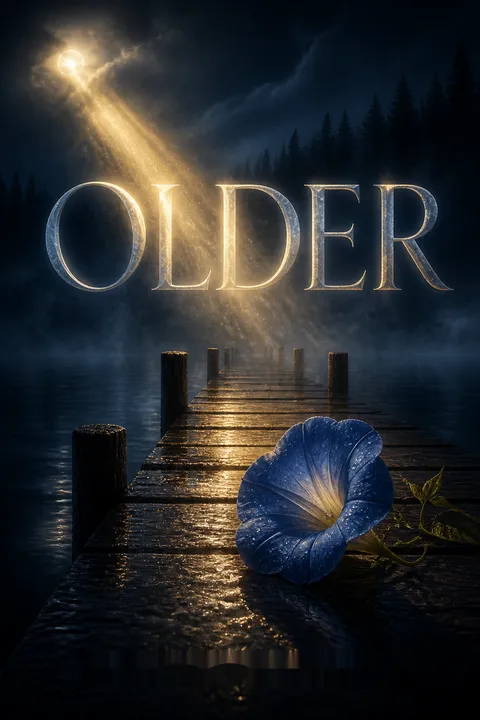
Reed's wordless love languageThe morning glory flower threads through the narrative as a coded message. Halley1 researches the symbolism after the Oasis album title and discovers they represent unrequited love—an irony she shares with Reed2, who deflates the romance by noting the name likely references drugs. Later, Reed2 slips morning glories into Halley's1 dress pocket after she confesses her love in the bathroom, and tucks them behind her ear during their Charleston beach walk years later. The flowers serve as Reed's2 wordless acknowledgment of feelings he cannot speak aloud—beautiful, temporary blooms that open in the morning and close by nightfall, much like their stolen moments together.
Photography and Blips
Halley's philosophy made visibleDuring their first conversation, Halley1 describes her fascination with life's blips—moments that seem insignificant but later become everything, like a paused movie frame catching someone mid-laugh. Reed2 suggests photography as the vehicle for capturing these moments, and the suggestion becomes Halley's1 career and identity. Her camera evolves from a disposable Kodak to a professional instrument, paralleling her transformation from passive victim to active author of her own story. Every photograph she takes is an act of defiance against the transience that abuse tried to teach her was inevitable. The device culminates when her photographs—assembled in a scrapbook—become the mechanism that finally communicates truth where words have failed.
The Scrapbook
Catalyst for forgivenessHalley1 gives Tara3 a handmade scrapbook on the day she leaves for Charleston, containing years of photographs arranged with captions and doodles—a visual testimony of their shared life and Halley's1 authentic love for Reed2. Tara3 shoves it under her bed, unable to face its contents. Two years later, Whitney4 sits with her daughter3 and opens it. The images accomplish what arguments, confessions, and time alone could not: they show Tara3 the genuine tenderness between her father2 and her best friend1, culminating in a park bench photograph with Halley's1 handwritten declaration of being truly seen. The scrapbook transforms frozen moments into living proof, becoming the bridge between estrangement and reconciliation.
FAQ
```markdown
Synopsis & Basic Details
What is Older about?
- A Forbidden Love Story: "Older" by Jennifer Hartmann explores the intense, complicated, and ultimately forbidden love story between Halley Foster, a young woman escaping a traumatic past, and Reed Madsen, an older man who is also the father of her best friend, Tara. The narrative traces their connection from Halley's late teens into her early twenties, highlighting the emotional and societal challenges they face.
- Healing from Trauma: At its heart, the novel is a profound journey of healing and resilience. Halley, a survivor of severe childhood abuse and neglect, finds solace and strength through her relationships with Reed, Tara, and Tara's mother, Whitney. The story delves into how she reclaims her sense of self, purpose, and worth despite her deep-seated trauma.
- The Cost of Secrets: The book intricately weaves themes of loyalty, betrayal, and the devastating consequences of secrets. The clandestine nature of Halley and Reed's relationship creates a ripple effect, impacting their bonds with Tara and Whitney, forcing them to confront difficult truths about love, family, and personal sacrifice.
Why should I read Older?
- Emotionally Charged Narrative: Readers should pick up "Older" for its raw, unflinching emotional depth. Jennifer Hartmann doesn't shy away from the messy realities of trauma, desire, and the complexities of human connection, offering a story that is both heartbreaking and ultimately hopeful.
- Deep Character Exploration: The novel excels in its psychological portrayal of characters, particularly Halley and Reed. Their internal struggles, motivations, and growth are meticulously detailed, inviting readers to empathize with their difficult choices and root for their hard-won happiness.
- Thought-Provoking Themes: Beyond the romance, "Older" tackles significant themes like the nature of consent, the impact of abuse, the power of chosen family, and the long road to forgiveness. It challenges readers to look beyond societal norms and consider the nuances of love in unconventional circumstances.
What is the background of Older?
- Contemporary Illinois Setting: The story is primarily set in northern Illinois, beginning in the mid-1990s and spanning into the early 2000s. This contemporary setting allows for relatable cultural touchstones like grunge music, roller rinks, and early internet chatrooms, grounding the intense emotional narrative in a familiar, nostalgic backdrop.
- Focus on Trauma and Recovery: The narrative is deeply informed by the psychological impact of childhood abuse, particularly domestic violence and neglect. Halley's journey reflects the non-linear process of healing, emphasizing the importance of safe spaces, supportive relationships, and self-empowerment in overcoming profound trauma.
- Exploration of Age-Gap Relationships: A central element of the story is the significant age difference between Halley and Reed. The novel explores the societal perceptions and moral dilemmas surrounding such relationships, particularly when one party is initially underage, forcing characters and readers alike to grapple with questions of ethics, maturity, and genuine connection.
What are the most memorable quotes in Older?
- "Life is like photography. You need the negatives to develop.": This quote, appearing early in the book, serves as a powerful thematic anchor. It foreshadows Halley's journey, suggesting that her painful past (the "negatives") is essential for her growth and eventual flourishing, much like a photograph needs its negatives to reveal its full image. It encapsulates the novel's message of finding beauty and strength through adversity.
- "You're not broken. When something breaks you, you pick up the pieces and put yourself back together. Maybe it's with stitches and glue sticks, but it's enough to keep going. Nobody needs to stay broken.": Reed delivers this profound statement to Halley during a moment of extreme vulnerability. It's a pivotal quote that defines Halley's arc, emphasizing resilience and the active process of healing. It highlights Reed's role as a protector and mentor, instilling in Halley the belief that her scars are not signs of weakness but testaments to her strength.
- "I love you fiercely, wholly, selfishly and unselfishly, more than I ever fucking should. I love everything about you... Now…tell me how that changes anything.": This raw confession from Reed encapsulates the central conflict of the novel. It reveals the depth of his forbidden love for Halley while simultaneously acknowledging the insurmountable obstacles they face. The heartbreaking question, "how that changes anything," underscores the tragic reality that love alone is often not enough to overcome societal judgment and personal sacrifice.
What writing style, narrative choices, and literary techniques does Jennifer Hartmann use?
- First-Person Dual Perspective: Hartmann employs a first-person dual perspective, alternating between Halley and Reed's viewpoints. This choice allows for deep immersion into the psychological states and emotional turmoil of both protagonists, providing a nuanced understanding of their individual struggles and their complex connection. It builds empathy and reveals the internal conflicts that drive their actions.
- Non-Linear Narrative with Time Jumps: The story utilizes a non-linear structure with significant time jumps, particularly in the early chapters. This technique mirrors the fragmented nature of memory and trauma, gradually revealing Halley's past and the evolution of her relationship with Reed. It creates suspense and allows readers to piece together the full emotional landscape of their journey.
- Symbolism and Metaphor: Hartmann frequently uses symbolism and metaphor to enrich the narrative. Recurring motifs like photography ("blips," "negatives to develop"), water (the lake, the ocean, drowning), and physical scars serve as powerful representations of healing, memory, and emotional depth. For example, Halley's photography is not just a hobby but a way for her to "immortalize" moments and find meaning in her chaotic life.
Hidden Details & Subtle Connections
What are some minor details that add significant meaning?
- The "Comet" Nickname and its Evolution: Reed's nickname for Halley, "Comet," initially seems a simple reference to her name. However, it subtly symbolizes her transient, often chaotic existence ("soared past his lips. A bright, cosmic phenomenon lighting up my insides and colliding with my heart" - Chapter 2) and her eventual journey of self-discovery. By the end, when Reed whispers "Comet" during their reunion, it signifies her return to his orbit, no longer lost but a guiding light. This detail highlights Halley's journey from feeling like a "waste of space" to a celestial body.
- The Significance of the Rice Krispies: The seemingly trivial box of holiday-themed Rice Krispies that Halley buys for Reed on Christmas Eve (Chapter 3) and later finds in his apartment (Chapter 26) is a subtle marker of their enduring, unspoken connection. It's a small, thoughtful gesture that Reed remembers and cherishes, symbolizing the quiet acts of care that define their bond outside the dramatic moments. It also subtly links to themes of childhood and simple comforts, contrasting with the complexity of their adult relationship.
- The "Morning Glory" Flower and Song: Halley's discovery of the morning glory flower's symbolism (unrequited love) and Reed's cynical correction (a drug reference) in Chapter 6 and 7 is a poignant detail. It foreshadows the painful, unacknowledged nature of their early love and the harsh realities that temper Halley's romantic idealism. The later Oasis album, "What's the Story, Morning Glory?", becomes a recurring motif, representing their shared, yet often misunderstood, emotional landscape.
What are some subtle foreshadowing and callbacks?
- Halley's Early Desire for "Strings": In Chapter 1, when Reed offers Halley a ride, she thinks, "Then again…maybe I wanted strings. Something to tether me. To anchor my floundering heart." This seemingly throwaway line subtly foreshadows her deep-seated need for connection and stability, which later draws her into the complicated relationship with Reed, seeking an anchor in a chaotic life. It hints at her vulnerability and longing for a lasting bond.
- Reed's Scar and Halley's Bruises as Parallel Wounds: The revelation of Reed's stab wound scar in Chapter 13, mirroring Halley's belt-lash scars, is a powerful callback to their shared experience of violence and trauma. Reed explicitly states, "A knife. A belt. Different weapons, same wounds." This connection, hinted at earlier by Halley's instinctive flinching, establishes a deep, unspoken understanding between them, suggesting their bond is rooted in shared pain and resilience, not just forbidden attraction.
- The "Save the Last Dance for Me" Song: Halley mentions this song in Chapter 2, and Reed notes a "really good cover of that song by Harry Nilsson." This seemingly innocent exchange becomes a poignant callback in Chapter 21 when Reed plays that very cover for Halley, inviting her to dance after their Prom night confession. It symbolizes their longing for a "last dance" before their inevitable separation, a final, cherished moment of intimacy that transcends their difficult reality.
What are some unexpected character connections?
- Whitney's Past Betrayal and its Echo in Tara's Reaction: The revelation in Chapter 13 that Whitney "slept with his brother" (Radley) and "betrayed his trust" is an unexpected connection that profoundly influences Tara's later reaction to Halley and Reed. Whitney's regret ("trying to catch smoke with your bare hands") and her subsequent overprotective stance against "wrong" relationships directly inform Tara's belief that Reed "groomed" Halley. This past trauma in Whitney's life creates a powerful, albeit misguided, parallel for Tara, making her judgment of Reed and Halley even more rigid.
- Scotty's Unrequited Love and his Role as Confidant: Scotty's quiet, steadfast affection for Halley, which is subtly hinted at through his actions and later confirmed by Halley's internal thoughts, creates an unexpected emotional triangle. His willingness to cover for Halley's relationship with Reed, despite his own feelings, highlights his deep loyalty and selflessness. This connection provides Halley with a safe space to confide in, even as it underscores the complexity and pain of her situation.
- Ladybug as a Bridge Between Halley and Reed: Ladybug, the family dog, serves as an unexpected, innocent connection between Halley and Reed. From Halley's initial bond with the dog (Chapter 4) to Reed's microchip registration (Chapter 18) and his later photograph of Ladybug and Nico (Chapter 35), the dog consistently brings them together. Ladybug's unconditional love and presence often diffuse tension and provide comfort, symbolizing the pure, uncomplicated affection that contrasts with the human drama.
Who are the most significant supporting characters?
- Whitney Stephens: The Unsung Moral Compass: Whitney, Tara's mother, is far more than a surrogate parent; she's the story's moral anchor and a testament to the power of forgiveness and empathy. Her own past mistakes (sleeping with Reed's brother, Chapter 13) give her a unique perspective on complex relationships and betrayal, allowing her to guide Tara and eventually accept Halley and Reed's love. Her role as a social worker further emphasizes her capacity for understanding trauma and offering unconditional support, making her instrumental in Halley's healing and the family's eventual reconciliation.
- Scotty: The Steadfast, Selfless Friend: Scotty evolves from a self-defense student to Halley's closest confidant and a symbol of healthy, platonic love. His unrequited feelings for Halley are handled with remarkable maturity, as he consistently prioritizes her well-being and happiness, even covering for her relationship with Reed (Chapter 23). Scotty represents the possibility of genuine friendship and support outside of romantic entanglement, providing Halley with a safe harbor and demonstrating that not all love needs to be possessive or destructive.
- Ladybug: The Embodiment of Unconditional Love: Ladybug, the golden retriever, is a constant, non-judgmental source of comfort for Halley. Her presence is significant in moments of Halley's deepest despair (e.g., after her father's abuse, Chapter 4; during her illness, Chapter 6). Ladybug symbolizes the healing power of simple, unconditional affection and the importance of animal companionship in trauma recovery. Her eventual reunion with Halley in the epilogue underscores the theme that true connections, even non-human ones, find their way back.
Psychological, Emotional, & Relational Analysis
What are some unspoken motivations of the characters?
- Halley's Pursuit of Reed as a Quest for Control and Worth: Beyond romantic attraction, Halley's relentless pursuit of Reed is an unspoken motivation rooted in her traumatic past. Her father's constant degradation ("You've never been good at doing hard things," "worthless nobody") instilled a deep need to prove her worth and exert control over her life. Reed, as a self-defense instructor and a man who "sees" her strength, represents the antithesis of her father. Her desire for him is intertwined with a desperate need for validation, safety, and the power to choose her own path, even if it's a forbidden one.
- Reed's Self-Sabotage as a Form of Protection: Reed's repeated attempts to push Halley away and his eventual self-sacrificing lie to Tara (Chapter 31) are driven by an unspoken, deeply ingrained protective instinct. Haunted by his own past trauma (the stab wound, Chapter 13) and the pain of his broken family, he fears repeating destructive patterns. His self-sabotage is a desperate attempt to protect Halley from the societal judgment and emotional fallout of their relationship, and to shield Tara from further pain, even at the cost of his own happiness and reputation.
- Tara's Fierce Loyalty and Fear of Betrayal: Tara's extreme reaction to Halley and Reed's relationship is motivated by an unspoken, deep-seated fear of betrayal, stemming from her past experience with Mr. Baker and Stacy (Chapter 33). Her fierce loyalty to Halley is genuine, but it's colored by her own unresolved trauma, leading her to project the "grooming" narrative onto her father. Her motivation is not malice, but a desperate need to protect her best friend from what she perceives as a dangerous, manipulative situation, driven by her inability to reconcile her father's actions with her idealized image of him.
What psychological complexities do the characters exhibit?
- Halley's Trauma-Informed Attachment and Resilience: Halley exhibits complex psychological responses to her abuse, including a tendency towards trauma-informed attachment, where she seeks intense connection and validation from figures like Reed. Her initial lie about her age (Chapter 1) and her desperate need for Reed's attention stem from a deep-seated fear of abandonment and a longing for unconditional love. Simultaneously, she displays remarkable resilience, channeling her pain into strength through self-defense and photography, actively working to rewrite her narrative and overcome the "helpless, awful feeling" (Chapter 12) that once defined her.
- Reed's Protector Complex and Moral Conflict: Reed's character is marked by a strong protector complex, stemming from his own past trauma (the knife attack, Chapter 13) and his role as a father and self-defense instructor. This complex drives his initial care for Halley, but it clashes with his forbidden attraction, creating intense moral conflict. He struggles with the psychological burden of his desire, viewing it as "sick" and "twisted" (Chapter 29) due to the age gap and his relationship with Tara. His decision to sacrifice his reputation for Halley's protection (Chapter 31) highlights the depth of his internal struggle between personal desire and ethical responsibility.
- Tara's Projection and Idealization of Family: Tara's psychological complexity lies in her tendency to idealize her family and project past traumas onto new situations. Her unwavering belief in her parents' potential reconciliation (Chapter 9) and her inability to accept Reed's love for Halley are rooted in her own unresolved pain from the Stacy incident (Chapter 33). She projects the "groomer" narrative onto her father, struggling to reconcile his actions with her idealized image of him. This psychological defense mechanism, while understandable, initially prevents her from seeing the truth and causes significant emotional damage to those she loves.
What are the major emotional turning points?
- Halley's Panic Attack in the Alleyway (Chapter 12): This scene is a major emotional turning point for Halley, as it forces her to confront the lingering, debilitating effects of her trauma. Her breakdown, triggered by a seemingly innocuous word ("lamb"), reveals the depth of her psychological wounds. Reed's compassionate response—holding her, soothing her, and validating her pain—solidifies their emotional bond and marks a shift in Halley's journey from passive victim to active survivor, inspiring her to seek self-defense training.
- Reed's Self-Sacrificing Lie to Tara (Chapter 31): This is a devastating emotional turning point for Reed, where he chooses to sacrifice his relationship with Tara and his reputation to protect Halley. His confession, "I did this. I took advantage of Halley when she was vulnerable, and I hate myself for it," is a profound act of love and self-immolation. It highlights the depth of his commitment to Halley's well-being, even at the cost of his own, and underscores the tragic consequences of their forbidden love.
- Tara's Discovery of the Scrapbook (Chapter 38): The moment Tara finally looks through Halley's scrapbook is a crucial emotional turning point for her. The photographs, particularly the one of Reed looking at Halley with love ("He sees me"), force Tara to confront the truth of their connection. This visual evidence, combined with Whitney's wisdom, allows Tara to move past her anger and projection, initiating her journey toward forgiveness and understanding, and ultimately paving the way for reconciliation.
How do relationship dynamics evolve?
- Halley and Reed: From Forbidden Spark to Enduring Love: Their relationship dynamically evolves from an initial, dangerous spark fueled by Halley's lie and Reed's protective instincts (Chapter 1) to a deep, enduring love forged through shared trauma and mutual respect. The dynamic shifts from a mentor-student relationship (self-defense training, Chapter 8) to a clandestine affair (Chapter 22, 26), and finally, after years of separation and growth, to an open, accepted partnership (Epilogue). This evolution highlights the power of their connection to transcend societal barriers and personal sacrifices.
- Halley and Tara: From Found Sisters to Fractured Friendship and Back: The dynamic between Halley and Tara transforms from a bond of found sisterhood and unwavering loyalty (Chapter 4) to one of profound betrayal and anger (Chapter 30). Tara's perception of Halley as a "victim" and Reed as a "groomer" creates a deep rift. However, through Halley's scrapbook and Tara's own journey of understanding and forgiveness, their friendship eventually heals, evolving into a mature, resilient bond that acknowledges past pain but embraces future connection (Epilogue).
- Reed and Tara: From Loving Father-Daughter to Estrangement and Reconciliation: Reed and Tara's relationship undergoes a dramatic shift from a close, loving father-daughter dynamic (Chapter 1, 5) to one of estrangement and deep hurt after the truth is revealed (Chapter 31). Tara's accusation of "grooming" shatters Reed. Their dynamic then enters a period of painful distance and slow, arduous reconciliation, driven by Whitney's mediation and Tara's eventual understanding. By the epilogue, their bond is restored, albeit changed, reflecting the hard-won nature of forgiveness and the enduring power of familial love.
Interpretation & Debate
Which parts of the story remain ambiguous or open-ended?
- The Full Extent of Halley's Mother's Redemption: While Halley eventually acknowledges that her mother "missed out on me" (Chapter 33), the narrative doesn't fully explore her mother's journey or potential for redemption. Her absence remains a poignant, unresolved wound for Halley, and readers are left to wonder if she ever truly confronted her addiction or sought to reconnect. This ambiguity highlights the lasting impact of parental neglect and the reality that not all relationships find closure.
- The Long-Term Societal Acceptance of Halley and Reed's Relationship: Although
About the Author
Other books by Jennifer Hartmann








Download PDF
Download EPUB
.epub digital book format is ideal for reading ebooks on phones, tablets, and e-readers.








































