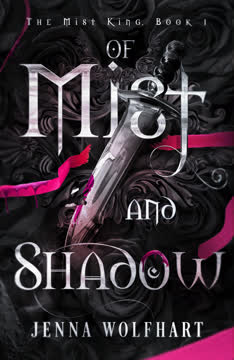
Plot Summary
Chasm Whispers and Rebellion Sparks
Tessa Baran's life is predestined—born to be a mortal bride for the fae king Oberon, her only value lies in servitude, silence, and sacrifice. But rebellion simmers in her heart. With friends Val and Nellie at her side, Tessa defies Oberon, venturing illegally into the chasm to mine forbidden gemstones. These stones hold whispered power and are coveted by both rebels and rulers. When a shadowfiend attacks, Oberon saves and punishes her rather than killing her outright, an act both of cruelty and intrigue. This first dance with death and defiance cracks open a fate Tessa neither wants nor understands, planting seeds of resentment, courage, and the first fraying of chains that bind her world.
Oberon's Chains, Tessa's Defiance
Tessa's confrontation with Oberon is fierce and humiliating. Bearing the stigma of her father's past rebellion, she's threatened, shaken, and exposed as both vulnerable and intractable. Yet, instead of public punishment, Oberon "sets her free"—a calculated move meant to inspire unease and dread. Tessa's spirit, though battered, is far from broken; her identity as daughter of a traitor becomes both curse and shield. The dynamics of power—who holds it, how it's used, and against whom—are laid bare, as Tessa's loyalty to her friends and family faces the brute force of fae control, setting her on a path where resistance is survival.
Kindled Bonds and Village Shadows
Return to Teine offers Tessa only fleeting comfort. Val and Nellie are her lifelines, but the shadow of Oberon's judgment looms. Bonds of sisterhood and friendship mingle with the terrors of the fae's wrath, illustrated vividly by flashbacks of torture, executions, and threats. Night brings respite in the form of dream-communication with the mysterious captain—later revealed as the Mist King Kalen—whose rebel cause is entwined with Tessa's stolen efforts. Here, dreams serve as haven, but darkness lurks ever closer, the boundaries between hope, loyalty, and rebellion blurring with each passing day.
King's Games and Ancient Promises
As Oberon's Festival of Light approaches—a cruel pageant where mortal girls are paraded for selection—Tessa's mother reveals painful truths. The hereditary nature of their sacrifices is unmasked: birth and marriage dictated by Oberon's will, not human choice. Tales of past brides, betrayals, and punishments illustrate the ongoing cost to hope and change in this magical, oppressive world. Tessa's resentment turns to burning purpose, driven by the knowledge that even her existence was never freely chosen, but she steels herself to fight for dignity and love, refusing to let her people's story remain one of silence.
Festival of Light—Fates Chosen
Teine swells with anxiety and tragic hope as the villagers prepare their daughters for the Festival of Light, each vying for Oberon's notice in the naive belief that queens suffer less than peasants. Tessa dreads the spectacle, but cannot evade Oberon's vengeful spotlight. Publicly chosen as the king's next bride, Tessa is made a living trophy—a defiant woman forced to become symbol of obedience. Crushed by the knowledge that her punishment is a tool to reinforce fae power, she is shorn from family and freedom as Oberon carts her to the golden prison of Albyria.
Crimson Court, Shattered Freedom
Life in Albyria shatters Tessa's autonomy. Fae customs are a toxic combination of pageantry, cruelty, and control. Poisoned food, haunting rituals, and the degradation of mortals into property strip away Tessa's remaining illusions. Here, queens are bred, marked, and then discarded. Allies are few—her only brief sympathy is from her human maidservant, Raven, whom she tries to rescue with tragic results. Tessa's effort at rebellion within the castle—an attempted assassination of Oberon at the Eversun Ball—ends with Raven's death and, worse, her sister's head thrown at her feet as punishment. All hope seems lost, and she is remade by grief and righteous fury.
Poisoned Silence, Queen's Trials
Tessa's resistance is battered, but not broken. The castle's traumatizing routines — baths, tattoos, and scorn from the reigning mortal queen — attempt to grind her spirit into dust. Yet her anger transforms into a cold resolve, especially as she learns how the fae manipulate and dehumanize every mortal connection. Tessa endures the queen's abuse and the slow violence of isolation, but each blow only sharpens her sense of justice and self. Her time among the fae has burnished her core: their attempts to make her silent and pliable only ensure she will someday be their undoing.
Ballads, Betrayal and Bloodshed
Her public defiance at the Eversun Ball results in an avalanche of violence. Oberon's retribution is theatrical and savage: Raven is executed, Tessa humiliated and physically assaulted, a public statement to all mortals who might consider rebellion. The mingling of lust and cruelty at fae revels underscores the kingdom's corruption. This trauma, and the loss Tessa experiences, finally severs any illusion that accommodation with fae power is possible. It is here, in the depths of loss, that Tessa's internal transformation is complete: she will never submit—not for family, not for peace, not for anyone. Now, hate and the need for vengeance drive her forward.
Through Mists, Into Shadow
As Oberon prepares for the wedding, Tessa's allies, led by the fae guard Morgan, risk everything to help her escape. Betrayed, imprisoned, and numbed with poison, Tessa is smuggled out during the chaos of a riot. She races across the Bridge to Death—pursued by wrathful fae—into the uncharted, monster-haunted mists. Kalen, the Mist King, captures her, and her first taste of freedom is in a cell. Slowly, new alliances form among the rebel shadow fae; Tessa's exhaustion and anger are met with empathy, banter, and an unexpected sense of home. A new world—sinister yet somehow more honest—opens before her.
Mist King's Prophecy Unveiled
Tessa's stay in the Mist King's realm brings crucial revelations. She learns Oberon is not as powerful as he pretends: his magic limited, his immortality borrowed, his kingdom teetering. Kalen, haunted by a tragic past and his connection to the gods, emerges as both protector and fellow victim of ancient wars. Their alliance transforms from hostage-keeper to uneasy equals. Together, they swear an enchanted vow: she will wield the Mortal Blade to assassinate Oberon; he promises to return her people to freedom and safety. Their destinies are entwined, the boundaries between love, hatred, and duty ever more blurred.
Oaths Forged, Vengeance Accepted
In the company of Kalen and his band, Tessa journeys through the shadowlands, facing both external and internal monsters. The world is perilous: pookas, storms, haunted caves, and other fae kingdoms with their own schemes test their unity and skill. Tessa's frail humanity is battered but endures, rescued repeatedly by Kalen's power and their growing connection. Through this hardship, ideas of vengeance, justice, and freedom grow sharper. Tessa learns the power of perspective and the agony of choice. Bonds with Kalen deepen into a complicated intimacy, punctuated by training, banter, and slow mutual healing.
Into the Wild, Darkness Beckons
Amid snakes, storms, and attacks, Tessa transforms. Her mortality—once weakness—is the very thing that enables her to carry the Mortal Blade and train for Oberon's death. Kalen's backstory as a tragic ruler willing to become the villain for his people comes to the fore. Moments of vulnerability, kindness, and pain chip away at their mutual distrust. Dreams and reality blur, old wounds are revealed, and the memory of both Oberon's and Kalen's cruelties leave indelible scars. Yet, with each trial, the alliance between mortal and fae, hate and longing, grows into something that could topple kingdoms—or destroy them both.
Snakebite and Shadowfiend Terror
Their journey almost ends as Tessa is poisoned by a beithir, then attacked by a horde of shadowfiends. Kalen's willingness to risk everything (even his control) to save her battered mortal body reveals the magnitude of his devotion. There is little rest, and the wild is a crucible in which both their skills and emotions are remade. Old wounds—Niamh's scar from Oberon, Tessa's own back branded by royalty—are swapped like war stories, each fueling the cause and deepening the connection. In the hardship of survival, love and vulnerability replace shame and fear.
Sacred Storm and Secret Plotting
As they finally approach the rebel haven, an attack by the storm fae leaves their party battered and their friend Toryn nearly dead, forcing Kalen into an explosive and terrifying demonstration of power. The cost of magic—on the world, on relationships, on conscience—is foregrounded. Amidst the brewing war, Tessa and Kalen's trust is stress-tested, set against conspiracies involving Morgan (the light fae spy), the origin of the Mortal Blade, and the dangerous lure of godlike power. Treachery from all sides becomes clear: survival requires risk, cunning, and often the ability to betray before you are betrayed.
Starless Night, Broken Hearts
Safe in Dubnos, Tessa discovers Val and her mother are not there—the letter was a trick by their enemies. Shaken by this betrayal and exhaustion, she at last opens herself to comfort. Kalen and Tessa fall into each other's arms—an act of passion, pain, and mutual healing—only to have the past and impending future threaten to tear them apart once more. Doubt and distrust resurface. Despite empathy and desire, these would-be allies are driven to solitude and uncertainty; the torch of hope is burning low.
Dreamscapes, Dark Bargains
The god of death, imprisoned within the castle at Itchen, seduces Tessa with the offer to resurrect her lost sister. Wrestling heartbreak and responsibility, Tessa refuses the god's bargain, sacrificing her own deepest wish to prevent chaos from being unleashed on the world. This act of moral clarity and self-denial is the climax of her internal arc. It strengthens her for what must come: a final assault, and the knowledge that her fate is neither as pawn nor as queen, but as the wielder of a new power—her own agency.
Sacrifice and the Mortal Blade
Together, Tessa and Kalen face new betrayals: as they return to Dubnos, the truth about Morgan's letter, the storm fae's interest in Tessa as Oberon's power source, and the revelation of blade's true twin serves to upend all their beliefs. Trust is again shattered; Tessa learns the Mist King—or Kalen—has withheld critical truths. Betrayed and burning with pain, she decides she cannot merely defeat a tyrant but must tear down all the old powers that have corrupted her world. Her journey drives her to commit the unthinkable—using the Mortal Blade on someone she loves.
Kingdoms Fall, Power Unbound
Tessa braves chasms and monsters, returning to Albyria to kill Oberon and free her family. Each step is hard-won, the cost of rebellion higher than she ever imagined: broken bones, blood, the loss of friends (even magical allies like Midnight), and the crushing realization that no blade can fix what is fundamentally broken in a kingdom built on lies. Facing Oberon in his private quarters, Tessa's courage is tested to its existential limit. Ultimately, he falls—not by magic alone, but by the righteous fury and resilience of a soul who will not be broken, a mortal woman made immortal by the legacy of her fight. The story ends not on triumph, but on the knife-edge of history, as the cost, and promise, of a better world is left for the future to determine.
Analysis
"Of Mist and Shadow" is a ferocious reimagining of the chosen-one fantasy, subverting the tropes of fae romance and high court intrigue by centering the cost of both love and defiance. Wolfhart's world is a study in economies of power: the mundane (who gets to choose whom to love, when to speak), the magical (who holds the blade, the prophecy, the vow), and the communal (who gets to survive tomorrow's dawn). At its core, the novel interrogates not just tyranny, but consent—every queen's silence, every rebel's secret, every monster's justification is about reclaiming the right to say yes or no. The book's enduring power lies in its obsessive focus on trauma and recovery: Tessa's journey from pawn to self-willed agent is steeped in grief, betrayal, and terror, but she reclaims those wounds as the very source of her strength. Wolfhart suggests that there is no pure, unmarked revolution: every victory comes with scars, and leaping into the chasm—risking everything for something better—is the most human act of all. The lessons are brutal but redemptive: no one can carry you to freedom; you must, again and again, choose to climb.
Review Summary
Reviews for Of Mist and Shadow are sharply divided. Positive readers praise its engaging world-building, compelling fae lore, fast pacing, and satisfying tropes like enemies-to-lovers and one bed. Critics, however, frequently compare it unfavorably to ACOTAR and From Blood and Ash, calling it derivative and underdeveloped. The main character Tessa draws significant criticism for being one-dimensional, frustrating, and immature. Many readers DNF'd the book. The cliffhanger ending generated strong reactions, with fans eagerly anticipating the sequel while detractors remained uninterested.
People Also Read


Characters
Tessa Baran
Tessa is both an everywoman and a singular figure—an ordinary mortal whose circumstances are anything but. Born to be sacrificed, her life is shaped by the constellations of fae power, prophecy, and gendered oppression. In relationship to family (sister Nellie, mother Ula), friends (Val), enemies (Oberon), and complicated allies (Kalen), Tessa's psychology is marked by defiance, deep loyalty, and ever-present wounds. Her arc bends from reluctant pawn to rebellious assassin—a human who learns to wield the tools of magic, power, and narrative to reclaim agency. Scarred but unbroken, she is defined by her unwillingness to let the cruelty of her world dictate the worth of her heart.
King Oberon
Oberon embodies the seductive brutality of power. He is cruel, vain, obsessed with legacy and public demonstration of authority—his violence choreographed as spectacle. Though he abuses mortals, he is also haunted by his own diminishing magic and the infertility of his people, driving his desperate bargains. Psychoanalytically, his need for control is both personal and existential—every defiance is a wound, every sacrifice insufficient. His downfall is not hubris alone, but the inability to see mortals as truly human, thus stoking the rebellion that ends his reign.
Kalen Denare (The Mist King)
Kalen's personality is forged by paradox—both liberator of mortals and source of their greatest fear. His power is awesome yet constrained, his motivations a blend of revenge, love, and cultural restoration. As a tragic figure, he is haunted by familial loss, responsible for unleashing the mists, and willing to become a villain to stop a greater evil (Oberon and the gods). Kalen's relationship with Tessa is both redemptive and fraught with betrayal; love for her exposes his vulnerability and capacity for change, even when secrets and strategy threaten to destroy them both.
Val
Val stands as a symbol of loyalty and chosen family. Orphaned by fae violence, she is both tough and deeply wounded, whose humor and resourcefulness buoy Tessa through moments of despair. Despite trauma, Val remains a pillar, prepared to face death and horror with grit, wit, and unconditional friendship. Her choices are shaped by solidarity—she engages in rebellion out of love, even as the cost is nearly her own life or worse.
Nellie
Nellie is both Tessa's heart and her greatest vulnerability. As a young, fearful, yet stubborn sister, Nellie represents what is most at stake—the future, lost innocence, and the possibility of change. Her staged death is the deep wound that drives Tessa's transformation; her return, a moment of miracle and moral reckoning. Nellie is both motivation and anchor: Tessa's love for her presses through despair, shaping, and ultimately, saving her soul.
Morgan
As the fae guard who aids Tessa's escape, Morgan is a master of compartmentalization. Outwardly loyal to Oberon, she secretly works for Kalen, her motivations a mix of idealism and survival. Morgan is defined by her trauma (past torture by Oberon) and pragmatic resistance—she risks everything for the possibility of a kindler kingdom. Her divided identity and ambiguous morality mirror the story's central tension: to change the world, someone must risk both trust and betrayal.
Niamh
Niamh is the embodiment of physical and emotional resilience, marked by literal scars (Oberon's cruelty) and years of battle. Her humor and bluntness shield a deep care for Tessa and a fierce loyalty to Kalen. As one of the few fae who actually kneels, listens, and acts to fix a mortal's hair, her actions dignify the ordinary within a world of grand gestures and violence.
Alastair
More than comic relief, Alastair fuses camaraderie with skill—his levity is essential for the group's dynamic, but he is also a formidable storm fae whose loyalty to Kalen and banter with Niamh anchor the found-family theme. In battle, he is clever, quick, and devastating; as a companion, he tempers the excesses of others, reminding both Tessa and Kalen of what is worth saving.
Toryn
Toryn, Kalen's oldest companion, is defined by his moral steadiness and warmth that offsets the extremes of their world. His experience and wisdom shape strategies for survival, while his suffering in battle (and near loss) underscore the cost of resistance. He is both the moral heart and practical mind behind Kalen's rule.
Raven
Raven, the maidservant, is more than a victim—her brief, tragic arc symbolizes the fate of the powerless and the cost of compassion under tyranny. She aids Tessa, hoping for kindness and name, only to be publicly ruined. Her death is the keystone in Tessa's transformation, the loss that makes continued compromise impossible.
Plot Devices
Prophecy and the Festival of Light
Deep magic and ancient promises structure the world, giving false legitimacy to the ongoing oppression of mortals. The Festival of Light, meant to select a bride, serves as annual trauma, anchoring the cycle of abuse in spectacle and myth. The prophecy of the "chosen one" appears inverted here: Tessa rejects her prescribed destiny, re-writing the narrative of sacrifice.
Dream-communication and Magic Vows
Dreams are not just escape, but weapons—spaces for strategic planning, emotional closeness, and even seduction. Magic vows serve both as plot pivot (binding and releasing goals) and as metaphors for the limits and possibilities of trust under pressure.
The Mortal Blade and Twin Weapons
The Mortal Blade, wieldable only by mortals, is a literal and symbolic key to revolution; yet its true nature (it has a twin, it is not infallible) complicates matters. Each attempt to use it is laced with risk, mistaken knowledge, and consequences, reminding the reader that power is easily subverted, and there are always other hands on the strings.
Layers of Betrayal and Shifting Alliances
Whether between Tessa and Kalen, Kalen and Morgan, or the gods themselves, duplicity and uncertainty fuel both suspense and character growth. The double and triple motivations of everyone—their bargains, lies, and choices—mean every climactic decision is fraught with moral ambiguity. There are no pure heroes or villains.
Gods as Dormant Threat
The imprisoned goddess in Itchen offers Tessa her heart's desire—the return of her slain sister—at the price of opening the world to annihilation. The subplot literalizes the book's central tension: Who deserves happiness, and at what cost to the wider world? The power—and burden—of choice is the most terrible magic of all.
Narrative Framing: Memory, Trauma, and Recovery
Backstory is woven through dreams, flashbacks, and trauma confession, illustrating that the truth is always constructed, never given. Recovery, whether of lost family or self, is fraught, nonlinear, and frequently obstructed by forces outside one's control. The story balances moments of hope and connection with relentless reminders of loss—and only in forging new memories can healing, and victory, be achieved.








































