
Plot Summary
Nightmare Sparks Obsessive Fears
Allison Britz's life as a high-achieving, perfectionist high school sophomore is upended by a vivid nightmare in which she is diagnosed with terminal brain cancer. The dream's emotional intensity lingers, convincing her that it is a warning, not just a product of her imagination. She wakes up shaken, unable to shake the certainty that she is doomed. This conviction quickly morphs into a desperate search for meaning and safety, as she tries to interpret signs and avoid imagined dangers. The fear is overwhelming, and her mind latches onto the idea that she must vigilantly protect herself from hidden threats. The nightmare marks the beginning of a relentless, invisible battle that will soon consume her daily life, relationships, and sense of self.
Cracks, Cancer, and Control
Haunted by her dream, Allison becomes convinced that ordinary things—like stepping on sidewalk cracks—can cause cancer. She develops elaborate rituals to avoid cracks, believing that her actions can prevent or cure her imagined illness. The rules multiply: she must count her steps, avoid certain numbers, and barter away food as penance for mistakes. These compulsions offer fleeting relief but quickly become all-consuming. Her world narrows as she tries to control every detail, desperate to stave off disaster. The rituals are both a comfort and a prison, isolating her from friends and family. The more she obeys the rules, the more powerful and demanding they become, and the less she is able to distinguish between rational thought and obsessive fear.
Rituals, Rules, and Isolation
Allison's rituals intensify, dictating every aspect of her day. She tiptoes, counts steps, and sacrifices meals, convinced that these actions are the only things keeping her and her loved ones safe. Her friends notice her strange behavior and begin to pull away, unable to understand her growing isolation. At home, her parents are bewildered by her sudden changes—her refusal to eat, her avoidance of normal routines, her anger when questioned. Allison's world shrinks as she becomes trapped in a cycle of anxiety and compulsion, unable to explain or escape. The rituals that once offered protection now threaten to destroy her connections and her sense of reality.
Starvation and Social Unraveling
As Allison's compulsions demand more sacrifices, she begins to starve herself, trading away food to atone for perceived mistakes. Her body weakens, and she becomes increasingly exhausted and detached. At school, her academic performance suffers, and her friendships unravel. She lashes out at those who try to help, pushing away even her closest allies. The shame and secrecy deepen her isolation, and she becomes convinced that no one can understand or help her. The rituals, once a source of control, now feel like a punishment she cannot escape. Her life becomes a series of desperate negotiations with her own mind, each day harder than the last.
Friends, Family, and Frustration
Allison's parents and friends grow increasingly alarmed by her behavior. Her mother tries to intervene, but Allison's anger and secrecy create a wall between them. Friends like Jenny and Sara are pushed away, confused and hurt by Allison's withdrawal and outbursts. Attempts to maintain normalcy—school, sports, social events—become impossible as Allison's compulsions take precedence over everything else. The people who care about her are left feeling helpless, watching her slip further away. Allison, meanwhile, is torn between a desperate need for help and an equally desperate need to keep her rituals secret, convinced that revealing them would bring disaster.
The Monster Expands Its Reach
The "monster" in Allison's mind grows stronger, expanding its list of forbidden objects and actions. Everyday items—hair dryers, towels, pens, even colors—become sources of danger. Her rituals become more elaborate and time-consuming, and her sense of reality begins to blur. She starts to believe that inanimate objects are communicating with her, that her thoughts have the power to cause harm. The boundaries between fear and fact dissolve, and Allison becomes increasingly lost in a world governed by irrational rules. The monster is both her tormentor and her protector, and she cannot imagine life without its constant presence.
Losing Touch With Reality
Allison's compulsions reach a breaking point as she loses the ability to function in daily life. She can no longer eat, dress, or attend school without elaborate rituals. Her grades plummet, her friendships are in ruins, and her family is at a loss. She becomes convinced that God is sending her messages, that her rituals are divinely mandated. The line between mental illness and spiritual calling becomes dangerously thin. Exhausted and hopeless, Allison contemplates escape, but even that feels impossible. Her world is reduced to a series of battles with her own mind, each one more exhausting than the last.
Breaking Points and Interventions
After a series of emotional outbursts and physical collapse, Allison's parents intervene, taking her to doctors and eventually a psychiatrist. The process is fraught with fear and shame—Allison is terrified that seeking help will anger the monster or bring harm to her family. The initial medical evaluations are inconclusive, but a referral to a psychiatrist, Dr. Adams, marks a turning point. For the first time, Allison is asked about her thoughts and rituals in a way that makes her feel seen. The possibility that her suffering has a name—and a treatment—offers a glimmer of hope, even as she struggles to trust and accept it.
Diagnosis and Self-Discovery
A pamphlet in Dr. Adams's office introduces Allison to the concept of obsessive-compulsive disorder. The description of persistent, unwanted thoughts and compulsive rituals resonates deeply, and she begins to realize that her experiences are symptoms of a mental illness, not divine messages or personal failings. Sharing this insight with her psychiatrist is both terrifying and liberating. The diagnosis of OCD reframes her struggle, offering an explanation and a path forward. Allison is both relieved and devastated—relieved to have a name for her suffering, devastated by the realization that it may never fully go away. The journey toward healing begins with this painful but necessary self-discovery.
Therapy, Trust, and Exposure
Allison is referred to Dr. Nelson, a psychologist specializing in OCD. Through exposure and response prevention (ERP) therapy, she learns to confront her fears and resist her compulsions. The process is slow and agonizing—staring at a pencil, touching forbidden objects, resisting the urge to perform rituals. Each small victory is hard-won, and setbacks are frequent. But with Dr. Nelson's guidance and encouragement, Allison begins to reclaim parts of her life. She learns that the anxiety will pass if she can endure it, and that her thoughts do not have the power to cause harm. Trusting her therapist and herself, she starts to believe that recovery is possible.
Small Victories, Setbacks, Hope
As Allison practices ERP, she experiences both triumphs and setbacks. She is able to use pencils, wear socks, and take notes in class—milestones that once seemed impossible. Some fears fade on their own as she confronts others. But new obsessions arise, and old ones sometimes return. The process is not linear, and Allison must learn to accept imperfection and uncertainty. Her relationships begin to heal as she opens up to friends and family, explaining her illness and asking for support. The journey is ongoing, but hope grows with each small victory. Allison learns that living with OCD means managing, not erasing, her fears.
Rebuilding Life, Accepting OCD
With therapy and support, Allison rebuilds her life. She returns to school, reconnects with friends, and resumes activities she once loved. She accepts accommodations for her illness and learns to advocate for herself. The rituals and obsessions never fully disappear, but they lose their power to control her. Allison comes to understand that OCD is a part of her, not the whole of her identity. She finds meaning in her struggle, using her experience to help others and to deepen her empathy. Recovery is not a return to her old self, but the creation of a new, stronger self—one who can live with uncertainty and imperfection.
Facing the Future, Finding Self
Allison's journey with OCD continues beyond high school, but she faces the future with resilience and self-acceptance. She graduates, attends college, and builds a life that accommodates her illness without being defined by it. The lessons of therapy—patience, persistence, self-compassion—become tools for navigating adulthood. Allison's relationships are deeper and more authentic, forged in the fires of vulnerability and honesty. She learns that asking for help is a strength, not a weakness, and that her story can offer hope to others. The monster is still there, but it no longer rules her life. In facing her fears, Allison finds herself.
Analysis
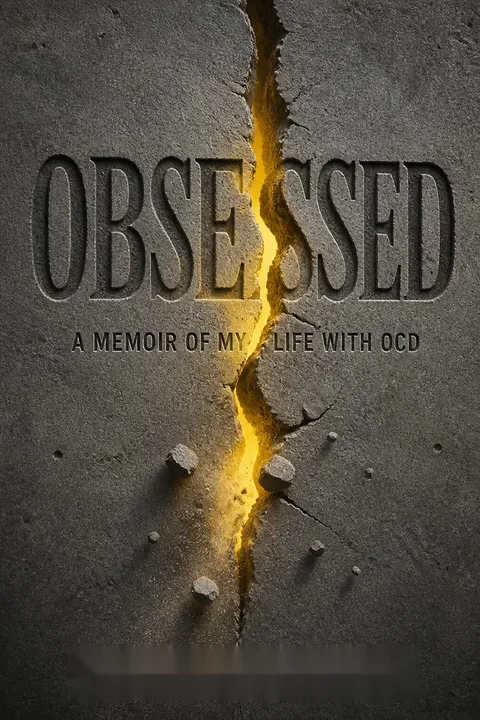
Obsessed: A Memoir of My Life with OCD is a raw, intimate exploration of the lived experience of obsessive-compulsive disorder, told through the lens of a teenager's descent into—and gradual emergence from—mental illness. Allison Britz's story is both deeply personal and universally resonant, capturing the terror, shame, and isolation of OCD as well as the hope and resilience that make recovery possible. The memoir demystifies OCD, moving beyond stereotypes of cleanliness or order to reveal the disorder's true nature: a relentless, irrational drive to prevent catastrophe through ritual and avoidance. The book's greatest strength lies in its psychological honesty and narrative immediacy, allowing readers to feel the claustrophobia and exhaustion of Allison's world. Through therapy, self-discovery, and the support of loved ones, Allison learns that recovery is not about erasing fear but about living with uncertainty and imperfection. The memoir offers a powerful message: mental illness is not a personal failing, and asking for help is an act of courage. In a culture that often stigmatizes difference, Obsessed is a testament to the power of vulnerability, the necessity of empathy, and the possibility of hope.
Review Summary
Obsessed receives mostly positive reviews, with readers praising its raw depiction of OCD and the author's bravery in sharing her story. Many found it eye-opening and educational, dispelling misconceptions about OCD. Some criticized the writing style as repetitive or simplistic. Readers appreciated the honest portrayal of mental health struggles and treatment. The book's impact on readers' understanding and empathy for those with OCD was frequently mentioned. Some cautioned that the content could be triggering for those with anxiety or OCD.
People Also Read
Characters
Allison Britz
Allison is a high-achieving, sensitive, and introspective high school sophomore whose life is derailed by the sudden onset of obsessive-compulsive disorder. Her initial drive for academic and social success is replaced by a desperate need to control her environment through rituals and avoidance. Allison's relationships suffer as she becomes increasingly isolated, but her intelligence and determination ultimately help her seek help and engage in therapy. Psychologically, she is torn between the need for certainty and the reality of uncertainty, between shame and the hope for acceptance. Her journey is one of self-discovery, resilience, and the gradual acceptance of imperfection.
Allison's Mother
Allison's mother is a disciplined, successful professional who values order and achievement. She is deeply concerned for her daughter but struggles to understand the nature of Allison's suffering. Her attempts to help are often met with anger or secrecy, leading to frustration and helplessness. Despite her confusion, she remains steadfast in her support, advocating for Allison's care and never giving up on her. Her relationship with Allison is tested but ultimately strengthened by their shared ordeal, as she learns to accept and love her daughter's vulnerabilities as well as her strengths.
Allison's Father
Allison's father is a warm, easygoing presence who tries to maintain normalcy and humor in the face of crisis. He is less confrontational than Allison's mother, offering quiet support and unconditional love. His concern for Allison is deep, though he often feels powerless to help. He represents stability and acceptance, providing a safe space for Allison even when he cannot fully understand her experience. His gentle encouragement and pride in his daughter are anchors in her turbulent world.
Sara
Sara is Allison's closest friend before the onset of OCD—a confident, outgoing girl who helps Allison navigate the social complexities of high school. As Allison's behavior becomes more erratic, Sara is confused and hurt by the distance that grows between them. She represents the life Allison is losing—the normalcy, the fun, the sense of belonging. Their relationship is strained by misunderstanding and silence, highlighting the isolating power of mental illness and the difficulty of maintaining connections in the face of stigma.
Jenny
Jenny is a persistent, outspoken friend who refuses to give up on Allison even as their relationship is tested by secrecy and anger. She confronts Allison about her behavior, offers support, and eventually becomes a key ally in Allison's recovery. Jenny's willingness to listen and to accept Allison's explanation of OCD is a turning point, demonstrating the importance of empathy and education in overcoming stigma. Her loyalty and honesty help Allison reconnect with the world outside her illness.
Maddie
Maddie is a cross-country teammate and friend who notices Allison's withdrawal and physical decline. She expresses concern and tries to intervene, but is often met with resistance or anger. Maddie's perspective highlights the confusion and helplessness of those who care for someone with a hidden illness. Her friendship is both a source of comfort and a reminder of what Allison is losing to OCD.
Dr. Adams
Dr. Adams is the psychiatrist who first introduces Allison to the concept of OCD, providing a name and a framework for her suffering. Her calm, nonjudgmental approach helps Allison begin to trust the therapeutic process. Dr. Adams's validation of Allison's experience is a crucial step in breaking the cycle of shame and secrecy. She represents the possibility of understanding and hope in the midst of confusion.
Dr. Nelson
Dr. Nelson is the psychologist who specializes in OCD and leads Allison through exposure and response prevention therapy. She is practical, empathetic, and persistent, helping Allison confront her fears and reclaim her life. Dr. Nelson's relationship with Allison is built on trust, humor, and mutual respect. She challenges Allison to face discomfort and to accept imperfection, modeling resilience and self-compassion. Her guidance is instrumental in Allison's recovery and self-acceptance.
The Monster (OCD Personified)
The "monster" is Allison's personification of her OCD—a voice or presence that issues warnings, demands rituals, and punishes disobedience. It is both terrifying and seductive, offering the illusion of safety while trapping Allison in a cycle of fear and compulsion. Psychologically, the monster represents the intrusive thoughts and anxiety at the heart of OCD, as well as the struggle to distinguish between self and illness. Over time, Allison learns to challenge and coexist with the monster, reducing its power over her life.
School Community (Teachers, Peers)
Teachers like Ms. Griffin and Ms. Matthews, as well as classmates and teammates, reflect the broader social response to Allison's illness. Some are supportive, others are confused or judgmental. Their reactions shape Allison's experience of stigma and acceptance, highlighting the importance of education and empathy in mental health. The school community is both a source of pain and, eventually, a context for healing and reintegration.
Plot Devices
Obsessive Rituals as Narrative Structure
The book's narrative is structured around Allison's compulsive rituals—counting steps, avoiding cracks, bartering food, and more. These rituals create a sense of claustrophobia and urgency, mirroring the relentless nature of OCD. The repetition of actions and thoughts builds tension and conveys the exhaustion of living with the disorder. The escalation of rituals and their impact on daily life serve as both plot engine and psychological portrait, drawing the reader into Allison's experience.
Personification of OCD ("The Monster")
By giving her OCD a voice and presence—the "monster"—Allison externalizes her internal struggle, making the invisible visible. This device allows the reader to understand the seductive and punitive aspects of OCD, as well as the difficulty of separating self from illness. The monster's demands and punishments drive the plot, while Allison's evolving relationship with it marks her psychological growth.
Foreshadowing and Symbolism
The opening nightmare foreshadows the onset of OCD and sets the tone for the story's exploration of fear and control. Everyday objects—cracks, pencils, socks—become symbols of anxiety and the arbitrary nature of compulsions. The shifting meaning of these objects (from dangerous to benign) mirrors Allison's progress in therapy and her changing relationship to her illness.
Therapy as Transformative Journey
The process of exposure and response prevention therapy provides a narrative framework for Allison's recovery. Each session is a mini-quest, with specific fears confronted and (sometimes) conquered. The therapy scenes are both literal and metaphorical, representing the broader challenge of facing discomfort and uncertainty. The gradual accumulation of small victories builds momentum and hope, even as setbacks remind Allison (and the reader) that recovery is ongoing.
First-Person, Present-Tense Voice
The memoir's first-person, present-tense narration immerses the reader in Allison's thoughts and emotions, creating intimacy and immediacy. The voice is candid, self-aware, and often darkly humorous, balancing the heaviness of the subject matter with moments of levity. This narrative choice allows for deep psychological insight and invites empathy, making Allison's internal world accessible and relatable.
FAQ
What is Obsessed: A Memoir of My Life with OCD by Allison Britz about?
- Personal account of OCD: The memoir details Allison Britz’s struggle with obsessive-compulsive disorder (OCD) during her high school years, focusing on her intrusive thoughts, compulsions, and the impact on her daily life.
- Unique symptoms and rituals: Allison’s OCD manifests in unusual ways, such as a fear of cancer from everyday objects, compulsive counting, and elaborate avoidance rituals.
- Journey to diagnosis and recovery: The book follows her path from confusion and isolation to seeking professional help, receiving a diagnosis, and engaging in therapy.
- Themes of hope and resilience: Despite severe challenges, Allison’s story is ultimately one of survival, gradual healing, and the importance of support.
Why should I read Obsessed: A Memoir of My Life with OCD by Allison Britz?
- First-person insight into OCD: The memoir offers a rare, honest perspective on living with OCD, especially symptoms beyond the typical germ-related fears.
- Mental health awareness: It raises awareness about adolescent mental illness, helping to break stigma and foster empathy.
- Inspiration and encouragement: Allison’s journey from debilitating fear to recovery provides hope for those facing similar struggles or supporting loved ones.
- Accessible explanation of treatment: The book demystifies therapeutic approaches like Exposure Response Prevention (ERP), making them understandable for readers.
What are the key takeaways from Obsessed: A Memoir of My Life with OCD by Allison Britz?
- OCD is complex and diverse: The memoir highlights the wide range of OCD symptoms, including fears of harm, compulsive rituals, and avoidance behaviors.
- Support is crucial: Family, friends, and professional help play vital roles in Allison’s journey toward healing and acceptance.
- Therapy is challenging but effective: Exposure Response Prevention (ERP) therapy is depicted as difficult but essential for managing OCD.
- Hope and resilience matter: Allison’s story emphasizes that recovery is possible, even when OCD feels overwhelming.
What are the most impactful quotes from Obsessed: A Memoir of My Life with OCD by Allison Britz and what do they mean?
- “Fighting OCD is like boxing. Each time you go against a thought, it’s a punch to its strength.” This metaphor highlights the ongoing, active struggle required to weaken OCD’s grip.
- “You have obsessive-compulsive disorder. For richer or poorer, for better or worse. That’s just how it is.” This quote reflects acceptance of OCD as a chronic condition that must be managed, not cured.
- “It’s just OCD. Just like pencils and calculators. Just like socks and sidewalk cracks.” Marks a turning point where Allison recognizes her fears as symptoms, helping her regain control.
- “I’m not anorexic. I have OCD.” Clarifies the importance of accurate diagnosis and understanding of mental illness.
How does Allison Britz describe her OCD symptoms and compulsions in Obsessed?
- Intrusive thoughts about harm: Allison is plagued by persistent fears that everyday objects or actions will cause cancer or death to herself or her family.
- Compulsive rituals: She engages in behaviors like counting steps, tiptoeing to avoid cracks, standing on one foot, and bartering food to prevent perceived harm.
- Avoidance of objects and colors: Items such as pencils, calculators, certain clothes, and even colors like green become sources of terror, leading to avoidance and distress.
- Religious compulsions: Allison incorporates prayers and ritualized gestures into her routines, intertwining her OCD with spirituality.
What is the significance of the “monster” or “protector” in Allison Britz’s experience with OCD?
- Source of intrusive thoughts: Allison refers to a mysterious presence—the “monster” or “protector”—that delivers cryptic warnings and commands she feels compelled to obey.
- Dual role: This entity is both terrifying and protective, as Allison believes following its rules will keep her and her family safe from harm, especially cancer.
- Physical and emotional impact: The “monster” communicates through physical sensations and vivid imagery, intensifying her anxiety and compulsions.
- Driving force behind rituals: Its demands lead to strict adherence to rituals, making daily life exhausting and isolating.
How does OCD affect Allison Britz’s academic and social life in Obsessed?
- Academic decline: Once a top student, Allison’s compulsions and anxiety cause her grades to suffer, and she struggles to complete assignments and exams.
- Social isolation: Her behaviors, such as counting steps aloud and avoiding certain objects, make her appear strange to peers, leading to gossip and loss of friendships.
- Challenges with accommodations: Receiving special accommodations at school helps but also makes her feel different and isolated.
- Gradual improvement: Through therapy, Allison slowly regains the ability to participate in class and rebuild relationships.
What role do Allison Britz’s parents and friends play in her journey in Obsessed?
- Parental concern and involvement: Her parents are deeply worried and actively seek medical and psychological help for Allison, though they often struggle to understand her condition.
- Family tension: The emotional toll of OCD leads to moments of frustration, misunderstanding, and conflict within the family.
- Friendship challenges: Allison loses many friends due to her behaviors and isolation but experiences moments of reconnection, such as with her friend Jenny.
- Support as foundation: Ultimately, the love and support from family and friends are crucial to her progress and recovery.
How does Allison Britz interpret the connection between OCD and her fear of brain cancer in Obsessed?
- Origin in a nightmare: Allison’s OCD begins after a vivid dream about being diagnosed with brain cancer, which she interprets as a warning from her protector.
- Symbolic associations: She links specific objects, actions, and even numbers to cancer risk, believing that following her protector’s rules can prevent illness.
- Compulsions as survival: Her rituals are framed as life-or-death necessities, making her OCD behaviors feel essential for survival.
- Psychological impact: This belief system intensifies her anxiety and blurs the line between OCD symptoms and genuine health fears.
What is Exposure Response Prevention (ERP) therapy, and how is it used in Obsessed: A Memoir of My Life with OCD by Allison Britz?
- Definition and purpose: ERP is a cognitive-behavioral therapy that exposes patients to anxiety triggers while preventing their usual compulsive responses, aiming to reduce anxiety over time.
- Application in Allison’s treatment: Her therapist, Dr. Nelson, guides her through confronting feared objects and situations without performing rituals.
- Process and challenges: ERP is described as a difficult, anxiety-provoking process that requires persistence, but each exposure weakens OCD’s hold.
- Homework and progress: Allison practices ERP outside therapy sessions, gradually regaining control and reducing her compulsions.
How does Allison Britz’s relationship with religion and spirituality develop in Obsessed?
- Seeking meaning and comfort: Allison turns to religion for comfort, interpreting her protector’s messages as divine guidance.
- Ritualized religious practices: She incorporates Bible reading, prayer, and specific gestures into her daily routines, sometimes as compulsions.
- Conflict with faith: As therapy progresses, Allison struggles to reconcile her religious beliefs with the understanding that her thoughts may be symptoms of OCD.
- Nuanced integration: The memoir suggests a balance between maintaining spirituality and recognizing the need for medical treatment.
What resources and advice does Allison Britz recommend for those struggling with OCD, as shared in Obsessed: A Memoir of My Life with OCD?
- Professional help is essential: Allison emphasizes the importance of seeking therapy and professional support for managing OCD.
- Support organizations: She recommends resources such as Active Minds, Mental Health America, NAMI, NIMH, and the International OCD Foundation for information and community.
- Encouragement to reach out: The memoir encourages readers not to struggle in silence and to connect with support networks.
- Hope for recovery: Allison’s story and advice underscore that with help, progress and healing are possible.
Download PDF
Download EPUB
.epub digital book format is ideal for reading ebooks on phones, tablets, and e-readers.








































