
Key Takeaways
1. The Blurring Lines: When "Normal" Becomes "Illness"
By telling people they have a right to enjoy perfect mental harmony, and if they do not, this is due to underlying factors beyond their control, we prevent people from experiencing the personal growth that difficulty, adversity and hard truths bring.
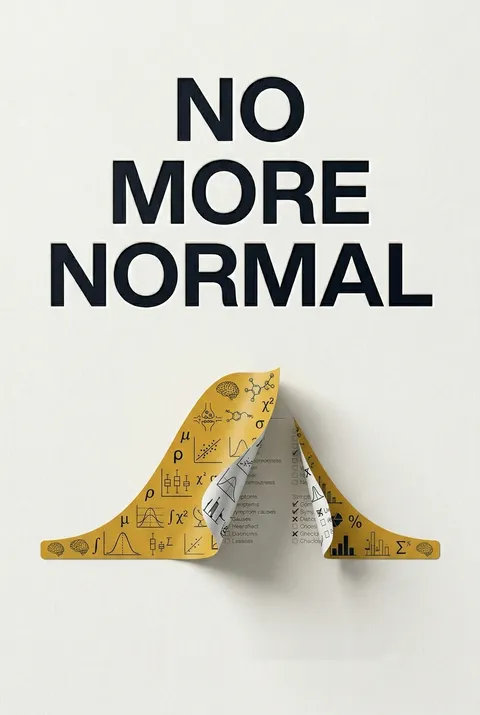
Psychiatry at a crossroads. The concept of "normal" mental health is increasingly flexible, driven more by social trends and emotional appeals than by evidence or even psychiatrists. This shift leads to the medicalization of everyday life's challenges, framing suffering and difference within an illness framework. The author questions if this represents true progress or a cyclical process where definitions endlessly change.
Over-diagnosis epidemic. The number of diagnosable mental disorders in the DSM has quadrupled in 70 years, yet it's unclear if society is genuinely less psychologically healthy. Examples like the 78% of students reporting mental health problems or the 787% increase in autism spectrum disorder (ASD) diagnoses between 1998 and 2018 suggest that diagnostic criteria are loosening, encompassing many previously considered normal. This expansion can lead to individuals re-evaluating life difficulties as symptoms of a diagnosis, rather than opportunities for personal growth.
Resource drain. This over-medicalization has significant consequences. While reducing stigma is positive, the burgeoning "wellness" industry and pharmaceutical companies profit from expanding diagnostic boundaries. This focus on milder, reclassified problems diverts precious resources from severe and enduring mental illnesses like schizophrenia and bipolar disorder, leaving the most vulnerable underserved.
2. Diagnosis as a Social Construct: Beyond Biology
Of all the medical specialisms, psychiatry is the most sensitive to social and cultural values, which have a bearing on how we all conceive of and talk about our experiences.
Beyond "real" or "constructed." Psychiatric diagnoses are not always clear-cut, lacking external validators like blood tests or brain scans. While some conditions like schizophrenia are universally recognized, others exist on a continuum, with diagnostic thresholds determined by expert consensus and heavily influenced by societal norms. This makes psychiatry uniquely susceptible to cultural shifts.
Historical missteps. The antipsychiatry movement of the 1960s and 70s, exemplified by Goffman's critique of asylums and Szasz's "The Myth of Mental Illness," highlighted how diagnoses could be social constructs. A stark example is Soviet "sluggish schizophrenia," a fabricated diagnosis used to institutionalize political dissidents, demonstrating how psychiatric labels can be weaponized to control behavior that deviates from societal norms.
Cultural relativity. Even seemingly robust diagnoses like schizophrenia are interpreted differently across cultures. While Western societies pathologize auditory hallucinations, other cultures might view them as contact from the spirit world. Similarly, the inclusion of premenstrual dysphoric disorder (PMDD) in the DSM was a socially influenced decision, legitimizing women's suffering while also raising concerns about pathologizing normal female experiences, often driven by pharmaceutical interests.
3. The Unintended Consequences of Mental Health Awareness
It is not hard to conclude that, in trying to be kind and inclusive, we have inadvertently done harm to individuals and populations.
Prevalence inflation. Mental health awareness campaigns, while well-intentioned in reducing stigma, have inadvertently contributed to a phenomenon where people interpret milder symptoms as mental health problems. This "prevalence inflation" leads to increased self-identification with disorders, behavioral changes that compound symptoms, and a continuous cycle of more awareness campaigns.
"Looping effects." Diagnoses are not static; they are shaped by how people perceive and discuss their suffering. Adolescents, for instance, redefine terms like "anxiety" and "depression" to describe common feelings, transforming them into cultural categories rather than strict diagnostic ones. This feedback loop further loosens diagnostic boundaries, making it easier for more people to qualify for a diagnosis.
Eroding resilience. By framing normal emotional distress as illness, society risks undermining individuals' capacity for personal growth through adversity. The author argues that most people already know when something is wrong; the solution isn't more awareness, but adequate services. The paradox is that increased awareness, by expanding the pool of those seeking help, makes services less available for those with severe conditions.
4. The Imperfect Science of Psychiatric Diagnosis
What he meant was that we have started to confuse a list of symptoms for the actual illness.
Checklist conundrum. Unlike physical medicine with its objective tests (scans, blood work), psychiatric diagnoses rely on symptom checklists. While these aim for reliability, they are not the illness itself. A patient might tick off enough symptoms for depression, but the underlying issue could be social isolation, thwarted ambition, or a lack of purpose, which a pill cannot fix.
Doctor-patient knowledge gap. Despite increased access to information, a significant disparity persists between what doctors and patients understand about illness. Patients often come with preconceived notions of their diagnosis, influenced by online sources or cultural narratives. This can lead to a "consumerist" approach to healthcare, where patients expect a specific diagnosis and treatment, challenging the clinician's expertise.
Functional disorders. A growing number of patients present with "functional disorders"—physical or neurological-looking symptoms for which no physical cause is found. These are often "software problems" rather than "hardware" issues, reflecting complex interactions of psychological factors, learned behaviors, and subconscious processes. The rise of "TikTok tics" during the pandemic, driven by social contagion and psychological vulnerability, exemplifies this phenomenon.
5. Memory's Deception: When Anxiety Mimics Dementia
All the evidence suggests that confidence in one’s recollection correlates poorly with how likely that memory is to be true.
Memory's unreliability. Our memories are not stable archives but subjective reconstructions, easily distorted by belief and time. Eyewitness testimony, often crucial in criminal trials, is notoriously fallible, leading to wrongful convictions. This inherent unreliability extends to personal narratives, where individuals can genuinely misremember past events.
The "recovered memories" controversy. The 1990s saw a surge in "recovered memories" of childhood abuse during therapy, leading to fractured families and legal battles. The scientific consensus leaned against repressed memories, suggesting they were often prompted by therapists. This highlights how external influence and the desire to explain current distress can shape perceived past events.
Anxiety's masquerade. Memory lapses are a normal part of life, but when anxiety takes hold, these can be misinterpreted as signs of serious illness. Patients like Jen, fearing dementia, develop "functional cognitive disorders" where anxiety impairs concentration, leading to forgetfulness. Similarly, post-concussion syndrome symptoms are often driven by the expectation of brain damage, creating a vicious cycle of anxiety and symptom focusing. Depression can also mimic dementia, as seen in the Ernest Saunders case, underscoring the difficulty of accurate diagnosis.
6. The Digital Echo Chamber: How the Internet Shapes Mental Health
Tell me what your diseases are, and I’ll tell you what decade you’re living in.
Social contagion amplified. The internet, particularly social media, acts as a powerful echo chamber, rapidly spreading ideas, beliefs, and behaviors that influence mental health. The "TikTok tics" phenomenon, where sudden-onset tics in teenagers spiked during the pandemic, is a prime example of social contagion driven by exposure to influencers and psychological vulnerability.
Harmful online communities. The dark side of the internet emerged with "pro-ana" (pro-anorexia) websites in the late 1990s, which promoted a deadly eating disorder through "tips and tricks" and "thinspiration" galleries. These platforms, unconstrained by traditional media regulations, demonstrate how online content can actively encourage and exacerbate serious mental illnesses, particularly among vulnerable teenagers.
Pathologizing normal behaviors. The internet has spawned numerous new "addictions" and "disorders" that often blur the lines with normal behavior. "Internet gaming disorder," "smartphone addiction," "Snapchat dysmorphia," "muscle dysmorphia," and "orthorexia" are terms gaining currency, often fueled by influencers and a cultural climate that seeks to pathologize any deviation from an idealized norm. This risks labeling vast swathes of the population as mentally ill, diverting attention from deeper societal issues.
7. Personality: A Spectrum, Not a Disorder
Personality is a fundamental concept in psychiatry. It is the base on which behaviours are built and aberrant actions understood.
Defining the undefinable. Personality, a core aspect of human identity, is notoriously fluid and hard to define, making personality disorders a persistent challenge for psychiatry. While psychologists attempt to distil personality into traits like the "Big Five," the line between a unique temperament and a diagnosable disorder remains elusive, especially at milder ends of the spectrum.
Public misuse of labels. In public discourse, terms like "narcissist" or "psychopath" are frequently used as insults or to absolve blame, detaching them from their clinical meaning. This casual "psychiatric name-calling" can create a false sense of crisp diagnostic boundaries, leading to armchair diagnoses of public figures, violating ethical guidelines like the Goldwater rule, and undermining the seriousness of genuine personality disorders.
The impact of labels. Diagnosing a personality disorder can be deeply stigmatizing, implying a fundamental flaw rather than a treatable condition. Studies show that even within psychiatry, patients with personality disorder labels are sometimes viewed as less deserving of care. The shift towards dimensional models in ICD-11, which describe personality traits on a spectrum rather than discrete labels, aims for greater accuracy and kindness, but struggles with clinical utility and ease of communication.
8. From Pathology to Identity: Psychiatry's Evolving Stance on Sexuality and Gender
Homosexuality is probably the paradigm of how to mismanage a psychiatric diagnosis.
A history of prejudice. Psychiatry's classification of homosexuality as a mental illness in DSM-I (1952), driven by a Darwinian view of procreation, stands as a shameful example of prejudice masquerading as science. This pathologization led to ineffective and harmful "treatments" like aversion therapy and chemical castration (as in Alan Turing's case), causing immense misery and reinforcing societal shame.
The shift to acceptance. Homosexuality was removed from the DSM in 1973 after a vote, a testament to changing social attitudes and growing recognition that it was a normal variant of human sexuality, not an illness. This historical trajectory serves as a cautionary tale for how societal intolerance can infiltrate medical diagnosis, creating mental health problems where none inherently existed.
Gender identity's current dilemma. Today, gender identity issues present similar challenges. The dramatic increase in referrals to gender identity services, particularly among young people, reflects both reduced stigma and a complex interplay of identity exploration. The recent Cass report highlighted the "shaky foundations" and "threadbare" evidence base for interventions, raising concerns that underlying mental health issues or personality variables might be overlooked in the rush to affirm gender transitions, potentially leading to misguided permanent treatments.
9. The Risk Paradox: When Safety Obscures Care
Many patients I speak to now feel that they’re being treated like risky cost pressures to be managed, rather than living human beings with complex and often messy lives and relationships.
The rise of risk assessments. Psychiatry has become increasingly dominated by a "risk agenda," where avoiding adverse events like suicide is prioritized. Mandatory, formulaic risk assessment forms, introduced in the late 1990s, have proliferated, covering everything from self-harm to radicalization. This bureaucratic approach reduces complex human experiences to simplistic checklists.
Ineffective and dehumanizing. Studies consistently show that these tick-box risk assessments are poor predictors of future harm; about half of suicides occur in individuals deemed low risk, and most high-risk patients never attempt suicide. This focus on risk often alienates patients, who feel their deeper emotional needs are ignored in favor of satisfying system requirements. Patients may even learn to "play up their risk" to access care.
Systemic failures. The pressure to manage risk is exacerbated by severe resource constraints, such as drastically reduced inpatient bed numbers (from 150,000 in the 1950s to 17,610 in 2020-21). This leads to discharges based on minimal risk rather than genuine recovery, perpetuating a cycle of readmission. The blame culture surrounding adverse events further incentivizes a defensive, rather than therapeutic, approach to patient care.
10. Tomorrow's Psychiatry: Precision, Humanity, and Redefined Boundaries
I would like to see tighter diagnostic guidelines. Not every variation of normal needs to be thought of as a diagnosable disorder.
Towards a brain-based understanding. Future psychiatry holds the promise of greater precision, leveraging advances in immunopsychiatry, genetics, and computational modeling to understand mental illness at the neuronal level. Research linking schizophrenia genes to the immune system and computational models describing panic attacks or paranoia offer glimpses into objectively "seeing" and understanding mental states.
The challenge of subjective experience. Despite technological progress, the fundamental challenge remains: how to bridge the gap between brain processes and subjective human emotions. While AI and machine learning may assist clinicians by identifying symptom clusters (like HiTOP) and predicting treatment responses, the author argues that human connection, intuition, and the ability to engage meaningfully with a patient's unique life story will remain indispensable.
Reclaiming "normal." The DSM's expansion from 128 categories in 1952 to 541 in 2013 highlights a critical need for psychiatry to redraw diagnostic boundaries. The author advocates for stripping back diagnoses, tightening guidelines, and erring on the side of excluding new disorders that merely represent variations of normal. This requires resisting lobbying from special interest groups and the pharmaceutical industry.
Beyond medicalization. Addressing the mental health crisis also requires looking beyond individual diagnoses to broader societal issues. The atomization of society, loss of community, and pervasive loneliness contribute to demoralization that can mimic mental illness. Social prescribing—connecting individuals to sports, hobbies, and community groups—offers a powerful, non-medicalized approach to foster belonging, purpose, and resilience, ultimately reducing symptoms often mistaken for mental illness.
People Also Read








Download PDF
Download EPUB
.epub digital book format is ideal for reading ebooks on phones, tablets, and e-readers.








































