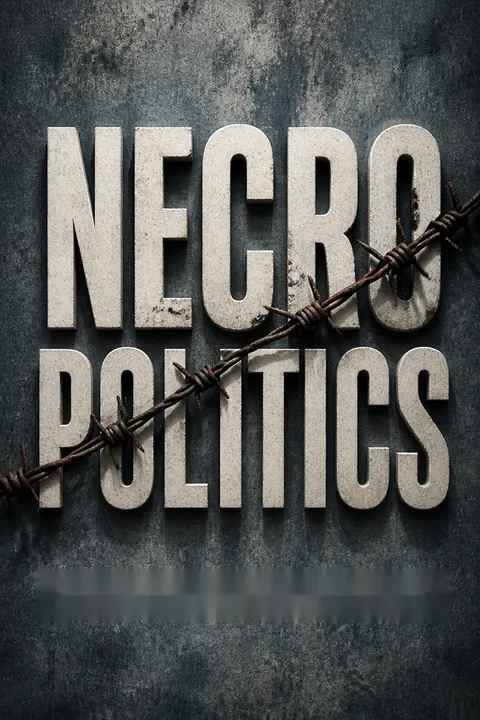

Key Takeaways
1. Modern Democracy's Violent "Nocturnal Body"
The history of modern democracy is, at bottom, a history with two faces, and even two bodies—the solar body, on the one hand, and the nocturnal body , on the other.
Democracy's hidden violence. Modern democracies, despite their claims of peace and civility, have always harbored a "nocturnal body" of violence, often externalized to colonies and marginalized populations. This hidden brutality, rooted in practices like slavery and colonial conquest, was essential for their self-reinvention and consolidation. The official narrative of pacified societies often conceals the systemic violence that allowed these democracies to flourish.
Slavery and colonialism as foundational. The pro-slavery democracy of the United States and the colonial empires of Europe exemplify this duality. These systems created a bifurcation: a community of "fellow creatures" governed by equality alongside a category of "nonfellows" (slaves, natives) subjected to absolute inequality and violence.
- The plantation regime was a "third place" for extreme cruelty.
- Colonialism served as a "pressure relief valve" for undesirables from the metropole.
- "Civilization of mores" in the West was often dependent on violence inflicted far away.
Mythology and externalization. To maintain their legitimacy, democracies enveloped themselves in quasi-mythological structures, dissimulating their violent origins by externalizing brutality to "third places" like plantations, colonies, or, today, camps and prisons. This externalized violence, though latent in the metropole, constantly threatens to resurface, challenging the illusion of a self-created and inherently peaceful political order.
2. The Planetary Entanglement and Redefinition of the Human
We have therefore passed from the human condition to the terrestrial condition.
Blurring boundaries of existence. The twenty-first century is characterized by planetary entanglement, marked by global repopulation, new migration cycles, and a profound redefinition of what it means to be human. This shift moves beyond anthropocentric views, recognizing that "being human" no longer solely determines who occupies the world.
- New inhabitants include artifacts, organic and vegetal species, and even geological forces.
- The human is becoming "plastic" and "digital," challenging notions of human specificity.
Technological and biological convergence. Advances in genetic engineering and digital technologies are dissolving the perceived "essence of man," opening up possibilities for modifying human biological structures and producing life through technomedicine. This convergence makes power over the living—the capacity to alter species—the absolute form of power.
- Genetic algorithms mimic biological operators for optimization.
- Human, plant, and animal genetic codes are being commodified and patented.
Capital, technology, and war. The articulation of capital's power with digital technologies and the capacity to alter human species constitutes a striking feature of our era. This tight imbrication, where the market functions like war and war drives technological development, directly threatens traditional democratic ideals by prioritizing control over life itself. This leads to a "terrestrial condition" where all forms of life and matter are interconnected and subject to new forms of power.
3. The Rise of the Society of Enmity and the Security State
The desire for an enemy, the desire for apartheid (for separation and enclaving), the fantasy of extermination—all today occupy the space of this enchanted circle.
The pervasive desire for an enemy. The contemporary era is defined by a pervasive "desire for an enemy," driving societies towards separation, hostility, and the fantasy of extermination. This need for an enemy, often racialized, has become a quasi-ontological requirement for subject formation, pushing liberal democracies into a "vicious stupor" where extraordinary measures are justified.
- Walls, checkpoints, and enclosures proliferate globally.
- The Israeli occupation of Palestinian territories serves as a laboratory for control techniques.
Mythology and fear in the security state. The "war on terror" exacerbates this dynamic, fostering a "state of insecurity" that the security state itself helps to foment and then claims to solve. This state thrives on fear, manufacturing bogeymen, and employing mass surveillance, leading to a permanent war against an irreducible, metamorphosing enemy.
- Public deliberation is replaced by zealous belief and mythoreligious reasoning.
- The "Muslim," "foreigner," or "immigrant" become targets of constantly recycled prejudices.
Nanoracism and the camp. This environment gives rise to "nanoracism"—insidious, everyday prejudice that infiltrates society, normalizing discrimination and dehumanization. This, combined with "hydraulic racism" (juridico-bureaucratic measures), leads to the proliferation of "camps for foreigners," which are no longer exceptions but structural features of a globalized condition. These camps represent a form of governmentality that manages "undesirables" through abandonment and the denial of dignity.
4. Necropolitics: Sovereignty as the Power to Dictate Death
The ultimate expression of sovereignty largely resides in the power and capacity to dictate who is able to live and who must die.
Sovereignty beyond biopower. Sovereignty, in its ultimate expression, is the power to decide who lives and who dies, extending beyond Foucault's concept of biopower. This "necropolitical" power instrumentalizes human existence, leading to the material destruction of bodies and populations, often under the guise of war or security. It operates through a continuous appeal to exception and a fictionalized notion of the enemy.
Colonialism as a testing ground. The material premises of modern extermination, including the Nazi death camps, find their origins in colonial imperialism. Colonies were zones of absolute lawlessness where the sovereign right to kill was unrestricted, and "peace" often meant "endless war."
- Colonial wars were asymmetrical, often driven by a "genocidal drive."
- The camp-form emerged in colonial wars (Cuba, Philippines, South Africa) before its systematization in the Third Reich.
Late modern occupation and death-worlds. Contemporary colonial occupation, as seen in Palestine, combines disciplinary, biopolitical, and necropolitical powers to achieve absolute domination. This creates "death-worlds"—new forms of social existence where populations are subjected to conditions that confer the status of the living dead.
- Territorial fragmentation, blockades, and extrajudicial assassinations are key tactics.
- "Vertical sovereignty" and "splintering occupation" redefine space and control.
- Infrastructural warfare targets civilian life support systems.
War machines and the logic of survival. Modern warfare, particularly in the globalization era, is characterized by "war machines" that operate beyond state monopolies, engaging in predation and resource extraction. This leads to a "logic of survival" where killing becomes the lowest form of survival, and the "martyrdom" of suicide bombers blurs the lines between homicide and suicide, resistance and self-destruction, transforming the body into a weapon.
5. Technology, Eschatology, and the Return of Animism
This event, which we can equate to a return to animism , is nevertheless not without danger for the idea of emancipation in this age of crypto-fascism.
Technological revelation and anxiety. Heidegger's concern about technology as a "mode of revealing" truth and freedom is re-examined in an age where technology threatens human exceptionalism. This era is marked by anxieties about:
- Things replacing people, and people being treated as things.
- The loss of direct control over an increasingly autonomous technological world.
Blurring human-object distinctions. Neoliberal capitalism and computational media are fostering a "return to animism," where the lines between living human beings and objects, artifacts, or technologies are increasingly blurred. This new relationship, reminiscent of old African cognitive worlds where agency was shared, sees humans seeking to capture the vitalism of objects and integrate artificial organs and prostheses.
- The human genome is being privately owned, and life is commodified.
- Algorithmic reason and big data treat matter and life as computable objects.
Negative messianism and the end of the world. This technological-animistic convergence intertwines with eschatological and apocalyptic narratives, leading to "negative messianism." This is a messianism of destruction, focused on collective suicide or expiatory bloodshed rather than redemption. It fuels a politics of survival, paranoia, and a desire for cleansing, where the "future is an anxious bird" in a world teetering on the brink of collapse. This mindset, often seen in "Dark Enlightenment" movements, rejects democracy and embraces absolute dictatorship, believing technology will overcome death itself.
6. Fanon's Vision: Creative Violence, Healing, and the Ethics of Care
The medical act aims to bring forth what he called a viable world.
Violence as resurrection. Frantz Fanon's work offers a profound counter-narrative to the destructive forces of necropolitics, emphasizing creative violence as a means of radical decolonization. This violence targets both the oppressive colonial system and the internalized inhibitions of the colonized, aiming to perform a "tabula rasa" to create a new, viable world and a new humanity.
- Fanon saw colonial war as generating pathologies and mental disorders.
- Regenerative violence is a "radical decision" to overturn history.
The suffering of the racialized subject. Fanon meticulously documented the profound suffering inflicted by racism, which he saw as a "gigantic work of economic and biological subjugation." Racism reduces the subject to an "Other," an object of fear and disgust, leading to internal conflicts, shame, and a "crushing objectality."
- Racism is a neurosis, a psychosis, and a delusion, often a projection of intimate shame.
- The "Negro phallus" in racist fantasy represents an alarming, transgressive power.
The ethics of care and reconstitution. Fanon's therapeutic practice focused on reconstituting the human link and the "common" for patients suffering from the madness of racism and war. The "care relation" aims to restore the patient's being and connection to the world, preventing them from "dying before time." This involves:
- Breaking silence and fostering communication.
- Reconstituting memory and projecting into the future.
- Confronting the "undercover part of the subject" to achieve "dissolution-reconstruction" of personality.
7. The "Ethics of the Passerby" for a Shared, Borderless World
Learning to pass constantly from one place to another—this ought, then, to be its project, since it is, in any case, its destiny.
Beyond fixed identities and borders. The twenty-first century demands an "ethics of the passerby," a philosophy that embraces movement, transfiguration, and detachment from fixed identities, nationality, and citizenship. This perspective recognizes the "fugitive character of life" and challenges the notion that one's place of birth irrevocably determines one's rights or destiny.
- The term "passant" encompasses "not" (pas), "step" (pas), "past" (passé), "passerby," "smuggler" (passeur), and "passenger" (passager).
- It advocates for a "total relation of freedom" and detachment from arbitrary constraints.
The anti-museum and the archive. The history of Atlantic slavery, with its "manure and silt figure" of the slave, cannot be contained within existing museum structures, which are devices of separation and domestication. Instead, it calls for an "anti-museum"—a space of radical hospitality and unconditional rest for humanity's rejects, preserving the slave's "power of scandal" and challenging the archive's inherent biases.
- The archive often fixes shadows rather than real events, requiring active engagement to retrieve meaning.
- Racialization was driven by the reality-creating fantasies of race and sex.
Emancipation of the living and planetary democracy. The future of emancipation requires a critique of capitalism alongside humanism, recognizing that capitalism's drives—manufacturing races, commodifying everything, and monopolizing life—are collapsing the dikes that once separated human from object. This leads to a "depth Negro" as a superfluous category in a digitalized, anthropomachinic world. A world-scale democratic politics must foster complementarities, not differences, and recognize the Earth as our common condition, demanding:
- A language that "bores, perforates, and digs" to save life.
- A reciprocal recognition of vulnerability as the basis for care.
- Europe is no longer the sole "pharmacy of the world."
Review Summary
Necropolitics by Achille Mbembe explores the concept of necropower and its relation to modern states, colonialism, and violence. Readers appreciate Mbembe's insightful analysis of racism, brutality, and exploitation in contemporary society. The book's dense language and abstract concepts challenge some readers, while others find it thought-provoking and relevant. Critics praise Mbembe's candid writing style and his expansion of Foucault's biopolitics. The work is considered essential for understanding current global power dynamics, though some find it difficult to follow without prior knowledge of political theory.
People Also Read




Download PDF
Download EPUB
.epub digital book format is ideal for reading ebooks on phones, tablets, and e-readers.








































