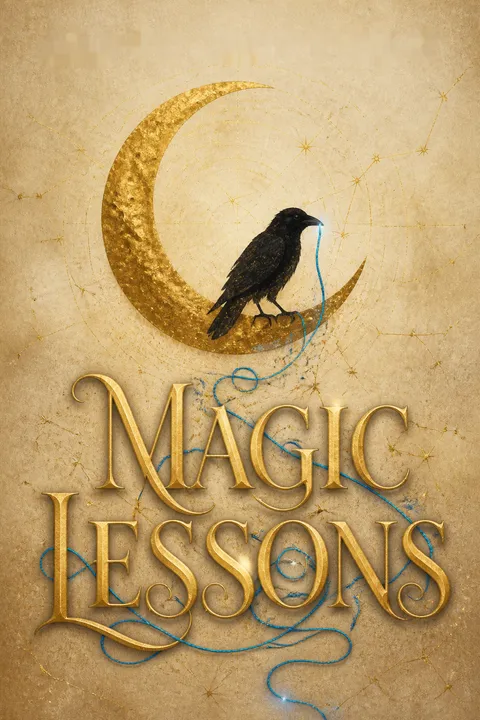

Plot Summary
Found in the Snow
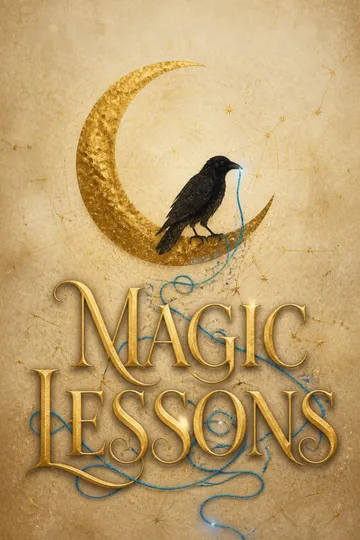
On a cold January day in 1664, a baby girl named Maria is found alone in a snowy English field, wrapped in a blue blanket stitched with her name. Discovered by the wise and kind Hannah Owens, Maria is taken in and raised in the woods, far from the superstitions and cruelties of the nearby villages. Hannah, a healer and practitioner of the Nameless Art, recognizes Maria's unusual gifts and teaches her the ways of green magic, herbal remedies, and the importance of kindness. Maria's earliest memories are of Hannah's songs and the loyal crow, Cadin, who becomes her familiar. In this nurturing, secretive world, Maria's fate as a witch and healer is set, and the seeds of her future are sown.
Lessons in the Nameless Art
Growing up under Hannah's tutelage, Maria learns the intricacies of the Nameless Art—herbalism, midwifery, and the subtle, dangerous craft of spellwork. Hannah imparts not only practical skills but also the moral code of magic: do as you will, but harm no one; what you give returns threefold. Maria witnesses the desperation of women seeking love, healing, or revenge, and learns that magic is as much about intention as it is about ritual. The world outside is hostile to women with knowledge, and Hannah's own history of persecution and loss shapes Maria's understanding of secrecy and survival. The lessons are both empowering and cautionary, as Maria's innate abilities begin to reveal themselves.
The Curse of Love
As Maria matures, she observes that most who seek magic do so for love—either to gain it, keep it, or be rid of it. Hannah warns her: always love someone who will love you back. The power of love spells is double-edged, and Maria sees firsthand how desire can lead to ruin. When a mysterious red-haired woman named Rebecca arrives, seeking to break a dangerous love spell, Maria learns that love, when forced or manipulated, can become a curse. The encounter with Rebecca, who is later revealed to be Maria's birth mother, plants the seeds of longing and abandonment in Maria's heart, and foreshadows the generational wounds that love can inflict.
A Mother's Betrayal
Rebecca's brief return brings both answers and pain. Maria discovers her true parentage and the reason for her abandonment: Rebecca, herself a bloodline witch, left Maria to protect her from a violent husband and the dangers of their shared magic. The reunion is fleeting—Rebecca departs without farewell, and soon, violence follows. Rebecca's husband and his men descend upon Hannah's cottage, seeking revenge. In the chaos, Hannah is killed, her home burned, and Maria is forced to flee, carrying only her grimoire and the lessons of her two mothers. The trauma of this betrayal and loss shapes Maria's resolve and her mistrust of love.
Fire and Flight
Maria's world is destroyed in flames, and she is thrust into exile. Alone but for Cadin, she journeys through the marshes toward the sea, haunted by grief and the knowledge that she is different—marked by magic, unable to drown, and destined to be an outcast. The burning of Hannah's home and the destruction of her childhood are both an ending and a beginning. Maria's flight is a rite of passage, forcing her to rely on her wits, her magic, and the legacy of the women who raised her. The blue blanket and the grimoire become her only tangible connections to her past.
The Blue Thread Legacy
As Maria seeks out Rebecca, she confronts the complexities of her lineage. The blue thread stitched into her blanket and the marks on her skin are symbols of her magical heritage. In a tense reunion, Rebecca admits that Maria's father is not the man who hunted them, but a mysterious lover. Maria's sense of self is fractured—she is both cherished and abandoned, powerful and vulnerable. The legacy of the blue thread is both a blessing and a burden, tying Maria to a history of women who have survived through secrecy, cunning, and the refusal to be defined by men.
Across the Sea
Maria's journey takes her across the ocean to Curaçao, sold into indentured servitude by her father, Robbie, a charming thief and actor. The sea voyage is perilous, but Maria's skills as a healer and her reputation as a witch protect her. On the island, she befriends Juni, a fellow servant, and learns new forms of magic from the local brua tradition. The diversity and danger of the New World broaden Maria's understanding of power, oppression, and resilience. Her longing for freedom and belonging intensifies, as does her determination to shape her own fate.
Servitude and Sorcery
In Curaçao, Maria endures years of servitude in the Jansen household, forming a deep bond with Juni and honing her magical abilities in secret. She becomes a clandestine healer for the women of the island, blending European and African traditions. When she meets John Hathorne, a visiting magistrate from Massachusetts, Maria is swept into a passionate, ill-fated love affair. Their connection is intense but doomed by secrets, distance, and the rigid hierarchies of their worlds. Maria's experience of love is both transformative and devastating, reinforcing the lessons of her mothers and setting the stage for tragedy.
The Price of Freedom
Hathorne's sudden departure leaves Maria pregnant and alone, her dreams of love shattered. She gives birth to her daughter, Faith, and secures her freedom from servitude through cunning and blackmail. The betrayal by Hathorne, who returns to his wife in Salem, cements Maria's belief in the dangers of love. She vows never to let herself or her daughter be ruled by passion again. The price of freedom is steep—Maria must navigate a world that is hostile to women like her, and the wounds of abandonment and loss are passed down to Faith.
The Tenth Potion
Maria's mastery of magic deepens, but she is haunted by the knowledge that some spells—especially those concerning love—are too dangerous to use. The Tenth Potion, a love spell that cannot be undone, becomes a symbol of the peril of tampering with fate. When Maria is betrayed by Hathorne and denied justice for herself and her daughter, she invokes a curse to protect her bloodline: any man who loves an Owens woman will be ruined. This act of desperation and rage sets in motion the generational curse that will haunt her descendants, and marks Maria as both victim and architect of her own suffering.
The Witch's Daughter
Faith grows up in the shadow of her mother's grief and the curse that defines their family. Kidnapped by Martha Chase and held captive for years, Faith is forced to suppress her magic and her true identity. The trauma of captivity and the loss of her mother harden Faith, fueling her desire for revenge and her fascination with the dark arts. Her eventual escape is both a triumph and a tragedy—Faith is changed, her innocence lost, and her relationship with Maria forever altered. The legacy of abandonment and survival continues.
The Dark Path Taken
Faith's years in captivity leave her embittered and drawn to the forbidden knowledge of The Book of the Raven, a grimoire of left-handed magic. She becomes adept at curses and maledictions, using her power to punish those who have wronged her. The pursuit of revenge brings Faith to the brink of losing herself, as she discovers that darkness begets darkness. Her actions have unintended consequences, and the price of her power is the loss of her familiar, Keeper, and the threat of losing her own soul. The struggle between vengeance and forgiveness becomes central to her journey.
Salem's Shadow
Faith travels to Salem, seeking her father, John Hathorne, and the justice denied to her mother. Disguised as a servant in the Hathorne household, she witnesses the ongoing witch trials and the hypocrisy of the magistrates. Faith's presence is both a reckoning and a haunting—she confronts Hathorne with the truth of his actions and the pain he has caused. The shadow of Salem's hysteria looms large, and Faith must decide whether to perpetuate the cycle of vengeance or seek a different path. The town's fear and violence threaten to consume her.
The Drowning Test
Faith is captured and subjected to the infamous drowning test, bound and thrown into the lake to prove her innocence or guilt as a witch. The ordeal is both physical and spiritual—a confrontation with death, the legacy of her mother's survival, and the limits of her own power. Rescued by Samuel Dias, who has returned for Maria, Faith is forced to reckon with the consequences of her choices and the possibility of redemption. The test is a crucible, burning away illusions and forging a new understanding of strength and vulnerability.
The Curse Unleashed
In the aftermath of the drowning, Maria and Faith are reunited, but the wounds of the past and the curse Maria invoked threaten to destroy them both. Maria's love for Samuel is tested by the fear that the curse will claim him, and Faith's anger at her parents and herself reaches a fever pitch. The cycle of pain, betrayal, and revenge seems unbreakable, and the cost of magic—especially when used in anger—is made clear. The family must confront the darkness within and the legacy they have inherited.
The Book of the Raven
Faith's discovery of The Book of the Raven offers her immense power but at a terrible price. The grimoire's spells of vengeance and control are seductive, promising agency and justice, but they also threaten to consume her. Maria, recognizing the danger, must guide Faith back from the brink, teaching her that true power lies not in domination but in compassion and restraint. The struggle between the allure of darkness and the necessity of forgiveness becomes the heart of their relationship.
Redemption and Return
Through sacrifice, honesty, and the willingness to save others, Maria and Faith begin to heal the wounds of the past. Maria's act of saving another woman's child becomes the key to reclaiming her own daughter. The family returns to Salem, where Maria builds a new home and establishes a school and library for girls, breaking the cycle of secrecy and shame. The curse is not undone, but its power is diminished by love, community, and the refusal to be defined by fear. The Owens women claim their place in the world, not as victims, but as healers and teachers.
Fate and Forgiveness
In the final reckoning, Maria, Faith, and Samuel find peace—not by escaping their past, but by embracing it. The lessons of magic are rewritten: do as you will, but harm no one; what you give returns threefold; fall in love whenever you can. The family's story becomes one of resilience, forgiveness, and the transformative power of love. The curse remains, but it is no longer a prison. The Owens women's legacy is one of courage, wisdom, and the refusal to let fate dictate their happiness. The story ends with hope, as a new generation is born and the cycle of magic and love continues.
Analysis
A modern feminist parable of trauma, resilience, and the power of loveMagic Lessons is both a historical novel and a mythic tale, blending the realities of 17th-century persecution with the timeless struggles of women to claim agency, knowledge, and self-worth. Alice Hoffman uses the framework of witchcraft and magical realism to explore the psychological wounds inflicted by abandonment, betrayal, and societal oppression. The generational curse is a metaphor for inherited trauma, and the journey of Maria and Faith is one of breaking cycles—of violence, secrecy, and self-denial. The novel insists that true power lies not in vengeance or domination, but in compassion, forgiveness, and the willingness to love despite the risks. The lessons of magic—do no harm, accept the consequences of your actions, and embrace love whenever you can—are ultimately lessons in humanity. Hoffman's storytelling is lush, evocative, and deeply empathetic, offering readers both the enchantment of fairy tale and the hard-won wisdom of lived experience. The book's enduring message is that fate can be rewritten, and that the greatest magic is the courage to choose love, even in a world determined to punish it.
Review Summary
Magic Lessons received mostly positive reviews, praised for its enchanting prose, rich historical detail, and exploration of love, family, and witchcraft. Set in the 17th century, it tells the origin story of the Owens family, focusing on Maria Owens and her daughter Faith. Many readers appreciated the blend of magic and reality, and the connection to Hoffman's previous works. Some found the pacing slow at times, but overall, the book was considered a captivating addition to the Practical Magic series, offering insight into the family's curse and magical heritage.
People Also Read

Characters
Maria Owens
Maria is the heart of the novel—a woman forged by abandonment, loss, and the relentless pursuit of belonging. Raised by Hannah Owens, she inherits both the gifts and burdens of the Nameless Art. Maria's journey is marked by trauma: the betrayal of her birth mother, the destruction of her childhood home, and the heartbreak of love lost and found. Her relationships—with Hannah, Rebecca, John Hathorne, and Samuel Dias—shape her understanding of power, vulnerability, and the dangers of love. Maria's greatest strength is her capacity for compassion, even when wounded. Her invocation of the family curse is both an act of protection and a source of generational pain. Over time, Maria evolves from a victim of fate to its master, building a legacy of healing, education, and forgiveness. Her psychological arc is one of moving from fear and anger to acceptance and hope.
Faith Owens
Faith is Maria's daughter, born of love and betrayal, and raised in the shadow of her mother's grief and the family curse. Kidnapped and held captive for years, Faith's childhood is marked by deprivation, secrecy, and the suppression of her magic. Her trauma manifests as anger and a fascination with the dark arts, particularly after discovering The Book of the Raven. Faith's journey is one of self-discovery—she must choose between vengeance and compassion, darkness and light. Her relationship with Maria is fraught but ultimately redemptive, as both women learn to forgive themselves and each other. Faith's psychological complexity lies in her struggle to reclaim agency and identity after years of powerlessness, and her eventual embrace of healing and teaching as her true path.
Hannah Owens
Hannah is Maria's adoptive mother and the embodiment of the best of the Nameless Art. She is compassionate, knowledgeable, and fiercely protective, teaching Maria not only the skills of magic but the ethics that must guide its use. Hannah's own history of persecution and loss informs her caution and her insistence on secrecy. Her death is a pivotal trauma for Maria, but her teachings endure, shaping the legacy of the Owens women. Hannah represents the possibility of goodness and resilience in a world that is often cruel to women.
Rebecca (Maria's Mother)
Rebecca is a complex figure—beautiful, powerful, and ultimately unreliable. Her decision to abandon Maria is driven by fear and self-preservation, but it leaves lasting scars. Rebecca's relationship with Maria is marked by longing, disappointment, and the painful recognition that love can be conditional and flawed. Her own history of trauma and survival shapes her choices, and her legacy is both a gift (the blue thread, the bloodline magic) and a curse (the wounds of abandonment).
John Hathorne
Hathorne is Maria's lover and Faith's father, a man torn between desire and duty, passion and propriety. His inability to reconcile his love for Maria with his role as a Puritan judge leads to betrayal, abandonment, and the perpetuation of injustice. Hathorne's psychological arc is one of denial and self-justification—he refuses to accept responsibility for his actions, even as he presides over the witch trials. His legacy is one of pain, both personal and communal, and he becomes the symbol of the dangers of unchecked authority and the refusal to see women as equals.
Samuel Dias
Samuel is Maria's soulmate, a Jewish sailor and survivor of persecution. His warmth, humor, and resilience offer Maria a model of love that is based on equality and acceptance. Samuel's own traumas—loss of family, exile, illness—mirror Maria's, and their relationship is one of mutual healing. He is the only man who can break the curse, not by magic, but by dying and returning to life, thus escaping fate's grasp. Samuel's psychological depth lies in his ability to endure suffering without losing hope, and his willingness to love Maria despite the risks.
Cadin (the Crow)
Cadin is more than a pet—he is Maria's constant companion, protector, and link to the supernatural. His presence marks Maria as a witch, and his loyalty is unwavering. Cadin's death is a profound loss, symbolizing the end of innocence and the dangers of standing out in a hostile world. He represents the connection between the human and natural worlds, and the power of animal familiars in magical tradition.
Keeper (the Wolf)
Keeper is Faith's companion during her years of captivity and beyond, a symbol of her wildness and her need for unconditional love. His eventual death marks the end of Faith's childhood and the consequences of her turn toward darkness. Keeper's presence is a reminder of the importance of connection, trust, and the pain of losing those we love.
Martha Chase
Martha is the woman who kidnaps and imprisons Faith, motivated by envy and a twisted sense of love. Her actions are driven by her own wounds and desires, but she becomes the embodiment of the dangers of unchecked longing and the capacity for cruelty. Martha's fate—drowning, abandoned by Faith—serves as a warning about the costs of vengeance and the cycle of harm.
Jack Finney
Jack is the peddler who helps Faith escape captivity and find her way back to Maria. His own losses and loneliness make him receptive to magic and transformation. Jack's relationship with Faith is one of mutual rescue, and his eventual happiness with Catherine Durant is a testament to the possibility of healing and new beginnings.
Plot Devices
Generational Curse
The central plot device is the curse Maria invokes in a moment of rage and despair: any man who loves an Owens woman will be ruined. This curse is both literal and metaphorical, shaping the fates of Maria, Faith, and their descendants. It serves as a commentary on the dangers of unchecked emotion, the legacy of trauma, and the ways in which women's lives are constrained by the actions of men and the judgments of society. The curse is both a prison and a catalyst for growth, forcing the characters to confront their own power and the necessity of forgiveness.
The Grimoire and Forbidden Books
The grimoire—first Hannah's, then Maria's, then Faith's—is a symbol of the transmission of knowledge, the importance of literacy, and the dangers of forbidden wisdom. The Book of the Raven, in particular, represents the allure and peril of dark magic. Books are both tools of liberation and sources of temptation, and the struggle over how to use them reflects the characters' internal battles between light and dark, compassion and vengeance.
Foreshadowing and Prophecy
The use of scrying, black mirrors, and prophetic dreams is a recurring device, foreshadowing key events and reinforcing the theme of fate versus free will. Characters often see glimpses of their future—Maria's vision of the man with diamonds, Faith's underwater journey, the recurring song "The Water is Wide"—and must decide whether to accept or resist what is foretold. This device heightens tension and underscores the psychological complexity of the characters' choices.
Narrative Structure
The novel moves fluidly between past and present, England and the New World, mothers and daughters. The cyclical structure—beginning and ending with abandonment, reunion, and the lessons of magic—mirrors the generational nature of trauma and healing. The use of multiple points of view allows for deep psychological insight and the exploration of different facets of love, power, and survival.
Symbolism
The blue thread, the red boots, the crow and the wolf, the magnolia tree, and the recurring motifs of fire and water all serve as symbols of the characters' journeys. These objects and rituals ground the magical realism of the story, connecting the personal to the universal and the mundane to the mystical.
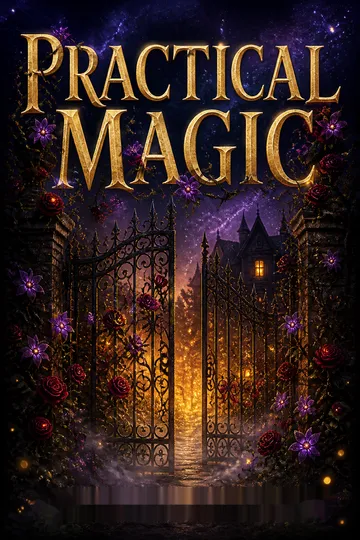
Practical Magic Series
About the Author
Other books by Alice Hoffman
Download PDF
Download EPUB
.epub digital book format is ideal for reading ebooks on phones, tablets, and e-readers.








































