
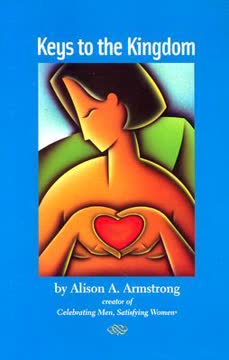

Plot Summary
Prologue
Karen2 lies curled against Mike,3 listening to his soft snoring, almost giddy with what has just happened between them. She thinks of Claudia,1 the woman who gave her what she calls the keys to the kingdom.
Whether or not Claudia1 knew the full power of what she had shared, Karen2 feels more grateful than she could have imagined. For the first time in months, a smile rather than tears accompanies her to sleep.
Five Hundred Years at Risk
Claudia1 returns from her doctor's office in a state she rarely knows: dread. Her arthritis worsens, her heart weakens, her kidneys slow — but the real terror isn't her body failing. It's what will be lost when it does. For twenty-five generations, the women of the Keys family have studied men, accumulating knowledge they passed mother to daughter.
Claudia's1 own daughter Myra7 refused the inheritance, and the family's Covenant — created centuries ago after outsiders weaponized the knowledge to manipulate men — forbids teaching a granddaughter directly.
Burt,4 Claudia's1 husband of nearly sixty years, finds her weeping in their garden and finally learns the Covenant's full history. He proposes something simple: find a woman outside the family who would use the knowledge in partnership, not as a weapon. Claudia1 agrees to consider it, and her burden lifts slightly.
Mike Unraveling at Forty-Two
Mike3 drives home from a construction site replaying the same unanswerable questions that appeared eight months ago: What matters? What's the point? His confidence has dissolved into uncertainty.
The future he and Karen2 built across twenty years — the Peace Corps in Zimbabwe, her teaching career, his construction company — now feels like someone else's life. When Karen2 mentions their annual ski trip with friends, Mike3 snaps that he doesn't know if he wants to go. The argument escalates, as they do daily now.
Karen2 weeps at the kitchen table, grabs her gym bag, and leaves for yoga class. Mike3 prowls the empty house, unable to identify what he's lost or how to retrieve it. Their marriage, once comfortable and affectionate, has become a minefield of his doubts and her desperation to hold their plans together.
The Student Claudia Needed
At yoga, Karen2 spots a petite older woman with bright blue eyes and feels an unexplained tingle of recognition. After class, Claudia1 invites Karen2 for coffee and listens with such warmth that Karen's2 real life tumbles out — Mike's3 distance, the vanishing fun, her fear of divorce.
When Claudia1 asks how Karen2 is sensitive to Mike's3 needs, Karen2 describes something she figured out on her own: when Mike3 comes home, his body arrives before he does. She greets him, then leaves him alone until he's ready. Claudia1 drives home electrified.
What Karen2 discovered independently is what the Keys women call Transition Time — men's need to shift focus between activities. That Karen2 noticed it without resentment suggests she doesn't view her husband as an adversary. She tells Burt4 she may have found the worthy student they discussed just that morning.
Knights, Pages, and Promises
The following Saturday, in Claudia's1 garden overlooking flowerbeds in late bloom, the lessons begin. Claudia1 reveals her full name — Claudia Keys Mitchell Lambert — and explains that Keys refers to Keys to the Kingdom, a middle name given to every girl in her lineage.
Before sharing anything, she extracts promises: honesty, confidentiality, completion. Then the hardest ones — Karen2 must never weaponize this knowledge against men, never punish herself for past ignorance, and forgive herself in advance for mistakes she'll discover. With Karen's2 pledge secured, Claudia1 introduces the Stages of Development.
Knights, from puberty to the late twenties, live for fun, adventure, and challenge. Before them come Pages — little Knight Wannabees who crave risk, despise boredom, and need to be heroes. Karen2 recognizes her second-grade boys instantly. She leaves so disoriented she can't find her parked car.
Their Best Night in Months
On Monday, Karen2 tries Claudia's1 advice with Casey,6 her most difficult student — a surly boy who walks home to an empty house. She asks him to carry boxes, comments on his strength, and watches him straighten with pride. By Friday he's volunteering to help and paying attention in class.
The transformation mirrors what happens at home. Over dinner, Karen2 tells Mike3 about Knights and Pages, following Claudia's1 instruction: present it as interesting, ask his opinion, and do not interrupt. Mike3 connects immediately — his brothers jumping from ever-higher stairs, his own jobs abandoned when they stopped being fun.
For the first time in months, they talk without fighting. He moves to her side of the booth, pulls her close, and kisses her until they need to leave. That night, Karen2 falls asleep on Mike's3 side of the bed, smiling.
Twelve Years of Waiting Named
Claudia's1 second session covers Princes — the decade-long building stage where men define their kingdoms. Middle Princes consume all their attention constructing careers; their partners exist on a tight budget of time and energy. Karen2 recognizes the years she spent packing lunches while Mike3 worked dawn to dark, never once thanked.
But the deeper blow lands afterward: sitting in her car, Karen2 realizes she can no longer blame Mike3 for her stalled life. She chose to wait, one day at a time, instead of pursuing her own passions.
Mid-week, Claudia1 explains why Mike3 keeps saying he isn't ready for children — his immigrant father worked two jobs and was never home, and Mike3 vows to give his kids more presence. Karen's2 resentment dissolves. She asks Mike3 directly, and he confirms: he pictures children who look like her, but something unnamed still holds him back.
Descent Into the Tunnel
While waiting for Claudia,1 Karen2 discovers that the carvings ringing Burt's garden table aren't flowers — they're twenty faces of Claudia1 at different ages, carved across decades of adoration. Then Claudia1 names what has gripped Mike:3 the Tunnel, a transition between Prince and King where a man's entire identity falls into question.
Every certainty erodes. He distances from those closest because their expectations shaped who he was, and he must define himself from within. Claudia1 warns that Karen2 will feel like she's free-falling — women depend on connection, and the Tunnel severs it.
The antidote: be his friend, listen without judgment, trust the process. She mentions programs that help men emerge faster. That week, Mike3 finds the websites Karen2 leaves and registers for the New Warrior weekend in San Diego. For the first time, his questions feel purposeful rather than terrifying.
The Cake Is Baked
Claudia1 assigns homework: count how many men Karen2 respects and admires. Karen2 arrives having found zero. Claudia1 uses this as her entrance to Kings: women can't see men because they measure them against what a woman would do, then declare them failures.
This blindness is fatal with Kings — men whose identities are complete, whose opinions express their deepest selves, who say they're not interested and mean it permanently. Kings need their gifts received, and Karen2 discovers she's been refusing gifts her entire life. She rejected her father's offers to prove independence.
She turned away Casey's6 saved potato chips, watching the boy deflate. Receiving, Claudia1 teaches, means opening yourself to let the gift and the giver inside — breathing, noticing, speaking what you see. Not receiving is the selfish act; receiving is the generous one. Karen2 weeps at the paradox.
In Love With His Wife
Thanksgiving brings everyone together. Mike3 likes Burt4 immediately — a man's man who apologizes for sawdust handshakes and whistles the Popeye theme. Claudia's granddaughter Kimberlee5 is attractive but sharp-edged.
In the kitchen, she observes that Mike3 looks at Karen2 like he's in love — something she's only seen in her grandparents, whom she dismisses as weird exceptions. After dinner, Burt4 leads Mike3 to his workshop and unveils a bench carved with five scenes: a Page straining under a sword, a Knight charging toward adventure, a Prince ascending a mountain, a King upon his throne, an Elder surrounded by grandchildren.
Mike3 blinks water from his eyes. Burt4 explains he serves humanity by ensuring Claudia's1 contribution reaches the world. Mike3 offers to help. Walking back across the lawn, it strikes him: the funny feeling he couldn't name is love — for his own wife.
Two Students or None
On Sunday, while Mike3 is at his Warrior weekend, Claudia1 delivers her final teaching — a warning about misuse. Using knowledge of the stages to treat men like products, or deliberately interrupting to steal their power, always backfires: weakened men provide less and turn their energy toward self-protection.
Then she reveals her decision: she won't teach Karen2 more until she finds a second student. To be the only person alive who sees men clearly is a kind of exile. Claudia1 describes the pain of watching women snipe at men in grocery stores and churches — witnessing needless suffering she alone understands.
She won't inflict that loneliness on Karen.2 Before they part, Burt4 guides them to the garden where his finished bench now rests. Karen2 watches Claudia1 absorb the gift like breathing, and struggles to do the same — opening, receiving, letting carved beauty inside.
The King Declares Himself
Mike3 takes the long way home from San Diego, transitioning through winding back roads with the top down. He enters the house with new proprietary satisfaction, already noting improvements to make. He finds Karen2 asleep, smelling of oranges and cloves from her self-care weekend, and nuzzles her awake.
The next evening over dinner, he asks her to hear who he is now. He builds homes, not houses — every room must be used daily or he won't construct it. He loves fast cars and needs a bigger garage.
He wants to revisit Zimbabwe and see the world. He loves her. Karen2 absorbs each declaration. Then he adds one more thing: he wants to make babies — lots of them, as many as they can have. A sob escapes Karen's2 chest. Fifteen years of waiting, resolved in a single sentence.
Kimberlee Must Ask
Over breakfast, Claudia1 tells Burt4 her decision. She won't die with her knowledge, but she won't teach Karen2 alone and leave her isolated either. If one Karen2 exists, perhaps millions of women are ready for partnership but need to understand men.
She'll find one more student to be Karen's2 companion, and the two of them can figure out how to reach everyone else. The student she hopes for is Kimberlee,5 who at Thanksgiving glimpsed something real when she noticed Karen2 and Mike's3 love.
But Claudia1 won't force her granddaughter the way she never pressured Myra.7 She needs Kimberlee5 to come voluntarily, heart open, and ask. She squeezes Burt's4 hand with fingers notably less gnarled than five weeks ago. The knowledge, at last, is no longer dying with her.
Analysis
Keys to the Kingdom operates as didactic fiction — a narrative chassis for relationship education — but its strategy is more sophisticated than that framing suggests. By embedding teachings within a four-generation inheritance crisis, Armstrong transforms instructional content into stakes that genuinely matter. Claudia1 isn't lecturing; she's racing mortality. Karen2 isn't absorbing advice; she's reconstructing a marriage while her biological clock approaches zero.
The novel's most subversive argument reframes female power. Where contemporary feminism positioned liberation in self-sufficiency, Armstrong argues that the deepest feminine power lies in understanding, receiving, and partnership — capacities positioned not as submission but as radical generosity. The paradox that receiving is more generous than refusing, that listening yields more influence than advising, that seeing men requires abandoning the assumption they should behave like women — these inversions challenge readers precisely because they violate cultural orthodoxy about gender relations.
The Covenant subplot raises an unresolved epistemological question: can transformative knowledge survive democratization without corruption? Claudia's1 ancestors watched their insights weaponized by dependent women. Armstrong's answer is conditional — sharing requires that women no longer need men to survive, and recipients must approach men as partners rather than adversaries. Karen2 qualifies not through intelligence but because she grieves rather than blames.
Structurally, Armstrong lets her protagonist fail repeatedly. Karen2 finds zero men she admires. She reflexively deflects a child's gift of saved potato chips. These failures authenticate the teachings as genuinely counterintuitive rather than obvious wisdom dressed in narrative clothing. Mike's3 transformation, occurring offstage during a weekend retreat, is equally shrewd — by withholding the process, Armstrong preserves male interiority as sovereign territory women must trust rather than witness.
The novel's physical symbolism provides its most elegant device. Claudia's1 arthritis improves as she teaches, externalizing the cost of suppressed purpose. Burt's table of carved faces tests whether viewers possess open hearts — Kimberlee5 sees only roses. His bench translates the Stages into permanent wood. Armstrong ultimately proposes that the war between the sexes is not a conflict of interest but a failure of perception, and that understanding — not compromise or equality as sameness — is the foundation on which everything else can be built.
Review Summary
Keys to the Kingdom receives mixed reviews. Many praise its insights into male psychology and relationship advice, finding it transformative for their marriages. Critics argue it promotes outdated gender roles and places too much responsibility on women to accommodate men. Some appreciate the content but dislike the fictional storytelling format. Common criticisms include poor writing quality, oversimplification of gender differences, and a heteronormative perspective. Overall, readers tend to either love or strongly dislike the book's approach to understanding male behavior and improving relationships.
People Also Read







Characters
Claudia
Keeper of the Keys legacyClaudia Keys Mitchell Lambert carries twenty-five generations of knowledge about men—a body of research restricted by family covenant for centuries. At seventy-seven, she is its last keeper; her daughter Myra7 refused the inheritance. Beneath soft features and twinkling blue eyes lives a woman in existential anguish: she possesses something priceless and watches the world suffer for its absence. Her arthritis, which visibly improves as she begins teaching, mirrors the psychosomatic cost of suppression. Claudia is simultaneously cautious and desperate, honoring the Covenant's spirit while recognizing that history has created new conditions. Her selection of Karen2 reveals remarkable psychological acuity—she tests not for intelligence but for the absence of adversarial instinct. Her deepest wound is Myra's7 rejection, carried as both grief and quiet self-doubt about her own mothering.
Karen
The chosen studentKaren Trevino is a thirty-nine-year-old elementary school teacher whose marriage is unraveling when the story begins. She and Mike3 built a life from college through the Peace Corps in Zimbabwe to careers in southern California—but twelve years of his intense career focus left her waiting for a life that never arrived. What makes Karen exceptional as Claudia's1 student is her instinctive orientation toward understanding rather than blaming. She figured out Transition Time independently and speaks of Mike3 with sadness, not contempt. Her core pattern is adaptation taken to extremes: she lost herself waiting for Mike3, surrendering passions—horses, Spanish, motherhood—while proving she could manage alone. Her journey requires simultaneously seeing Mike3 more clearly and recovering her own identity, learning that true partnership demands two whole people.
Mike
Husband in transformationMike Trevino is forty-two, experiencing what others dismiss as a mid-life crisis but is actually the Tunnel—a deep transition where his entire identity falls into question. Once confident, he now questions everything: his work, his purpose, the value of what he's built. He constructs custom homes but increasingly sees them as purposeless caverns, haunted by memories of meaningful structures he built in Zimbabwe. His deepest tension is between obligation and authenticity—he delayed fatherhood not from indifference but from a standard shaped by his absent immigrant father, wanting to be fully present for his children. Beneath frustration and doubt, Mike remains generous and loving, a man whose devotion to Karen2 persists even when he can't express it. His vulnerability surfaces in small moments: jealousy, relief at being understood, and a quiet willingness to seek help.
Burt
The Elder woodcarverBurt4 Lambert is Claudia's1 husband of nearly sixty years, a retired carpenter and woodcarver who represents what the Keys tradition calls an Elder—a man beyond ambition, dedicated to appreciating life and serving others. His primary service is ensuring Claudia's1 contribution reaches the world. Burt is the story's quiet architect; his suggestion to find a worthy outsider sets the entire plot in motion. His carved table, ringed with faces of Claudia1 at every age, is the novel's most potent symbol of sustained devotion. His bench depicting the stages of manhood becomes both gift and visual map of the central teaching. Burt's psychological signature is contentment without passivity—he acts when needed, comforts Karen2 during crisis, and gently nudges Claudia1 toward the broader mission she resists.
Kimberlee
The hoped-for second studentClaudia's1 thirty-year-old granddaughter, sharp-featured and masculine in demeanor, shaped by her mother Myra's7 rejection of the Keys tradition and her own divorce. She sees roses where Burt4 carved faces—a detail that reveals her heart is not yet open to what Claudia1 could teach her. At Thanksgiving, she notices love between Karen2 and Mike3, suggesting a latent capacity for recognition that Claudia1 hopes to nurture into full readiness.
Casey
Karen's difficult studentA surly second-grader who transforms when Karen2 applies the Pages concept—asking for his help and praising his strength. His responsiveness demonstrates that even the youngest males flourish when given meaningful ways to contribute.
Myra
The daughter who refusedClaudia1 and Burt's4 daughter, who repeatedly refused her inheritance of Keys family knowledge. Never appearing directly, her rejection is the catalyst for the entire story—without a willing daughter, twenty-five generations of wisdom face extinction.
Plot Devices
The Covenant
Central obstacle to sharingCreated centuries ago after outsiders weaponized Keys family knowledge to manipulate men, the Covenant prohibits teaching anyone outside the bloodline. Because Claudia's1 daughter Myra7 refused the inheritance, Claudia1 cannot teach her granddaughter Kimberlee5 directly, leaving twenty-five generations of wisdom trapped in one aging woman. Claudia1 doesn't seek to destroy the Covenant but to work within its spirit, arguing that modern women's economic independence removes the survival dependency that once drove manipulation. The Covenant functions as both prison and protector—it shields men from exploitation while slowly killing its keeper through suppressed purpose. Claudia's1 arthritic hands, which improve as she begins teaching, physically manifest the cost of knowledge held too long in silence.
Stages of Development
Framework for seeing menThe central teaching framework: men progress through Pages (risk-loving boys), Knights (adventure-driven young men), Princes (decade-long builders), the Tunnel (existential questioning), and Kings (men with complete, unalterable identity), with some reaching Elder, a state of wisdom beyond ambition. Each stage carries distinct needs, capacities, and limitations that women routinely misinterpret as immaturity or selfishness. The framework functions as both educational content and narrative engine—each stage Karen2 learns transforms her understanding of Mike3 and their marriage, while the sequential structure creates momentum. She cannot learn about Mike's3 current crisis until she understands what preceded it. Most powerfully, the Stages operate as a corrective lens: once Karen2 sees male behavior as developmental rather than personal, her resentment dissolves and partnership becomes possible.
Burt's Carved Table and Bench
Symbols and diagnostic toolsThe round garden table is ringed with twenty carved faces of Claudia1 at different ages—laughing, sleeping, pursing her lips in thought. Claudia1 theorizes that seeing the faces requires an open heart; her granddaughter Kimberlee5 perceives only roses. The bench, Burt's4 secret project throughout the story, depicts five scenes spanning Page to Elder across its carved seat back. Together these objects externalize the novel's emotional cores: the table embodies decades of devotion, while the bench maps the teaching onto permanent material form. They also function as diagnostic instruments within the plot—who can perceive the faces reveals whose heart is open enough to learn. Karen2 eventually sees the faces; Kimberlee5 cannot yet, establishing the condition for Claudia's1 final hope.
Listening Without Interrupting
Gateway skill for intimacyThe first practical skill Claudia1 teaches and the one producing the most immediate results. Men are Single Focused—they process one thing at a time—and interruptions derail their thoughts permanently. By not interjecting questions, opinions, or reactions while Mike3 speaks, Karen2 unlocks depths of expressiveness she never knew he possessed. Their first genuine conversation in months leads to restored intimacy and lovemaking. The technique extends beyond marriage: Karen2 practices with Casey6, her difficult student, discovering that patient attention transforms surly children into eager helpers. Listening functions as both practical tool and governing metaphor—the act of truly hearing men is the prerequisite for truly seeing them. Claudia1 calls it one of the biggest keys to the kingdom.
Receiving
Essential feminine capacityThe capacity to accept gifts, help, and provision without deflecting or protesting unworthiness. Claudia1 teaches Karen2 that receiving is paradoxically generous—it honors the giver's impulse—while refusing is selfish, centering the receiver's discomfort over the giver's need to contribute. Karen2 discovers she has deflected generosity her entire adult life: she refused her father's help to prove independence, turned away Casey's6 offered potato chips, and proved self-sufficiency to Mike3 for over a decade. Learning to receive requires vulnerability—breathing deeply, noticing the gift and the giver, letting both inside. Receiving is positioned as the essential feminine capacity for relating to Kings, whose defining need is to provide. When Burt4 unveils his bench, Karen's2 struggle to accept it becomes a lived test of her growth.
FAQ
What's "Keys to the Kingdom" about?
- Focus on Relationships: "Keys to the Kingdom" by Alison A. Armstrong explores the dynamics of relationships between men and women, aiming to transform how they understand and interact with each other.
- Stages of Development: The book delves into the stages of male development, from childhood to seniority, and how these stages affect relationships.
- Empowerment and Understanding: It emphasizes empowering women with knowledge about men to foster more satisfying and joyful relationships.
- Practical Insights: Through the story of Karen and Mike, the book provides practical insights and tools for improving communication and partnership.
Why should I read "Keys to the Kingdom"?
- Improved Relationships: The book offers valuable insights into understanding men, which can lead to more harmonious and fulfilling relationships.
- Personal Growth: It encourages self-reflection and personal growth, helping readers understand their own behaviors and assumptions.
- Empowerment: By understanding the stages of male development, women can feel more empowered in their interactions with men.
- Practical Advice: The book provides practical advice and real-life examples that can be applied to everyday situations.
What are the key takeaways of "Keys to the Kingdom"?
- Stages of Male Development: Understanding the stages of male development is crucial for improving relationships and communication.
- Listening and Receiving: Effective listening and the ability to receive are highlighted as essential skills for building strong partnerships.
- Avoiding Misinterpretations: The book emphasizes the importance of not misinterpreting men's actions and intentions, which can lead to unnecessary conflict.
- Partnership and Support: It advocates for viewing men as partners rather than adversaries, fostering mutual support and understanding.
How does Alison A. Armstrong define the "Stages of Development" in men?
- Pages and Knights: The early stages include Pages, who are adventurous and risk-taking, and Knights, who seek fun and challenge.
- Princes: As men mature, they become Princes, focused on building their careers and establishing their identities.
- Tunnel and Kings: The Tunnel is a transitional phase leading to becoming a King, where a man is fully self-aware and confident in his identity.
- Elders: Some men reach the Elder stage, characterized by wisdom, contentment, and a focus on contributing to others.
What is the "Tunnel" stage, and why is it significant?
- Transitional Phase: The Tunnel is a significant transitional phase between being a Prince and becoming a King, marked by introspection and questioning.
- Identity Crisis: Men in the Tunnel experience an identity crisis, questioning their values, accomplishments, and sense of self.
- Emotional Challenges: This stage can be emotionally challenging for both men and their partners, as it involves distancing and uncertainty.
- Path to Kingship: Successfully navigating the Tunnel leads to becoming a King, where a man is more self-assured and capable of providing.
How does "Keys to the Kingdom" suggest women should interact with men?
- Understanding and Compassion: Women are encouraged to understand the stages of male development and approach men with compassion.
- Effective Listening: The book emphasizes the importance of listening to men without interruption, allowing them to express themselves fully.
- Avoiding Manipulation: It advises against using knowledge of men to manipulate or diminish them, as this backfires and weakens relationships.
- Support and Partnership: Women are encouraged to support men as partners, fostering mutual respect and admiration.
What role does "receiving" play in relationships according to the book?
- Essential Skill: Receiving is highlighted as an essential skill for women, allowing them to accept and appreciate what men offer.
- Vulnerability and Openness: It involves being open and vulnerable, which can strengthen the bond between partners.
- Generosity in Receiving: The book suggests that receiving is a generous act, as it acknowledges and values the giver's contribution.
- Impact on Men: When women receive well, it empowers men and encourages them to continue providing and supporting.
What are the best quotes from "Keys to the Kingdom" and what do they mean?
- "Keys to the kingdom": This phrase symbolizes the knowledge and understanding that unlocks the potential for fulfilling relationships.
- "Men are naturally Prince-like": This quote highlights the inherent qualities of men, such as honor and generosity, that women can nurture.
- "Receiving is generous": This emphasizes the paradox that accepting gifts and support is an act of generosity, as it validates the giver.
- "Color in a black and white world": This describes femininity's impact on men, bringing vibrancy and energy to their lives.
How does the book address common misconceptions about men?
- Misinterpretations: The book addresses common misinterpretations of men's behaviors, such as seeing them as emotionally unavailable or selfish.
- Focus and Listening: It explains that men's single focus is often mistaken for poor listening skills, when in fact, they are highly attentive when focused.
- Stages of Life: By understanding the stages of male development, women can see that behaviors often labeled as immature are part of natural growth.
- Partnership Potential: The book challenges the notion that men are adversaries, instead presenting them as potential partners in fulfilling relationships.
What is the significance of the "Covenant" in the book?
- Family Tradition: The Covenant is a family tradition among the women in Claudia's lineage, focusing on studying and understanding men.
- Knowledge Sharing: It involves passing down knowledge about men from mother to daughter, ensuring it is used wisely and not for manipulation.
- Protection and Respect: The Covenant aims to protect both men and women by fostering respect and understanding in relationships.
- Claudia's Dilemma: Claudia's decision to teach Karen represents a departure from the Covenant, highlighting the importance of sharing this knowledge more broadly.
How does "Keys to the Kingdom" redefine femininity?
- Qualities of Femininity: The book identifies qualities such as playfulness, receptivity, and compassion as integral to femininity.
- Empowerment through Femininity: It suggests that embracing these qualities can empower women and enhance their relationships with men.
- Femininity as a Gift: Femininity is portrayed as a gift that women can offer to men, enriching their lives and strengthening partnerships.
- Balance and Self-Care: The book emphasizes the importance of self-care and balance, allowing women to express their femininity fully.
What are the potential challenges of applying the book's teachings?
- Overcoming Misconceptions: Women may struggle to overcome deeply ingrained misconceptions about men and relationships.
- Practicing New Skills: Developing skills like effective listening and receiving can be challenging and require conscious effort.
- Balancing Self and Partnership: Finding the right balance between self-care and partnership priorities can be difficult.
- Avoiding Manipulation: Ensuring that the knowledge is used to empower rather than manipulate men is crucial for success.

Download PDF
Download EPUB
.epub digital book format is ideal for reading ebooks on phones, tablets, and e-readers.








































