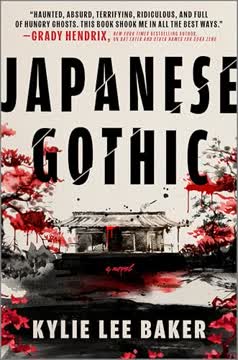
Plot Summary
Haunted House Arrival
Lee Turner, a troubled college student, flees New York after a mysterious incident involving his roommate, James. He arrives at his father's new home in rural Japan—a centuries-old house shrouded by sword ferns and secrets. Lee's mind is clouded by sedatives, guilt, and a gnawing sense of unreality. The house, with its strange stains and uncanny atmosphere, feels alive, as if it's waiting for him. Lee's father and his girlfriend Hina try to welcome him, but Lee's isolation is palpable. He senses anomalies everywhere: bloodstains in odd places, flowers blooming out of season, and a window that sometimes disappears. The house's history and Lee's own haunted past begin to intertwine, setting the stage for a collision between the living and the dead.
Blood, Lies, and Sedatives
Lee's life is a web of lies, sedatives, and suppressed trauma. He's haunted by the memory of his mother's disappearance years ago, and now by the recent, inexplicable murder of his roommate. Lee's relationship with his father is strained—his father loves him but cannot look at him, seeing too much of Lee's vanished mother. Lee's only comfort comes from Hina, who offers him ghost stories and small tokens of affection. Yet, even Hina is not what she seems. Lee's senses are unreliable: he cannot taste or smell, and he's obsessed with stains—physical and metaphorical—that he cannot scrub away. The house amplifies his anxieties, and the boundaries between reality and hallucination blur as Lee tries to hide his guilt and keep his father safe.
Samurai Shadows Return
In 1877, Sen, the daughter of the last samurai, lives in the same house, now a refuge for her disgraced family after the fall of the samurai class. Sen is trained as a warrior by her harsh, broken father, who survived the failed rebellion but returned a shell of himself. Her mother and brothers are caught between fear and hunger, while Sen shoulders the impossible burden of being both protector and weapon. The house is crowded with servants and secrets, and Sen's only solace is her sword. She is haunted by the memory of her lost sister and the knowledge that her family's days are numbered. The past and present begin to echo each other, as Sen's story of survival and shame unfolds in parallel to Lee's.
Ghosts in the Well
Lee and Hina bond over ghost stories, particularly the tale of Okiku, a murdered servant girl whose spirit haunts a well. The house's history as a samurai residence is revealed through its architecture and the stains that refuse to fade. Lee's insomnia and drug use intensify his visions: he hears his mother's voice, sees shadows with no source, and feels the house's pulse. Meanwhile, Sen in the past is forced to confront her own family's decline and her father's increasing instability. Both Lee and Sen are drawn to the well, sensing it as a threshold between worlds. The supernatural becomes increasingly tangible, as the house's true nature begins to emerge.
The Door Between Worlds
Lee discovers that the house is larger on the inside than the outside, and that a sliding door in his room sometimes opens onto another world. One night, he encounters Sen's shadow through the door—a girl from the past, armed and wary. Their first contact is fraught with fear and violence, but also recognition. Both are haunted, both are outcasts, and both are searching for answers. As they begin to communicate, they realize that the house is a bridge between their times, and that their fates are intertwined. The door only opens under certain conditions, often when the tide is low, hinting at a deeper connection to the sea and to the legend of Urashima Tarō.
Samurai Daughter's Burden
Sen's life is a relentless test of loyalty and strength. Her father's training is brutal, and her mother's love is conditional. Sen is forced to make impossible choices: to harm her own mother at her father's command, to kill spies to protect her family, and to bear the weight of her family's honor alone. Her only comfort is the hope that her father will one day be proud of her. But as the government closes in, Sen realizes that her family is doomed. The house becomes a prison, and Sen's dreams of glory turn to nightmares of blood and betrayal. Her connection to Lee becomes a lifeline, even as her world collapses.
Stains and Secrets
Lee's obsession with stains—on walls, on shirts, on souls—mirrors his desperate need to uncover the truth about his mother, James, and himself. As he and Sen share more of their stories, they begin to piece together the mysteries of the house and their own pasts. Lee's father is hiding something, and Hina's behavior grows increasingly erratic. The boundaries between guilt and innocence, past and present, blur. Lee's search for his mother's fate leads him to disturbing revelations about human trafficking and family secrets. Sen, meanwhile, is forced to confront the reality that her father's love is inseparable from his violence, and that her own survival may require a betrayal she cannot bear.
The Bridge of Death
Lee and Sen discover that their physical contact allows them to cross into a liminal world—a gray, ashen beach where the dead linger. Together, they search for Lee's mother, but find only emptiness and echoes. The legend of Urashima Tarō, the fisherman who visits the undersea palace and returns to find centuries have passed, becomes a metaphor for their own journey. Both are trapped by time, unable to return to the lives they once knew. The house, the well, and the sea are all revealed as thresholds between life and death, memory and forgetting. Their bond deepens, but so does the sense of impending doom.
The Legend's Curse
The story of Urashima Tarō is woven throughout the narrative, serving as both a warning and a prophecy. Like the fisherman, Lee and Sen are offered a chance to escape their pain, but at the cost of losing everything they love. The house is revealed to be a kind of palace beneath the sea, built by the immortal Otohime to shelter lost souls. But the price of sanctuary is stasis—time stops, but healing never comes. When the box is opened, the borrowed time runs out, and the true cost of escape is revealed. The legend's curse is that no one can outrun their fate, and that the past will always reclaim its own.
Fathers and Failures
Both Lee and Sen are ultimately betrayed by their fathers. Sen's father, unable to bear his shame, murders his family and begs Sen to help him die with honor. Sen is forced to become his executioner, and then to take her own life. Lee, in the present, is driven to madness by the realization that his father may have killed his mother, and that he himself is capable of violence beyond his understanding. The house becomes a stage for their final confrontations, as the sins of the past and present converge. Both are left alone, haunted by the ghosts of those they loved and lost.
The Truth Unburied
In the aftermath of violence, Lee and Sen are both mortally wounded—Lee by his own hand and his father's, Sen by her father and herself. As they die, their worlds finally merge. They meet one last time, hand in hand, in the liminal space beneath the house, surrounded by water and ashes. The truth is revealed: the house was a sanctuary built by Otohime, the sea goddess, to save them from their fates, but it could not protect them from themselves. The stains, the doors, the well—all are echoes of the pain they could not escape. In the end, they are remembered only by each other.
The End of the Samurai
Sen's story ends as it began: with a sword at her brother's throat, a family on the brink of destruction, and a house full of secrets. The cycle of violence and loss repeats, but with each retelling, something changes. Sen's final letter to Lee is a plea for remembrance—a hope that their stories will not be lost to time. The house behind the sword ferns remains, a monument to all that was loved and lost. The legend of Urashima Tarō lingers, a reminder that time is both a curse and a gift, and that the only immortality is memory.
The Last Letter
Sen's last letter to Lee is a testament to their unlikely bond. She entrusts him with her story, her house, and her memory, asking only that he remember her. In doing so, she breaks the cycle of shame and silence that destroyed her family. Lee, in turn, is left with the knowledge that he is not alone—that even in death, connection is possible. The house, the sword, and the letter become symbols of hope in the face of despair. The story ends not with closure, but with the promise of another meeting, another chance, another beginning.
Analysis
A modern gothic meditation on trauma, memory, and the longing for connectionJapanese Gothic is a haunting exploration of the ways in which the past refuses to stay buried. Through its dual narratives, the novel examines how cycles of violence, shame, and longing are passed down through generations, shaping the lives of those who inherit them. The house behind the sword ferns is both sanctuary and prison—a place where time folds in on itself and the boundaries between worlds blur. The supernatural elements are not mere scares, but metaphors for psychological wounds that cannot be healed by denial or escape. The legend of Urashima Tarō serves as a warning: borrowed time is no substitute for true healing, and the price of forgetting is the loss of self. Ultimately, the novel suggests that the only way to break the cycle is through remembrance and connection. Sen's final letter to Lee is a plea for acknowledgment—a hope that their stories will not be lost to time. In a world where endings are inevitable, Japanese Gothic offers the possibility of another meeting, another chance, another beginning.
Review Summary
Japanese Gothic is a dual-timeline gothic horror novel receiving largely enthusiastic reviews, with most readers praising its haunting atmosphere, rich Japanese mythology, and emotionally layered characters. Reviewers highlight the immersive prose, creepy house setting, and clever intertwining of two timelines set in 1877 and 2026. The audiobook narration by Natalie Naudus earns consistent praise. Some readers found the pacing slow or the ending confusing, while a minority felt the characters underdeveloped. Overall, it's considered a standout horror release of 2026 and a strong follow-up to Baker's debut adult horror novel, Bat Eater.
Characters
Lee Turner
Lee is a young man tormented by guilt, trauma, and a relentless need to uncover the truth. His mother's disappearance and his own involvement in a violent death have left him emotionally numb, reliant on sedatives, and alienated from those around him. Lee's relationship with his father is fraught—he craves approval but feels fundamentally unlovable. His obsession with stains and secrets mirrors his inability to let go of the past. Lee's psychological landscape is a labyrinth of denial, self-loathing, and desperate hope. His connection with Sen offers him a brief respite from isolation, but ultimately, he is forced to confront the darkness within himself. Lee's journey is one of painful self-discovery, as he learns that the truth can be both liberating and destructive.
Sen (Iwasaki Sen)
Sen is the eldest daughter of the last samurai, raised to be both weapon and protector in a world that no longer values her kind. Her father's impossible expectations and her mother's conditional love have left her emotionally scarred, fiercely loyal, and deeply lonely. Sen's identity is shaped by violence, sacrifice, and the constant threat of annihilation. She is both victim and perpetrator, forced to harm those she loves to survive. Her connection with Lee is a lifeline, offering her a glimpse of a world beyond duty and shame. Sen's psychological struggle is between obedience and selfhood, honor and survival. In the end, her greatest act of courage is to choose herself, even as it leads to her death.
James Turner (Lee's Father)
Lee's father is a man haunted by loss and failure. His love for Lee is real but compromised by his inability to accept the parts of his son that remind him of his vanished wife. He is emotionally withdrawn, hiding behind routines and small acts of care. His own secrets—about Lee's mother, about his reasons for moving to Japan—fuel the atmosphere of suspicion and unease. As the story unfolds, it becomes clear that he is both victim and perpetrator, complicit in the cycles of violence and silence that define the family. His psychological complexity lies in his simultaneous desire to protect and to control, to love and to erase.
Hina
Hina is Lee's father's girlfriend, but her role is far more complex. She is a source of comfort and stability for Lee, offering him food, stories, and small tokens of affection. Yet, as the supernatural elements intensify, Hina's true nature is revealed—she is both protector and jailer, possibly an incarnation of Otohime, the sea goddess. Her motivations are ambiguous: she wants to keep Lee safe, but her methods are controlling and sometimes menacing. Hina embodies the duality of sanctuary and prison, love and possession. Her psychological depth comes from her longing for connection and her fear of abandonment.
Iwasaki Itaro (Sen's Father)
Sen's father is the last of a dying breed—a samurai who cannot let go of the past. His identity is built on honor, violence, and the rigid codes of Bushido. The failure of the rebellion shatters him, and he returns home a shell of his former self. His love for Sen is twisted by his need for control and his fear of shame. He is both mentor and abuser, demanding absolute loyalty while offering little affection. His psychological unraveling culminates in the murder of his own family and his plea for Sen to help him die with honor. He is a tragic figure, undone by the very values he sought to uphold.
Otohime
Otohime is the mythic architect of the house behind the sword ferns—a being who tries to save lost souls by trapping them in a timeless sanctuary. Her love for humans is both generous and possessive; she cannot bear to see them suffer, but her attempts to protect them only prolong their pain. Otohime's psychological complexity lies in her loneliness and her inability to accept the limits of her power. She is both savior and captor, longing for connection but doomed to be left behind.
Matt/James Baldridge
James (sometimes Matt, as Lee's memory fractures) is Lee's college roommate and the catalyst for Lee's descent into madness. His kindness and normalcy highlight Lee's alienation. The circumstances of his death are shrouded in mystery, and his presence lingers as both ghost and accusation. He represents the part of Lee that cannot be reconciled—the capacity for violence that lies beneath the surface. His psychological role is that of the innocent sacrificed to the protagonist's need for meaning.
Sen's Mother
Sen's mother is a figure of both warmth and coldness. She loves her children but is unable to protect them from their father's violence or the world's indifference. Her own survival instincts lead her to make impossible choices, including sacrificing Sen to the sea in a desperate bid to save her son. She embodies the complexities of maternal love in a world where survival often means betrayal.
Youna (Sen's Maid)
Youna is more than a maid—she is a quiet guardian, possibly another incarnation of Otohime. Her devotion to Sen is unwavering, and she tries to shield her from the worst of her father's wrath. Youna's psychological depth comes from her willingness to endure suffering for the sake of those she loves, and her quiet resistance to the violence around her.
The House
The house behind the sword ferns is a character in its own right—a living, breathing entity that holds the pain and secrets of all who have lived and died within its walls. It is both sanctuary and prison, a place where time folds in on itself and the boundaries between worlds blur. The house amplifies the psychological states of its inhabitants, reflecting their fears, desires, and regrets. It is the ultimate symbol of the story's themes: the impossibility of escape, the persistence of memory, and the longing for connection.
Plot Devices
Dual Timelines and Mirrored Narratives
The novel's structure alternates between Lee in the present and Sen in the past, their stories unfolding in the same house but separated by more than a century. This mirroring allows the reader to see how trauma, violence, and longing echo across generations. The dual timelines converge as Lee and Sen begin to interact, blurring the boundaries between past and present, reality and dream. The mirrored events—family breakdown, betrayal, and the search for meaning—underscore the universality of suffering and the cyclical nature of history.
The Haunted House as Liminal Space
The house is more than a setting; it is a plot device that enables the crossing of boundaries—between life and death, past and present, self and other. Its shifting architecture, mysterious stains, and supernatural phenomena create an atmosphere of unease and possibility. The house's connection to the sea and the legend of Urashima Tarō deepens its role as a place where time and fate are suspended, but never truly escaped.
The Stain Motif
Stains—on walls, on clothing, on souls—are a recurring motif that symbolize the persistence of guilt, shame, and memory. Lee's obsession with stains reflects his inability to move on from the past, while Sen's encounters with bloodstains mark the irreversible consequences of violence. The stains are both evidence and accusation, reminders that some wounds never heal.
The Door and the Well
The sliding door in Lee's room and the well in the yard are literal and metaphorical gateways. They allow for communication between Lee and Sen, and for journeys into the land of the dead. The conditions under which the door opens—often tied to the tides—suggest a deeper connection to the cycles of nature and the inevitability of change. The well, haunted by the legend of Okiku, is a symbol of secrets buried and truths waiting to be unearthed.
The Legend of Urashima Tarō
The story of Urashima Tarō is interwoven throughout the novel, serving as both a parallel and a cautionary tale. Like the fisherman, Lee and Sen are offered escape from their pain, but at the cost of losing their place in the world. The legend's themes of borrowed time, irreversible change, and the impossibility of return resonate with the characters' struggles. The myth becomes a lens through which the reader can interpret the novel's events, adding layers of meaning and foreshadowing.
Letters and Artifacts
Sen's final letter to Lee, the sword guard, and other small artifacts serve as tangible connections between the characters and their histories. These objects anchor the narrative, providing moments of clarity and continuity amid the chaos of shifting timelines and realities. They are reminders that even in the face of loss and forgetting, something endures.








































