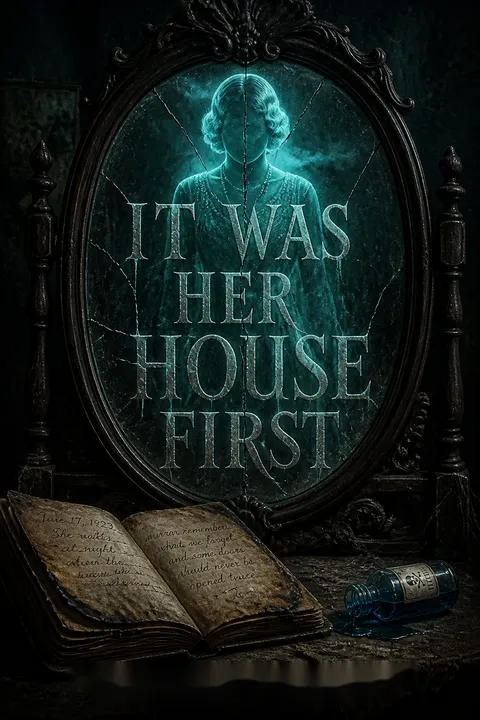

Plot Summary
Gallows and Ghosts Remain
The story opens with Bartholomew Sloan witnessing the hanging of Oscar Amundson, convicted for the murder of his wife, silent film star Venita Rost—a crime Sloan believes was a suicide framed to look like murder. Consumed with guilt and grief, Sloan inherits Oscar's house, a legacy he feels undeserving of. Memories swirl: the tragic string of deaths—first Priscilla, their child; then Venita by the cliff; finally Oscar; and now Sloan, alone in a home crowded with echoes and unresolved injustices. In the beautiful, artifact-filled Amundson home, Sloan confronts reminders of happier times and is tormented by a letter Venita left him. Reading her bitter note, blaming him for her child's death and vowing vengeance, breaks Sloan's resolve, leading to his own demise. The house, tainted and grieving, is left for others to inherit its curse.
Haunted House, New Owner
Years later, Veronica "Ronnie" Mitchell arrives on the scene, the new owner of the infamous house. She's a practical, anxious woman seeking restoration and perhaps reinvention after loss—her brother Ben's death has left her with both the funds and the compulsion to fix something broken. Accompanied by her friend Kate, Ronnie confronts the house's squalid grandeur, the brutal legacy of murder, suicide, and scandal whispered by the jumpy trustee agent Jeff. As unlocking doors triggers unease, urban legend and neighborhood suspicion seep in: little girls' deaths, starlet suicides, ghostly presences—all go unchallenged by Ronnie. Practical, skeptical, and haunted by her own regrets, she nonetheless feels the gravity of her new haunted home.
Tour with Hidden Grief
Ronnie and Kate's tour becomes both a physical and emotional investigation. Each crumbling room and toxic whiff carries the memory of past residents, but also of Ronnie's own buried grief—including Ben's death, which she blames herself for while hiding the truth from Kate. They catalog restoration dreams alongside whispered tragedies—dead flippers, lost children, suicides. Kate's interest in moving in, and her banter, contrast with Ronnie's undercurrents of anxiety and survivor's guilt. The house becomes a vessel for unresolved loss, drawing the living and dead together into uneasy proximity.
Specters of the Past
The neighborhood's lore comes alive through trustee Jeff's ghost stories. As he details the sequence of death—Priscilla, Venita, Oscar, and Sloan—Ronnie and Kate parse fact from myth, searching for logic in hauntings. This interplay of skepticism and fascination sets the tone: Ronnie proclaims herself unafraid of ghosts, yet her compulsive worrying is a shield against both paranormal and psychological terrors. Memories of Ben resurface as the women discuss restoration, grief, and the stubborn persistence of the past. The house's reputation isn't just supernatural; it's social, economic, and emotional—a magnet for those with something to escape or confront.
Fixer-Upper, Broken Souls
Ronnie digs into the labor of reclamation—dumpsters, floor plans, leaks, and rot. The act of restoring the house becomes an imperfect therapy for her own cracked spirit. Kate's presence is a lodestone of found family, but reminders of Ben—the real shared bond—haunt every task. Ronnie's self-doubt, guilt, and neurotic planning mesh with the endless work; the narrative of haunted houses and haunted hearts intertwines. As secrets about Ben's death threaten to surface, Ronnie clings to action as salvation, hoping order and purpose can stave off the sense that the house—and life—will always be unstable.
Basement Shrines and Secrets
In the basement, Ronnie uncovers a modern shrine: Hugh Crawford's obsessive fan tribute to Venita Rost, littered with rare films, books, and evidence of unhealthy fixation. Alongside, she finds Venita's water-damaged diary—her voice vivid, ambitious, wounded, and increasingly erratic. Both artifacts become windows into the past and the machinery of haunting: the persistence of obsession, sorrow, and vengeance. As Ronnie pores over the diary, Venita's heartbreak and rage reach out across decades, blurring the line between historical research and supernatural influence.
The Platinum Cat Appears
A platinum-hued cat—possibly Venita's spectral avatar—appears to Ronnie. Its ambiguous nature (ghost or stray) compounds Ronnie's sense of unsettled reality. The cat weaves through the story as a symbol of Venita, of innocence, of lingering attachment. Its appearances track thresholds of change: the cat is present at moments of revelation, danger, or existential questioning. For Ronnie, who prefers dogs and craves pure logic, the uneasy gift of mystery is simultaneously enticing and disorienting.
Unveiling Diary, Unveiling Trauma
As more of Venita's diary is revealed, Rashomon-like layers of the household tragedy emerge: her love for Priscilla, her fury at Sloan, her unraveling. Ronnie, reading between lines, recognizes herself in Venita's rage and grief. Parallel to Venita's descent is Ronnie's own: she reveals, in a moment of half-drugged candor, the truth about Ben's death—her own medication-abetted negligence and resulting guilt. The ghosts in the house are doubled by ghosts within. The act of reading draws old and new wounds together until the diary becomes almost sacramental—a bridge and a curse.
History in the Mirror
The story shifts into the house's "memory" as Sloan, in life and afterdeath, recounts his own downfall. Seeking forbidden power to be the perfect detective, Sloan had bargained with unnatural forces; guilt and the resulting curse taint everything. The parlor's great mirror, site of Priscilla's accident, becomes a literal and figurative portal: it is both a witness to evil and a possible weapon. Sloan's knowledge of Coty/Andrew's lurking intentions in the present echoes his regretful warnings to Venita. The haunted house is also a haunted mind; every reflection is layered. Sloan, unable to intervene in life, tries to protect Ronnie from repeating his mistakes and from the darkness Coty brings.
The Lure of Venita
Venita's spirit emerges in full: a charismatic, dangerous, tragic figure. She seduces both the living and the dead—Ronnie is drawn into visions of the house's golden age, a lucid dream wreathed in nostalgia and threat. Venita's rage against Sloan—blamed for Priscilla's death—erupts anew, and she allies with Ronnie when Coty's intentions become clear. As restoration progresses, Venita's moods and memories bleed into the world: the past is never past. Her power to shape the environment is revealed, blending haunting with wish-fulfillment and vengeance.
Coty's Obsession Emerges
Coty (aka Andrew), under the guise of neighborly interest, reveals his obsession with his ancestor Sloan and his belief that the house offers supernatural power. His lies grow more evident as he maneuvers to access the house and Venita's diary, fixated on usurping Sloan's bargain with the supernatural and transcending his failed life. Ronnie's suspicions, Kate's conflicted loyalties, and the imminent threat of Coty's rituals escalate. Ghostly warnings and human jealousy entwine. Coty's increasingly erratic actions lead toward confrontation—the haunted legacy is about to claim a new victim.
Poisoned by the Past
Coty breaks in, armed and desperate, demanding the secrets of Sloan's power. Ronnie, using quick wits, delays him while Venita and Sloan's ghosts intervene. Venita bewitches Coty with all her starlet charm, luring him to repeat Sloan's fatal ritual—drinking gin laced with poison. Ghostly battles blur with physical ones; Coty, attempting to claim kinship and destiny, is undone by the house's history. His soul, seeking power or escape, instead finds only death and oblivion. The cycle of inheritance and haunting continues: the price of bargains and the dangers of unearned legacy are underscored.
The Final Bargain Plays Out
With Coty dead and his ritual failed, spectral energies shift. Sloan's ghost, complicit in both carnage and protection, finds possible release—or at least replacement—in Coty's demise. Venita, her vengeance fulfilled, softens into the role of house guardian rather than fury. Ronnie contemplates both her complicity and survival: what it means to inherit not just a house, but unfinished business and generations of unresolved pain. The house itself seems soothed; some ghosts linger, others fade, but the balance has changed.
Houses That Hold Grudges
Ronnie and Kate, now reconciled, begin in earnest to remake the house. The labor is physical and metaphorical: demolishing walls, erasing mold, installing new systems—creating safety and home where there was decay and danger. The haunted reputation subsides; Venita's presence, once terrifying, becomes a source of conversation, wisdom, and even advice. The platinum cat lingers, a benign familiar, as restoration and ghostly acceptance go hand in hand. The violence of the past becomes memory, not prophecy.
Renovations and Reconciliations
As the house revives, so do the bonds among the living. Ronnie shares her truths with Kate, embraces medication again, and chooses connection over isolation. Restoration is not exorcism—Venita's continued presence affirms the value in integrating pain and legacy rather than denying it. Coty's absence confirms that some ghosts are not worth saving, but others are: the dead and living must learn to cohabit, honor, and forgive, even as they keep their distance.
Haunting Lingers, Futures Beckon
With the work nearly complete, Ronnie muses on the nature of haunting—how homes, histories, and hearts hold onto their wounds but also their beauty. Venita, now more muse than menace, haunts less from rage than from longing to be remembered and to see her home restored. Ghosts, like trauma, can be lived with—not always defeated, but accommodated and understood. Ronnie, finally at home, offers hospitality to the house and its past, forging a future that acknowledges every shade between light and dark.
Analysis
Haunted by what we cannot repair, "It Was Her House First" is a searing exploration of inherited trauma, the allure and price of shortcuts, and the tangled nature of guilt and atonement
Priest's haunted house novel is less about ghosts than about the things we carry: guilt, grief, ambition, and the dreams of making the broken whole. By blending psychological realism with supernatural menace, she refashions old tropes—the cursed house, the vengeful mother, the detective's hubris—into piercing commentary on how we live with the past. Every character's attempt to conquer fate or outwit regret fails; only by embracing complexity, by allowing haunting to become a relationship rather than a malady, do the living and the dead find coexistence. The narrative's polyphonic structure echoes its lessons: no one person, perspective, or generation owns the whole truth. The house, like trauma itself, is never fully cured, only reoccupied and reimagined. For modern readers, the novel's lesson is plain—what haunts us will shape us, but healing comes not from expulsion, but from listening, accommodating, and, ultimately, forging new futures on old ground.
Review Summary
Reviews for It Was Her House First are generally positive, averaging 3.69 out of 5. Readers praise the multiple perspectives — including ghost POVs and diary entries — the atmospheric setting of a decaying Seattle mansion, and the compelling protagonist Ronnie, whose anxiety and dry humor resonate with many. The blending of past and present timelines is frequently highlighted as a strength. Common criticisms include a slow start, excessive focus on house renovations, and insufficient scares. Comparisons are drawn to The September House and works by T. Kingfisher and Rachel Harrison.
Characters
Veronica "Ronnie" Mitchell
Ronnie is a meticulous, neurotic, and deeply empathetic woman who inherits the haunted house after her brother Ben's death—an act that fills her with both obsessive energy and gnawing self-loathing. She is plagued by anxiety and intrusive worry, which originated as a coping mechanism during childhood but became overwhelming after her unintentional role in Ben's death. Ronnie's urge to restore the house is inextricably linked to her need to atone, control, and distract from her own psychic pain; she fears ghosts less than her own mind. Her bonds with Kate are fierce but fraught, as she strives to protect others even as she isolates herself. Ronnie's arc is from guilt-ridden survivor and skeptic to a reluctantly open believer who learns to coexist with ghosts—both literal and emotional—finding solace in acceptance, honesty, and the ongoing work of building a home.
Kate
Kate, Ben's fiancée and Ronnie's best friend, is pragmatic, loyal, and unexpectedly tough. She anchors Ronnie through wit and dogged presence, offering a sense of chosen family after Ben's death. Kate's dynamic with Ronnie is both codependent and reparative, and her openness to moving in together serves as a redemptive gesture for both women. Kate is also the bridge between skepticism and belief; although her responses to hauntings are grounded, she comes to accept the layers of the house's trauma as restoration progresses. Her willingness to forgive and reconnect helps Ronnie surface from the depths of guilt and anxiety, showcasing the restorative power of friendship.
Venita Rost
Venita is at once a glamorous icon and a wrathful wraith—her film star persona both shield and sword. Psychologically, she is driven by a mother's love for her lost child and undying rage at those she perceives as responsible; her elaborate suicide, framed as murder, is both act of vengeance and tragedy. In death, her spectral influence shapes the house's reality—she both enthralls and terrifies, pulling others into her narratives. Venita evolves from a figure of uncontrollable fury to a complex matriarchal ghost, torn between vengeance and longing for connection, eventually helping Ronnie protect the house and establishing an uneasy, tender detente.
Bartholomew Sloan
A onetime legendary investigator, Sloan is both victim and perpetrator: his quest for supernatural certainty led to a Faustian bargain, ultimately dooming himself and others. Grief-stricken and burdened by guilt over Priscilla's death (accidental, but at his hand in a magical mishap), Sloan spends his afterlife trying to warn others and atone for his mistakes. His relationship to Venita is adversarial yet tinged with regret, while his concern for Ronnie offers a chance at partial redemption. Sloan's character illustrates the cost of shortcuts and the moral ambiguity of power—the limits of knowledge can imperil as much as they empower.
Coty Deaver / Andrew Stack
Coty, Sloan's descendant, represents toxic inheritance: aimless, envious, and deeply dissatisfied, he is determined to steal the supernatural "blessing" of his uncle. His duplicity, dishonesty, and sense of entitlement make him dangerous—he is both wannabe hero and villain. Coty's psychological profile is dominated by resentment, a sense of familial failure, and willingness to risk others for his own gain. His fatal confrontation with the supernatural—mirroring Sloan's own—ends with his undoing, a cautionary tale about coveting legacy without understanding its costs.
Hugh Crawford
A previous owner and amateur restorer, Hugh is a lonely man who succumbs to the house's curse. His creation of a basement shrine to Venita symbolizes the dangers of nostalgia and fixation; ultimately, his fixation doesn't save him and he dies alone, joining the legacy of haunted men. In the afterlife, he offers Ronnie minor guidance, another echo in the chorus of lingering spirits.
Oscar Amundson
Oscar is both innocent and destroyed—hanged for Venita's murder after her engineered suicide. His loss underscores the fallout of unchecked vengeance and the collateral damage of grief. In life, he was loving but perhaps naive, unable to see the storm brewing in his marriage or protect his family. His death hands the cursed house to Sloan, deepening the cycle of haunted inheritance.
Priscilla Amundson
Priscilla's death (accidental, supernatural, devastating) is the gravestone upon which the entire narrative pivots—the loss from which no character recovers. Her innocence is preserved in memory and in the diary, but her absence is the defining wound, animating both Venita's vengeance and the house's sorrow. Her ghost, notably, does not haunt: perhaps a mercy, a lost hope for peace.
Jeff Gaines
Jeff represents the wary community, haunted by local lore and eager to distance himself from the house's legacy. His anxious presence and insistence on divulging the property's history set the tone for Ronnie's introduction to the home—a harbinger of the unease and threat the house brings.
The Platinum Cat
Neither fully explained nor entirely benign, the platinum cat serves as an unearthly familiar for Venita and a living connection between eras. Embodying innocence, memory, and the uncertain borders between worlds, its silent guidance and reappearances emphasize the story's core themes of haunting, repetition, and the unfathomable persistence of loss.
Plot Devices
Layered, Polyphonic Narrative
The story is told through interleaved perspectives—Ronnie (the haunted present), Sloan (posthumous guilt), and Venita (diary entries and apparitions)—blending first-person immediacy with epistolary confession. This structure blurs the boundary between memory, haunting, and reality, keeping the reader uncertain about what is supernatural and what is psychological. The result is both disorienting and intimate, emphasizing the instability of perception in a haunted house and a haunted mind.
Foreshadowing through Setting and Rumor
The house's literal collapse, with holes in the floor, boarded windows, mold, and rot, is not just background but an active tool: every structural flaw mirrors a trauma or secret. Lore and local gossip foreshadow the cyclical dangers—every previous owner dies or flees, and each new arrival inherits both the house's beauty and its peril. The recurring appearances of the platinum cat and shifting environments (as Venita reclaims spaces with spectral authority) warn both character and reader of cycles yet unbroken.
Found Documents: The Diary
Venita's diary, discovered and painstakingly deciphered by Ronnie, becomes the central mystery artifact, gradually illuminating not just what happened, but how grief and blame fuel haunting. The physical deterioration of the diary parallels the unreliability and fragmentary nature of memory; the slow reveal—interrupted pages, lost letters, illegible passages—raises suspense and invites interpretation. Its presence, hidden and protected, fuels the conflict with Coty and drives the supernatural climax.
Mirrors as Portals and Witnesses
Mirrors, especially the grand parlor mirror, act as literal and metaphorical gatekeepers. They reflect but also invite, serving as scenes of tragedy (Priscilla's death), magical invocation (Sloan's bargain), and communication with the dead. Their power to reveal—sometimes with violence—makes them loci of both memory and supernatural intervention. The motif of seeing and being seen, of appearances versus truth, runs throughout, with mirrors as both temptation and warning.
Ritual and Repetition: The Dangers of Seeking Power
The story's tragic engine is the repetition of ill-conceived bargains—first by Sloan, then by Coty/Andrew, both hungry for the shortcut to greatness. The rituals that brought disaster once are mirrored and replayed as the present reckons with the past. Haunting functions as a moral and magical law: those who try to possess or supplant the past's power invite its curse. Only acceptance, not conquest, offers peace.
Psychological Haunting and Unreliable Reality
Internal states are rendered as external threats; Ronnie's guilt over Ben, Sloan's over Priscilla and Venita, Venita's over her own reactions, all become landscape in the house. The moments of supernatural menace are often indistinguishable from panic attack or depressive break—allowing every ghost to double as a metaphor for unresolved trauma. Resolution comes not from exorcism but from integration: only by accepting what can't be changed or explained do the characters (and house) find uneasy peace.


Download PDF
Download EPUB
.epub digital book format is ideal for reading ebooks on phones, tablets, and e-readers.








































