Key Takeaways
1. Interoception: Your Inner Sense Guiding All Aspects of Health
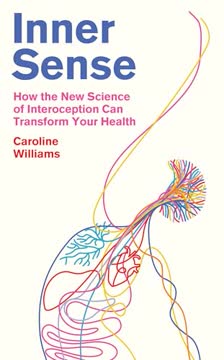
It’s called interoception: the sense of our own bodies from within, and it’s a catch-all term for the way the brain makes sense of signals and sensations that originate from inside our bodies, such as heartbeat, hunger, temperature, fatigue, vigour, pleasure and pain.
A hidden universe. Imagine a sense more fundamental than sight or hearing, one that constantly monitors your internal world, influencing every thought, feeling, and decision. This is interoception, the "inner sense" that processes signals from organs and tissues, providing vital clues about your current and future well-being. It's the biological mood music coloring your existence, yet often operates beneath conscious awareness.
Beyond the brain. For centuries, Western science largely divorced the mind from the body, assuming all important mental processes happened "from the neck up." Interoception challenges this, revealing the brain not as a solitary boss, but as an equal partner, working in close collaboration with the body. This integrated view offers potential for better well-being, reduced stress, increased energy, and new treatments for complex conditions affecting both mind and body.
Modern disconnect. Our modern world, with its sensory overload, sedentary lifestyles, and ultra-processed foods, often numbs us to these subtle internal signals. This disconnect can lead to a vague sense of unease, making us vulnerable to external influences and hindering our ability to understand our true needs. Reconnecting with interoception promises a path to greater self-awareness and resilience in an increasingly complex world.
2. The Body and Brain Co-Create Reality Through Constant Dialogue
The brain wasn’t created in a vat and bolted onto the body, fully formed; it emerged from the body with the sole aim of keeping the body alive.
Evolutionary imperative. Life's fundamental drive is survival, achieved through homeostasis—the cellular process of self-care. As organisms grew more complex, the brain evolved to manage this internal stability, not just reacting to changes but predicting them. This "allostasis" allows us to adapt in advance, using past lessons to guess what's coming next, making us experts at navigating complex environments.
Predictive processing. Our brain constantly makes "best guesses" about what our senses will report, preparing the body accordingly. Sensory information then either confirms these predictions or creates an "error signal," prompting adaptation. This dynamic interplay dictates our experience of reality, influencing thoughts and feelings even when we're unaware of the underlying body-brain discussions. For example:
- A rumbling stomach predicts hunger.
- Seeing a hill makes legs feel tired in anticipation.
- Ignoring pain in an emergency to focus on escape.
Feelings as a user interface. Feelings act as a "slick user interface," summarizing our physiological state along scales of "good to bad" and "urgent to less urgent." These sensations, from unease to vitality, are the foundation of our basic sense of self. Pioneering researchers like Antonio Damasio and Bud Craig emphasized that consciousness is rooted in the body's current needs, not just the brain, highlighting that "feelings tell you, in no uncertain terms, what is happening to you."
3. The Vagus Nerve: A Crucial Highway for Body-Brain Communication
In fact, parasympathetic nerves actually only make up around 20 per cent of the total in the vagus nerve; the other 80 per cent is made up of so-called sensory afferent fibres that carry bottom-up sensory information from the organs and other viscera to the brain.
The wandering nerve. The vagus nerve, named for its "wandering" path, is a primary communication highway connecting the brain to major organs and blood vessels. While often popularized as a "one-stop shop" for calming the body, its role is far more complex. Only 20% of its fibers transmit "rest and digest" signals from the brain; the vast majority (80%) are sensory, carrying vital "bottom-up" information from the body to the brain.
Mapping the superhighway. Scientists are meticulously mapping the vagus nerve's 100,000 fibers to understand its intricate organization. This research aims to develop targeted stimulation therapies, moving beyond current methods that activate all fibers indiscriminately. For instance, initial studies in pigs show that fibers for different organs cluster together, suggesting future implants could precisely target specific areas, like the spleen for inflammation, without affecting others.
Beyond popular hacks. While cold-water plunges or deep breathing are often touted as vagus nerve "hacks," the precise mechanisms are still being investigated. The anti-inflammatory reflex, discovered by neurosurgeon Kevin Tracey, demonstrates a clear two-way communication: sensory vagal neurons detect inflammatory signals, and the brain responds by sending anti-inflammatory messages back via the vagus nerve. This targeted understanding is revolutionizing treatments for conditions like rheumatoid arthritis, offering "fine-tuned control" over the body's responses.
4. Your Energy Levels Are a Dynamic Body-Brain "Budget"
Whether we feel full of pep or dead on our feet is the result of an ever-shifting body–brain estimate of whether we have energy to spare or whether we should conserve what we have.
Subjective vitality. Our perception of energy, or "subjective vitality," is not merely a fuel gauge but a complex interoceptive feeling. It's a body-brain estimate of available energy, current demands, and a prediction of future needs. This explains why "boosting energy" isn't as simple as consuming more calories; it's about balancing supply, demand, and cautious budgeting.
Mitochondrial psychobiology. Doug Wallace pioneered the study of mitochondria—the "powerhouses of the cell"—linking their energy production to health and the mind. Martin Picard further developed "mitochondrial psychobiology," showing how genetics, stress, diet, exercise, and aging affect mitochondrial function and, consequently, our mental state. When mitochondria struggle, we feel exhausted, signaling a literal lack of cellular energy.
Modern life's energy drain. Ultra-processed foods, chronic stress, and sedentary lifestyles disrupt mitochondrial efficiency.
- Diet: Too much sugar and fat can jam the energy production line, leading to less available energy and fatigue.
- Stress: Cortisol, the "action hormone," mobilizes energy, but chronic stress depletes resources, making cells burn fuel 60% faster.
- Inactivity: Sedentary habits shrink muscles and reduce mitochondrial efficiency, leading to sluggishness.
This leads to "sickness behavior"—fatigue, demotivation, and irritability—a distress signal that something needs to change in our body-mind conversation.
5. Gut Feelings: A Complex Symphony Easily Disrupted by Modern Life
For most of our evolutionary history, this system has guided us well. But in a world where comfort food is easier to come by than meaningful human connection and where much of what we eat is tastier than it is filling, it can be a struggle to know what our bodies – and minds – are asking for.
The gut's wisdom. Our gut is a powerful communicator, constantly sending signals about hunger, fullness, and discomfort, loaded with feelings that drive our actions. This system, honed by evolution, motivates us to seek food for survival and even extends to social connection, making us "hungry" for human interaction and comfort. However, modern life often confuses these ancient drives.
Disrupting satiety signals. Ultra-processed foods (UPFs) are chemically engineered to be delicious and melt-in-the-mouth, reducing the need for chewing and containing less insoluble fiber. This "predigested" nature means we eat them faster and consume more calories before feeling full, as demonstrated by studies showing people eat 500 more calories daily on UPF diets. This disrupts the interoceptive pathways that regulate appetite, making fullness an unreliable signal.
The gut-brain axis. The gut's "second brain"—the enteric nervous system—communicates rapidly with the brain via the vagus and spinal nerves, forming the gut-brain axis. Specialized "neuropod cells" in the gut lining detect nutrients and microbial secretions, translating them into neurotransmitters that influence appetite, mood, and cravings. High-fat and high-sugar diets can "desensitize" calorie-counting neurons in the hypothalamus and alter dopamine pathways, leading to persistent cravings even after weight loss. Interventions like GLP-1 agonists mimic fullness signals, effectively "switching off" appetite, but highlight the need for a deeper understanding of these complex pathways.
6. "Bodymetal Health" Integrates Physical and Mental Well-being
In this new view of health, the best treatments aren’t trying to tackle physical and mental issues separately, but as one fully integrated system that only makes sense when viewed as a whole.
Beyond the mind-body split. The concept of "bodymetal health" recognizes that physical ailments and mental disorders are not separate entities but arise from glitches in the interconnected body-brain system. This paradigm shift moves beyond treating symptoms in isolation, aiming to understand and rebalance the dynamic communication loop that underpins our conscious experience.
Anxiety's bodily roots. Anxiety disorders are a prime example of bodymetal health issues. Conditions like joint hypermobility, which causes stretchy blood vessels, can lead to a racing heart when standing or in heat. The brain, lacking an external threat, interprets this unexplained physiological arousal as anxiety. Similarly, some individuals are hypersensitive to stress hormones, triggering anxiety at lower thresholds. These "bottom-up" signals clash with the brain's "top-down" predictions, creating a distressing mismatch.
Inflexibility and self-perception. Mental health disorders like anxiety, depression, eating disorders, and addiction often involve an "inflexibility" in updating the brain's predictions when confronted with new bodily evidence. People with these conditions tend to stick to past assumptions about their body's state, even when current signals contradict them. This disconnect can manifest as alexithymia (difficulty identifying emotions) or alexisomia (inability to notice bodily sensations), leaving individuals perpetually confused about their feelings and contributing to poor body image.
7. Pleasure and Pain: Intertwined Survival Signals Shaped by Experience
The way that pleasure, pain and emotion are intricately intertwined also explains the recent finding that painkillers such as paracetamol blunt not only physical pain but also the emotional pain of rejection.
Survival's motivators. Pleasure and pain are fundamental interoceptive motivators, driving us to seek beneficial experiences and avoid harm. These feelings exist on a spectrum of positive to negative valence and urgency, prompting actions that ensure survival. However, in humans, this system is complex, intertwined with thoughts, emotions, and social relationships, making their interpretation and management challenging.
Pain beyond sensation. Pain is not merely a direct result of tissue damage; it's a complex emotional experience shaped by brain predictions and context. The classic "nail through the boot" story illustrates how intense pain can be felt even without physical injury, highlighting the brain's powerful role in interpreting signals. Physical and emotional pain are processed in the same brain regions, like the insula, and positive emotions can reduce pain, while negative ones, like anxiety, can amplify it (the "nocebo" effect).
Addiction as a homeostatic drive. Addiction, often misunderstood as a moral failing, is better viewed as a homeostatic drive gone wrong. Opioids, for instance, evoke feelings of warmth, safety, and unconditional love, hijacking the body's natural reward circuitry. Damage to the insula, the interoceptive cortex, can immediately eliminate cravings, suggesting addiction is driven by aberrant embodied sensations rather than just a lack of impulse control. Trauma and unmet early life needs can make individuals more vulnerable, seeking external substances to fulfill the hardwired need for safety and connection.
8. Cultivating Interoceptive Skills Empowers Self-Regulation and Resilience
When we understand ourselves as more than a biological machine run by a disembodied mind, we can start to live a life that is richer and more connected.
Mastering inner awareness. Integrating interoception into daily life begins with understanding your baseline and developing four key skills: precision (detecting signals), discrimination (distinguishing sensations), interpretation (understanding their meaning), and flexibility (shifting attention to address issues). Just as we learn potty training, we can learn to decipher and respond to our body's subtle cues, fostering a sense of agency over our well-being.
Practical strategies for tuning in:
- Body-based mindfulness: Practices like yoga, tai chi, or guided somatic meditations help you mindfully explore bodily sensations, identifying tension and promoting calm.
- Random check-ins: Use alarms or apps to prompt moments of self-awareness throughout the day, noticing breathing, muscle tension, or subtle feelings, and being curious about their meaning.
- Movement as medicine: Physical activity, from walking to stretching, helps rebalance the body-brain system, burning off stress hormones and resetting internal rhythms, combating lethargy and improving time perception.
- Affective touch: Gentle, slow touch (from others or self-touch) activates C-tactile fibers in the skin, releasing endorphins and oxytocin, promoting feelings of pleasure, safety, and reducing pain.
Leveraging technology and social connection. Tech tools like heart rate variability (HRV) monitors can help distinguish between physical fatigue and mental lethargy, guiding decisions on rest or activity. While continuous glucose monitoring offers insights into blood sugar, its benefits for non-diabetics are still debated. Ultimately, strong social connections are paramount; feeling safe and supported by others triggers natural pain relief and boosts energy. By understanding and actively engaging with our inner sense, we can navigate modern challenges, foster resilience, and live more connected, fulfilling lives.
People Also Read