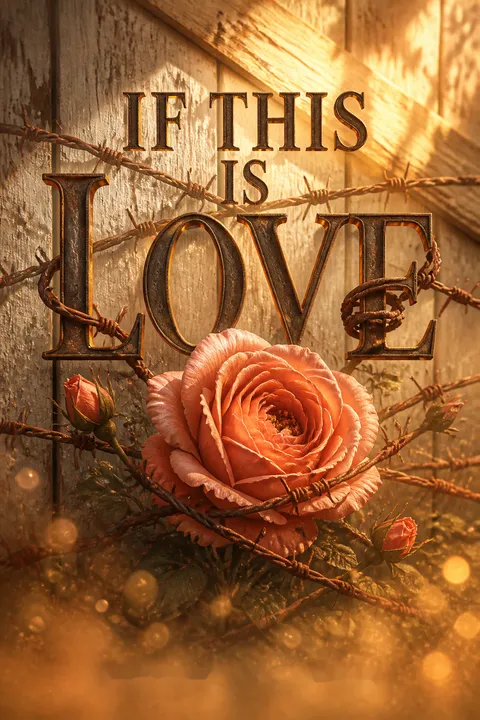

Plot Summary
Purchased for Love
Indiana "Indie" Ellington is purchased as a toddler by Fletcher Ellington for his wife Ruthie, a woman who cannot have children. Indie's earliest memories are shaped by Ruthie's warmth and Fletcher's cold authority. She is raised on a Texas ranch, always aware she is not "blood," a fact the Ellington family never lets her forget. Ruthie's love is unconditional, teaching Indie to question everything and find beauty in small things. But the knowledge of her transactional adoption lingers, making Indie feel like property, not family. This foundational wound shapes her sense of belonging and her hunger for real love, setting the stage for a lifetime of searching for connection and identity.
Ruthie's Garden, Ruthie's Ghost
Ruthie's sudden death devastates Indie, leaving her adrift in a house that feels less like home without her. Ruthie's gardens, once a place of comfort and learning, become haunted with memories. Fletcher, once softened by Ruthie's presence, collapses into grief and anger, withdrawing from Indie. The warmth of Ruthie's touch is replaced by the chill of Fletcher's indifference. Indie clings to the lessons Ruthie taught her—about love, resilience, and the power of chosen family—but the loss leaves a void. Ruthie's absence becomes a ghostly presence, shaping Indie's relationships and her desperate need to be seen and loved for who she is, not what she was bought to be.
Burnt Grilled Cheese and Grief
In the aftermath of Ruthie's death, Indie finds solace in Milo Odell, Fletcher's right-hand man. Milo, eight years her senior, becomes her protector and confidant, making her burnt grilled cheese sandwiches and offering quiet comfort. Their bond deepens as Fletcher's grief turns to neglect and anger, pushing Indie further into Milo's orbit. The ranch becomes a place of silent suffering, with Indie and Milo forming a makeshift family in the barn. Their connection is innocent but charged, a lifeline for Indie as she navigates loss and the feeling of being unwanted. Grief becomes both a barrier and a bridge, shaping the contours of their relationship.
Milo: Protector, Prisoner, Crush
Milo is both Indie's guardian and a prisoner of Fletcher's will. His own tragic past—his brother in prison, his sister institutionalized—mirrors Indie's sense of captivity. As Indie grows, her childhood crush on Milo intensifies, complicated by the boundaries of age, power, and circumstance. Milo teaches her ranch skills, listens to her fears, and becomes the only person who makes her feel safe. Yet, he is also bound by debts to Fletcher, unable to fully protect Indie or himself. Their relationship teeters between familial affection and forbidden desire, each finding in the other a reflection of their own longing for freedom and belonging.
Boarding School Exile
Fletcher, unable or unwilling to parent Indie, sends her away to boarding school. The exile is both a punishment and a relief, offering escape from the ranch's suffocating grief but deepening Indie's sense of abandonment. At school, Indie is an outsider, haunted by her past and her longing for Milo. Holidays and summers become bittersweet reunions, with Milo as her only anchor. The distance intensifies her feelings for him, turning childhood affection into adolescent yearning. The ranch, once a place of pain, becomes the only place she feels she belongs, but always as an outsider looking in.
Coming of Age, Coming Undone
Indie's return home as a teenager is marked by sexual awakening and the end of innocence. She witnesses Milo with other women, her crush evolving into jealousy and longing. The boundaries between them blur, charged with unspoken desire and the impossibility of acting on it. Indie experiments with sex, seeking validation and escape, but finds only emptiness. The ranch's oppressive atmosphere, Fletcher's control, and Milo's emotional distance push her toward self-destruction. Coming of age becomes a process of coming undone, as Indie grapples with her identity, her desires, and the pain of loving someone she cannot have.
The Uncrossable Line
The tension between Indie and Milo reaches a breaking point. Their relationship, once defined by care and restraint, becomes fraught with temptation and guilt. A single kiss changes everything, igniting a passion that cannot be contained but must be denied. Both are trapped—Milo by loyalty and debt, Indie by her status as Fletcher's "property." The line between right and wrong, love and betrayal, becomes increasingly blurred. Their longing is palpable, but the consequences of crossing the line are devastating. Theirs is a love that must remain unspoken, a secret that threatens to destroy them both.
Arranged Futures, Stolen Hearts
Fletcher's machinations reach new heights as he arranges for Milo to marry Jolene, Indie's lifelong rival. The marriage is a business transaction, a way to secure the family legacy and keep Milo under Fletcher's control. Indie is forced into the role of observer, watching the man she loves be given to another. The wedding becomes a symbol of everything she has lost—her family, her home, her chance at happiness. Milo, too, is trapped, forced to choose duty over desire. Their hearts are stolen by circumstance, their futures arranged by others, leaving them both longing for a freedom they cannot grasp.
The Kiss That Changes Everything
In a moment of vulnerability, Milo and Indie finally give in to their feelings, sharing a kiss that is both a confession and a curse. The kiss is electric, filled with years of longing and repression, but it changes nothing and everything. It cannot alter their circumstances, but it makes denial impossible. The emotional fallout is immediate—guilt, fear, and a deepening sense of loss. The kiss becomes a secret they must carry, a memory that haunts them as they navigate the fallout of choices made by others. It is the beginning of the end, the point of no return.
Forbidden Touches, Secret Pain
Milo and Indie's relationship becomes a series of stolen moments and forbidden touches. Their love is a secret, hidden from a world that would never accept it. The secrecy is both thrilling and agonizing, each encounter a reminder of what they cannot have. The pain of loving in the shadows takes its toll, leading to jealousy, misunderstandings, and self-doubt. Indie's sense of self-worth is battered by rejection and the knowledge that she will always come second to duty and legacy. Milo is torn between his love for Indie and his obligations, each choice wounding them both.
Jolene's Wedding, Indie's Loss
Milo's marriage to Jolene is a public spectacle and a private tragedy. Indie, forced to participate as a personal attendant, is humiliated and heartbroken. The wedding is a funeral for her hopes, a final confirmation that she will never be chosen. Milo, too, is broken, performing his role as husband while mourning the loss of the only woman he has ever truly loved. The aftermath is a spiral of grief, anger, and self-destruction. Both are imprisoned by choices not their own, their love buried beneath the weight of family, duty, and betrayal.
The Price of Freedom
Indie attempts to escape the ranch and her past, but freedom proves elusive. Every attempt to break free is met with new forms of captivity—emotional, financial, and physical. Fletcher's control extends beyond the grave, his manipulations ensuring that neither Indie nor Milo can ever truly be free. The price of freedom is steep—loss, loneliness, and the constant threat of violence. Indie's journey becomes one of survival, learning to navigate a world where love is a liability and trust is dangerous. The illusion of escape is shattered, replaced by the hard truth that some prisons are invisible but no less real.
Imprisoned by Family
Both Indie and Milo are imprisoned by the families that should have protected them. Fletcher's tyranny, Jolene's jealousy, and the legacy of violence and secrets keep them trapped in roles they never chose. Love becomes an act of rebellion, a way to assert agency in a world determined to control them. Their relationship, once a source of comfort, becomes a battleground—each fighting for scraps of happiness in a hostile environment. The cost of loving each other is high, but the cost of giving up is higher. Family, in this world, is both a curse and a crucible.
Escape and Return
Indie flees the ranch, seeking anonymity and peace in a new city. She builds a life for herself, working in a flower shop and forging new relationships. But the past is never far behind. Milo, too, is haunted by what he left behind—his sister Annie, his own sense of worth, and the love he cannot forget. Their paths cross again, drawn together by fate and unfinished business. The reunion is bittersweet, filled with longing and the knowledge that some wounds never heal. Escape proves temporary; the pull of home, and of each other, is inescapable.
Truths Unearthed, Wounds Exposed
The truth about Indie's parentage, Milo's family tragedy, and Fletcher's crimes come to light. Each revelation is a wound reopened, forcing Indie and Milo to confront the realities that shaped them. The knowledge is both liberating and devastating, offering answers but no easy solutions. Forgiveness becomes a central struggle—of self, of each other, and of the families that failed them. The process is messy, filled with anger, grief, and the slow work of healing. Only by facing the truth can they hope to build something new, free from the shadows of the past.
The Art of Forgiveness
In the aftermath of Fletcher's death and the unraveling of old secrets, Indie and Milo are left to pick up the pieces. Forgiveness is not a single act but an ongoing process—of themselves, of each other, and of those who hurt them. They learn that love is not about possession or perfection, but about acceptance and the willingness to try again. The art of forgiveness is hard-won, requiring vulnerability and courage. It is the only path to healing, the only way to transform pain into something beautiful.
Death of a Tyrant
Fletcher's death marks the end of his reign of terror and the beginning of a new chapter for Indie and Milo. The family gathers to mourn, but for Indie and Milo, it is a moment of liberation. The chains that bound them are broken, but the scars remain. The future is uncertain, but for the first time, it is theirs to shape. The death of the tyrant is both an ending and a beginning—a chance to reclaim their lives and build something new from the ashes of the past.
Annie's Apiary: A New Beginning
Indie and Milo, finally free from the ghosts of their past, create a new life together. They build a home filled with love, laughter, and the simple joys Ruthie once taught Indie to cherish. Annie's Apiary, named in honor of Milo's sister, becomes a symbol of healing and hope—a place where wounds can mend and new dreams can take root. Their love, tested by fire, endures. The story ends not with a grand gesture, but with the quiet certainty that, after everything, they have found their way home.
Analysis
A modern gothic of love, trauma, and the search for selfIf This Is Love is a searing exploration of the ways in which love can be both a wound and a salve, a prison and a path to freedom. Through the intertwined lives of Indie and Milo, the novel interrogates the legacy of family trauma, the corrosive effects of power, and the possibility of forgiveness. The story is unflinching in its depiction of abuse, neglect, and the ways in which children inherit the wounds of their parents. Yet, it is also a testament to resilience—the ability to survive, to love, and to build something new from the ashes of the past. The lessons are hard-won: that love is not about possession, that forgiveness is an ongoing process, and that freedom is never given but must be claimed. In the end, the novel offers hope—not in the form of a perfect resolution, but in the messy, beautiful work of starting over, of choosing love, and of daring to believe that, after everything, healing is possible.
Review Summary
If This Is Love receives mixed reviews, averaging 4.02/5. Fans praise the forbidden age gap romance, Yellowstone-esque cowboy setting, and intense angst between Milo and Indie. Many readers found the emotional journey captivating and the chemistry compelling. Critics, however, took issue with the hero being perceived as a coward, the arranged marriage plotline, a baby with the other woman, and an overly dramatic, soap-opera-like narrative. The rushed ending disappointed many. Content warnings include cheating, an age gap romance with early beginnings, arranged marriage, blackmail, and mature themes.
People Also Read

Characters
Indiana "Indie" Ellington
Indie is the emotional heart of the story—a girl bought for a million dollars, raised in a world where love is transactional and family is conditional. Her journey is one of longing: for acceptance, for love, for a sense of self that is not defined by others' choices. Ruthie's warmth shapes her early years, but Ruthie's death leaves Indie adrift, desperate for connection. Her relationship with Milo is both a lifeline and a source of pain, evolving from childhood crush to forbidden love. Indie's psychological arc is marked by resilience, self-doubt, and a fierce determination to claim her own worth. Her development is a testament to the power of chosen family and the possibility of healing, even after profound betrayal.
Milo Odell
Milo is both Indie's savior and a victim of his own circumstances. Haunted by a violent family history—his brother in prison for murder, his sister institutionalized after a traumatic injury—Milo is bound to Fletcher by debts of loyalty and survival. He is gentle with Indie, teaching her, comforting her, and ultimately falling in love with her. But his sense of duty and guilt keep him trapped, unable to fully claim his own happiness. Milo's psychological complexity lies in his struggle between self-sacrifice and desire, between protecting Indie and protecting himself. His journey is one of learning to forgive himself and to believe he is worthy of love.
Fletcher Ellington
Fletcher is the story's primary antagonist—a man who buys a child for his wife, arranges marriages for business, and wields power through fear and manipulation. His grief over Ruthie's death curdles into cruelty, making him a figure of both pity and horror. Fletcher's need for control is rooted in his own wounds, but he is ultimately unable to love or be loved. His psychological profile is marked by narcissism, rage, and a desperate need to maintain his legacy at any cost. Fletcher's death is both a liberation and a cautionary tale about the corrosive effects of unchecked power.
Ruthie Ellington
Ruthie is the moral center of Indie's childhood—a woman who loves fiercely, teaches gently, and believes in the power of chosen family. Her gardens are a metaphor for her approach to life: patient, nurturing, and full of hope. Ruthie's death is the story's original trauma, setting off a chain of grief and longing that shapes every character. Her legacy endures in Indie's resilience and in the lessons she leaves behind about love, forgiveness, and the importance of questioning everything.
Jolene
Jolene is Indie's lifelong antagonist—a cousin who embodies everything Indie is not: "blood" family, entitled, and ultimately chosen to inherit the Ellington legacy. Her arranged marriage to Milo is both a victory and a curse, leaving her with everything she thought she wanted but none of the love she craves. Jolene's psychological arc is one of envy, insecurity, and the slow realization that possession is not the same as happiness. She is both a victim and a perpetrator, her cruelty masking her own wounds.
Pauline
Pauline, Fletcher's sister and Jolene's mother, is a secondary antagonist—complicit in the family's dysfunction but also a survivor of its brutality. She is pragmatic, cold, and fiercely protective of her own interests. Pauline's relationship with Indie is marked by condescension and rivalry, but she is ultimately a product of the same system that wounds everyone. Her psychological complexity lies in her ability to adapt and endure, even as she perpetuates harm.
Annie Odell
Annie, Milo's twin sister, is a tragic figure—her life forever altered by violence and betrayal. Institutionalized and dependent, she becomes the ultimate pawn in Fletcher's manipulations, used to control Milo and keep him obedient. Annie's presence haunts Milo, a constant reminder of his guilt and the cost of survival. Her eventual death is both a release and a wound that can never fully heal.
Archer Odell
Archer, Milo's older brother, takes the fall for the family's tragedy, serving time in prison and ultimately dying as a result. His sacrifice is both noble and tragic, a testament to the ways in which love can be twisted by circumstance. Archer's absence shapes Milo's sense of responsibility and guilt, making him both a cautionary figure and a lost ideal.
Ty
Ty is Fletcher's bodyguard and enforcer, a man who does terrible things out of loyalty, fear, or necessity. His relationship with Indie is marked by violence and complicity, but he is also a victim of the same system that traps everyone. Ty's eventual death is a reminder that no one escapes unscathed, and that even those who do harm are often themselves harmed.
Benjamin
Benjamin, Milo and Jolene's son (via surrogate), is a symbol of both the cost and the possibility of new beginnings. Born into a world of secrets and pain, he represents the hope that the next generation can break the cycle. His presence forces Indie, Milo, and Jolene to confront their own wounds and to imagine a future that is not defined by the past.
Plot Devices
Transactional Love and Power
The central plot device is the idea that love, family, and belonging can be bought, sold, or arranged. Indie's adoption, Milo's arranged marriage, and the constant negotiations of loyalty and betrayal all revolve around the commodification of human relationships. This device is used to explore the ways in which power corrupts, love is distorted, and freedom is always conditional. The narrative structure is cyclical, with each generation repeating the mistakes of the last until someone is brave enough to break the pattern.
Dual Narratives and Shifting Perspectives
The story alternates between Indie and Milo's perspectives, allowing readers to see the same events through different lenses. This device creates dramatic irony, deepens emotional resonance, and highlights the ways in which trauma and love are experienced differently by each character. The shifting perspectives also allow for the gradual revelation of secrets, building suspense and empathy.
Foreshadowing and Symbolism
Ruthie's gardens, burnt grilled cheese sandwiches, and the recurring motif of food are used to symbolize care, neglect, and the hunger for love. The gardens foreshadow both growth and decay, while the sandwiches become a shorthand for comfort and connection. These symbols are woven throughout the narrative, grounding the emotional arc in tangible details.
Secrets, Revelations, and the Slow Unraveling of Truth
The plot is driven by secrets—about Indie's parentage, Milo's family tragedy, and Fletcher's crimes. The gradual revelation of these truths is used to build tension, complicate relationships, and force characters to confront their own complicity. The device of the "unearthing" of truth is both literal (as in the discovery of graves) and metaphorical, culminating in moments of catharsis and transformation.
The Prison of Family and the Possibility of Chosen Love
The story uses the device of family as both a literal and metaphorical prison, exploring the ways in which blood ties can be both binding and redemptive. The possibility of chosen love—of building a family not based on obligation or transaction but on genuine care—is held out as the ultimate hope. The narrative structure moves from captivity to liberation, from inherited wounds to the possibility of healing.
About the Author
Other books by Jewel E. Ann


Download PDF
Download EPUB
.epub digital book format is ideal for reading ebooks on phones, tablets, and e-readers.








































