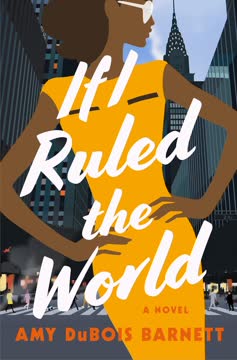
Plot Summary
Krispy Kreme Reckoning
On a rainy New York night, Nicole Rose's parents catch her in a compromising position at Krispy Kreme with Alonzo Griffin—her married boss, her mother's old friend, and the gatekeeper of the music magazine industry. As her parents leave in disbelief, Nicole's illusions shatter. The humiliating aftermath forces Nicole to confront the power imbalance and predatory nature of her relationship with Alonzo, pushing her towards self-disgust and alienation. Pressured, vulnerable, and without guidance, Nicole quits her position under threat and lands at StyleList Fashion Magazine, desperate to reclaim her ambition but forever tainted by guilt, secrecy, and a gigantic emotional scar. Her career and self-worth now hang in uncertain balance.
StyleList: A Tightrope Walk
Three years later, Nicole toils at StyleList, the world's trendiest (and whitest) fashion magazine. She wears literal and figurative masks—muted colors, pulled-back hair, passive demeanor—hiding her true self from predatory bosses and spiteful colleagues. Her rare moments of visibility come at great cost, as she's both a "chocolate chip in the snickerdoodle" and an outsider in a fiercely insular environment. Despite racism and microaggressions, her creative ideas—especially a bold "Ageless Issue"—bring Nicole fleeting recognition. Yet, as she grapples with identity, code-switching, and loneliness, the pressures of being the lone Black woman stifle her authenticity and happiness.
Black Girls Don't Sell
Nicole's ambition and heart ache as her earnest pitch—to put a Black woman on the StyleList cover—meets Lucinda's brutal dismissal: "Black girls don't sell magazines." The comment exposes the deep systemic racism and lack of representation underpinning the industry, crushing Nicole's hopes and forcing her to examine her place in a world that valorizes whiteness. Friendships and romance make the sting sharper. Joseph, her high-achieving, condescending boyfriend, pressures her for outward perfection. With every microaggression and refusal, Nicole's resolve to both belong and change the game intensifies. She secretly yearns for a space where style, culture, and Black womanhood all belong.
Ageless Issue, Timeless Struggles
Nicole's innovative sex-and-relationships package for the "Ageless Issue" catapults her into Lucinda's good graces—and the crosshairs of jealous coworkers. She earns responsibility but not camaraderie, and the weight of representation grows with every new assignment. Her relationship with Joseph grows more transactional, revealing the limitations and costs of "marrying well." Nicole finds fleeting solidarity with her best friends but faces subtle and overt rejection at work for every move towards authenticity. She starts to see that true acceptance won't come from assimilation or validation within hostile systems. The cracks between belonging and self-betrayal widen.
Shadows of Ambition
Nicole's career at StyleList seems to soar, yet she's used as the company's "diversity solution" and denied stories she truly cares about. When a new urban upstart, Sugar magazine, catches her attention—messy yet authentic, proudly Black—Nicole fixates on its possibilities and begins critically analyzing both her own magazine and herself. The allure of running her own publication, free from white gatekeeping, grows stronger. Her home life also strains, especially as she and Joseph move in different emotional directions. Nicole dreams of ownership but fears losing her fragile stability and the little status she's earned.
Dangerous Help and Quiet Allies
After confiding in Marie, the only Black HR contact at Park Ave Pub, Nicole learns the limits of institutional support—her friend can help her privately but warns of blowback and cautions her to avoid another scandal. Meanwhile, Sugar's owner Barbara Porter gains industry clout, and Alonzo seduces his way to the top of new ventures, casting a long shadow over Nicole's path. Loyal sisters and old friends keep Nicole grounded; sometimes, stern advice and honest friendship are all that keep her afloat. Yet every step up increases her visibility—and her vulnerability.
Sugar's Siren Song
Tempted by Sugar's rawness and promise to speak to Black women, Nicole critiques and eventually meets with Barbara Porter. Their tense, challenging conversations force Nicole to defend her vision for a chic, smart, crossover urban magazine. Barbara tests her, draws out her insecurities about "Black enoughness," and finally offers Nicole the chance to pitch—then run—Sugar, but only on a six-month, prove-yourself basis. Nicole agonizes over Joseph's disapproval, her unfinished business with Marie, and fear of Alonzo's revenge. Taking the leap, she ends her relationship and severs old ties, ready to risk it all for her voice.
Lucinda's Unwelcome Favor
Lucinda, StyleList's feared EIC, promotes Nicole to "special projects editor," with a mandate to represent "urban" culture and do the unglamorous diversity work needed to save the business. This "favor" undermines Nicole—she's still seen as a token, not an equal—and sours her relationships with coworkers. Rivals spread rumors, former mentors turn hostile, and Lucinda's real interest is in shoring up her own position using Nicole's credibility. Nicole quickly realizes that true power—creative or financial—will never be hers at Park Ave Pub. Feeling used, she succumbs to the call to jump to Sugar.
Into the Fire: Sugar
Nicole's arrival at Sugar is far from triumphant: the office is chaotic, the staff loyal to her predecessor Luna (and Luna herself is a venomous, gossip-fueled schemer). "Black enoughness" is weaponized against Nicole, old rumors about Alonzo resurface, and Nicole's every decision—hair, clothes, voice—is scrutinized. The magazine is on the verge of bankruptcy, the editorial schedule is a mess, and her presence is openly resented. Yet, Nicole's sense of purpose solidifies as she confronts the true costs of representation, the depth of colorist and class divides, and the lines between empowerment and exploitation.
The Hazing at NuVoices
Nicole's first encounters—especially with Luna and her loyalists—are designed to undermine her confidence. Sabotage, rumors of "sleeping to the top," microaggressions, and outright attempts to revoke her "Black card" are constant. Only Von, her dandy assistant, offers quiet support. The threat of Alonzo's intervention is ever-present, as is the company's possible collapse. Nicole improvises, cleans her office herself, and tries to build trust with a traumatized team. When a bold mission statement leaks and causes industry drama, Nicole feels both exposed and suddenly influential—thrust into a national conversation about who really sets the tone in Black media.
Cover Stories and Sabotage
Nicole secures early wins—an innovative sex survey, a Betty Brown cover—to industry acclaim, only to be undermined at every turn. Alonzo manipulates Sugar's artists and story subjects out of her hands; rivals steal cover stars and sabotage launches; Luna and JJ (Nicole's new lover) collaborate behind her back. Nicole's ambition becomes a target—she's painted as an outsider, a "ho," and both too bougie and not urban enough. Even victories are double-edged: a racist designer's withdrawal costs Sugar crucial ad revenue, and old enemies grow more desperate as Nicole's star rises.
Crisis, Sisterhood, and Strength
When a sexual assault scandal hits, Nicole chooses integrity over profit—publishing tough truth and risking lawsuits. She is forced to admit the cost of flawed alliances, including her love interests who are as complicit in misogyny as her professional enemies. Personal crises also mount: friendships falter after public humiliations, and Nicole's sense of herself as a "pawn" rather than a queen forces painful introspection. In the darkest moments, bonds of sisterhood and honesty among women—Nicole's friends, colleagues, and readers—prove both her safety net and her source of power to persist.
Ballers, Rumors, and Survival
Nicole becomes a lightning rod for rumors, attacks, and sexist gossip after her editorials and relationships become public. At an industry party, face-offs with Luna, Alonzo, and JJ nearly endanger her physically—and emotionally. The culture of "ballers," male gatekeeping, and transactional affection becomes untenable as she realizes the personal costs of surviving (and thriving) in such a system. Nicole defends herself, sometimes literally, and finds courage in the unexpected support of her new best friend Von, her girls, and even professional frenemies—showing that transformation is both painful and precious.
A Dangerous Love Game
Nicole's affairs—with Joseph, JJ, and even the dangerous pull of Alonzo—teach her more about power than love. Each man represents a different form of toxic masculinity, privilege, or manipulation. Nicole sees in JJ the same possessiveness as Alonzo, and the dangers of yielding sexual and emotional power to men who shape her workplace and reputation. As the realities of rape culture become personal and public, Nicole chooses to end cycles of self-betrayal and learns to place passion, loyalty, and self-concept above empty validation and external markers of success.
When Lines Are Crossed
Nicole's greatest professional dilemma arrives when her landmark cover and story on Sliq Bishopp—a rapper accused of sexual assault—forces her to choose: retract, apologize, and save her job and company, or stand by her principles and risk professional annihilation. When Barbara gives the ultimatums, old enemies rally, and lawsuits loom, Nicole refuses to sell out her story or her readers. Even as she is fired and her career stalls, Nicole realizes her worth is not defined by the institutions or men who profit off her work, pain, or authenticity.
The Weight of Integrity
Shunned by the industry, Nicole grieves, then picks herself up to create Nikki's Notes—a blog where she owns her voice and content. Reestablishing her values and priorities, she finds purpose (and some success) untethered from treacherous institutions. Friendship, family, and a blossoming romance with Derek—a principled public defender—bring healing and new ways of seeing herself. Nicole chooses to return to Sugar under new ownership, but only by negotiating equity for all employees and bringing her new confidence (symbolized by a bold haircut and personal transformation) to her old job.
Bobbie's Legacy
When beloved artist Bobbie Washington dies, Nicole and her team pull off a career-defining tribute issue, weaving personal grief into collective empowerment. Nicole's editor's letter—where she finally acknowledges past abuse and industry misogyny—sparks a national outpouring of support and truth-telling, inspiring others to speak up about sexual harassment and racism. Through mourning, Nicole reclaims her integrity and professional legacy, ensuring Sugar becomes an institution where authenticity and justice are possible. The magazine's rebirth mirrors Nicole's own: scars are a source of miraculous strength.
Full Circle: Victory and Loss
Nicole's journey ends where it began—at Sugar's helm, flanked by friends, family, and hard-earned love. Having ousted old foes (Alonzo is finally dethroned), forged new ownership models, and united a team around genuine empowerment, Nicole relishes her place as both industry leader and vulnerable truth-teller. She embraces personal happiness without apology—and with a style and voice that are truly her own. The chapter closes on a toast to fresh starts, courage, and the power of a Black woman who refuses to be anyone's pawn ever again.
Analysis
If I Ruled the World is a fiercely contemporary coming-of-age tale set inside the transactional, image-obsessed world of media, but its heart is the timeless struggle of a Black woman to own her story and self. Through the rise, fall, and rebirth of Nicole Rose—a woman forced to navigate sexual exploitation, institutionalized racism, and gendered betrayals at every turn—Amy Dubois Barnett crafts a narrative that exposes the real price of ambition for women of color. The novel interrogates the false promises of "representation" within toxic systems, the double-edged sword of proximity to power, and the importance of real, often messy, sisterhood as survival. It shows how cycles of trauma and erasure are both inflicted and internalized, but ultimately can be broken by radical honesty, collective resistance, and self-reinvention. The lessons Nicole learns—about leadership, love, and the necessity of being the author of one's own narrative—are a call to arms for anyone seeking both personal freedom and structural change. The book's greatest insight is that real belonging requires risking loss, prioritizing one's dignity, and never relinquishing the pen.
People Also Read






Characters
Nicole Rose
Nicole is both the heart and the engine of this story: a "bougie" Harlem-born, biracial Black woman with ambitions to become a magazine editor in chief. The trauma and shame of being seduced and manipulated by Alonzo, her mother's friend and her powerful boss, shapes her entire trajectory. Psychologically, Nicole is haunted by the craving to belong in white or Black spaces, the constant threat of being "not enough," and the dangers of men with power. Her defense mechanisms—hiding, code-switching, self-doubt—slowly transform into purpose and self-assuredness as she maneuvers through misogyny, racism, and betrayal. Her emotional journey is a battle between people-pleasing (and self-betrayal) and radical authenticity and conviction.
Alonzo Griffin
Alonzo, once a bullied nerd, becomes a manipulative, powerful figure in the music magazine industry—and Nicole's main antagonist. He embodies the dangers of unchecked male privilege, using his charm, status, and connection to Nicole's family to seduce, dominate, and discard women for his own advancement. A narcissist who confuses transactional sex and mentorship, he wields institutional power as both a weapon and a shield. Alonzo projects a mix of vulnerability and cruelty, and his ability to scare and discredit women underlines much of the novel's critique of toxic Black masculinity and its perpetuation in overlapping professional and personal circles.
Lucinda
Lucinda, StyleList's iconic but volatile EIC, is both mentor and exploiter. Her "favor" of promoting Nicole is a poisoned chalice, revealing the limitations of white women's solidarity and the ease with which Black excellence is co-opted and then discarded. Lucinda is unpredictable, harsh, and performatively progressive—she wants Nicole's "diversity value" but not her voice. Her psychological complexity lies in her insecurity and need for control, but also in sporadic genuine admiration. She stands as both an ally and obstacle, reminding Nicole—and the reader—that "representation" within toxic systems can be a trap.
Barbara Porter
Barbara, the sharp-witted Black owner of NuVoices and Sugar, is motherly and ruthless, alternately testing and uplifting Nicole. She has survived, and thrived, in male-dominated, racist, and sexist industries by being two steps ahead, trading only in results and loyalty. Psychologically, Barbara is someone who expects betrayal and expansion at all times; she sees mentorship as a transaction and dislikes any whiff of "weakness." She subjects Nicole to intentional "hazing" and, paradoxically, becomes both her greatest advocate and the ultimate gatekeeper. Her pragmatic, often cold support forces Nicole to define her own values and strength.
Luna Baxter
Luna, former model and Sugar's predecessor EIC, is initially Nicole's tormentor—goading, belittling, and wielding rumors as weapons. Yet, Luna is also a survivor of Alonzo's abuse and systematic misogynoir, using her sharp tongue and hyper-visibility to protect herself. Her insecurities—around colorism, Blackness, age, and respect—mirror Nicole's and ultimately make her a complex frenemy. Psychologically, Luna is both mask and mirror: her bravado hides vulnerability, her attacks telegraph fear of erasure. Her evolution from enemy to uneasy ally with Nicole demonstrates the potential—and difficulty—of solidarity among Black women.
Von
Von is Nicole's gender-nonconforming, stylish assistant at Sugar. He offers (rare) unconditional support, witty commentary, and everyday courage. Von is always watching, the canary in the coal mine for shifting alliances, and capable of both comic relief and emotional ballast. His presence signals the importance of chosen family and queer resilience within toxic workplaces. Through staff churn, betrayals, and magazine crises, Von grounds Nicole and affirms her right to lead on her own terms.
Joseph Burke III
Joseph is Nicole's "perfect catch"—wealthy, educated, well-connected, and desired by her family and society. Psychologically, he is deeply invested in status, respectability, and conventional markers of success. His love is contingent and paternalistic, often boiling over into control and resentment when Nicole deviates from his plans. Joseph personifies the dangers of settling for acceptance at the cost of self-determination. Their romance reveals how patriarchal "niceness" can crush women, especially Black women, who dare to want more.
JJ (Jerome Jermaine)
JJ, a successful music producer, offers Nicole both genuine care and the same possessive, transactional love as her previous lovers. He reflects masculinity in the industry—flattery, fierce loyalty, and the expectation of open secrets ("things") with women. JJ's protectiveness veers into control, and his proximity to Nicole raises questions about who can be trusted, what intimacy looks like in toxic contexts, and how the rules never serve women. His arc is both a warning and a stepping stone for Nicole's journey toward real intimacy.
Imani McKnight
Brought on as Nicole's executive editor at Sugar, Imani is a truth-seeker, able to interrogate power dynamics and question profit-driven compromises. Her friendship with Nicole is challenging and invigorating, as she refuses to allow emotional shortcuts or empty gestures. Psychologically, Imani is clear-eyed about the necessity of institutional change and the role of radical honesty in storytelling.
Teresa Cruz
Teresa, Nicole's BFF since high school, is a public defender, plain-spoken, and allergic to bullshit. She represents the steadfast, accountability-laden friendship that all of Nicole's romantic and professional struggles lack. Her core role is to remind Nicole—sometimes harshly, always directly—of her worth, her boundaries, and the radical possibilities of self-reinvention. Psychologically, Teresa is both caretaker and disruptor, pushing Nicole to center truth over optics at every turn.
Plot Devices
Cyclical Betrayal and Survival
The narrative structure mirrors Nicole's cycle of hope, betrayal, and rebirth; she is seduced, deceived, and then left to reconstruct herself, over and over, by new mentors, lovers, and institutions. Betrayal isn't just personal—it is infrastructural, enforced by workplace racism, sexism, and colorism. The "heroine's journey" is shown as nonlinear: progress and regress exist side by side, and survival is a radical act. Readers sense early that Nicole's "second chance" at Sugar will mirror her earlier trauma, giving weight to every emotional high and professional breakthrough.
Hair as Metaphor
Nicole's hair evolution—from unruly curls, to forced blowouts, to a self-chosen pixie cut—acts as a visual metaphor for her journey toward authenticity and self-possession. This device is used to show how the outside world polices Black women's appearance, how power structures reward or punish conformity, and how unleashing one's natural self is brave in both social and professional realms. Hair becomes as central as any character, marking every transformation.
Letters, Editor's Notes, and First-Person Reflection
Nikki's Notes, her editor's letter and later her blog, provide both real-time emotional arc and an intimate view into Nicole's internal reckoning. This plot device bridges the gap between the heroine's strategic public self and her evolving private truths, culminating in revelations of past abuse and present advocacy. The device offers a non-linear window into how trauma, ambition, and healing are processed.
Mirror and Doubling
Characters like Luna, Lucinda, and Barbara function as both foils and future-selves for Nicole—each embodying a road Nicole might take, or a version of herself she might become. These doubling strategies create complex sympathy with antagonists and keep readers alert to possible betrayals or unexpected acts of kindness.
Industry Parties, Covers, and Releases (Set Pieces)
Major plot points take place at the high-profile industry events, cover reveals, or launches—they are both literal and figurative stages for confrontation, humiliation, and emotional climax. The public/private conflict and the shifting alliances of "ballers," colleagues, and gatekeepers drive tension and foreshadow chaos and triumph.








































