

Plot Summary
The Boy Behind the Glass
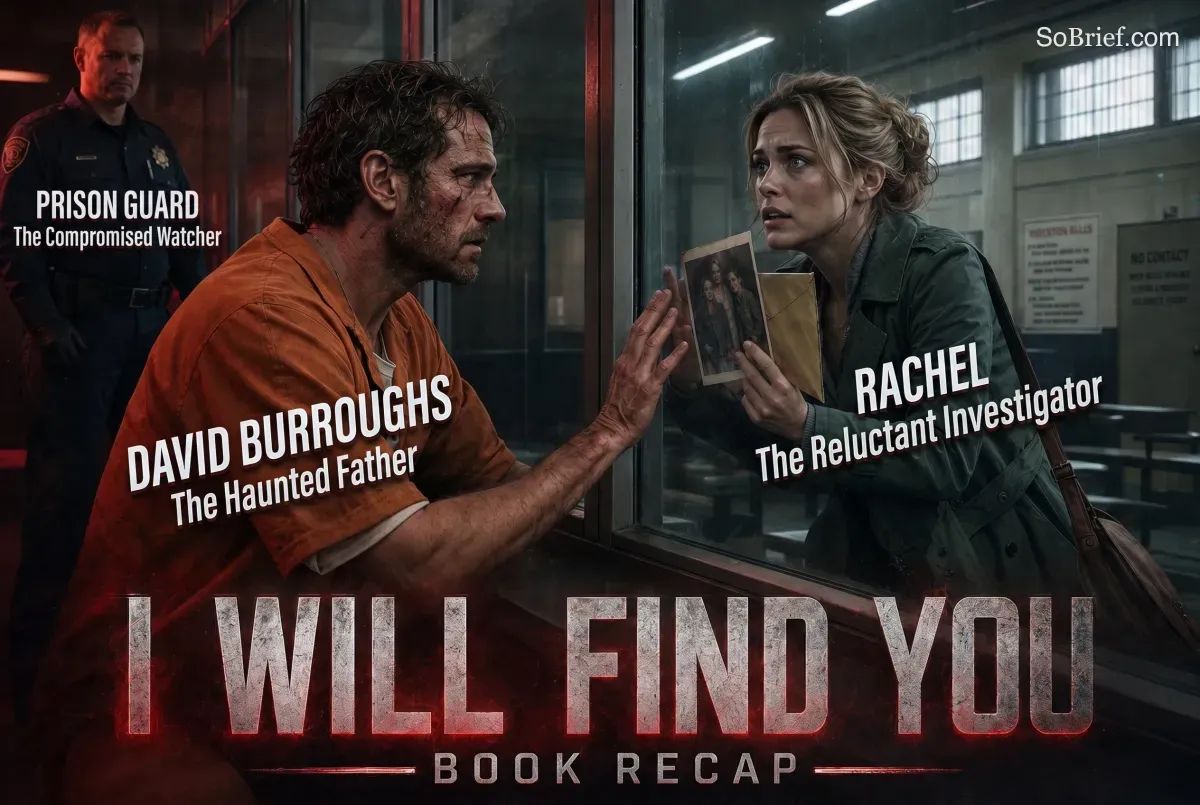
David Burroughs1 has served five years at Briggs Penitentiary for murdering his three-year-old son Matthew — a crime he insists he didn't commit. He stopped fighting long ago. No visitors, no appeals, no will to live.
Then Rachel Anderson,2 his ex-wife Cheryl's5 sister, appears on the other side of the plexiglass with a photograph. Taken at a Six Flags amusement park, it shows a family posing in the foreground. But in the background stands an eight-year-old boy with a fading port-stain birthmark — the same birthmark Matthew had.
Age-progression software confirms the resemblance. David1 touches the glass with trembling fingers. He tells Rachel2 they cannot go public: if whoever has the boy learns they are searching, the child could vanish. Then he demands to see the warden.
A Tear on Lenny's Cheek
Warden Philip Mackenzie,4 David's1 godfather and lifelong friend of David's father Lenny,15 flies to Boston. He walks into the old Revere row house where Lenny15 — paralyzed, unable to speak — lies in a bed tended by his sister Sophie.10
Philip4 sits beside his former police partner and tells him everything: the photograph, David's1 plea to escape, the impossible choices ahead. Lenny15 cannot respond. His filmy eyes hold a thousand-yard stare. Philip4 squeezes his old friend's hand, apologizes for having no answers, and rises to leave.
Then Sophie10 points him back. On Lenny's15 ashen, skeletal face, a single tear track glistens. Philip4 steps onto the stoop without looking back. Before he reaches the sidewalk, he calls his receptionist and books a return flight to Briggs.
The Guard Turns Killer
David1 survives a cafeteria attack by Ross Sumner,12 a wealthy cannibal serial killer housed in his wing, beating Sumner12 badly enough to hospitalize him. But the fight triggers something worse. From his infirmary bed, Sumner12 bribes and blackmails a guard the inmates call Curly,13 offering over a hundred thousand dollars to kill David.1
That night, Curly13 lures David1 from his cell on a fabricated pretext, leads him into a deserted corridor, and lunges with a shiv. David1 dodges, taking a deep gash on his forearm, and screams until another guard subdues him from behind.
When David1 wakes in restraints, Curly13 has flipped the story: the official report says David1 attacked him. Only Warden Philip,4 who rushed back after a loyal guard's call, grasps the truth — David1 will not survive another night at Briggs.
Ramming the Gate
Philip's4 son Adam11 — David's1 best friend and a police officer — brings his uniform. David1 shaves, changes clothes, and tucks a cap low over his eyes. Philip4 stages the cover story: David1 overpowered them both, stole Philip's4 loaded Glock, forced Adam11 into a closet, and marched the warden4 out at gunpoint.
They walk past the checkpoint side by side. But before the exit gates fully open, the alarm sounds — Adam11 was discovered too soon. Philip4 floors the accelerator and rams through the closing gate, metal shrieking against steel.
David1 calls a detective on Philip's4 phone, pretending to be a crazed hostage-taker, while Philip4 steers into an underground parking garage. David1 rolls out unseen and keeps talking as Philip4 drives on as a decoy. Rachel2 races from a nearby diner to pick him up. Together they plant false trails north toward Canada before doubling back toward New York City.
Theo's Birthmark
At the Payne Museum of Art in Newport, Rhode Island, eighty-two-year-old Gertrude Payne — known as Pixie7 — watches her grandson Hayden3 address wealthy donors at a charity luncheon. The family is American aristocracy: bourbon dynasty, billion-dollar portfolio, generations of philanthropy layered over buried scandal.
When Pixie7 checks her phone and reads that David Burroughs1 has escaped, her composure fractures. She finds Hayden3 and tells him they must leave immediately. Then she walks to the museum's former music room, where an eight-year-old boy named Theo stands admiring a Vermeer painting.
She takes his hand and leads him out. As the boy turns, the narrative catches what Pixie's7 gaze cannot help but find: a port-stain birthmark on his cheek, identical in placement to the one in Rachel's2 photograph.
Max Sees Through It
FBI Special Agent Max Bernstein6 — short, jittery, brilliant, perpetually gnawing his nails — takes over the manhunt with his partner Sarah Jablonski.9 They interrogate Rachel,2 who lawyers up with notorious attorney Hester Crimstein and gives nothing.
They confront Philip4 and Adam11 in the warden's office, and Max6 methodically shreds the hostage story: Philip's4 secretary says he never wears or loads his gun, the car rammed the gate with suspicious enthusiasm, and Philip4 flew to visit David's father15 the day before the escape.
Max6 cannot yet determine what Rachel2 showed David1 through the plexiglass — the prison video has no audio and the photograph is too blurry. But he senses something beyond a simple breakout, something that made a career warden risk everything for a convicted child killer.
The Witness Confesses
David1 reaches Manhattan disguised with a shaved head, mustache, and glasses. He tracks down Hilde Winslow,14 the elderly widow who testified she saw him burying the murder weapon — a woman who changed her name and moved to New York after the trial.
He forces his way into her apartment at gunpoint and demands the truth. Hilde14 breaks. A man with a white forelock — a condition called poliosis — threatened her family: her daughter-in-law owed crushing gambling debts, and the man snapped her son's finger over the phone to ensure compliance.
David1 recognizes the description instantly — Skunk Kyle, a violent enforcer from his Revere childhood. Before he can press further, police flood the building. Hilde14 sends David1 to the fire escape. He leaps across rooftops, tackles a cop in a backyard, and vanishes into the night.
Aunt Sophie Opens the Door
David1 takes an Amtrak to Boston and the Blue Line to Revere Beach, navigating the streets of his childhood under a surgical mask. He cuts through backyards he memorized as a boy until he reaches his family's old row house.
Through the kitchen window, he sees Aunt Sophie10 — the fierce, loving woman who raised him after his mother died. He raps on the glass. Sophie10 does not hesitate; she flings open the back door and pulls him into an embrace that nearly buckles his knees. Upstairs, his father Lenny15 sleeps on morphine, face twisted in a permanent grimace, his once-powerful arms reduced to milky reeds.
David1 kisses his forehead. Lenny's15 eyes never open. Before leaving, David1 asks Sophie10 whether his father believed he was innocent. Her honest answer stings: at first yes, but the evidence planted doubt Lenny15 could never shake.
Pizza with the Mob Boss
David1 arranges a meeting with Skunk through an old Revere friend, but it is an ambush — he is knocked out, blindfolded, and flown to Daytona, Florida. There, retired crime boss Nicky Fisher8 sits him down at a replica of their old Revere Beach pizzeria inside a surreal retirement boardwalk community.
Nicky8 reveals the full architecture of the frame-up: decades ago, David's father Lenny15 planted false evidence to convict Nicky's8 son Mikey, who was then killed in prison.
When a rookie cop later found the baseball bat hidden in David's1 basement, Lenny15 moved it to the nearby woods — because Lenny15 believed David1 had killed Matthew. Nicky8 then coerced Hilde Winslow's14 testimony to balance the scales. David1 tells the old man that Matthew is alive. After a long, measuring silence, Nicky8 sets him free.
Cheryl's Hidden Truth
While scouring Six Flags social media photos, David1 and Rachel2 spotted the logo for Berg Reproductive Institute on a corporate event backdrop — the same fertility clinic Cheryl5 secretly visited during their marriage.
Now Rachel2 drives David1 to St. Barnabas Medical Center, where Cheryl5 works as a transplant surgeon. He slips past her new husband Ronald and locks himself in her office. The reunion is shattering: Cheryl5 runs to him, holds him as his legs buckle. He tells her Matthew may be alive. She shakes her head.
Then David1 presses about the clinic. Cheryl5 crumbles and confesses she actually went through with the anonymous sperm donation, despite telling David1 she hadn't. She believes this secret broke him — that her betrayal triggered the blackout in which he killed their son.
The Lemhall Ring
Rachel2 has contacted her old friend Hayden Payne,3 heir to the Payne fortune — a man she has been bonded with since he rescued her from a campus sexual assault at Lemhall University.
Hayden3 sends corporate photos from the Six Flags event, but the key break comes from a different source: David1 and Rachel2 visit the woman who took the original photograph and access her high-resolution digital files. When they zoom into the image of Matthew, the quality is sharp enough to travel up the boy's arm to the adult hand gripping his.
On that hand sits a ring with a purple stone and school crest. Rachel2 recognizes it immediately: a Lemhall University graduation ring — the same one Hayden Payne3 wears every day. The kidnapper is not a stranger. He is Rachel's2 closest friend.
The Man Who Stole Matthew
Rachel2 drives David1 to the Payne estate in Newport. David1 hides in the cargo hold while Rachel2 passes through the security gate. Alone with Hayden3 in the manicured gardens, she confronts him. His composure dissolves into confession.
He used his family's ownership of Berg Reproductive to substitute his own sperm for the anonymous donor's when Cheryl5 — posing as Rachel2 — visited the clinic. When Cheryl5 got pregnant, Hayden3 believed the child was biologically his.
He waited years, then kidnapped three-year-old Matthew, replacing him in bed with a terminally ill orphan boy from a Payne-funded overseas institution whom he murdered to stage the scene. He drugged David's1 whiskey. Hayden3 insists he rescued his own son — a conviction his grandmother Pixie7 reinforced by telling him a paternity test confirmed his fatherhood.
David Finds Matthew
David1 emerges from the shrubs carrying proof Hayden's3 belief is wrong: old emails containing two paternity tests he ran years ago, both confirming he is Matthew's biological father. Pixie7 had lied to prevent Hayden3 from returning the boy and destroying the family.
When the Paynes' armed security chief draws a weapon, David1 fires first, dropping two guards. He storms the white modernist mansion and finds Matthew — called Theo for five years — standing with Hayden,3 staring up at the stranger with an expression that mirrors his mother's.5
David1 tells the eight-year-old the truth: he is his father, stolen from his home at age three. Their eyes lock in the purest moment of David's1 life. Then police burst through the door and open fire. Matthew runs toward his father's falling body. The officers stop shooting.
Epilogue
Eight months later, David1 stands at his father Lenny's15 funeral in Revere, walking with a cane. Three bullets at the Payne7 estate nearly killed him, but Matthew1 running to his body made the police cease fire. David1 was freed after three months.
He now shares custody of Matthew1 with Cheryl5 and her husband Ronald.5 Rachel2 stands beside David,1 holding Matthew1's other hand — they are together now. Philip4 and Adam11 lost their jobs but avoided prison.
The Paynes, shielded by wealth and attorneys, have largely escaped prosecution, though retired mob boss Nicky Fisher8 gives David1 a knowing nod from across the funeral that promises his own form of justice. The FBI has begun tracing the murdered orphan boy to a Payne-funded overseas institution. Lenny15 held on just long enough to see his grandson alive and his son exonerated.
Analysis
Coben constructs 'I Will Find You' as an architecture of nested deceptions, each built to protect someone loved — and each producing consequences its architect never intended. David's father Lenny15 plants evidence to shield his son; crime boss Nicky Fisher8 coerces a witness to avenge his. Cheryl5 uses her sister's identity at a fertility clinic; Rachel2 helps her, then anonymously exposes her. Hayden Payne3 substitutes his sperm to claim a child; his grandmother Pixie7 falsifies a paternity test to prevent him from returning one. Every deception springs from love or loyalty, and every one deepens the catastrophe.
The novel's most radical argument is that justice and protection are often indistinguishable from their opposites. Lenny Burroughs,15 the decorated cop, uses the same evidence-planting tactics against his own son's case that he once deployed against criminals. Nicky Fisher,8 the murderous mob boss, sincerely believes he is restoring moral equilibrium. Even Hilde Winslow,14 the perjuring witness, was a philosophy professor who rationalized her lie through the utilitarian frameworks she spent decades teaching.
Coben weaponizes the thriller's mechanics — prison breaks, rooftop chases, gunfights at estates — against the genre's usual moral clarity. David1 is both innocent and implicated: he killed no one, but his drinking, his emotional withdrawal, and his unlocked doors made the crime mechanically possible. His heroism is not redemption so much as refusal to accept a narrative everyone else has agreed to believe.
The Payne7 family functions as the novel's structural counterweight to the working-class Revere world. Both operate on the same principle — family above all — but wealth transforms that instinct from human impulse into institutional impunity. Pixie Payne7 does not differ from Nicky Fisher8 in moral calculus; she simply has better lawyers. What lingers is the recognition that every character who 'protected' someone ended up imprisoning someone else. The question the novel ultimately poses is not whether David1 is innocent — it is whether anyone is.
Review Summary
I Will Find You receives mostly positive reviews for its fast-paced, suspenseful plot about a wrongly convicted father searching for his supposedly dead son. Readers praise Coben's engaging writing style and ability to create tension. Many find the story gripping and hard to put down, despite some unrealistic elements. Critics note formulaic aspects and cartoonish characters, particularly the FBI agents. Overall, reviewers appreciate the thrilling ride and satisfying conclusion, recommending it as an entertaining, if somewhat over-the-top, read.
People Also Read



Characters
David Burroughs
Convicted father seeking truthA man stripped to the marrow by loss and incarceration. Once a charismatic, athletic husband and father from blue-collar Revere, Massachusetts, David was convicted of murdering his three-year-old son Matthew and sentenced to life at Briggs Penitentiary4. He accepted his sentence not because he believed in guilt but because the metaphorical punishment—losing his child—was already worse than any prison. His passivity masks profound self-blame: he was drinking the night Matthew died, the doors were unlocked, and he heard nothing. Behind the numbness lies fierce loyalty and explosive physical toughness when cornered. His psychology pivots between total surrender and desperate, all-consuming drive—the shift triggered by new evidence that Matthew might still be alive.
Rachel Anderson
Disgraced journalist allyCheryl's5 younger sister and David's1 former sister-in-law. Rachel thrived as an investigative journalist at the Boston Globe until her career was destroyed: she pressured a sexual assault victim to break an NDA, and the woman committed suicide that night. The guilt reshaped Rachel into someone running from herself—divorced, medicated, unemployable. Yet her investigative instincts remain razor-sharp beneath the damage. She carries secrets that intertwine with the central mystery, including helping Cheryl5 deceive David1 about a fertility clinic visit. Her bond with David1 evolves from familial duty into something deeper, driven by shared conviction that redemption requires action rather than absolution. Her psychology is defined by tension between self-punishment and an unstoppable compulsion to uncover truth.
Hayden Payne
Heir with dangerous obsessionGrandson of the Payne family matriarch7, Hayden presents as a charming, boyish philanthropist with old-money ease. Beneath that surface operates a man whose capacity for violence has been enabled and buried by wealth since adolescence. He once rescued Rachel2 from a campus sexual assault by nearly beating her attacker to death—an act that bonded them but exposed his volatility. Hayden's psychology is rooted in entitlement elevated to cosmic conviction: he believes wealth signals divine favor and ordinary rules do not apply to him. His obsessive attachment to Rachel2, combined with access to his family's corporate empire, gives him means to act on desires most would only imagine. He justifies all actions through personal mythology and perceived righteousness.
Philip Mackenzie
Warden torn by loyaltyDavid's1 godfather and warden of Briggs Penitentiary, Philip is a barrel-chested former Revere cop whose friendship with David's father Lenny15 spans Vietnam, the police force, and raising their sons together. He secretly arranged David's1 protective custody at Briggs. Philip wrestles with duty versus love—what he owes his dying friend weighed against the career and pension he stands to lose.
Cheryl Dreason
Surgeon haunted by secretsDavid's1 ex-wife and Matthew's mother. A brilliant transplant surgeon who rebuilt her life after the conviction with a new husband, new name, and a pregnancy, Cheryl's composure is scaffolding over a wound that never healed. She carries the burden of decisions made during a devastating fertility crisis—decisions she fears contributed to the unraveling of her marriage and the tragedy that followed.
Max Bernstein
Eccentric FBI pursuerThe lead FBI agent assigned to recapture David1. Short, jittery, perpetually nail-gnawing, and always in motion, Max compensates for awkward social skills with extraordinary analytical instincts. He deploys chaos and deadpan humor alongside his partner Sarah9 to destabilize suspects during interrogation. Unlike most law enforcement in the case, Max begins questioning whether David1 actually committed the crime.
Gertrude 'Pixie' Payne
Ruthless family matriarchThe eighty-two-year-old head of the Payne dynasty who swims daily and wields her family's wealth with unsentimental precision. Pixie views morality as a luxury the powerful cannot afford and family as the only loyalty worth maintaining. Her life's work has been burying scandals—from predatory relatives to her grandson's3 volatility—using money, lawyers, and intimidation.
Nicky Fisher
Retired mob bossFormer head of the Revere-area crime syndicate, now retired to a bizarre boardwalk-themed community in Daytona. Nicky's rivalry with David's father Lenny15 spans decades of cops-versus-criminals warfare. He operates by a self-created moral code, willing to manipulate justice when he believes the cosmic scales need balancing—even as his methods mirror the corruption he claims to oppose.
Sarah Jablonski
Max's by-the-book partnerA tall, broad-shouldered redhead and Max's6 sixteen-year FBI partner. Where Max6 bends rules and follows instinct, Sarah insists on procedure and protocol. Their rapid-fire interrogation banter masks genuine mutual devotion. Sarah serves as the moral anchor who reminds Max6 that their job is to capture an escaped convict, not retry his case.
Aunt Sophie
David's fiercest believerLenny's15 sister who stepped in to raise David1 after his mother died of cancer when he was eight. Now caring for the dying Lenny15 in their old Revere row house, Sophie embodies unconditional love with a fierce protective edge. She is the one person in David's1 life who never doubted his innocence, not for a single second, and her embrace is the first genuine warmth David1 experiences in five years of incarceration.
Adam Mackenzie
David's loyal best friendPhilip's4 son and David's1 lifelong best friend. A police officer whose loyalty to David1 runs deep enough to risk everything, Adam also serves as Matthew's godfather—a bond that mirrors the one their fathers shared.
Ross Sumner
Wealthy cannibal serial killerA prep-school-educated serial killer housed in David's1 prison wing whose family fortune extends its influence even behind bars. His boyish charm disguises a bottomless capacity for cruelty.
Ted 'Curly' Weston
Compromised prison guardA financially struggling Briggs guard whose mounting debts and love for his two daughters make him vulnerable to the manipulations of wealthy inmates12, pushing him into moral territory he never imagined crossing.
Hilde Winslow
Coerced trial witnessAn elderly former philosophy professor whose trial testimony—that she saw David1 burying the murder weapon—proved decisive in his conviction. She later changed her name and moved to New York City.
Lenny Burroughs
David's dying cop fatherA retired Revere police officer, now paralyzed and nearly comatose. Lenny's lifetime of service, fierce paternal love, and moral compromise form the hidden foundation beneath David's1 case.
Plot Devices
The Six Flags Photograph
Ignites the entire plotA chance image taken by a friend's husband at an amusement park captures, in its background, what appears to be David's1 murdered son Matthew alive at age eight, identifiable by a fading port-stain birthmark. This single photograph shatters David's1 five-year resignation to his fate, drives Rachel2 to visit him in prison, convinces Warden Philip4 to risk his career, and ultimately propels a manhunt that reaches from Maine to Florida to Rhode Island. Its existence is both absurdly improbable and narratively inevitable—the one-in-ten-million coincidence that cracks open a conspiracy built to remain airtight. The photo functions as both evidence and Rorschach test: everyone who sees it projects their own hopes, fears, and guilt onto the blurry boy behind the family.
The Baseball Bat Evidence
Fabricated conviction evidenceThe murder weapon—a baseball bat covered in David's1 fingerprints—was the prosecution's most damning evidence. Its true journey reveals the novel's layered irony about vigilante justice: a rookie cop found it hidden in David's1 basement; David's father Lenny15, believing his son guilty, moved it to the nearby woods to make it look planted by an outside killer; then crime boss Nicky Fisher8, seeking to avenge his own imprisoned and murdered son, coerced elderly neighbor Hilde Winslow14 into testifying she saw David1 burying it. Two men acting from love—one trying to protect David1, the other trying to convict him—created a Rube Goldberg machine of false evidence that no single party fully controlled or understood.
Berg Reproductive Institute
Connects kidnapper to victimThe fertility clinic where Cheryl5 sought donor sperm under her sister Rachel's2 identity, secretly owned by the Payne7 family conglomerate. Its logo appearing on the Six Flags corporate event backdrop is the first thread connecting the amusement-park photograph to the Payne empire. The clinic's role extends far deeper: Hayden Payne3 exploited his family's ownership to substitute his own genetic material for the anonymous donor sample, believing this would make him the biological father of any resulting child. The institute embodies the novel's central mechanism—how institutional power enables private obsession, turning a routine medical procedure into the origin point of a kidnapping.
The Lemhall University Ring
Identifies the kidnapperVisible on the adult hand gripping Matthew's in the blown-up photograph, this purple-stoned college graduation ring transforms a blurry background figure into a named suspect. Rachel2 recognizes it immediately as a Lemhall University ring—the same school she and Hayden Payne3 attended, the same ring he never removes. The ring connects two seemingly unrelated narrative threads: Rachel's2 college friendship with a billionaire heir and the identity of whoever took Matthew from his bed. It functions as the novel's keystone clue, the detail small enough to have been invisible at low resolution but devastating at full magnification.
The Port-Stain Birthmark
Links dead boy to living oneMatthew's congenital hemangioma—a large reddish birthmark on his right cheek that doctors predicted would fade over time. Its presence on the boy in the Six Flags photograph, smaller and lighter but in the exact same location, is what first convinces Rachel2 the child could be Matthew. The birthmark operates as both forensic evidence and emotional touchstone: it is the physical detail that bridges the toddler who was supposedly murdered and the eight-year-old at the amusement park. Ironically, the kidnapper waited years for it to disappear completely, but it persisted just long enough to be captured in a stranger's snapshot.
FAQ
Synopsis & Basic Details
What is I Will Find You about?
- A Father's Desperate Quest: I Will Find You follows David Burroughs, a man serving a life sentence for the murder of his three-year-old son, Matthew. Believing himself innocent but resigned to his fate, David's world is shattered and then reignited when his former sister-in-law, Rachel, presents him with a photograph suggesting Matthew might still be alive.
- Unraveling a Deep Conspiracy: Driven by this impossible hope, David orchestrates a daring escape from a maximum-security prison. He embarks on a relentless, high-stakes journey to uncover the truth behind Matthew's disappearance, navigating a treacherous web of family secrets, mob connections, and the corrupting influence of immense wealth.
- The Search for Redemption: Beyond a thrilling manhunt, the novel delves into themes of grief, betrayal, and the enduring power of a parent's love. David's quest for his son becomes a desperate search for personal redemption, forcing him to confront his past, challenge his own memories, and ultimately redefine what it means to be a father.
Why should I read I Will Find You?
- Masterful Pacing & Suspense: Harlan Coben delivers a relentless, high-octane thriller that grabs you from the first page and doesn't let go. The narrative is a masterclass in suspense, with constant twists and turns that keep readers guessing, making it an ideal choice for fans of intricate mysteries and fast-paced action.
- Deep Emotional Resonance: Beneath the thrilling plot lies a profoundly emotional core. The novel explores the devastating impact of loss, the complexities of guilt, and the fierce, unwavering love of a parent. David's journey from numb despair to desperate hope offers a compelling psychological portrait that resonates long after the final page.
- Thought-Provoking Themes: Beyond entertainment, I Will Find You delves into the corrupting influence of power and privilege, the fallibility of memory, and the subjective nature of justice. It challenges readers to consider how far they would go for family and what constitutes true redemption, offering a rich layer of thematic depth.
What is the background of I Will Find You?
- Contemporary American Setting: The story is primarily set in the northeastern United States, moving from the stark confines of Briggs Penitentiary in Maine to the bustling streets of New York City, the suburban sprawl of New Jersey, and the affluent enclaves of Newport, Rhode Island. This diverse geographical backdrop underscores the wide reach of the conspiracy.
- Exploration of Privilege & Justice: The narrative implicitly critiques the American justice system and the societal impact of extreme wealth. It highlights how money and influence can bend laws, silence witnesses, and obscure truth, contrasting this with the struggles of ordinary individuals seeking justice.
- Psychological Realism: While a work of fiction, the novel grounds its fantastical premise in psychological realism, particularly David's initial numbness and self-doubt, and the complex motivations of characters driven by grief, loyalty, or a warped sense of entitlement. The exploration of unreliable memory and the human capacity for self-deception adds a layer of depth.
What are the most memorable quotes in I Will Find You?
- "I am serving the fifth year of a life sentence for murdering my own child. Spoiler alert: I didn't do it.": This opening line immediately establishes David's voice, his dark humor, and the central mystery, hooking the reader with its audacious claim of innocence. It sets the stage for a narrative that challenges perceptions of guilt and truth.
- "Redemption isn't possible in this case. Or at least, that was what I believed right up until the moment that the guard, a particularly eccentric case we call Curly, comes to my cell and says, 'Visitor.'": This quote marks the pivotal turning point for David, signifying his shift from resigned despair to a renewed, albeit terrifying, hope. It encapsulates the novel's core theme of unexpected chances for redemption.
- "Fathers and sons. We are all the same. I would have done anything to keep Mikey out of prison, even though I knew he was guilty. Your father was the same.": Spoken by mob boss Nicky Fisher, this line distills a central theme of the novel: the fierce, often morally ambiguous, lengths parents will go to protect their children. It highlights the parallel between David's father and Nicky, blurring the lines between "good" and "bad" and emphasizing the universal drive of parental love.
What writing style, narrative choices, and literary techniques does Harlan Coben use?
- First-Person Unreliable Narration: The story is primarily told from David Burroughs's perspective, offering intimate access to his thoughts and emotional state. This choice initially creates an unreliable narrator, as David himself doubts his innocence due to blackouts, forcing the reader to question his memories and the "truth" presented.
- Propulsive Pacing and Short Chapters: Coben employs a signature fast-paced, cinematic style with short, cliffhanger-ending chapters. This keeps the narrative momentum high, driving the reader forward through constant revelations and escalating stakes, making the book difficult to put down.
- Layered Mystery and Misdirection: The author masterfully constructs a complex mystery with multiple red herrings and shifting suspects. He uses narrative misdirection, introducing seemingly unrelated plotlines (like Rachel's past scandal or the mob's history) that eventually converge, revealing a meticulously planned, multi-faceted conspiracy.
Hidden Details & Subtle Connections
What are some minor details that add significant meaning?
- Curly's Gloves and Demeanor: When Curly comes to take David to the infirmary (Chapter 7), David notes Curly's ashen face, glistening eyes, quivering lip, and the black latex gloves. These subtle details immediately signal that Curly is not acting under normal prison protocol and is deeply distressed, foreshadowing his coerced attempt on David's life.
- Philip Mackenzie's Visit to Lenny: Warden Mackenzie's seemingly personal visit to David's dying father, Lenny (Chapter 5), is more than just a gesture of friendship. It's a moment where Philip seeks moral guidance and justification for his impending actions, revealing his deep internal conflict and the profound loyalty that drives him to break David out.
- The "Chicken Extinction" Argument: Gertrude "Pixie" Payne's philosophical musings on the "chicken extinction question" (Chapter 35) subtly reveal her ruthless pragmatism and capacity for self-justification. It highlights her belief that the greater good (preserving the Payne legacy) outweighs individual suffering, even if it means sacrificing innocent lives.
What are some subtle foreshadowing and callbacks?
- David's Sleepwalking History: Early in the novel (Chapter 1), David mentions his history of sleepwalking and "mental health issues" as a potential defense his lawyer considered. This detail subtly foreshadows Cheryl's later confession (Chapter 32) that she believed David's blackouts and sleepwalking, exacerbated by her betrayal, led him to unconsciously harm Matthew.
- Hayden's Past Violence: Rachel's recollection of Hayden's brutal attack on Evan Tyler in college (Chapter 29) subtly foreshadows his capacity for extreme violence and his warped sense of "saving" those he cares about. It hints at the dark side beneath his privileged exterior, preparing the reader for his role in Matthew's kidnapping.
- The "White Forelock" Man: Hilde Winslow's description of the man who blackmailed her, noting his "poliosis" or "white forelock" (Chapter 31), is a specific detail that immediately connects him to Skunk Kyle, a character from David's past. This subtle callback reinforces the idea that the conspiracy is deeply rooted in David's hometown and its criminal underworld.
What are some unexpected character connections?
- Hayden Payne's Obsession with Rachel: The revelation that Hayden Payne was deeply in love with Rachel Anderson in college, and that his actions were partly driven by this unrequited affection (Chapter 29, 37), adds an unexpected layer of personal motivation to the grand conspiracy. It transforms his villainy from pure greed to a twisted, obsessive desire for family and connection.
- Cheryl's Fertility Clinic Deception: The connection between Cheryl's secret visit to the Berg Reproductive Institute and Hayden Payne's family conglomerate (Chapter 25) is a crucial, unexpected link. It reveals that the very institution Cheryl used to hide her fertility struggles was owned by the man who would ultimately steal her child, highlighting the insidious reach of the Payne family's influence.
- Rachel's Role in Cheryl's Deception: Rachel's confession that she facilitated Cheryl's secret fertility clinic visit by using her own ID (Chapter 31) is a surprising betrayal that complicates her relationship with David. It reveals her own past moral compromises and adds depth to her motivation for helping David, as she seeks to atone for her own role in the initial marital breakdown.
Who are the most significant supporting characters?
- Ted "Curly" Weston: More than just a corrupt guard, Ted Weston's character (Chapter 6, 10, 21) highlights the pervasive nature of financial desperation and the ease with which seemingly ordinary people can be coerced into morally compromising acts. His internal conflict and eventual betrayal by Ross Sumner underscore the novel's critique of systemic corruption.
- Eddie Grilton: David's childhood friend, Eddie (Chapter 23), serves as a vital link to David's past and the local underworld. His unwavering loyalty and willingness to help David, despite the immense risks, provide a grounding force and a reminder of genuine friendship amidst the widespread deception.
- Catherine Tullo: Though never appearing directly, Catherine Tullo (Chapter 12, 20) is a significant character whose tragic suicide, indirectly caused by Rachel's journalistic zeal, fuels Rachel's deep-seated guilt. Her story provides a crucial parallel to the themes of unintended consequences and the destructive power of secrets, motivating Rachel's desperate need for redemption.
Psychological, Emotional, & Relational Analysis
What are some unspoken motivations of the characters?
- Cheryl's Self-Blame: Cheryl's intense emotional breakdown and confession (Chapter 32) reveal her unspoken motivation: she believes she is directly responsible for Matthew's "murder." Her lie about the donor sperm, and David's subsequent unraveling, led her to conclude that her actions drove him to an unconscious act of violence, a profound and hidden burden of guilt.
- Pixie's Legacy Preservation: Gertrude "Pixie" Payne's ruthless actions are driven by an unspoken, almost primal, need to protect the Payne family legacy at all costs. Her willingness to falsify paternity tests and orchestrate cover-ups (Chapter 37) stems from a deep-seated belief that the family's power and reputation are paramount, even if it means sacrificing individual lives or moral integrity.
- Hayden's Twisted Sense of Destiny: Hayden Payne's elaborate scheme to kidnap Matthew and raise him as his own is fueled by an unspoken, narcissistic belief in a "destiny" to have a child with Rachel. His manipulation of the fertility clinic and the subsequent cover-up (Chapter 34) are rationalized by a warped sense of entitlement and a desire to fulfill his own twisted vision of family.
What psychological complexities do the characters exhibit?
- David's Numbness and Reawakening: David Burroughs initially exhibits profound psychological numbness, a coping mechanism for his grief and perceived guilt. His reawakening upon seeing Matthew's photo (Chapter 2) is a complex shift from apathy to fierce, almost manic, determination, highlighting the human capacity for resilience and the transformative power of hope.
- Ross Sumner's "Intellectual" Sadism: Ross Sumner (Chapter 4) is a chilling portrayal of psychopathy, exhibiting a detached, "intellectual" curiosity about human suffering. His philosophical ramblings about "strangers as life's props" and his desire to understand David's "barbaric" act reveal a profound lack of empathy masked by a veneer of education, making him a truly disturbing character.
- Rachel's Guilt and Atonement: Rachel Anderson's character is deeply complex, driven by a profound sense of guilt over her past journalistic scandal and Catherine Tullo's suicide (Chapter 12, 20). Her relentless pursuit of the truth for David is not just loyalty but a desperate attempt at atonement, blurring the lines between selflessness and self-redemption.
What are the major emotional turning points?
- The Photograph as Catalyst: The moment Rachel shows David the amusement park photograph (Chapter 2) is the primary emotional turning point. It shatters David's five-year-long numbness, replacing his resignation with a desperate, almost painful, surge of hope and a renewed will to live and fight.
- Hilde Winslow's Confession: Hilde Winslow's admission that she lied on the stand (Chapter 31), coerced by Skunk Kyle, is a crucial emotional turning point for David. It validates his long-held, yet doubted, belief in his innocence, transforming his quest from a desperate hope into a righteous pursuit of justice.
- Cheryl's Breakdown and Confession: Cheryl's tearful confession about the donor sperm and her belief that her actions led to Matthew's "murder" (Chapter 32) is a devastating emotional climax. It reveals the hidden burden of guilt she carried, adding a layer of tragic irony to David's suffering and highlighting the profound impact of their shared trauma.
How do relationship dynamics evolve?
- David and Rachel: From In-Laws to Partners: Their relationship evolves from a distant familial connection to a deep, trusting partnership. Rachel's initial visit, driven by a mix of curiosity and loyalty, transforms into a full commitment to David's cause, culminating in a romantic relationship (Eight Months Later), built on shared trauma and a mutual quest for truth.
- David and Cheryl: From Shattered Marriage to Shared Parenthood: Their dynamic shifts from a broken, guilt-ridden ex-marriage to a fragile, yet hopeful, co-parenting relationship. Cheryl's initial belief in David's guilt and her subsequent self-blame are replaced by a shared understanding and a renewed bond over their son, Matthew, symbolizing healing and forgiveness.
- Philip Mackenzie's Loyalty to Lenny and David: Philip's relationship with David is deeply rooted in his lifelong friendship and loyalty to David's dying father, Lenny. His decision to risk his career and freedom to help David escape (Chapter 9) is a testament to the enduring power of these bonds, showcasing how personal loyalty can transcend professional duty.
Interpretation & Debate
Which parts of the story remain ambiguous or open-ended?
- The Paynes' Ultimate Fate: While David is exonerated and Matthew is returned, the novel leaves the ultimate legal consequences for Gertrude "Pixie" and Hayden Payne ambiguous. Nicky Fisher's promise of "good for me, bad for the Paynes" (Eight Months Later) suggests extra-legal retribution, leaving readers to debate whether true justice is served outside the formal system.
- Matthew's Long-Term Psychological Impact: The story acknowledges Matthew's nightmares and resilience (Eight Months Later) but leaves the full extent of his long-term psychological effects open-ended. Readers are left to ponder how a child raised under such deceptive circumstances will truly integrate his past and reconcile his two "fathers."
- The Nature of "Justice": The novel consistently questions what constitutes true justice. Is it legal exoneration, personal redemption, or extra-legal vengeance? The ending suggests a blend of these, leaving the reader to interpret whether the resolution is truly satisfying or merely a pragmatic outcome in a morally complex world.
What are some debatable, controversial scenes or moments in I Will Find You?
- David's Use of Violence: David's willingness to use violence, including hitting Hilde Winslow with a gun barrel (Chapter 19) and assaulting a police officer (Chapter 19), is highly debatable. While presented as acts of desperation to find his son, these moments challenge the reader's sympathy for David and raise questions about the morality of his methods.
- Pixie's Justification for Deception: Gertrude "Pixie" Payne's cold, pragmatic justifications for her actions, particularly her "chicken extinction" argument (Chapter 35), are controversial. Her belief that protecting the family legacy outweighs individual suffering forces readers to confront uncomfortable truths about privilege and the lengths people will go to maintain power.
- Rachel's Past Actions and Guilt: Rachel's role in Catherine Tullo's suicide (Chapter 12, 20) and her deception regarding Cheryl's fertility clinic visit (Chapter 31) are highly controversial. These moments highlight the moral ambiguities of her character, prompting debate about whether her later actions are true redemption or merely self-serving attempts to alleviate her own guilt.
I Will Find You Ending Explained: How It Ends & What It Means
- Matthew's Return and David's Exoneration: The novel culminates in David's dramatic confrontation with Hayden and Pixie Payne at their estate, where Matthew is revealed to be alive and recognizes David as his true father. David is shot but survives, and his innocence is eventually proven, leading to his release from prison and the beginning of shared custody with Cheryl. This signifies a hard-won victory for truth and the enduring bond of family.
- The Elusive Nature of Justice for the Paynes: Despite their elaborate crimes, Hayden and Pixie Payne largely evade legal consequences due to their immense wealth and influence. However, the ending hints at a different form of justice: Nicky Fisher, the mob boss, promises to ensure the Paynes "getting away with it" "can't stand" (Eight Months Later), suggesting that the underworld's code of retribution may deliver what the legal system cannot. This leaves the reader with a nuanced view of justice, where formal and informal systems operate
About the Author
Other books by Harlan Coben






Download PDF
Download EPUB
.epub digital book format is ideal for reading ebooks on phones, tablets, and e-readers.








































