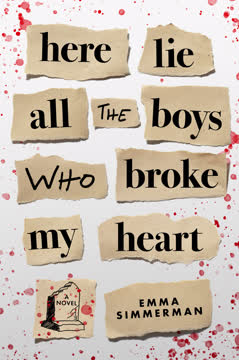
Plot Summary
Prologue: Eulogies for the Living
For Sloane Sawyer, breakups mean penning eulogies to exes in the pages of her private journal—a darkly comic, slightly unhinged ritual of closure. "If you break my heart… you are dead to me." For Sloane, it's therapy; for her friends, it's a quirk; for her exes, well… what they don't know won't hurt them. Or so she thinks, until the summer before her last year of college, when the boys she's "eulogized" in fiction start dying for real. It's more than coincidence—it's the start of a campus mystery that will unravel every friendship, romantic entanglement, and painful secret Sloane was trying to write out of her life.
Senior Year, New Regrets
Sloane returns to Pembroke College for her last year with her cousin Adrienne as her new roommate, a protective mother at a distance, and a history of public mistakes: an affair with a married professor, a DUI, and a general reputation as the campus "hot mess." Yet, Sloane hopes for stability and emotional growth, and maybe something uncomplicated with her longtime friend group: sharp Annica, soft-hearted Dani, and the cluster of boys—including Wes, the one who could ruin everything. Her routine—parties, flirting, hangovers—feels familiar, until grief and old wounds crash through the surface.
An Ex-Boyfriend's Death
Sloane discovers that Jonah, her first love and first ex committed to paper in her eulogy journal, died in a car accident. She is shaken—not by fresh heartbreak, but by guilt and the surreal coincidence that she'd "killed" him in her writing years ago. As her family checks in and her mother worries about her spiraling, Sloane re-reads the eulogy that once helped her move on from Jonah and wonders if the universe is cruel enough to make fiction bleed into life.
Weekend Rituals and Grief
Sloane's routine continues—drinking margaritas, gossipping, chasing guilty laughter about deaths and heartbreaks in the shadow of Jonah's passing. Her friends notice the cracks she tries to hide. The world spins around Sloane—a university teeming with welcome parties, drama, and an undercurrent of guilt as Sloane realizes her internal narrative is no longer private. She wonders if she deserves closure for something she can't make sense of.
Unrequited Friendship, Unspoken Love
Amid all-night parties, the college's familiar crowd offers both comfort and threat. Sloane's friendship with Wes—now with a girlfriend, Marissa—jostles against what might have been, marked by longing, regret, and secrets. Her group is tight-knit but full of rules, especially the one about not getting too close to certain boys. Tensions mount as Asher, the group's agent of chaos, discovers hints about Sloane's summer indiscretions. Friendships bend under secrets, and love is complicated by rivalry and silent pacts.
The Journal of Broken Hearts
Sloane's private ritual takes on chilling significance as she tallies up the exes she's "buried" in ink—Jonah, Ryan, Marco, Bryce, Wes (only in potential). When another ex, Ryan, dies just after an ugly encounter, Sloane sees the pattern: the exes in her journal are dying, and the fiction she wrote for closure has become a bleak curse. Panic, suspicion, and guilt consume her—could the thoughts she writes cause real harm, or is she being set up?
Party Games and Power Hour
Sloane's group navigates Power Hours, dive bar nights, and increasingly dangerous liaisons. The tension between friends, sexual rivals, and ex-lovers thrums under every shot and challenge. Sloane's complicated deal with Asher—to help each other get what they want (for her, love; for him, a family business)—raises the stakes. The secrets grow knottier, alliances shift, and Sloane's paranoia spirals, especially as someone seems to know about her eulogy journal.
Death Comes for the Exes
At an out-of-town frat party, Sloane is implicated in another ex's death—Ryan "fell" from a balcony after a drunken argument and a vicious, blackout night. The police, led by Detective Grange, question Sloane and her friends, especially after a copy of her eulogy for Ryan is found on his body. Panic turns to horror as Sloane tries to remember whether she could have committed the crime herself, or if she's a scapegoat for someone else's vendetta.
Trapped in the Past
Sloane struggles with blank spaces in her memory and the growing suspicion that someone is orchestrating events to implicate her. The missing journal becomes evidence—and blackmail material. Sloane's past mistakes, reckless habits, and fraught relationships make her a plausible suspect to the world and to herself. As she investigates, she realizes the circle of people with motive and knowledge is small—and one of them is weaponizing her own words.
Secrets on the Dance Floor
Wes and Sloane's chemistry boils over in the chaos of campus nightlife. Amid secret dances, reckless confessions, and jealous glances, Sloane courts disaster with Asher's help, manipulating appearances to win Wes and protect herself. The boys' complicated family inheritance looms, and Sloane and Asher's faked relationship blurs the line between performance and reality. But every new deception—their deal, their proximity—sows distrust and confusion among the friends.
Guilt, Hangovers, and Suspicions
Another eulogy subject—Marco—dies in a "gas leak" restaurant fire after Sloane's group dines there. With each death, Sloane's guilt intensifies, and the physical evidence—the eulogy pages—keep appearing at the crime scenes, always implicating her. Asher becomes her partner in crime-solving, constructing elaborate suspect boards. But with her own fingerprints on the "evidence," Sloane teeters between victim, detective, and possible perpetrator.
The Murderer in Our Midst
The circle tightens as more eulogy pages find their way to dead bodies. Sloane tries to keep her friends close and suspects closer, but her secrets multiply and vulnerabilities mount. Her failed relationships, fractured trust, and the mounting body count threaten to destroy every bond she values. When the group travels for family events and holidays, Sloane's double life—romantic rival, detective, possible killer—explodes in fights, betrayals, and desperate attempts at control.
Twists of Friendship and Betrayal
The characters, once fused by college camaraderie, are divided by jealousy, secrets, and trauma. Sloane navigates power dynamics, romantic triangles, and blackmail. Each attempt at alliance—whether with Asher, Annica, or even old flames—ends messily, tainted by suspicion and hidden agendas. The friends' complicit silence and history of covering for one another allow danger to fester in the group.
Playing Detective, Playing Dangerous
Sloane's desperation turns her and Asher into partners on the hunt—breaking into the professor's office, surveilling suspects, and tracing every lead. But every clue seems to circle back to Sloane's own failings and relationships. The stakes escalate: now, the killer seems to be accelerating their pattern, targeting people even outside Sloane's romantic orbit if they get too close. Sloane is forced to question not only her trust for her friends, but her own sanity.
Kiss Me, Kill Me, Save Me
The "fauxmance" between Sloane and Asher, meant as mutual cover for their goals, turns passionate. In a raucous hot tub game, their staged romance crosses into genuine longing and confusion—especially as they both witness and contribute to the group's collapse. Emotional boundaries are crossed; sex becomes a battlefield; and Sloane lurches between self-destruction and desperate hope for love.
Halloween Masks and Swords
On Halloween, as Sloane's friend group wades through complicated tensions at an underground society party, another eulogy subject—Bryce—is stabbed. Drugs, costumes, and sex in the shadows provide the perfect cover for another killing. Sloane and Asher, high and confused, stumble across Bryce's body and rip off the eulogy note, compounding their criminal exposure and guilt. The group's trust is shattered—paranoia, suggestion, and grief rule the weeks that follow.
Grief, Guilt, and Gasoline
After Bryce's murder and another close call with Graham, Sloane's world contracts. Every friend is now both suspect and potential next victim; every trust is tainted. Sloane's mental health buckles. Annica and Dani question her, the campus gossips, and Sloane is branded as "the Pembroke Psycho." Friendships crack, loyalties betray, and through it all, Sloane clings to her writing—and what's left of her soul.
Suspect Boards and Social Media
Sloane cannot escape campus gossip, police suspicion, or her own spiraling guilt. Annica and the group push for the truth; Sloane weighs trusting Detective Grange, who grows increasingly irritated with her self-destructive tendencies. The evidence—the eulogy journal—becomes both compass and curse. Social media burns with rumors; friends weaponize information; Sloane is left running out of allies, consumed by what she's lost.
Complicated Friendships, Complicated Crimes
Sloane's relationship with both Asher and Wes becomes hopelessly tangled, haunted by betrayal, guilt, and the constant presence of death. Trust is a mirage. Every attempt at stability is undone by trauma, grief, and unresolved romantic triangles. As the killer's pattern grows bolder, Sloane's circle contracts to near-isolation. No relationship—from familial to sexual—feels safe.
Lovers and Liars in Vail
A group trip to Vail—meant to celebrate and escape—becomes a crucible of tension and temptation. Sloane and Asher's relationship combusts physically and emotionally, but is shadowed by unresolved secrets about the murders and Asher's role within the group. Every attempt at love carries the weight of suspicion; every pleasure is shadowed by the past.
Journal Pages and Near Misses
Sloane and Tristan nearly die in a locked freezer, with a eulogy page as warning. The killer's methods are growing inventive and cruel. The police seem only marginally closer to solving the crimes, and Sloane feels the noose tightening as suspicion again falls on her—with the mounting pressure destabilizing the group's last shreds of trust.
Betrayals Multiply, Friendships Fracture
As the group reels from trauma and Sloane's growing desperation, previously unassailable friendships collapse under the strain. Annica's behavior turns cold and critical; Asher's affection becomes sinister in its ambiguity. Sloane is left alone, burdened by secrets, and surrounded by crumbling relationships. Her old journal of closure is now a logbook of distress.
The Real Killer Revealed
In a breathtaking, claustrophobic scene during a stormy graduation party, Sloane receives a text from Annica—and finds Wes stabbed, bleeding out. Annica, jealous, wounded, and tired of living in Sloane's shadow, confesses to orchestrating the deaths, wielding Sloane's eulogies as both inspiration and frame-up. Annica intends to have Sloane either killed or arrested for the final murder. Only the intervention of the police—and a struggle—prevents tragedy.
Aftermath and Endings
With Annica dead and Wes wounded but alive, Sloane confronts the damage: grief, betrayal, broken friendships, and a lingering sense of being unmoored. She confesses everything to Wes, who forgives her only into friendship. Dani, Charlie, and the others attempt to heal. Sloane faces graduation haunted, hollowed, and determined to write her own ending. She must turn away from her own self-sabotage and the ghosts she wrote into being.
Choosing Myself
Sloane, alone, for the first time accepts her own story—letting go of destructive love, expectation, and even self-hatred. She refuses to follow Asher to Colorado after discovering his complicity in the eulogy scheme. Instead, she resolves to write her way to closure—"not a eulogy, but a whole damn book"—choosing herself instead of love, betrayal, or fame. The story ends with a blinking cursor: the promise of a new beginning.
Analysis
Brutally contemporary, darkly comic, and psychologically astute, "Here Lie All the Boys Who Broke My Heart" is both a murder mystery and an interrogation of the ways young women are allowed—and punished—for processing pain
Emma Simmerman's novel embodies the volatility of college life—the intoxicating mix of carelessness and yearning, the intensity of found family, and the way social rituals can morph into psychological battlegrounds. The eulogy journal, at once premise and metaphor, exposes how women's narratives about heartbreak are always at risk of being weaponized, misunderstood, or erased—even, and especially, by their closest friends. The group's dynamic, with its fierce loyalty and petty betrayals, is a precise portrait of twenty-something loneliness, where the fear of being left behind curdles into envy and violence. Simmerman's greatest achievement is Sloane herself: a protagonist allowed to be unlikeable, unreliable, lovable, and finally, her own savior. The novel refuses easy closure—romantic or moral. It insists that survival sometimes means seeing your life's worst chapter through, refusing to let shame or heartbreak be the last word. For readers, the lesson is not just whodunit, but who gets to write the ending.
Review Summary
Here Lie All the Boys Who Broke My Heart receives mostly positive reviews, averaging 3.79 stars. Readers praise its addictive premise—a college girl's breakup eulogies become murder evidence—along with its banter-filled enemies-to-lovers dynamic, messy characters, and satisfying twists. Many binged it in single sittings and highlight its similarities to Tell Me Lies and A Good Girl's Guide to Murder. Common criticisms include a difficult-to-root-for protagonist, pacing issues, a rushed ending, and romance overshadowing the mystery. The audiobook narration receives consistent praise.
People Also Read



Characters
Sloane Sawyer
Sloane is equal parts wild and wounded—a sharp-tongued, hard-drinking English major who externalizes heartbreak through sarcastic, fictional "eulogies" for her exes. Her self-image oscillates between "hot mess" and cautious dreamer, shaped by parental expectations, past mistakes (the DUI, the professor affair), and a fraught friend group. Sloane's strongest connections are with her friends—competitive Annica, gentle Dani, and the complicated cluster of boys (especially Wes and Asher). Psychologically, she is fragile but persistent, her defense mechanisms both comic and destructive. The events of the novel force her to question every trusted relationship and to ultimately choose herself over the desperate search for romantic validation. Her arc is a darkly comic coming-of-age journey from self-loathing to hard-won clarity.
Annica Labrant
Annica is Sloane's oldest campus friend and chief rival—witty, wealthy, hyper-competitive, and rigidly rule-bound beneath her sarcastic shell. She is haunted by perceived slights and terrified of being overshadowed, especially by Sloane's casual charisma and sexual history. Annica's bitterness and jealousy metastasize into violence as she becomes the twisted "avenger" wielding Sloane's own eulogies against her, murdering exes to frame Sloane and reclaim control. Underneath, Annica is deeply insecure, exhausted by always being second best, and ultimately driven to destroy what (she thinks) has destroyed her happiness. Her descent into villainy is both tragic and, in the novel's terms, grimly believable.
Asher McCavern
At first, Asher is the group's insufferable flirt and provocateur—a golden-boy with a caustic tongue, a penchant for manipulation, and a hidden desperation for approval. His entanglement with Sloane is fraught: what starts as a strategic alliance (to win a family inheritance by distracting Wes) becomes blurrier and more passionate, leading to genuine feelings overshadowed by selfish motive. Psychologically, Asher is damaged by years of familial abuse (his father's violence, his mother's loss), resulting in a belief that love must always be performed or bartered. His complicity in Annica's plot—initially as a pawn, later as self-protection—exposes the limits of his capacity for intimacy and trust. By story's end, Asher embodies both Sloane's greatest heartbreak and her greatest cautionary tale.
Wesley McCavern
Wes, campus dreamboat and group linchpin, is Sloane's "what if"—smart, kind, but emotionally unavailable due to his own burdens (expectations to inherit the family business, messy relationships, and loyalty to the group). Wes's stability provides comfort for Sloane, but his consistent distance keeps her off-balance. When they finally become a couple, their connection is tender but fraught by Sloane's secrets and guilt. Wes is essentially a good man overwhelmed by others' machinations—his cousin's manipulations, Annica's jealously, Sloane's divided heart. His forgiveness in the end is realistic: wounded, but mature enough to value friendship above ruined romance.
Danielle "Dani" Montgomery
Dani is the group's caretaker—a sincere, empathetic nursing student whose anxiety and kindness offset the chaos around her. She is the first to spot changes in Sloane's mood, the most likely to extend forgiveness, and the last to believe anyone is irredeemable. Psychologically, Dani is built for support—her instinct is always to heal, listen, and rationalize everyone's behavior. Yet even Dani frays under the strain, ultimately standing by Sloane as most others pull away.
Detective Grange
Grange is the main adult presence—a persistent, shrewd, but ultimately fair Boston detective who alternates between suspecting and trying to save Sloane. He's a foil to the group's subjective reality, methodically piecing together evidence that is always just out of reach. Grange represents the real-world consequences Sloane can't outdrink or outtalk, as well as a shadow of mentorship as he insists she take responsibility for her trauma and mistakes.
Miles Holland
The married ex-professor, Sloane's infamous "mistake"—serves as both a red herring in the murder mystery and a locus of guilt. Miles is possessive, charismatic, and manipulative, driving Sloane's reputation into public scandal and making him a plausible suspect when eulogy pages turn up as evidence. His new relationship with Sloane's cousin Adrienne adds depth to his menace. Ultimately, he is more pathetic than evil—the victim of Annica's framing, but also his own bad choices.
Adrienne
Adrienne, fashion major, model student, and Sloane's roommate, is the "responsible" cousin meant to be a good influence. Instead, she becomes entangled with Miles, either out of ignorance or calculation (her motives veiled). Her relationship with Sloane is strained but essential: she is both confidante and betrayer, reminding Sloane that everyone has secrets, and no one is as stable as they seem.
Tristan Brent
Flirtatious bartender, once the subject of Sloane's affection and another name in her death journal. Tristan is a symbol for all the minor heartbreaks Sloane can't shake: charming, not too deep, and almost deadly, when the killer traps them together. His eventual rescue—the first near miss—marks a shift in the pattern of the killings and helps Sloane see the endgame closing in.
Marissa Wilder
Wes's girlfriend, "annoying" to Sloane, always present at the group's periphery. Marissa's dating of Wes, social media presence, and mysterious behavior make her a prime red herring—the obvious scapegoat, especially when she colludes with other suspicious characters (like Colton). Ultimately, her significance is psychological: a representation of everything Sloane feels excluded from, and a pawn in the true game Annica is playing.
Plot Devices
Eulogy Journal as Deadly McGuffin
The eulogy journal is the story's central device: Sloane's ritual for closure, a symbol of her unresolved trauma, and ultimately, a murder weapon in the hands of someone else. Initially a darkly comic device for self-therapy, it is used by the real killer (Annica) for framing, blackmail, and plot escalation. The pages function as both physical evidence and psychological torture, blurring the lines between imagination and consequence. The recurring burning and rewriting of eulogies mirror Sloane's struggle to control narrative and fate.
Unreliable Narration, Blackouts, and Guilt
Sloane's excessive drinking, self-hatred, and complicated relationships are inseparable from her perception of reality. Her blackouts, secret-keeping, and spirals of guilt make the reader doubt her reliability—could she really have done these things? Is she culpable when her past actions clearly set the stage for tragedy? The plot repeatedly uses her lapses and shifting memories to sow suspense, red herrings, and emotional honesty.
Group Dynamics and Foreshadowing
The college friend group is constructed as both found family and breeding ground for disaster. The novel foreshadows Annica's jealousy, Asher's manipulativeness, Wes's passivity, and the limits of everyone's trust—each character's flaws are laid bare in the early pages and quietly weaponized as the plot tightens. The shifting alliances, romantic entanglements, and "rules" of the group all become devices for both suspense and psychological realism.
Casual Humor as Emotional Armor
The novel's first-person, sardonic voice is a shield: Sloane's wit deflates melodrama but can't protect her from trauma. Comic set pieces (party disasters, sex shenanigans, group games) are constantly undercut by the threat of violence or betrayal, making the humor bittersweet and reinforcing that even the "fun" of college isn't safe.
Misdirection and Red Herrings
The story's construction as a murder mystery is built from classic genre moves—dark academia, unreliable witnesses, a selection of plausible suspects (professor, exes, Marissa, Asher). Each is implicated in ways that feel emotionally plausible given Sloane's experiences. Only at the climax does the true murderer (Annica) reveal herself, her motivations both foreshadowed and shocking.
Metafiction and the Power of Writing
Sloane is literally writing the story of her own undoing, and ultimately (in therapy, at the keyboard after college) writing her own survival. The book turns the eulogy into a narrative weapon—first for Sloane, then for Annica, then back to Sloane as she realizes only she can finish her story. The "cursor blinking at the end" is the last image: closure not as answers or romance, but as self-authorship.








































