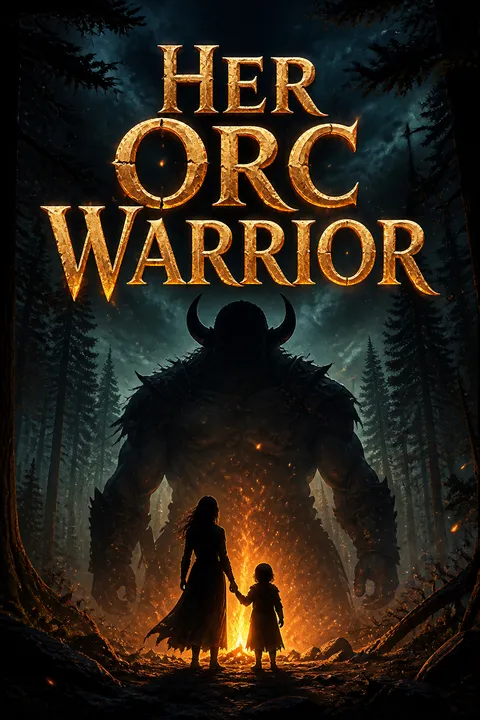

Plot Summary
Escape Beneath Twilight Wagons
Hazel, a streetwise woman, and her young daughter Wren, escape the city of Ultrup under cover of dusk, hiding in a merchant's wagon. Hazel's life has been shaped by hardship and survival, and now, with her daughter threatened by the cruel gang leader Timo, she risks everything for freedom. The tension is palpable as they evade pursuers, relying on Hazel's instincts and the hope that this wagon—driven by an unknown, possibly dangerous owner—will carry them to safety. The city's corruption and the ever-present threat of betrayal loom, but Hazel's fierce love for Wren propels them forward into the unknown, setting the stage for a journey that will test every ounce of their courage.
The One-Eyed Orc's Mercy
Hazel and Wren's hiding place is discovered by Vark, a massive, scarred orc with a single eye. Instead of turning them in or reacting with violence, Vark surprises Hazel by protecting their secret and even sharing his food and blanket. The orc's actions defy every story Hazel has heard about his kind, sowing confusion and reluctant gratitude. As the wagon rolls out of Ultrup, Hazel's wariness battles with the first glimmers of trust. Vark's silent, watchful presence and his willingness to help two desperate strangers hint at a depth of character—and a destiny—Hazel cannot yet fathom.
Flight and Forest Shadows
When the wagon stops in the wilderness, Hazel seizes the chance to flee with Wren, but Vark follows, tracking them through the dark forest. The chase is tense, Hazel's instincts sharpened by years of danger, but she is outmatched by Vark's strength and skill. Cornered in a tree, Hazel prepares to fight, but Vark's calm, nonthreatening approach and his insistence that he means no harm begin to erode her defenses. The encounter ends not in violence, but in a strange, uneasy truce—one that will soon deepen into something neither expects.
Campfire Promises and Mates
Hazel and Wren are brought into the orc caravan's camp, where they meet Vark's companions. Around the fire, Hazel's suspicions clash with the orcs' straightforward kindness. Vark reveals the orc belief in fated mates, claiming Hazel as his, a declaration that unsettles her deeply. The orcs' culture—honorable, communal, and surprisingly gentle—contrasts sharply with Hazel's experiences among humans. As Wren finds warmth and food, Hazel is forced to confront her prejudices and the possibility that safety, and even belonging, might be found among monsters.
Reluctant Trust, Relentless Pursuit
Hazel struggles with her growing reliance on Vark and the orcs, determined to remain independent and wary. Vark's protective instincts and gentle persistence begin to wear down her walls, but Hazel's past trauma and fear of being controlled make her lash out. The threat of Timo's pursuit lingers, and Hazel's guilt over Wren's suffering haunts her. Yet, as the caravan travels north, small moments of trust and care accumulate, hinting at the possibility of healing and partnership—if Hazel can let herself believe in it.
Bargains, Blades, and Boundaries
Vark proposes a wager: if Hazel can best him in a fight, she wins gold and her independence; if not, she and Wren will stay with the orcs for the winter. The challenge is both a test and a lesson, as Vark's superior strength and skill force Hazel to confront her limitations. Their sparring is charged with tension—physical, emotional, and sexual. The bet becomes a vehicle for Hazel's growth, pushing her to accept help, learn new skills, and reconsider what it means to be strong.
Lessons in Strength and Survival
Hazel begins training with the orcs, learning not just to fight, but to trust and rely on others. The orcs' approach to teaching is patient and respectful, challenging Hazel's assumptions about power and vulnerability. Wren flourishes among the orcs, her natural curiosity and resilience shining. As Hazel's body grows stronger, so does her sense of self-worth. The journey north becomes a crucible, forging new bonds and revealing the possibility of a life beyond mere survival.
Training, Tension, and Tenderness
The daily rhythm of travel and training brings Hazel and Vark closer, their banter and friction giving way to moments of tenderness and desire. Vark's respect for Hazel's boundaries and his unwavering support begin to heal old wounds. Hazel, in turn, starts to see Vark not as a captor or protector, but as a partner—one who values her strength and vulnerability alike. The emotional stakes rise as Hazel contemplates a future she never dared imagine.
Confessions by Moonlight
Under the cover of night, Hazel and Vark share their histories—their losses, regrets, and the scars that shaped them. Vark reveals the story of his injury and his fall from warrior status, while Hazel confesses the truth about Wren's parentage and her own criminal past. These confessions strip away the last of their defenses, exposing raw wounds but also creating space for empathy and understanding. The moonlit honesty binds them more tightly than any physical act.
River Revelations and Desire
A stolen moment by the river becomes a turning point, as Hazel and Vark's simmering attraction erupts into passion. The orc's openness about desire and Hazel's cautious curiosity collide, leading to a night of exploration and mutual pleasure. The encounter is transformative, not just physically but emotionally, as Hazel experiences intimacy free from fear or obligation. The river becomes a symbol of cleansing and renewal, washing away old shame and opening the door to new possibilities.
Storms, Shelter, and Surrender
A violent storm forces the caravan to seek shelter in a human inn, where Hazel and Wren experience comfort and hospitality unlike any they've known. The enforced closeness and safety allow Hazel to lower her guard, and she surrenders to Vark's care and affection. The storm outside mirrors the turmoil within, but as the rain passes, Hazel finds herself changed—more willing to accept love, more hopeful for the future, and more determined to protect her newfound family.
New Bonds, Old Fears
As Hazel and Wren settle into life with the orcs, new challenges arise. Hazel grapples with jealousy, insecurity, and the fear that happiness is fleeting. Vark's possessiveness and the orcs' communal ways force Hazel to confront her own capacity for trust and belonging. Wren's unique abilities begin to surface, hinting at a mysterious heritage. The past is never far behind, and Hazel's old life threatens to intrude, testing the strength of the bonds she has formed.
The Past Hunts Them Down
Timo and his men catch up to the caravan, demanding Wren and threatening violence. Hazel is forced to confront her greatest fears, standing between her daughter and the man who once controlled her life. The orcs rally to her defense, and Vark's warrior instincts reawaken. The confrontation is brutal and decisive, shattering the last ties to Hazel's old life and proving the depth of her new family's loyalty. In the aftermath, Hazel must reckon with the cost of freedom and the meaning of home.
Blood, Blades, and Breaking Free
The battle with Timo's crew is swift and deadly. Hazel's skills and courage are tested to the limit, and Vark's strength and leadership shine. The violence is not without cost—blood is spilled, and old wounds are reopened. Yet, in the breaking of old chains, Hazel and Wren are finally free. The orcs' willingness to fight for them cements their place in the clan, and Hazel's sense of belonging deepens, even as she mourns the losses and scars left behind.
Aftermath and Acceptance
In the quiet after the storm, Hazel and Wren grieve the past and begin to heal. The orcs' rituals of mourning and remembrance offer solace, and Vark's unwavering presence helps Hazel process her guilt and sorrow. Acceptance comes slowly, but with it, a sense of peace and possibility. Hazel's relationship with Vark matures, grounded in mutual respect, honesty, and shared purpose. Wren, too, finds her place, her unique gifts embraced rather than feared.
Arrival at the Hill
The caravan arrives at the Black Bear Hill, the orc stronghold, where Hazel and Wren are welcomed as family. The underground city is vibrant and communal, a stark contrast to the isolation of their old life. Hazel meets the orc king and queen, witnessing a model of partnership and leadership that inspires her. The promise of safety, work, and community is realized, and Hazel dares to hope for a future where she and Wren can thrive.
Home, Hope, and Healing
Hazel and Wren settle into their new life, finding work, friends, and a sense of purpose. Hazel's skills are valued, and her past is no longer a source of shame but a foundation for growth. Vark, too, finds redemption and a new role, teaching and protecting the next generation. Together, they build a home filled with love, laughter, and hope. The wounds of the past begin to heal, replaced by the bonds of chosen family and the promise of a brighter tomorrow.
The Future Unfolds
As winter settles over the land, Hazel, Vark, and Wren look to the future with cautious optimism. The journey from fear and survival to love and belonging has transformed them all. The orc clan's acceptance, the forging of new traditions, and the embrace of difference signal a new era—not just for Hazel and her family, but for the world they inhabit. The story closes on a note of hope, with the promise that, whatever challenges lie ahead, they will face them together.
Analysis
Her Orc Warrior is a monster romance that subverts expectations, using the trappings of fantasy to explore deeply human themes of trauma, trust, and transformation. At its core, the novel is about the possibility of healing through radical acceptance—of oneself, of others, and of difference. Hazel's journey from survival-driven isolation to chosen family is both harrowing and hopeful, offering a nuanced portrayal of the scars left by abuse and the courage required to risk love again. Vark's arc challenges traditional notions of masculinity, presenting vulnerability and care as strengths rather than weaknesses. The orc clan, with its communal ethos and embrace of outsiders, serves as a utopian counterpoint to the violence and exploitation of Hazel's past. The fated mates trope, often criticized for its lack of agency, is here reimagined as a catalyst for mutual growth and consent. The novel's treatment of sexuality is frank and celebratory, using intimacy as a site of healing rather than shame. In a modern context, Her Orc Warrior resonates as a story about found family, the power of community, and the ongoing work of building a life worth living after trauma. Its lessons—about trust, resilience, and the necessity of hope—are as relevant in our world as in any fantasy realm.
Review Summary
People Also Read
Characters
Hazel
Hazel is a woman forged by hardship, fiercely protective of her daughter Wren and deeply mistrustful of others. Her past as a street thief in Ultrup, shaped by betrayal and abuse, has left her wary, resourceful, and slow to trust. Her relationship with Wren is the core of her identity, driving every decision and sacrifice. Hazel's journey is one of gradual healing—learning to accept help, to trust in love, and to believe in her own worth. Her dynamic with Vark is fraught with tension, vulnerability, and eventual surrender, as she moves from seeing herself as a burden to embracing her place in a new family. Hazel's psychological arc is about reclaiming agency, redefining strength, and allowing herself to hope.
Vark
Vark is a one-eyed orc, marked by physical and emotional scars from a past betrayal that cost him his place among the warriors. His sense of honor, loyalty, and gentleness contrasts with his formidable appearance. Vark's discovery of Hazel as his fated mate reignites his sense of purpose and belonging, but also brings insecurity—he fears he is unworthy due to his injury and lost status. His relationship with Hazel is characterized by patience, respect, and a deep desire to protect without controlling. Vark's development is about accepting vulnerability, redefining masculinity, and finding redemption through love and service to his new family.
Wren
Wren is Hazel's adopted daughter, a quiet, observant child with mysterious abilities that hint at fae heritage. Her resilience and adaptability are remarkable, shaped by early trauma but nurtured by Hazel's fierce love. Wren's connection to animals and the natural world sets her apart, and her innocence serves as a catalyst for Hazel's transformation. As she finds acceptance among the orcs, Wren blossoms, her gifts embraced rather than feared. Psychologically, Wren represents hope, the possibility of healing generational wounds, and the promise of a future unburdened by the past.
Timo
Timo is the cruel leader of Hazel's former gang, a manipulative and violent man who seeks to control through fear and exploitation. His pursuit of Hazel and Wren is relentless, driven by greed and a sense of ownership. Timo's presence in the story is a constant reminder of the dangers of the past and the difficulty of breaking free from cycles of abuse. His eventual defeat is both a literal and symbolic liberation for Hazel and Wren, allowing them to move forward unshackled.
Ozork
Ozork is an older orc, respected within the Black Bear Clan for his wisdom and steadiness. He serves as a bridge between Hazel and the orc community, offering guidance, protection, and gentle humor. Ozork's role is that of a surrogate father or uncle, providing stability and modeling healthy masculinity. His acceptance of Hazel and Wren is instrumental in their integration, and his own longing for a mate adds depth to his character.
Korr
Korr is another orc in the caravan, notable for his skill as a hunter and his patient, encouraging approach to teaching Hazel. He represents the nurturing side of orc culture, challenging Hazel's assumptions about strength and violence. Korr's interactions with Wren and Hazel are marked by kindness and respect, and his own story hints at the broader possibilities for connection and growth within the clan.
Ritta
Ritta is the primary female orc in the caravan, offering Hazel a model of orc womanhood that is both strong and nurturing. Her camaraderie and practical support help Hazel adjust to the new culture, and her presence challenges gendered assumptions about power and care. Ritta's friendship is a source of comfort and solidarity, and her role in the story underscores the importance of female bonds.
Neekar
Neekar is a younger orc, skilled in tracking and combat, who brings humor and lightness to the group. His playful banter and quick wit provide relief from the story's darker moments, and his loyalty to the clan is unwavering. Neekar's acceptance of Hazel and Wren signals the broader community's willingness to embrace outsiders.
King Gorvor
King Gorvor is the ruler of the Black Bear Clan, a figure of authority who balances strength with compassion. His relationship with his human mate, Queen Dawn, serves as an aspirational model for Hazel and Vark. Gorvor's openness to change and his commitment to justice and inclusion set the tone for the clan's culture, making the Hill a place where difference is not just tolerated but celebrated.
Queen Dawn
Dawn, the human queen, embodies the possibility of cross-cultural love and acceptance. Her partnership with Gorvor is marked by mutual respect, humor, and shared leadership. Dawn's presence reassures Hazel and Wren that they, too, can find belonging and purpose in the orc world. Her warmth and approachability help ease Hazel's transition, and her pregnancy symbolizes hope for a new generation.
Plot Devices
Fated Mates
The orc concept of fated mates is central, serving as both a plot engine and a metaphor for radical acceptance. It forces Hazel and Vark into proximity and emotional vulnerability, challenging their self-perceptions and fears. The mate bond is not coercive but rather an invitation to healing, requiring both parties to confront their wounds and choose each other freely. This device allows the narrative to explore themes of destiny versus agency, and the transformative power of unconditional love.
Found Family
Hazel and Wren's integration into the orc clan is a slow, sometimes painful process, marked by suspicion, testing, and eventual acceptance. The found family trope is used to contrast the violence and betrayal of Hazel's past with the possibility of safety, support, and belonging. The orc community's rituals, humor, and shared labor provide a backdrop for Hazel's healing and Wren's flourishing. This device underscores the idea that family is chosen as much as inherited.
Trauma and Healing
Both Hazel and Vark are shaped by trauma—Hazel by abuse and poverty, Vark by injury and lost status. The narrative structure alternates between moments of high tension (flight, confrontation, violence) and quiet intimacy (training, confession, care), mirroring the rhythms of trauma recovery. Healing is depicted as nonlinear, requiring patience, setbacks, and the willingness to risk trust. The story uses foreshadowing (the threat of Timo, Wren's abilities) and parallel arcs (Hazel and Vark's mutual growth) to build emotional resonance.
Cultural Contrast
The juxtaposition of human and orc cultures is a recurring device, used to challenge Hazel's (and the reader's) assumptions about monstrosity, gender, and power. Orc customs around hospitality, sexuality, and community are depicted as both alien and deeply humane, forcing Hazel to reevaluate her beliefs. The narrative structure uses Hazel's outsider perspective to gradually reveal the richness and complexity of orc society, culminating in her acceptance and integration.
Symbolism of Journey
The northward journey from Ultrup to the Hill is both literal and symbolic—a passage from danger to safety, from isolation to community, from survival to flourishing. Each stage of the journey marks a step in Hazel's transformation, with physical obstacles (forest, storm, pursuit) mirroring internal struggles (trust, shame, desire). The journey's end at the Hill is not a conclusion but a new beginning, signaling the ongoing nature of healing and growth.
Download PDF
Download EPUB
.epub digital book format is ideal for reading ebooks on phones, tablets, and e-readers.








































