


Plot Summary
The Collar She Cannot Remove
Iverson,1 the king's wraith and assassin, breaks into the enchanter Darrow's4 shop and demands he unlock the ruby collar Baylor2 fastened to her throat when she was ten, a jeweled noose that tightens and suffocates her whenever she displeases him. Darrow4 insists only the king2 can remove it.
Before she can press him, a stranger arrives wreathed in living shadow-snakes, hunting a weapon called the whisperer hidden in tunnels beneath the palace. He strangles Darrow4 for information, senses Ivy1 despite her invisibility, and reveals himself as a winged reaper with a scythe.3 Ivy1 barely escapes, then spots him perched among the palace gargoyles, watching her. Her one plan for freedom has collapsed, replaced by a deadlier mystery.
The opening inverts the assassin fantasy: the predator is herself a caged animal. Taylor establishes control as the book's master grammar, the collar literalizing coercive relationships where love and ownership blur. Ivy's casual violence toward Darrow masks helplessness; her true vulnerability is the throat she cannot free. The reaper's intrusion reframes her from apex threat to prey, seeding the enemies-to-lovers dynamic through mutual sensing, a somatic intimacy that precedes trust. The scene's gothic excess of mirrors and serpents signals a world where surfaces deceive, priming readers for a narrative obsessed with illusion, hidden identity, and the chasm between performance and self.
Breakfast With Her Master
Summoned to Baylor's2 cheerful breakfast chamber, Ivy1 performs devotion for the man who calls her his pet, hiding revulsion behind practiced smiles. The scene lays bare her cage: the collar forces obedience to any direct command, and Baylor2 dispatches her to murder those he brands traitors, most recently a lord she executed the night before.
She glimpses the late queen Leona's8 hand-painted plates on the table, stirring buried grief. Baylor2 frets over his approaching twenty-fifth anniversary ball, the invited Gods, failing harvests, and a vigilante killer called the Angel of Mercy terrorizing the city.
When Ivy1 offers to hunt the murderer, Baylor2 refuses, calling it beneath her. She smiles sweetly, concealing that she knows precisely who the Angel is.
The breakfast stages abuse as domestic theater. Baylor's warmth, the honorific pet, the place of honor, all are choreography designed to make captivity feel like devotion, a grooming dynamic weaponized into governance. Leona's porcelain intrudes as involuntary memory, the repressed puncturing Ivy's mask. Taylor braids the personal and political: failing harvests and the Angel manhunt establish a kingdom decaying alongside its king's soul, while the collar's command mechanic exposes consent as fiction. Ivy's offer to hunt the vigilante she herself is reveals her defining strategy, hiding in plain sight, and her practiced comfort inhabiting contradiction without cracking her performance.
The Angel of Mercy
Slipping into MASQ, the club run by Della,5 the late queen's8 grieving former lover, Ivy1 collects a target: a father who sold his daughter. Della5 authenticates victims while Ivy1 executes them, a covert vengeance conducted behind Baylor's2 back. Ivy1 secretly returns Leona's8 stolen porcelain to Della's5 private shrine, a gesture of quiet penance.
That night she corners the drunkard Lynal in an alley, severs his hand, confirms he trafficked his own child, and beheads him, painting the word Mercy on the wall in his blood. This is the Angel of Mercy, Ivy's1 chosen identity, her only atonement for the lives the collar compels her to take. Then the reaper3 reappears, having watched the entire killing.
Here the novel reframes Ivy from villain to avenger, revealing that her chosen killings obey a moral logic Baylor's do not. The Angel of Mercy is atonement structured as ritual, the bloody signature both confession and claim. Della's shrine and the returned porcelain externalize how survivors curate grief, some caging their ghosts, some communing with them. Lynal's crime, commodifying a daughter, mirrors Ivy's own reduction to the king's pet, making her vengeance intimately personal. Taylor refuses to sanitize her heroine, who savors fear even as she rescues, insisting that trauma breeds both fierce compassion and genuine cruelty.
Blackmail Over Stolen Blades
The reaper, who names himself Thorne,3 corners Ivy1 at her regular pub and threatens to expose her as the Angel of Mercy unless she helps him steal the whisperer from Baylor.2 He flashes Death's sigil tattooed on his wrist, claiming it grants him entry to any court. Ivy1 refuses, distrusting his motives, and he leaves the threat dangling.
Digging through the palace library, she uncovers an unsigned history claiming the first God of Life, Claudius, was not slain in war but murdered by another God wielding an enchanted sword who confessed the whispers made him do it. The account names the blade a God Slayer. Ivy1 realizes the whisperer may be that very weapon and dreads what king2 and God intend for it.
The blackmail converts attraction into obligation, a genre-savvy engine that forces proximity while preserving antagonism, and inverts their power so the invisible killer becomes the exposed one. The library discovery seeds the cosmology, but more subtly it introduces authored history: an unsigned book preserving suppressed truth against official lies, echoing Ivy's own buried memories. The God Slayer revelation raises the ethical stakes, since helping Thorne may make her complicit in deicide. Ivy's instinct that he wants something beyond the sword shows her reading people as texts, perpetually alert to the gap between stated and actual motive, a survivor's hard-won literacy.
Death's New Liaison
Baylor2 abruptly confines Ivy,1 then Thorne3 strides into the king's2 study openly as Death's ambassador. Ivy1 learns the truth: Baylor2 traded the sword's recovery for shipments of grain to feed his starving isle, and a rogue palace guard named Grell Darby16 stole the blade from tunnels she never knew existed.
Thorne3 demands Ivy1 serve as his personal liaison in the hunt, needling Baylor's2 insecurity about being the only ruler who is not a God. After Thorne3 leaves, Baylor2 punishes her earlier disobedience by triggering the collar, choking her until she nearly blacks out. Recovering, Ivy1 manipulates the king2 into accepting the arrangement, privately resolving to find the sword and keep it from both of them.
Power's machinery is laid bare. Baylor's willingness to swallow humiliation for grain reveals a kingdom starving, while Thorne exploits the king's status wound, the shame of being merely fae among Gods. The collar punishment is the book's most naked depiction of intimate terror, control that leaves no witness. Crucially, Ivy weaponizes her own subjugation, converting Thorne's scheme into cover for her true aim. This triangulation, the abused pawn playing her two would-be owners against each other, marks the emergence of strategic agency still cloaked in the posture of the obedient pet, resistance disguised as compliance.
The River Beneath the Palace
Armed with a drawing of the bone-hilted almanova and Baylor's2 warning never to let it touch her skin, Ivy1 descends into the tunnels with Thorne,3 joining Remy's6 search crew. A collapse seals the pair away from the others beside an underground river, where their canoe is ambushed by a tentacled monster. Ivy1 nearly drowns, reliving a childhood trauma, until Thorne3 hauls her from the water.
When she reaches to brush algae from his hair, he recoils violently and orders her never to touch him. He unfurls his black wings and flies off, leaving her stung and puzzled. Their reluctant partnership deepens even as his secrets multiply, and her collar inexplicably warms near a hidden staircase along the way.
The claustrophobic descent literalizes Ivy's psyche, a buried self and a near-drowning that resurrects her foundational trauma of being interred alive. Taylor uses environmental peril to force interdependence, and the monster reframes the invincible wraith as savable, a vulnerability she resents and needs. Thorne's violent recoil from her touch becomes the chapter's engine of mystery, an intimacy withheld that paradoxically intensifies desire. The unexplained warmth of the collar near the hidden staircase plants a structural seed for later revelations. His wings, glimpsed only in flight, extend the motif of concealed true natures that governs every relationship in the book.
A Sword That Whispers
Confronting Darrow4 again, Ivy1 learns the almanova is no mere weapon but a sentient thing that whispers into minds and enslaves anyone who touches it, turning them into the Forsaken; its name means soul of the star. Darrow4 warns that no one can resist it and refuses further help.
The danger proves real when a young guard named Kipps, who lied about the tunnel collapse, is cornered at the docks. Raving that a voice commands him, he slits a bystander's throat and then his own. The dying woman collapses in Ivy's1 arms, hurling her back into grief for Leona.8 Thorne3 carries her away as Solmare's mood curdles, the sword's corruption spreading unseen through the city.
The sword's sentience transforms the quest object into an antagonist with interiority, a corruptor that speaks to shame, making it thematically inseparable from Ivy, whose self-loathing is its softest target. The Forsaken function as horror-inflected metaphor for how coercion hollows the self, echoing both the collar and Thorne's drugged mother. Kipps's murder-suicide demonstrates the stakes with brutal economy and collapses Ivy back into unresolved grief, illustrating trauma's non-linearity, how a stranger's death resurrects a specific loss. Darrow's refusal underscores the world's moral exhaustion, where self-preservation trumps courage even among the clever and the kind.
Two Broken Children
On a quiet shore, Thorne3 cleans the blood from Ivy's1 face and coaxes out her guilt over Leona,8 the queen she failed to save. In return he confesses his own past: a paranoid father who kept him and his mother captive, an enchanter hired to drug his mother into false contentment, and the night his mother drove a blade into her own heart so that eight-year-old Thorne3 could finally fly free.
Their mirrored grief binds them. Then his friend Griffen11 arrives with news that Thorne3 is needed on the Fifth Isle, and he departs, promising to attend Baylor's2 ball. For the first time, Ivy1 admits she trusts the reaper,3 an admission that frightens her more than any threat.
The shore scene is the romance's hinge, trading confession for confession, structured as mirrored trauma: two children raised in captivity by paranoid fathers. Thorne's mother's suicide, framed as a liberating gift, darkly rhymes with Leona's death and complicates the ethics of freedom bought by another's sacrifice. The enchanted drug that stole his mother's emotions illuminates the collar's psychology from a fresh angle. Ivy's dawning recognition that she trusts him is rendered as fear because, for a survivor, trust is the most dangerous vulnerability. Vulnerability, not violence, emerges here as the story's truest test of courage.
Death Comes to the Ball
At Baylor's2 anniversary ball, the Gods arrive: gentle Selim, the knowing Cassandra,19 and the petulant Heir of Life, Foley.20 Ivy1 reunites with her estranged brother Bellamy9 and endures her cold father Nigel. Then Death's party enters, and Ivy1 realizes with sinking horror that Thorne is not Death's ambassador but Killian, the God of Death himself,3 flanked by advisers Griffen11 and Fia.13
He conjures a ring of fire overhead to prove it. Compelled to dance with him before the entire court, Ivy1 grasps that his touch is lethal, explaining why he never let her near his skin. Cassandra19 unsettles her with a cryptic warning about a fate that cannot be fought, only accepted.
The unmasking recontextualizes every prior interaction, converting a slow-burn flirtation into a reckoning with deception at scale. Thorne's identity as Death, whose touch kills, literalizes emotional unavailability and forbidden intimacy, a lover who cannot hold. The public dance forces private tension into performance before the court, doubling the novel's obsession with masks. Cassandra's prophecy introduces the fate motif that will govern the climax, seeding the paradox that acceptance, not resistance, becomes the path to power. Ivy's refusal to kneel dramatizes defiance even while collared, showing dignity persisting in posture when it is denied in circumstance.
The Wrong Bride Named
Instead of naming Bridgid,12 the niece he has been bedding, Baylor2 announces his engagement to Ivy,1 shattering her hope that a new queen might free her. As she suffocates in panic, Bridgid's12 drunken father Lord Burgess erupts, calling Ivy1 a bastard-born whore and reminding the court he lent the armies that won Baylor2 his throne.
Thorne3 steps forward, peels off a glove, and lays his bare hand on the lord's face, killing him with Death's touch3 before the horrified crowd. Later, in Ivy's1 chambers, she and Thorne3 nearly surrender to their desire until a guard summons her to Baylor's2 bed. She refuses the king2 for the first time, then wakes to find Baylor2 waiting in her sheets.
The engagement is the abuser's masterstroke, converting the fantasy of rescue into a tighter cage and turning Ivy's own hope against her. Her panic attack renders trauma somatically, walls closing, air vanishing, staged publicly to show how invisible suffering hides inside spectacle. Thorne's execution of Burgess is both protective and monstrous, forcing readers to hold his tenderness and lethality together. Ivy's first refusal of Baylor's bed marks a threshold of resistance, while the collar's implicit threat frames every choice as survival calculus. The chapter sharpens the central question: can she refuse the king without dying for it.
Why She Cannot Run
Baylor's2 morning advances leave Ivy1 clawing bloody furrows into her own throat, begging the collar off. Thorne3 flies through her balcony, wraps her so their skin never meets, and carries her to a secluded cove. There she finally reveals the collar's cruelest term: only Baylor2 can remove it, and should he die while she still wears it, the enchantment will tighten until she suffocates.
Thorne's3 instinct to simply kill the king2 collapses against this. She recounts drowning as a child at her father's hands, then clawing from her own grave, the night Baylor2 first took her. Understanding at last why she stays, Thorne3 vows to find another way, and their bond hardens into something neither dares name.
The cove crystallizes the novel's central bind, revealing why escape is impossible: freedom and death are welded together by the collar's design. Taylor deepens the abuse portrait with Ivy clawing her own throat, externalizing internalized rage as self-harm. The childhood drowning at her father's hands establishes the origin of her trauma and the recurring motif of survived deaths. Thorne's careful, skin-avoiding tenderness reframes intimacy as consent and restraint. His pivot from wanting to kill Baylor to seeking another route marks the shift from possessive rescue to genuine partnership, honoring her constraints rather than overriding them in the name of saving her.
Mercy Written in Father's Blood
Returning home, Ivy1 learns her father Nigel was found with his throat slit and the word Mercy scrawled in his blood, framing the Angel of Mercy and signaling that someone has uncovered her identity. She feels no grief for the man who drowned her, only dread. Della,5 terrified by a fifty-thousand-gold bounty Baylor2 will soon post, refuses to feed Ivy1 any more targets, and the two women quarrel bitterly.
Then Darrow4 confesses the lie he told at the very beginning: the almanova itself can sever her collar. The catch is monstrous, for touching the blade means trading one master for another. Desperate for freedom, Ivy1 resolves to claim the sword regardless of the cost.
The framed murder weaponizes Ivy's own persona against her, collapsing her sanctuary of justice into liability, while her indifference to her father's death measures how thoroughly he forfeited her love. Della's refusal dramatizes the ethics of resistance under surveillance, where continuing to help may doom the helpers. Darrow's confession detonates a first-chapter lie, retroactively charging the opening with meaning and offering a poisoned hope. The almanova as key to the collar fuses the two plot engines, and Ivy's willingness to trade one master for another exposes how desperation warps judgment, freedom pursued at any cost becoming its own species of trap.
The Trap and the Touch
Alice Darby,17 the guard's wife Ivy1 once tried to help, lures her into an ambush of Forsaken in the Lowers, now led by the corrupted Grell Darby.16 Ivy1 sends her eidolon as bait, but the almanova's voice invades her mind, promising to erase her shame if she surrenders. Thorne3 crashes down and slaughters the attackers, though Darby16 and Alice17 flee with the sword.
In the aftermath, when a blade opens Thorne's3 throat, Ivy1 presses her bare hands to his skin to save him and feels no pain. Impossibly, she alone can touch the God of Death.3 Overwhelmed, they give in to each other against the alley wall until Griffen11 interrupts, and Ivy1 flees her own longing.
The trap tests Ivy's control and finds it wanting; the sword's whisper reaches her precisely through shame, proving the blade's real threat is psychological intimacy, not brute force. Alice's betrayal complicates victimhood, showing that the abused can become instruments of the same corruption. The touch revelation is the romance's alchemical turn: the one person Death cannot kill is the one who has already survived death repeatedly, a mystery hidden in plain sight. Consummation amid corpses fuses eros and mortality, fitting for a God of Death, while Ivy's flight from her own longing shows desire experienced as another loss of control.
The Prisoner Beneath the Throne
At a tense dinner, Thorne3 bargains to use the recovered sword to kill a mysterious prisoner in exchange for Baylor2 removing Ivy's1 collar, a public gambit that endangers her. Baylor2 stalls. Furious that Thorne3 tried to buy her freedom, Ivy1 sends him away, then descends the tunnels alone, drawn by her pulsing collar to the hidden staircase.
There she finds Maebyn, the vanished Goddess of Illusion,10 caged for twenty-five years and wearing an identical ruby collar. Maebyn10 reveals Baylor2 means to have the sword slay her so her power passes to him, that only her bloodline can resist the blade, and that Ivy1 bears her true father's amber eyes. The Goddess10 urges her to seize the sword and flee.
The bargain and the discovery mirror each other, both concerning a caged prisoner whose death transfers power. Maebyn's imprisonment reframes the entire mythos: the missing Goddess was never gone but silenced, a chilling literalization of erased women. That she wears an identical collar makes Ivy's plight generational and systemic rather than singular. The revelation about Ivy's amber eyes and true father plants the identity mystery that governs the ending. Taylor uses the parallel captivity to argue that Baylor's tyranny is patterned and replicable, and that Ivy's fight is not merely personal escape but the undoing of an architecture of control.
The Hand That Killed Leona
Bringing lilacs to the archway veil where Leona8 supposedly took her own life, Ivy1 is ambushed by Kaldar, Baylor's7 spiteful adviser, who stabs her with a poisoned blade to slow her healing. Gloating, he confesses that he murdered Leona8 on Baylor's2 orders and now intends to shove Ivy1 through the veil to die.
Ivy1 drives his own dagger into his chest; they tumble apart, and she survives, hides his body in a hollow tree, and drags herself home. That night Thorne3 slips into her room, gently cleans her wound with his bare hands, and holds her until she sleeps, a tenderness that cracks open her long-guarded heart even as a wedding nightmare haunts her.
Kaldar's confession delivers catharsis and horror at once, resolving the mystery of Leona's death while exposing Baylor's murder-by-proxy. The poisoned blade and the veil setting bind vengeance to mortality, and Ivy's survival of yet another near-passage through death quietly accumulates toward the finale's revelation. That she kills her attacker in self-defense, then conceals it, extends her pattern of solitary burden-bearing. The counterpoint of Thorne tending her wound with bare hands transforms violence into tenderness within a single chapter, and the wedding nightmare voices her deepest dread, that her performed consent will curdle into an eternal, inescapable contract.
Betrayed by Her Mentor
Emboldened, Ivy1 confronts Baylor2 in his study, forcing him to admit he had Leona8 removed for standing in his way, and declaring she never loved him; he strikes her. Then Remy, the captain who raised her6 and her last trusted ally, enters and denounces her as the Angel of Mercy.
His hollow stare and fixation on her collar betray the horrifying truth: the sword has claimed Remy6 too, and he confesses to murdering her father. Baylor2 uses the collar to command her obedience and imprisons her under guard. Isolated, Ivy1 realizes nearly everyone she loved, her maids and her mentor6 among them, has been swallowed by the almanova's growing army of the Forsaken.
The mentor's betrayal is the emotional nadir, weaponizing the one relationship Ivy believed unconditional and demonstrating the sword's cruelty: it corrupts precisely what we love most. Baylor's flat admission that Leona was merely in his way exposes the sociopathy beneath his romantic performance. The command-enforced imprisonment strips even the illusion of choice, and Ivy's realization that her maids and mentor are all Forsaken renders her total isolation, the abuser's ultimate aim. Taylor frames corruption as communal contagion, mirroring how abusive systems recruit bystanders and leave the victim doubting every intimacy, seemingly alone against the world.
A Bride's Doppelganger
Baylor2 announces they will marry that very day, and Ivy's1 Forsaken maids dress her in Leona's8 stolen gown. Ivy1 conjures her eidolon, now named Rose, to take her place, then slips invisibly from the palace while Rose walks the aisle. As Thorne3 flies her toward safety, Ivy1 channels the last of her strength through the duplicate: Rose drives a blade into Baylor's2 eye at the altar before vanishing.
Depleted and bleeding, Ivy1 is smuggled into MASQ, where Darrow4 wards her against the king's2 tracking and exposes the baker Nolan as another of the Forsaken. Then Baylor2 retaliates through the collar, choking Ivy1 in an agonizing, hours-long cycle of suffocation and release while Thorne3 holds her and counts her breaths.
The eidolon escape is Ivy's cleverest reclamation, turning the shameful double she once used to survive Baylor's bed into an instrument of liberation and revenge, striking him through a self she controls. Naming it Rose earlier pays off as self-integration weaponized. The prolonged collar torture is the book's harrowing crescendo of intimate violence, and Thorne's counting of her breaths reframes witness as love, presence as resistance. Darrow's ward and Nolan's exposure sustain the paranoia of a world where allies may be enemies. The chapter converts passive endurance into active rebellion, the pet finally biting the hand that leashed her.
The Sword Sets Her Free
Ivy,1 Thorne,3 and their allies storm the gray house in the Lowers, where the almanova waits amid a Forsaken horde; townsfolk join the fight and the old pub friend Calum18 dies defending his district. Downstairs, Thorne,3 having seized the sword to end Darby,16 succumbs to its whispers, yet fights its will long enough to swing the blade at Ivy,1 shattering her collar instead of her throat.
Baylor2 arrives, claims the sword, and reveals the ultimate secret: he is the Heir of Illusion, Maebyn's10 own son, who caged his mother to steal her throne. When he lunges at the weakened Thorne,3 Ivy1 throws herself into the sword's path and is run through the heart, dying in Thorne's3 arms.
The climax collapses every thread: the sword that could free her nearly kills her, and freedom arrives paradoxically through the beloved's corrupted hand. Baylor's revelation as the Heir of Illusion who caged his own mother completes the novel's portrait of power built on familial betrayal and stolen destiny. Ivy's self-sacrifice, hurling herself onto the blade, is agency at its most extreme, choosing death to protect rather than being killed on command, a final inversion of the collar's coercion. That she dies free, collar shattered, lends the tragedy a bitter dignity and stages transformation rather than mere loss.
The Heir Who Returns
Ivy1 drifts as a bodiless soul toward the veil, only to be tethered and dragged back into her body. She wakes in Thorne's3 stronghold, collar gone, mortal wound healed, and a great crimson tattoo of wings spread across her back. Thorne3 and his council confront the impossible: only the old God of Death, Desmond, could have tethered a soul, and he would do so for one person alone.
Thorne3 confesses his own deception, that he is not Death's blood heir but an impostor who took the throne, and that Ivy1 is the true Heir of Death. Her resurrection is the proof, and her ascension into godhood has only just begun.
The resurrection reframes the whole novel as an origin story, recasting Ivy's serial survivals of death as evidence of a tethered, divine destiny. Thorne's confession as an impostor destabilizes the romance's foundation, insisting that even the beloved wields deception and power, and that trust must survive revelation. The wings mark bodily transformation, identity written on flesh. Cassandra's earlier prophecy, that fate is accepted rather than fought, pays off: Ivy's godhood is a destiny others tried to steal, now reclaimed. Taylor ends on ascension as empowerment, the abused pet becoming Death itself, promising that the next book's power will be hers.
Analysis
Heir of Illusion weds the fae romantasy template to a sustained study of coercive control and the psychology of surviving abuse. The collar is the book's master metaphor: an object that literalizes how abusers rewrite affection as ownership, punishment as love, and obedience as safety. Taylor's shrewdest move is making illusion both the magic system and the theme. Ivy1 is a professional deceiver whose greatest lie is the one she tells herself, that she once willingly loved her captor and therefore deserves her cage. Her arc is less about escaping a villain than about dismantling the internalized shame that keeps the door locked from the inside, a recognizable portrait of trauma bonding and self-blame. The Angel of Mercy subplot dramatizes the survivor's attempt to convert imposed violence into chosen meaning; every abuser she kills is a proxy for the queen she could not save and the child she once was. The eidolon literalizes dissociation, a self she sends to be violated so the real self survives intact, and naming it becomes an act of reintegration. Romance functions as counter-conditioning. Thorne,3 whose lethal touch makes intimacy impossible, is the one person Ivy1 can touch, and his refusal to own her, insisting freedom must be her choice, models the difference between love and possession that Baylor2 deliberately blurred. Yet Taylor complicates the redemption by making Thorne3 a liar and impostor too, suggesting even benevolent power conceals agendas. The cascade of revelations, Baylor2 as usurping Heir, Maebyn10 caged by her own son, Ivy1 resurrected as the true Heir of Death, reframes the personal as cosmic. Fate, the book argues, cannot be fought, only accepted, but acceptance is not surrender. It is the reclamation of a destiny others tried to steal. The heroine who clawed from one grave rises from a second, no longer a pet but a god.
Review Summary
Heir of Illusion receives overwhelmingly positive reviews (4.39/5 stars) praising its unique magic system, complex plot twists, and immersive world-building featuring gods, fae, and mortals. Readers adore the slow-burn romance between badass assassin FMC Ivy and morally grey "shadow daddy" MMC Thorne, highlighting their exceptional banter and tension. The "touch her and die" dynamic resonates strongly. Most reviewers were shocked by the unpredictable ending and cliffhanger, desperate for book two. Common praise includes fast pacing, anxiety representation, and fresh take on fantasy tropes. Minor criticisms mention occasional juvenile dialogue and predictability, though most felt genuinely surprised by major reveals.
Characters
Iverson (Ivy) Pomeroy
Caged wraith assassinThe novel's narrator, a wraith whose rare illusion magic lets her vanish and conjure a living double. Raised from age ten as King Baylor's2 collared assassin, she performs a devotion she does not feel, having mastered lying so completely she deceives even herself. Beneath the seductive court mask lives a woman corroded by guilt, especially over the queen she loved8 and failed to protect. She funnels her self-punishment into a secret vigilante identity, killing abusers to atone for the murders her collar compels. Fiercely intelligent, sardonic, and self-destructive, she equates suffering with cleanliness and flinches from care. Her arc traces a slow, painful reclamation of agency, honesty, and the dangerous belief that she might actually deserve freedom.
Baylor
Tyrant king, abuserThe King of the Seventh Isle, called the Beast of Battle, who seized his throne through war. Charming and paternal on the surface, he is a possessive abuser who fastened Ivy's1 collar in her childhood and calls her his pet. Obsessed with legitimacy because he alone among the rulers is not a God, his affection is manipulation and his patience masks a monstrous shapeshifting rage that surfaces when he is denied or defied.
Thorne (Killian Blackthorne)
Winged God of DeathA winged reaper who wields shadow-snakes and a scythe, presenting himself as the God of Death. Sardonic, secretive, and lethal to the touch, he arrives hunting a stolen weapon while carrying a buried wound from his mother's death. His performance of cold indifference hides a fierce protectiveness, and he insists that freedom must be a person's own choice rather than a gift bestowed. His deepening bond with Ivy1 forces him to confront his isolation, his lies, and the limits of his considerable power.
Darrow
Vain secret-selling enchanterA half-fae enchanter and dealer in secrets who crafts powerful objects, including Ivy's1 collar. Vain, self-preserving, and theatrical, he plays the careless fool to conceal his shrewdness. A fellow bastard who conned his way to status, he shares an uneasy kinship with Ivy1 and privately carries guilt over his role in her captivity, occasionally letting genuine care slip past his performance.
Della (Dellaphine Cardot)
Club owner, grieving loverThe formidable owner of the club MASQ and the late queen Leona's8 grieving lover. Small in stature but iron-willed, she supplies Ivy1 with targets for the Angel of Mercy while curating a private shrine to her lost love. Her caution and her devotion war throughout, and her strained bond with Ivy1 carries years of buried hurt and enduring loyalty.
Remy (Remard)
Guard captain, surrogate fatherHalf-fae captain of the city guard who trained Ivy1 from childhood and became her surrogate father. Gruff, honorable, and quietly protective, he is the one person she trusts to genuinely want the best for her. That singular trust makes his role in the story emotionally fraught, and his own past hides a scar he refuses to explain.
Kaldar Burgess
Resentful royal adviserBaylor's2 ambitious, magicless chief adviser, resentful of Ivy1 and eager to install his niece12 as queen. Petty and cruel, he trades in humiliation and errand-running, chafing at being treated as a lackey, and hides sharper, more dangerous capabilities beneath his sniveling exterior.
Leona
The beloved late queenThe queen who died a year before the story opens, a loving mother figure to Ivy1 and Della's5 cherished partner. Her memory and Ivy's1 crushing guilt over failing to save her haunt the narrative, shaping Ivy's1 vigilante mission and her simmering hatred of the king2.
Bellamy (Bel)
Ivy's estranged brotherIvy's1 older half-brother, who fought to protect her the night she was taken away. Warm, patient, and loyal, separated from her for fifteen years, he reappears carrying his own regrets and a wariness of their cold father, still trying to shield his sister however he can.
Maebyn
Vanished Goddess of IllusionThe Goddess of Illusion and former ruler of the Seventh Isle, whose disappearance twenty-five years ago allowed Baylor2 to seize the throne. A cunning, weary, cryptic presence deeply tied to the mystery of the whispering sword and to the secret of Ivy's1 true origins.
Griffen
Death's charming adviserThorne's3 flirtatious, good-humored adviser and old friend, who lightens grim moments with easy charm and repeatedly aids Ivy1 on Thorne's3 orders. Beneath the levity he is a capable warrior and a loyal confidant to his God.
Bridgid
Aspiring rival queenKaldar's7 niece, a vain courtier who imitates Ivy's1 style and boasts of an affair with Baylor2 while angling to become queen. Cruel to those beneath her, she is ultimately another pawn in the king's2 games.
Fia
Death's elegant councilorAn observant half-fae member of Thorne's3 advisory council, elegant and sharp, whose presence at Death's side initially stirs Ivy's1 jealousy before she proves an ally.
Morwen
Loyal half-fae maidIvy's1 half-fae lady's maid and a discreet link in the Angel of Mercy network, engaged to the baker Nolan and quietly devoted to her mistress.
Alva
Sweet mortal maidIvy's1 kind mortal lady's maid, cheerful and caring, entirely unaware of her mistress's double life as a vigilante killer.
Grell Darby
The guard who stoleThe palace guard who stole the whisperer from the hidden tunnels and fell under its corrupting influence, becoming a changed and dangerous man far from the husband his wife17 once knew.
Alice Darby
The guard's abused wifeGrell's16 abused, exhausted wife, whom Ivy1 pities and tries to help with work and safety, a woman worn thin by her husband's16 transformation.
Calum
Endearing pub regularAn elderly, gruff, warmhearted pub regular who quietly recognizes Ivy1 despite her invisibility and becomes an unlikely, cherished friend over shared ale.
Cassandra
Cryptic Goddess of DivinationThe Goddess of Divination, oldest among the current Gods, whose unsettling prophecies about fate that must be accepted rather than fought shadow Ivy1 at the ball.
Foley
Petulant Heir of LifeThe spoiled Heir of Life, a notorious rake raised without discipline who clashes with Thorne3 and covets Ivy1, embodying power inherited without earning it.
Plot Devices
The Ruby Collar
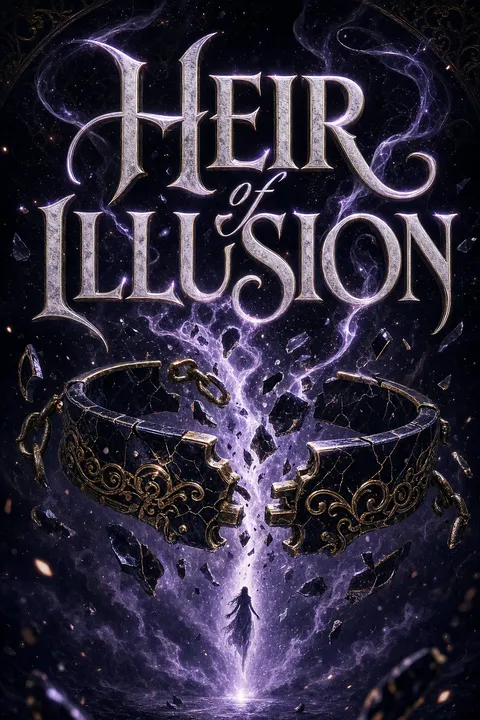
Enchanted leash of controlA jeweled collar Baylor2 locked around Ivy's1 throat at age ten, enchanted so that only he can remove it. It forces her to obey any direct command he issues while touching it, and tightens to suffocate her whenever she angers him. Beautiful and lethal, it is the physical embodiment of coercive ownership and the central obstacle to Ivy's1 freedom. Its rubies uncannily resemble those set into the stolen sword, a mystery that drives much of the plot. The collar turns every act of defiance into a gamble against strangulation, and its removal becomes the story's engine, forcing Ivy1 to weigh freedom against an unthinkable cost.
The Almanova (The Whisperer)
Sentient corrupting God SlayerAn ancient bone-hilted sword studded with blood-red rubies, whose name means soul of the star. Far more than a blade, it is a sentient will that whispers into minds and enslaves anyone who touches it, turning them into the Forsaken. In the hands of a God it becomes a God Slayer capable of killing the divine. Stolen from hidden palace tunnels by a corrupted guard16, it is coveted by both Baylor2 and Death3, and it alone can sever Ivy's1 collar. Its whisper of erasing shame preys on the guilt-ridden, making it a psychological threat as much as a physical one, spreading corruption through the city.
The Eidolon (Rose)
A living duplicate selfIvy's1 rarest gift, the ability to split off a fully corporeal double of herself that moves, speaks, and feels through a mental tether, at the cost of searing pain and nosebleeds. She keeps it secret, using it to endure Baylor's2 summons by sending the double in her place, a source of deep shame. The duplicate serves as both weapon and shield across the story, from combat to infiltration. When Thorne3 urges her to name it, the act of calling it Rose forces Ivy1 to confront the double as an extension of herself, deepening her fractured relationship with her own identity and agency.
The Angel of Mercy
Her secret vigilante identityThe alias under which Ivy1 hunts and executes abusers across Solmare, marking each kill with the word Mercy written in blood. Working with Della5, who vets targets, she reclaims a measure of agency from a life of forced murder, converting coerced violence into chosen justice and a form of self-punishing atonement for failing the queen8. The persona becomes a fatal liability when Baylor2 posts a bounty on the killer's head, and when a murder staged in its signature style reveals that someone has discovered who wears the mask, raising the stakes of exposure to a lethal pitch.
The Veil and Soul-Tethering
Archway between life and deathStone archways scattered across the isles through which departing souls are pulled into the afterlife, remnants of an ancient war; to pass through is death without return. The motif recurs as a site of danger and revelation, culminating in the rare act of tethering a soul, binding it to a body so it cannot be drawn through the veil. This binding becomes central to the novel's final revelation about who Ivy1 truly is and which member of the divine chose, long ago, to save her from a death that should have been permanent.
Download PDF
Download EPUB
.epub digital book format is ideal for reading ebooks on phones, tablets, and e-readers.








































