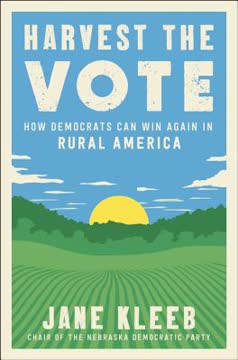
Key Takeaways
1. The Urban-Rural Divide is a Political Choice, Not an Inevitability.
The feeling of being left behind and forgotten by our elected officials because big corporations trump the people is a universal feeling among working- and middle-class families no matter where you live.
Shared struggles. The perceived chasm between urban and rural America is often manufactured by politicians, not inherent to the people. Both urban and rural working- and middle-class families share universal concerns about economic insecurity, corporate power, and feeling ignored by elected officials. This common ground is frequently overlooked, allowing political parties to exploit differences rather than build unity.
Political abandonment. While Republicans take rural "flyover voters" for granted, the Democratic Party has largely abandoned them, leading to a deep sense of neglect. This neglect fosters stereotypes of rural people as "gun lovers" or "racists," ignoring the vibrant, community-minded, and often progressive spirit found in small towns. The author's personal experience in Hastings, Nebraska, reveals communities actively pushing back against cuts and building local infrastructure, demonstrating resilience despite political oversight.
Call to action. Bridging this divide requires Democrats to actively show up, listen, and invest in rural communities, recognizing their vital role in the nation's fabric. Rural areas are not just sources of food, fiber, and energy; they are home to people who share core values of fairness and a desire for a country that works for everyone. Ignoring them weakens both the party and the nation, hindering progress on critical issues like climate change, healthcare, and economic justice.
2. Democrats Historically Championed Rural America, We Can Again.
The Democratic Party has a long tradition of standing with working families, whether that is family farmers or union workers.
A forgotten legacy. The Democratic Party once had a strong relationship with rural America, championing policies that directly benefited farmers and rural communities. During the 1930s and '40s, FDR's New Deal programs like the Rural Electrification Act brought electricity and jobs, while in the 1980s, leaders like Reverend Jesse Jackson stood with farmers during the farm crisis, uniting "eaters and feeders" for economic justice.
The decline of representation. This historical connection has eroded, leaving rural communities feeling unheard and unrepresented by Democrats. The "Tractor Brigade" of the 1980s, where farmers rode tractors to D.C. to protest foreclosures, highlighted a crisis that Democrats addressed, leading to significant electoral gains in rural states. Today, however, the "Tractor Caucus has shrunk to one," with Senator Jon Tester being the sole working farmer in the U.S. Senate.
Rebuilding trust. Senator Tester's advice for Democrats is simple: "Show up and listen." He emphasizes authenticity, understanding rural concerns, and reframing issues like climate change in ways that resonate with farmers who rely on carbon-based fuels daily. Democrats don't need to change who they are, but they must engage directly, acknowledge rural realities, and offer concrete actions rather than just words, to regain the trust of voters who feel forgotten.
3. Unlikely Alliances Offer a Blueprint for Bridging Divides.
Bringing these diverse elements together was not easy.
KXL as a model. The fight against the Keystone XL Pipeline serves as a powerful example of how urban and rural, environmental and agricultural, and Native and non-Native communities can unite for a common cause. This "unlikely alliance" succeeded by:
- National and local groups working hand-in-hand.
- Constant, place-rooted actions building trust.
- Shared strategy incorporating rural voices.
- Directly challenging powerful politicians.
Learning from past failures. The failure of the cap-and-trade bill, largely due to its D.C.-centric approach and exclusion of rural voices, underscored the need for a new strategy. Environmental leaders like Kenny Bruno and Bill McKibben recognized that engaging frontline communities—farmers, ranchers, and tribal nations—was crucial. This shift transformed the climate movement, demonstrating that local, direct impact stories resonate more powerfully than abstract policy debates.
Shared vulnerability, shared power. The KXL fight revealed that fossil fuel industries often target rural and minority communities, assuming they lack political power. However, the shared threat to land, water, and way of life forged a powerful bond. The "Cowboy and Indian Alliance," a historical echo of cooperation, became a symbol of this unity, demonstrating that mutual respect and a common fighting spirit can overcome deep-seated divisions and win against seemingly insurmountable odds.
4. Rural and Urban Voters Share Core Progressive Values.
While there are clear differences between urban and rural constituencies, these groups also share some common ground on big issues that rural communities need pushed in state government and in Congress.
Wellstone's wisdom. The late Senator Paul Wellstone exemplified a Democrat who successfully bridged the urban-rural divide by focusing on "we all do better when we all do better." He championed the "little guy" against big corporations, addressing concerns from market consolidation for farmers to mental health parity for urban families. His approach prioritized people over corporate lobbyists, demonstrating that empathy and a focus on shared struggles can unite diverse constituencies.
Beyond broadband. While broadband access is a critical and unifying issue for rural America, it cannot be the sole focus of a rural policy platform. Just as the Rural Electrification Act brought power to all, government intervention is needed to ensure universal internet access. However, a broader progressive agenda, encompassing healthcare, corporate overreach, immigration, and education, holds significant appeal for rural voters, even if they articulate these concerns differently.
Common ground on core issues:
- Healthcare: Rural hospital closures, mental health scarcity, and rising insurance costs are pressing concerns.
- Corporate Overreach: A deep-seated distrust of "big" (banks, ag, pharma, oil) unites rural and urban progressives.
- Education: Quality schools and affordable college are universal aspirations.
- Fairness: A fundamental desire for a fair shake for families and small businesses underpins many shared policy goals.
5. Healthcare is a Critical, Unifying Rural Issue.
Rural America now faces a full-blown health care crisis, what with the lack of mental health care and the dearth of specialists to help people recover from illnesses.
Crisis in rural healthcare. Rural communities are grappling with a severe healthcare crisis, marked by alarming rates of hospital closures, critical shortages of mental health professionals, and limited access to specialists. This forces families to wait months for appointments or travel hours for essential care, exacerbating health outcomes and contributing to higher suicide rates than in urban areas. The author's personal experience with an eating disorder highlights the devastating impact of insurance companies prioritizing profit over life-saving treatment.
Economic and social impact. The rising cost of health insurance often compels farmers and their spouses to seek off-farm jobs, hindering the growth of family operations. This issue, coupled with the disproportionate impact of Medicare and Medicaid cuts on older, poorer rural populations, creates a double whammy that threatens the very existence of rural hospitals and the jobs they provide. The author witnessed firsthand how rural communities, unlike larger cities, focused on the tangible threat of hospital closures during the Obamacare debate.
Voter-driven solutions. Despite political rhetoric, rural voters are actively seeking solutions. Red states like Nebraska, Idaho, and Utah have overwhelmingly passed Medicaid expansion through ballot initiatives, demonstrating a clear public mandate for accessible healthcare. This success, however, often outpaces candidate campaigns, highlighting a critical funding gap where millions are invested in ballot measures but not in the state parties and candidates who could implement these policies and win elections.
6. Ending Corporate Eminent Domain Abuse Resonates Across the Spectrum.
Nobody wants to be told someone’s going to come in and take your land, and it doesn’t matter what political bent you are.
A fundamental injustice. Eminent domain, originally intended for "public use" projects like highways, is now routinely abused for private corporate gain, from sports arenas to massive pipelines. This practice disproportionately targets older landowners, rural communities, and communities of color, who are often threatened and misled by land agents. The story of Cathie Genung's elderly mother being pressured by TransCanada exemplifies this predatory behavior.
Republican hypocrisy. The Republican Party, traditionally seen as the champion of property rights, has shown blatant hypocrisy on this issue. While publicly decrying eminent domain abuse, they have passed laws with "carve-outs" that specifically allow pipelines and other fossil fuel projects to seize private land. More recently, they've introduced meaningless bills "protecting" property rights from wind farms (which don't have eminent domain powers) while ignoring real corporate threats, further dividing rural and urban voters.
A unifying policy. Ending eminent domain for private gain is a powerful, unexpected policy that could unite urban and rural leaders. It aligns with the Democratic value of standing up for the "little guy" against corporate power and resonates deeply with anyone who values their home and land. This issue transcends partisan lines, offering a concrete way for Democrats to demonstrate their commitment to protecting citizens from corporate land grabs, as seen in Julia Trigg Crawford's fight in Texas.
7. Rural Communities are Key to Climate Solutions, Not Just Problems.
Rural communities rely on the land for their livelihoods. They are on the front lines of climate change. They need to be at the table providing solutions because they already are confronting climate change with biofuels and regenerative agricultural practices.
Frontline solutions. Rural communities, deeply connected to the land, are on the front lines of climate change and are already implementing innovative solutions. They are not just victims or contributors to the problem but essential partners in developing effective climate policy. Representative Deb Haaland's assertion, "Our land is everything," underscores this profound connection and the need for rural voices at the policy table.
Beyond stereotypes. The "Green New Deal" rollout, with its unfortunate "farting cows" jokes, highlighted a critical disconnect: urban Democrats often stereotype agriculture without understanding its complexities or its potential for climate solutions. Young activists, like those in the Sunrise Movement, are actively seeking to bridge this gap, recognizing the difference between corporate agriculture and family farmers who are stewards of the land.
Practical rural climate actions:
- Using water sensors to reduce usage.
- Planting cover crops for soil health and carbon sequestration.
- No-till farming to reduce erosion and act as a carbon sink.
- Growing biofuels (corn, switchgrass) with lower emissions.
- Turning manure into energy.
- Rotational grazing for healthier ecosystems.
- Installing wind and solar energy.
- Expanding hemp production for bioplastics and CO2 absorption.
8. Leveling the Agricultural Playing Field Unites Against Corporate Power.
Family Farm Action protects America’s family farms and rural communities from multinational agribusiness monopolies that are destroying rural economies and our way of life.
Corporate stranglehold. Industrial and corporate agriculture is systematically squeezing out family farmers, who operate on razor-thin margins. Vertical integration, where corporations like Tyson or Costco dictate terms and control markets, traps farmers in cycles of debt and limits their ability to sell products competitively. This corporate encroachment not only threatens livelihoods but also degrades soil and water quality, as seen in the fight against Costco's massive chicken barns in Nebraska.
Monopolies and land grabs. Multinational corporations are increasingly buying up farmland and food companies, creating monopolies that undermine fair markets and local control. Winona LaDuke highlights how foreign governments are acquiring U.S. land to export resources, threatening food sovereignty and indigenous rights. This consolidation of power, as crusading lawyer Dave Domina argues, is diminishing the "citizen who is produced on a farm or ranch," eroding the foundation of vibrant rural communities.
Progressive solutions. Democrats can find strong common ground by actively opposing corporate encroachment and advocating for policies that support family farmers. Senator Elizabeth Warren's plan to break up "Big Ag" monopolies, reform outdated antitrust laws, and champion the "Right to Repair" for farm equipment directly addresses these issues. Policies like country-of-origin labeling also unite rural producers and urban consumers, demonstrating a shared desire for transparency and support for local, sustainable food systems.
9. Authenticity, Not Avoidance, is Key to Navigating Wedge Issues.
You do not need a perfectly poll-tested message. If you have that, you will sound like a robot.
Beyond "God, gays, and guns." The traditional advice for rural Democrats to avoid "hot-button" issues like guns, abortion, and immigration is outdated and ineffective. Rural voters value authenticity over poll-tested messages, and attempting to sidestep these topics makes candidates seem disingenuous. Instead, Democrats must acknowledge these issues directly, explain their positions honestly, and focus on shared values and common ground.
Finding common ground on guns. Rural communities view guns through the lens of family tradition, personal safety in remote areas, and predator control, often identifying with the Second Amendment. While urban and rural views differ, common ground exists:
- Skepticism towards the NRA, seen as a corporate lobbyist.
- Support for conservation groups like Ducks Unlimited.
- Agreement on universal background checks.
- Opposition to arming teachers.
- Support for liability insurance for gun purchases.
Navigating abortion with honesty. While many rural voters identify as pro-life, a significant portion also believes abortion should remain legal. Democrats should be honest about their pro-choice stance while also highlighting policies that support women and children, such as Medicaid expansion, Title X funding for birth control, comprehensive sex education, and paid parental leave. Republicans, by contrast, often use abortion as a wedge issue without offering concrete solutions to reduce abortions or support families.
Embracing immigrants. Despite anti-immigrant rhetoric, rural towns are being revitalized by immigrant families seeking jobs and a better quality of life. Democrats must push back against cruelty, support legal pathways to citizenship, and actively recruit new Americans to run for local office. When immigrant families are seen as integral parts of the community, working alongside long-time residents on local issues, it breaks down stereotypes and builds bridges, demonstrating that America is a nation of immigrants.
10. Strategic Investment and Local Leadership are Essential for Democratic Wins.
Our campaign shows that building true representational political power requires investing in state-level politics that translate progressive values to the realities of rural America and revive faith in local political movements.
The cost of neglect. Democrats have been absent from rural communities for decades, leading to a significant decline in electoral performance, with margins widening from 20 to 40 points in many areas. This neglect stems from a lack of investment in red state parties and candidates, who are often overlooked by national campaign committees and major donors who prioritize "swing states."
Rebuilding infrastructure. The "50-state strategy" under Howard Dean demonstrated the power of investing in state parties, leading to record Democratic gains at local and state levels. However, this investment waned under President Obama, resulting in a massive loss of over 1,200 state legislative seats. Rebuilding requires:
- Consistent, long-term funding for state and county parties.
- Support for grassroots organizing and volunteer training.
- Developing local leaders and campaign staff.
- Utilizing effective, person-to-person voter contact methods like "Block Captains."
Beyond transactional politics. Rural voters, like Laurie Bertram Roberts emphasizes, "smell fake" and reject transactional politics. True organizing requires long-term investment, building trust, and being present in communities year-round, not just during election cycles. This means funding local grassroots groups and candidates who understand their communities and can translate progressive values into tangible local solutions, proving that Democrats are genuinely committed to rural America.
11. Reforming Party Structures and Electoral Rules Empowers Rural Voices.
We need to reform the way we are electing positions within the DNC and other party structures.
Lack of rural representation. The Democratic Party's national leadership, particularly within the Democratic National Committee (DNC), lacks sufficient rural representation. This absence means that rural perspectives are often overlooked in critical decisions regarding programs, messaging, and funding, leading to policies that fail to resonate with or even alienate rural voters. For example, a rural leader might have prevented the "farting cows" gaffe in Green New Deal talking points.
Structural reforms needed:
- Geographic Diversity: Implement rules requiring geographic diversity in DNC officer positions and committee chairs, ensuring at least one rural leader.
- Regional Elections: Elect committee positions by region (South, West, Midwest, East) to give smaller, rural states a greater voice.
- Electoral College Reform: Instead of abolishing the Electoral College (which would further marginalize rural states), reform it to allocate votes by congressional district, ensuring rural voices are heard in presidential elections.
- Open Primaries: Allow Independent voters to participate in Democratic primaries. This builds relationships, earns votes, and strengthens the party by welcoming the fastest-growing voter demographic.
Empowering local action. Empowering rural Democrats in leadership roles and reforming electoral rules will help bridge the knowledge gap within the party, identifying winnable races that might appear impossible on paper. Local Democrats, like the 850 who ran in Nebraska in 2018 (73% winning local elections), are already making a difference in their communities. Investing in these local leaders and candidates, and giving them a seat at the national table, is crucial for transforming the political landscape and ensuring the Democratic Party truly represents all shades of blue.
People Also Read