Plot Summary
Shadows and Woodchippers
Harper, a gardener at Lancaster Manor, shares an unusual relationship with serial killer "boyfriend" Nolan. Their connection is forged in blood, clever banter, and reluctant trust—a union built on shared violence. While disposing of bodies, Harper is confronted by Nolan, who has discovered her true identity as Autumn Bower, survivor of a notorious serial killer. Their identities and pasts, entwined in trauma and murder, threaten their unstable alliance. As secrets surface and old wounds burn, trust teeters. The woodchipper isn't the only thing devouring evidence—Harper and Nolan must decide whether to hide, destroy, or finally face what's left alive between them.
Secrets Unearthed
Nolan reels from the revelation of Harper's true identity: she's not the woman he seeks vengeance for, but a survivor with her own burden of blood. His rage and self-loathing spiral as he reflects on their violent circumstances—both nearly killer and prey. Haunted by regret and love, he tries to piece together how to protect Harper from mounting suspicions while wrestling with his original purpose of revenge. Meanwhile, a tangled web of police investigations and mounting bodies in town means any mistake will tie back to them. The lines between enemy, ally, and lover blur.
Ghosts of the Past
Harper is torn between caretaking responsibilities, loyalty to her aging mentor Arthur, and keeping her own identity buried. While grappling with Arthur's failing memory and Lukas's pressure to move him to a care home, Harper's guilt swells—her entire existence hinges on keeping Arthur's promises and her own past hidden. Disposing of bodies and secrets becomes routine, but every act threatens exposure. The arrival of more amateur sleuths means time is running out for both hiding and healing. Pressure mounts at the crossroads of duty and desire.
Memento Mori
Cheese slicers for trophies, garrotes for vengeance—the sharp aesthetics of Nolan's violence are unearthed as both he and Harper revisit old wounds. A stag party of suspicion marches forth, fueled by the arrival of more investigators and growing pressure on the local sheriff, Yates. As Nolan faces the artifacts of his previous life, burning past victims' memorabilia, he is forced to examine whether the line between justice and obsession can ever be walked straight, especially with Harper caught at the crossroads of his remorse.
Games with Predators
The town of Cape Carnage is a playground for those who toy with death—be it for sport, survival, or a warped sense of justice. As search and rescue efforts for missing townsfolk become media spectacles, Harper and Nolan juggle hiding evidence and maintaining their cover. The emotional stakes rise with the discovery of ties between missing men and Harper's own secrets. Chess games, both literal and figurative, become metaphors for their romantic maneuvers and deadly calculations.
Tangled Loyalties
Caught amid Arthur's declining health, Lukas's attempts to take charge, and an increasingly tangled body count, Harper's sense of family is fragmented but fierce. The tension between her need for belonging and the danger it brings surges as she realizes she cannot save everyone—or perhaps anyone. The town's support is both comfort and curse, blame cuts both ways, and every murder threatens to unspool the tenuous web Harper clings to for meaning and survival.
Echoes in the Dark
In the dark, love becomes indistinguishable from threat—Nolan's and Harper's passion combusts on muddy riverbanks and in blood-soaked gardens. Yet even as they find new ways to claim, bruise, and comfort each other in the night, the echo of unfinished vengeance crashes through their moments of peace. History repeats with every exhumed grave and every promise whispered against bruised skin. Their bond is deepened by shared monstrosity and marred by the things they have done—and fear they'll have to do again.
Carnage Rising
With investigations closing in, every false lead and misdirection Harper and Nolan plant only knits suspicion tighter around them. Nolan's attempt to control the Search and Rescue operation as an insider is both advantage and risk. Sleuthseekers—online true crime vultures—close in, trying to connect the town's deaths, even as Harper's old life threatens resurrection. Amidst manipulation, strategic violence, and uneasy alliances, loyalty itself becomes a dangerous weapon.
Rules for Monsters
Arthur's mental decline accelerates, dragging Harper further into the mire of impossible choices—caring for him means risking everything, while guilt claws at her for every slip of memory, each lie. Michael Yates, the seemingly bumbling sheriff, proves sharper than assumed. As old monsters stir—trauma, dementia, regret—Harper realizes her own rules for survival have bred a new kind of danger: monsters love control, and nobody is immune to their bite, especially those who make themselves keepers of promises.
Revealing Graves
Every shovel full of dirt reveals new evidence, ancient crimes, and the psychological toll of being both protector and predator. Harper and Nolan must dig both literally and metaphorically—exhuming Arthur's many victims, trying to erase any link back to them even as discovery feels inevitable. Amidst this, new faces—like Maxine, a tie to Lukas's wounded past—enter the scene, stirring new hope and heartache, and deepening the sense that Cape Carnage's soil will never stop giving up ghosts.
Seeds of Doubt
Relationships are tested by secrets, omissions, and outside interference. Harper's fear of love's loss makes her defensive, and even Nolan's obsessive devotion cannot shield them from the consequences of shared guilt. Trust, once their only refuge, is eroded by a series of manipulations and cunning third parties—some wearing police badges, others donning masks of friendship or desire—complicating their fight for both safety and genuine connection.
When Ravens Speak
Morpheus, the raven with a taste for both meat and mimicry, becomes an unsettling oracle—echoing voices, carrying secrets, becoming a symbol of both warning and fate. As murders pile up and loose ends fray, even the birds know the price of blood spilled. When ravens speak the truth of who someone is, it cannot be ignored, no matter how much one wishes for redemption.
Blood and Garden Prizes
Even as Harper and Arthur chase fleeting pride in the annual garden competition, violence intrudes—old bodies, new suspects, and the shadow of grief. Arthur's past, brilliant and brutal, begins to catch up with him. As the world around them combusts, the satisfaction of a perfect hydrangea is soured by fear, shattered trust, and the sense that there's never enough beauty to offset the hunger of Cape Carnage.
Truth Finds a Host
Sheriff Yates, underestimated by all, reveals the skillful, chilling hand he's played for decades. His true identity as La Plume—the legendary serial killer—shocks the narrative, showing every piece, every play, was designed to drive Harper to the brink. Through meticulous manipulation, Yates orchestrates not just murder, but psychological destruction, aiming to transform Harper from survivor into something closer to his own monstrous legacy.
Unraveling the Vow
Arthur's murder sends Harper reeling—violently bereaved, untethered from her last vow. Rage eclipses grief as she realizes she's been outmaneuvered and betrayed. What she thought was love unravels into a sick game of revenge, manipulation, and exploitation. Yet, stripped of every safety and illusion, Harper feels her old promises replaced by a single new one: vengeance at any cost. The hunter has become unstoppable prey.
Reaping What Remains
Yates claims his heritage as both lawman and legendary killer, executing his plans with surgical cruelty. Nolan, chained and powerless, awakens to the horror of having led the true puppetmaster directly to Harper. As town and self implode—betrayal, murder, lost innocence—the irrevocable consequences of violence surge. The cycle of trauma, destruction, and retribution claims all who remain. Only death can reap what's sown here, and survival becomes an act of defiant will.
Harvest of Loss
With Arthur gone, Harper's heart becomes a wasteland. The only legacy left is ashes—of gardens, of love, of every myth and vow. With the last safeguards stripped away, Harper's final transformation begins. There is no one left to call family or lover. Only a scorched earth and the sharpened promise: she will not rest until her enemies are destroyed. But even revenge exacts a toll, and grief is its own reaping.
The Last Cut
In the ruins of every tie—romantic, familial, communal—Harper is left stripped to the quick but unbroken. Nolan, now a captive, must face his powerlessness and the destruction wrought in the name of justice and love. Yates/La Plume, the true architect of their undoing, basks in the chaos he cultivated. Yet the darkness sown here is ambiguous: perhaps, from decay, something poisonous and new will bloom—one last cut before dawn.
Analysis
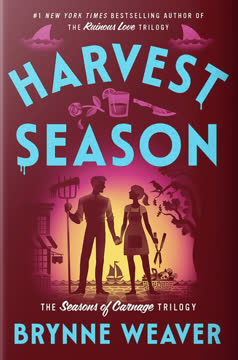
A modern gothic for true crime's digital age, Harvest Season is a daring subversion of our cultural appetite for both vengeance and romance
Brynne Weaver's second Cape Carnage novel detonates the old debate—Can monsters love?—by making every character simultaneously predator and prey. Through its dual protagonists, serial killers in love, the book probes whether trauma can be harvested for hope, or whether every garden, no matter how beautiful, conceals rot beneath the soil. The manipulations of family and authority—epitomized in Arthur's decline and Yates's corrosive paternalism—pose sharp questions about the poisons we inherit and the ones we choose. The novel's portrait of dementia is both compassionate and horrifying, showing how memory itself is a battlefield where identity, loyalty, and survival are all at stake. By entwining romance and violence, horror and comedy, Weaver destabilizes the boundary between victim and villain: everyone in Cape Carnage is complicit, grieving, guilty, and, at times, irresistible. In a world where all evidence can be faked and "truth" is just another kind of performance, the only thing left to claim is agency—in love, in revenge, in the determination to pull meaning from the ruins. Harvest Season asks not only who we are when everything is stripped away, but whether new life, however twisted, can bloom from the compost of our worst deeds. It is a love story, but one where every heartbeat is a warning, every promise a potential betrayal, and every confession a cut that might never quite heal.
Review Summary
People Also Read


Characters
Harper Starling / Autumn Bower
Harper is a woman living on borrowed names, shedding identities like snake skins after surviving abduction by a serial killer. Her role is a tapestry of contradictions: caretaker to Arthur, burdened by promises; caustic in humor but ravaged by guilt. She is both predator and prey, compelled to eradicate monsters while becoming one to ensure survival. Psychologically, Harper is driven by trauma—her fear of intimacy palpable, her need for control obsessive, her capacity for love hindered by loss. Her defiance is her spear, but inside remains a core of vulnerability, built upon the ashes of those she lost and the betrayals she endured. Through grief, loyalty, and violence, her arc is transformation: from broken survivor to an avenger, finally embracing the darkness that threatened to consume her.
Nolan Rhodes
Nolan arrives bent on vengeance, believing Harper to be his brother's killer. His psyche fuses the roles of rescuer, torturer, and eventual lover, his capacity for violence matched only by his need for loyalty and truth. A man both enraged and repentant, he is marked physically and emotionally by trauma, struggling to reconcile the purpose his anger once gave him with the possibility of acceptance—or hope. His interactions with Harper reflect a shifting tide: wanting to possess and destroy her, to save and be claimed by her. In his most honest moments, Nolan yearns for belonging and absolution, haunted always by the threat of loss that drove him to kill in the first place. He is deeply, sometimes destructively, in love—a love that ultimately cannot shelter him from the games of even deeper monsters.
Arthur Lancaster
Arthur's withering mind is a battleground of fierce intellect, fading memory, and buried violence. Once a formidable serial killer beneath genteel manners, he's now Harper's confidant, surrogate parent, and sometimes co-conspirator. The line between his love for Harper and manipulation is blurred; his increasing frailty and dementia only intensify her protectiveness and her guilt. Arthur believes, and perhaps rightly, that promises and blood are the only things that matter; his arc is one of denial, autocratic pride, and inevitable decline, culminating in a tragic self-sacrifice meant to free Harper—if also to forge her into something darker.
Sheriff Michael Yates / La Plume
Yates is the quiet wolf of Cape Carnage, masquerading as an affable if bumbling lawman, but in truth a legendary serial killer who orchestrates the downfall of all around him—especially Harper. Patient, cunning, devoid of empathy save aesthetic appreciation for suffering, Yates embeds himself in every narrative thread. He studies trauma like a painter studies a canvas, seeking not just murder but artistic transformation. His psychological insight allows him to exploit every weakness—not to break his victims, but to remake them in his own monstrous image. In his hands, every sympathy, every act of protection, is twisted into a weapon.
Lukas Lancaster
As Arthur's grandson, Lukas is defined by the responsibilities he vacillates between claiming and shunning. Gentle and sometimes awkward, he symbolizes Harper's chance at family and stability—though his inability to confront the worst in Arthur complicates his place in their circle. His devotion to family is sincere, but self-doubt keeps him rooted in place, unable to grow until forced by tragedy. Unfulfilled longing (for Maxine and belonging alike) is a core part of his journey; he is a bittersweet echo of innocence in a world built on blood and lies.
Maxine "Max" Yates
Daughter to Yates and a past love of Lukas, Max's return to town brings back buried wounds and possibilities for healing. She embodies the tension between memory and change—her presence disrupts old patterns and creates space for reconciliation, if not redemption. Her sharpness and independence offer a mirror for Harper and a second chance for Lukas—an opportunity to redefine family outside blood or violence.
The Three Bobs (Bob, Bobby, Bert)
The Bobs represent the conscience and resilience of Cape Carnage: equally prone to coarse jokes and shrewd observation, they reflect the dark humor, loyalty, and underlying decency of those who survive in the town. They provide levity, grounding, and, at times, the necessary distraction or cover for Harper's work—reminding her, and readers, that humanity persists even when horror dominates.
Morpheus (the Raven)
Morpheus is both macabre mascot and supernatural voice—a raven who mirrors human cruelty and wit, who mimics words and omens. His presence aligns with violence and foreshadows transformation; he sees what others miss and delivers truths often at the worst possible moment. Morpheus blurs the boundary between nature and monster—his mimicry serves as both warning and catalyst.
Tylor Knightsbridge ("KnightofTruth")
A key Sleuthseeker, Tylor represents the dangers of obsession—from armchair detective to invasive predator, a representative of the world's hunger for spectacle. His relentless search for conspiracy provokes ever more desperate acts among Harper, Nolan, and their circle, accelerating carnage and bringing hidden enemies into the light.
Sarah Winkle
A perpetual nemesis in the gardening wars and town gossip, Sarah is both realist and disruptor. Her obsession with image and petty victories almost leads to the exposure of deeper secrets, reminding Harper and readers alike that not all enemies emerge from shadows—some wear smiles and wield garden shears.
Plot Devices
Dual Perspectives and Nonlinear Revelations
The novel shifts between Harper's and Nolan's first-person perspectives, allowing readers intimate access to competing psychologies and unreliable accounts. The layering of memory and confession steadily unspools mysteries: revelations of identity, trauma, and motive arrive in nonlinear fashion, with each pivot reframing prior knowledge and emotional stakes. This device deepens both character and plot, making truth itself a moving target and the experience as much about feeling as about figuring out who's going to survive.
Metaphor of Gardening/Harvest
Gardening pervades the imagery and structure: bodies are buried like seeds, exhumed like spoiled tubers, and the cycle of death, rot, and forced bloom recurs throughout. Gardening competitions provide both comic relief and existential dread, serving as covers for violence but also reminders that nurture and destruction coexist. "Harvest" becomes the central, dual metaphor: the harvest of literal flowers, of corpses, and of the final reckoning for all that's been sown.
Foreshadowing and Animal Symbolism
Morpheus the raven—omnivorous for both eyes and secrets—foreshadows disaster with his speech, appearance, and appetite. The chessboard and other game references (cards, dice, contests) forecast moves made and yet to come; each hint, warning, or mimicry introduces a future revelation. These symbols reinforce the sense that fate, violence, and predation are inescapable—nature and nurture in perpetual, deadly dialogue.
Unreliable Evidence / Red Herrings
Plot turns rely on the careful planting (and later discovery) of misleading clues—bones, forensic traces, digital photographs—that create a state of perpetual suspense for both the characters and readers. The real enemy, Yates, sows evidence to frame others while remaining unseen, using the world's obsession with "the truth" to force everyone into hiding or confession. This device fosters mood but also speaks to contemporary anxieties about proving innocence in a culture obsessed with spectacle.
Psychological Unraveling and Manipulation
The deterioration of Arthur's mind, the unraveling of Harper and Nolan's grip on reality, and Yates's masterclass in psychological manipulation ratchet tension. Readers are forced to question who's telling the truth, the nature of memory, and whether any reconciliation or love is possible in a world built on trauma. Gaslighting—by lovers, mentors, authorities—functions both as plot and as thematic argument: trauma begets trauma, and predators are often disguised as family and friends.
Modern True Crime Culture
The presence of online amateur detectives, ravenous press, and TikTok-level speculation satirizes and critiques the world's obsession with murder as entertainment. These devices create structural layers (chat logs, memes, mentions of documentaries) that both advance plot and examine the voyeur's role in violence, complicating what it means to seek justice—or simply to watch.








































