
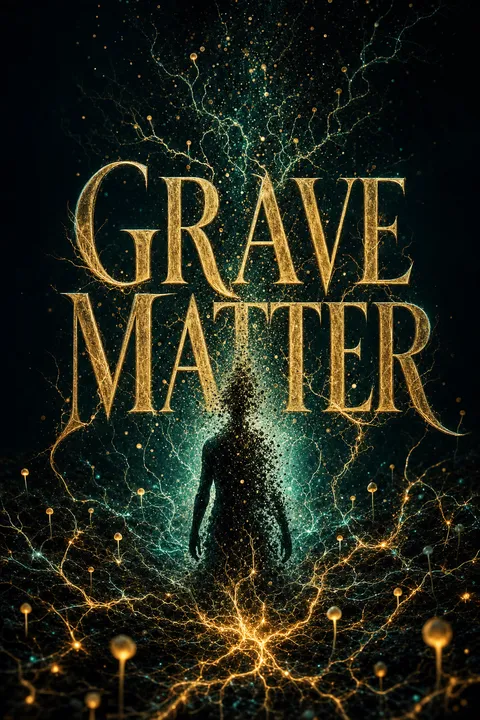


Plot Summary
The Last to Arrive
Sydney1 steps off a floatplane into a fog-drowned inlet on Vancouver Island, only to find Amani,11 the cheerful woman she chatted with the entire flight, gone as if she never boarded. Lodge manager David Chen10 insists Amani11 simply walked ahead.
Sydney1 surrenders her phone and glimpses her grandmother's wallpaper mysteriously swapped for an angry, warning image. She carries her own secret: days earlier Stanford stripped her scholarship after an affair with a married professor went viral, leaving her broke and homeless.
She flew north anyway, gambling the prestigious Madrona Foundation will not discover she no longer qualifies for their Alzheimer's fungal research program. Sixteen weeks of isolation stretch ahead, and the dark old cannery-turned-lodge feels less like a workplace than something that has been waiting for her.
The opening weaponizes disorientation as characterization. Sydney's neurodivergence, her ADHD time-blindness and object permanence struggles, becomes the perfect narrative alibi: every anomaly can be rationalized away by her own distrust of her perception. Halle establishes an unreliable narrator who doubts herself before anyone else does, a psychological state familiar to those repeatedly told they are too much. The swapped photograph functions as a gothic omen, but also as a thesis about memory's fragility. Sydney's deception about her scholarship mirrors the institution's deceptions, planting the moral ambiguity that defines her. Isolation, the surrendered phone, the fog, is framed as therapeutic while functioning as containment.
The Head and the Doctor
Everly Johnstone,3 the foundation's brilliant CEO, personally carries Sydney's1 luggage upstairs and reveals she approved the application herself, calling Sydney1 special. During the tour, Sydney1 collides with Wes Kincaid,2 the grey-eyed professor who wrote the lodge's poetic website copy and, she learns, doubles as her mandatory weekly psychologist.
He lives alone aboard a sailboat named Mithrandir. That night she catches him smoking beneath her window, and vivid erotic dreams about him follow. Everly3 explains the counseling exists because the remoteness fractures fragile minds, and repeats the lodge's unsettling motto: do not try to change the lodge, let the lodge change you.
Meanwhile abrasive classmate Clayton5 insists no one here is truly special, while warmer students Lauren6 and Munawar7 fold Sydney1 into their circle of nervous camaraderie.
The chapter constructs a triangulated power structure Sydney cannot yet read. Everly's flattery and Kincaid's magnetic reticence both exploit the same wound: a fatherless, motherless woman starved for recognition and love. The mandatory therapy is a masterstroke of institutional control disguised as compassion, blurring the line between healing and surveillance. Kincaid's dual role as teacher and psychologist creates an ethically charged power imbalance the novel refuses to sanitize, foregrounding its dark-romance contract. The motto operates as ideological programming, reframing coercion as personal growth. Clayton's hostility reads as jealousy but seeds a counter-narrative: that being deemed special by Madrona is not a compliment but a designation of expendability.
A Grave in the Woods
On a foraging trek led by surfer-professor Nick,8 Sydney1 touches an ancient cedar and sees a flash: a dark-haired girl hanging, her neck broken. She and Lauren6 then discover a grave crowned with translucent, orange-gilled mushrooms, which Nick8 dismisses as the resting place of a beloved dog.
In their first counseling session, Kincaid2 coaxes Sydney1 off her Adderall and into keeping a diary, promising she can manage without medication. She grows perpetually exhausted, loses her appetite and weight, and keeps glimpsing Amani,11 who supposedly flew home sick, darting through the bushes and calling her name.
Kincaid2 gently insists the wilderness plays tricks on the mind. Sydney1 cannot decide whether the lodge is genuinely haunted or whether her own brain is quietly betraying her, one symptom at a time.
Removing Sydney's medication is presented as therapeutic minimalism but functions as deliberate destabilization, a clinician engineering the very vulnerability he claims to treat. The diary, ostensibly a tool of self-knowledge, becomes a record whose authority Sydney herself learns to distrust. Halle exploits the real cultural stigma around neurodivergence: the ease with which a woman's testimony is reclassified as pathology. The cedar vision introduces the mycorrhizal motif of interconnection, hinting that Sydney is plugged into a network larger than herself. The recurring Amani, physically impossible yet emotionally insistent, dramatizes grief's refusal to accept absence, and the reader's growing suspicion that these hauntings encode buried facts.
The Wolf That Should Be Dead
During a boat expedition to a hidden beach, Clayton5 corners Sydney1 and warns her the whole program is a ruse, that they will never show students the real work, and that a fortune teller told him he would never leave.
Rattled, she wanders off and finds a half-decayed wolf, its exposed heart furred white with mycelia. The heart begins to beat, the wolf opens a milky eye, hisses at her to release it, and lunges before slinking away. Kincaid2 finds her screaming, cradles her face with startling tenderness, then tells the other students she merely slipped on moss.
Everly3 administers rabies shots, treating Sydney1 like a shaken girl imagining monsters. Sydney1 knows the wolf was dead, yet everyone rewrites her reality, and her faith in her own eyes begins to erode.
The reanimated wolf is the novel's first undeniable rupture of natural law, forcing Sydney into an impossible epistemology: trust her senses and be branded insane, or accept the sanctioned lie and preserve her place. Kincaid's cover-up is the crucial betrayal-in-miniature, his protectiveness and his deception fused into a single gesture. The rabies-shot ritual literalizes institutional gaslighting, medicine deployed to overwrite testimony. Clayton emerges as an unreliable prophet whose paranoia keeps proving accurate. The wolf's plea to be released reframes the horror as suffering rather than menace, an early ethical signal that Madrona's true monstrousness lies not in its creatures but in the men and women who make them.
Snow in June
Amani's11 phantom lures Sydney1 into a field where impossible summer snow falls, and a hurled snowball leaves her nose bleeding. Later, locked out of her room by an unseen prankster, Sydney1 seeks Everly3 and instead endures Michael Peterson,4 the cold COO who unnervingly recites details about her dead father and mother.
Everly3 then reveals she received a call from Stanford and knows about the lost scholarship, yet praises Sydney's1 nerve and ambition and lets her stay, declaring her family now.
Relief curdles into unease. Sydney1 realizes the staff have known her secret all along, which sharpens a creeping certainty: she was not admitted by luck or oversight but chosen deliberately, an orphan no one would miss, for reasons Madrona has not yet disclosed.
This section fuses the supernatural and the sociological. The June snow proves the environment itself is being manipulated, while Michael's clinical knowledge of Sydney's losses exposes the foundation's predatory data-gathering. Everly's forgiveness is a seduction: she reframes lying and cheating as admirable ambition, mirroring Sydney's darkest impulses back to her as virtues. The revelation that Sydney's expendability, her orphan status, may be a qualification rather than a coincidence inverts the meritocratic fantasy that drew her here. Halle interrogates how institutions recruit the isolated and precarious precisely because their disappearance costs nothing, dressing exploitation in the language of belonging and chosen family.
Cameras Behind the Paintings
A spider under her bed knocks loose a painting, revealing a hidden camera; Sydney1 finds a second lens and a microphone concealed in her room. Drunk and enraged, she storms Kincaid's2 office and slaps him. He admits he installed them himself, unauthorized, claiming he watches only to keep her safe and that he has wanted her since the moment they met.
Her fury dissolves into grief over how utterly alone she is in the world, and he holds her as she weeps. The charged tension finally breaks: she kisses him, and he surrenders, restraining and pleasuring her across his desk. Their forbidden dynamic, commanding doctor and willing patient, becomes the single thing that makes Sydney1 feel alive amid the fog, the lies, and her fraying mind.
Halle stages the dark-romance core as a collision of two pathologies: his controlling obsession and her craving to be possessed, wanted, seen. The surveillance, objectively a violation, is reframed through Sydney's abandonment wound as proof of devotion, a psychologically astute rendering of how trauma reroutes danger signals into desire. The confession scene locates the erotic in emotional exposure rather than mere physicality; her breakdown over loneliness is the true climax, the sex its release. The power imbalance is neither excused nor moralized but presented as the honest terrain of a woman who has learned that intimacy always carries a price, and who chooses to pay it anyway.
The Skinless Goat
Restless during a tour of the propagation lab, Sydney1 wanders to the barn, where every animal flees from her. Inside she discovers a baby goat stripped of its skin, raw muscle threaded with white mycelia snaking from its empty eye sockets, screaming as the fungus consumes it alive. Nick8 appears, his laid-back surfer mask gone cold, and warns her that speaking of it will invoke the NDA and a lawsuit she cannot possibly afford.
Terrified, she runs to Kincaid,2 who neither denies nor explains, bound by his own contracts. Sydney1 now grasps that Madrona is not merely culturing fungi in petri dishes; something monstrous is being grown inside living flesh, and everyone she has begun to trust is actively complicit in hiding it from her.
The barn scene converts abstract dread into visceral body horror, collapsing the comforting distance between laboratory science and atrocity. The animals recoiling from Sydney is an unexplained detail that will retroactively acquire meaning, an example of Halle's fair-play foreshadowing. Nick's transformation from harmless guru to enforcer reveals the corporate machinery beneath the retreat-center aesthetics, and the NDA becomes a weapon of economic coercion wielded against the precariat. Kincaid's silence tests the reader's investment: is his restraint protection or captivity. The mycelium erupting from a still-living creature literalizes the novel's central violation, the refusal to let death be death, foreshadowing horrors that remain hidden.
Waking in the Forest
Sydney1 jolts awake outdoors at night with no memory of leaving her bed, sinking into the dog's grave, now unearthed and glowing with disturbed Amanita excandesco. Something in the soil grips her wrist, and a growling presence chases her to Kincaid's2 boat. Comforting her, he confesses the lodge has endured four deaths, three students and one researcher, all ruled suicides, which is why the mandatory counseling exists.
He also reveals he is not only a psychologist but a neurosurgeon hired for clinical trials. They sink deeper into their bondage-laced relationship, and he swears he will stay as long as she does. Sydney's1 grasp on reality keeps slipping, yet Kincaid2 remains the one anchor she cannot decide whether to cling to or flee.
Sleepwalking dissolves Sydney's bodily autonomy, her body acting without her consent, a horror distinct from and deeper than hallucination. The disclosure of four suicides recasts the lodge as a serial site of death, and the reader begins assembling a grimmer arithmetic than Sydney can. Kincaid's revelation as a neurosurgeon is a crucial reframing: his interest in her brain acquires clinical menace. The escalating intimacy, with its safe words and ropes, offers Sydney the paradoxical comfort of surrendering control in one arena while losing it everywhere else. Halle uses BDSM's negotiated power as a counterpoint to Madrona's unnegotiated, invisible domination of her mind and body.
The Cape of Storms
On a camping expedition into the wild Brooks Peninsula, Sydney1 and Kincaid2 grow closer, though during sex she hallucinates mycelia binding her to the forest floor. A Quatsino man mistakes her for Everly3 and accuses the foundation of cheating his people out of their fungal profits, confirming Madrona's exploitation of the land it leases.
An incoming Pacific storm forces an early retreat. Hiking back, the group is stalked by black bears that move wrong, their faces sloughing to bone and writhing mycelia.
Crucially, Lauren6 sees the half-dead creatures too, and Kincaid,2 armed and grim, clearly recognizes them. For the first time Sydney's1 visions are corroborated. The wilderness itself now feels colonized by whatever Madrona has released, and she understands the horrors are neither rabies nor madness but experiments run loose.
External validation marks a structural pivot: when Lauren and Kincaid confirm the reanimated bears, the novel shifts from psychological ambiguity toward exposed conspiracy, restoring Sydney's credibility to herself and the reader. The Quatsino man introduces the colonial critique, situating Madrona's fungal capitalism within a longer history of extraction from Indigenous land, and the man's misrecognition of Sydney as Everly plants a quiet, unsettling clue. The hallucinated bondage by living forest fuses her erotic surrender with the mycelial network's literal claim on her body, hinting she is more entangled with the fungus than she knows. Nature here is not pastoral refuge but a spreading crime scene.
Clayton in the Tree
Back at the lodge, an alarm seals the buildings with metal shutters, warning of a dangerous animal. From her window Sydney1 watches Clayton,5 supposedly flown home weeks earlier, climb the cedar naked, his chest stapled shut and slick with blood, straining to reach her.
Michael's4 armed men shoot him out of the tree and drag his body away. When Sydney1 insists on what she saw, Everly3 and Michael4 brand her delusional in front of the horrified students, then Everly3 jabs a sedative into her arm and steers her toward the lab, muttering about examining her brain.
Kincaid2 bursts in, wrenches her away, and carries her to his boat. Madrona's benevolent mask has finally fallen: its leaders intend to silence Sydney1 by force, and her doctor is now openly at war with them.
The lockdown externalizes the novel's dread into set-piece terror while confirming the reader's darkest inference: Clayton was never sent home. His stapled, resurrected body is the payoff to the barn's foreshadowing, transposing fungal reanimation onto a human being. Everly's public discrediting weaponizes the community against Sydney, converting witnesses into an audience for her erasure. The sedation and the muttered intention to open her skull escalate the bodily threat from metaphor to imminent surgery. Kincaid's intervention finally forces him to choose a side visibly, collapsing the ambiguity of his loyalties into action and repositioning him as ally against the institution he has served.
The Lab Beneath the Lab
Following the phantom of Farida,15 the dark-haired student who once hanged herself, Sydney1 descends into a hidden underground operating theater and finds Clayton5 strapped to a table, wired to machines, his skull stapled, speaking to her without moving his lips.
Hiding as Everly3 enters, Sydney1 overhears her interrogate Clayton5 and boast that Madrona has used the mycelia to resurrect him after he died twice, that they have learned to temporarily cheat death itself. The reanimated animals in the forest were never failures; they were the entire purpose.
Clayton,5 terrified for Sydney,1 urges her to flee before she becomes like him and confirms that Kincaid2 is one of them. Devastated, she races back to the boat, certain the man she loves2 has been lying about the most monstrous thing imaginable.
The buried lab is the novel's literal and thematic underworld, and Farida as psychopomp completes the raven symbolism threaded throughout, the dead guiding the once-dead toward truth. Overhearing Everly converts scattered horror into coherent doctrine: Madrona's ambition is not curing disease but abolishing death, the ultimate Faustian overreach. Clayton, twice-killed and still conscious, embodies the ethical nightmare of a resurrection that preserves suffering rather than granting peace. His confirmation of Kincaid's complicity detonates Sydney's one refuge, staging maximum betrayal precisely before the identity revelation. Halle positions the reader to condemn Kincaid absolutely, sharpening the reversal to come.
The Photograph From Next Year
Sydney1 confronts Kincaid,2 accusing him of murdering Clayton;5 he restrains her with rope and begins sailing them away through the storm, insisting he is protecting her.
Thrown against the console, she dislodges a Polaroid he has secretly treasured for weeks: it shows her and Kincaid,2 joyful at Christmas, her hair its natural brown, dated 2023. Sydney1 is certain it is 2022. Kincaid2 tells her, quietly, that it is 2025. Three years are missing from her life.
He produces a shoebox crammed with photographs of a whole vanished existence at Madrona, of her laughing with him, with Everly,3 with Janet Wu.9 Fragments surge back, and with them the outline of a truth carefully hidden from her: she once lived here, loved this man, and died aboard this very boat.
The temporal reveal reframes the entire narrative as a controlled experiment in which Sydney, and the reader, have been the subject. Every rationalized anomaly, the changed photo, the reappearing shoes, the dyed hair, the atrophied body, retroactively snaps into a chilling coherence, a triumph of fair-play construction. The Polaroid weaponizes photography's evidentiary authority against Sydney's own memory, making the image more real than her lived sense of time. Kincaid's hoarded keepsake reveals grief rather than guilt, inverting the reader's condemnation. The revelation that she died on this boat transforms the gothic haunting into autobiography: Sydney has been the ghost story all along.
The Person She Was
Full memory floods back. Years earlier Sydney1 worked at Madrona, fell in love with Kincaid,2 then let a jealous Everly3 manipulate the two of them apart. Consumed by ambition, Sydney1 cracked the formula allowing the fungus to rebuild a human brain, and she supplied Farida's15 suicide as the first test subject.
During a bitter fight with Kincaid2 aboard the boat, she fell, struck her head on the table, and died. Everly3 resurrected her with erased memory to study whether she would become the same person again.
Kincaid,2 tormented, has spent this whole summer watching her relive it. Horrified by who she once was, Sydney1 knocks him unconscious, jumps into the freezing inlet, and swims to Madrona for help, not realizing she is fleeing straight into the arms of the people who remade her.
The novel's moral center detonates here: the victim was also the perpetrator, the haunted also the one who created the hauntings. Sydney's discovery that her former self weaponized a suicide for ambition delivers the book's harshest reckoning with the corrupting hunger for significance. The nature-versus-nurture premise, the deliberate erasure to test whether ambition is essence or circumstance, gives the horror a genuinely philosophical spine. Kincaid's silent endurance recasts his controlling behavior as unbearable love, a man watching his resurrected beloved not recognize him. Sydney's flight toward Madrona is dramatic irony at its cruelest: her broken memory sends her toward her makers rather than her rescuer.
Burn It All Down
David10 takes Sydney1 in; Everly3 and Michael4 confess everything, gloating that her rebuilt self is less brilliant and must be reset yet again, then drug her tea. Strapped to the operating table, she hears Kincaid2 arrive.
He has secretly recorded their confessions and led every remaining student down into the tunnels as witnesses. In the ensuing chaos he shoots Michael4 dead, a stray round ignites chemicals, and fire tears through the lab. Kincaid2 carries the paralyzed Sydney1 out moments before the building explodes.
The survivors flee aboard Mithrandir as Everly3 torches the compound and vanishes into the storm. Watching Madrona Lodge burn against the black water, Sydney1 feels a strange release, as if the place only ever wanted to be set free, and she chooses, at last, to trust the man beside her.2
The climax resolves the novel's epistemological torment by making truth communal: Kincaid's recording and the assembled student witnesses shatter the NDA regime that enforced silence through isolation. Fire, the ancient purifier fungi cannot resist, becomes the only sterilizing force against a science that abolished natural limits. Everly's escape denies neat closure, insisting evil disperses rather than dies. Sydney's final choice to trust Kincaid completes her arc from the woman who let Everly poison their bond to one who reclaims love as agency rather than surrender. The burning lodge, personified throughout as a waiting predator, is reimagined as a captive longing for release, mirroring Sydney herself.
Epilogue
A 2027 Vancouver news dispatch reports jury selection beginning in the trial of former Madrona CEO Everly Johnstone,3 charged with illegal and unsanctioned experiments on captured wildlife. The case was brought by former employees Wes Kincaid,2 Sydney Kincaid,1 Janet Wu,9 and Gabriel Hernandez,14 who witnessed the abuses on the peninsula.
The fire that razed the research lodge in 2025 killed Michael Peterson,4 lodge manager David Chen,10 and student Clayton Wade.5 The foundation claims to have resumed its work at an undisclosed location. Wes2 and Sydney,1 married soon after leaving Madrona, are expected to testify and are currently sailing the world aboard Mithrandir, where Kincaid2 works as a neurosurgeon for Doctors Without Borders.
The clinical, third-person news register jolts the reader out of Sydney's fevered interiority, translating private horror into public record and granting a fragile realism to events that strained belief. Yet the article is pointedly partial: the resurrections, Sydney's own deaths and rebirths, remain unspeakable, prosecutable only as animal cruelty because the deeper truth would invite lifelong scrutiny of Sydney herself. The unresolved trial and the foundation's relocation refuse triumphalism, insisting that institutional evil survives its figureheads. The married couple sailing free, Kincaid healing rather than experimenting, offers redemption as ongoing labor. The report's cool neutrality quietly underscores how the most monstrous truths often slip beneath the world's official memory.
Analysis
Grave Matter fuses body-horror, dark romance, and psychological thriller to interrogate ambition, memory, and consent. Its cleverest move is structural: Halle builds an unreliable narrator whose neurodivergence supplies a built-in alibi for every anomaly, so that gaslighting operates on the reader as thoroughly as on Sydney.1 The mid-book revelation that three years have vanished and that Sydney1 died and was resurrected reframes the entire gothic apparatus as a controlled experiment, retroactively legitimizing details that seemed like mere atmosphere. This is fair-play construction weaponized for existential horror. The novel's deepest cruelty is moral rather than gory: the victim is also the architect. Sydney's1 discovery that her ambitious former self supplied a human corpse for testing forces a reckoning with the hunger for significance that the book treats as its true monster, more dangerous than any fungus. Halle situates that hunger within recognizable structures of exploitation, an institution that recruits the isolated and indebted precisely because their disappearance is costless, and that extracts value from Indigenous land while enforcing silence through NDAs and confiscated connection. The mycelial network functions as sustained metaphor: everything is entangled, the dead feed the living, and severing connection is presented as the real violence. Against this, the dark romance offers a counter-thesis about consent and control. Kincaid's2 negotiated dominance, with safe words and aftercare, stands in pointed contrast to Madrona's unnegotiated domination of Sydney's1 brain and body, suggesting that surrender freely chosen can be its own reclamation of agency. The book asks whether we are our ambitions or our capacity to choose otherwise, whether love can survive erasure, and whether some scientific frontiers, the abolition of death itself, are horrors precisely because they refuse the limits that make a life meaningful. Its answer, embodied in fire and open water, favors release over resurrection.
Review Summary
Grave Matter is a gripping gothic thriller that blends horror, romance, and sci-fi elements. Set in an isolated research facility on Vancouver Island, it follows Sydney, a mycology student, as she uncovers dark secrets. Readers praise the atmospheric writing, unexpected plot twists, and steamy romance between Sydney and Professor Kincaid. While some found the pacing slow, many were captivated by the eerie setting and mind-bending revelations. The book's unique blend of genres and compelling characters make it a standout read for fans of dark academia and psychological thrillers.
Characters
Sydney Denik
Ambitious haunted grad studentA neurobiology and mycology grad student in her twenties, Sydney is brilliant, impulsive, and self-sabotaging, shaped by ADHD and a lifetime of loss. Orphaned young and raised by a grandmother who died of Alzheimer's, she is driven by twin hungers: to leave a mark on the world and to be genuinely loved despite feeling like too much for everyone. She masks compulsively, distrusts her own worth, and reads rejection as catastrophe. Her craving for significance shades into ruthlessness, while her wit and vulnerability make her fiercely sympathetic. Arriving at Madrona broke and secretly disgraced, she wants belonging and redemption in equal measure. Her core tension is whether ambition or conscience defines her, and whether she can trust either her mind or the people insisting they know it better than she does.
Wes Kincaid
Brooding doctor with secretsGrey-eyed, tattooed, and coldly composed, Kincaid serves as Madrona's professor, resident psychologist, and, it emerges, a neurosurgeon. He lives alone aboard the sailboat Mithrandir, a self-described wanderer who stopped wandering. Intensely controlling, protective, and dominant, he cloaks a deep well of feeling behind clinical reserve and clipped speech. He is bound by contracts and secrets that force him to lie even to those he cares for, and he insists his surveillance and rule-breaking are all in service of keeping Sydney1 safe. His obsession with her borders on the pathological, yet it is braided with genuine, aching love. A man who insists he makes no idle threats, Kincaid embodies the novel's central ambiguity: is he Sydney's1 captor or her only true ally.
Everly Johnstone
Charismatic foundation CEOThe genius daughter of the foundation's founder, Everly runs Madrona with dazzling charm and effortless authority. Beautiful, warm, and flattering on first meeting, she styles herself as approachable family and Sydney's1 devoted mentor. Beneath the grace lurks a possessive, manipulative operator who prizes ambition above ethics and grows jealous when devotion drifts from her. She wields praise and understanding as tools of control, reframing lies and cruelty as admirable nerve. Married but unhappily, she craves attention she cannot command and punishes those who withhold it. Everly personifies the seductive rot of unchecked ambition, a woman who mistakes brilliance for permission and treats other people as instruments of her vision. Her friendliness is a currency she can withdraw the instant it stops serving her.
Michael Peterson
Cold calculating COOThe foundation's chief operating officer and Everly's3 estranged husband, Michael is a deep-eyed, perpetually scowling man who radiates menace. Rarely present, he appears only when significant work demands him. Profit-driven, remorseless, and unsettlingly knowledgeable about every student's private history, he treats human beings as data and inconvenience. He and Kincaid2 share open mutual loathing, and his presence signals that Madrona's darker machinery is in motion.
Clayton Wade
Abrasive prophetic outsiderA brash student from Montana who clashes with Sydney1 from the first day, Clayton hides genuine warnings inside hostility and paranoia. Increasingly erratic and bloodshot-eyed, he insists the program is a ruse, that being called special is dangerous, and that a fortune teller foretold he would never leave. His crude, unnerving attempts to reach Sydney1 conceal a desperate effort to tell her the truth she is not ready to hear.
Lauren
Sydney's loyal friendA forest biology student from the University of Victoria, Lauren is quick-witted, teasing, and the first to welcome Sydney1. She would rather be in the woods than a lab and becomes Sydney's1 closest confidante. Fiercely protective, she voices blunt concerns about Kincaid's2 power over her friend and stands beside Sydney1 when others turn away, offering a steady thread of ordinary human loyalty amid the strangeness.
Munawar
Comic warmhearted classmateA Bangladeshi student known for wearing a different fungi-pun shirt every day, Munawar supplies humor and heart to the cohort. Cheerful, self-deprecating, and blessed with unusually sharp hearing, he is generous to a fault, forever offering the shirt off his back. Beneath the jokes he is perceptive and genuinely kind, an anchor of levity when the lodge grows menacing.
Nick Tilden
Surfer professor with secretsA blond, thirty-something professor with the easy manner of a surf guru, Nick leads the foraging expeditions and handles much of the students' orientation. His relaxed charm proves to be a carefully maintained performance; when threatened, a colder, corporate enforcer surfaces. He knows far more about Madrona's operations than his laid-back facade suggests.
Janet Wu
Fragile genomics lab managerThe soft-spoken, delicate genomics lab manager who is meant to teach the students. Prone to sudden emotional breakdowns she cannot explain, Janet clearly carries a private grief tied to the foundation's work. Her stiffening around Sydney1 hints at a history and a conscience at odds with her employers, marking her as one of the few staff burdened by what Madrona does.
David Chen
Formal unsettling lodge managerThe lodge's manager, a lanky man in incongruous dress shoes whose scripted joviality never quite reassures. He handles logistics, keys, and arrivals with a smoothness that masks something watchful and complicit.
Amani
Vanishing fellow arrivalA bright, talkative young woman in a pink hijab who befriends Sydney1 on the floatplane, then inexplicably disappears upon arrival. Said to have flown home sick, she keeps reappearing at the edges of Sydney's1 vision, calling her name.
Michelle
Nervous jittery receptionistThe lodge's perpetually flustered receptionist, all sweaty handshakes and too-wide smiles. Her hysteria-adjacent cheer and pink lipstick make her both comic and faintly ominous, a jumpy functionary who seems to know more than she can bear.
Rav
Kind student, Lauren's crushA gentle, well-liked student drawn into a slow-burn romance with Lauren6. Level-headed and supportive, he takes Sydney's1 alarming accounts seriously rather than dismissing them, becoming part of her trusted inner circle.
Gabriel Hernandez
Marine sciences chaperoneThe affable head of marine sciences, newer to Madrona than most, who chaperones expeditions and proves an unexpectedly steady, decent presence when circumstances turn dangerous.
Farida Shetty
Dark-haired haunting figureA former student remembered for a tragic end, whose dark-haired, broken-necked figure drifts through the lodge's halls and Sydney's1 visions. More than a scare, she seems to be trying to lead Sydney1 toward something the living refuse to reveal.
Plot Devices
Amanita excandesco
The impossible glowing fungusA bioluminescent mushroom found only on Madrona's land, teal-glowing with orange gills, is the foundation's crown discovery and the engine of its Alzheimer's research. Introduced through Sydney's1 mycology expertise and the mysterious grave, it seems at first a miracle drug candidate that crosses the blood-brain barrier. Its true capability, using mycelia to rebuild dead brains and reanimate the deceased, is the novel's central revelation, explaining the talking wolf, the skinless goat, the melting bears, and ultimately Sydney1 herself. The fungus embodies the book's Faustian theme: a scientific breakthrough that abolishes death's finality, turning healing into desecration and making resurrection a repeatable, memory-erasing procedure.
The shifting hallucinations
Reality Sydney cannot trustRecurring impossible events, the vanished Amani11, snow in June, ghost sightings, reanimated animals, whispering trees, are deployed to keep both Sydney1 and the reader uncertain whether she is haunted, poisoned, or mad. Each is rationalized by staff as isolation, stress, or her discontinued medication, weaponizing her neurodivergence against her own testimony. The device sustains the psychological-thriller tension and enacts institutional gaslighting, but it is also fair play: nearly every hallucination encodes a suppressed fact. As corroboration arrives, when Lauren6 and Kincaid2 confirm the creatures, the mechanism flips from destabilizing Sydney1 to vindicating her, guiding the narrative from ambiguity toward exposed conspiracy.
The Polaroid shoebox
Photos that rewrite timeKincaid2 secretly carries a single Polaroid he stares at with longing, and hides a shoebox of images documenting a life Sydney1 does not remember. When she finally sees a photo of herself and Kincaid2 dated later than she believes possible, the physical evidence overturns her sense of time and identity. The device converts photography's evidentiary authority into a weapon against memory, retroactively explaining a chain of small anomalies (changed wallpaper, reappearing shoes, dyed hair, an atrophied body). It delivers the novel's great reversal, transforming a gothic ghost story into an account of a woman who has been erased and rebuilt, and reframing Kincaid's2 behavior from menace to grief.
Mandatory counseling
Surveillance disguised as careEvery student must attend weekly recorded sessions with Kincaid2, framed as protection against the isolation that has driven others to despair. The therapy, combined with hidden cameras and a policy of confiscating phones, converts intimacy and self-disclosure into instruments of monitoring and control. It lets Madrona catalog each subject's psychology while presenting itself as compassionate. For Sydney1, the sessions blur the line between healing and manipulation, and the recorded footage later becomes evidence her captors use to brand her unstable, an example of care curdled into containment.
The NDAs
Contracts that enforce silenceNon-disclosure agreements signed on arrival, alongside the surrender of phones and the ban on laptops, form the legal scaffolding of Madrona's secrecy. Invoked as threats whenever a student witnesses something monstrous, the NDAs weaponize the participants' precarity, their debts, their lack of money and family, turning economic vulnerability into a muzzle. They isolate each witness, preventing collective testimony, and their eventual circumvention through recorded confessions and assembled witnesses is what finally breaks the foundation's regime of enforced silence.
FAQ
Synopsis & Basic Details
What is Grave Matter about?
- Isolated Research Leads to Horror: Sydney Denik, a grad student seeking a fresh start, joins the secretive Madrona Foundation on remote Vancouver Island for Alzheimer's research, only to find the isolated lodge harbors dark secrets, including unsettling disappearances and strange phenomena.
- Psychological Thriller Meets Gothic Romance: As Sydney questions her sanity amidst moving dead animals and bizarre weather, she finds herself drawn to the resident psychologist, Dr. Wes Kincaid, whose own hidden depths and the foundation's unethical experiments blur the lines between reality, obsession, and danger.
- Unraveling Personal and Scientific Secrets: Sydney's investigation into the foundation's groundbreaking work with a unique fungus leads her to confront not only the horrifying truth of their experiments but also buried secrets about her own past and connection to the lodge.
Why should I read Grave Matter?
- Atmospheric and Suspenseful Setting: The remote, fog-shrouded Vancouver Island inlet and the eerie former cannery create a palpable sense of isolation and dread, amplifying the psychological tension and gothic elements.
- Complex, Morally Grey Characters: The story features deeply flawed protagonists like Sydney, grappling with past trauma and neurodivergence, and Kincaid, whose protective instincts clash with ethical boundaries, offering a compelling exploration of human nature under duress.
- Unique Blend of Genres: Combining psychological thriller, gothic romance, body horror, and speculative science fiction centered around mycology, the novel offers a fresh and inventive reading experience that delves into themes of ambition, ethics, and the nature of reality.
What is the background of Grave Matter?
- Remote Vancouver Island Setting: The story is set in a remote inlet on Vancouver Island's northwest coast, specifically referencing the Brooks Peninsula, a wild and largely unexplored area known for its unique biodiversity and challenging weather, amplifying the theme of isolation.
- Former Cannery Turned Research Lodge: The Madrona Lodge itself is a repurposed building, originally a cannery and then a fishing lodge, giving it a history tied to the natural resources of the area before becoming the headquarters for cutting-edge, and ultimately unethical, scientific research.
- Secretive Alzheimer's Research Foundation: The Madrona Foundation, founded by Brandon Johnstone and now run by his daughter Everly, is known for groundbreaking but highly secretive work, particularly involving a local fungus, Amanita excandesco, hinting at a corporate and scientific background driven by ambition and profit.
What are the most memorable quotes in Grave Matter?
- "Don't try to change the lodge. Let the lodge change you.": This repeated phrase, first spoken by Everly Johnstone, serves as a chilling mantra for the foundation, subtly hinting at the transformative, and ultimately sinister, influence the place and its experiments have on its inhabitants.
- "I'm the one who gets to judge, not you. Now shut the fuck up and don't speak until you're spoken to.": Uttered by Kincaid during a moment of intense BDSM-tinged intimacy, this line encapsulates the complex power dynamics and dark desires within his relationship with Sydney, blurring the lines between consent, control, and vulnerability.
- "You died. You fucking died, and you're worried about a tooth.": Sydney's internal monologue after her near-death experience in the ocean starkly highlights the profound trauma and disorientation she faces upon remembering her past, contrasting mundane concerns with the horrific reality of her resurrection.
What writing style, narrative choices, and literary techniques does Karina Halle use?
- First-Person Subjective POV: The story is told entirely from Sydney's perspective, immersing the reader in her increasingly unreliable perceptions, heightened anxiety, and emotional turmoil, making her psychological journey central to the narrative.
- Sensory and Atmospheric Prose: Halle employs rich descriptions focusing on sensory details—the smell of cedar and fog, the feel of damp moss, the sight of glowing fungi—to build the intense, gothic atmosphere and ground the reader in the remote, wild setting.
- Blending Psychological and Supernatural Horror: The narrative skillfully blurs the lines between Sydney's potential mental breakdown (hallucinations, paranoia) and genuinely inexplicable, horrifying events (moving dead animals, ghosts), keeping the reader constantly questioning what is real until the truth is revealed.
Hidden Details & Subtle Connections
What are some minor details that add significant meaning in Grave Matter?
- Sydney's Phone Wallpaper Change: The brief, unsettling moment when Sydney sees her grandmother's angry face instead of the loving one on her phone wallpaper foreshadows the lodge's ability to manipulate perception and prey on her deepest fears and traumas related to Alzheimer's and loss.
- Carved Messages on the Gazebo Table: The seemingly random carvings like "Don't trust any of them" and "They're all lying to you" serve as direct, ignored warnings from past inhabitants, hinting at the pervasive deception and danger within the foundation long before Sydney uncovers the truth.
- Michelle's Nervous Demeanor: The lodge receptionist, Michelle, is consistently described with nervous tics, a plastered smile, and trembling hands, subtly indicating the underlying stress and fear experienced by even seemingly peripheral staff members aware of the foundation's secrets.
What are some subtle foreshadowing and callbacks in Grave Matter?
- David's Comment on Distraction: David's initial remark about new students being "enraptured by the scenery" and missing things, even someone disembarking, subtly foreshadows Sydney's later inability to fully trust her own observations and memory due to the lodge's influence and her psychological state.
- Kincaid's Raven Tattoo Meaning: Kincaid explains his raven tattoo symbolizes perspective and being a "keeper of secrets," which later takes on deeper meaning when Sydney learns ravens are also "psychopomps," mediators between life and death, directly linking to the foundation's work and Kincaid's role in her resurrection.
- Repeated Phrase "Plays Tricks on You": The recurring idea that the forest or the place "plays tricks on you" is initially presented as a natural phenomenon of isolation and weather but evolves to encompass the deliberate manipulation of perception and reality by the foundation's experiments and the mycelial network.
What are some unexpected character connections in Grave Matter?
- Sydney's Past Research on Dark Fungi: Sydney's previous academic success in classifying a dark fungus is a seemingly innocent detail that later reveals her pre-existing expertise and passion for mycology, making her a uniquely valuable, and perhaps targeted, candidate for Madrona's specific research needs.
- Everly's Jealousy of Sydney/Wes: The overheard conversation between Everly and Kincaid reveals Everly's bitter jealousy of Sydney, not just professionally but personally regarding Wes, hinting at a deeper, unstated history and rivalry that predates Sydney's current arrival at the lodge.
- The Native Man Mistaking Sydney for Everly: The encounter with Samson, the native man, who mistakes Sydney for Everly and accuses her of past betrayals regarding land and profit, directly links Sydney to Everly's unethical actions and reveals the foundation's exploitation of the local indigenous population, highlighting Sydney's unwitting complicity in her past life at Madrona.
Who are the most significant supporting characters in Grave Matter beyond the main trio?
- Lauren: Sydney's closest friend among the students, Lauren provides emotional support, a grounding presence, and shares her own unsettling experiences, serving as a crucial confidante and validating Sydney's fears when others dismiss them, highlighting the importance of peer trust in an isolating environment.
- Munawar Khatun: Known for his fungi pun shirts and humor, Munawar offers comic relief and camaraderie, but also demonstrates loyalty and belief in Sydney's experiences, representing the potential for genuine connection and support among the students despite the pervasive deception.
- Dr. Janet Wu: Initially appearing as a quiet lab manager, Janet is later revealed to be a former friend of Sydney's from her previous time at Madrona and a key figure in exposing the foundation, symbolizing the hidden network of resistance and the personal cost of the experiments.
Psychological, Emotional, & Relational Analysis
What are some unspoken motivations of the characters in Grave Matter?
- Everly's Need for Validation: Beyond ambition, Everly seems driven by a deep-seated need to surpass her father's legacy and prove her own genius, potentially fueling her ruthlessness and jealousy towards anyone, like Sydney or Wes, who might overshadow her or challenge her control.
- Michael's Pure Profit Motive: Michael Peterson's cold demeanor and focus on the pharmaceutical company suggest his primary motivation is financial gain and corporate power, viewing the research and even human lives solely through the lens of market value and control.
- Kincaid's Desire for Redemption: Kincaid's intense focus on "saving" Sydney and his willingness to sacrifice his career hint at a motivation rooted in guilt and a desperate need for redemption, likely stemming from his role in her accidental death and the subsequent unethical resurrection experiments.
What psychological complexities do the characters exhibit in Grave Matter?
- Sydney's Trauma and Dissociation: Sydney's history of loss, undiagnosed ADHD, and the shock of her resurrection manifest as memory gaps, hallucinations, sleepwalking, and difficulty distinguishing reality, showcasing the profound psychological impact of trauma and manipulation.
- Kincaid's Obsessive Protection: Kincaid's "obsession" with Sydney is a complex mix of genuine love, guilt, and a need for control, stemming from his past relationship and her death, leading him to cross ethical boundaries like surveillance in a desperate attempt to keep her safe.
- Everly's Narcissistic Cruelty: Everly's charming facade hides a core of narcissistic cruelty and a chilling lack of empathy, viewing others, including her former friend Sydney and her husband Michael, as tools or obstacles in her pursuit of scientific and personal dominance.
What are the major emotional turning points for Sydney in Grave Matter?
- The Phone Wallpaper Incident: The moment Sydney sees her grandmother's angry face on her phone wallpaper is an early emotional shock that plants seeds of doubt about her perception and the lodge's influence, triggering her underlying anxieties about her mental state.
- Breakdown About Loneliness: Sydney's tearful confession to Kincaid about her profound loneliness and lack of connection after losing her family marks a crucial emotional vulnerability, revealing the deep well of grief and isolation beneath her often prickly exterior.
- Remembering Her Death: The sudden, visceral memory of hitting her head and dying on Kincaid's boat is the ultimate emotional climax, shattering her current reality and forcing her to confront the horrifying truth of her past and the foundation's actions.
How do relationship dynamics evolve in Grave Matter?
- Sydney and Kincaid: From Professional Distance to Inevitable Connection: Their relationship rapidly transforms from a formal psychologist-patient/professor-student dynamic into one charged with intense mutual attraction, culminating in physical intimacy and Kincaid's protective obsession, despite Sydney's initial mistrust and the ethical boundaries.
- Sydney and Everly: From Mentor to Manipulator: Initially, Everly presents as a supportive, inspiring figure who champions Sydney's potential, but this dynamic curdles into rivalry and betrayal as Sydney uncovers the truth, revealing Everly's manipulative nature and deep-seated jealousy.
- Sydney and the Student Cohort: From Outsider to Found Family: Despite initial awkwardness and Sydney's tendency to mask, shared unsettling experiences and mutual support, particularly with Lauren, Munawar, and Rav, forge bonds of camaraderie and trust, highlighting the human need for connection in a hostile environment.
Interpretation & Debate
Which parts of the story remain ambiguous or open-ended in Grave Matter?
- The Full Extent of Mycelial Consciousness: While the book establishes the fungi can influence minds and even reanimate bodies, the precise nature of the mycelia's consciousness, its goals, and its potential long-term impact on those resurrected remain scientifically ambiguous.
- The Fate of Some Staff Members: While Michael Peterson is confirmed dead and Everly Johnstone is facing trial, the ultimate fates of David Chen, Nick, Michelle, Handyman Keith, and Roderick after the fire and escape are not explicitly detailed, leaving their survival and whereabouts open to interpretation.
- The Long-Term Effects on Sydney's Memory: Although Sydney begins to recover her memories, the narrative leaves open whether her brain will fully integrate all past experiences, if the mycelia will continue to influence her, or if she will face future memory loss or psychological repercussions.
What are some debatable, controversial scenes or moments in Grave Matter?
- The Ethics of Kincaid's Actions: Kincaid's decision to place hidden cameras in Sydney's room, his manipulation of her medication, and his initiation of a sexual relationship while acting as her psychologist raise significant ethical questions about abuse of power and consent, even if framed within his protective motivations.
- The Depiction of BDSM Elements: The explicit inclusion of BDSM dynamics, particularly Kincaid's use of degradation and restraint, can be debated regarding its portrayal within a relationship initiated under ethically compromised circumstances, prompting discussion on power, consent, and trauma responses.
- The Justification of the Resurrection Experiments: The foundation's goal of curing death through unethical experiments on animals and humans, including resurrecting corpses, presents a profound moral dilemma, forcing readers to consider whether the potential scientific advancement justifies the horrific means.
Grave Matter Ending Explained: How It Ends & What It Means
- The Lodge Burns, Secrets Exposed: Sydney remembers her past, including her accidental death and resurrection via the fungi, and with Kincaid's help, exposes the foundation's experiments to the other students. The lab and lodge burn down, destroying much of the evidence but freeing the students and ending the immediate threat of the experiments.
- Escape and Seeking Justice: Sydney, Kincaid, and the surviving students escape the island by boat. Michael Peterson is killed during the chaos, while Everly Johnstone escapes but is later apprehended and faces trial for illegal experiments, with Sydney and Kincaid planning to testify.
- Reconciliation and Uncertain Future: Sydney and Kincaid reconcile, their shared trauma and history forging a deep, complex bond. Sydney grapples with her recovered memories and past self, while they embark on a new life together, carrying the burden of what they know and the potential for Sydney's past research to still impact the world.
About the Author
Other books by Karina Halle








Download PDF
Download EPUB
.epub digital book format is ideal for reading ebooks on phones, tablets, and e-readers.








































