Key Takeaways
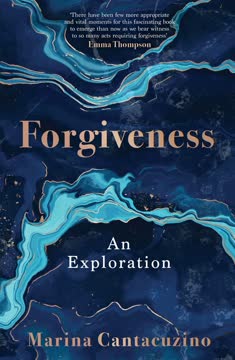
1. Forgiveness: A Complex Journey of Self-Liberation
‘The whole area of forgiveness is like a huge spectrum… at one end you have a fracas in the playground, and at the other end you’ve got mass slaughter and yet you’ve got this one word that is supposed to fit everything.’
A messy business. Forgiveness is rarely a tidy, foolproof remedy, but rather a fluid, ever-changing process that grows out of damage. It can transform and disturb, soothe and upset, bringing meaning to sorrow while also confusing. The author's work with The Forgiveness Project emphasizes exploring its contours rather than prescribing it as a panacea.
Beyond persuasion. The project's core mission is an inquiry into forgiveness, not a persuasion to forgive. It aims to illustrate every aspect of this complex subject, mapping myriad ways it manifests as an alternative to hate. The goal is to reveal gritty, messy, risky, but authentic narratives, making them accessible to a wide range of people.
A radical ingredient. If pressed for a definition, forgiveness means making peace with things or people you cannot change, relinquishing the burden of hatred and the desire for revenge. Crucially, it requires a degree, perhaps just a faint hint, of compassion or empathy for the person who has hurt you, stretching our humanity.
2. The Power of Choice: Forgiving to Reclaim Your Life
‘His arrival in our home was a kind of reckoning,’ said Wilma, ‘because having just been through the immense pain of losing our daughter, it now seemed we might lose everything else as well.’
A lifeline decision. Wilma Derksen, whose thirteen-year-old daughter Candace was murdered, chose to forgive her killer just hours after her body was found. This wasn't a religious obligation but an instinctive choice born from dread of what "unforgiveness" might bring, after a stranger, also a parent of a murdered child, warned them of the devastating toll of unresolved grief.
Freedom from suffering. Forgiveness became a conscious decision to release themselves from a lifetime of suffering, a "lifestyle choice" to find peace in a maelstrom of uncertainty. Despite facing relentless public scrutiny and criticism for her choice, Wilma's commitment remained unwavering, proving an invaluable way to navigate traumatic loss.
An ongoing intention. Even after years of legal frustrations and the killer's acquittal, Wilma's forgiveness was never truly tested. It remained a fresh, ongoing position of the mind, a "North Star" to follow, offering comfort and assuagement. This highlights forgiveness as a personal journey, not dependent on external resolution, but on an internal resolve to find peace.
3. Beyond the Act: Forgiving Imperfections, Not Offenses
‘Forgiveness is not about forgiving the act but forgiving the imperfections which are inherent in all of us.’
Humanity's transgressions. Samantha Lawler, whose father murdered her mother, found forgiveness not by condoning the act, but by forgiving the inherent imperfections in all humans. This perspective suggests that when people forgive appalling acts, they are forgiving humanity itself for failing and being fallible, rather than tolerating the harm done.
Empathy for the "monster." This profound empathy allows forgivers to find compassion for individuals with twisted minds, seeing them as "ruined pieces of nature" rather than purely evil. They understand that moral growth can be derailed by trauma, leading to a limited capacity for empathy or an inability to distinguish right from wrong.
A hint of compassion. Mina Smallman, mother of two murdered daughters, initially stated forgiveness doesn't include compassion for the killer. Yet, she referred to him as a "young man," implying she saw him as a human being. This subtle recognition of shared humanity, even a faint hint of compassion, is often the radical ingredient in profound forgiveness.
4. The Dark Side: When Forgiveness Becomes a Burden or a Weapon
‘To forgive without requiring the other to change is not only self-destructive but ensures a dysfunctional relationship will remain so by continually rewarding mistreatment.’
Pseudo-forgiveness. Forgiveness can be insincere, coerced, or used for manipulation, such as celebrities seeking forgiveness after cheating or bank executives pleading for pity. This "pseudo-forgiveness" is often a self-serving attempt to assuage guilt or repair reputation, rather than a genuine act of repentance or bridge-building.
An outrage and accusation. When governments use forgiveness to avoid accountability, or when it's offered condescendingly ("I forgive you" implying the other is wrong), it can be an outrage. Richard Wilson, whose sister was murdered, views forgiveness as "moral absolutism combined with wishful thinking," especially when unrepentant murderers are involved.
Enabling abuse. In cases of domestic violence or child abuse, forced forgiveness can be dangerous, perpetuating cycles of harm. Religious institutions, for instance, have been found to use forgiveness dogma to cover up abuse, prioritizing organizational reputation over victims' needs. This highlights the critical need for accountability and justice before forgiveness can be truly healing.
5. Releasing the Grip of Revenge: A Path to Inner Peace
‘Beware that, when fighting monsters, you yourself do not become a monster… for when you gaze long into the abyss. The abyss gazes also into you.’
The allure of retribution. Revenge, a primeval predisposition, can feel attractive, promising to ease misery and salvage injuries by making the wrongdoer suffer. It can provide a sense of identity, purpose, and camaraderie, as seen in narratives from Greek tragedies to modern politics.
A dead end. However, revenge often proves to be a "dead end," keeping individuals tied to both the wound and the person who inflicted it. As psychotherapist Robin Shohet notes, it's an attempt to restore power that ultimately fails, leading to further suffering for the avenger.
Choosing a different legacy. Many victims, like Robi Damelin (whose son was killed by a sniper) and Aqeela Sherrills (whose son was killed in gang violence), instinctively reject revenge. They understand that retaliation would only perpetuate the cycle of hate, choosing instead to transform their pain into peacebuilding and compassion, ensuring their loved ones' legacies are not defined by violence.
6. The Intimate Challenge: Forgiving Loved Ones and Ourselves
‘All friendships of any length are based on a continued, mutual forgiveness.’
Everyday carnage. While extreme traumas are profound, the "incessant provocations of daily life" within families and friendships also create deep, festering wounds. Unresolved hurts, betrayals, and rejections lead to estrangements, leaving individuals and families fractured and heartbroken.
The difficulty of proximity. It's often harder to forgive the smaller wrongs of loved ones than the greater wrongs of strangers. This is because serious conflicts with those we care about involve accusations of betrayal, rejection, or unfairness, exposing old wounds and making us don the "armour of moral indignation."
A forgiving mindset. Navigating this disarray requires a forgiving mindset: accepting that people have opposed opinions without deeming them "bad," responding with compassion rather than rage, and moving beyond one's own hurt to embrace others' pain. This flexible perspective, as Dr. Kathleen Lawler-Row suggests, is key to finding peace.
7. Healing from Within: The Transformative Power of Self-Forgiveness
‘It might be harder to forgive oneself because forgiving oneself requires [us] to work at a deep identity level.’
The burden of guilt. Lis Cashin, who accidentally killed her friend with a javelin at age thirteen, carried immense guilt for decades, believing she was "evil" and deserved punishment. This self-blame, amplified by societal silence, led to self-destructive behaviors and a complete breakdown.
Self-compassion as antidote. Through intense therapy, Lis realized she was an innocent child, not a perpetrator, leading to profound self-compassion. Similarly, Jean-Michel Jarre, who felt unloved by his father, found peace by forgiving himself for "not being able to be loved by you," transforming his woundedness.
A tactical process. Self-forgiveness is not about letting oneself "off the hook" but about transformation. Arno Michaelis, a former white supremacist, found self-forgiveness essential to becoming a peace advocate, realizing that self-hatred would prevent him from helping others. It's a moral word, as Stephen Cherry notes, admitting something is wrong and needs to be put right.
8. Political Forgiveness: Aspiration vs. Reality in Collective Healing
‘The only antidote to the irreversibility of history is the faculty of forgiveness.’
Beyond personal scope. Political forgiveness aims to resolve historical wrongs and enable communities to move past painful legacies. Stacy Bannerman, after her veteran husband's war-induced violence, sought to forgive American society for the Iraq War, realizing her personal trauma was a consequence of collective actions.
Truth and accountability. Forgiveness in the political realm often seems incongruous without truth-telling, accountability, and reparations. As Dr. Eileen Borris emphasizes, a political forgiveness process must begin with these critical first steps; otherwise, healing is impossible, and forgiveness becomes merely symbolic or even insulting.
The "good grudge." Sometimes, holding onto a grievance, a "good grudge," is necessary to drive social change and demand justice, as argued by Stephen Cherry. However, this requires skillful navigation to avoid righteousness turning into demonization, as Stacy Bannerman learned when her blame campaign became alarmingly vengeful.
9. Faith and Forgiveness: A Source of Strength and Contention
‘God will break your heart over and over and over and over and over and over again until it stays open.’
Divine connection. For many, faith provides a framework for forgiveness, allowing them to hand over some of the "heavy lifting" to a higher power. Azim Khamisa, a Sufi Muslim whose son was murdered, found strength and the "blessing of forgiveness" through prayer, seeing "victims at both ends of the gun."
A spiritual phenomenon. Even for self-avowed atheists like Letlapa Mphahlele, being forgiven can be a spiritual experience, transcending religious dogma. This suggests forgiveness, at its core, is a spiritual phenomenon, stretching one's life into new alignments of consciousness and connectivity.
The straitjacket of religion. However, linking forgiveness rigidly to religious belief can be exclusive and burdensome. Sister Dianna Ortiz, a Catholic nun tortured by the Guatemalan military, struggled with the Christian ideal of forgiveness, feeling guilty for her inability to forgive. This highlights the danger of weaponizing forgiveness by imposing it as a moral imperative.
10. Facing the Enemy: Dialogue as a Bridge to Understanding
‘Because crime hurts, justice should heal.’
The humanizing encounter. Meeting the person who has caused harm, or someone like them, is profoundly difficult but can be transformative. Jo Berry, whose father was killed by IRA bomber Patrick Magee, engaged in dialogue not to forgive, but to understand, humanizing the "enemy" and moving beyond the power dynamics of victim and perpetrator.
Beyond blame. This dialogue, often facilitated by restorative justice, shifts the focus from punitive justice to healing. Victims seek answers to "why me?" and to share their pain, while offenders aim to make amends and explain their actions. This process can reveal shared humanity and elicit compassion.
Unforeseen connections. Restorative justice can lead to unexpected outcomes, like Linda and Peter Biehl offering work to their daughter's killers, or Carmen Aguirre thanking her rapist for teaching her compassion. These radical acts of kindness, while not always leading to explicit forgiveness, bring symmetry and healing by transcending violence through understanding.
11. The Mechanics of Forgiving: Cultivating a Compassionate Mindset
‘I imagine one of the reasons people cling to their hates so stubbornly is because they sense, once hate is gone, they will be forced to deal with pain.’
Five key ingredients. Forgiveness is not a single act but a process built on several components:
- Curiosity: An inquiring mind, seeking what's not evident, understanding the "why."
- Perception Change: Shifting from black-and-white thinking to an open-minded, flexible view.
- Finding Empathy: Standing in another's shoes, recognizing shared humanity, refusing to demonize.
- Letting Go of Resentment: Releasing bitterness as an act of self-compassion, giving up the need to be "right."
- Making Meaning: Transforming painful experiences into purpose, creating a new understanding from trauma.
The power of self-reflection. Underlying these ingredients is the capacity for self-reflection. Without understanding ourselves, we risk delusion and causing further damage. Deep self-awareness allows us to meet others deeply, fostering compassion and enabling fundamental change.
Storytelling as therapy. Telling and retelling one's story, whether through writing, art, or dialogue, is a powerful therapeutic tool. It helps process emotions, construct a coherent narrative, and transform pain into wisdom. This act of defiance and remembrance can liberate the storyteller and nurture compassion in those who bear witness.
People Also Read