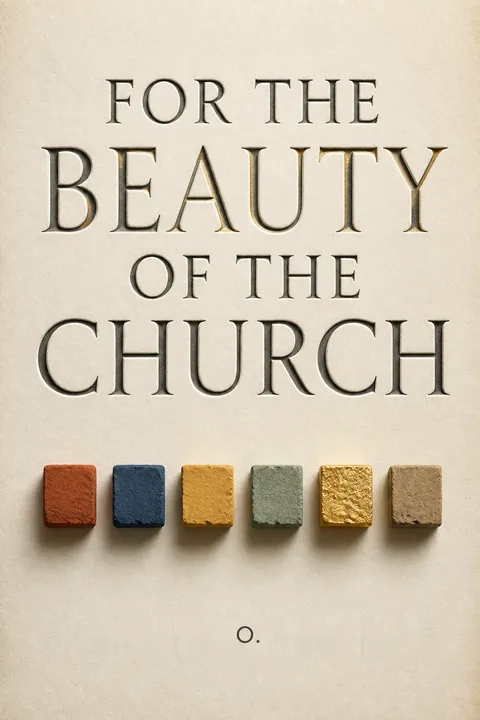

Key Takeaways
1. Art as God's Original Gift and Human Vocation
Culture is God’s creation as much as nature is.
God, the first artist. Contrary to common assumptions, Genesis 2 reveals God as the original culture-maker, planting a garden that is "pleasant to the sight and good for food," and placing gold, bdellium, and onyx stone in the land—materials whose primary value lies in their beauty. This initial act establishes culture, including art, not merely as a human endeavor but as a divine gift, a foundational aspect of creation itself. It highlights that beauty and utility are intertwined in God's design, with beauty often preceding or exceeding mere function.
Humanity's creative calling. When God places Adam in the garden "to till it and keep it," he extends this creative calling to humanity. Our role is to make something of the world, both materially and meaningfully, transforming raw creation into cultural goods. However, the Fall twisted this good gift into a defensive measure, as seen in the fig leaves and the Tower of Babel, where culture became a means to self-sufficiency rather than a grateful response to God.
Art's "unuseful" grace. Art, defined as aspects of culture that cannot be reduced to utility, stands as a testament to God's superabundant grace. Like worship, art is "better than useful," inviting us into a relationship with God that transcends mere transactional benefit. It allows us to play and to confront pain, both seemingly "useless" acts that are nonetheless vital for human flourishing and for reflecting the generous, non-utilitarian nature of God's love.
2. The Profound Nature of True Beauty
The beautiful, he said, is wholeness, harmony, and radiance.
Aquinas's timeless definition. Thomas Aquinas's definition of beauty—wholeness, harmony, and radiance—provides a robust framework for understanding the terrain of true artists. Wholeness implies completeness, with nothing missing or gratuitous, offering a sense of peace and rest. Harmony signifies complementary relationships between all parts, evoking joy and reflecting our communal nature as beings made in the image of a Triune God.
Radiance and personal dignity. Radiance refers to the profound moral, spiritual, or intellectual enlightenment a beautiful object communicates, often beyond language. This experience feels like a personal call, revealing our unique dignity as human persons and making us content in our creaturehood, subverting the temptation to be "like gods." It reminds us that we are chosen witnesses to something greater than ourselves, fostering both humility and euphoria.
Beyond the superficial. It is crucial to distinguish true beauty from its superficial imitations. Beauty is not "cute," "easy," "banal," "silly," "sweet," "nice," "facile," or "unthreatening." Such sentimental or unchallenging art, like "Precious Moments" figurines, may offer temporary comfort but ultimately cheapens the profound encounter with the divine that genuine beauty facilitates. True beauty challenges, transforms, and calls us to a deeper engagement with reality and with God.
3. Art's Essential Role in Corporate Worship
Good liturgical art is art that serves effectively the actions of the liturgy.
Beyond individual experience. Exemplary liturgical art resists the individualistic tendencies of modern culture by expressing and deepening the corporate nature of Christian life and worship. It aims to foster profound solidarity, helping congregations sing, pray, listen, and receive God's gifts together. This means accessibility is a legitimate factor, challenging artists to be both profound and understandable to a diverse community, much like Ralph Vaughan Williams harmonized folk hymns for parish churches.
Covenantal engagement. The most fruitful liturgical artworks are not ends in themselves but means to deepen the covenantal relationship between God and the gathered congregation. Art in worship should help us engage in specific covenantal actions like praising, lamenting, confessing, and thanking. When worshipers say, "Your song, your poetry, your dance helped us to pray, to hear God, to know and love God," the art has fulfilled its highest potential, moving beyond mere aesthetic contemplation to relational renewal.
Iconic and idolatry-resisting. Liturgical art should be iconic, inviting worshipers to "look through" the artwork to perceive the beauty and glory of God, much like Orthodox icons. This tradition, echoed by Calvin and Wesley, emphasizes that sensory experience in worship should contribute to a perception of the Triune God. Furthermore, art can be a potent antidote to idolatry, not just by avoiding the worship of the artwork itself, but by challenging and correcting sub-Christian, distorted images of God, helping us perceive God's glory more truly.
4. Artists as Indispensable Guides for Pastors
I was there to give witness to the decisive and critical influence that artists have had in my life as a pastor in a Christian church.
Vocation over job. Eugene Peterson's journey as a pastor was profoundly shaped by artists who helped him distinguish between a "vocation" and a "job." Artists like Willi Ossa, a janitor who was a serious painter, embodied the idea that their identity was rooted in a calling, not in what others thought of them or paid them. This perspective served as a crucial warning against the church's tendency to reduce pastoral ministry to a quantifiable job description, reminding Peterson to stay attentive to God's immediate and authoritative call.
Forming worship, not just proclaiming. The biblical figure Bezalel, the artist who designed and oversaw the construction of the wilderness tabernacle, became a mentor for Peterson through his architect, Gerry Baxter. Bezalel's meticulous attention to the details of the sanctuary revealed that worship is not just about verbal proclamation but about the material means for forming salvation, detail by detail, day by day. This artistic vision helped Peterson understand worship as the coherent assembly of all aspects of life into responsive obedience, a place where identity is formed in time and place.
The "beginner mind" and fresh perception. Artists, like Judith the textile artist, bring a "beginner mind" to faith, seeing the unseen in the seen and hearing the no-longer-heard in the heard. They perceive forms and relations in what has become disjointed or cliché for others. This fresh perspective is invaluable for pastors, who, immersed in familiar forms of glory, can become desensitized. Artists help "rip off the veils of habit that obscure the beauty of Christ," restoring color, texture, and smell to a salvation that might otherwise become disembodied in abstraction.
5. Nurturing Artists: The Pastor as a Loving Farmer
The standard of the exploiter is efficiency; the standard of the nurturer is care.
Care over efficiency. Drawing on Wendell Berry's wisdom, the role of a pastor nurturing artists is akin to that of a loving farmer. This approach prioritizes "care" over "efficiency," taking a long-term view and understanding that artistic development, like agricultural growth, is a messy, organic process. This perspective counters the temptation to view artists as mere tools to enhance church programs, instead recognizing them as intricate individuals whose gifts require patient cultivation.
Building a foundation of trust. Pastoring artists begins with intentionally pursuing them and sharing in their work, fostering a foundation of trust. Many artists feel lonely, misunderstood, and financially insecure, making genuine interest and affirmation crucial. This involves asking sincere questions about their medium, influences, and inspirations, and actively seeking to experience their work in their creative spaces. This "sharing in their world" validates their calling and helps bridge the conceptual gap often perceived between the arts and the church.
Promoting and producing with discernment. Nurturing extends to promoting artists by moving their work from private to public audiences, and "producing" them through loving critique. Promotion involves discerning when an artist's work is ready for public display, releasing gifts slowly, and valuing the person over their talent. Producing, a rigorous, hands-on engagement, involves consistent, honest feedback that affirms strengths while challenging weaknesses. This process, whether through individual coaching or peer workshops, helps artists mature, ensuring their fruit is sustainable and their character is formed alongside their craft.
6. Recognizing and Avoiding the Dangers of Art in Church
The possibility of abuse does not remove the legitimacy of use.
Beyond naive enthusiasm. As the church increasingly embraces the arts, it must mature beyond naive enthusiasm to wisely navigate potential dangers. Confusing "superordinate Truths" (essential beliefs about God, humanity, church, art) with "subordinate truths" (cultural expressions like musical styles) can lead to unnecessary conflict and misjudgment. What appears dangerous in another culture's artistic expression might simply be a different, yet faithful, enactment of the gospel.
Six specific pitfalls:
- Bad art: Cliché, superficial, or lazy art that betrays a dismissive view of God and lacks the excellence worthy of His glory.
- Supersaturation: Contributing to an overstimulated culture with constant artistic input, which can morally weaken parishioners and make them vulnerable to manipulation.
- "Estancandose tercamente" (stubbornly stagnating): Traditionalism that rigidly closes off God from refreshing or redirecting artistic expressions, hindering growth.
- Utilitarian reduction: Limiting art's value solely to its usefulness for church tasks (e.g., evangelism), thereby belittling God's expansive creation and robbing artists of their broader calling.
- Art as distraction: Using art to escape hard realities, whether into feelings, entertainment, or the art itself, replacing genuine spiritual connection with God.
- Immaturity: Artists indulging in self-serving behaviors (e.g., manipulation, sloth) or leaders being ruled by fear or numerical growth, causing harm rather than fostering Christ-like character.
Discerning use, not avoiding. While these dangers are real, the principle abusus non tollit usum (abuse does not remove the legitimacy of use) reminds us that the potential for misuse does not negate art's inherent goodness. The challenge is not to avoid art, but to remain alert and discerning, ensuring that artistic activity genuinely serves the good purposes of the church and glorifies God.
7. Theological Roots: Beautifying the Commandments
This is the idea that one does not just do the commandments, one “beautifies” them.
Hiddur Mitzvah: Adorning God. The Jewish principle of hiddur mitzvah, meaning "beautifying the commandments," offers a profound theological foundation for Christian engagement with art. Rooted in Exodus 15:2 ("This is my God and I will beautify him with praises"), it teaches that fulfilling God's commands should be done with elegance and beauty. This means using a beautiful shofar, building an ornate sukkah, or crafting intricate marriage contracts, not just meeting the minimum requirements.
Art as an act of honor. This principle elevates art beyond mere decoration or utility, positioning it as an act of honor and glorification toward God. The delicate papercutting of Ruth 1:21, purchased by Lauren Winner, serves not just as a personal reflection but as an adornment to God. This perspective challenges the notion that art is an extravagance, instead framing it as an integral part of devout living, where aesthetic excellence becomes a form of worship.
Purposeful beauty. Hiddur mitzvah suggests that art often has a purpose beyond "senseless beauty." While extravagant beauty can exist for its own sake (like peacocks' plumage), in a religious context, beauty frequently materializes goodness and truth, clarifies meaning, and directs attention heavenward. This historical engagement with art, evident in ornate tabernacle details or early American church architecture, demonstrates that Christians have long understood art as a powerful medium for teaching, inspiring, and connecting with the divine.
8. The Spirit's Hopeful Subversion for Art's Future
The Spirit, they tell us, is the “first fruits” of the final harvest . . . the “down payment” of what is to come . . . the “seal” of the future.
Future-driven vision. Instead of merely extrapolating from present trends, a truly Christian vision for the future of art in the church must be driven by God's promised future, as revealed in Revelation 21-22. The Holy Spirit acts as a "hopeful subversion," interrupting and erupting into the present with a foretaste of this ultimate reality. This perspective liberates us from resignation to current cultural forces and from triumphalist self-reliance, inviting us to participate in God's ongoing work.
Six subversive movements of the Spirit:
- Unites the Unlike: The Spirit fosters multiethnic, diverse communities, subverting homogeneity and enabling artists and pastors to understand each other's distinct "media" of communication.
- Generates Excess: The Spirit reveals a God of superabundance, whose grace vastly surpasses mere balance or utility, inspiring art that is multiply evocative and points to reality's "generative excess."
- Inverts: The Spirit turns worldly values upside down, revealing the Lamb on the throne and inviting art that conveys hopeful social subversion, challenging conventional power structures.
- Exposes the Depths: The Spirit confronts sentimentality by exposing the profound depths of human sin and God's extreme love, particularly at Golgotha, leading to art that grapples honestly with brokenness.
- Re-creates: The Spirit transforms, rather than annihilates, the physical world, echoing Jesus's resurrection. Artists become "re-creators," participating in God's ongoing transformation of matter.
- Improvises: The Spirit brings endless, surprising novelty, fostering "non-order" or "jazz-factor" in life and art. This encourages artists to venture into risky novelty while remaining grounded in tradition.
Embracing the Spirit's work. This vision calls for artists and pastors to embrace these Spirit-led movements, allowing them to reshape their understanding and practice of art. It's about learning to hear each other, celebrating abundance, challenging norms, confronting reality, participating in transformation, and creating with both tradition and spontaneity.
9. Cultivating a Culture of Patronage for the Arts
We get the culture for which we pay.
Investing in new culture. To substantially change artistic culture, the church must actively "make new culture," which requires a robust culture of patronage. This means a willingness to invest significant money, time, and energy into producing new art, understanding that a small amount of great art emerges from a larger body of good art. Without this practical support, complaints about cultural decline ring hollow.
Beyond the individual purchase. Patronage extends beyond individual art purchases to systemic support. This includes:
- Church art programs: Thoughtfully developed initiatives that integrate art into congregational life.
- Art education: Encouraging young Christians to pursue art schools and careers, and integrating art-related courses into seminary curricula.
- Parachurch organizations: Supporting ministries like ArtsLink or the International Arts Movement that provide resources and influence.
- Professional societies: Fostering communities where believer artists can integrate faith and craft, whether in explicitly Christian groups or mainstream industries.
A long-term, communal vision. Developing a living artistic tradition is a long-term endeavor, requiring multiple generations of artists, critics, patrons, and theorists working together. It necessitates a communal perspective, recognizing that supporting "numerous second-rate artists" is essential for the emergence of "the few first-rate ones." This collective investment, fueled by a "Holy Spirited vision of compassion," is crucial for generating deeper-going artistry that can powerfully reshape culture for the common good.
10. Principles for Healthy Artistic Growth in the Church
The question, as always, is: How do we grow well?
Relationally ordered growth. Healthy artistic growth in the church is fundamentally "relationally ordered." This requires strong, humble relationships between pastors and artists, scholars and practitioners, and across generations and global cultures. Pastors can offer artists a broader congregational perspective and patience, while artists can teach pastors the importance of sensory engagement and diverse art forms. This mutual deference and protection of strengths and weaknesses foster a vibrant, God-ordained wisdom.
Contextually relative excellence. Artistic excellence in the church is "contextually relative," meaning its merit is determined by how well it accomplishes its purpose within a specific context. A horror movie discussion, while potentially redemptive, is better suited for a Tuesday night than a Sunday morning service. Furthermore, "excellence" itself can be refocused; while professional skill is often valued, sometimes the unpolished dance of children is more "excellent" in its ability to remind a congregation of the kingdom's upside-down values and the need for grace.
Organically rhythmed life. Finally, healthy artistic growth is "organically rhythmed," embracing the God-established patterns of "festal muchness" and "cleansing simplicity." This means allowing for seasons of abundant, extravagant artistic expression (like Solomon's temple dedication or Jesus's wine at Cana) alongside periods of intentional self-denial and minimalism (like fasting or simple worship). This dual rhythm, moving between maximal and minimal, prevents artistic life from becoming either manic or stagnant, fostering ecclesial well-being and rescuing us from confusing the heart of worship with its instruments.
Review Summary
For the Beauty of the Church receives mostly positive reviews, averaging 4 out of 5 stars. Readers frequently praise Barbara Nicolosi's chapter on pastoring artists and Andy Crouch's opening essay. Reviewers appreciate the book's honest examination of art's place in the church and its theological vision. As a collection of essays from eight contributors, opinions vary by chapter. Some critics find certain sections bland or ethnocentric, while enthusiastic readers describe it as formative and indispensable for Christian artists and pastors seeking to integrate the arts into church life.
People Also Read




About the Author
Other books by W. David O. Taylor

Download PDF
Download EPUB
.epub digital book format is ideal for reading ebooks on phones, tablets, and e-readers.








































