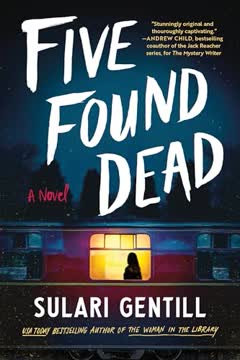
Plot Summary
Boarding the Midnight-Blue Train
Meredith and her brother Joe, a celebrated Australian crime writer recovering from cancer, board the Orient Express at Gare de l'Est. The train is a swirl of glamour and nostalgia, with passengers in evening wear and stewards in blue and gold. Joe's illness has left both siblings changed, seeking inspiration and healing. They are joined by a cast of colorful characters: podcasters Flex and Herds, the enigmatic Frenchman Napoleon Duplantier, and the lively Duchess of Kinross. The siblings' bond is palpable, their banter masking deeper fears. As the train departs, the sense of stepping into a story—one haunted by the ghosts of classic mysteries—settles over them, promising adventure and danger.
Siblings, Survivors, and Strangers
Meredith and Joe navigate the train's corridors, meeting their neighbors and fellow travelers. Joe's fame brings both admiration and awkwardness, while Meredith reflects on their family's complicated dynamics. Dinner in the opulent dining car introduces them to Duplantier, a retired French policeman, and Abigay Williams, a Jamaican-born detective inspector. The conversation is playful, full of speculation about murderers and victims among the passengers, but beneath the surface, everyone carries secrets and scars. The siblings' shared history—marked by illness, sacrifice, and rediscovered purpose—anchors them as they are drawn into the train's web of intrigue.
Dinner with Detectives
The first dinner on the Orient Express is a feast for the senses and the imagination. Meredith and Joe, joined by Duplantier and Abigay, swap stories and theories, casting their fellow diners as characters in a murder mystery. The podcasters, Flex and Herds, add a meta layer, referencing Christie and other classic authors. The conversation turns to the nature of nicknames, hard work, and the paradoxes of Australian culture. As the train glides through the night, the boundaries between fiction and reality blur, and the stage is set for a real-life mystery to unfold.
Ghosts and Games in the Night
After dinner, the Midnight Bar becomes a hub of mingling and speculation. Joe is inspired to write, haunted by the literary ghosts of the train's past. Meredith finds herself in a philosophical conversation with Duplantier about identity and purpose. The Duchess of Kinross dazzles with her charisma, and the podcasters chase interviews and ambiance. As the siblings retire to their cabin, Joe confides his anxieties about writing after illness, and Meredith reassures him. The night is filled with dreams, both literal and literary, as the train speeds toward the Alps—and toward trouble.
Blood on the Velvet Curtains
Morning brings a shocking discovery: the cabin next to Meredith and Joe's is splattered with blood, its occupant—known variously as Blackwell, Harrington, or Cheval—missing. The door was latched from the inside, and there is no body. The Mayfield sisters, elderly Englishwomen on a mission to recover stolen funds, are drawn into the chaos. The train's staff, led by Fleischmann, scramble to contain the situation. Joe's writerly curiosity is piqued, but Meredith is unsettled by the proximity of violence. The mystery deepens: how did the killer escape, and who was the real target?
Locked Doors, Missing Bodies
As the train crosses into Italy, Meredith and Joe eavesdrop on the investigation, piecing together timelines and alibis. The Mayfields reveal their own pursuit of the missing man, while Duplantier hints at a professional connection. The siblings debate whether to move cabins, but decide to stay—lightning, they reason, won't strike twice. Joe is drawn into an interview with the podcasters, who theorize about the train's literary hauntings and the social dynamics of luxury travel. The sense of being trapped—by both the train and the unfolding mystery—intensifies.
The Bar Council Convenes
Fleischmann assembles a council of passengers with law enforcement or investigative backgrounds: Duplantier, Abigay, Whitman, Sartori, Singh, Rees, the Mayfields, Elle Baird, and the Penvales. Each brings their own perspective, biases, and secrets. The group debates jurisdiction, motives, and the reliability of witness accounts. Sketches of the missing man—wildly inconsistent—are produced. The council inspects the crime scene, noting the absence of fingerprints and the missing duffel bag. Tensions rise as suspicions shift from outsiders to those within the group.
Quarantine and Conspiracy
News breaks that a new COVID variant has been detected in the rear carriages, leading to a strict quarantine. The train is turned back at the Italian border, surrounded by armed soldiers. Passengers grow restless, and panic simmers beneath the surface. The council is forced to balance the threat of contagion with the danger of a murderer on board. The podcasters, undeterred, continue their amateur sleuthing, while Meredith and Joe pursue their own lines of inquiry. The sense of claustrophobia and paranoia mounts.
The Train Turns Back
As the Orient Express is denied entry to Venice and forced to return to Paris, the council's investigation stalls. The quarantined passengers attempt to break free, further straining the stewards and staff. Sartori proposes abandoning the sick carriages, sparking outrage. The group fractures, with some advocating for continued investigation and others for self-preservation. Meredith and Joe, undeterred, seek out witnesses and clues, determined to solve the mystery before reaching Paris.
Suspects, Sketches, and Secrets
The council's efforts to identify the missing man are hampered by conflicting descriptions and missing passports. The Mayfields' story unravels under scrutiny, and Duplantier's motives are questioned. The podcasters, disguised as stewards, search cabins for evidence, uncovering secrets but also putting themselves in danger. The Duchess of Kinross and Whitman reveal their own connections to the case. The train becomes a labyrinth of suspicion, with every passenger a potential suspect or victim.
Stewards, Stealth, and Suspicion
Another steward is found murdered, and the council's focus shifts to the possibility of an inside job. Joe and Meredith piece together the timeline, noting the absence of fingerprints and the odd behavior of certain passengers. The podcasters' reckless investigation leads to their own demise, and the Mayfields' duplicity becomes more apparent. The council is forced to confront the possibility that the killer is among them, hiding in plain sight.
The Mayfields' Mission
The Mayfield sisters' true nature is revealed: far from harmless spinsters, they are cunning and ruthless, willing to kill to protect their secrets. Their pursuit of Harrington is exposed as a cover for darker deeds, including multiple murders. Meredith narrowly escapes their attack, saved by the intervention of Duplantier and Joe. The sisters' façade crumbles, and the council must reckon with the reality that evil can wear the most unassuming faces.
The Barman's Disguise
The barman, Frank, is unmasked as the missing man—Harrington, Blackwell, Cheval, and more. He reveals a history of fraud, a diagnosis of terminal cancer, and a desperate scheme to fake his own death and escape his enemies. Frank's manipulation of the COVID tests is exposed, explaining the false outbreak and the train's isolation. His confession implicates others, but also elicits a measure of sympathy. The line between victim and villain blurs, and the council must decide his fate.
The Podcasters' Pursuit
The podcasters' amateur investigation leads them into the Mayfields' cabin, where they are discovered and killed. Their deaths are staged as self-defense by the sisters, but the truth emerges through forensic evidence and witness testimony. Their final recordings, full of wit and insight, serve as both a tribute and a warning. The cost of curiosity—and the dangers of underestimating the seemingly harmless—are laid bare.
The Duchess and the Detective
The Duchess of Kinross, Whitman, Singh, and Rees reveal their own connections to Frank, each having been defrauded or wronged by him. Their presence on the train is no coincidence, and their motives for revenge or justice complicate the investigation. Duplantier's own history with Frank is revealed: a botched arrest, a career-ending injury, and a thirst for closure. The council must navigate a web of personal vendettas and shifting alliances.
Panic at the Border
As the train is stopped at the French border, panic spreads among the passengers. Attempts to escape are met with gunfire from the authorities. Meredith and Joe are attacked by frightened travelers, saved only by the intervention of new allies. The council's authority is challenged, and the line between order and chaos grows thin. The need for resolution becomes urgent as the train inches closer to Paris.
The Old Ladies' Truth
Under pressure, Clarice Mayfield confesses to the murders, implicating her sister and herself in a string of killings both on and off the train. Their motive: to protect their secrets and eliminate threats. The council, shaken by the revelation, must confront their own failures and biases. Frank's role as both instigator and survivor is clarified, and Duplantier's integrity is restored. The true cost of deception and denial is laid bare.
The Final Reveal
As the Orient Express arrives in Paris, the authorities take custody of the killers and the survivors. The dead are mourned, and the living reckon with what they have witnessed and done. Joe, inspired by the ordeal, finds his voice as a writer once more. Meredith, battered but unbroken, contemplates her own future. The ghosts of the train—both literal and literary—are laid to rest, and the siblings prepare to step back into the world, forever changed.
Paris, Ghosts, and Goodbyes
In the aftermath, Meredith and Joe reflect on the journey, the friends lost, and the lessons learned. The council disperses, each member carrying their own scars and stories. Joe's manuscript, shaped by the events on the train, promises to be his best yet. Meredith, having faced death and deception, embraces the uncertainty of the future. The Orient Express, cleansed of its ghosts, stands ready for its next journey—its next story.
Analysis
Sulari Gentill's Five Found Dead is a masterful reinvention of the classic train-bound murder mystery, blending homage and innovation with psychological acuity and contemporary resonance. The novel interrogates the allure and limitations of genre fiction, using the Orient Express as both setting and symbol—a place where stories, identities, and realities collide. Through its ensemble cast, the book explores themes of survival, deception, and the masks we wear, both to protect ourselves and to manipulate others. The pandemic subplot is not mere backdrop but a pointed commentary on the power of fear and misinformation, echoing the ways in which narratives—personal, political, and literary—shape our perceptions and actions. The locked room mystery, with its vanished body and shifting suspects, becomes a metaphor for the human psyche: closed, complex, and full of hidden dangers. Ultimately, the novel suggests that truth is elusive, justice imperfect, and survival often a matter of luck and resilience. Yet, in the aftermath of violence and loss, there is room for healing, creativity, and new beginnings. Five Found Dead is both a gripping puzzle and a meditation on the stories we tell to make sense of chaos—a fitting tribute to the ghosts of mysteries past, and a bold step into the future of the genre.
Review Summary
Five Found Dead is a modern, Christie-inspired murder mystery set on the Orient Express, receiving mostly positive reviews averaging 3.37 stars. Readers praise its atmospheric setting, eccentric characters, and entertaining plot, though many note its implausibility and chaotic pacing. The book draws clear parallels to Murder on the Orient Express, featuring a Poirot-like French detective and Christie-esque character types. A COVID subplot divides opinion, with some finding it clever and others off-putting. Most readers recommend it for mystery lovers willing to suspend disbelief and enjoy a fun, tongue-in-cheek ride.
People Also Read






Characters
Meredith Penvale
Meredith is the emotional and narrative center of the story, Joe's twin and caretaker, whose legal mind and steady presence ground the chaos around her. Her relationship with Joe is complex—marked by love, rivalry, and shared trauma from his illness. Meredith's journey is one of self-discovery: from lawyer to artist, from bystander to active participant in the mystery. Her empathy and skepticism make her both a reliable narrator and a keen investigator, able to see through facades and connect disparate threads. Her development is shaped by loss, danger, and the realization that even the most ordinary people can harbor extraordinary secrets.
Joe Penvale
Joe is a charismatic, witty, and deeply wounded man, whose brush with death has left him both vulnerable and driven. His fame as a crime novelist brings both opportunity and scrutiny, and his struggle to write again after cancer is a central emotional arc. Joe's relationship with Meredith is both a source of strength and tension, as he resists her protectiveness while relying on her insight. His psychological complexity—marked by fear of mortality, imposter syndrome, and a need for meaning—fuels both his creativity and his involvement in the unfolding mystery. Joe's arc is one of reclamation: of his talent, his agency, and his future.
Napoleon Duplantier
Duplantier is a retired French policeman whose elegance and dry humor mask a deep sense of loss and unfinished business. His pursuit of Frank/Cheval is both professional and personal, tied to a career-ending injury and a need for closure. Duplantier's Old World manners and understated charm make him both an ally and a suspect, as his motives and methods are questioned. His psychological depth lies in his struggle with identity—no longer a policeman, not yet at peace—and his capacity for both compassion and ruthlessness. His relationship with Meredith hints at the possibility of new beginnings.
Clarice and Penelope Mayfield
The Mayfield sisters are a study in contrasts: outwardly frail, inwardly formidable. Their pursuit of Harrington is a cover for a history of violence and manipulation, revealed through their conflicting stories and eventual confessions. Their psychological complexity lies in their ability to weaponize assumptions about age and innocence, using their perceived harmlessness to mask deadly intent. Their relationship is symbiotic, each enabling the other's worst impulses. Their arc is one of exposure and downfall, as their carefully constructed personas unravel.
Frank / Gregory Blackwell / Cheval / Hugh Booby
Frank is the missing man at the heart of the mystery, a master of disguise and deception whose crimes span continents and identities. His cancer diagnosis adds a layer of desperation and pathos, driving his scheme to fake his own death and escape his enemies. Frank's psychological profile is marked by self-pity, cunning, and a capacity for both charm and cruelty. His manipulation of the COVID crisis is both brilliant and callous, and his confessions blur the line between victim and villain. His arc is one of exposure and reckoning, as his lies catch up with him.
Abigay Williams
Abigay is a seasoned police inspector whose down-to-earth manner and sharp instincts make her a stabilizing force within the council. Her background—Jamaican-born, now Australian—adds depth to her perspective on justice and community. Abigay's psychological strength lies in her ability to cut through nonsense and focus on facts, even as the situation spirals. Her empathy and humor provide relief and clarity, and her arc is one of steadfastness in the face of chaos.
Elle Baird, Duchess of Kinross
Elle is both a figure of glamour and a woman marked by loss and resilience. Her annual journeys on the Orient Express are rituals of remembrance and renewal. Defrauded by Frank, she seeks not revenge but closure, and her interactions with Joe and Meredith reveal a capacity for both wit and wisdom. Her psychological complexity lies in her ability to balance vulnerability and strength, and her arc is one of acceptance and moving forward.
Bob Whitman
Whitman is a Chicago cop whose bluntness and loyalty make him both a foil and a friend to the other investigators. His relationship with Elle is protective, bordering on paternal, and his suspicion of the council's motives adds tension. Whitman's psychological profile is shaped by years of seeing the worst in people, making him both cautious and courageous. His arc is one of adaptation, as he learns to trust and collaborate in unfamiliar territory.
Ajeet Singh and Aled Rees
Singh and Rees represent the global reach of the mystery, each with their own reasons for pursuing Frank. Singh's connection is personal—his sister was defrauded—while Rees brings expertise in terrorism and crisis management. Both are marked by secrecy and suspicion, their true motives only gradually revealed. Their psychological complexity lies in their ability to operate in ambiguity, balancing personal vendettas with professional duty.
Flex and Herds (Felix Shannon and Benjamin Herder)
Flex and Herds are both comic relief and tragic figures, their enthusiasm for mystery fiction leading them into real danger. Their amateur sleuthing, fueled by curiosity and bravado, ultimately costs them their lives. Their psychological profile is marked by naivety, idealism, and a longing to be part of the stories they love. Their arc is a cautionary tale about the risks of blurring fiction and reality.
Plot Devices
Locked Room Mystery
The central device is the classic locked room: a cabin latched from the inside, a missing body, and no clear means of escape. This structure pays homage to Christie and other Golden Age writers, while subverting expectations through modern twists—multiple identities, unreliable witnesses, and the intrusion of real-world crises (COVID). The locked room becomes a metaphor for the train itself: a closed system, full of secrets and dangers, where everyone is both suspect and prisoner.
Ensemble Cast and Jury Structure
The assembly of investigators—each with their own motives, backgrounds, and secrets—creates a dynamic interplay of suspicion, alliance, and betrayal. The council functions as both a jury and a microcosm of society, forced to confront their own biases and limitations. The shifting focus among characters allows for multiple perspectives and red herrings, keeping the reader guessing.
Metafiction and Literary Ghosts
The narrative is self-aware, referencing the train's literary history and the influence of classic mysteries on both the characters and the plot. Joe's struggle to write, haunted by the ghosts of Christie, Hitchcock, and others, mirrors the unfolding events. The podcasters' commentary adds another layer, blurring the line between observer and participant. The train itself becomes a character, imbued with the weight of its fictional past.
False Identities and Disguises
Nearly every major character is not what they seem: Frank is a master of disguise, the Mayfields are killers masquerading as innocents, Duplantier's motives are ambiguous, and even the podcasters don steward uniforms. The motif of disguise extends to psychological masks—characters hiding trauma, guilt, or desire. The revelation of true identities is both the engine of the plot and a commentary on the dangers of assumption.
Pandemic and Quarantine
The COVID outbreak—ultimately revealed as a fraud—serves as both a plot device and a metaphor for the spread of fear, rumor, and suspicion. The quarantine heightens the sense of claustrophobia and urgency, forcing characters into close quarters and desperate actions. The manipulation of public health fears by Frank is both timely and chilling, reflecting the real-world consequences of misinformation.
Red Herrings and Misdirection
The narrative is rich with false leads: conflicting sketches, missing passports, staged crime scenes, and shifting alliances. The reader, like the characters, is constantly forced to reevaluate assumptions. The ultimate revelation—that the killers are the least suspected, and the supposed villain is a victim of circumstance—subverts genre conventions while honoring their spirit.








































