
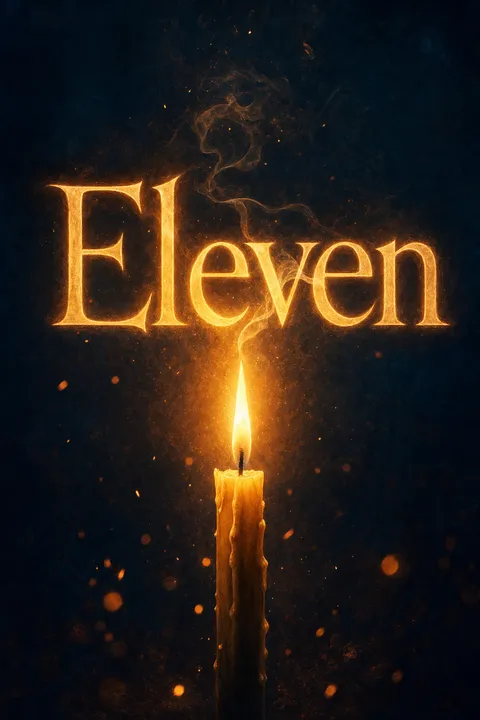


Plot Summary
The Dog He Hasn't Earned
Alex,1 one night shy of turning eleven, lives for two things: airplanes and dogs. His half of the shared bedroom is a shrine to fighter jets and mutts, and his call sign, painted on a model F-16, is A-Dawg. For months he has campaigned for a birthday dog, wearing his parents down with sticky notes and relentless pestering.
But his nurse mother4 reminds him of their bargain: better grades buy the dog, and his recent C in math broke it. That night, as his dad2 tucks in little sister Nunu3 with their nightly song, Alex,1 sulking and certain his wish is doomed, spits out three words he cannot take back. He tells his father2 he hates him. The door clicks shut on the silence.
Rogers establishes childhood magical thinking as the engine of the whole novel. Alex treats affection as a transaction, grades for a dog, love for obedience, and the reader watches an eleven-year-old mistake causality for morality. The bedroom, split by tape into his world and Nunu's, externalizes his belief that he can control chaos through rules. The cruel bedtime line is dramatically loaded not because it is unusual (children say such things nightly) but because the narrative will soon make Alex believe words carry cosmic weight. The chapter's video-game framing, heroism imagined then unplugged, quietly foreshadows how real heroism will look nothing like the fantasy he rehearses.
Worst Birthday, Crushed Cupcakes
Morning arrives and Alex1 is officially eleven, greeted by pancakes and a chocolate cake reading Tower to A-Dawg. Yet his mother's4 avoided eyes confirm the awful truth: there is no dog. On the school bus, the class terror Jordan McCreevey9 wedges in beside him, promises not to touch the homemade cupcakes, then uses a sharp turn to slam Alex1 and the box against the window.
Pinned and humiliated, Alex1 glimpses something through the glass that lifts him: a muddy stray5 nosing through trash near an abandoned gas station. The dog locks eyes with him, chases the bus, and stops obediently at a lethal intersection when Alex1 silently wills it. For one fragile heartbeat, the ruined birthday feels survivable.
The date reveal, September 11, 2001, arrives quietly as a circled square on a classroom calendar, weaponizing the reader's foreknowledge against the boy's innocence. Jordan embodies a specific bully genius: cruelty engineered to look accidental, never punishable, mirroring the invisible menace about to descend on the city. Against that, the stray functions as pure yearning made flesh. Alex's telepathic connection with the dog, willing it to stop at the curb, extends his deal-making superstition into the animal world. Rogers builds an emotional counterweight before the horror lands, so that the day's later trauma will land on a heart already stretched between humiliation and hope.
Sent Home, Be a Grown-Up
Second period is cut short when a runner delivers a note. Mrs. Hamlin, her face gray as ash, orders Alex1 to collect Nunu3 and go straight to their mother4 at Mercy Hospital. There the usually unflappable nurse trembles, redials a dead phone again and again, and argues with her bulldog supervisor about staying for a long, ugly night.
She kneels, tells Alex1 to take Nunu3 home, keep the television off, play board games, and above all to be a grown-up for the day. Alex,1 still stewing over the dog and the smashed cupcakes, senses only that every adult is behaving strangely. He does not yet know that across the river the towers where his father2 drives are burning. The whole city has gone eerily quiet.
This is the novel's structural hinge: the catastrophe is present but withheld, filtered through a child's limited perception. Rogers dramatizes protective adult silence, the mother rationing truth because she doubts her son can bear it, and shows its cost, a boy left to interpret terror as mere inconvenience. The dramatic irony is acute; readers supply the meaning Alex cannot. His mother's request that he be a grown-up plants the book's central developmental question, because Alex has spent two chapters insisting he already is one. The quiet buses and averted eyes render collective trauma through absence and hush rather than spectacle, honoring the day's memory without exploiting it.
The Stray Becomes His
Riding home, Alex1 begs the universe for a sign, and the bus halts beside the same gas station. The stray5 sits waiting, as though for him alone. He and Nunu3 tumble out, and the mutt5 bowls Alex1 over with a slobbering welcome. For one stolen morning the boy crams a lifetime of dog dreams into the streets: fetch, Heely-surfing on a leash, a scratch baseball game where the dog5 fields every ball and Alex1 slides home a hero.
At an oddly abandoned bakery he leaves his lunch money for two cupcakes and sings himself happy birthday, the dog5 howling to the finish. He cannot settle on a name yet, cycling through Rex and worse, but he is certain this scruffy animal is meant to be his.
Rogers grants his protagonist a pocket of joy suspended inside the worst day in modern American history, and the juxtaposition is deliberate rather than tone-deaf. The empty bakery, doors open and nobody home, silently registers the evacuation Alex cannot comprehend; the reader reads dread into his delight. The dog answers a need deeper than companionship: it restores agency to a boy stripped of control. Naming becomes a small drama of ownership and identity, the child trying on the role of caretaker. This interlude also banks emotional capital, making the coming sacrifice devastating, because we have now watched precisely what Alex will decide he must surrender to save his father.
Radar Guards His Boy
Jordan9 and his goons, hulking Calvin10 and grinning Deemer,11 corner Alex1 in the park after his friends bolt. Jordan9 clotheslines him, pins his arms, and cocks a fist, until the stray5 explodes from behind with a low growl, backing all three into a wall and chasing them from the park, tearing a pocket clean off Jordan's9 jeans.
Triumph curdles fast when Alex1 realizes Nunu3 has vanished; frantic searching finally uncovers her calmly playing a handheld game inside a concrete drainage pipe. Then, from the bridge above, Jordan9 hurls a beer bottle in wounded revenge. It strikes the dog's5 skull with a sickening crack, his front legs fold, and Alex1 gathers the heavy, bleeding animal into his arms and runs.
The dog's intervention inverts the fantasy of Chapter one: heroism arrives not from Alex's imagined fighter jet but from loyalty, sudden and physical. Jordan's escalation from casual sadism to a hurled bottle marks the day's cruelty spilling past containment, a small human echo of the larger violence offstage. Rogers also stages a rehearsal of guilt: Nunu's disappearance terrifies Alex because responsibility, the very thing he claimed to crave, suddenly feels crushing. The injury to the dog transforms the animal from a wish granted into a life in his hands, accelerating Alex from want to duty. Love, the chapter insists, is inseparable from the terror of losing what you love.
The Vet's Two Revelations
At the Happy Dog Animal Hospital, kindly Dr. Marks12 stitches the wound and waves off payment. Then his scanner beeps over the dog's back: the animal is chipped, called Radar,5 registered to 417 Van Orton Street. The vet12 tells Alex1 the dog belongs to someone else and must be returned. Pressed about his parents, Alex1 explains that his mother4 is a nurse and his father2 drives the PATH train under the river to the World Trade Center.
The vet's12 face collapses, and gently, choosing his words, he delivers the thing everyone has been shielding the boy from: terrorists flew two planes into the towers that morning. The scattered strangeness of the day snaps into a single picture, and one question devours all the rest.
Two revelations detonate together, and their pairing is the book's cruelest, most elegant stroke. The microchip gives the dog a name and, simultaneously, an owner, meaning the thing Alex just claimed is not his to keep. In the same scene, an adult finally tells the truth, and comprehension arrives like a Rubik's cube clicking into alignment. Rogers uses a stranger, not the parents, to break the news, underscoring how family silence left the boy defenseless. The father's job, once a source of pride and skyline daydreams, curdles into dread. Knowledge here is loss: to understand the day is to understand that his father was driving straight into its heart.
A Deal to Save Dad
Drawn by instinct to the high bridge he crosses every school morning, Alex1 lifts his eyes and finds the Twin Towers simply gone, only a churning column of smoke where they stood. Somewhere beneath it is his father.2 Last night ambushes him: he told his dad2 he hated him, and in his magical accounting the universe is now balancing the ledger.
Desperate to reverse the curse he believes he cast, he strikes a fresh bargain with himself. To buy his father's safe return he must surrender something enormous, and the price is instantly, unbearably clear. He will give up Radar,5 walk the dog back to 417 Van Orton Street, and hand him over to set the broken world right again.
Here the novel's psychology crystallizes into tragic logic. Alex converts guilt into a sacrificial economy, a child's animism in which cruelty spoken becomes cruelty enacted upon the world. Rogers renders grief's bargaining stage with unusual precision: unable to control planes or towers, Alex controls the one variable he owns, the dog. The image of holding two fingers up to fill the missing towers is the reach of a mind refusing an unrevisable fact. His decision is both irrational and morally beautiful, a boy proposing to trade his greatest joy for his father's life. The impossible exchange rate of love and loss becomes the emotional current carrying the rest of the book.
No House at 417
Radar5 resists every step toward Van Orton Street, digging in, hiding behind Alex's1 legs, until they arrive to find only a charred foundation ringed with No Trespassing signs. The dog's former home burned after squatters dumped him like trash. When Nunu3 and Radar5 squeeze through the fence, a scowling old man6 pins Alex,1 mistaking him for a vandal, then melts the instant he recognizes the dog.5
He is Mac, short for MacKnight,6 and he ushers the children inside. There his wife Dottie,7 lost to Alzheimer's, watches cartoons and calls them Bunny. Before Mac's6 muted television, Alex1 at last sees the towers fall on endless replay and pours out the guilt he has carried all day: his father2 is gone, and it is entirely his fault.
The burned house shatters Alex's bargain at its foundation, because a home that no longer exists cannot receive the sacrifice meant to redeem his father. Rogers stages a collision of two households cracked by loss, the child's imagined catastrophe and Mac's real, unfolding one. Dottie's dementia introduces a parallel grief, love enduring past recognition, that will later reframe Alex's understanding of anger and devotion. The moment Alex finally watches footage rather than merely hearing about it marks the difference between knowing and seeing; the collapse becomes irreversibly real. His confession to a stranger, rather than family, shows how the day has dissolved the ordinary boundaries between neighbors into raw, immediate intimacy.
Two Deal-Makers Waiting
Mac6 laughs, not unkindly, because he has spent the entire day making the same futile bargains with a silent telephone, waiting for his son Bobby,8 an investment banker who rode the PATH train into the North Tower. The old man and the boy trade fathers and sons, Yankees and white shirts, and a friendship spans sixty years in an afternoon.
In his garage Mac6 keeps a squadron of model aircraft he once built and flew with Bobby,8 and he places the controls in A-Dawg's1 hands and lets him fly. Mac6 shares Dottie's7 old saying, that it is better to light a candle than curse the darkness, and insists that a person can be furious with someone and still love them completely, even when ugly words escape.
Mac functions as the wise elder who recognizes in Alex his own coping mechanism, superstitious bargaining, and thereby normalizes it while gently dismantling its guilt. Their shared vocabulary of planes and pinstripes builds instant kinship across generations united by dread. The crucial therapeutic gift is Mac's teaching that anger and love coexist, spoken by a man who once traded insults with a wife who threw a skillet at him and adored him. This directly absolves Alex's I hate you. The model planes translate Alex's fantasy of flight into a real, controllable, shared act of joy, and Dottie's candle proverb seeds the novel's ethical thesis: meaning is chosen, not given.
Becoming the Grown-Up
Carrying an exhausted Nunu,3 Alex1 heads home and encounters Calvin10 on the bus, bruised and unrecognizable without his sneer. The goon apologizes for the injured dog,5 admits Jordan9 is a jerk, and confesses the bruise came from trying to stop the bottle. At home, with both parents still out, Alex1 steps fully into the role his mother4 asked of him: he fries hot dogs and macaroni, cleans the kitchen, and coaxes the skittish Radar5 indoors.
When Nunu3 melts down, wailing for their father,2 Alex1 does exactly what their dad2 does each night, stroking her hair and singing the sunshine song alone all the way to the end. The boy who bristled at growing up has, across one terrible day, quietly become something like a man.
The day's crucible produces the maturity Alex once demanded be granted him. Calvin's transformation illustrates how catastrophe strips away performed identities, the tough kid revealed as a lonely boy who actually resisted the cruelty. Alex's caretaking is the payoff of his mother's charge to be a grown-up, but achieved through tenderness rather than the swagger he'd equated with manhood. The lullaby, which he mocked in the opening chapter and now sings solo to soothe his sister, measures his arc precisely: the very ritual he rejected becomes his instrument of love. Growing up, Rogers suggests, is not privilege claimed but responsibility absorbed, quietly, in the absence of the adults you're replacing.
The Man in the White Shirt
All day, woven between Alex's1 chapters, a soot-covered man has been making his way out of lower Manhattan: escaping the burning concourse, carrying the wounded with a stray policewoman, reviving a grime-choked dove with bottled water, turned away from a blood bank because no victims are coming.
That man is Alex's father,2 alive, walking mile upon mile toward Jersey City, cutting through the dark park where he passes a bandaged stray5 without recognizing it. Back at the house, Radar5 suddenly bolts through the opened door and vanishes into the night, and Alex,1 unable to abandon Nunu,3 loses him. Two households keep vigil at their windows, both fathers and sons aimed at the same street corner, one fated to arrive and one not.
Rogers finally converges his dual narrative, and the withheld identity of the Man in the White Shirt pays off as both suspense and theme. The father's odyssey is a portrait of ordinary heroism, ferrying strangers, tending a broken bird, offering his universal blood, the real thing that Alex's fighter-pilot fantasies only imitated. The unrecognized encounter with Radar in the park quietly links the two rescue missions. Radar's flight seems, cruelly, to void Alex's bargain at the worst moment, sustaining dread to the final pages. Two vigils placed side by side create unbearable symmetry, and the reader senses the terrible arithmetic that one corner will stay empty while the other fills with light.
Home, and a Candle Lit
Alex's mother4 arrives first and holds him as he reveals he already knows everything. Then a knock: his filthy, exhausted father,2 locked out without his keys, sweeps all three children and their mother4 into his arms. Alex1 apologizes for the words from the night before, and his father2 says a dad always knows they were never meant.
Moments later Radar5 scratches at the door, having shadowed the man2 safely home, and the family keeps him for good. Across town Mac6 keeps the coffee brewing and waits for a son8 who will never round the corner. The next morning Alex1 carries a slice of birthday cake to Mac,6 plants two candles, and lights them, choosing, as Dottie7 taught, to light a candle rather than curse the dark.
The resolution braids triumph and grief without letting either cancel the other. Alex's reunion redeems the opening fight, and his father's assurance dissolves the guilt engine that drove the whole day, while Radar's return quietly honors the sacrifice Alex was willing to make, granting the dog as grace rather than transaction. Crucially, Rogers refuses sentimental symmetry: Bobby does not come home, and Mac's endless vigil anchors the story in the day's real, uncounted losses. The final candle transforms Dottie's proverb from words into action, and Alex's gift of cake to a bereaved stranger completes his maturation. Comfort, the book concludes, is something the grieving choose to offer one another.
Analysis
Eleven filters a national catastrophe through the narrow, self-absorbed lens of a boy1 fixated on cupcakes, bullies, and a birthday dog, and that narrowness is precisely its moral instrument. Rogers understands that children experience history sideways, as a series of inexplicable adult behaviors, and he lets dramatic irony do the emotional heavy lifting: readers carry the weight of September 11 that Alex1 spends most of the day failing to perceive. The result honors the day without spectacle, keeping the towers offstage and rendering trauma through hush, empty buses, averted eyes, and a bakery abandoned mid-frosting. The novel's psychological spine is magical thinking. Alex's1 habit of bargaining with the universe, harmless until grief weaponizes it, dramatizes how the powerless invent culpability to feel less helpless, and his conviction that three angry words doomed his father2 is a child's version of survivor guilt. Mac,6 making the same doomed deals with a silent phone, universalizes the impulse and then, crucially, offers release: the teaching that anger and love coexist, that saying you hate someone does not unmake devotion. This is the book's real gift to its young readers, a permission and an absolution. Its developmental arc reframes maturity itself. Alex1 begins by demanding the label grown-up as a privilege that earns dogs and freedoms; he ends having absorbed responsibility as burden and tenderness, cooking, protecting, singing the lullaby he once mocked. Rogers pointedly separates fantasy heroism, the unplugged fighter pilot, from the genuine article: a father2 ferrying strangers, a dog5 guarding a boy, a child comforting a grieving stranger with cake and candles. The dual ending refuses cheap consolation. One family reunites; Mac's6 son never rounds the corner. Meaning, the candle proverb insists, is not bestowed by fate but deliberately lit, person to person, in the dark.
Review Summary
Eleven by Tom Rogers receives high praise for its sensitive portrayal of 9/11 through the eyes of an 11-year-old boy. Readers appreciate the emotional depth, historical accuracy, and relatable characters. Many found it a powerful, tearjerking read that effectively introduces young readers to the events of September 11th. The interweaving storylines and dog subplot add interest. While some found early chapters slow, most agree it's an engaging, thoughtful book for middle-grade readers to learn about this significant historical event.
People Also Read

Characters
Alex Douglas
Boy turning elevenAn imaginative, daydreaming ten-year-old on the cusp of eleven, obsessed with fighter jets and desperate for a dog5. Alex copes with an uncontrollable world by striking private bargains with the universe, believing that small acts of will can bend outcomes his way. He craves the label of grown-up while resisting its burdens, and he struggles to keep his feelings off his face. Beneath the swagger of his A-Dawg call sign lives a tender, guilt-prone boy who loves his little sister3 more than he admits and worships a father2 he cannot easily talk to. Over a single catastrophic day he is forced to translate his fantasies of heroism into the unglamorous real work of responsibility, sacrifice, and care.
Alex's father
PATH train driverA steady, warm-hearted man who drives the commuter train beneath the Hudson to the World Trade Center, proud that it takes a lot to impress him. He wears a crisp white shirt each morning and returns rumpled each night. Patient with his sulking son1, he insists that responsibility, not age, is what earns a dog, and he carries a childhood memory of his own beloved mutt, Rufus. Devoted to bedtime songs and playful nicknames, he anchors the family's tenderness. His quiet decency and instinct to help strangers reveal a man whose ordinary heroism far outstrips any of his son's1 imagined dogfights.
Nunu
Little sister, age sixAlex's1 six-year-old sister, whose real name is Nolabeth. Pink-obsessed and inseparable from her chewed-up doll Lolly, she peppers everyone with endless why questions that both exasperate and disarm her brother1. Trusting, easily delighted, and quicker than Alex1 realizes, she reads his sadness even when he tries to hide it. Her innocence forces him into the protective, caretaking role that defines his growth.
Alex's mother
Nurse, keeper of truthA no-nonsense nurse at Mercy Hospital, calm and in charge until the day fractures her composure. She sets the bargain of grades for a dog5 and refuses to be charmed out of it. Loving but pragmatic, she shields her children from the day's horror, later admitting she underestimated her son1. Her trembling hands and rationed truths embody a parent's impossible choices under catastrophe.
Radar
The stray dogA muddy, mismatched stray with one ear that flops backward, a black patch like a shiner, and a tongue that flings slobber. Abandoned by squatters and dumped on the street, he attaches himself to Alex1 with instant, ferocious loyalty, fielding baseballs, chasing off bullies, and refusing to be given away. Chipped and formerly named Radar, he is both the birthday wish granted and the sacrifice Alex1 believes he must make. Playful, fearless, and uncannily attuned to the boy1, he becomes the emotional heartbeat of the day and a small, insistent argument that goodness survives in a broken world.
Mac (MacKnight)
Grieving old neighborA gruff, plaid-and-green old man living beside the burned lot at 417 Van Orton, initially mistaking Alex1 for a vandal before revealing a gentle, wise soul. He cares for his wife Dottie7 through her dementia and waits all day for word of his son8. A Yankees fan and lifelong builder of model planes, Mac recognizes his own superstitious bargaining in Alex1 and offers the boy hard-won comfort: that anger and love coexist, and that it is better to light a candle than curse the darkness. His friendship reframes Alex's1 guilt and grief.
Dottie
Mac's ailing wifeMac's6 wife, a retired schoolteacher whose Alzheimer's has clouded her mind so that she watches cartoons and calls visitors Bunny. Once a sharp, spirited woman who once threw a skillet at Mac6, she is the source of the story's guiding proverb about lighting candles, love persisting past recognition.
Bobby
Mac's grown sonMac's6 only child, an investment banker in his thirties who moved home to help care for his mother7. He rides the PATH train to his job in the North Tower, volunteers at a soup kitchen, gives blood, and dreams in Yankee pinstripes. His absence haunts Mac's6 daylong vigil.
Jordan McCreevey
Calculating schoolyard bullyThe seventh-grade terror whose genius is cruelty that never gets caught, an empty, menacing calm masking casual sadism. He crushes Alex's1 cupcakes, taunts him as a crybaby, ambushes him in the park, and hurls the bottle that wounds Radar5. His flat affect makes him more frightening than his cruder henchmen and marks him as the day's small, human face of malice.
Calvin Butts
Bully's henchman who changesOne of Jordan's9 two goons, squat and heavy, who trails the bully mostly for lack of anyone else to belong to. By day's end, bruised and softened, he apologizes to Alex1 for the dog5 and admits he tried to stop the bottle, revealing a lonely kid beneath the muscle. His small redemption mirrors the day's fragile decency.
Deemer
Silent grinning henchmanJordan's9 other sidekick, a wordless boy with a pasted-on clown grin and a creepy backwards laugh, who chants taunts and helps corner Alex1 in the park. He advertises his menace where Jordan9 conceals it.
Dr. Marks
Compassionate veterinarianThe vet at the Happy Dog Animal Hospital who stitches Radar5 for free and scans the dog's microchip. Kind but honest, he insists the dog5 be returned to its owner, then gently becomes the adult who finally tells Alex1 the truth about the attacks.
Mr. Patel
Generous pizza shop ownerAn Indian immigrant who runs Antonio's Pizza and quietly feeds Alex1, Nunu3, and Radar5 by inventing a fictional one-dollar special with a one-dollar rebate to spare the boy's pride. A small emblem of the day's unexpected kindness among strangers.
Doug and Kwan
Alex's loyal best friendsAlex's1 two inseparable pals: bespectacled, braces-and-pimples Doug and tall, big-eared Kwan. They share his bus-seat banter and airplane obsession, flee when Jordan9 attacks, and later call to apologize, grounding Alex1 in ordinary boyhood friendship.
Plot Devices
Deals with the universe
Magical thinking as copingAlex1 constantly bargains with an imagined universe: if he does one small thing, a wished-for outcome will follow. The habit begins as harmless childhood superstition (holding his breath so a bully stops, closing his eyes so the dog5 appears) but escalates into the novel's tragic core when he decides that returning Radar5 will undo his angry words and bring his father2 safely home. Rogers doubles the device through Mac6, who spends the day making identical futile deals with a silent telephone, waiting for his son8. Pairing the boy1 and the old man6 reveals bargaining as a universal grief response, a way the powerless try to seize control of the uncontrollable, and the story gently exposes both its comfort and its cruelty.
The Man in the White Shirt
Parallel narrative and revealInterleaved chapters follow an unnamed, soot-covered man escaping lower Manhattan and walking home all day, helping strangers along the way. His identity is deliberately withheld, and because both Alex's1 train-driver father2 and Mac's6 banker son8 wear white shirts and ride the same PATH line, the reader cannot be sure which man is walking home. This structural suspense binds the two storylines and sustains dread until the final chapters, when the survivor arrives at Alex's1 door and the ambiguity resolves into one family's reunion and another's loss. The device turns anonymity into universality, letting the man stand for every ordinary person walking north that day.
You Are My Sunshine
Motif of love and role reversalThe father's2 nightly lullaby, which Nunu3 mangles into her favorite No Deer line, appears first as a routine Alex1 resents and mocks. Rogers plants it early as a marker of family tenderness and of Alex's1 childish irritation. Its recurrence becomes a precise measure of his transformation: when their father2 is missing and Nunu3 breaks down crying for him, Alex1 takes the father's place, stroking her hair and singing the song alone to its end. The tune that once embarrassed him becomes his instrument of comfort, quietly signaling that the boy who demanded to be treated as a grown-up has become one through tenderness rather than swagger.
Better to light a candle
Thematic ethical anchorDottie's7 old refrain, that it is better to light a candle than curse the darkness, is passed to Alex1 by Mac6 as the antidote to despair and to Alex's1 belief that everything has changed for the worse. Introduced as folksy wisdom, it is dramatized in the closing image when Alex1 brings cake to the grieving old man6 and lights two birthday candles, converting the proverb from words into a chosen act of comfort. The candles echo the birthday theme and reframe the whole day: meaning is not handed down by fate but deliberately kindled by people for one another.
Model airplanes and A-Dawg
Fantasy versus real heroismThe book opens inside Alex's1 flight-simulator fantasy, where his alter ego A-Dawg makes heroic sacrifices in an F-16, a dream of glory unplugged the instant his mother4 pulls the cord. Airplanes recur as the boy's private language of aspiration, from the signed Blue Angels photo to the dangling models over his bed. Mac's6 garage full of hand-built planes lets Alex1 finally fly something real, controlled and shared rather than imagined. The motif quietly critiques the fantasy of dramatic heroism: real courage in the story looks like a father2 carrying strangers, a boy1 cooking dinner and singing his sister3 to sleep, and a dog5 standing between a bully9 and its friend.
FAQ
Synopsis & Basic Details
What is Eleven about?
- A Boy's Birthday: Eleven follows Alex Douglas, an imaginative almost-eleven-year-old, on his birthday, September 11, 2001, as he navigates typical childhood desires—like getting a dog—amidst escalating, unexplained chaos. His personal struggles with responsibility and family conflict are set against a backdrop of growing unease in his New Jersey town.
- Unfolding National Tragedy: The narrative interweaves Alex's day with the harrowing experiences of his father, "the Man in the White Shirt," a PATH train conductor whose route ends at the World Trade Center. The story gradually reveals the unfolding 9/11 attacks through the eyes of those directly and indirectly affected, creating a powerful sense of suspense and dread.
- Finding Connection Amidst Crisis: As Alex is sent home early from school and encounters a stray dog he names Radar, he also meets Mac, an elderly man whose son is missing in the attacks. The story explores themes of loss, resilience, and the unexpected connections formed between strangers, culminating in a poignant exploration of hope and healing in the face of unimaginable tragedy.
Why should I read Eleven?
- Unique Perspective on 9/11: Eleven offers a rare and intimate look at the September 11th attacks through the eyes of a child, providing a deeply personal and emotionally resonant narrative that captures the confusion, fear, and eventual understanding of the day. It avoids graphic details, making it accessible while still conveying the profound impact of the events.
- Exploration of Childhood Growth: The novel masterfully portrays Alex's journey from self-centeredness and childish "deals with the universe" to a burgeoning sense of empathy, responsibility, and maturity. His internal conflicts and external challenges, like bullying and the search for a dog, are relatable and serve as a powerful coming-of-age story.
- Themes of Hope and Humanity: Despite the tragic backdrop, the book is ultimately a testament to the resilience of the human spirit, the power of community, and the importance of small acts of kindness. It highlights how love, forgiveness, and connection can emerge even in the darkest of times, offering a message of enduring hope.
What is the background of Eleven?
- Historical Setting: September 11, 2001: The entire narrative unfolds on a single, pivotal day in American history, September 11, 2001. The book explicitly dates Alex's birthday to this day (Chapter 5), and the news reports heard by Mac and Alex detail the specific events: American Airlines Flight 11 and United Airlines Flight 175 hitting the World Trade Center, American Airlines Flight 77 hitting the Pentagon, and United Flight 93 crashing in Pennsylvania (Chapter 31).
- Geographical Context: New York/New Jersey: The story is primarily set in Jersey City, New Jersey, across the Hudson River from Manhattan. Alex's bus route crosses a bridge from which he can see the Manhattan skyline and the World Trade Center (Chapter 4), emphasizing the proximity and direct impact of the attacks on his community. His father commutes to the World Trade Center via the PATH train, grounding the personal narrative in the specific geography of the disaster.
- Cultural and Emotional Landscape: The book captures the immediate aftermath of the attacks, including the widespread confusion, fear, and the breakdown of communication (phone lines jammed, school closures, hospital overload). It also portrays the spontaneous acts of community and kindness that emerged, such as strangers helping each other, the vet treating Radar for free, and the pizza man offering food (Chapters 16, 28).
What are the most memorable quotes in Eleven?
- "I hate you.": Spoken by Alex to his father in a moment of childish anger (Chapter 2), this quote becomes a profound source of guilt and regret for Alex when his father's life is in danger. It encapsulates the raw, unfiltered emotions of childhood and the heavy burden of unspoken words, driving Alex's desperate attempts to "make it right."
- "Better to light a candle than curse the darkness.": This phrase, attributed to Mac's wife Dottie (Chapter 33), serves as a central thematic anchor for the novel. It represents a philosophy of resilience, hope, and proactive kindness in the face of overwhelming despair, guiding both Mac and Alex towards finding good amidst tragedy.
- "Everything's changed.": This statement, heard on the news and echoed by Alex (Chapter 33), captures the immediate and profound impact of 9/11 on the characters' perception of their world. It highlights the loss of innocence and the shift into a new, uncertain reality, yet the book subtly challenges this by showing how fundamental aspects of life—like the sun, sky, and human connection—remain constant.
What writing style, narrative choices, and literary techniques does Tom Rogers use?
- Parallel Narratives & Interweaving Narratives: Rogers employs a parallel narrative structure, alternating between Alex's immediate, child-centric experience and his father's harrowing journey as "the Man in the White Shirt." This choice builds suspense and gradually reveals the full scope of the tragedy, allowing readers to piece together the larger picture alongside Alex, enhancing the emotional impact.
- Simple, Direct Prose with Internal Monologue: The writing style, particularly in Alex's chapters, is characterized by clear, accessible language and a strong focus on Alex's internal thoughts and "deals with the universe." This allows readers to deeply connect with Alex's innocent perspective, his anxieties, and his attempts to make sense of an incomprehensible world, contrasting his vivid imagination with harsh reality.
- Symbolism and Recurring Motifs: Beyond the already noted symbolism of Radar and "deals with the universe," Rogers uses recurring imagery like airplanes (from Alex's toys to the attacking jets, and the F-15), the "white shirt" (representing normalcy, vulnerability, and heroism), and the act of "waiting" (for a dog, for a father, for news) to deepen thematic resonance and connect disparate elements of the story.
Hidden Details & Subtle Connections
What are some minor details that add significant meaning?
- Father's Worn Shoe Heel: In Chapter 2, Alex notices his father's "heel of his left shoe, worn down so far it curved underneath" and "two loose threads standing straight up off the cuff of his stark white shirt." These small observations subtly establish his father as a hardworking, everyday man, making his later disappearance and "the Man in the White Shirt" identity more poignant and relatable, emphasizing that the victims and survivors were ordinary people.
- Bakery's Unfinished Cake: When Alex and Nunu enter DiSarno's bakery in Chapter 10, they find a "half-decorated cake with red letters on top that read Happy b" and a piping bag trailing icing. This detail vividly illustrates the suddenness and urgency of the evacuation, showing how ordinary life was abruptly interrupted, leaving behind unfinished celebrations and a sense of suspended reality.
- The "Silent Man" Concept: Alex's internal musing about "silent letters" in English class and how "Man was like those silent letters... the silent man" (Chapter 2) subtly foreshadows his father's initial anonymity as "the Man in the White Shirt." It also reflects Alex's struggle with the abstract concept of adulthood and responsibility, which he believes will make him "better at hiding your feelings."
What are some subtle foreshadowing and callbacks?
- Alex's "A-Dawg" Hero Fantasy: From the very first chapter, Alex imagines himself as "A-Dawg," a heroic fighter pilot saving the world (Chapter 1). This early fantasy subtly foreshadows his real-life acts of courage and responsibility throughout the day, from protecting Nunu to caring for Radar and ultimately comforting his mother, showing his transformation from a make-believe hero to a genuinely responsible "young man."
- The Man in the White Shirt's Creased Pants: In Chapter 24, the Man in the White Shirt observes that his ash-covered pants still hold their "razor-sharp line" where creased, a "reminder of how normal and ordinary his life had been." This detail directly callbacks to Alex's earlier observation of his father's "shiny spot on his pants knee, where the crease in the fabric just seemed to disappear" (Chapter 2), subtly reinforcing their connection before the father's identity is explicitly revealed.
- Model Plane as a Frozen Image: The Man in the White Shirt watches an F-15 jet recede into the distance, "growing smaller and smaller until it seemed to just float there, frozen in place, like a model plane hanging from a wire" (Chapter 34). This imagery is a direct callback to Alex's bedroom, where "Four airplane models dangled from the ceiling on strings" (Chapter 2), creating a poignant, shared visual motif that links father and son through their love of planes, even when separated by crisis.
What are some unexpected character connections?
- Calvin's Apology and Bruise: The unexpected apology from Calvin, one of Jordan's goons, and the visible bruise on his cheek (Chapter 35) reveal a surprising layer of complexity. Alex deduces that Jordan might have given Calvin the bruise for trying to stop him from throwing the bottle, suggesting that even bullies can have moments of conscience or be victims themselves, highlighting the ripple effect of violence and the potential for unexpected empathy.
- Alex and Mac's Shared "Deals": Alex's habit of making "deals with the universe" is mirrored by Mac, who admits to doing "the exact same thing all day" (Chapter 31), trying to make the phone ring by not looking at it. This shared coping mechanism creates an immediate, deep bond between the boy and the old man, showing how similar psychological responses can emerge across generations in times of crisis.
- Radar's Connection to Both Father and Son: Radar's appearance in the park, where he is seen by the Man in the White Shirt (Chapter 39), and his subsequent arrival at Alex's home, creates a powerful, almost mystical connection between the dog and both father and son. Alex believes Radar "found his dad and made sure he got home safely" (Chapter 40), suggesting Radar's loyalty extends beyond Alex to his entire family, symbolizing a protective force.
Who are the most significant supporting characters?
- Mac (MacKnight): Beyond his role as a grieving father, Mac serves as a crucial mentor figure for Alex, offering wisdom, comfort, and a different perspective on loss and resilience. His shared experience of waiting for a loved one and his philosophy of "lighting a candle" provide Alex with a vital emotional anchor and a model for coping with uncontrollable events.
- Alex's Mother: While initially portrayed as a disciplinarian, Alex's mother's character deepens significantly as she grapples with the overwhelming demands of her nursing job during the crisis and her fear for her husband. Her vulnerability and eventual admission that she "didn't think you could handle it" (Chapter 39) reveal her protective instincts and allow for a more mature, understanding relationship with Alex.
- Calvin: Though a minor character, Calvin's unexpected apology and the hint of his attempt to intervene in Jordan's bullying (Chapter 35) make him a significant supporting character. He represents the nuanced reality of peer dynamics and the potential for individuals within a group to exhibit unexpected humanity, even if conflicted, adding depth to the portrayal of the school environment.
Psychological, Emotional, & Relational Analysis
What are some unspoken motivations of the characters?
- Alex's Quest for Control: Alex's relentless campaign for a dog and his "deals with the universe" are unspoken manifestations of his desire for control and predictability in a world that often feels chaotic and unfair. His belief that getting a dog will make it his "Greatest Birthday Ever" (Chapter 2) is a child's attempt to impose order and happiness on his life, a motivation that becomes tragically ironic as the day unfolds.
- Alex's Mother's Need for Order: Alex's mother's strict adherence to rules ("No games until my homework is done," "no TV") and her initial reluctance to tell Alex about the attacks (Chapter 7, 39) are driven by an unspoken need to maintain a semblance of normalcy and control in her family's life, especially as her professional world as a nurse descends into chaos. Her rules are a form of protection, both for her children and for her own sanity.
- Mac's Search for Connection: Mac's initial gruffness and his immediate openness to Alex and Nunu, despite his own profound grief, stem from an unspoken need for connection and companionship. His son Bobby's absence leaves a void, and his willingness to engage with Alex, share stories, and even fly model planes (Chapter 33) reveals his deep loneliness and his desire to find comfort and meaning in shared humanity.
What psychological complexities do the characters exhibit?
- Alex's Magical Thinking and Guilt: Alex exhibits classic magical thinking, believing his "I hate you" to his father (Chapter 2) directly caused the 9/11 tragedy and that sacrificing Radar will "undo the damage" (Chapter 21). This profound sense of personal responsibility for an uncontrollable event highlights the psychological burden of a child trying to make sense of trauma, leading to intense guilt and a desperate need for atonement.
- The Man in the White Shirt's Altruistic Response to Trauma: Alex's father, the Man in the White Shirt, demonstrates an immediate and sustained altruistic response to the disaster, helping injured strangers and offering blood (Chapters 16, 20, 29). This selflessness, even as he is personally traumatized and desperate to reach his family, showcases a complex psychological coping mechanism where helping others becomes a way to regain agency and purpose in a chaotic environment.
- Dottie's Protective Dementia: Mac's wife, Dottie, suffers from Alzheimer's, which, while tragic, serves as a form of psychological protection from the horrors of 9/11. Her inability to fully comprehend the news (Chapter 27, 38) allows her to remain in a state of innocent calm, highlighting the mind's complex ways of shielding itself from unbearable reality.
What are the major emotional turning points?
- Alex's Realization on the Bridge: Standing on the bridge and seeing the "hole in the sky" where the Twin Towers once stood (Chapter 21), Alex's confusion gives way to a terrifying understanding of the disaster's scale and his father's potential fate. This moment is a major emotional turning point, as his childish guilt over his "I hate you" transforms into a desperate, mature desire to sacrifice his deepest wish (Radar) to bring his father home.
- The Man in the White Shirt's Hospital Revelation: The Man in the White Shirt's realization at the hospital that "There aren't… They haven't brought us any" victims (Chapter 29) is a chilling emotional turning point. It signifies the moment he fully comprehends the catastrophic loss of life, shifting from a mindset of rescue and aid to the grim acceptance that many did not survive, prompting his desperate need to "Go home."
- Mac's Outburst and Shared Vulnerability: Mac's sudden outburst, "That's enough, dammit!" (Chapter 33), when Alex insists his father won't come home, is a raw emotional turning point. It shatters Mac's gruff exterior, revealing his own profound fear and grief for Bobby. This shared moment of vulnerability allows Alex to see Mac not just as a wise old man, but as someone experiencing the same deep pain, forging a deeper, more empathetic bond between them.
How do relationship dynamics evolve?
- Alex and Nunu: From Annoyance to Protector: Initially, Alex views Nunu as a "pest" and a source of annoyance, especially with her "Lolly doll" and her presence in "his" half of the room (Chapter 2). However, as the day's events unfold, Alex's role shifts to that of a protective older brother, taking responsibility for her safety, comforting her with the "Muffin People" story (Chapter 25), and even singing her to sleep like his father (Chapter 37), demonstrating a significant evolution in their bond.
- Alex and His Parents: From Conflict to Mutual Respect: The relationship between Alex and his parents begins with typical childhood friction over rules, responsibility, and the dog (Chapter 2). The crisis forces a profound shift: Alex's acts of maturity (caring for Nunu, cooking, cleaning) earn his parents' "pride" and respect (Chapter 40), while his father's return and their shared tears lead to a powerful moment of forgiveness and unconditional love, transcending their earlier conflicts.
- Alex and Mac: From Strangers to Surrogate Family: Alex and Mac's relationship evolves rapidly from a chance encounter between a boy and a "surly old man" (Chapter 30) to a deep, intergenerational bond. Mac becomes a surrogate grandfather, offering Alex comfort, wisdom, and a shared space for grief and hope, while Alex's presence provides Mac with companionship and a renewed sense of purpose, culminating in their shared ritual of lighting the birthday candle (Chapter 41).
Interpretation & Debate
Which parts of the story remain ambiguous or open-ended?
- Bobby's Final Moments: While the book confirms Mac's son, Bobby, does not return home (Chapter 39), the specific details of his fate are left ambiguous. The narrative focuses on Mac's enduring wait and grief, rather than a definitive account of Bobby's death. This open-endedness allows readers to project their own understanding of loss and the countless individual tragedies of 9/11 onto Bobby's story, making his absence a powerful symbol.
- Radar's "Return" to Alex's Home: Radar's appearance on Alex's porch at the end of the day is presented with a touch of ambiguity. Alex's father suggests Radar "must've followed me home from the park," but Alex "knew better" (Chapter 40), believing Radar "found his dad and made sure he got home safely." This leaves it open to interpretation whether Radar's return is a coincidence, a symbolic act of loyalty, or a moment of magical realism, reinforcing the theme of finding hope in unexpected places.
- The Future of the Characters' Healing: While the ending offers a sense of reunion and hope, the long-term healing process for Alex, his family, and Mac is left open-ended. The "World Changed Forever" (Chapter 16) theme implies that life will not simply return to normal. The final scene of lighting a candle suggests a path forward through remembrance and hope, but acknowledges that the journey of coping with such a profound tragedy is ongoing.
What are some debatable, controversial scenes or moments in Eleven?
Download PDF
Download EPUB
.epub digital book format is ideal for reading ebooks on phones, tablets, and e-readers.








































