Key Takeaways
1. The Christian Life Begins with New Birth, Awakening the Soul to God's Beauty.
To become a Christian is to become alive to beauty.
Defining Beauty. Jonathan Edwards understood God's "excellency" as his "beauty," a moral and spiritual category perceived by the soul, not merely the physical senses. This divine beauty is supremely manifest in God's holiness and happiness, which are inextricably linked. For Edwards, God is beautiful in his holiness, and this holiness is not a melancholy, sour thing, but thrilling, solid, and radiantly joyous.
New Birth's Necessity. This spiritual perception of divine beauty is ignited by the new birth, or regeneration—a sovereign, unilateral work of God that radically changes a person's very nature. It's not a human decision or a prayer, but a divine infusion of grace, making one "alive to beauty" for the first time. This transformation is profound, reaching deep into one's desires and changing what the heart truly wants.
God's Unilateral Work. New birth is entirely God's doing, a monergistic act that cannot be earned or manipulated by human effort. It's a secure, irreversible change, though it doesn't perfect us immediately. This divine act is the decisive, initial beautification of the believer, making them "partakers of the divine nature"—not deified, but beautified, sharing in God's spiritual beauty and happiness according to a creature's capacity.
2. Love, Rooted in God's Trinitarian Delight, is the Essence of Christian Living.
Love is the life and soul of all religion.
Divine Fountain. All Christian love flows from God's eternal, intratrinitarian love—the Father, Son, and Holy Spirit mutually delighting in each other. This overflowing love compelled creation itself, not out of need, but out of God's own joyous refulgence. For Edwards, the Holy Spirit is this divine love, poured into believers, establishing a new outward-oriented impulse.
Sum of Virtues. Christian love, a divine implantation, is the sum and root of all other virtues. It's not an optional add-on but definitive of authentic Christianity, encompassing both benevolence (delighting in another's welfare) and complacence (delighting in another's inherent goodness). Without love, even the most extraordinary spiritual gifts, vast knowledge, or mountain-moving faith are utterly worthless.
Active and Humble. True love cannot be static; it necessarily expresses itself in "holy practice" and concrete actions, both towards God and others. This love is always humble, reflecting God's astonishing condescension in Christ and refusing self-promotion. It's a "sweet flame" that seeks God's honor, not its own, and is characterized by meekness, gentleness, and a willingness to forgive.
3. Joy, a Solemn and Humble Delight in God, Fuels the Christian Life.
The purest and best joy is a solid joy.
God-Centered Delight. Joy is not an optional addition but the driving force of Christian living, stemming from seeing God's beauty, especially in Christ. Earthly pleasures are mere "shadows" and "drops" pointing to the supreme joy found in God, making all of life sacramental. Edwards taught that to cultivate joy, one must focus on God, not on joy itself, allowing it to "sneak unbidden in the back door."
Light and Desire. Edwards frequently used light and brightness as metaphors for joy, signifying its all-enveloping, life-giving, and beautiful nature. Paradoxically, true joy is intertwined with holy desire and longing for God; the "thirstings and pantings" for God are themselves a form of possessing and enjoying Him. This "hunger is better than all fullness," as C.S. Lewis would later echo.
Solemn Humility. Edwards emphasized that true joy is "solid" and "solemn," not frothy or superficial. It often manifests with humility and brokenheartedness, leading to tears rather than laughter, and making one "more poor in spirit, and more like a little child." This humble joy is the richest happiness, found in contented lowliness before God, and it "solemnizes" rather than elevates the soul.
4. Gentleness, a Christ-like Aroma, is a Powerful Christian Virtue.
A lamblike, dovelike spirit and temper... [is] the true, and distinguishing disposition of the hearts of Christians.
Defining Gentleness. For Edwards, gentleness is synonymous with calmness, long-suffering, patience, kindness, and meekness. It's not a situational virtue but a pervasive "spirit" or "aroma" that clothes the Christian's entire being, making them "like little children." It's an essential, indisputable evidence of the Holy Spirit's work, a "sweet, calming, and quieting principle."
Strength in Meekness. Edwards reconciled gentleness with biblical calls to "warfare" and "zeal" by defining Christian fortitude as fighting internal enemies (sinful passions) with "holy calm, meekness, sweetness, and benevolence." True zeal is a "sweet flame" of divine love, directed against things (sin) not persons, and thus perfectly compatible with gentleness. Hell can imitate zeal far better than it can imitate gentleness.
Manly Gentleness. Edwards challenged the notion that gentleness is effeminate. True manhood, exemplified by Christ, unites awesome majesty with tender gentleness. A mature Christian leader, like an immovable oak, is both strong and beautiful, providing shelter. Gentleness is a mighty weapon against darkness, not a sign of weakness, and it "checks and restrains a bitter spirit."
5. Scripture is the Inexhaustible Treasure for Nourishing the Soul.
What a precious treasure God has committed into our hands in that he has given us the Bible.
Divine Treasure. Edwards viewed the Bible as an infinitely rich treasure, far exceeding gold and pearls, because it recounts God's saving work in history, supremely in Christ, and contains the very words of God. Neglecting Scripture is akin to self-starvation, living in spiritual poverty despite immense riches. It is "a book, as it were, sent down from heaven."
Food for the Soul. The Bible is "sincere milk" and "refreshing ravishing food" for the newborn soul. However, merely intellectual knowledge is insufficient; the Holy Spirit must awaken our "taste buds" to enjoy and "feel or taste" the spiritual beauty within the Word. This union of Word and Spirit prevents both doctrinaire hardness and unpredictable flights of fancy.
Christ-Centered Authority. Edwards believed every word of Scripture is God speaking, pure and perfect, making it the supreme authority over all human experience. He saw the entire Bible as testifying to Christ, the key that unlocks its meaning. Preaching, when faithfully rooted in Scripture, becomes "the voice of the great God," offering salvation to sinners and serving as God's "tool of human beautification."
6. Prayer is Intimate Communion with a Generous, Sovereign God.
Of the more excellent nature any blessing is that we stand in need of, the more ready God is to bestow it in answer to prayer.
Sovereignty's Embrace. Edwards, despite his high view of God's sovereignty, saw prayer not as futile but as crucial. Our prayers are not outside God's decree but built into it. A sovereign God encourages prayer, as He is the ultimate source of all change, especially in softening hearts. "God does all and we do all. God produces all and we act all."
God's Eagerness to Give. God delights to hear and answer prayers, especially for "spiritual blessings" like the Holy Spirit, which Edwards called "the thing purchased" in salvation. God is not stingy; He is "most forward" to bestow the greatest gifts, having cleared the way through Christ's atonement. Prayer is opening the door to an "infinite fountain of divine glory and sweetness."
Private and United. Edwards emphasized both secret, individual prayer as the "lifeblood" of Christian living and concerted, united prayer for the advancement of Christ's kingdom. Private communion reveals our true spiritual state, while corporate prayer, even for temporal and political events, reflects a deep reliance on God's power to fulfill His redemptive purposes.
7. Embrace Christian Life as a Hopeful Pilgrimage, Not a Permanent Home.
Therefore, it becomes us to spend this life only as a journey towards heaven.
Strangers in the World. The Christian life is a pilgrimage, a journey through a "dark wilderness" where believers are "strangers" and "aliens." This status brings inherent misery, misunderstanding, and restlessness, as our deepest loyalties are lodged elsewhere. It's a constant swimming against the world's current, a "toil and fatigue" that demands we "travel up hill."
Adversity's Purpose. God often uses profound adversity—the "over-the-head wave" that cannot be out-jumped—to reinforce our pilgrim status. Such trials force a choice: cynicism and coldness of heart, or true depth with God as we welcome our pilgrim status. This embrace is thrust upon us to compel us to bank all our hopes on Christ and our heavenly citizenship.
Invincible Hope. Despite the misery, pilgrimage is ultimately hopeful. Our destination is "final rest," a paradise infinitely better than any earthly comfort. Earthly joys are but "shadows" and "drops" compared to God, the "substance" and "ocean." We lose nothing in leaving earth for heaven; all good things are recapitulated and perfected in Christ, making it impossible to make a sacrifice.
8. True Obedience Springs from a Heart Delighting in God's Beauty.
Holiness is a most beautiful, lovely thing.
Heart's Delight. Obedience is not grudging submission but doing what a regenerate heart loves to do, out of a new "sense of the heart" that finds God and holiness beautiful. It's the "fruit" of salvation, not its cause, blossoming naturally from internal spiritual health. Sullen obedience, akin to paying a tax, is in fact disobedience because it lacks the heart's delight.
Required, Not Earning. While not saved by obedience, we are not saved without it. Obedience is necessary for salvation, much like breathing is necessary for life, though not its cause. It's the outward manifestation of an inward union with Christ, proving what we truly believe. Our actions reveal what we love, and "to depend upon the word of another is so to believe it as to dare to act upon it."
Universal and Thrilling. Authentic obedience is universal, not selective; it's a consistent pattern of holiness, not a bargaining with conscience. It's active "will," not passive "wouldings." Far from boring, holiness is "sweet and ravishingly lovely," the greatest thrill, bringing "calm ecstasy" and making the soul "pure, more bright, and more excellent." Sin, by contrast, ultimately leads to boredom and emptiness.
9. Recognize Satan as a Defeated Foe, a Puppet in God's Sovereign Plan.
Satan cannot hurt" true believers.
Accuser and Tempter. Satan is the "grand enemy," "the accuser of our brothers," pointing to sins already covered by Christ's blood. He also tempts, presenting ugliness as beauty, to create grounds for accusation. His temptations are subtle, honed by centuries of experience, aiming for spiritual apathy and misery, making sin look appealing instead of repulsive.
God's Puppet. Despite his malice, Satan is ultimately a "puppet" in God's hands, unable to act outside God's sovereign, decretive will. God uses Satan's evil to further His own designs, even causing temptations and sins to ultimately work for the believer's good and God's glory. Satan's cunning is ultimately foolishness, as "sin is of such a nature that it strangely infatuates and bewitches persons."
Defeated by Weakness. Satan's defeat is sure and irreversible, secured by Christ's apparent weakness on the cross. At the moment of his seeming victory, Satan sealed his own demise. Christ's "poverty, afflictions, reproaches, and death" were the weapons that "overthrew all the power and baffled all the craft of hell," rendering Satan's threats empty and his bite all gums and no teeth.
10. The Immortal Soul is the Foremost Concern of the Christian Life.
The good of the soul is of infinitely the greatest concern.
You Are a Soul. The soul is not merely a part of a human; it is the human, the animating, immortal center that feels, thinks, and wills. It's the organ of beauty, the part of us that is regenerated, united to Christ, and will endure forever, unlike the transient things of this world. "We do not have a soul. We are a soul."
Infinite Priority. Edwards argued that spiritual blessings for the soul are "infinitely the most necessary, the most profitable, the most honorable, the most pleasant and delightful and satisfying, and the most durable" compared to temporal comforts. Neglecting the soul for worldly pursuits is an "absurdity," like a drowning man ignoring air for fish, or a sick man neglecting medicine.
Eternal Happiness. The soul's immortality means its state determines eternal happiness or misery. Awareness of death should lead to sober concern for the soul, not distraction. Soul joy, though imperfect now, is to be experienced here, often flourishing even amidst adversity, as it is not determined by external circumstances but by internal union with God.
11. Heaven is the Consummation of Joy and Love in Christ's Presence.
Heaven is a world of love.
Unspeakable Joy. Heaven is a place of "exceeding great and vigorous" joy, a "flame of fire" that is "inexpressible sweetness." It's the full, constant, and everlasting view of Christ's beauty, intimate conversation with Him, and participation in His infinite pleasure. This joy will not only be full but will eternally expand as our capacity for it grows, ensuring it is "never disappointingly boring."
Love's Perfection. Heaven is defined by love because God, the "inexhaustible fountain of love," is there, and everything unlovely is purged. Saints will experience perfect mutual love, delighting in each other without envy or condescension, caught up in the Trinitarian love between Father and Son. This love is inherently reciprocal and eternally returned, making heaven a "swimming in the ocean of love."
Christ, All in All. Christ is "the darling of heaven," the sum of all joys. Whatever we love in earthly relationships, sunsets, or accomplishments will be recapitulated and perfected in Him. We lose nothing in leaving earth for heaven; we gain everything, as Christ, who possesses all things, is entirely ours, and "every atom in the universe is managed by Christ so as to be most to the advantage of the Christian."
12. Discern Edwards's Strengths While Acknowledging His Limitations.
With Edwards, as with every historical hero, we must swallow the meat and spit out the bones.
Gospel Application Gap. Edwards's greatest weakness was a missed opportunity to consistently apply the gospel's ongoing relevance to Christians' daily struggles with sin. While a profound theologian of justification, his focus leaned more towards subjective transformation ("Christ in us") than objective pardon ("Christ for us") for believers' daily failures, sometimes leading to unhealthy introspection.
Introspection and Asceticism. Edwards encouraged an unhealthy preoccupation with one's spiritual state, fostering anxiety rather than resting in Christ's finished work. He also sometimes implicitly devalued the material world and bodily pleasures, promoting a false asceticism that overlooked the goodness of creation and the physical nature of our final, resurrected state on a restored earth, not a disembodied heaven.
Scriptural Nuances. While a fervent lover of Scripture, Edwards's hermeneutical methods sometimes led to strained typological connections and allegorical interpretations, occasionally importing meaning rather than exporting it. His prophetic interpretations of contemporary events also proved fallible. We should imitate his devotion to the Word, but with greater exegetical restraint and a balanced view of God's image in all humanity.
Review Summary
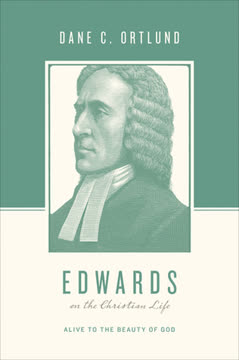
Readers largely praise Edwards on the Christian Life as a devotional and theologically rich introduction to Jonathan Edwards' thought, highlighting beauty as the central theme of his theology. Ortlund's writing is frequently described as worship-inducing and soul-stirring. Most criticism centers on the final chapter, where some feel his critiques of Edwards are insufficiently supported, while one reviewer notably faults the omission of Edwards' slave-ownership from those critiques. Overall, the book earns high marks for accessibility and spiritual depth.
People Also Read