Key Takeaways
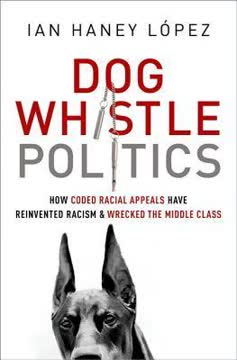
1. Dog Whistle Politics: Coded Racial Appeals Undermine the Middle Class
American politics today—and the crisis of the middle class—simply cannot be understood without recognizing racism’s evolution and the power of pernicious demagoguery.
Coded communication. Dog whistle politics refers to coded racial appeals that manipulate hostility toward nonwhites, driving broad segments of white voters to adopt self-defeating hostility toward government. These messages operate on two levels: they are inaudible and easily denied in one range, yet stimulate strong reactions in another, allowing politicians to appeal to racial anxieties without explicitly using racial slurs. This subtle manipulation has profoundly reshaped American politics and contributed to the economic struggles of the middle class.
The "punch, parry, kick" dynamic. Modern racial pandering follows a distinct three-part choreography. First, politicians "punch" race into the conversation through thinly veiled references to threatening nonwhites, such as "welfare cheats" or "illegal aliens." Second, they "parry" charges of racism by emphasizing the lack of direct racial epithets or group references. Finally, they "kick" back, savaging critics for "opportunistically alleging racial victimization" or "playing the race card."
Economic consequences. The ultimate impact of dog whistle politics is to convince middle-class voters that government, rather than concentrated wealth, is the greatest threat to their well-being. This manipulation leads them to support policies that primarily favor the extremely wealthy, such as tax cuts for the rich and deregulation, while simultaneously dismantling government commitments essential to supporting a vibrant middle class. The result is an economic crisis marked by dramatic increases in wealth at the top and severe strains for almost everyone else.
2. The Southern Strategy: How Republicans Became "The White Man's Party"
On the night he lost the 1958 election, Wallace sat in a car with his cronies, smoking a cigar, rehashing the loss, and putting off his concession speech. Finally steeling himself, Wallace eased opened the car door to go inside and break the news to his glum supporters. He wasn’t just going to accept defeat, though, he was going to learn from it. As he snuffed out his cigar and stepped into the evening, he turned back: “Well, boys,” he vowed, “no other son-of-a-bitch will ever out-nigger me again.”
Wallace's transformation. The origins of dog whistle politics trace back to George Wallace, who, after losing his first gubernatorial race as a racial moderate, vowed to become a staunch segregationist. His epiphany came after his "stand in the schoolhouse door" in 1963, where he realized that hostility toward blacks was widespread nationally and could be exploited using seemingly non-racial language like "states' rights" and "federal overreach." This marked a shift from overt white supremacy to a more coded form of racial appeal.
Goldwater's racial gambit. The 1964 presidential election saw Barry Goldwater, a conservative Republican, explicitly adopt a "Southern Strategy." He aimed to win white votes by appealing to racist sentiments, even if it meant alienating black support. Goldwater's campaign used coded terms like "states' rights" and "freedom of association" to signal his opposition to civil rights, effectively transforming the Republican Party into "the White Man's Party" in the eyes of many white voters, particularly in the Deep South.
Nixon's consolidation. Richard Nixon, initially a moderate, quickly adopted Wallace's refashioned racial demagoguery in his 1968 presidential campaign. He used phrases like "forced busing" and "law and order" as racial codes to appeal to white fears, especially in the North. This strategy, later formalized by Nixon's special counsel John Ehrlichman as "going after the racists," solidified the GOP's racial alignment and demonstrated that coded racial appeals could be a national, not just regional, path to electoral dominance.
3. Strategic Racism: A Cold, Calculating Tool for Power and Wealth
Strategic racism refers to purposeful efforts to use racial animus as leverage to gain material wealth, political power, or heightened social standing.
Beyond traditional racism. Strategic racism is distinct from other forms of racism like individual hate, structural inequality, or implicit bias. It describes the cold, calculating decision by political and economic elites to manipulate racial divisions not out of personal animosity, but to achieve self-interested goals such as winning elections, securing wealth, or maintaining social status. This form of racism is fundamentally about power and profit, with racial animus serving as a means to an end.
Convict leasing as an example. The post-Civil War system of convict leasing exemplifies strategic racism. With the end of slavery, Southern elites systematically created a criminal justice system designed to re-enslave black Americans, using trivial offenses to imprison them and then leasing them out for brutal labor. This system, which generated immense profits for governments and corporations, was a purposeful shift in labor extraction, demonstrating how racial exploitation can be reinvented to protect white financial interests and maintain social control.
Reinventing racism. Strategic racists do not necessarily create racial ideas from scratch; instead, they reinvent existing racial beliefs and stereotypes to suit new political and economic contexts. By legitimizing, energizing, and stimulating racial divisions, strategic racism gives renewed life and staying power to the destructive project of racial hierarchy. It transforms racial prejudice into a potent political weapon, ensuring that racism remains a central, evolving force in society.
4. Reagan's Legacy: Racial Appeals Justified Wrecking the Middle Class
For Reagan, conservatism and racial resentment were inextricably fused.
Fusing conservatism and race. Ronald Reagan, unlike his predecessors Wallace and Nixon, was a lifelong conservative who intuitively understood the power of racial provocation. He seamlessly fused his anti-New Deal ideology with dog whistle themes, making conservatism and racial resentment inseparable. Reagan's campaign rhetoric, such as his repeated invocation of the "Chicago welfare queen" and "strapping young bucks" buying T-bone steaks with food stamps, demonized welfare recipients and implicitly linked them to lazy, larcenous black individuals.
Blaming minorities for economic woes. Reagan's racial appeals served a crucial purpose: to convince white voters that the real danger in their lives came from an intrusive government showering benefits on undeserving minorities, rather than from concentrated wealth. This narrative helped justify massive tax cuts for the rich, deregulation, and cuts to social services, effectively transferring wealth from the middle class to the super-rich. The middle class became convinced that government was the primordial threat, leading them to support policies that ultimately harmed their own economic interests.
The "traditional individual." Reagan's rhetoric resurrected the idea of the "rugged individual" from the pre-New Deal era, but with a racial twist. This "traditional individual" was now resentful of government efforts to force unwanted racial integration and perceived government help as a handout to minorities. This shift in perception allowed plutocratic policies, which voters had previously rejected, to gain widespread support by being framed as a defense against threatening minorities and an overreaching liberal state.
5. Colorblindness: A Shield for Racism and White Victimhood
Colorblindness shifts the harm of racism from degradation, exclusion, and exploitation, to being treated differently on the basis of a socially irrelevant characteristic—no matter how benign the motive.
Hijacked ideal. The concept of "colorblindness," originally an aspirational ideal from Justice John Marshall Harlan's dissent in Plessy v. Ferguson and later a rallying cry for civil rights lawyers like Thurgood Marshall, has been hijacked by conservatives. They redefine it to mean that government should never take race into account, even to remedy historical injustices. This rigid interpretation allows them to oppose affirmative action and other race-conscious remedies by claiming such efforts constitute "reverse discrimination" against whites.
Denying systemic racism. Conservative colorblindness operates by portraying race as merely a superficial biological characteristic, disconnected from social context or historical practices. This "race-as-blood" argument dismisses the idea that social dynamics give race tremendous salience in individuals' lives and communities' trajectories. By divorcing race from its social and historical roots, colorblindness effectively denies the existence of systemic racism against nonwhites, making it impossible to address deep-seated inequalities.
White victimization. This framework also enables the narrative of white victimization. If racism is simply treating someone differently based on race, then affirmative action, which considers race to promote equality, can be framed as racism against whites. This allows conservatives to portray whites as the true victims of racial discrimination, while simultaneously justifying white dominance by attributing minority failures to "defective cultures" rather than ongoing racism. This narrative provides crucial cover for dog whistle politics, allowing demagogues to insinuate minority inferiority while denying any racial intent.
6. Dog Whistle Evolution: Democrats Adopt Tactics, New Racial Targets Emerge
Clinton’s pandering to dog whistle sensibilities extended well beyond the campaign trail. In fact, he made them a centerpiece of his administration’s accomplishments.
Bipartisan normalization. Dog whistle politics, initially a Republican strategy, became bipartisan with Bill Clinton's presidency. As a "New Democrat," Clinton adopted coded racial appeals to attract white voters, demonstrating his toughness on crime (e.g., the execution of Ricky Ray Rector) and hostility to welfare (e.g., ending Aid to Families with Dependent Children). This shift normalized dog whistle tactics across the political spectrum, making them a standard feature of American electoral competition.
New racial targets. While African Americans remained a primary target, dog whistle politics evolved to include new racial specters. After 9/11, the Bush administration's response, including dragnet detentions of "Arab Muslim" men, fueled a new wave of racialized fear. Similarly, the "illegal alien" threat, primarily targeting Latinos, gained urgency, framing immigrants as national security risks, cultural invaders, and criminals. Both parties, including the Obama administration, adopted harsh policies against these groups, demonstrating the expanding scope of dog whistle racism.
The "race card" defense. The "punch, parry, kick" dynamic continued to be central. When criticized for racial pandering, politicians would deny racial intent and accuse critics of "playing the race card," effectively silencing substantive discussions about race. This tactic, combined with the strategic use of nonwhite spokespersons (e.g., Clarence Thomas, Herman Cain, Tim Scott, Marco Rubio) to front conservative agendas, further insulated dog whistle politics from accusations of racism, even as it continued to fuel racial anxieties.
7. The Tea Party & Romney: Makers vs. Takers, Fueled by Racial Anxiety
The fire that put many Tea Partiers into the streets in 2009 and into the voting booths in 2010 was a fury at Obama himself—an opposition so deep it led many to firmly believe that Obama could not legitimately be president at all.
Post-2008 resurgence. The election of Barack Obama, the nation's first black president, ignited a powerful backlash that fueled the rise of the Tea Party movement. This movement, predominantly white, was animated by intense hostility toward Obama, often rooted in racial anxieties and a deep-seated belief that he was not a legitimate president. The Tea Party's core concerns—welfare, undocumented immigrants, Arab Muslims, and Obama himself—were all deeply intertwined with dog whistle themes.
"Makers and Takers" rhetoric. Mitt Romney's 2012 campaign, particularly his "47 percent" remarks, exemplified how dog whistle politics conjoined racial demagoguery with plutocratic policies. Romney implicitly racialized the "takers" as those dependent on government handouts, while portraying "makers" as hardworking, tax-paying individuals. This rhetoric, despite being factually inaccurate, resonated with white voters and justified policies like tax cuts for the rich and drastic cuts to social services, aligning with the extreme anti-government vision of his running mate, Paul Ryan.
Undermining democracy. Beyond dog whistling, the right also employed tactics to suppress the votes of minorities and the poor, including restrictive voter ID laws and gerrymandering. These efforts, often spearheaded by organizations like True the Vote and funded by wealthy donors, reflected a disdain for democratic processes and aimed to reduce the voting power of Democratic constituencies. This combination of racialized rhetoric and electoral manipulation further entrenched conservative power and obstructed the will of the broader electorate.
8. Commonsense Racism: Why White Voters Unconsciously Respond to Dog Whistles
It seems that dog whistle politicians manipulate these background views and emotions, but succeed with most whites only so long as the racial appeals stay below conscious recognition.
Unconscious reception. Most white voters who respond to dog whistle appeals do so unconsciously, not as overt racists. Studies, such as those on the Willie Horton campaign, show that racial appeals are most powerful when they contain racial content but are not consciously recognized as racial. When the racial nature of the message is explicitly pointed out, its power often diminishes, suggesting that many whites consciously reject overt racism but are susceptible to subtle, implicit racial cues.
The "commonsense" of race. This unconscious receptivity is rooted in "commonsense racism," which refers to the pervasive, ordinary, and often unquestioned racial beliefs that operate as "obvious" truths in society. These beliefs are shaped by four interconnected forces:
- Social learning: Media representations often reduce nonwhites to stereotypes, reinforcing racial archetypes.
- Environment: Segregated neighborhoods and wealth disparities make race seem real and relevant, confirming stereotypes.
- Cognitive routines: The human mind's tendency to categorize automatically, and to experience losses more intensely than unrealized gains, facilitates racial biases.
- Motives: Whites are often drawn to racial ideas that protect their self-image, affirm their innocence, and legitimize their privileged social position.
Imagined losses. Dog whistle politics thrives by convincing many whites that their economic hardships and declining opportunities stem from the increasing presence and demands of nonwhites, rather than from complex economic forces or policies favoring the wealthy. This creates a sense of "imagined losses" that far outweighs any actual material costs of integration, leading whites to blame minorities for their woes and support policies that ultimately harm their own interests.
9. Obama's Post-Racial Strategy: Silence on Race, Retreat from Liberalism
For Obama, to be post-racial meant to eschew any mention of race, and if this meant largely abandoning efforts to specifically promote racial justice, then so be it.
A squandered opportunity. Obama's election in 2008 presented a rare opportunity to shift American politics back toward liberalism, as conservative ideas were discredited by the financial crisis and ongoing wars. However, Obama adopted a "post-racial" strategy, choosing to avoid entanglement with race and often echoing conservative rhetoric to foster compromise. This cautious approach, driven by a fear of being racially targeted as a black liberal president, led him to shy away from robustly endorsing liberal solutions and contributed to the conservative resurgence.
Post-racialism's core tenets. Obama's post-racialism, while acknowledging race's historical relevance, strategically avoids public discussions of contemporary racism. It tends to define "racism" narrowly as individual bias, refusing to connect past injustices to broader structural dynamics or prevalent cultural beliefs. This approach, exemplified by his "beer summit" after the Henry Louis Gates arrest, aims to defuse racial controversies by downplaying race's salience and equating reactions to racism with racism itself.
Betraying minorities and the middle class. By largely abandoning race-targeted initiatives and shying away from full-throated endorsements of liberal programs (which are often racialized by dog whistle politics), Obama's post-racial strategy ultimately failed to address persistent racial inequalities. It also inadvertently reinforced dog whistle themes by legitimizing white resentments and portraying liberalism as a politically unwise distraction. This approach, while perhaps achieving limited liberal gains in the short term, ensured that racial demagoguery would continue to limit liberalism and harm the middle class in the long run.
10. Ending Dog Whistle Politics: Proactive Steps for a Liberal Future
In today’s dog whistle political climate, silence on race spells defeat for liberalism and the middle class.
Demography is not destiny. The belief that changing demographics will naturally end dog whistle politics is a dangerous delusion. The Republican Party has become deeply racialized, and dog whistling will continue to evolve, targeting new anxieties around issues like education and economic competition with China. Furthermore, the GOP actively seeks to recruit nonwhite voters and may even contribute to expanding the definition of "white" to maintain its electoral base, demonstrating that proactive efforts are essential.
Politicians must lead. Liberal politicians, especially white ones, must articulate and govern according to a positive liberal vision, consistently identifying the "malefactors of great wealth" as the true culprits behind economic inequality. They must also actively encourage appointees and allies to address race directly, pushing back against the "race card" accusation. Silence on race, as Obama's presidency demonstrated, only cedes the public square to racial demagogues and ensures liberalism's defeat.
Reclaiming "racism" and building movements. Civil rights organizations must reclaim and reinvigorate the language of "racism" as a moral indictment, expanding its definition to include unconscious, structural, and strategic forms. They need to spark a new, multiracial economic justice movement, pushing for "targeted universalism" that addresses specific racial inequalities while pursuing universal goals. Foundations and unions must support these efforts, bolstering liberal ideals and countering the well-funded right-wing propaganda machine that has systematically undermined liberalism for decades. Individuals must consciously consider race, speak out against racial demonization, and pressure politicians to restore government as a tool for liberty and opportunity for all.
People Also Read