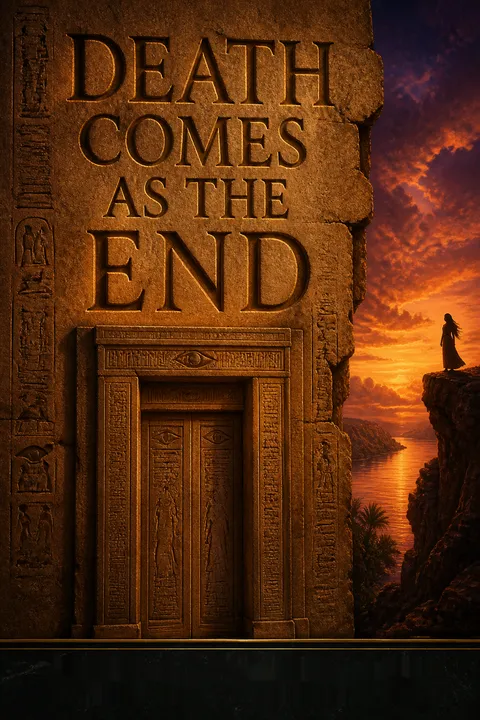

Plot Summary
Homecoming Shadows Stir
Renisenb, recently widowed, returns with her young daughter to her childhood home on the Nile's west bank. She seeks comfort in the unchanging patterns of family and ritual, surrounded by her fretful brother Yahmose, boisterous Sobek, and shrewd old grandmother Esa. Beneath the familiar surface ripples of sibling arguments and bustling domesticity lies an unspoken tension—a nostalgia for lost innocence and denial of personal change. The atmosphere is heavy with both comfort and disquiet, as Renisenb tries to convince herself that nothing has changed. Yet, an uneasy sense lingers; family roles, once protective and warm, now carry the seeds of unrest and transformation. Renisenb's yearning for safety is palpable, but the encroaching presence of time and loss foreshadows that beneath still waters lie powerful, unseen currents about to surface.
Family Faultlines Exposed
As the household prepares for the patriarch Imhotep's return, the fractures between family members widen. Yahmose, weighed down by anxious responsibility, is cowed by the dominance of both his wife Satipy and his father's authority. Sobek grumbles about his lack of freedom, while his wife Kait focuses all her energy on her children, weaponizing domestic routine as both shield and weapon. Youngest brother Ipy feels overlooked, smoldering with envy and precocious ambition. Henet, the persistently maligned companion, fans family discord with whispering self-pity and veiled malice. Old Esa, sharp-eyed, remains an observer and sometimes a judge, noting that dependence breeds both resentment and inertia. The domestic tensions, once sources of irritation, feel newly volatile—primed for the introduction of something, or someone, that will shift the balance irrevocably.
The Concubine Arrives
Imhotep returns not only with news and authority, but with his beautiful, city-bred concubine Nofret. Her youth and outsider status ignite instant hostility in the family, especially among his sons' wives, Satipy and Kait. Nofret's presence shatters the fragile veneer of familial unity, embodying both the allure and the threat of change. Her haughtiness invites envy and contempt, and her close relationship to Imhotep puts her at the center of the household's inheritance anxieties. Renisenb, observing the family's response, recognizes that Nofret's arrival is a catalyst—she destabilizes alliances and heightens old rivalries. The family's simmering resentments find a new focal point, while Nofret herself becomes an object of both fascination and fear, casting a long shadow over the household.
Storms of Jealousy
Nofret does not seek to ingratiate herself, instead asserting claims to space, privilege, and influence, stoking old animosities into open dispute. Satipy and Kait, forced to show ceremonial respect, instead plot petty persecutions and form a cold alliance that excludes Nofret. Imhotep, self-important and preoccupied, fails to appreciate the discord he has unleashed. Even Sobek and Ipy are stung by perceived slights, their ambitions thwarted. Minor insults escalate: ruined clothing, spiked food, and clandestine complaints. Meanwhile Henet, ever watchful, inserts herself as both confidant and informant, enjoying the burgeoning chaos. The once lively, noisy household is now fraught with tension; the women's war, waged by both words and sabotage, marks the shift from mere rivalry to genuine malice—a battle for survival within the ancient walls.
Schemes and Suspicions
Nofret's complaints and manipulations escalate, her alliance with Imhotep threatening the family's inheritance. She exploits Kameni, a clever young scribe and cousin, to document reported abuses, and tasks Henet with surveillance, ensuring every slight is reported. As Imhotep prepares to leave for his northern estates, he entrusts Nofret's well-being to the care of the family, explicitly instructing the others to treat her with honor. This further enrages the sons and their wives, who see their futures slipping away with every favor Nofret gains. In private, conversations grow dark: Satipy advocates violence; Sobek boasts of his willingness to act. The drama shifts from words to intention, as the characters weigh the cost and necessity of removing the disruptive intruder by any means necessary.
Poisoned Roots Spread
As resentment curdles toward action, Nofret's campaign of complaint leads Imhotep to threaten his children's disinheritance. The prospect of losing both home and status unites the previously fractious siblings and their wives—now bound together by mutual hatred of Nofret. Tensions escalate dramatically as several family members consider murder, rationalizing that the removal of a single, hated woman could restore harmony and security. Meanwhile, friendships and affections turn brittle; Renisenb, once the heart of familial warmth, is buffeted by doubts and dread. The atmosphere is febrile, suffused with the double threat of personal vendetta and supernatural curse. In the crucible of shared fear and desperation, the family's secrets ferment into something truly dangerous.
Strangers in the House
Kameni's presence as a northern outsider, trusted by Imhotep and now close to both Nofret and Renisenb, adds new danger and rivalry. Henet manipulates alliances, subtly aligning with whichever family faction seems most likely to prevail. Kameni's affection for Renisenb stirs jealousy both in her and in Nofret, while Renisenb's feelings for Kameni awaken confusion, longing, and guilt—especially regarding her late husband, Khay. The newcomers serve as both catalysts and mirrors: Kameni, with his charm and ambition, and Nofret, with her pain and manipulation, reflect the desires, fears, and festering wounds within the family. Old boundaries blur, and allegiances become slippery. The house pulses with suspicion, longing, and the inexorable slide toward violence.
The Price of Power
In a moment of horror, Nofret is found dead at the base of the cliffs—an apparent accident, though the entire family is bound by a tacit pact of silence and mutual suspicion. The house is plunged into a paroxysm of relief quickly laced with fear: who among them bears responsibility? While Imhotep accepts the explanation of misadventure, old Esa and the perceptive Hori sense darker truths. The women tug the narrative toward exoneration, but Satipy's transformation into a shadow-haunted, trembling figure suggests the presence of crushing guilt. The fragile peace created by Nofret's absence is poisoned by the knowledge that a murderer walks among them, and that violence, once introduced, cannot easily be contained.
Death on the Cliff
As the household careens from one shock to the next, Satipy plunges to her death from the same cliffs that claimed Nofret. Those present see terror and recognition in her final moments—a fear not of a supernatural pursuer but of a living, deadly force. Family and servants alike seize on the idea of haunting, but beneath this is the gnawing certainty that the house has become a nest of evil. Questioning and accusation swirl, but no resolution soothes the sense of doom. Already, eyes turn toward Imhotep's house as accursed—a place where those who once felt safest now anticipate further tragedy, where the perpetrator of violence is emboldened by impunity, and where each family member trembles at each knock, each meal, each shadow.
The Family Unravels
After Nofret and Satipy's deaths, the family becomes a collection of suspects, bound together by fear and shared complicity. Yahmose and Hori, on one side, quietly seek the truth. Old Esa sharpens her suspicions to a point—convinced someone among them has a master plan. Kait hardens to steely self-interest, keen only on her children's fate. Sobek and Ipy fall to squabbling and resentment, both suddenly at risk. Meanwhile, mysterious accidents—food poisoning, missing jewelry, evidence planted—stoke the sense of inescapable doom. Each character nurses private grievances and suspicions; trust is impossible. Esa's attempts to detect the culprit amount to a psychological inquest, probing for whoever is best served by this string of deaths, even as all are desperate to avoid that spotlight.
Rituals and Restlessness
In an attempt to stem the tide of misfortune, Imhotep and the family make religious and magical appeals, including petitions to the dead and the gods. Underneath the rites, however, is the sense that neither ritual nor reason can stem the chaos. Even as more deaths occur—first through overt violence, then through insidious, accumulating poison—grief is subdued by the new normal of suspicion and dread. The characters revert to rite and hierarchy for reassurance, but find only emptier forms; Imhotep is reduced to a shadow of his former self, the authority he wielded now pathetically ineffective. The truth remains elusive: evil persists, disguised as both accident and vengeance, inherent in the house itself.
The Ghost That Haunts
With each death, whispers of Nofret's vengeful ghost grow louder, providing everyone a comforting explanation for their horror yet insulating the real killer. The tale of a "woman in Nofret's necklace" seen on the night of the poisonings adds supernatural gloss, but characters like Hori and Esa remain unsatisfied. They recognize that the real evil is living, not spectral, and that the only way to end the cycle is to unmask the murderer. The line between hidden guilt and open accusation is blurred. Those who know too much, such as Esa, find themselves in peril, while those who continue to believe in haunting prove easy prey. The cycle of violence, superstition, and scapegoating accelerates.
Shifting Roles, Secret Pain
As the house reels from tragedy, roles reverse: meek Yahmose shows flashes of hidden will; weak Kait reveals ruthless cunning; even Ipy, perennial child, turns calculating. Esa warns that "people are like a tomb's false door—they become the stories they tell about themselves". Under pressure, old masks fall, true selves break through—sometimes startlingly dark. Everyone is a suspect, everyone frightened. Affection is colored by suspicion—can one love a potential killer? Renisenb struggles to make sense of her shifting family, realizing that survival in such a corrosive atmosphere requires a new kind of courage and the abandonment of comforting fictions. Nothing and no one remain quite what she thought.
Poison in the Cup
As poison's slow damage claims both Yahmose's health and Sobek's life, the evidence of murder becomes undeniable. Investigations ensue, using servants as witnesses; a supposed vision of "Nofret's ghost" turns out to be a deliberate human impersonation. Suspicion falls on various women—Kait, Henet, and even Renisenb herself—while Imhotep is reduced to helpless, repetitive grief. The discovery of planted evidence (a broken amulet, a necklace) reveals double-layered deceptions. Each family member must confront whether the avenger is truly among them, and, if so, whether this is the work of private hatred or a broader, coldly rational pursuit of power. The household is brought to the verge of revelation, but the price is further, more intimate loss.
Knowledge and Confrontation
Old Esa's relentless questioning and gathering of clues bring her close to the truth—but at fatal cost. The killer, threatened by her insight, dispatches Esa by stealthy poison, proving that seniority, prudence, and wariness are no safeguards. The family is left further isolated, robbed of wisdom and clarity, while the murderer remains at large, now deadlier and more desperate than ever. Attempts at confrontation are stymied—Henet, even as she is alternately suspected and innocent, remains a vessel of corrosive knowledge and bitterness. Each character, confronting evidence and feeling the killer's gaze, must decide whether to risk revelation or retreat into sullen silence. The atmosphere is now one of total siege.
The False Door
As Renisenb reflects upon the "false doors" of tombs and people, she realizes the difference between appearance and reality is not just individual but systemic—including in herself. Proposals of marriage are debated as a matter of survival as much as love. Past alliances and relationships (Kameni and Nofret, Renisenb and Kameni, the lost Khay) are unearthed, only to complicate rather than clarify motivations. When Renisenb's finding of the broken amulet finally links Kameni's past with Nofret's, the deep psychological wounds of the living become clear. Renisenb faces, for the first time, the full weight of the family's losses, the limits of understanding, and the demands of agency. What must she become to survive and keep others safe?
The House Trembles
The last deaths are sudden and brutal: Ipy is drowned at the water's edge, and soon after, the aged and shrewd Esa succumbs to poisoned ointment. The machinery of suspicion and vengeance, wound so tight, breaks open completely. The survivors—Imhotep, Renisenb, Hori, Kameni, Kait, and Yahmose—must reckon with the possibility that anyone might be next. Even Henet, ever the survivor, now moves from malice to dread, confessing old wounds and old hatreds. The family's shared history, once a source of meaning, is now merely a ledger of injury and animosity. The house, which once offered haven, now holds only risk, and every comfort—food, routine, domestic order—is tainted by the question: whose hand is deadly?
The Old Wise Woman Dies
With Esa's mysterious, likely violent death, the family's last pillar of clarity falls. She departs with bitter insight and deeper loneliness—her suspicions unproven, her warnings possibly unheeded. Her absence sharpens the sense that not only has a personal relationship been lost, but a living link to wisdom, tradition, and stability. Her death, masked as natural, deepens the household's paranoia, for it is clear the killer is still active, still dangerous, and now bolder. Mistrust, once balanced by Esa's inquisition, now churns unchecked. For those left, survival depends not just on vigilance but also on the courage to confront the rot—the "evil of the heart"—directly, without illusion.
Revelations by the Tomb
In a last sequence of deception and confrontation, Renisenb walks alone by the tombs, summoned into peril by a cryptic message—unaware she is being drawn into a trap by the one she trusted most. The revelation is shocking: Yahmose, ever the gentle brother, is unmasked as the murderer, driven by lifelong resentment, bruised pride, and the corrosive effects of humiliation. Hori, ever the calm observer and ally, arrives in time to save Renisenb, killing Yahmose with a bow. The truth behind each murder falls into place: the killer, long overlooked, manipulated perceptions masterfully, masking lethal intention behind apparent illness and meekness. "Rottenness from within," as Hori terms it, found fertile ground, and only the courage of confrontation breaks the cycle.
Final Choices, Endings
As the dust settles, Renisenb must choose whether to embrace the safe, passionate life with Kameni or the more difficult, searching love with Hori. She recognizes the truth: masks and self-deceptions protected no one; agency and understanding demand honesty, risk, and self-knowledge. She chooses Hori, their bond forged through shared pain, loss, and the unblinking acceptance of what life—with its uncertainties—requires. The house's survivors begin the fraught work of healing, shadowed by both memory and the hope that new growth can emerge. The river flows, the crops will again rise from nourishing floodwaters. But the meaning of family, belonging, and safety is forever changed—reborn through death's transformative end.
Analysis
Ancient Egypt as timeless allegory of family rotChristie's Death Comes as the End transforms the classic country house murder into an intense, claustrophobic psychological drama about the deadly consequences of suppressed envy, ambition, and pain within families or any closed society. By relocating her familiar mystery machinery to ancient Egypt, she exposes the universality of jealousy, fear, and the capacity for violence—independent of era or culture. The book's central question—where does evil come from, and how do we fail to see it even in those closest to us—remains powerfully modern. Every character is forced to confront their own "false door", the difference between who they appear to be and who they might become under pressure. Christie rejects easy recourse to the supernatural, insisting on the essentially human origin of both love and malice. The novel's lesson is a warning against complacency: that the most perilous threats are those we refuse to see in our friends, our family, or ourselves. Only by embracing ambiguity, questioning received wisdom, and risking authentic connection can survival—and true understanding—be achieved. Death, here, is not simply the end, but the beginning of painful, necessary reckoning with the self.
Review Summary
Death Comes as the End is widely praised for its unique Ancient Egyptian setting, vivid atmosphere, and complex characters. Readers appreciate Christie's historical accuracy and psychological depth, with many noting the high body count and surprising murderer reveal. While some find the family drama slow-paced or the heroine naïve, most agree the novel stands apart from Christie's typical work. The mystery kept readers guessing, with the plot twist earning particular admiration. It's frequently described as a fascinating departure from her English-set mysteries.
Characters
Renisenb
As the central protagonist, Renisenb is a study in longing for safety and clarity amidst chaos. Initially she seeks only the restoration of lost innocence—a kind of emotional homecoming after widowhood. Her relationships with siblings, her daughter Teti, and the various household members reveal her as nurturing but largely passive, caught between tradition and individual agency. Psychologically, Renisenb's evolution is profound: her initial denial of change matures into a painful but necessary capacity for insight and action. She comes to question the essence of evil, the inscrutability of others, and her own capacity for discernment and courage. By the story's end, her choice between Kameni and Hori reflects a deeper decision: to accept the ambiguities and burdens of genuine selfhood over comforting illusion.
Imhotep
Imhotep, the family's imperious, self-satisfied ka-priest, is at once the architect of order and a source of chaos. His refusal to cede authority breeds resentment, his self-congratulation blinds him to discontent, and his indulgence of favorites (Ipy, Nofret) sows jealousy and fear. As crisis mounts, Imhotep becomes a shadow of himself, his authority hollow, his wisdom inadequate, his reliance on ritual and Henet's flattery pathetic. Psychologically, Imhotep's development is a tragic slippage from power to impotence—his inability to heed warning signs and his prioritizing of status over empathy both emblematic and critical of patriarchal inertia.
Yahmose
Yahmose appears as the dutiful, timid eldest son, endlessly anxious to please but stifled by domination from both wife and father. His psychological complexity—meek on the surface, roiling with decades of resentment and unmet needs beneath—makes him the most surprising of the characters. The cumulative disappointments and humiliations, coupled with Nofret's contempt, catalyze his transformation from victim to perpetrator. His crimes are both literal and symbolic, expressions of a self too long suppressed. Yahmose's trajectory illustrates the danger and unpredictability of hidden wounds and the darkness that can erupt when repression collides with opportunity.
Sobek
Sobek is the embodiment of bravado, impulsiveness, and a desire for autonomy—but beneath that, a man easily cowed by authority and circumstances. His marriage to Kait is more partnership than romance; Kait listens but rarely participates, letting Sobek's complaints pass without comment. He becomes both perpetrator (by talk) and victim (by fate), ultimately succumbing to poison through his own heedless actions. Sobek's function is as a red herring—a plausible suspect whose talk of violence never translates into real action, illustrating the distinction between noise and true threat.
Satipy
Satipy is the classic shrew—controlling, argumentative, and perpetually dissatisfied. Her bullying of Yahmose and rivalry with Kait marks her as both powerful and brittle. When Nofret's death occurs and Satipy is implicated, she nearly disintegrates under the weight of guilt and terror, becoming a fleeting shadow of herself before her fatal fall from the cliff. Psychologically, Satipy's collapse is both individualized (cowardice, unease with genuine power) and symptomatic of a collective unraveling. Her demise exemplifies how dominance built on fear is utterly vulnerable to the return of that same fear.
Kait
Kait appears soft, plodding, and dull—wholly devoted to her children, effective at deflecting Satipy's attacks through obstinate silence. Beneath this, however, lies a sharp self-interest, a ruthless willingness to do "whatever is best for the children," regardless of moral cost. Her emotional landscape is constrained to the private sphere of maternity; to others her motivations seem opaque, even dangerous. Kait's role is to demonstrate the dangers of insular love and the way self-protection can easily become a kind of passive cruelty, blind to the pain it inflicts on others.
Ipy
The youngest son, Ipy, is marked by arrogance and need. Endlessly indulged and manipulative, he gravitates toward whatever advantage is offered, seething with envy for his older brothers. His impetuousness and inability to understand consequences render him easily used and finally expendable; his murder marks the point at which the family's secrets and violence are no longer containable. Ipy's psychological arc, though brief, is a study of entitlement curdling into vulnerability, his outsider status setting him apart even as it seals his fate.
Nofret
Nofret's arrival is the spark for all that follows. Young, alluring, and deeply unhappy, she brings both the promise of pleasure and the threat of disruption. Her schemes, complaints, and manipulations are as much a product of her own pain and alienation as of malice; her true tragedy is her inability to find connection or protection. Her one-sided love for Kameni, and her exclusion by the family, drive her to harness every weapon at her disposal. In death she becomes the house's "ghost," a symbol of the way unresolved pain and injustice linger and metastasize in closed communities.
Hori
As Imhotep's man of affairs and quiet confidant, Hori is distinguished by his insight, detachment, and compassion. He alone sees through appearances—reading beneath surfaces, weighing motives instead of merely cataloguing actions. His role is both advisor and potential suitor; his steady counsel and protective acumen ultimately save Renisenb's life. Psychologically, Hori exhibits both wisdom and restraint, willing to act but slow to judge, able to articulate the core theme that "rottenness from within" is the real enemy. In choosing Hori, Renisenb chooses not just safety but the possibility of understanding, growth, and meaning beyond tradition.
Henet
Henet is at once a victim and an engine of pain: self-pitying, cringing, endlessly maligned, and deeply envious. Her ability to manipulate and ferret out secrets is unrivaled, though her motivations are opaque. Her true function is that of the house's "false door": appearing harmless, but summoning disaster through small betrayals, festering hatreds, and untold grievances. The psychology of Henet is complex: unable to attain love, she instead cultivates a twisted satisfaction in the suffering of those more fortunate. Her greatest power is in the knowledge she accrues and metes out, sparingly or maliciously, until the day that same knowledge puts her in fatal danger.
Plot Devices
Poison as Concealed Agency
Poison operates not only as a literal weapon but a symbol of insidious, untraceable malevolence. The use of subtle, cumulative poisonings (as with Yahmose) and staged accidents (Nofret's fall) makes culpability hard to establish, encouraging suspicion to fall upon anyone. The device of the "poisoned cup"—sometimes communal, sometimes individual—undermines the family's sense of safety in even the most basic rituals of nourishment. Poison in food and ointment reflects an evil that grows from within, impossible to wall off by social position or tradition. It also enables dramatic surprise: those apparently weakest or most harmless become the most dangerous.
The "False Door" Motif
The motif of the "false door"—a fixture of Egyptian tombs that seems to be a passage but is stone—echoes the ways characters hide true selves behind outward conformity and role. Satipy's dominance conceals weakness; Yahmose's meekness masks rage; Kait's stupidity hides calculated self-preservation; Henet's devotion is bitter envy. This structural device underpins much of the dramatic irony and delayed revelation: the narrative continually invites the reader (and Renisenb) to look beyond appearances, just as the characters themselves must. The ultimate "door" leads either to ruin or wisdom.
Shifting Narrative Perspective
Christie's careful control of close third-person viewpoint, often focalized through Renisenb (but not exclusively), invites the reader to participate in the confusion, longing, and horror as characters are alternately implicated and vindicated. This fuels the suspense: motives remain ambiguous, the reader feels implicated in the house's collective blindness and, finally, complicit in the inevitability of tragedy.
Superstition versus Rational Inquiry
The recurrent suggestion of supernatural agency—Nofret's ghost, curses, and rites—serves to externalize and deflect the uncomfortable truth that family members themselves are at fault. Rituals and magical thinking provide temporary solace, substituting for decisive action but also heightening vulnerability. Characters' superstitions are both shields from unbearable suspicion and tools of the real murderer, who exploits the plausible presence of supernatural wrath to cover his own actions.
Psychological Isolation and Familial Siege
The narrative's confinement to a single family estate, framed by the river, tombs, and ceremonial duties, places every relationship under intense scrutiny. The spatial confinement mirrors psychological isolation and intensifies the effect of every betrayal, death, and revelation. The estate itself becomes a crucible: there is literally no escape, for the enemy and the threat is always from within.
About the Author
Other books by Agatha Christie









Download PDF
Download EPUB
.epub digital book format is ideal for reading ebooks on phones, tablets, and e-readers.








































