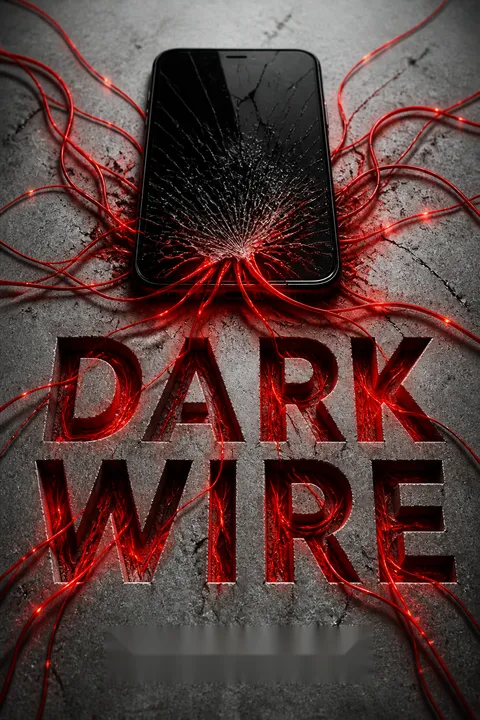

Key Takeaways
1. The Rise of Encrypted Phones in Organized Crime
"You weren’t a serious criminal unless you had an encrypted phone."
Evolving criminal tech. Organized crime underwent a significant technological leap with the advent of encrypted phones, moving beyond traditional communication methods. These devices offered scrambled text messages, removed features like cameras and GPS, and operated on private servers, making traditional wiretaps ineffective. This created a hyper-competitive underground industry, with dozens of firms vying to be the preferred secure communication provider for criminal syndicates worldwide.
Early adoption and innovation. Criminals initially favored BlackBerry Messenger (BBM) due to its perceived security, but soon sought more robust solutions from lesser-known firms. Companies like beStealth and later Phantom Secure emerged, offering customized BlackBerry handsets with enhanced encryption and features like remote wiping. This shift allowed criminals to communicate without fear, giving them a significant advantage in the surveillance arms race.
Global reach and lucrative business. The encrypted phone industry became incredibly lucrative, generating tens of millions in revenue for its operators. Distributors partied with escorts, bought luxury cars, and amassed fortunes, all while operating in obscurity. These phones became indispensable for international drug traffickers, weapons dealers, and money launderers, enabling them to control vast criminal empires remotely across continents.
2. Phantom Secure's Downfall: The Catalyst for a New Strategy
"Most ironically of all, one of the main things that Hanson relied on for his security while trafficking drugs—his encrypted phone—was the detail that convinced him that Wilson was a crime figure and not an FBI agent."
Violent drug empire. Owen Hanson, a former USC footballer, built a multimillion-dollar gambling and drug smuggling operation, known for its extreme violence in debt collection. He relied heavily on Phantom Secure encrypted phones, believing they offered impenetrable security, even using them to vet potential criminal partners like undercover FBI agent Al Wilson. Hanson's brazenness and desire to be seen as a gangster ultimately led to his downfall.
Unlocking secrets. Hanson's arrest and the subsequent seizure of his Phantom Secure phone provided the FBI and prosecutors, Andrew Young and Ben Katz, with an unprecedented trove of intelligence. Despite Phantom Secure's remote wipe feature, the FBI successfully secured the device, and Hanson's failure to change the default passcode allowed access to thousands of messages. This revealed the colossal scale of his international drug trafficking, far beyond initial suspicions.
Beyond one case. The intelligence from Hanson's phone opened law enforcement's eyes to the broader threat of encrypted communication companies. It became clear that Phantom Secure was not just enabling one gang but potentially thousands of criminals globally. This realization, coupled with the frustration of traditional wiretaps being useless, spurred the San Diego FBI and prosecutors to target Phantom Secure itself, marking a pivotal shift in their strategy against organized crime.
3. The Audacious Plan: FBI Secretly Runs Its Own Encrypted Network
"What would it be like to see the messages of all of the users of one of these phone companies?"
A novel legal approach. Frustrated by the limitations of traditional investigations and the failure to infiltrate Phantom Secure directly, the San Diego team, led by prosecutor Andrew Young and FBI agent Nicholas Cheviron, sought a new strategy. They leveraged the Racketeer Influenced and Corrupt Organizations (RICO) Act, typically used against mafia bosses, to target Phantom Secure as a criminal enterprise. This aggressive legal stance allowed them to pursue a Canadian company for crimes linked to San Diego.
The informant's offer. A critical breakthrough came when Australian police offered a confidential human source (CHS) – a Phantom Secure distributor named David. David's infiltration led to a face-to-face meeting with Phantom Secure CEO Vincent Ramos, where Ramos unwittingly admitted to facilitating drug trafficking and offering evidence-wiping services. This provided crucial evidence for a RICO charge.
Anom's extraordinary proposition. After Ramos's capture and Phantom Secure's shutdown, David (Afgoo) made an astonishing offer: he would build a new encrypted phone company, Anom, for the FBI to secretly control. This presented an unprecedented opportunity for law enforcement to not just infiltrate, but run a backdoored encrypted network, turning the criminals' own tool against them and fundamentally undermining trust in the entire industry.
4. Anom's Covert Capabilities: A Digital Trojan Horse
"For every feature Anom users thought gave them more security, the FBI had a workaround that actually gave the agency more data."
Building a surveillance apparatus. Anom was developed by a team of unsuspecting coders in Asia, who believed they were creating a secure messaging app for corporations. Unbeknownst to them, the FBI, through Afgoo, directed the integration of covert features. These included:
- Message copying: Every message sent was secretly duplicated and sent to an FBI-controlled server.
- Hidden vault access: The "secure vault" for sensitive files automatically uploaded its contents to authorities.
- Unaltered images: Photo pixelating features still provided the original, unedited images to law enforcement.
Deceptive security features. Anom's design was a masterclass in deception, making criminals believe they were more secure than ever. The app was hidden behind a functional calculator, requiring a PIN to access. A duress password would supposedly wipe the device, but Anom had already sent all messages to the authorities. These features, intended to attract security-conscious criminals, became their downfall.
ArcaneOS: Total control. The custom operating system, ArcaneOS, was Anom's crown jewel. While it appeared to remove GPS functionality, it secretly enabled precise location tracking for nearly every device, attaching coordinates to every message. ArcaneOS also provided a "satellite-like view" of the entire network, allowing the FBI to push updates and maintain complete control, transforming Anom phones into powerful surveillance machines.
5. The "Influencer" Strategy: Criminals Unknowingly Selling FBI's Phones
"Instead of the sort of influencer who convinced their Instagram followers what skin product to buy, Ayik told serious organized criminals what encrypted phone they should use to traffic drugs."
Leveraging criminal credibility. Hakan Ayik, "The Facebook Gangster" and a top-tier Australian drug trafficker, became Anom's key "influencer" for international expansion. His reputation and extensive criminal network, including the "Aussie Cartel," lent immense credibility to Anom, convincing other high-ranking criminals to adopt the platform. Ayik's involvement was crucial for Anom to quickly gain traction and legitimacy in the criminal underworld.
Aggressive market penetration. Maximilian Rivkin, "Microsoft," a violent Swedish drug kingpin, further propelled Anom's growth in Europe. He aggressively undercut competitors like Sky, offered free phones, and used intimidation tactics, famously stating, "We move Anom like we move kilos." Microsoft's relentless sales efforts, combined with his own active drug trafficking on Anom, rapidly expanded the network's reach across the continent.
A self-feeding pyramid. The FBI's strategy was to allow Anom to grow organically, with criminals like Ayik and Microsoft doing the heavy lifting of distribution. This created a "pyramid scheme" where high-ranking criminals sold Anom phones to their subordinates, generating profits that unknowingly flowed back to the FBI. This hands-off approach minimized entrapment risks while maximizing the network's expansion and intelligence gathering.
6. The Vacuum Effect: Rivals' Demise Fuels Anom's Growth
"Encrochat’s dramatic and sudden exit left a crater in the encrypted phone industry. Desperately looking for an alternative, many Encrochat users who hadn’t been arrested now ran away from one trap straight into the claws of another: Anom."
Encrochat's collapse. In June 2020, French authorities successfully hacked Encrochat, a major encrypted phone provider with 60,000 users, by hijacking its update process to install malware. This allowed them to collect 100 million messages, leading to mass arrests across Europe and forcing Encrochat to shut down. The hack sent shockwaves through the criminal underworld, creating a desperate need for a new secure communication platform.
Sky Global's demise. The master plan continued with the coordinated takedown of Sky Global, another dominant encrypted phone company. In March 2021, European police hacked Sky, followed by a US indictment against its CEO and the seizure of its web domains. Sky's collapse, like Encrochat's, created a massive vacuum in the market, leaving tens of thousands of criminals scrambling for alternatives.
Anom's exponential growth. The FBI strategically positioned Anom to absorb these displaced users. Encrochat's downfall doubled Anom's user base, and Sky's demise tripled it to approximately 9,000 users, with up to a million messages harvested daily. The FBI even secretly supplied Google Pixel phones to meet the surging demand. This "waterbed effect" funneled criminals from compromised networks directly into the FBI's own surveillance platform, making Anom a top player in the underground market.
7. Unprecedented Intelligence: A Window into Global Crime
"The messages of over one hundred thousand Owen Hansons and their minions could appear in front of the agencies’ eyes."
A goldmine of data. Anom provided law enforcement with an unparalleled, real-time view into global organized crime. FBI agents, working in dedicated "wire rooms," sifted through millions of messages in dozens of languages, uncovering intricate details of criminal operations. The data allowed them to map out complex syndicates, identify key players, and understand their methods, from drug production to money laundering.
Revealing criminal networks. The FBI's in-house system, Hola iBot, visualized criminal networks, showing who communicated with whom and in which group chats. This revealed the interconnectedness of organized crime in the 21st century, with groups often collaborating across ethnic and geographical divides. Analysts could track the flow of drugs, weapons, and money, building comprehensive profiles of previously unknown high-value targets.
Shocking scale and sophistication. Investigators were astonished by the sheer scale and sophistication of the criminal activities revealed. They saw:
- Drug shipments measured in tons, not kilos.
- Elaborate concealment methods: cocaine in tuna cans, precursors in stone slabs, drugs in diplomatic pouches.
- Industrial-scale drug labs in Europe, producing hundreds of kilograms of amphetamine and meth.
- Money laundering operations moving €40-45 million weekly.
This intelligence shattered previous assumptions about the size and complexity of global organized crime.
8. The Human Cost: Threats to Life and Ethical Dilemmas
"What if a murder for hire were picked up in Anom messages, and the investigators were unable to scramble a team quickly enough to stop that murder, wherever in the world it might be?"
Intervening in violence. Anom's real-time intelligence presented constant ethical dilemmas for law enforcement. Agents frequently encountered threats to life, including planned kidnappings, torture, and murders. The FBI and its partners intervened approximately 150 times, often by providing anonymous tip-offs to local authorities, to prevent these violent acts. This required a delicate balance to save lives without revealing Anom's true nature.
Missed opportunities. Despite interventions, some tragedies could not be averted. The murder of Sascha on a Stockholm bridge, planned in excruciating detail on Anom, occurred before Swedish police had access to the platform. This incident, dubbed "The Bridge," became a stark reminder of the high stakes and the constant race against time in such operations. It pushed Swedish police to vow never to let such a killing happen again.
The spiral of paranoia. As police quietly disrupted criminal operations based on Anom intelligence, criminals grew suspicious, often blaming each other for leaks. This paranoia sometimes led to further violence, as syndicates targeted perceived informants. The FBI found itself in a difficult position, having to protect "bad guys" who were wrongly accused, further complicating the ethical landscape of the operation.
9. The Hawala and Crypto Connection: Financial Backbone of Crime
"By bringing Eizuldeen onto Anom, Microsoft had unknowingly opened a window into the hawala system and the traffickers’ use of Bitcoin."
Invisible financial networks. Anom provided unprecedented insight into the shadow economy that facilitated global organized crime. Money launderers like Abdullah Eizuldeen ("Bitcoin / Money Transfer") operated sophisticated hawala networks, moving vast sums of cash across continents without using traditional banks. This system, based on trust and a network of couriers, allowed criminals to transfer wealth quickly and invisibly.
Bitcoin's role in crime. Criminals increasingly adopted Bitcoin for its borderless and rapid transfer capabilities, despite its trackability. Eizuldeen offered services to convert cash to Bitcoin and vice versa, acting as an underground exchange for criminals. Anom messages revealed:
- Bitcoin wallet addresses and transactions.
- Cash pickup and drop-off locations.
- Unique serial numbers on banknotes used as "tokens" for secure exchanges.
This exposed the full scope of how cryptocurrencies were integrated into criminal finance.
Massive money laundering. The FBI tracked one money laundering syndicate on Anom that moved €40-45 million per week, stacking cash in soundproofed safe houses. This demonstrated the immense scale of illicit financial flows, far exceeding previous estimates. Anom's intelligence allowed law enforcement to map these complex financial pipelines, identifying key players and methods that were previously undetectable.
10. The Global Takedown: Operation Trojan Shield
"The twenty-four hours beginning on June 7, 2021, were going to be a nonstop, intercontinental line of dominoes. Ten thousand police around the world would act that day, in what would be the single largest law enforcement action in history."
Coordinated global strike. After years of covert operation, the FBI and its international partners planned "Operation Trojan Shield," a massive, synchronized global takedown. On June 7, 2021, 10,000 police officers across more than a dozen countries executed arrests, starting in Australia and moving westward with the sun. This unprecedented coordination aimed to disrupt organized crime on a global scale.
Massive arrests and seizures. The action day resulted in:
- Over 500 initial arrests, eventually surpassing 1,000.
- Seizures of 12 tons of cocaine, 1.5 tons of meth, 1.5 tons of amphetamine, 17 tons of precursor chemicals, 22 tons of hash/marijuana, and 300 firearms.
- Over €700 million ($761 million) in cash and other assets.
These figures continued to climb in the months and years following the initial raids, demonstrating the profound impact of the operation.
The reveal. The FBI publicly announced it had secretly run Anom, exposing the platform as a law enforcement honey pot. This revelation, following the earlier hacks of Encrochat and Sky, aimed to shatter criminals' trust in the entire encrypted phone industry. The operation was a testament to the San Diego team's audacious vision, transforming a "crummy office downtown" into the command center for the largest sting in history.
11. Shattering Trust: The Long-Term Impact on the Dark Wire
"Operation Trojan Shield has shattered any confidence criminals may have through the use of hardened, encrypted devices."
Undermining an industry. The public revelation that the FBI had secretly run Anom, combined with the earlier hacks of Encrochat and Sky, created widespread paranoia and distrust within the criminal underworld. The goal was to make criminals question the security of any encrypted communication platform, hoping they would abandon the technology altogether. This strategy aimed to fundamentally disrupt the "dark wire" ecosystem that had protected them for years.
Industry collapse. The impact was immediate and far-reaching:
- Anom's top sellers were indicted, with many arrested.
- Microsoft, Ayik, and other key figures were eventually apprehended.
- Ciphr, another major encrypted phone company, ceased operations entirely.
- Wickr, a popular secure messaging app, closed its free version and eventually shut down, partly due to its problematic user base.
The encrypted phone industry, once a thriving haven for criminals, largely collapsed under the weight of law enforcement infiltration.
Forcing a return to "traditional methods." Law enforcement hoped that by destroying trust in specialized encrypted devices, criminals would revert to older, less secure communication methods, making them easier to track. This strategic goal aimed to regain the upper hand in the ongoing cat-and-mouse game between police and organized crime.
12. The Unending Battle: Resilience of Organized Crime
"But even Anom, the biggest law enforcement sting in history, did not, and cannot, make a macro level dent in the drug trade."
Resilience and adaptation. Despite the unprecedented scale of Operation Trojan Shield and related investigations, organized crime proved remarkably resilient. While many leaders and networks were dismantled, new ones quickly emerged to fill the vacuum. The drug trade, particularly cocaine, continued to flourish, with record seizures in ports like Antwerp indicating an ever-increasing flow of narcotics.
The "vacuum effect" in reverse. The arrests of high-level criminals sometimes created power vacuums, leading to renewed violence as new players fought for control. In Sweden, for example, fatal shootings skyrocketed two years after the Encrochat hack, surpassing previous records. This highlighted the complex challenges of combating organized crime, where arrests alone may not address underlying systemic issues.
Ongoing debate and future challenges. The Anom, Encrochat, and Sky operations sparked significant debate regarding privacy, proportionality, and the legality of bulk interception. Defense lawyers challenged the use of harvested messages in court, and privacy advocates warned of a "slippery slope" where such powers could expand to target mainstream encrypted apps or lesser crimes. Law enforcement, however, views these large-scale operations as the future, constantly seeking the "next evolution" in their fight against an ever-adapting criminal underworld.
People Also Read







Download PDF
Download EPUB
.epub digital book format is ideal for reading ebooks on phones, tablets, and e-readers.








































