

Key Takeaways
Stop chasing pleasure — your real job is dodging pain
“The fool rushes after the pleasures of life and finds himself their dupe; the wise man avoids its evils…”
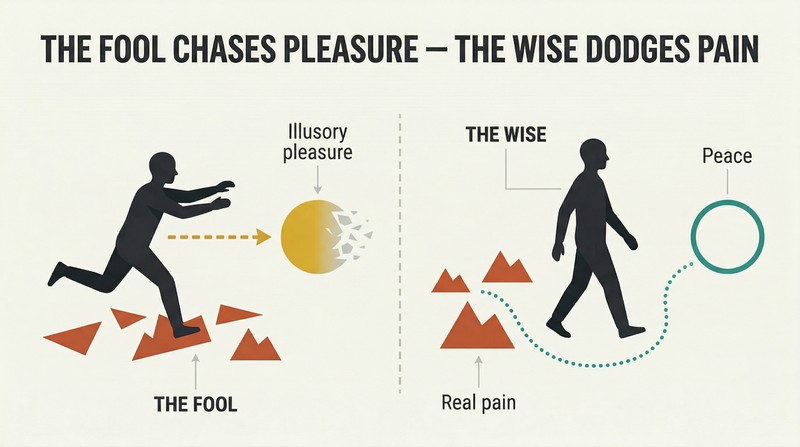
Schopenhauer's core thesis inverts the default assumption about happiness. Following Aristotle, he argues that pleasure is merely the negation of pain — pain is the positive, real element in life. When your whole body is healthy except for one sore spot, that single pain absorbs all your attention, erasing your sense of well-being. Pleasure works identically: it's the temporary removal of discomfort, nothing more.
This reframes the entire project of living well. Instead of pursuing delights, the wise person minimizes exposure to suffering. "To live happily only means to live less unhappily." Never purchase pleasure at the cost of pain — you're trading something real for something illusory. The alchemists searched for gold and discovered gunpowder, medicine, and natural laws; we search for happiness and, if wise, find experience and insight instead.
Honor every pain-free hour now — you'll mourn it later
“We live through our days of happiness without noticing them; it is only when evil comes upon us that we wish them back.”
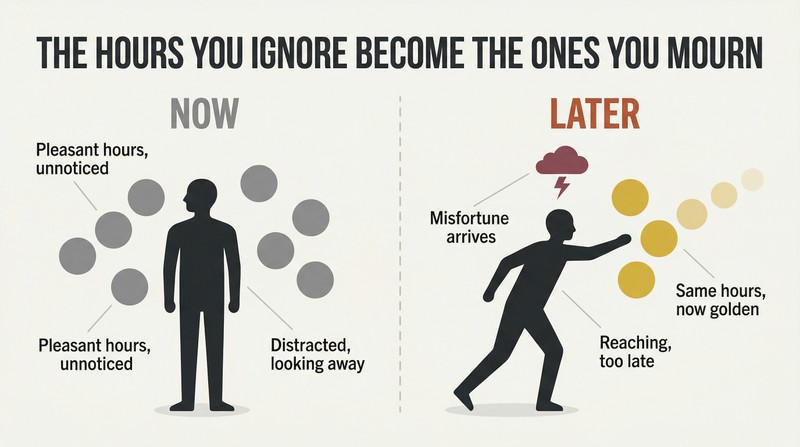
The present is the only reality. Schopenhauer warns against two traps: living entirely in the future like "donkeys chasing hay on a stick" fixed to their heads, and brooding over the past. Both steal from the only moment that actually exists. The future almost always turns out contrary to expectations; the past was different from how we remember it.
A thousand pleasant hours get wasted in ill-humor, recalled only with desperate longing once misfortune arrives. When you're sick, every healthy past hour seems like a lost paradise. Schopenhauer's remedy: cultivate full consciousness of every bearable moment's value. The ebbing tide carries each hour into the past, where memory transfigures it into something golden — but by then it's too late to enjoy it.
Shrink your expectations to widen your security
“There is no doubt that life is given us, not to be enjoyed, but to be overcome — to be got over.”
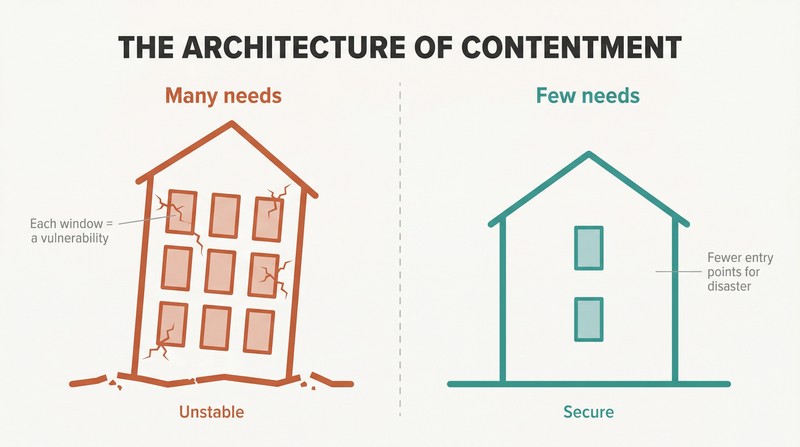
Schopenhauer treats happiness architecturally. While buildings need broad foundations for stability, happiness requires the opposite: the fewer things you need to be content, the fewer points of vulnerability exist. A life requiring wealth, status, love, health, admiration, and adventure is a house with a hundred windows — each one an entry point for disaster.
Don't make extensive preparations for life. Plans assume you'll live long enough to execute them, but time changes both your circumstances and your capacity for enjoyment. The wealth arrives too late, or you arrive too late for fortune. "It is extremely easy to be very unhappy; while to be very happy is not indeed difficult, but quite impossible." The golden mean — modest claims, modest exposure — is the only reliable strategy.
Treat solitude as a gold mine — and bring some into every room
“A man can be himself only so long as he is alone; and if he does not love solitude, he will not love freedom…”
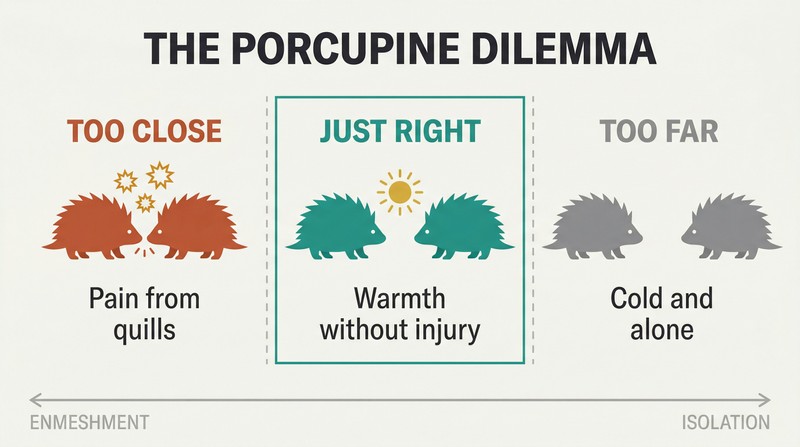
Schopenhauer's porcupine dilemma captures the fundamental tension of social life: porcupines huddle together for warmth in winter but prick each other with their quills. After many cycles of huddling and dispersing, they settle at a moderate distance — close enough for warmth, far enough to avoid pain. That moderate distance is what we call manners.
Sociability stands in inverse ratio to intellectual value. "Rascals are always sociable," Schopenhauer observes, because they cannot bear their own company. If you find society disagreeable but can't yet endure total solitude, carry your solitude with you: don't say everything you think, don't over-invest in others' opinions, and approach company like a fire — warm yourself at proper distance, or get scorched.
Character is permanent — read it in trifles, never expect change
“To forgive and forget means to throw away dearly bought experience.”
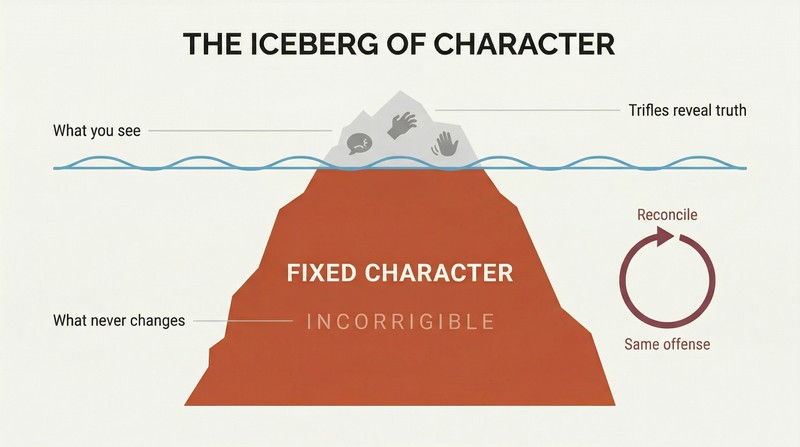
Watch how people handle small things. When someone is off guard in trivial matters — how they treat those who serve them, whether they appropriate what belongs to everyone — their true nature surfaces. "If he is inconsiderate and seeks only what is advantageous to himself" in trifles, he would be a scoundrel wholesale if law didn't bind his hands.
Never reconcile and expect different behavior. Character is incorrigible — all actions flow from an inward principle that does not bend. Reconciliation after a falling-out merely signals that you cannot get along without them, which emboldens repetition of the original offense. The same applies to rehired servants and re-trusted friends. Observe patterns, record them, and adjust your distance accordingly.
Never ruminate or decide at night — darkness distorts everything
“Each day is a little life: every waking and rising a little birth, every fresh morning a little youth, every going to rest and sleep a little death.”
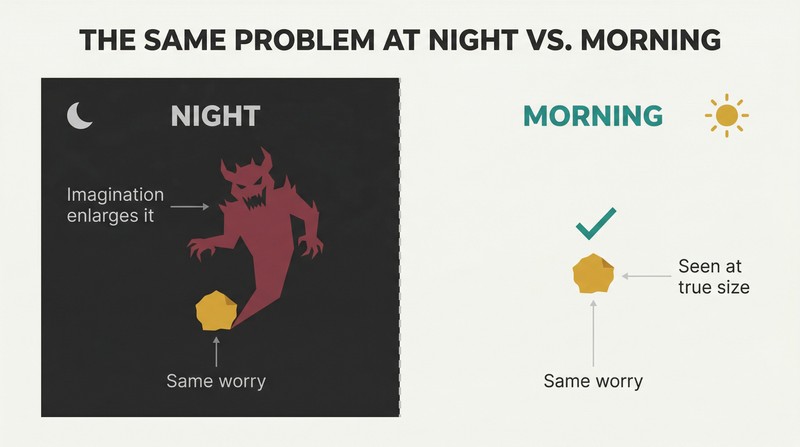
Schopenhauer maps the psychology of the day onto the stages of life itself. Morning is youth — bright, fresh, full of capacity. Evening is old age — languid, talkative, silly. Night is subjective darkness, where a relaxed intellect loses its grip and imagination runs unsupervised.
When we lie awake at night, worries that are manageable by daylight become terrifying — "as black and monstrous as possible." A Spanish proverb captures it: "The night is colored, the day is white." Schopenhauer's practical rule: never shorten the morning by sleeping late or wasting it on trivia. Reserve mornings for all serious efforts, mental and physical. Seize good moods when they arrive, and save dark subjects for daylight.
Displaying intelligence to others is an act of social aggression
“Intellect is invisible to the man who has none.”
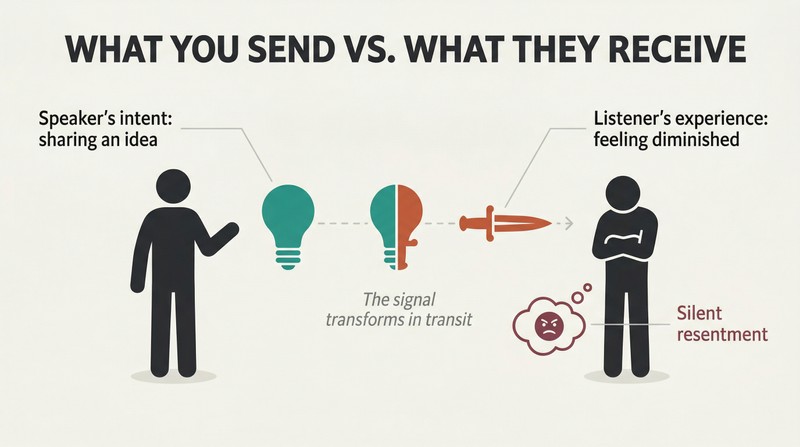
You cannot show your intelligence without indirectly telling others they lack it. When someone perceives a conversational partner as intellectually superior, they silently conclude that the superior party must view them as dim. This inference — even if never spoken — "rouses the bitterest feelings of sullen and rancorous hatred."
The social consequence is uncomfortable but important. People defer to rank and wealth, but intellectual ability receives no such courtesy — it is ignored at best, resented at worst. The Spanish writer Gracian advised that the only way to win affection is to wear the disguise of simplicity. Vanity is the quality people guard most jealously, and nothing threatens it more directly than encountering someone who is clearly, visibly smarter.
Channel hostility only into action, never into words or looks
“It is only cold-blooded animals whose bite is poisonous.”
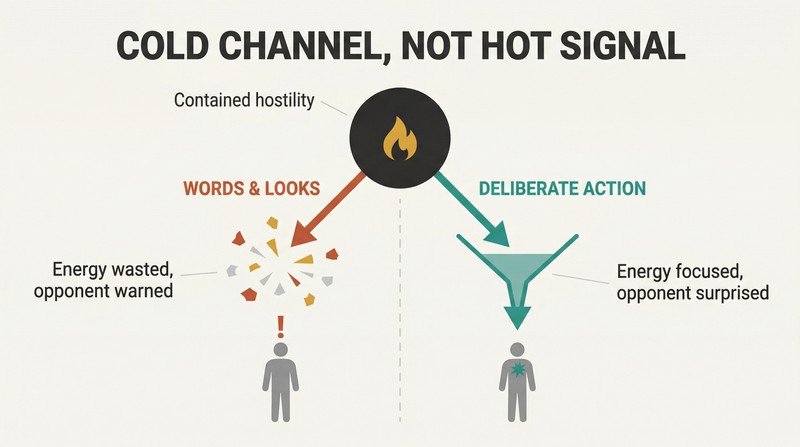
Expressing anger verbally or through hostile looks is unnecessary, dangerous, foolish, and vulgar, according to Schopenhauer. Anger and hatred gain their full force only when channeled exclusively into deliberate action. The moment you telegraph hostility through words or facial expressions, you waste it — alerting your opponent while satisfying nothing but impulsiveness.
The principle extends to everyday persuasion. If you want your judgment accepted, express it coolly and without passion. Vehemence makes people suspect your opinion is driven by emotional will rather than clear knowledge. Schopenhauer calls this "speaking without accent" — leaving others to discover what you've said rather than ramming it home. The quieter the delivery, the deeper it cuts.
Don't borrow from Time — rushing nature exacts ruinous interest
“There is no more thriftless proceeding than to try and mend the measured pace of Time.”
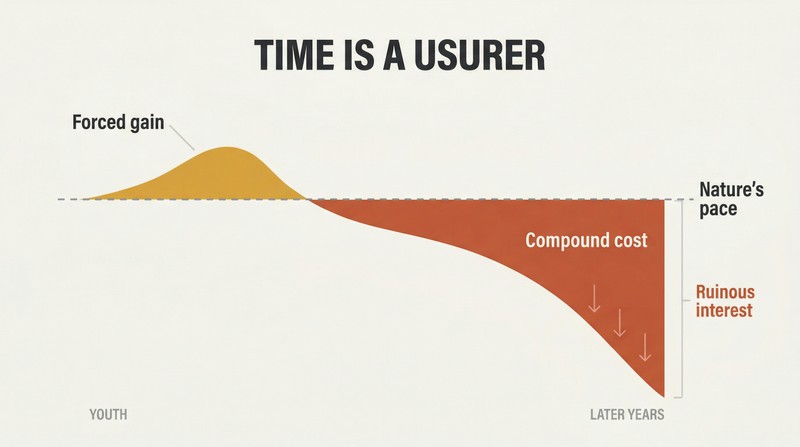
Schopenhauer compares Time to a usurer whose interest rates dwarf any moneylender's. A youth who forces his body to perform at nineteen what it could handle easily at thirty pays with the strength of his later years. An illness rushed through "recovery" becomes a lifelong chronic condition. Capital spent before its time creates permanent, deepening deficits.
The metaphor extends to all impatience with natural pace. You can force a tree to blossom early with artificial heat, but it will wither and die. Child prodigies pushed through hot-house education frequently become ordinary adults. Even Kant, Schopenhauer suspects, suffered second childhood from overwork in later life. The rule is universal: every shortcut from nature's schedule carries compound interest payable in health, capacity, or life itself.
After forty, life shifts from writing the text to reading the commentary
“Towards the close of life, much the same thing happens as at the end of a bal masqué — the masks are taken off.”
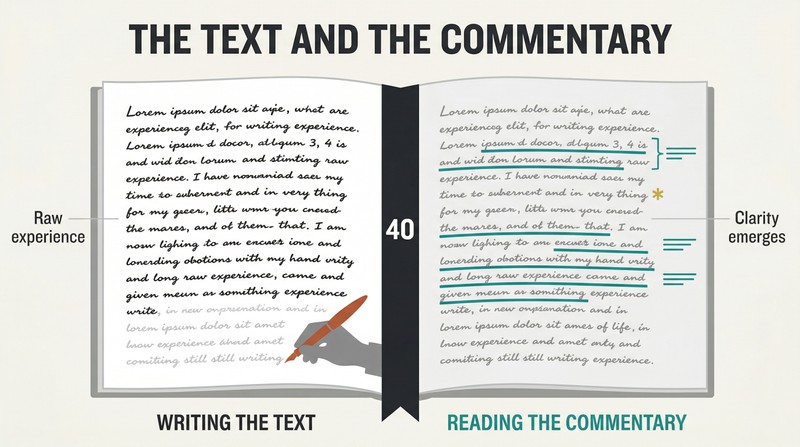
Schopenhauer assigns each decade a planetary ruler: Mercury at ten (quick and narrow), Venus at twenty (consumed by love), Mars at thirty (ambitious and combative), Jupiter at fifty (authoritative, at one's peak). Youth sees the world like a theatre set viewed from a distance — gorgeous, full of promise. Old age is the same scenery up close, where every crack is visible.
The compensation is clarity. Disillusion strips away what Schopenhauer calls the "phantoms of the brain," and the world finally appears as it is. The passions that tormented youth cool, intellect gains the upper hand, and — paradoxically — the old man grows more cheerful than the young, freed from the "forced labor" of desire. The first forty years supply raw experience; the rest reveal what it meant.
Analysis
Schopenhauer's Counsels and Maxims is routinely dismissed as the grumblings of a famous pessimist, but this reading misses its quietly radical project. Published in 1851 as part of his Parerga and Paralipomena, it represents one of the first modern attempts to build practical wisdom — what Schopenhauer calls eudaemonology — grounded not in religious morality but in an empirical assessment of human psychology.
The book's central insight — that happiness is negative (absence of pain) while suffering is positive (the default state) — anticipates by well over a century the research on loss aversion and negativity bias that Kahneman and Tversky would formalize. Where the Stoics recommended indifference and the Epicureans counseled moderate pleasure, Schopenhauer synthesizes both into something operationally sharper: treat life as intelligent damage control. This is strategic realism, not nihilism.
What gives the work enduring relevance is Schopenhauer's psychological acuity. His observations on envy, the masks people wear, and the inverse relationship between intelligence and sociability read more like empirical social psychology than 19th-century metaphysics. His porcupine dilemma remains one of the most cited metaphors in attachment theory and organizational behavior. His insight that displaying intelligence functions as involuntary social aggression anticipates modern research on status threat and intellectual humility.
The book's weakest moments arrive when aristocratic contempt curdles into snobbery — his repeated claim that five-sixths of humanity are morally and intellectually defective is less philosophical observation than temperamental confession. His framework also lacks any meaningful theory of growth or transformation; if character is truly permanent and most people beyond redemption, his advice reduces to sophisticated avoidance.
Yet this limitation is also the book's strange strength. By starting from the assumption that the house is already on fire, Schopenhauer bypasses the motivational platitudes that plague self-help literature and delivers something rarer: a manual for navigating a world that will never fully cooperate with your desires. For readers exhausted by relentless optimism, it remains bracing medicine.
Review Summary
Counsels and Maxims receives mostly positive reviews, with readers appreciating Schopenhauer's practical wisdom and sharp writing style. Many find his advice on achieving tranquility and avoiding pain insightful, though some criticize his pessimism and elitism. Readers draw parallels to Stoicism and other philosophical traditions. The book is seen as thought-provoking, offering valuable perspectives on life, society, and human nature. Some readers revisit the book regularly, finding its insights particularly relevant during challenging times.
Glossary
Eudaemonology
Science of achieving happinessSchopenhauer's term for the study or science of happiness, which he immediately redefines as a euphemism: since true positive happiness is impossible, eudaemonology is really the art of living less unhappily — systematically minimizing suffering rather than maximizing pleasure. It forms the philosophical foundation for the entire book.
The Porcupine Dilemma
Optimal social distance metaphorA fable from Schopenhauer's Parerga: porcupines huddle together for warmth in winter but prick each other with their quills. After repeated cycles of coming together and pulling apart, they discover a moderate distance — close enough for warmth, far enough to avoid pain. This represents politeness and the practical code of social manners that makes coexistence tolerable.
La gran sindéresis
Innate moral discernment instinctA term Schopenhauer borrows from the Spanish writer Balthasar Gracian, referring to an innate, instinctive power of moral and practical discernment — a deep inner compass that guides a person's major life decisions below the level of conscious reasoning. It operates like an invisible thread through one's biography, and Schopenhauer considers it essential: without it, a person is fundamentally lost.
Euthanasia (Schopenhauer's usage)
Gentle natural death in old ageSchopenhauer uses euthanasia in its original Greek sense: a gentle, easy death occurring naturally in extreme old age — past ninety — without disease, convulsion, struggle, or pain. He argues this peaceful expiration is attainable only by those who reach the natural human lifespan of approximately one hundred years, as supported by the Vedic Upanishads. It is distinct from the modern medical-ethical meaning of the term.
FAQ
What's "Counsels and Maxims" about?
- Philosophical Guidance: "Counsels and Maxims" by Arthur Schopenhauer offers philosophical guidance on how to live a wise and fulfilling life. It is a collection of thoughts and advice on various aspects of human existence.
- Life's Challenges: The book addresses the challenges of life, focusing on how to navigate personal relationships, manage expectations, and find contentment.
- Practical Wisdom: Schopenhauer provides practical wisdom on dealing with pain, pleasure, and the pursuit of happiness, emphasizing the importance of self-awareness and understanding human nature.
- Structure: The book is divided into sections that cover general rules, our relationship with ourselves and others, worldly fortune, and the different ages of life.
Why should I read "Counsels and Maxims"?
- Timeless Advice: The book offers timeless advice that remains relevant for anyone seeking to improve their understanding of life and human behavior.
- Philosophical Insight: Schopenhauer's insights into human nature and the human condition provide a deep philosophical perspective that can enrich one's worldview.
- Practical Application: The maxims and counsels are practical and can be applied to everyday life, helping readers navigate personal and social challenges.
- Self-Reflection: Reading the book encourages self-reflection and introspection, prompting readers to consider their own lives and choices more thoughtfully.
What are the key takeaways of "Counsels and Maxims"?
- Happiness is Negative: Schopenhauer argues that happiness is the absence of pain rather than the presence of pleasure, suggesting that life should be about minimizing suffering.
- Value of Solitude: The book emphasizes the importance of solitude and self-sufficiency, advocating for independence from societal pressures and superficial relationships.
- Realistic Expectations: Schopenhauer advises setting realistic expectations and reducing desires to avoid disappointment and achieve a more content life.
- Wisdom with Age: The book discusses how wisdom and understanding of life deepen with age, as illusions fade and reality becomes clearer.
What are the best quotes from "Counsels and Maxims" and what do they mean?
- "Not pleasure, but freedom from pain, is what the wise man will aim at." This quote encapsulates Schopenhauer's belief that true happiness comes from avoiding pain rather than seeking pleasure.
- "Life is given us, not to be enjoyed, but to be overcome." This reflects the idea that life is full of challenges and suffering, and the goal is to endure and rise above them.
- "A man can be himself only so long as he is alone." This highlights the value of solitude in maintaining one's individuality and freedom from societal influence.
- "The world is glorious to look at, but dreadful in reality." Schopenhauer suggests that while the world may appear beautiful, its underlying nature is filled with suffering and hardship.
How does Schopenhauer view happiness in "Counsels and Maxims"?
- Negative Happiness: Schopenhauer views happiness as the absence of pain rather than the presence of pleasure, emphasizing the importance of avoiding suffering.
- Illusion of Pleasure: He argues that the pursuit of pleasure is often illusory and leads to disappointment, as true contentment comes from minimizing desires.
- Eudaemonology: The book presents a method of eudaemonology, which involves living a tolerable life by reducing unhappiness rather than seeking happiness.
- Realistic Approach: Schopenhauer's approach to happiness is realistic, focusing on managing expectations and accepting the inherent suffering in life.
What advice does Schopenhauer give about relationships in "Counsels and Maxims"?
- Value of Solitude: Schopenhauer advises valuing solitude and self-sufficiency, suggesting that true freedom and individuality are found in being alone.
- Cautious Interaction: He recommends being cautious in relationships, as people often act out of self-interest and can be sources of disappointment.
- Understanding Human Nature: The book emphasizes understanding human nature and accepting others as they are, rather than trying to change them.
- Avoiding Envy: Schopenhauer advises avoiding envy and focusing on one's own life, as comparing oneself to others leads to dissatisfaction.
How does Schopenhauer address the concept of worldly fortune in "Counsels and Maxims"?
- Role of Luck: Schopenhauer acknowledges the significant role of luck in life, suggesting that fortune often determines success more than personal effort.
- Prudence and Courage: He emphasizes the importance of prudence and courage in navigating life's uncertainties and dealing with misfortune.
- Acceptance of Fate: The book advises accepting the inevitability of fate and focusing on what can be controlled, rather than lamenting what cannot.
- Realistic Expectations: Schopenhauer encourages setting realistic expectations and being prepared for life's changes, as fortune is unpredictable.
What does Schopenhauer say about the different ages of life in "Counsels and Maxims"?
- Childhood and Youth: Schopenhauer describes childhood as a time of learning and wonder, while youth is marked by the pursuit of happiness and disillusionment.
- Middle Age: In middle age, people often shift focus from seeking pleasure to avoiding pain, as they gain a clearer understanding of life's realities.
- Old Age: Old age is seen as a time of reflection and acceptance, where wisdom and a deeper understanding of life are achieved.
- Life's Transience: The book emphasizes the transient nature of life and the importance of adapting to its changes at each stage.
How does Schopenhauer's philosophy in "Counsels and Maxims" relate to his other works?
- Consistent Themes: The themes in "Counsels and Maxims" are consistent with Schopenhauer's broader philosophy, particularly his views on the will and suffering.
- The World as Will: The book reflects his idea that the world is driven by a blind, irrational will, leading to inevitable suffering.
- Pessimistic Outlook: Schopenhauer's pessimistic outlook on life is evident, as he emphasizes the importance of minimizing pain and accepting life's hardships.
- Practical Application: While his other works are more theoretical, "Counsels and Maxims" offers practical advice for applying his philosophical ideas to everyday life.
What is Schopenhauer's view on human nature in "Counsels and Maxims"?
- Inherent Selfishness: Schopenhauer views human nature as inherently selfish, with individuals primarily motivated by self-interest.
- Illusions and Reality: He believes that people are often deluded by illusions of happiness and fail to see the harsh realities of life.
- Understanding Others: The book advises understanding and accepting human nature as it is, rather than expecting people to change.
- Cynical Perspective: Schopenhauer's perspective on human nature is cynical, emphasizing the need for caution and self-reliance in dealing with others.
How does Schopenhauer suggest dealing with misfortune in "Counsels and Maxims"?
- Acceptance of Inevitability: Schopenhauer suggests accepting the inevitability of misfortune as a natural part of life.
- Prudence and Preparation: He advises being prudent and preparing for potential misfortunes to minimize their impact.
- Focus on Resilience: The book emphasizes the importance of resilience and maintaining a strong will in the face of adversity.
- Learning from Experience: Schopenhauer encourages learning from past experiences to better navigate future challenges and avoid unnecessary suffering.
What is the significance of solitude in "Counsels and Maxims"?
- Source of Freedom: Schopenhauer views solitude as a source of true freedom, allowing individuals to be themselves without societal constraints.
- Intellectual Growth: Solitude is seen as essential for intellectual growth and self-reflection, providing the space to develop one's thoughts and ideas.
- Avoiding Superficiality: The book suggests that solitude helps avoid the superficiality and distractions of social interactions, leading to a more authentic life.
- Self-Sufficiency: Schopenhauer emphasizes the importance of self-sufficiency, advocating for independence from the opinions and influences of others.
About the Author



Download PDF
Download EPUB
.epub digital book format is ideal for reading ebooks on phones, tablets, and e-readers.








































