
Plot Summary
Monday Donut Mystery
The week begins with the theft of a single donut in the breakroom, igniting an undercurrent of suspicion and passive-aggressive office sparring. For Zephyr Holdings, it's never about donuts; it's the lack of respect, the microaggressions, the willingness to escalate minor grievances into office myth. Sales rep Roger obsesses over the donut, suspecting coworkers. Meanwhile, new hire Jones watches as each person defends themselves, revealing how fragile office harmony is—a sign that the culture is toxic at its core. The missing donut becomes a metaphor for bigger issues: competition, distrust, and the pretense of teamwork. In the insular world of Zephyr, even the smallest disruption can unravel the narrative of unity and purpose.
First Day Induction Fog
Stephen Jones, bright-eyed and idealistic, enters Zephyr Holdings on his first day. He is bombarded with corporate buzzwords, logo-plastered walls, and a cold mission statement that says nothing about what the company actually does. The labyrinth of waiting, subservience to unseen managers, and coded office small talk introduce him to a world built on ambiguity and ritual. Finding even the floor numbers run in reverse—seniority mapped to elevation—he's disoriented, left yearning for clarity. This, Jones realizes, is not an environment that nurtures individuality or honesty, but rather one where tradition, conformity, and uncertainty are quietly enforced.
Inside the Cubicle Farm
Jones meets the inhabitants of the "Berlin Partition"—the wall dividing sales reps from assistants—and watches daily power struggles over parking spaces, office snacks, and hierarchies. Sales reps claw for quotas and affection; assistants swallow resentment and backstab. Office design feeds division, and each role comes with its own depraved rituals, grievances, and secret dreams of escape. Here, colleagues don't just do work—they audition for survival. The tiniest symbols—a chair, an office hook—become loaded, competitive currency. Jones sees how his own ambitions may trap him the same way, as he's initiated into Zephyr's surreal family.
Managerial Smoke and Mirrors
Sydney, a pixie-sized manager, rules the Training Sales department with cruelty and passive-aggression. She tricks subordinates, exploits uncertainty, and revels in subtext. Promotions hinge on inscrutable metrics and secret alliances. When layoffs thunder through, 'teamwork' is a shield managers wield to justify arbitrary firings. Sydney's public speeches about budget cuts and teamwork mask a ruthless performance: the decisions have little to do with merit and more to do with keeping commissions, quotas, and her own seat safe. For new hires like Jones—and for outsiders peering in—Zephyr's management defies logic by design.
Office Rumors Unleashed
As layoff rumors spiral, office denizens spin absurd survival theories. Secret projects on missing floors, rumors of cloned reps, and the omnipresent specter of "Assiduous"—the mysterious competitor that poaches ex-employees—all swirl. The staff become obsessed with imagined enemies, scapegoating, and the arbitrary rules of who stays or goes. Every phone call is interpreted as a coded signal from Senior Management, and anxiety over the hiring freeze grows. The real enemy, however, is the company's indifference, which uses restructuring, outsourcing, and policy to keep everyone powerless and distracted from what Zephyr actually does.
The Layoff Whirlwind
Whole departments are gutted in days. Cognitively, layoffs feel arbitrary—top performers are cut to prevent budget overruns or keep managers safe. The newly unemployed recede into memory, their names struck from the record as if they never existed. Those left behind panic, clutch to routines, mourn lost colleagues, and speculate nervously about whose turn is next. "Golden handcuffs," "parachutes," and other corporate euphemisms for rewards and punishment become the real language of survival. The cost of loyalty is a relentless pressure to outwork—not for reward but to avoid being the next in line for exile.
Secrets of the Empty Company
Jones, promoted unexpectedly, stumbles into the truth that Training Sales "sells" not to external customers, but only to internal departments, who do likewise—a circular system. There are no real clients, no market competition, only a web of internal transactions, billing, and quotas performed for their own sake. All roads end within Zephyr. The mission statement and annual reports conceal more than they reveal, and the CEO is an unseen, mythic figure. Jones realizes he works for a company that may exist entirely as a self-referential machine, built to mimic—and parody—the act of being a company.
Who Does Zephyr Serve?
Jones grows obsessed with Zephyr's true purpose, questioning colleagues and searching annual reports. Encounters with Gretel, the receptionist who tracks every former employee on a secret list, feed his suspicion. When marketing departments admit to doing "nothing," and compliance with endless, shifting rules is the only real work, it becomes clear: neither profit nor product is the point. Zephyr, it turns out, "holds" nothing—except its workers in suspended animation. It becomes an existential comedy: a place where the appearance of business replaces anything like substance, and all identity melts into procedure.
The Search for Meaning
Unable to access Senior Management, Jones searches for purpose up and down Zephyr's floors—hitting locked doors, reversed elevators, and barred stairways. Each attempt to find out what the company does deflects him: managers accuse him of "not being a team player" and warn against "second-guessing strategic direction." Office romances, personal crises—like Elizabeth's pregnancy and Roger's unresolved desire—provide fleeting meaning, but even these are trampled by policy and performance management. The order becomes clear: Zephyr is designed so no worker ever finds or questions the purpose for their labor.
Alpha Revealed
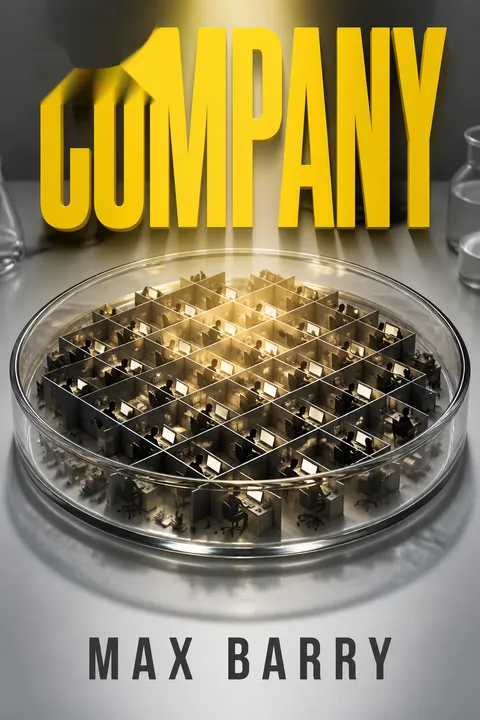
Jones discovers the secret: Zephyr is a closed experiment for the "Alpha" project, run by CEO Klausman and his agents posing as janitors, receptionists, and managers. There is no real business, just a giant petri dish for testing management theories—what happens under cycles of layoffs, fake productivity, endless restructuring, and manufactured anxiety. The cultish Omega Management System marketed to the world is born here. Jones is recruited as a new Alpha agent, forced to choose between exposing the farce and joining the manipulators. The line between observer and observed blurs dangerously.
A Test at Any Cost
Zephyr's departments become crucibles for ever-more invasive management experiments. Pregnant staff are put under surveillance and "random" drug tests, smokers are isolated in humiliating corrals, and desk arrangements and resource allocations are changed daily. Human Resources becomes a Kafkaesque inquisition: workers are interrogated by faceless voices about their health, moods, and loyalty. Empowerment is a myth; real power is held by the unseen Alpha observers upstairs. These experiments are callous, designed to maximize productivity and profit—yet utterly detached from empathy. The employees' suffering is normalized, justified as "science."
The System Strikes Back
After another consolidation, staff roles are atomized: everyone must "tender" for tasks, bill for their own desks, and compete for cubicles—turning teamwork into cutthroat rivalry. Resentments fester. Roger presides over the chaos, using accountability as both sword and shield. Meanwhile, the malfunctioning network—formerly a source of stress—has left staff cheerfully reliant on face-to-face contact, revealing that technological efficiency sometimes erodes human connection. But Alpha demands the network be restored; Jones is tasked to rewire the system, forced back into collusion with the gatekeepers of the artificial order.
Network Down, Workers Up
When IT is outsourced and the company network fails, Zephyr's rigid divisions briefly dissolve. Unable to email or forward calls, workers rediscover camaraderie in the corridors, delivering memos by hand and collaborating spontaneously. Productivity, contrary to Alpha's best-laid plans, actually improves—suggesting that less surveillance and bureaucracy create more engagement and morale. But Senior Management, blind to this, focuses only on blame and cost, frantically rehiring sacked IT just to bring the system back to its "proper" state. As soon as the network is restored, infighting returns and the new rules become even more punishing.
New Powers, New Rules
Consolidations slash departments, sparking chaos as old hierarchies upend and rivals vie for new positions. Workers celebrate victories—Roger's rise to manager, Holly's brief promotion—only to see them snatched away. Accountability morphs into weaponized policy: drug testing, promotions denied, and every small humiliation enforced. Meanwhile, the Alpha team worries Jones—now privy to their secrets—may distribute sensitive data using the revived network. Workers, exhausted and desperate, revert to tribalism; but new affinities, alliances, and betrayals start to bloom, even as Zephyr grows more dystopian.
Breaking Rank and Rebellion
Realizing incremental change is pointless, Jones, Freddy, and Holly distribute an anonymous, subversive employee survey, capturing the true extent of worker dissatisfaction. Dissatisfaction surges into movement; rumors of planned revolt sweep Zephyr. On a climactic afternoon, workers storm Senior Management's office, spurred by the recognition that their "leaders" are simply self-interested obstacles. Chants of "Resign!" ring through the building; the old order collapses in a single day. Joy and chaos ensue as Zephyr, for the first time, belongs to its staff.
The Survey Revolution
For a brief moment, Zephyr is free from its overlords. Employees take over the boardroom, turning it into a party zone. Repressed energies and personalities blossom—Holly and Freddy finally connect, Elizabeth confronts her affections, and Roger's quest for revenge against Elizabeth and donuts finally ends in farce. The euphoria of liberation is real; so is the uncertainty. Responsibility is now collective, but so are confusion and fear. For the first time, the company faces the task of forming itself around people rather than control.
Management Falls
Realizing the experiment is over, Alpha panics—sabotaging the revolution by having HR declare all positions vacated, then refusing to post any job openings. The whole workforce is effectively sacked. A sense of betrayal and powerlessness returns; the dream of worker democracy collapses into anger and despair. As the employees gather, denied reentry into their past roles, Zephyr's glass walls glow in the sunset—a symbol of the fragile illusions that governed their lives. Morale and trust shatter. Alpha's agents retreat, casualties by their own manipulations.
Life After Zephyr
In the ruins of Zephyr's "experiment," Jones tours the lecture circuit, recounting the horrors and the hope of insurrection. Eve, Alpha's chief manipulator, profits handsomely from the aftermath, spinning Zephyr's collapse as a lesson for would-be executives. Workers scatter; some forgive Jones, others nurse wounds. The company persists as a story more than a place, its legacy a cautionary tale about the perils of control, alienation, and the meaning of work. Yet, amid the fallout, authentic connections and self-knowledge remain, hinting at stubborn resilience even in the hollowness left behind.
Analysis
Max Barry's Company is a razor-sharp satire of contemporary work life, skewering the rituals, language, and existential emptiness of large bureaucratic organizations. His central conceit—an organization so cloaked in ambiguity it functions purely as a laboratory for management theory—exposes the dehumanizing effects of treating employees as numbers, costs, and interchangeable resources. Through caricature, farce, and escalating absurdity, Barry illuminates contemporary anxieties about purpose, agency, and alienation in corporate culture. Yet, beneath the savage humor, Company raises deeper questions: Is it possible for organizations to value people over process? Can workplaces foster solidarity, dignity, and fulfillment, or are they inevitably engines of exploitation? Barry stops short of promising redemption, but his story is not without hope: even as Zephyr collapses and the "experiment" fails, individuals rediscover meaning, friendship, and the courage to resist. Ultimately, Company warns that when systems prioritize abstract goals above human needs, rebellion is both inevitable and necessary—but never without cost.
People Also Read



Characters
Stephen Jones
Newly hired and initially naïve, Jones serves as the reader's entry into Zephyr's surreal office dystopia. He's earnest, inquisitive, and unable to let absurdity stand unchallenged. Driven to apply principles from business school, he is dismayed to find corporate reality running on rituals, status games, and circular logic. Unable to accept the company's lack of purpose, Jones becomes first a questioner, then a revolutionary. He is enticed to join Alpha, the secret management experiment, but even within its power, he is haunted by conscience and empathy. Jones's journey mirrors that of awakening, disillusionment, and ultimately rebellion, revealing the emotional and ethical cost of surviving in a system designed to convert people into variables.
Eve Jantiss
Ostensibly the glamorous receptionist, Eve is in truth a high-ranking Alpha operative, manipulating experiments from behind the scenes. She is magnetic, ambitious, and ruthlessly pragmatic, using her intelligence and sexuality as tools for advancement, yet concealing loneliness behind bravado and performance. Psy-cho-logically, Eve is both postmodern anti-hero and product of her environment: she rationalizes all decisions under "what's best for the experiment/company" and claims not to believe in ethics, only results. Her curious, sometimes vulnerable rapport with Jones hints at the possibility of mutual change, but her ultimate loyalty is to power and control.
Roger Jefferson
Roger is a deeply competitive, thin-skinned man whose only logic is the elevation (and defense) of his own importance. Even minor slights (like a stolen donut) are existential threats. His brilliance as a sales rep comes with a hunger for vindication; he flips between humorous egotism and vindictive revenge, especially against women like Elizabeth who challenge his dominance. Roger's progression from victim to mid-level manager exposes how easily zeal and insecurity become cruelty in systems with weak accountability and endless games of one-upmanship.
Elizabeth Miller
Elizabeth's inability to compartmentalize business from feeling is both her strength and her curse. She truly "falls in love" with her clients, forming connections that turbocharge her sales but leave her battered when quotas clash with reality. Her affair with Roger, subsequent pregnancy, and battle with HR's surveillance reflect the deep psychological violence wrought by workplaces that demand loyalty but punish attachment or vulnerability. Elizabeth's path is one of losing and then reclaiming self-definition, ultimately choosing personal meaning over the void of institutional approval.
Freddy Carlson
Freddy is the archetype of the forgettable, self-erasing employee. Quick-witted but risk-averse, he exists to blend in, never rock the boat, and support stronger personalities. A victim of systemic neglect—never promoted due to deliberate Alpha intervention—Freddy's yearning for affirmation finds unhealthy expression (such as sending anonymous flowers to Eve). His gradual awakening through friendship, then his part in the rebellion, speaks to the deep reservoirs of resilience and dignity even the "invisible" workers hold.
Holly Vale
Holly is an assistant obsessed with self-improvement but emotionally adrift. Often underestimated for her focus on fitness, she struggles to find fulfillment and connection in her role. Her emotional armor—the discipline of the gym—hides vulnerability and a yearning for recognition. Holly's brief elevation to running the gym, followed by its abrupt loss, catalyzes her rebellion against the system. Her reluctant alliance with Jones and Freddy, and tentative romance with Freddy, highlight the yearning for real teamwork beneath corporate simulations.
Sydney Harper
Sydney's diminutive appearance hides an explosive temper and a vindictive need for control. Her rule is marked by petty retribution, shifting standards, and spectacular double standards. Envious, embittered, and insecure, she views all subordinates as threats, justifying arbitrary cuts and sacking the most vulnerable. Psychologically, Sydney is both victim and perpetrator: she is as much shaped by the system's cruelty as she inflicts it, part of a self-perpetuating cycle of violence at the heart of Zephyr's bureaucracy.
Daniel Klausman
Klausman is Zephyr's architect—pretending to be a janitor, manipulating from the shadows as head of Alpha. For him, the company is a sterile experiment, not a community. He has no emotional connection to the daily human costs, treating layoffs and misery as "results." He preaches efficiency and detachment, proud of a company with no customers—and, metaphorically, no soul. Upon Jones's rebellion, Klausman is shocked to discover his system can revolt, forced to watch his own experiment escape control.
Blake Seddon
Blake is the confident, calculating Senior Management plant on the Alpha team—always ready with a rival theory, a sneer, and a knife for anyone not serving his own ambition. He views all relationships transactionally (including his past entanglement with Eve), and is more threatened by Jones's idealism than by incompetence. In the final uprising, Blake's efforts to gaslight the workers fail; his brand of rationalized, bloodless leadership is at last overwhelmed by dissent.
Megan Jackson
Megan is overweight, socially invisible, and addicted to tracking the movements of Jones and others—compensatory behaviors for the profound isolation of the anonymous office worker. Her ceramic bears and careful logs stand for the tiny acts of meaning and affection that survive in even the most dehumanizing workplaces. When finally dismissed for "lacking goals," Megan becomes the company's scapegoat, and her tearful, humiliating exit illustrates the real cost of a system that treats souls as costs to be "externalized."
Plot Devices
Satire and Parody of Corporate Culture
Barry devises Zephyr Holdings as a hyperbolic microcosm of contemporary office life, pushed beyond plausibility to expose hidden truths: the cult of policy over people, panicked restructuring, meaningless work, managerial cowardice, and the erosion of loyalty. Devices like the missing donut, reverse-numbered elevators, and circular billing lampoon the rituals of modern business, while the proliferation of memos, voice mails, and status games deepen the farce.
Unreliable Structures and Shifting Floors
Floors numbered in reverse, missing level 13, and hidden elevator panels both literalize and symbolize the barriers to understanding, transparency, and progress within the company. Jones's quest to interview Senior Management is constantly rerouted, mirroring both the physical and psychological traps in institutional life.
The "Experiment" Reveal & Secret Surveillance
The revelation that Zephyr is a management laboratory renders every action suspect and every relationship subject to manipulation. On the meta-level, it becomes a story about the dangers of abstraction, surveillance, and dehumanization: what are the psychological consequences of being treated as a variable rather than a person?
Escalation and Absurd Policy Implementation
Policy changes—absurd accountability programs, department consolidations, and random drug tests—become ever more invasive, culminating in a company-wide staff satisfaction survey that doubles as a call to arms. Barry's "one-upping" of office dysfunction exposes not only how fragile ordinary life becomes under institutional insanity, but also the ease with which even well-meaning attempts at change are co-opted or destroyed.
Climactic Role Reversal and Revolt
The narrative's structure builds from individual confusion and manipulation to collective awakening and insurrection. The workers' seizure of Senior Management's boardroom, and the farcical fallout engineered by Alpha and HR, subvert both the fantasy of "worker power" and the myth of benevolent management in one stroke. The final ambiguous victory leaves little optimism but insists on the enduring need for truth, dignity, and solidarity.

Download PDF
Download EPUB
.epub digital book format is ideal for reading ebooks on phones, tablets, and e-readers.








































