Plot Summary
Owl-Lover's Embrace
The story opens with Tiny, a cellist, dreaming of making love to an owl-woman. She wakes with talon marks on her chest, and soon discovers she is pregnant. Her husband, a rational, loving man, is overjoyed, but Tiny is unsettled—she knows this child is not his, but the owl-lover's. The pregnancy is fraught with anxiety, as Tiny senses the "owlness" of her baby from the start. Her husband's optimism clashes with her dread, and she feels isolated, haunted by the wildness growing inside her. The owl-baby's presence is both a promise and a threat, and Tiny's sense of self begins to unravel as she contemplates the impossible: loving a child that is not quite human, and not quite hers alone.
The Unwanted Miracle
Tiny's pregnancy is a battleground. Her husband celebrates, but she is consumed by doubt and fear. The owl-baby asserts itself, whispering in her mind, demanding to be born. Tiny seeks help, even considering abortion, but finds no comfort—no one can decide for her. Memories of her own childhood surface: a mother with ornithosis, a father who demanded obedience, and a wildness she could never suppress. The owl-baby's insistence grows, and Tiny is forced to confront her own monstrousness, her inability to conform, and the inevitability of becoming a mother to something the world will never accept.
Becoming Mother, Becoming Monster
As Tiny's pregnancy progresses, she is increasingly alienated from her husband and his family. She recalls her upbringing on the border between order and chaos, her mother's suffering, and her own escape into the wild. The owl-baby's presence intensifies, disrupting her music and her relationships. Tiny's sense of self fractures—she is both the caged animal and the caretaker, the wild thing and the mother. The narrative blurs the line between reality and metaphor, as Tiny's identity is consumed by the demands of the owl-baby, and she mourns the loss of her former life.
Family of Dogs and Birds
Tiny is thrust into her husband's family, a clan of tall, robust "dog-people" who prize conformity and tradition. She is the outsider, the "tiny, fragile wife," relegated to the children's table and dismissed by her mother-in-law. The family's rituals—barbecues, games, and stories—highlight Tiny's alienation. Her mother-in-law's rescue birds, broken and abused, mirror Tiny's own sense of displacement. The family's inability to see or accept Tiny's difference foreshadows the challenges to come when the owl-baby arrives, and the maternal wisdom offered is hollow, rooted in denial and control.
The Music Between Us
Music is Tiny's sanctuary, but pregnancy disrupts her artistry. Her quartet partners notice her decline, and the owl-baby sabotages her playing. The cello, once an extension of her body, becomes a site of conflict. Tiny's attempts to reclaim her identity through music are thwarted by the owl-baby's will. The struggle between mother and child is mirrored in the dissonance of their music, and Tiny is forced to choose between her art and her child. The loss of music marks a turning point—Tiny's surrender to motherhood is both a defeat and a transformation.
Flight to Berlin, Flight from Self
Overwhelmed, Tiny flees to Berlin, seeking clarity and escape from her fate. In the city of her musical triumphs, she is haunted by memories and the presence of her owl-lover, who appears in a fiery, destructive vision. The encounter is both a farewell and a reckoning—Tiny chooses her husband and the human world, rejecting the wild, carnal love of the owl. Yet, the choice is fraught with regret, and the owl-baby's claim on her remains. The journey ends with Tiny's reluctant acceptance of motherhood, as she returns home, changed and resigned.
Choosing the Owl-Baby
Back home, Tiny's ambivalence gives way to acceptance. She loses her place in the quartet, her hands swollen and useless. The owl-baby's demands are relentless, but Tiny finds a strange peace in yielding. The sonogram reveals a creature both monstrous and beautiful, and Tiny's maternal instincts awaken. She is isolated, misunderstood, and judged, but the bond with the owl-baby deepens. The narrative explores the paradox of mother-love: the willingness to be destroyed, the joy and terror of surrender, and the transformation of fear into devotion.
Birth of Chouette
Labor is violent and surreal. Chouette is born with claws, beak, and ambiguous sex—an owl-child. The medical staff is baffled, the father devastated. Tiny names her daughter Chouette, claiming her as her own. The hospital is a battleground of authority and love, with Tiny fighting to keep her child alive and free from intervention. The birth cements Tiny's role as Chouette's sole protector, and the narrative shifts from anticipation to the realities of raising a child the world cannot understand or accept.
The Triangle of Love
At home, the family dynamic fractures. The father cannot accept Chouette, mourning the loss of the child he expected. Tiny is caught between her husband's grief and her daughter's needs. The love triangle—mother, father, child—is fraught with jealousy, resentment, and shifting allegiances. Tiny chooses Chouette, knowing no one else will. The father withdraws, and Tiny becomes both mother and father, her identity subsumed by the demands of her wild, needy child. The narrative explores the loneliness and sacrifice of motherhood, and the impossibility of satisfying everyone's needs.
Feeding the Wild Child
Chouette's needs are feral—she rejects milk for meat, devours live prey, and grows in ways that defy human norms. Tiny adapts, sourcing pinkie mice and nurturing a household ecosystem of prey. The rituals of feeding, cleaning, and caring become acts of devotion and survival. The world outside recoils, and Tiny is further isolated. Yet, in the daily routines, a fierce, primal love emerges. Tiny learns to see Chouette's beauty, to celebrate her difference, and to find meaning in the relentless, messy work of mothering a wild child.
The World's Rejection
Attempts to integrate Chouette into society—family gatherings, therapy, church—end in disaster. The world is not ready for a child like her. Tiny faces judgment from all sides: family, neighbors, professionals. The father's efforts to "fix" Chouette through therapy, schools, and medical interventions only deepen the rift. Tiny's secret lover offers brief solace, but even this relationship is destroyed by Chouette's violence. The narrative exposes the cruelty of systems that demand conformity, and the pain of loving a child the world refuses to accept.
The Father's Crusade
The father becomes obsessed with curing Chouette, dragging her through a parade of therapies, schools, and doctors. Each intervention fails, often violently. The quest for normalcy becomes a crusade, and Tiny is sidelined, her instincts dismissed. The father's love is conditional, rooted in the hope of transformation. Tiny's resistance grows, but she is worn down by guilt and exhaustion. The narrative interrogates the ethics of "fixing" difference, the violence of normalization, and the cost of denying a child's true nature.
The Secret Lover's Visit
Tiny's affair with her sister-in-law, the "secret aborter," offers a brief escape from isolation. Their intimacy is tender, affirming, and fraught with risk. Chouette's violence ends the relationship in blood, and Tiny is left more alone than ever. The episode underscores the dangers of loving outside the bounds of convention, and the impossibility of finding refuge in a world that punishes difference. Tiny's grief is compounded by guilt, and her sense of self fractures further.
Night Hunts and Blood Lessons
Tiny and Chouette take to the night, hunting together and reveling in their shared ferocity. The mother teaches the child to kill, to survive, to embrace her nature. The narrative explores the ethics of raising a child for a world that will never accept her, and the tension between nurturing and preparing for battle. The bond between mother and child deepens, forged in blood and necessity. Yet, the violence of their life together isolates them further, and the threat of intervention looms.
Therapy, Schools, and Failing Systems
Attempts to integrate Chouette into therapy, school, and society end in disaster. She is expelled, restrained, and nearly arrested. The systems designed to help only traumatize and reject her. Tiny's resistance is met with suspicion and blame. The narrative exposes the limits of institutional care, the violence of normalization, and the loneliness of those who cannot conform. Tiny's faith in herself wavers, but her commitment to Chouette remains unbroken.
Synthetic Intelligence
The father, desperate for a cure, subjects Chouette to a procedure that implants synthetic intelligence in her brain. Chouette becomes docile, verbal, and "normal"—but her true self is erased. Tiny is devastated, mourning the loss of her wild, beloved child. The narrative interrogates the ethics of medical intervention, the violence of erasure, and the cost of conditional love. Tiny's grief is profound, and her sense of purpose is shattered.
Baptism and Rebirth
In a desperate bid for restoration, Tiny brings Chouette to church for baptism. The ritual briefly restores Chouette's true self, but the miracle is fleeting. The narrative explores the power and limits of faith, the longing for transformation, and the persistence of hope in the face of loss. Tiny's struggle to reclaim her child is both heroic and tragic, and the world's inability to accept difference is laid bare.
Final Flight, Final Freedom
The story culminates in violence—Tiny and Chouette, cornered and threatened, kill the father, grandmother, and nurse. They flee, pursued by the consequences of their difference. On the run, Chouette grows, transforms, and ultimately leaves Tiny behind, flying into the wild. Tiny is left alone, grieving and liberated, forced to confront the meaning of motherhood, love, and loss. The narrative ends with a note of hope—Tiny, battered but alive, ready to face whatever comes next, and to celebrate the wildness that remains.
Analysis
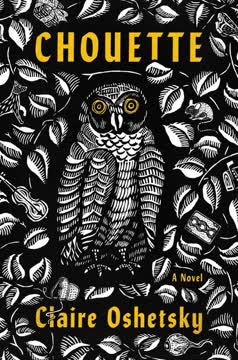
Chouetteis a fierce, surreal meditation on motherhood, difference, and the violence of normalization. Through the story of Tiny and her owl-baby, Claire Oshetsky interrogates what it means to love a child the world cannot accept, and the cost of insisting on authenticity in the face of relentless pressure to conform. The novel is both a personal journey and a social critique—an allegory for disability, queerness, and all forms of otherness that challenge the boundaries of the "normal." Oshetsky's use of magical realism, unreliable narration, and musical structure creates a narrative that is both emotionally raw and intellectually provocative. The lessons are clear: love is not about fixing or erasing difference, but about embracing it, even when it is monstrous, inconvenient, or terrifying. The story refuses easy answers, insisting on the complexity of motherhood, the inevitability of loss, and the possibility of transformation. In the end, Chouette is a celebration of wildness, a lament for what is lost in the pursuit of normalcy, and a call to honor the strange, the beautiful, and the unassimilable in ourselves and those we love.
Review Summary
Chouette is a visceral, darkly poetic parable about motherhood, told through Tiny, a cellist who gives birth to an owl-baby. Most reviewers praised its raw emotional power, lyrical prose, and unflinching exploration of unconditional love, acceptance versus conformity, and raising a non-conforming child against societal pressure. The central tension between a mother who embraces her daughter's wild nature and a father determined to "fix" her resonated deeply. A few readers found it too bizarre or unsatisfying, but the majority considered it original, brave, and profoundly affecting.
People Also Read

Characters
Tiny (The Mother)
Tiny is a professional cellist whose life is upended by her surreal pregnancy with an owl-baby. She is small, sensitive, and deeply attuned to the wildness within herself and her child. Her relationship with her husband is fraught—she is both cherished and misunderstood, always the outsider in his family of "dog-people." Tiny's psychological journey is one of ambivalence, resistance, and eventual surrender to motherhood. She is haunted by memories of her own monstrousness, her mother's suffering, and her longing for acceptance. Her love for Chouette is fierce, sacrificial, and transformative—she becomes both protector and accomplice, embracing the wildness that sets them apart. Tiny's development is marked by loss—of music, identity, and relationships—but also by resilience and the capacity to love the unlovable.
Chouette (The Owl-Baby)
Chouette is born of an impossible union between Tiny and her owl-lover. She is part human, part owl—clawed, beaked, and ambiguous in sex. Chouette's existence challenges every norm, and she is both adored and rejected. Her needs are feral—she craves meat, hunts live prey, and cannot be tamed. Chouette is a mirror for Tiny's own wildness, and their bond is primal and unbreakable. As she grows, Chouette becomes the battleground for her parents' conflicting desires: to fix, to love, to accept, to erase. Subjected to therapies and ultimately synthetic intelligence, Chouette's true self is repeatedly threatened. Her final transformation—growing immense and flying away—symbolizes both the triumph and the tragedy of difference.
The Husband (Father)
Tiny's husband is a well-meaning, practical man who longs for a conventional family. He is supportive, affectionate, and eager to be a father, but cannot accept Chouette's difference. His love is conditional, rooted in the hope of transformation. As Chouette's wildness becomes undeniable, he becomes obsessed with fixing her—through therapy, medicine, and ultimately synthetic intelligence. His inability to accept what he cannot control leads to alienation, violence, and ultimately his own destruction. Psychologically, he represents the societal impulse to normalize, to erase difference, and to value conformity over authenticity.
The Owl-Lover (Other-Mother)
The owl-lover is both literal and symbolic—a lover, a mother, a force of nature. She represents the wildness Tiny both fears and desires. Their relationship is passionate, destructive, and ultimately unsustainable. The owl-lover's presence haunts Tiny, offering both escape and condemnation. She is the source of Chouette's difference, and her final appearance is a call to courage and authenticity. Psychologically, she embodies the parts of Tiny that cannot be assimilated—the monstrous, the queer, the wild.
Mother-in-Law
The mother-in-law is the matriarch of the "dog-family," a woman who prizes order, tradition, and conformity. She is dismissive of Tiny, abusive to her rescue birds, and unable to see the value in difference. Her attempts at maternal wisdom are hollow, rooted in denial and control. She becomes an antagonist, representing the societal forces that police the boundaries of normalcy and punish those who transgress.
Secret Lover (Sister-in-Law)
The secret lover is Tiny's sister-in-law, known as the "secret aborter." Their affair offers Tiny a brief escape from isolation and judgment. She is kind, understanding, and similarly marginalized within the family. Their relationship is tender but doomed—destroyed by Chouette's violence and the impossibility of sustaining love outside the bounds of convention. She represents the longing for connection and the dangers of loving what the world rejects.
Doctor Great
Doctor Great is the leader in "fixing" children like Chouette, offering synthetic intelligence as a cure for difference. He is persuasive, authoritative, and ultimately destructive. His interventions erase Chouette's true self, offering the illusion of normalcy at the cost of authenticity. Psychologically, he embodies the violence of medicalization, the hubris of science, and the societal demand for conformity.
The Bird of the Wood
The Bird of the Wood is a maternal figure from Tiny's childhood, offering refuge and wisdom. She represents the possibility of a world where difference is cherished, not punished. Her presence is a reminder of what is lost in the pursuit of normalcy, and her guidance is both comforting and bittersweet.
The Father-in-Law
The father-in-law is a fading patriarch, afflicted by dementia. His actions—throwing Chouette into the pool—unintentionally restore her true self. He is both a relic of the past and a catalyst for transformation, embodying the unpredictable consequences of tradition and the possibility of unexpected kindness.
The Day Nurse
The day nurse is hired by the mother-in-law to care for Chouette. He is cautious, distant, and ultimately powerless. His presence represents the intrusion of authority, the surveillance of difference, and the failure of systems to understand or nurture the wild.
Plot Devices
Magical Realism and Metaphor
The novel employs magical realism, using the owl-baby as both literal and metaphorical. Chouette's existence is never fully explained—she is at once a real child and a symbol of all that is wild, queer, and unassimilable. The narrative blurs the boundaries between dream and reality, using surreal imagery to explore psychological states, maternal ambivalence, and the violence of normalization. This device allows the story to operate on multiple levels—personal, societal, and mythic—inviting readers to question the nature of monstrosity, love, and acceptance.
Unreliable Narration and Subjectivity
The story is told entirely from Tiny's point of view, and her perceptions are often unreliable, colored by emotion, memory, and fantasy. This subjectivity creates ambiguity—readers are never certain what is real and what is imagined. The device heightens the emotional intensity, immersing readers in Tiny's psychological landscape and forcing them to grapple with the complexities of motherhood, difference, and love.
Repetition and Musical Motifs
Music is woven throughout the narrative, both as a literal element (Tiny's career, the quartet, the marimba) and as a structural device. Musical motifs—repetition, dissonance, improvisation—mirror the emotional arc of the story. The loss and recovery of music parallel Tiny's journey as a mother, and the shared music between mother and child becomes a language of love and survival. The narrative's rhythm, cadence, and structure echo musical forms, reinforcing themes of harmony, discord, and transformation.
Foreshadowing and Circularity
The novel uses foreshadowing—dreams, memories, and repeated encounters (the woman painting daisies, the dog, the thicket)—to create a sense of inevitability. The story is circular, with motifs and events recurring in altered forms, suggesting that the struggle between wildness and conformity, love and rejection, is endless. This device reinforces the themes of fate, choice, and the cyclical nature of motherhood and difference.
Allegory and Social Critique
Chouette's owlness is an allegory for any form of difference—disability, queerness, neurodivergence—that society seeks to "fix" or erase. The narrative critiques the violence of normalization, the failures of institutions, and the conditional nature of love. Through allegory, the story invites readers to question their own assumptions about what it means to be human, to belong, and to love.








































