
Key Takeaways
1. The Great Bovine Switch: Bison Out, Cattle In
This great bovine switch would mark, as the historian Richard White has written, “the transformation of the plains, deserts, and mountains from a biological republic to a biological monarchy where humans reigned, where uselessness among lesser living things was a crime punishable by death, and where enterprise was the reigning value.”
A vast wasteland. For nearly a century, the American West was largely dismissed as the "Great American Desert," a barren expanse suitable only for Native American tribes and teeming with tens of millions of bison. However, the post-Civil War economic boom in the North, coupled with a rising demand for beef, transformed this perception. The seemingly infinite supply of wild longhorn cattle in Texas, valued at $4 a head there but $40-50 in New York, presented an irresistible opportunity.
Bison's swift demise. The arrival of the railroad in the 1860s dramatically accelerated the extermination of the bison. Railroad companies encouraged recreational hunting to clear tracks, while telegraph companies sought their removal as bison rubbed against poles, disrupting communication. Commercial hunters, armed with new breech-loading rifles, slaughtered millions for hides, which were used for coats, blankets, and industrial belts, leading to an "orgy of slaughter" that pushed the species to near extinction by 1884.
Ecological and human cost. This "bovine switch" was not just an economic shift but an environmental disaster and a strategic move against Native Americans. The U.S. military actively supported bison slaughter to deprive Plains Indians of their primary food source, forcing them onto reservations and into dependence on the government. The plains were transformed from a diverse ecosystem into a monoculture for cattle, setting the stage for future ecological challenges.
2. The Arduous Trail Drive: Forging the American Cowboy
“From that time on the big drives were made every year, and the cowboy was born.”
Post-war opportunity. Following the Civil War, devastated Texas found its only abundant commodity was wild longhorn cattle. The soaring demand for beef in northern cities created a lucrative incentive to drive these cattle north to railheads in Kansas and Missouri, despite the immense challenges. Early trail drives, like George Duffield's harrowing 1866 journey, highlighted the extreme hardships involved.
Challenges of the trail. A typical drive of a thousand cattle required at least eight men and four to five horses per cowboy, lasting three to six months. Drovers faced:
- Hostility from farmers fearing trampled crops and Texas fever.
- Risk of Indian attacks (though less prevalent later).
- Stampedes, often triggered by weather or wildlife, which could be deadly.
- River crossings, where cattle could panic and drown.
- Constant exhaustion from long hours and lack of sleep.
The cowboy's emergence. Despite the grueling conditions, the promise of adventure and modest wages (often $25-40/month, or double with one's own horses) drew young men, many former Confederate soldiers, to the open range. This diverse group, including European immigrants, Mexicans, former slaves, and Native Americans, forged a unique culture. The discovery that cattle could survive northern winters on free grass opened vast new economic possibilities, leading to the "largest forced migration of animals in human history."
3. Cattle Towns: Booming Hubs of Commerce, Vice, and Myth
“If Abilene excelled all later cow towns in wickedness, it also excelled them in service—the service of bartering the beef of the South for the money of the North.”
McCoy's vision. Joseph G. McCoy, an Illinois cattle merchant, revolutionized the industry by conceiving and building Abilene, Kansas, the first dedicated railroad depot for cattle sales in 1867. This innovation allowed Texas drovers and northern buyers to meet without interference from hostile farmers, quickly transforming Abilene from a "small, dead place" into a bustling town with hotels, saloons, and brothels.
A stage for the West. McCoy's success spurred the rapid growth of other "cow towns" like Dodge City and Cheyenne, strategically located along westward-expanding rail lines. These towns became vibrant, if often lawless, centers where cowboys, fresh off the trail with cash, sought entertainment. They offered:
- Saloons with gambling (faro, poker) and various liquors.
- Prostitution, from parlor-house girls to "crib girls."
- Shops for personal supplies, haircuts, and photography.
- A unique blend of commerce and vice, attracting journalists and writers like Owen Wister.
Law and disorder. Early cattle towns often lacked formal governance, leading to a rough-and-tumble atmosphere. Marshals like "Wild Bill" Hickok were hired to maintain order, often resorting to violence. While exaggerated in dime novels, gunfights did occur, though disease was a far greater threat. These towns, despite their transient nature, played a crucial role in uniting North and South through commerce and fostering a multicultural society.
4. Foreign Capital Fuels the Boom: The Allure of Western Ranches
“The acknowledged profits upon capital invested in cattle are 25 to 33 per cent; even the latter figure is probably below the mark.”
Scottish and British interest. Reports of phenomenal profits (25-33% annually) in the American cattle trade, particularly from Scottish agricultural correspondent James Macdonald and a British parliamentary report, ignited a speculative frenzy in Europe. Scottish investors, already adept at financial innovation, and British aristocrats, facing declining agricultural incomes at home, poured capital into the American West.
Aristocrats and adventurers. The promise of quick wealth and adventure attracted a wave of "cowboy aristocrats," including Moreton Frewen, a British squire, and the Marquis de Morès, a French nobleman. These wealthy young men, often with limited practical experience, invested heavily, buying ranches and building lavish headquarters like Frewen's "Castle" in Wyoming. They saw ranching as a glamorous pursuit, a blend of sport and business.
The investment bubble. Between 1879 and 1888, 33 British limited companies invested $45 million (over $1 billion today) in Western cattle. This influx of capital led to rapid consolidation and gigantism, with ranches like the XIT in Texas spanning millions of acres. However, this growth was often based on inflated "book counts" of cattle and overlooked the inherent risks of the environment and market, setting the stage for a dramatic bust.
5. Barbed Wire: Reshaping the Landscape and Ending the Open Range
“The cattle ain’t born that can get through it. Bring on your steers, gentlemen!”
A simple innovation. In 1874, Joseph Glidden, Isaac Elwood, and Jacob Haish, farmers and merchants from DeKalb, Illinois, independently developed and patented barbed wire. Glidden's "The Winner," created using a coffee grinder, became the dominant design. This simple invention, which fixed barbs onto plain steel wire, offered an inexpensive and effective solution for fencing in the timber-scarce prairies.
Transformative impact. John W. Gates dramatically commercialized barbed wire with a public demonstration in San Antonio, corralling longhorn bulls with the new fencing. Sales exploded, and by 1880, over 80 million pounds were produced annually. Barbed wire:
- Allowed homesteaders to protect crops from wandering cattle.
- Enabled ranchers to control breeding and protect valuable bulls.
- Reduced losses from straying and predation, cutting labor costs.
- Facilitated the enclosure of vast tracts of land, including public domain.
The "Devil's Rope." While economically beneficial, barbed wire had significant drawbacks. It trapped cattle during blizzards, leading to mass deaths, and caused injuries that resulted in screwworm infestations. Crucially, it ended the era of the open range, dividing the vast plains into private holdings and sparking conflicts between large ranchers, small homesteaders, and cowboys over land and water access.
6. The Big Die-Up: Nature's Reckoning for Overexpansion
“As the South Sea bubble burst, as the Dutch tulip craze dissolved, this cattle gold brick withstood not the snow of winter.”
Winter's wrath. The winter of 1886-87, known as the "Big Die-Up," delivered a catastrophic blow to the overextended cattle industry. Following years of drought and overgrazing, record-breaking blizzards and extreme cold, reaching 60 degrees below zero, swept across the northern ranges. Cattle, trapped by barbed wire fences and unable to find forage, froze or suffocated in snowdrifts.
Devastating losses. The scale of animal and financial loss was immense. Estimates suggest 50-80% of herds perished, with some ranchers losing nearly all their cattle. The stench of death permeated the plains in spring, as carcasses clogged rivers and hung from trees. Beyond the animals, some 320 people, mostly cowboys and settlers, also died from exposure and starvation.
Financial ruin. The Big Die-Up triggered a widespread financial collapse. Cattle prices plummeted, and many prominent cattle companies, including those backed by foreign capital like Moreton Frewen's Powder River Cattle Company and Alexander Swan's Swan Land & Cattle Company, went bankrupt. Investors, both American and European, lost fortunes, leading to a rapid contraction of the industry and a deep sense of disillusionment.
7. Vigilante Justice and the Johnson County War: The Dark Side of the Boom
“We were in Wyoming as paid assassins of the big ranchers. We were brought there to murder men in violation of the law.”
The "rustler problem." In the wake of the Big Die-Up and economic hardship, the powerful Wyoming Stock Growers Association (WSGA), dominated by large cattle barons, sought scapegoats. They fabricated a narrative of rampant cattle rustling in Johnson County, despite evidence suggesting otherwise. This served as a pretext for a campaign to eliminate small ranchers and homesteaders who were encroaching on their grazing lands.
Assassination campaign. Led by former sheriff Frank Canton (an escaped convict named Joe Horner), WSGA detectives embarked on a series of murders, targeting individuals like Tom Wagoner, Nate Champion, Orley Jones, and John Tisdale. These victims were falsely accused of rustling, their deaths serving as warnings. The lynching of Jim Averell and Ella Watson ("Cattle Kate") in 1889, based on fabricated charges, set a grim precedent.
The Johnson County Invasion. In April 1892, a paramilitary force of 25 Cheyenne cattlemen and 25 hired Texas gunmen, funded by the WSGA, invaded Johnson County with a "dead list" of targets, including the sheriff and county commissioners. Their aim was to seize control and clear the land. However, their plan was thwarted by Nate Champion's heroic stand and the subsequent mobilization of local citizens, leading to a siege at the TA Ranch and ultimately, federal military intervention.
8. The Meatpacking Monopolies: Controlling the Cattle Kingdom
“The big packinghouses loaned money to commission agents, who loaned it to farmers seeking to buy feeders from the western range. The agents held a mortgage on both the corn and the steer. Long before the steer ever reached Chicago, Kansas City, or Fort Worth, the packers controlled it.”
Chicago's rise. The Civil War shifted meatpacking westward, with Chicago becoming the industry's hub due to its rail network. The Union Stock Yards, established in 1865, became a massive facility processing millions of animals annually. This consolidation, aided by the "evener system" of railroad rebates, cemented Chicago's dominance.
Refrigeration revolution. Innovators like Gustavus Swift and Philip Danforth Armour transformed the industry by developing refrigerated railcars. This allowed dressed beef to be shipped nationwide, reducing transport costs (no need to ship useless parts of the animal) and enabling year-round slaughter. Swift's vertical integration, from slaughterhouse to retail, created a highly efficient, cost-effective empire.
The Beef Trust. The "Big Five" meatpackers (Swift, Armour, Morris, Cudahy, S&S) formed a powerful oligopoly, known as the Beef Trust. They controlled pricing, distribution, and even financed ranchers, effectively dictating terms across the entire supply chain. Their ruthless business practices, including driving down prices to eliminate competitors, made them a formidable force, ultimately surpassing the railroads in industrial power.
9. The Cowboy President: Theodore Roosevelt and the Rise of Conservation
“I have always said I would not have become President had it not been for my experience in North Dakota.”
Western transformation. Theodore Roosevelt, a patrician New Yorker, found solace and strength in the Dakota Badlands after personal tragedies. His experiences as a rancher and avid hunter, despite financial losses in the Big Die-Up, forged his "vigorous life" philosophy and deepened his appreciation for the natural world. He cultivated a "cowboy president" image, which resonated deeply with the American public.
Birth of conservation. Roosevelt's passion for nature, combined with his political acumen, led him to co-found the Boone and Crockett Club in 1887, the nation's first environmental organization. This club, dedicated to wildlife preservation and ethical hunting, successfully lobbied for landmark legislation:
- The Forest Reserve Act of 1891, allowing presidents to protect wooded lands.
- The Lacey Act of 1894, safeguarding Yellowstone's wildlife.
- The creation of the New York Zoological Society (Bronx Zoo).
Presidential legacy. As president, Roosevelt became America's greatest conservationist. He doubled the number of national parks, created 18 national monuments (including Devil's Tower), and conserved 230 million acres of wilderness. His alliance with Gifford Pinchot, head of the U.S. Forest Service, championed "wise and multiple use" conservation, ensuring federal control over public lands for the common good, a legacy that continues to shape American land policy.
10. The Enduring Myth of the Cowboy vs. Economic Reality
“Disregarding actuality, we see these knights of the range in our mind’s eye wandering the open prairies, free from the confines of the city, of marriage, of capitalism, and of the many other fetters and fetishes that plague our lives.”
Wister's romantic hero. Owen Wister, inspired by his Western experiences and encouraged by Theodore Roosevelt, penned "The Virginian" in 1902. This bestselling novel cemented the image of the cowboy as a noble, honorable, and law-abiding "natural aristocrat," a stark contrast to earlier depictions as a wild gunfighter. The Virginian became an enduring archetype, influencing countless Western films and literature.
The tragic reality. The romanticized image often masked the harsh realities of cowboy life. Cowboys were typically overworked, underpaid ($25-40/month), and lacked opportunities for advancement. Their jobs became seasonal, and new rules, like the Maverick Law, stripped them of traditional perquisites. Many, like Teddy Blue Abbott, eventually became farmers, the very profession they had sought to escape.
Political exploitation. The cowboy's mythic image of rugged independence and moral righteousness has been repeatedly leveraged by politicians, from Lyndon Johnson to Ronald Reagan and George W. Bush, to enhance their public appeal. This cultural phenomenon, however, has also been criticized for fostering a "frontier mentality" in U.S. foreign policy, potentially justifying unilateral and imperialistic actions.
11. Lessons from the Boom-Bust Cycle: Greed, Innovation, and Environmental Impact
“The open-range cattle era and its role in shaping America deserve to be more broadly known, if only as an instructive cautionary tale.”
A broken model. The Johnson County War marked the end of open-range ranching as a viable economic model. The industry, doomed by false assumptions, overgrazing, barbed wire, and mismanagement, was forced to restructure. Smaller, fenced ranches replaced massive operations, adopting sustainable practices like growing hay and sheltering cattle.
Economic evolution. The cattle boom, despite its dramatic bust, significantly accelerated the settlement, development, and industrialization of the American West. It funded new industries like barbed wire and meatpacking, and transformed vast wilderness into productive agricultural land. This period highlights capitalism's brutal efficiency, where innovation and market timing could lead to immense wealth, while misjudgment and overextension resulted in ruin.
Environmental awakening. The era also brought a crucial environmental awakening. The Big Die-Up and the ravaged grasslands underscored the finite nature of natural resources. Theodore Roosevelt's conservation efforts, born from his Western experiences, led to the protection of vast wilderness areas and the establishment of a national conservation ethic, fundamentally reshaping America's relationship with its land and wildlife.
Review Summary
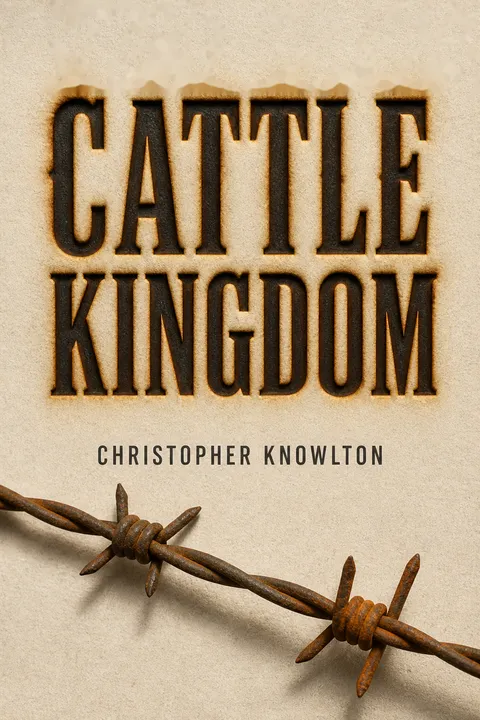
Cattle Kingdom receives strong praise for its comprehensive and engaging exploration of the open-range cattle era, earning an overall rating of 4.1/5. Readers appreciate Knowlton's ability to connect the cattle boom to broader American economic and cultural history, including the Johnson County War, the destruction of the bison, and the role of British and Scottish aristocrats. Some critics find the subtitle misleading, the focus occasionally scattered, and certain sections reading like a textbook rather than narrative history.
People Also Read


Download PDF
Download EPUB
.epub digital book format is ideal for reading ebooks on phones, tablets, and e-readers.








































