Plot Summary
Stray Shadows and Kindness
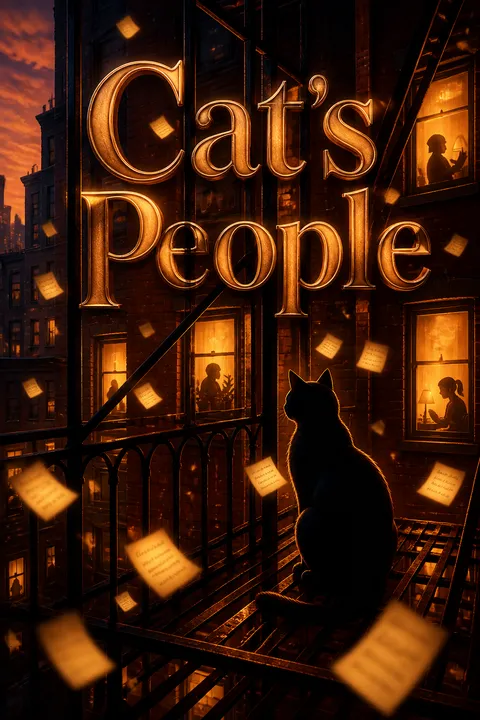
In Brooklyn, a black stray cat—wise from years on the streets—navigates a world that mostly fears or ignores him. He trusts only a handful of humans: Núria, a dedicated cat rescuer; Bong, a grieving bodega owner; Collin, a reclusive writer; and Omar, the beloved mailman. Each morning, Núria's routine revolves around her three adopted cats and the strays she feeds, even as her mother pressures her to settle down. The cat, wary but observant, recognizes the rare kindness in these people. Their small acts of care—feeding, gentle words, a safe place—form the fragile web of his world. Through his eyes, we glimpse the loneliness and resilience of both cats and humans, and the quiet, everyday heroism of those who choose to care.
Lonely Hearts in Brooklyn
Bong mourns his wife, Conchita, finding solace in the rhythms of his bodega and the brief connections with regulars like Núria. Collin, once a bestselling author, is paralyzed by writer's block and isolation, watching the world—and especially Núria—through his window. Omar, the mailman, brings cheer to his route, connecting with people and animals alike, but quietly wonders if there's more to life. Each character is haunted by absence: lost partners, estranged family, or the ache of unfulfilled dreams. Their lives intersect through small gestures—paper plates for cat food, a smile at the register, a shared story—hinting at the possibility of healing through community.
Notes, Neighbors, and New Beginnings
Collin, inspired by Núria's daily kindness to the stray cat, leaves her a mysterious Post-it note: "Do you think the cat understands you?" This sparks a cautious, anonymous exchange of notes, each left at the cat's feeding spot and weighed down with a stone. The notes become a lifeline for both, offering connection and curiosity in their otherwise lonely routines. Meanwhile, Lily, a young woman from Georgia, arrives in Brooklyn with a secret: she is Núria's half-sister, the product of their father's second family. She watches Núria from afar, longing for the courage to reveal herself. The city's web tightens, drawing these disparate souls closer.
Cat's World, Human Woes
The stray cat, dubbed "Cat" by Núria, narrates his impressions of the humans around him. He senses their sadness, their hopes, and their need for connection. He is wary of touch but drawn to kindness, especially from Núria and Omar. Cat's perspective is both humorous and poignant—he sees humans as servants, yet recognizes their vulnerability. His daily routines—finding food, avoiding danger, seeking shelter—mirror the emotional survival strategies of the people who care for him. Through Cat's eyes, we see the city as a place of both peril and unexpected grace.
Connections at the Bodega
Bong's bodega becomes a hub for the neighborhood's lonely hearts. He quietly supports Núria's cat rescue efforts, providing paper plates and treats. Omar, ever the connector, befriends Bong and helps him through waves of grief. Lily, working at the local supermarket, observes Núria and struggles with her own sense of belonging. The bodega is more than a store—it's a place where small acts of generosity ripple outward, creating a fragile but vital sense of community. Through shared loss and shared purpose, these characters begin to find solace in each other.
Feeding Routines and Family Tensions
Núria's life is structured around her cats and her volunteer work, but she is haunted by her mother's expectations and the unresolved pain of her father's abandonment. Her friendship with Rocky provides comic relief and tough love. The anonymous notes from Collin become a source of excitement and anxiety, challenging her to open up. Meanwhile, Lily's attempts to approach Núria are stymied by fear and shame. The city's routines—feeding cats, making coffee, running errands—mask deeper currents of longing, regret, and the hope for connection.
The Mystery of the Post-It
The exchange of notes between Núria and Collin grows more personal, each revealing vulnerabilities they cannot share face-to-face. Collin's gifts—a homemade cat house, a Murano glass heart—speak to his longing for connection and his fear of rejection. Núria, emboldened by the notes, invites her secret admirer to reveal himself by ordering a "Guillermo" at her café. The anticipation and uncertainty of this slow-burn romance are heightened by the city's chaos and the ever-present threat of loss. The cat, ever watchful, senses the shifting dynamics and plays his own subtle role in bringing people together.
Grief, Friendship, and Small Mercies
Bong, with Omar's gentle encouragement, begins to emerge from his grief, finding purpose in helping others—hiring Lily, supporting Núria, and caring for the stray cat that reminds him of Conchita. Omar, facing his own crossroads, contemplates a new career in animal care, inspired by his love for the creatures on his route and the wisdom of Mrs. Lewis, his elderly friend. The characters' struggles—with loss, identity, and the search for meaning—are softened by moments of laughter, food, and mutual support. The city, once cold and indifferent, becomes a place of possibility.
Sisterhood in the City
Lily finally reveals her identity to Núria, presenting letters and mementos from their shared father. The revelation is painful—Núria feels betrayed, her old wounds reopened—but ultimately cathartic. Through tears and anger, the sisters begin to forge a tentative relationship, united by loss and the desire for family. Their reconciliation is mirrored by the broader community's willingness to forgive, support, and embrace one another, despite past hurts. The city's harshness is countered by the resilience of chosen and found family.
Nighttime Dangers and Heroics
One night, Núria, drunk and vulnerable, is nearly assaulted on the street. The stray cat intervenes, attacking her assailant and drawing the attention of Lily, who helps Núria home. The incident cements the cat's status as a hero and deepens the bonds among the characters. It also serves as a turning point—Núria confronts her own vulnerabilities, Lily steps out of the shadows, and Collin, witnessing the aftermath, is moved to finally reveal himself. The city's dangers are real, but so is the power of courage and community.
Secrets, Letters, and Lost Fathers
Núria and Lily confront the legacy of their father's abandonment and the secrets their mothers kept. Through old letters, photographs, and painful conversations, they piece together a more nuanced understanding of their family history. Forgiveness is not immediate, but the act of sharing their stories brings relief and the possibility of healing. Meanwhile, Collin and Núria's relationship deepens as they move from anonymous notes to real conversation, each learning to trust and be vulnerable. The cat, now ill, becomes the catalyst for the community's final act of collective care.
Cat's Illness and Community
When Cat falls gravely ill, Collin rushes him to Núria and then to the vet. The entire cast—Núria, Collin, Omar, Bong, Lily—gathers to support Cat and each other. The diagnosis is serious: advanced kidney disease. Rather than give up, they pool their resources and skills to ensure Cat can live out his days in comfort, with Collin volunteering to adopt him. Omar, inspired by the experience, decides to pursue a new career as a veterinary technician. The crisis reveals the strength of their community and the depth of their compassion.
Healing, Home, and Hope
Cat settles into his new home with Collin, adjusting to indoor life and the rhythms of care and affection. Collin and Núria, now openly together, find joy in the ordinary—shared meals, caring for Cat, and supporting their friends. Lily and Núria rebuild their relationship, forging a sisterhood that honors their father's memory. Bong, buoyed by friendship and purpose, continues to heal. Omar, embracing change, prepares for a new chapter. The city, once a backdrop of loneliness, is transformed by the web of connections they have built.
Forgiveness and Found Family
The characters confront their pasts—lost loves, family secrets, personal failures—and choose forgiveness, both for themselves and others. Through honest conversation, shared vulnerability, and acts of kindness, they create a chosen family that transcends blood and circumstance. Cat, once a symbol of survival and solitude, becomes the heart of this new family, his journey from stray to beloved companion mirroring the characters' own transformations. The story ends with hope: for love, for healing, and for the possibility of home in the most unexpected places.
A Home for Cat
In the final scenes, Cat, once a shadow in the city, is surrounded by his people—no longer just a survivor, but a cherished member of a community. His journey from the margins to the center reflects the novel's central message: that home is not a place, but the people who choose to care for us, and whom we choose to care for in return. The story closes with laughter, food, and the quiet contentment of belonging—a testament to the power of kindness, resilience, and love.
Analysis
Cat's People is a tender, multi-voiced meditation on loneliness, resilience, and the transformative power of kindness. Through the intertwined stories of a stray cat and the humans who orbit his world, Tanya Guerrero explores the ways in which small acts of care—feeding a stray, writing a note, sharing a meal—can ripple outward to create community and healing. The novel challenges the myth of the self-sufficient individual, instead celebrating the messy, imperfect, and often accidental ways we find and make family. By giving voice to both human and feline narrators, Guerrero blurs the boundaries between species, suggesting that the need for connection, safety, and love is universal. The book's modern relevance lies in its portrayal of urban isolation, the search for belonging, and the courage required to be vulnerable in a world that often rewards detachment. Ultimately, Cat's People is a hopeful, heartwarming reminder that home is not a place, but the people—and animals—who choose to care for us, and whom we choose to care for in return.
Review Summary
Characters
Cat
Cat is a black stray who has learned to navigate the dangers and indifference of city life with caution and pride. Scarred by past betrayals, he trusts only a select few humans, judging them by their actions rather than their words. His perspective is both humorous and poignant, offering a feline lens on human foibles and kindness. Over the course of the story, Cat evolves from a solitary survivor to a beloved companion, his journey mirroring the emotional arcs of the humans around him. His heroism—saving Núria from assault—cements his place at the heart of the community, and his eventual adoption by Collin symbolizes the healing power of trust and belonging.
Núria
Núria is a barista and devoted cat rescuer whose life is shaped by loss—her father's abandonment, her mother's relentless expectations, and her own struggles with self-worth. She finds purpose in caring for strays, both feline and human, but neglects her own needs. Núria's journey is one of gradual opening: through anonymous notes, new friendships, and the revelation of her half-sister Lily, she learns to accept love and support. Her relationship with Collin, built on vulnerability and mutual admiration, helps her reclaim hope and joy. Núria's arc is a testament to the quiet strength of those who choose to care, even when it hurts.
Collin
Collin is a once-successful author paralyzed by writer's block and loneliness. He observes the world—and especially Núria—through the safety of his window, longing for connection but fearing rejection. The anonymous note exchange becomes his lifeline, allowing him to reveal his true self without risk. Collin's transformation is catalyzed by his growing love for Núria and his decision to care for Cat, acts that force him out of isolation and into community. His awkwardness and vulnerability make him endearing, and his willingness to change is rewarded with love, friendship, and renewed creative purpose.
Omar
Omar is the neighborhood mailman, beloved by humans and animals alike for his warmth, humor, and generosity. Beneath his cheerful exterior, he grapples with questions of purpose and fulfillment, especially as his relationship with his partner Carl is tested by career uncertainty. Omar's empathy and resourcefulness make him a linchpin in the community, supporting Bong through grief, encouraging Collin and Núria, and ultimately finding his own calling in animal care. His journey is one of self-discovery, as he learns to balance the needs of others with his own dreams.
Bong
Bong is the owner of the local bodega, adrift after the sudden death of his beloved wife, Conchita. His days are marked by routine and loneliness, but he finds solace in small acts of kindness—supporting Núria's rescue work, befriending Omar, and eventually hiring Lily. Bong's arc is one of gradual reawakening: through friendship, community, and the memory of Conchita's generosity, he learns to embrace life again. His bodega becomes a symbol of resilience and hope, a place where broken hearts can find comfort and purpose.
Lily
Lily arrives in Brooklyn carrying the secret that she is Núria's half-sister, the product of their father's second family. Haunted by her own sense of inadequacy and longing for connection, she watches Núria from afar, afraid to reveal herself. Lily's eventual confession is painful but necessary, forcing both sisters to confront the wounds of abandonment and the complexities of family. Through honesty and vulnerability, Lily and Núria forge a new bond, transforming their shared pain into the foundation of a chosen family. Lily's journey is one of courage, forgiveness, and the search for home.
Rocky
Rocky is Núria's best friend and confidante, offering tough love, humor, and unwavering support. She pushes Núria to take risks, confront her fears, and embrace the possibility of happiness. Rocky's presence provides both levity and grounding, reminding Núria—and the reader—that friendship is as vital as romance or family. Her role, though secondary, is crucial in catalyzing Núria's growth and in modeling the importance of chosen family.
Carl
Carl is Omar's partner, an interior decorator with big ambitions for their future. His desire for Omar to pursue a more prestigious career creates conflict, forcing both men to confront their values and priorities. Carl's arc is one of learning to listen, compromise, and accept Omar for who he is. Their relationship, tested by honesty and distance, ultimately emerges stronger, illustrating the challenges and rewards of true partnership.
Mrs. Lewis
Mrs. Lewis is an elderly widow on Omar's mail route, cherished for her warmth, wisdom, and delicious pastries. Her impending move to Boston is a source of grief for Omar, but her parting gift—a cherished tea set and a generous check—becomes the catalyst for his new career. Mrs. Lewis embodies the novel's themes of intergenerational friendship, the importance of ritual, and the enduring impact of kindness.
Bernie
Bernie is Collin's precocious niece, whose curiosity and openness provide comic relief and emotional grounding. Her acceptance of Cat and her imaginative drawings symbolize the possibility of new beginnings and the healing power of innocence. Bernie's presence in Collin's life helps him reconnect with joy, creativity, and the simple pleasures of companionship.
Plot Devices
Multiple Perspectives and Rotating Narration
The novel employs a rotating cast of narrators—Cat, Núria, Collin, Omar, Bong, Lily—each offering a distinct lens on the events and relationships unfolding in Brooklyn. This structure allows the reader to inhabit the inner worlds of both humans and animals, revealing the hidden struggles, hopes, and fears that drive their actions. The use of Cat's perspective, in particular, provides both humor and insight, bridging the gap between species and highlighting the universality of longing and resilience.
Anonymous Notes and Slow-Burn Romance
The exchange of anonymous notes between Collin and Núria serves as both a plot engine and a metaphor for the risks and rewards of vulnerability. The gradual revelation of identity—culminating in the "Guillermo" password at the café—mirrors the characters' emotional journeys from guardedness to openness. The notes, gifts, and coded messages create suspense and anticipation, drawing the reader into the unfolding romance and the broader theme of connection.
Found Family and Community Web
The novel's structure weaves together the stories of disparate characters—strays and humans, old and young, locals and newcomers—into a web of mutual care. The bodega, the café, the vet clinic, and the city streets become sites of encounter, where small acts of kindness accumulate into transformative change. The theme of found family—chosen, not given—runs throughout, challenging traditional notions of belonging and home.
Foreshadowing and Symbolism
The recurring motifs of paper plates, Post-it notes, cat houses, and gifts (like the Murano glass heart) serve as symbols of care, vulnerability, and the desire for connection. The cat's journey from stray to companion foreshadows the characters' own arcs from isolation to community. The city's dangers and hardships are balanced by moments of grace, suggesting that hope and healing are always possible, even in the unlikeliest of places.
Healing Through Crisis
Cat's illness and Núria's near-assault serve as narrative crises that force the characters to confront their fears, reveal their true selves, and rely on one another. These moments of vulnerability become opportunities for growth, forgiveness, and the forging of deeper bonds. The community's collective response to Cat's illness exemplifies the novel's central message: that healing is a communal, not solitary, endeavor.
Download PDF
Download EPUB
.epub digital book format is ideal for reading ebooks on phones, tablets, and e-readers.








































