Key Takeaways
1. Category Creation: A Noble Strategy for Market Dominance
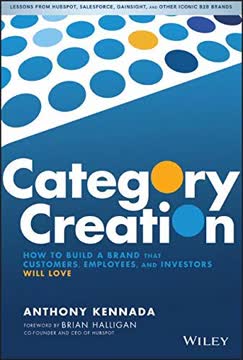
Category creation is a business strategy that focuses on positioning and evangelizing a brand new problem observed in the marketplace, in addition to the solution for that very problem.
Define the new. Unlike disruption, which targets existing markets with a "better mousetrap," category creation identifies and popularizes a problem no one has adequately addressed. This strategy involves building an entirely new industry of products and services, distinct from anything that came before, with a single company positioned as the leader. It's about starting a conversation that doesn't yet exist.
Signals of opportunity. You might be creating a category if you observe:
- Few or no direct competitors.
- Low search volume for the problem you solve.
- No dedicated press or media coverage.
- A marginalized buyer persona no one is meaningfully serving.
- A small, passionate niche of early believers, contrasted with a larger population that doesn't yet "get it."
The ultimate prize. While challenging, successfully creating and dominating a new category offers exponential rewards. Companies instrumental in category creation account for significantly higher incremental revenue growth (53%) and market capitalization growth (74%) compared to their peers. This long-term vision attracts greater funding, top talent, and ultimately, unparalleled market leadership.
2. Brand is the Heart of Category Creation in the Business-to-Human (B2H) Era
Category creation seeks to reinforce a belief that companies can both win at business while also being human first.
Beyond B2B and B2C. The digital age has blurred the lines between business-to-business (B2B) and business-to-consumer (B2C) marketing, ushering in the Business-to-Human (B2H) era. In this new reality, customers expect the same human-centric, emotive experiences at work as they do in their personal lives. Brand, defined as a "set of expectations, memories, stories, and relationships," becomes paramount.
Humanity in marketing. B2B marketers often focus on "closing logos" and "hunting elephants," forgetting the real people behind those companies. B2H marketing shifts this focus, recognizing that individuals don't turn off their humanity when they come to work. They are drawn to companies they trust and admire, especially market leaders who speak to their deeper needs and aspirations.
Category-oriented branding. For category creators, brand programs are outwardly focused on the market and customer, not just the company and product. This means:
- Hosting industry conferences, not just customer conferences.
- Publishing blogs on industry best practices, not just product use cases.
- Cultivating brand fanatics, not just customer advocates.
This approach builds thought leadership and trust, establishing your brand as a partner in the customer's journey, even before they are ready to buy.
3. Embrace the Long-Term Game: Category Creation is Inherently Challenging
Companies that are long-term greedy, on the other hand, are not interested in taking any shortcuts on their path to success.
Long-term greed is essential. Category creation demands a "long-term greedy" mindset, prioritizing lasting value over quick profits. High-growth SaaS IPOs, for instance, take an average of 14 years from founding to public markets, requiring significant capital investment and patience. This journey is not for those seeking a quick exit.
Six core challenges:
- Initial misunderstanding: Not everyone will grasp your new category immediately; you're defining a problem people don't know they have.
- Education-first customers: Early customers seek education on the category, not necessarily your product, leading to a "two-funnel effect" (category interest vs. product interest).
- High capital requirements: Creating broad awareness for an unmet need is expensive, often requiring hundreds of millions in funding, though bootstrapped companies like Qualtrics prove it's possible with patience.
- Difficult short-term planning: Traditional sales qualification (BANT) often doesn't apply, making forecasting and ROI justification challenging.
- Executive and investor buy-in: Leadership must possess patience, courage, and conviction to sustain the effort through inevitable bumps.
- Confusing competition: The real competition is often the status quo or the inertia of the market itself, not direct rivals.
Patience and conviction. These challenges highlight why category creation is "brutally hard" compared to disruption. It requires unwavering commitment from founders, executives, and investors who believe in the vision and are prepared for a marathon, not a sprint.
4. Established Companies Can Also Create New Categories
The largest companies in the world can play their advantages to build new markets and develop leadership positions within them.
Commoditization drives innovation. Even established companies in commoditized markets, like Best Buy facing the "retail apocalypse" from Amazon, can leverage category creation. When industries become crowded with similar products, the imperative shifts from competing on price to creating new value and breaking away from the noise.
Two strategic options:
- Launch into new product categories: This involves organically developing, partnering for, or acquiring new product lines that expand the company's overarching brand promise. M&A, like Salesforce acquiring Demandware or Adobe acquiring Marketo, can be a fast track to leadership in an emerging product category.
- Leverage unfair advantages: Established brands possess unique assets that startups lack. Best Buy, for example, revitalized itself by investing in employees, price matching, strategic partnerships, and doubling down on in-person services like Geek Squad, transforming its retail experience.
Unfair advantages include:
- Existing customer base: A ready audience for new offerings, providing invaluable feedback, referrals, and cross-sell/upsell opportunities.
- Established brand equity: A recognized name carries inherent trust and credibility, allowing for easier extension into new areas (e.g., Ford moving into new mobility services).
- Budget and Go-to-Market (GTM) resources: Access to capital for marketing programs, headcount for scaling sales and content, and M&A capabilities to acquire market leadership.
By strategically deploying these advantages, established companies can redefine their market position, differentiate their brands, and become category leaders, even in mature industries.
5. Purpose, Values, and Culture Must Be Lived Out Loud
People don't buy what you do; they buy why you do it.
The "why" is foundational. Simon Sinek's insight that "people don't buy what you do; they buy why you do it" is paramount for category creators. Your company's purpose—its reason for being—must be inspiring, timeless, expansive, and authentic. It informs your brand, guides decision-making, and becomes the "guiding star" for your movement.
Developing shared purpose. Articulating purpose begins with the executive team defining their individual talents and how they apply them to the world. This leads to a collective discovery of the company's higher purpose, often centered on helping customers achieve what matters most to them. This shared purpose then shapes the company's "people strategy," influencing recruitment, enablement, and alignment.
Activating purpose and values. Purpose cannot remain a static statement; it must be "lived out loud" through:
- Website explanations and inspiring blog posts.
- Inclusion in sales decks and corporate narratives.
- Executive communication platforms and PR.
- Event experiences that reflect company values (e.g., diversity and inclusion initiatives).
Gainsight's purpose, "to be living proof that you can win in business while being human-first," became a rallying cry, demonstrating that a strong purpose attracts talent and fosters deep meaning in work, impacting retention and engagement.
6. Focus on People, Not Just Products, to Build Your Category
People are at the heart of category creation, not products.
Serving human needs. Category creation inherently focuses on a "marginalized buyer" with an unmet need. Your role is to serve them as a trusted advisor on their journey up Maslow's hierarchy, helping them justify their role, build community, and achieve recognition. This means prioritizing their professional development and personal growth over immediate product pitches.
Psychology of early adopters. New categories attract "early adopters" driven by:
- Information: They are diligent researchers seeking knowledge about new trends.
- Novelty: They are motivated by the competitive advantage of adopting trends early.
- Status: They seek affiliation with brands that elevate their personal and professional identity.
Content marketing must cater to these motivations, providing educational resources, speaking opportunities, and platforms for them to share their stories and expertise.
Content marketing for people. The majority of your content efforts should be "early stage," educating the market on the "why" and "how" of your category. This builds thought leadership, drives organic traffic, and establishes your brand as the go-to resource. While product-focused content is necessary later, the initial emphasis must be on:
- Naming your category clearly.
- Identifying diverse spokespeople and contributors.
- Articulating the problem and its strategic importance.
- Providing best practices and "how-to" guides.
- Evangelizing the movement through various channels, including books and speaking engagements.
7. Cultivate a Lifestyle Brand Through Premium Content and Experiences
A lifestyle brand is a company that markets its products or services to embody the interests, attitudes, and opinions of a group or a culture.
Beyond traditional B2B. In the B2H era, B2B marketers must draw inspiration from B2C "lifestyle brands" like Red Bull, Nike, or Harley-Davidson, which sell more than products—they sell purpose, culture, and identity. For category creators, this means becoming a "career companion," inspiring and guiding the professional development of your community.
Premium content for culture. Traditional webinars and e-books are table stakes. To stand out, invest in premium content and media programs that engage customers in their personal lives:
- Digital Media: High-quality video (e.g., Gainsight's PulseCheck live workshops, executive vlogs), podcasts (e.g., "the official podcast for your category"), and even unconventional campaigns like a hip-hop single (Gainsight's "Customer Success (Who's Fired Up?)").
- Education & Career Services: Develop industry certification courses (curating existing content into learning pathways via an LMS) and online job boards. These programs drive conversions, generate revenue, and signal deep care for your community's success.
Drift's "Conversational Marketing" example. Drift's success in building a lifestyle brand highlights key principles:
- Student of the Game: Learning from B2C branding classics.
- Signal-to-Noise Ratio: Leveraging new channels like LinkedIn video early.
- Zig While Competition Zags: Creating unique offerings like "Drift Insider" to break through noise.
- Pay for Premium Content: Charging for exclusive, high-quality professional development.
- Publishing Industry Still Matters: Writing definitive books to establish thought leadership.
8. Community and Live Events Are Essential for Category Growth
There is nothing more powerful in category creation than having those same individuals who are carrying the weight of the market problem be taken in and accepted by their tribe, feeling that perhaps for the first time in a long time they are not alone.
The human need for belonging. In a digitally hyper-connected yet often isolating world, community fulfills a fundamental human need for belonging. For early adopters in a new category, who often feel alone in solving complex problems, a vibrant community provides validation, shared learning, and emotional support.
Creating experiences, not just events. As event volume grows, standing out requires crafting "experiences" that are emotive, sensory, and cultivate human connection. These go beyond typical corporate seminars, focusing on details like music, food, and surprise moments that reflect your company culture and delight attendees.
Four types of corporate experiences:
- Field Events: Local gatherings focused on best practices, not just sales pitches, to inspire and connect.
- Community Groups: Self-managed local chapters, organized by volunteer leaders, expanding your brand presence and market development.
- Executive Forums: Intimate, invite-only gatherings for senior leaders to learn from peers and engage with your vision.
- Industry Conferences: The most impactful, serving as the annual destination for education, networking, and a powerful display of category leadership (e.g., Gainsight's Pulse, growing 20x in seven years).
Planning impactful conferences. Key principles include:
- Focus on the movement, not your product.
- Source diverse speakers (VIP keynotes, executives, practitioners) to add credibility.
- Build an agenda that inspires and educates.
- Create memorable experiences (creative venues, better food, unique themes).
- Use pricing tactics and team activations to drive registrations.
- Monetize by adding value to the prospect experience (meetings, executive dinners, expo presence).
- Measure success through NPS, attendance growth, pipeline impact, and revenue.
9. Customers, Not Analysts, Ultimately Crown Category Leaders
Customers create categories—not companies.
The shift in authority. While industry analysts historically held sway in defining and validating markets, the rise of the internet, social media, and online review platforms has empowered customers with unprecedented voice. Today, customers turn to peers and trusted networks for buying advice, giving more authority to the general populace than to traditional experts.
Customer voice is paramount. In the subscription economy, customer success is inextricably linked to financial success. Satisfied customers become powerful advocates, sharing their experiences publicly and influencing purchasing decisions. This "social proof" is a core principle of persuasion, where people look to the actions of others to determine their own.
How customers create categories:
- Validate the pain: Their stories confirm the existence and relevance of the problem your category addresses.
- Co-author best practices: They share learnings and push the boundaries of the discipline, often on your platforms.
- Make your product better: Their feedback directly influences product roadmaps, ensuring your solution meets real-world needs.
- Crown the leader: Through public endorsements, case studies, testimonials, and online reviews, they cast their vote for the category-defining company.
Engaging with analysts. While customers are king, analysts still play a role, especially for large enterprise deals. Engage them strategically later in your journey through:
- Sponsored research to validate your category hypothesis.
- Speaking opportunities at your events to add credibility.
- Regular briefings to influence their research agendas, especially once your category gains traction.
However, prioritize making customers successful and activating them as brand ambassadors, as their authentic voice is the most powerful force in category creation.
10. Authentic Executive Communication Scales Trust and Influence
The most effective form of leadership and trust building is authenticity.
Executives as brand ambassadors. In the B2H world, your executive team serves as the public face of your company's purpose, values, and culture. Customers are drawn to brands they admire, and executives' authenticity and vulnerability can forge deep connections, establishing trust at scale. This is a "superpower" for category creators, as communities look to leaders for inspiration.
Marketing's role in "exec comms." Marketing plays a critical role in coaching executives and amplifying their authentic voice through various programs. Julie Ogilvie's "Four Cs" of effective executive communications provide a framework:
- Comfort: Media training and simulated environments reduce stress.
- Context: Aligning executives with specific messages and preparing them for situations.
- Content: Developing concise, natural-sounding content that advocates for the category itself.
- Connection: Leveraging personal narratives and vulnerability to build rapport.
A fifth "C," Culture, ensures that executive communications consistently reflect company values, like Gainsight's "childlike joy" expressed through Carpool Karaoke or rap performances.
Scaling trust through channels. Marketers can amplify executive authenticity via:
- Contributed Articles: Opinion pieces in high-authority publications.
- Social Media: Individual profiles on LinkedIn and Twitter for engagement and content distribution.
- Speaking at Events: Internal and external opportunities to share industry perspectives.
- Brand Campaigns: High-quality audio and video content that showcases culture and personality.
Keith Krach, a "Category Kingmaker" for four categories, emphasizes that trust is built on authenticity, and marketing helps scale this crucial element, turning executive courage into a brand superpower.
11. Connect Category Creation to Tangible Growth Metrics
Not everything that can be counted counts, and not everything that counts can be counted.
Quantifying the unquantifiable. While Albert Einstein's quote offers marketers some solace, CFOs and investors demand quantifiable impact. Category creation, despite its intangible benefits, must ultimately correlate to pipeline creation and revenue growth. The "two-funnel effect" (category interest vs. product interest) presents a challenge, but successfully bridging this gap leads to hypergrowth.
Six key growth outcomes:
- Marketable Database Growth: Quantify conversions (new contacts) from organic and paid efforts, segmented by persona, company size, and industry. This measures funnel one health.
- Marketing Database Engagement: Track ongoing interaction with content (webinars, site visits, event registrations) to signal category interest and inform lead scoring.
- Pipeline Creation (Sourcing): Measure MQLs (marketing qualified leads), SQLs (sales qualified leads), and SALs (sales accepted leads) to quantify product interest (funnel two).
- Pipeline Acceleration (Influence): Demonstrate how marketing engagement with active opportunities increases close rates and reduces sales cycles.
- New Business ARR: Directly attribute new customer bookings to category marketing efforts, using win/loss interviews to understand brand's role in purchasing decisions.
- Expansion ARR: Measure Net Revenue Retention (NRR), including renewals, upsells, and cross-sells. Category creation also drives "second-order revenue" through champion changes and word-of-mouth referrals.
Conference impact case study. Gainsight's Pulse conference, for example, significantly impacts growth:
- 3.5x higher close rates for attendees.
- 40%+ higher Average Contract Values (ACVs) for attendees.
- 13 points higher logo retention for customers with attendees.
These metrics prove that category creation programs, while broad, directly fuel the sales funnel and contribute to sustainable business growth.
12. Beyond Metrics: The Intangible Rewards of Category Creation
People are not buying products and services anymore, they are buying purpose.
Purpose-driven impact. Duncan Wardle, former VP of Innovation at Disney, highlights that customers buy purpose, not just products. For category creators, this means telling a compelling story that resonates deeply, leading to profound intangible benefits for both customers and teammates. These benefits, while harder to quantify, are critical for long-term success and fulfillment.
For customers:
- Radically High Ambition: They are drawn to your bold vision of creating a new wave, not just surfing an existing one. They become invested in your success, rooting for the category leader.
- People Centricity: They find deeper, less transactional relationships within the community you foster, aligning with a future where humans come first.
- Pioneering Spirit: They embrace the opportunity to be part of writing history for a new industry, valuing transparency and collaboration.
For teammates:
- Engagement and Retention: A strong purpose, as shown by Culture Amp's research, correlates with higher employee engagement and stock price growth. Teammates find deep meaning in contributing to a noble mission.
- Career Transformation: Category creation offers opportunities for personal and professional growth, attracting entrepreneurial talent who thrive on solving hard problems and shaping a new market.
- Healthy Alliance: Companies foster transparency, buy-in, candor, and rigor, creating a culture where everyone contributes to winning. This ensures that even as individuals move on, they remain allies, carrying the category's mission forward.
Ultimately, category creation is about more than just financial success; it's about building a movement that inspires, connects, and empowers people, leaving a lasting impact on an entire industry.
People Also Read