

Key Takeaways
Thirteen bloodline families allegedly run the world from behind the scenes
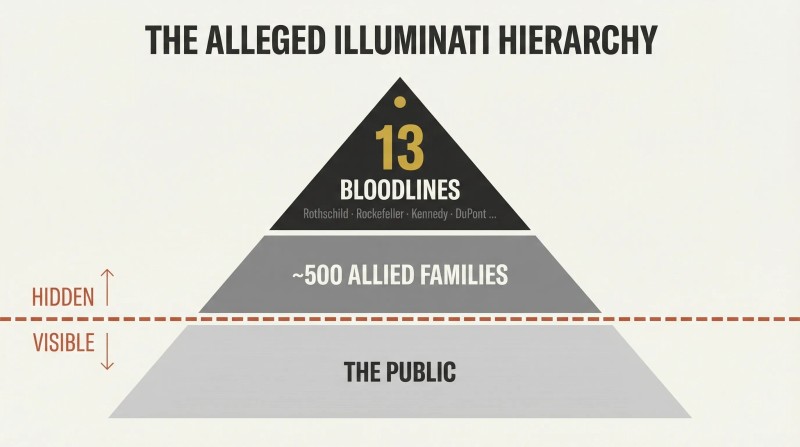
Springmeier's central thesis: 13 specific family bloodlines — Astor, Bundy, Collins, DuPont, Freeman, Kennedy, Li, Onassis, Rockefeller, Rothschild, Russell, Van Duyn, and a 13th "Merovingian" line — form a secret ruling hierarchy the author calls the Illuminati, or "Moriah." These families allegedly gained power over centuries through occult practices, strategic marriages, banking monopolies, and control of intelligence agencies.
About 500 allied families worldwide serve this inner circle, but the 13 bloodlines sit at the apex. Springmeier claims evidence from historical records, genealogical research, and testimony from defectors. The book frames every major modern event — the French Revolution, both World Wars, the creation of Israel — as orchestrated by these interconnected dynasties pursuing a single plan for one-world government.
Trace who funds both sides of any conflict to spot the real puppeteer
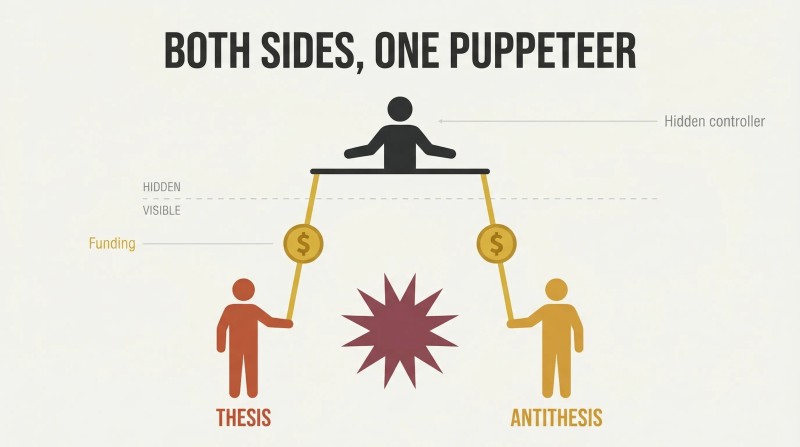
The Hegelian dialectic as weapon. Springmeier argues the elite deliberately manufacture opposing forces — thesis versus antithesis — so that the resulting "synthesis" serves their agenda. He compares it to the Mafia's classic extortion racket: send threatening letters, then offer "protection" from the very threat you created. The conflict itself is the tool; both sides are controlled.
Concrete examples fill the book. The Rothschilds allegedly financed both Napoleon and the coalition opposing him. During World War II, the author claims Rockefeller sold Hitler oil through Spain while simultaneously funding the Allies. Communist revolution and capitalist monopoly are presented not as genuine opposites but as two arms of the same body — both designed to concentrate power and eliminate independent competitors.
Dynastic wealth hides inside trusts nested within trusts
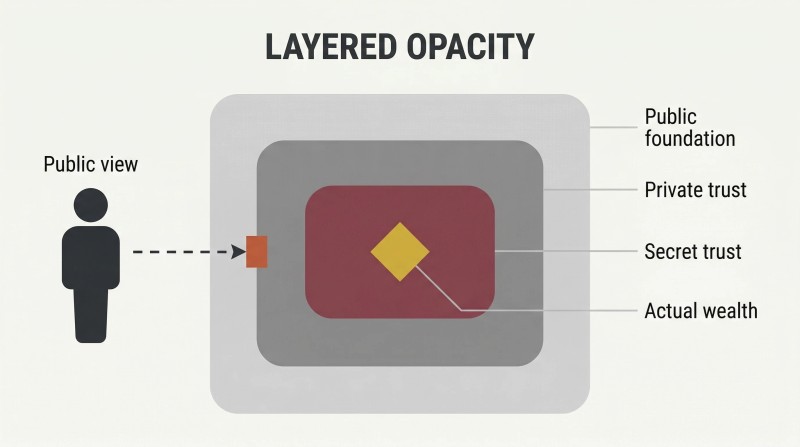
Invisible financial architecture. The Rockefellers, Springmeier writes, maintain between 200 and several thousand foundations and trusts — nobody knows the real number. Nelson Rockefeller paid zero income taxes in 1970 despite being perhaps America's richest man. The DuPonts operate similarly: when Eugene DuPont died, even family members barely knew the company's true worth.
The mechanism is layered opacity. Donations flow from one family-controlled foundation to another family-controlled organization, appearing charitable while never leaving their network. Delaware incorporation laws allow total corporate secrecy — Disney reincorporated there in 1987 for precisely this reason. The author argues that public balance sheets dramatically understate these families' real financial power because most holdings travel through proxies, holding companies, and offshore structures.
Elite families use cousin marriage as a power-preservation tool
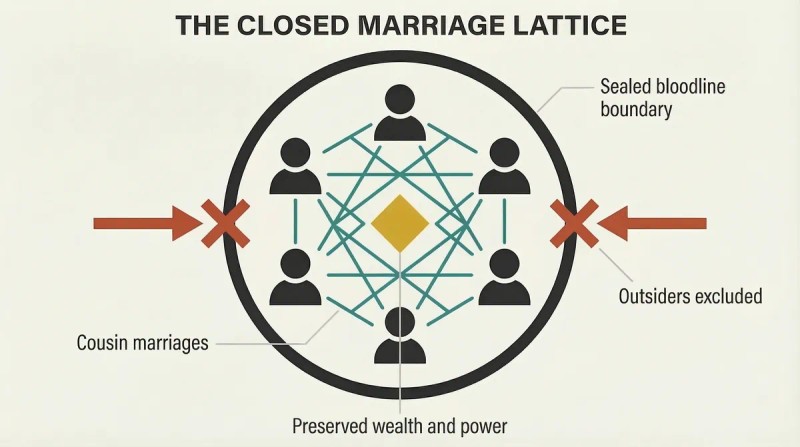
Endogamy locks in control. Of Mayer Amschel Rothschild's 18 grandchildren, 16 married first cousins. The DuPonts followed the same pattern, intermarrying so frequently that their family tree resembles a lattice. The Astors, Kennedys, and Russells all show extensive intermarriage with other bloodlines on the author's list — Collins, Freeman, Phelps, and each other.
Springmeier argues this is not merely social preference but strategic design. Mayer Rothschild's will reportedly dictated that family business remain exclusively within the bloodline — no outside partners, no outside shareholders. Daughters and their husbands were explicitly excluded from the business. When children are "adopted out" to hide paternity, the biological parents still participate in internal ceremonies — preserving the genealogical chain while concealing it from outsiders.
Secret societies layer management between hidden rulers and the public
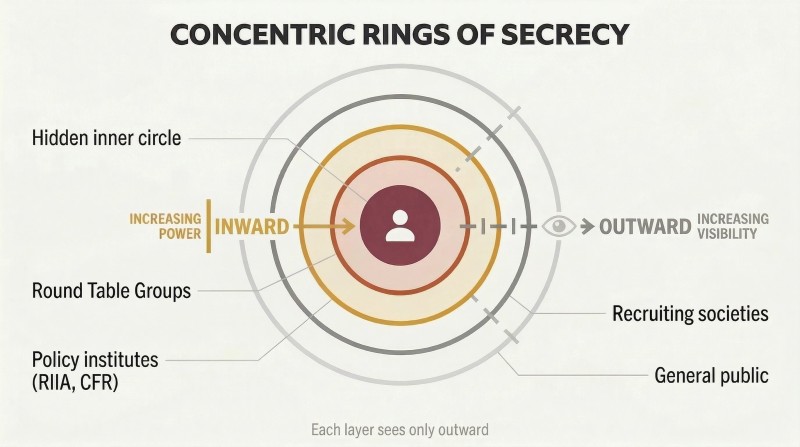
Concentric rings of secrecy. Springmeier maps a specific hierarchy: the Prieure de Sion and the Committee of 300 sit at the top; below them, the Round Table Groups; then the Royal Institute of International Affairs and the Council on Foreign Relations at the fourth layer; the Pilgrim Society at the sixth. Freemasonry, Skull and Bones, and groups like the Bohemian Grove serve as recruiting and vetting layers.
Each layer knows only what it needs to. Lower-level members have no idea of the structure above them, much like military compartmentalization. The author notes that the Astors helped create the Pilgrim Society in 1901, the Rothschilds backed the Round Table Groups, and the CFR was seeded by Rothschild-connected figures at the Hotel Majestic meetings of 1919.
The same families bankrolled both sides of every major modern war
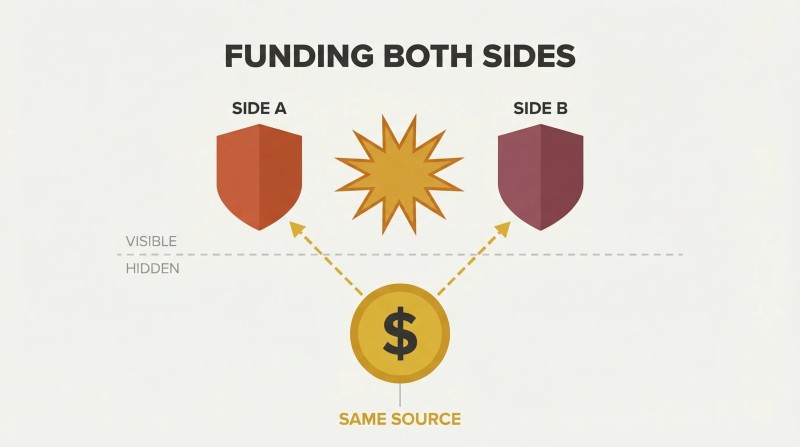
War as managed investment. Springmeier details how the Rothschild courier network gave the family advance knowledge of the Waterloo outcome, which Nathan exploited on the London stock exchange. The family simultaneously financed the British war effort and — through brother James in Paris — maintained relations with Napoleon's government, even smuggling gold across the French blockade with French approval.
During World War II, the author claims, a secret executive order by FDR made trading with the enemy legal with Treasury approval. Onassis's fleet suffered zero losses despite sailing through war zones, while 360-plus other Greek merchant ships were sunk. The Krupps manufactured Hitler's weapons while their American relatives — the Bohlens — served as top U.S. diplomats to the Soviet Union. Both sides of the conflict, Springmeier argues, were managed assets.
Disney's wholesome image allegedly masks occult programming
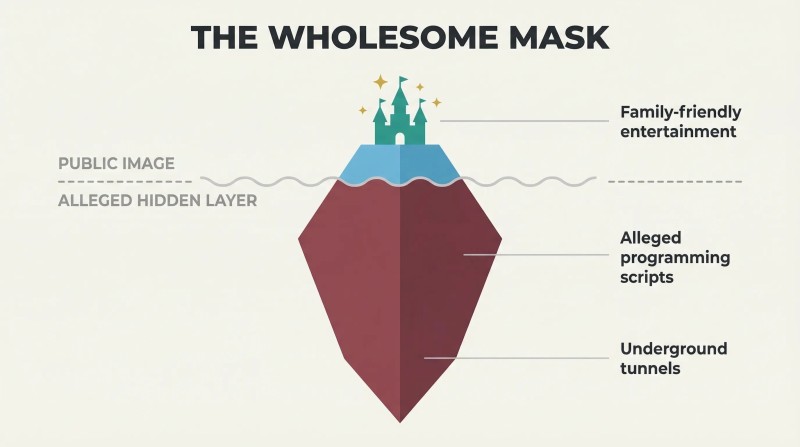
The longest chapter exposes Disney. Springmeier argues that Disneyland and Disney World serve dual purposes: public entertainment above ground, and alleged trauma-based mind-control programming in underground tunnel networks beneath. He claims Disney's strict wholesome image was deliberately cultivated — with backing from the B'nai B'rith, major studios, and the establishment press — specifically because it provides perfect cover.
The author details how specific films like Fantasia, Alice in Wonderland, and Pinocchio are allegedly used as programming scripts, with colors, music scales, and storylines mapped to dissociative states. Walt Disney himself, Springmeier writes, was an FBI informant (documented via Freedom of Information Act records), a 32nd-degree Freemason, and secretly connected to organized crime through figures like Joseph Schenck and Harry Cohn.
Tax-exempt foundations buy control of schools, churches, and crisis lines
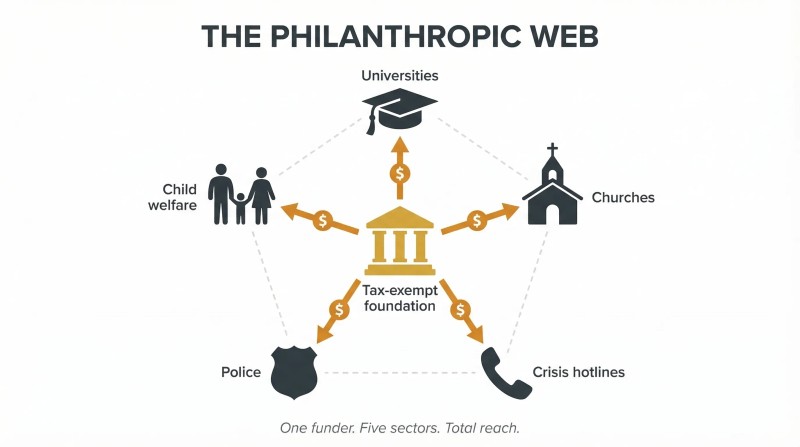
Philanthropy as soft dominion. The Rockefeller and Carnegie foundations bankrolled two-thirds of all higher education endowments in early 20th-century America, pushing curricula toward socialism and one-world-government ideals. The Sealantic Fund directed Rockefeller money specifically into Protestant seminaries. The Rockefellers helped launch the Federal Council of Churches, which the author argues was designed to co-opt Christianity from within.
The Reynolds family's Z. Smith Reynolds Foundation illustrates local control: in a single year it funded police departments, crisis counseling hotlines, child welfare agencies, Baptist churches, Planned Parenthood chapters, and the state Department of Human Resources across North Carolina. Springmeier argues this means any abuse survivor calling a crisis line in that region connects to a network ultimately funded by the same families.
These dynastic families place themselves above every nation's legal system
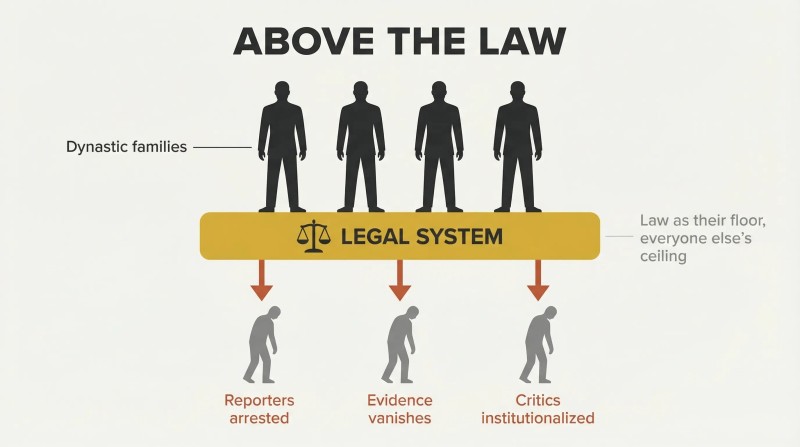
Immunity through power concentration. Friedrich Krupp's pedophilia was known to police, politicians, and journalists across Europe — yet German authorities arrested reporters who tried to publish the story rather than the perpetrator. When Krupp's wife complained, she was committed to a mental hospital. John Jacob Astor received special government trade privileges from Jefferson and Gallatin that let him profit while all other American ships were embargoed.
Disneyland operates with its own private police force, its own rules, and its own detention cells — no constitutional protections apply. The author notes that Disney's unincorporated Florida property was granted extraordinary sovereignty: its own laws, its own tax rates, its own hospitals. When powerful people are investigated, Springmeier writes, evidence disappears, witnesses recant, and prosecutors lose interest.
Analysis
Springmeier's Bloodlines of the Illuminati occupies a unique position in conspiracy literature as perhaps the most genealogically ambitious attempt to map alleged hidden power. Published in 1995 during the American militia movement's zenith, the book channels anxieties about invisible authority into a specific structural framework — 13 named families — giving readers a concrete enemy rather than the amorphous 'them' of vaguer conspiracy narratives.
Methodologically, the work blends three distinct evidence types: documented historical facts (Rothschild banking records, DuPont corporate histories, Disney FBI files), genealogical connections of varying rigor, and unverifiable testimony from anonymous 'ex-Illuminati insiders.' The author moves freely between these evidentiary registers without flagging their vastly different reliability. A documented fact — that the Rockefellers funded seminaries — sits beside an anonymous claim about underground programming tunnels, both treated as equally established.
The book's most analytically interesting contribution is its framework for how dynastic wealth perpetuates through legal instruments (nested trusts, tax-exempt foundations, Delaware incorporation) and social mechanisms (endogamy, private clubs, boarding schools). These observations about wealth concentration have since found more rigorous expression in Thomas Piketty's work on capital returns exceeding growth rates. Where Piketty identifies structural economic mechanisms, Springmeier attributes the same outcomes to deliberate conspiracy — an important epistemological distinction.
The fundamental weakness is unfalsifiability: any counter-evidence is reframed as successful deception by the conspirators; any public disagreement between alleged members is dismissed as theater. This epistemological closure immunizes the framework against correction, which is precisely what separates conspiracy thinking from investigative journalism. The framework expanded over time to absorb virtually any institution — Disney, the Mormon Church, the Jehovah's Witnesses — suggesting an unfalsifiable theory rather than a testable one. Nevertheless, the book remains culturally significant as a primary source document of late-20th-century American conspiracy culture whose influence reverberates through QAnon genealogies and Illuminati-themed media today.
Review Summary
Bloodlines of the Illuminati receives polarized reviews with an overall 4.02/5 rating. Supporters praise its extensive research into alleged ruling families controlling world affairs, finding it eye-opening and informative despite grammatical issues and dense content. They appreciate the historical connections and conspiracy revelations. Critics dismiss it as poorly sourced propaganda, containing right-wing fearmongering, historical inaccuracies, and unsubstantiated claims requiring blind faith. Common complaints include poor organization, lack of verifiable evidence, and the author's narrow religious perspective. Most agree it's entertaining but recommend approaching with skepticism and critical thinking.
People Also Read




Glossary
The 13 Bloodlines
Alleged ruling Illuminati familiesSpringmeier's framework identifying 13 specific family bloodlines—Astor, Bundy, Collins, DuPont, Freeman, Kennedy, Li, Onassis, Rockefeller, Rothschild, Russell, Van Duyn, and a 13th Merovingian line—as the secret ruling hierarchy of the world. Five of these families form an inner core. The author claims these bloodlines have maintained power through generational occult practices, intermarriage, and control of institutions.
Moriah
Illuminati's internal nameThe name that Springmeier says members of the Illuminati use internally to refer to their own organization and its satanic hierarchy. The term distinguishes the actual secret ruling structure from its many public-facing front organizations like the CFR, Round Table Groups, and various secret societies that serve as outer layers of the system.
Committee of 300
Secret legislative governing bodyAn alleged secret legislative body within the Illuminati hierarchy that Springmeier describes as making key decisions about global commerce, including who is permitted to participate in lucrative trades like the opium business. The Committee reportedly decides which families receive economic privileges and which independent competitors are eliminated. John Coleman's research on this body is frequently cited.
Mothers of Darkness
High-ranking female Illuminati membersA specific rank within the Illuminati hierarchy for women, described by Springmeier as a high-level position in the satanic power structure. The Mothers of Darkness allegedly have their own castle in southern Belgium where rituals are conducted and a secret handwritten history book is maintained. Each of the 13 families reportedly has its own set of Mothers of Darkness.
Fam-Trads
Families transmitting occult practices generationallyA term coined by occultist Isaac Bonewitz and adopted by Springmeier, referring to powerful families that have passed witchcraft and occult practices down through generations for centuries. Unlike converts to witchcraft, Fam-Trads carry lineage-based power. The author argues these families concealed their practices behind more respectable fronts—Freemasonry in the 18th century, Spiritualism and Theosophy in the 19th.
Feast of the Beast
Major ritual every 28 yearsA year-long holiday occurring every 28 years during which, according to Springmeier, high-level satanists in the Illuminati hierarchy receive new instructions for carrying out their long-range plan for world domination. Representatives of the top 13 families allegedly gather for this event, which the author describes as the occasion when Satan personally delivers updated directives to his hierarchy.
Hegelian dialectic
Create opposing forces for desired outcomeAs used by Springmeier, the deliberate creation of a thesis and its opposite (antithesis) so that the resulting conflict produces a pre-planned synthesis that serves the Illuminati's agenda. The author's primary example: international socialism (communism) was created as the thesis, national socialism (Nazism) as the antithesis, and the desired synthesis was movement toward one-world government through institutions like the United Nations.
Round Table Groups
Elite coordinating organizations worldwideSecret and semi-secret organizations created beginning around 1910 by Cecil Rhodes's inner circle, financially backed by families including the Astors and Rothschilds. These groups spawned the Royal Institute of International Affairs in London and the Council on Foreign Relations in the United States. Springmeier places them in his hierarchy as sitting between the top secret ruling bodies and the more visible policy organizations.
Prieure de Sion
Ancient order guarding bloodline secretsAn alleged secret society dating to the First Crusade (1099 AD) that Springmeier connects to the 13th Illuminati bloodline. The Prieure de Sion supposedly guards the Merovingian genealogy and has been led by Grand Masters including Jean Cocteau and Gaylord Freeman. The author links it to the creation and guidance of both the Rosicrucians and Freemasonry, and connects it to the Freeman family—one of his 13 bloodlines.
Monarch programming
Trauma-based total mind controlA specific alleged mind-control methodology using systematic trauma, drugs, and hypnosis to create dissociative identity states (multiple personalities) in victims, which can then be independently programmed and activated. Springmeier claims Disney films—especially Fantasia, Alice in Wonderland, and Wizard of Oz—serve as foundational programming scripts. The name references the Monarch butterfly, whose multigenerational migration pattern symbolizes the passing of programming knowledge across generations.
FAQ
1. What is Bloodlines of the Illuminati by Fritz Springmeier about?
- Exposes 13 Illuminati bloodlines: The book investigates the existence and influence of 13 powerful Illuminati families, claiming they control world events from behind the scenes.
- Historical and genealogical research: Springmeier uses thousands of sources, including books, newspapers, insider testimonies, and genealogical records to support his claims.
- Focus on occult and mind control: The narrative centers on the families’ involvement in occult rituals, Satanism, and trauma-based mind control as tools for maintaining power.
- Not presented as theory: The author insists his work is factual, not speculative, aiming to reveal the hidden rulers of global society.
2. Why should I read Bloodlines of the Illuminati by Fritz Springmeier?
- Unveils hidden power structures: The book claims to expose secretive families and organizations that mainstream history and media allegedly conceal.
- Connects history and occultism: It links major historical events, political assassinations, and financial manipulations to occult bloodlines, offering a different perspective on world affairs.
- Challenges mainstream narratives: By revealing the alleged dark side of famous families, it encourages readers to question accepted history and current events.
- Provides insider information: Springmeier draws on interviews, secret documents, and occult knowledge to present a comprehensive picture of Illuminati influence.
3. Who are the 13 Illuminati bloodlines discussed in Bloodlines of the Illuminati by Fritz Springmeier?
- Named elite families: The book details families such as the Astors, Bundys, Collins, DuPonts, Freemans, Kennedys, Li, Onassis, Reynolds, Rockefellers, Rothschilds, Van Duyns, and the Merovingian bloodline.
- Intermarriage and secrecy: These families intermarry to consolidate power and maintain their bloodlines, often keeping their true affiliations secret.
- Occult and political power: Each family is described as holding significant influence in politics, finance, secret societies, and occult practices.
- Global reach: The bloodlines span across America, Europe, and Asia, with connections to both Western and Eastern secret societies.
4. What are the main methods of control used by the Illuminati families according to Bloodlines of the Illuminati?
- Secret societies as instruments: Organizations like Freemasonry, the Prieure de Sion, and the Triads are used to coordinate occult, political, and criminal activities.
- Mind control and trauma: The book claims the families use trauma-based mind control (Monarch programming) to create dissociative identities and control both insiders and the public.
- Financial and political manipulation: Illuminati families allegedly control banking, finance, and governments, funding wars and revolutions to shape global events.
- Media and cultural influence: Entertainment, education, and religious institutions are infiltrated to spread occult symbolism and maintain societal control.
5. How does Bloodlines of the Illuminati by Fritz Springmeier describe the role of Satanism and occultism in the Illuminati bloodlines?
- Core spiritual foundation: Satanism and occult rituals are depicted as central to the Illuminati’s power structure, used to gain spiritual control and enforce loyalty.
- Ritual abuse and mind control: The families are said to practice ritual abuse and Monarch mind control programs to maintain secrecy and obedience.
- Symbolism and magic: Occult symbols like the pentagram, hexagram, and swastika are used in rituals and as family emblems, linking the bloodlines to ancient mystery religions.
- Public deception: Public-facing groups like the Church of Satan are described as distractions, while real Satanic activities remain hidden and more sinister.
6. What is the significance of secret societies such as Freemasonry, the Prieure de Sion, and the Triads in Bloodlines of the Illuminati?
- Organizational frameworks: These societies serve as the backbone for Illuminati coordination, enabling global reach and secrecy.
- Cultural compatibility: The book highlights how Western and Eastern secret societies share rituals and cooperate in global conspiracies.
- Occult hierarchy: Societies like the Prieure de Sion are linked to royal bloodlines and the Satanic hierarchy, preserving ancient occult knowledge and power.
- Infiltration of institutions: These groups are said to have infiltrated governments, police, and financial institutions, making them central to the New World Order’s plans.
7. How does Bloodlines of the Illuminati by Fritz Springmeier portray the Rothschild and Rockefeller families’ influence on global power?
- Rothschilds as financial overlords: The family is depicted as controlling vast wealth, international banking, and influencing governments and the creation of Israel.
- Occult and political ties: Both families are described as practicing occult rituals, manipulating politics, and funding wars for their benefit.
- Rockefellers’ control over religion and education: The Rockefellers are said to fund seminaries, universities, and religious organizations to promote New Age and socialist agendas.
- Secretive family structures: Power is maintained through arranged marriages, secret courier systems, and control over major institutions.
8. What does Bloodlines of the Illuminati reveal about the use of mind control, especially Monarch programming?
- Trauma-based programming: The book claims all top Illuminati families are involved in creating Monarch slaves, using trauma to induce multiple personality disorder (MPD).
- Use in intelligence and rituals: Monarch slaves are allegedly used for covert operations, sexual slavery, and ritual abuse by intelligence agencies and Illuminati elites.
- Programming triggers in media: Symbols, colors, and songs embedded in entertainment are said to serve as triggers for programmed individuals.
- Societal impact: Mind control is linked to the infiltration of religious organizations and supports the New World Order by controlling influential people.
9. How does Bloodlines of the Illuminati by Fritz Springmeier describe the Disney family and the role of Disney in mind control?
- Disney as a deception: Walt Disney and his empire are portrayed as a front for occultism, mind control, and satanic rituals under a wholesome public image.
- Use of films and theme parks: Disney movies and parks are described as tools for trauma-based mind control, with secret programming centers and underground tunnels.
- Programming scripts and symbolism: Films like Fantasia are said to contain occult themes and color programming, used to indoctrinate children and create dissociative identities.
- Employee surveillance and secrecy: Disney is depicted as employing private police and spies to suppress negative publicity and maintain strict operational control.
10. What is the significance of the Merovingian bloodline and the 13th Illuminati family in Bloodlines of the Illuminati?
- Source of the Anti-Christ: The 13th bloodline is described as the origin of the future Anti-Christ, claiming descent from both Jesus’s holy blood and Satan’s seed.
- Connections to royalty and leaders: This bloodline includes British royalty, American political leaders, and Mormon presidents, linking it to occult and satanic heritage.
- Complex genealogy: The bloodline is difficult to trace due to interweaving with other families and secretive practices.
- Ancient roots: Associated with the Tribe of Dan, Druidism, and ancient mystery religions, it is said to maintain vast power and prepare for the Anti-Christ’s rise.
11. How does Bloodlines of the Illuminati by Fritz Springmeier explain the use of deception and disinformation by the Illuminati and intelligence agencies?
- Deception as control: The Illuminati and intelligence agencies are said to use lies and disinformation to manipulate public perception and protect their agendas.
- Types of agents and tactics: The book details various agents (double agents, sleeper agents, provocateurs) and techniques like staged arrests and coded communication.
- Impact on opposition: Disinformation is used to discredit genuine opposition, with many anti-NWO figures allegedly being controlled or discredited.
- Societal confusion: The spread of disinformation creates distrust and confusion, weakening resistance to Illuminati control.
12. What warnings and advice does Fritz Springmeier give readers in Bloodlines of the Illuminati?
- Investigate independently: Springmeier urges readers to research and verify facts for themselves rather than accepting his claims at face value.
- Awareness over fear: He emphasizes that Christians and others should be aware of Illuminati control but not live in fear, advocating for spiritual preparedness.
- Deceptive appearances: The book warns that entities like Disney, despite their wholesome facade, are deeply involved in occult mind control and global conspiracies.
- Urgency for awareness: Readers are encouraged to recognize hidden realities behind popular culture and institutions to resist manipulation and protect future generations.
Download PDF
Download EPUB
.epub digital book format is ideal for reading ebooks on phones, tablets, and e-readers.








































