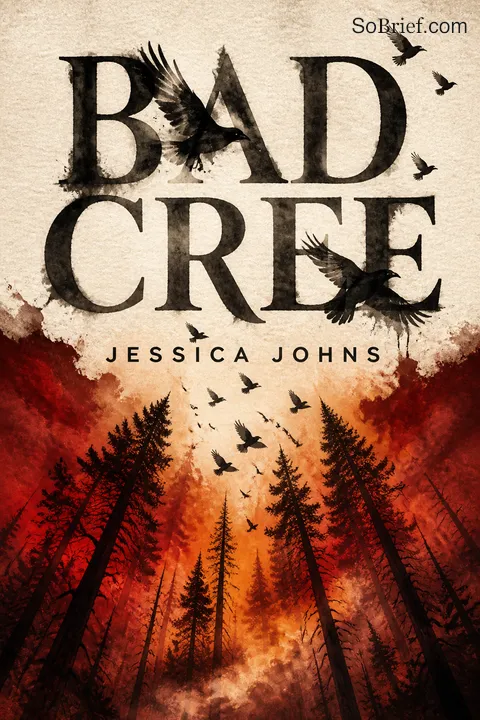

Plot Summary
Nightmares Cross Into Day
Mackenzie wakes from a nightmare clutching a crow's head, the sensation and smell lingering even after it vanishes. This is not the first time her dreams have left physical traces—branches, scents, and now blood. The crows outside her Vancouver apartment seem to watch her, their presence growing more ominous. Mackenzie's anxiety mounts as she struggles to distinguish dream from reality, haunted by visions of her dead sister, Sabrina, and the sense that something is deeply wrong. The boundaries between worlds are thin, and Mackenzie's fear is palpable as she seeks comfort in routine and the company of her friend Joli, but the sense of being hunted by her own dreams only intensifies.
Crows Gather, Shadows Linger
The crows' presence becomes impossible to ignore, gathering in unnatural numbers and following Mackenzie wherever she goes. Their behavior is a warning, echoing Cree beliefs about crows as messengers and omens. Mackenzie's dreams grow more vivid and terrifying, replaying the trauma of Sabrina's death and hinting at unresolved guilt. The city's noise and bustle offer little protection from the supernatural, and Mackenzie's isolation deepens. She reaches out to her family, but the distance—both physical and emotional—remains. The crows' watchfulness is a constant reminder that the past is not finished with her.
Family Calls and Old Wounds
Desperate for answers, Mackenzie calls her Auntie Doreen, breaking the silence she's kept from her family. The conversation is laced with humor and love, but also with the weight of generational trauma and the pain of separation. Auntie Doreen listens, offering both skepticism and belief, and encourages Mackenzie to reconnect with her mother and other relatives. The call stirs memories of home, the lake, and the family's history of loss. Mackenzie's reluctance to return is rooted in guilt over Sabrina's death and her own escape from the suffocating grief that followed.
Haunted by Sister's Absence
Mackenzie's memories of Sabrina are fragmented, coming in flashes of childhood, shared laughter, and the nightmarish image of her sister's corpse. The anniversary of Sabrina's death looms, intensifying Mackenzie's sense of responsibility and regret. She recalls the last summer at the lake, the closeness of her family, and the subtle ways Sabrina began to change after their grandmother's death. The pain of absence is compounded by the knowledge that Mackenzie did not return for Sabrina's funeral, a choice that has left her estranged from her mother and twin sister, Tracey.
Dream Relics and Warnings
The boundary between dream and waking life continues to erode as Mackenzie brings objects—branches, a crow's head—back from her nightmares. The crows' behavior escalates, and Mackenzie's friend Joli urges her to seek help from her family. Conversations with her aunties and cousin Kassidy reveal that dreams and visions run in the family, each woman experiencing her own form of prophetic or haunting dreams. The sense of being chosen or cursed grows, and Mackenzie begins to suspect that her dreams are not just personal, but part of something larger and more dangerous.
The Lake's Hidden Memory
Mackenzie finally returns to her family in Alberta, greeted by a house full of relatives and the ghosts of the past. The lake, a place of childhood joy and trauma, becomes the focal point of her memories and dreams. Old photographs reveal a mysterious scar on Sabrina's chest, a wound no one remembers. The family's grief is palpable, but so is their love and resilience. Mackenzie's presence stirs up old wounds, but also offers a chance for healing and understanding. The lake holds secrets that are key to unraveling the mystery of Sabrina's death and the nightmares that plague Mackenzie.
Grief's Unending Echo
The family's grief over the deaths of kokum (grandmother) and Sabrina is ever-present, shaping their relationships and sense of self. Mackenzie's mother, Loretta, reveals her own history of prophetic dreams and the ways she tried to suppress them. The family's coping mechanisms—humor, storytelling, avoidance—are both a shield and a source of pain. Mackenzie's guilt over leaving and not returning for Sabrina's funeral is confronted in tense conversations with Tracey, who accuses her of running from responsibility. The sisters' bond is tested, but the possibility of reconciliation emerges as they share their secrets and pain.
Secrets in the Bloodline
The women in Mackenzie's family reveal their own experiences with dreams and visions, each carrying a piece of the puzzle. Auntie Verna dreams in colors that warn of danger or safety; Kassidy dreams the future; Tracey and Sabrina shared dreams as children. These gifts are both a blessing and a curse, isolating them from others and from each other. The family's history of trauma—residential schools, addiction, loss—intertwines with their supernatural abilities, suggesting that the line between psychological and spiritual inheritance is blurred. The family must confront these secrets together if they are to survive.
The Return of the Past
Mackenzie's dreams become more intense and revelatory, replaying the night at the lake when Sabrina and Tracey disappeared into the woods. The dreams show not just memory, but a supernatural distortion: winter in summer, crows attacking, wounds that appear and vanish. The family realizes that something monstrous—wheetigo, a creature from Cree legend—may have targeted Sabrina, feeding on her grief and isolation. The wheetigo's presence is felt in the land, the dying trees, and the family's collective pain. The past is not just remembered, but re-enacted, demanding resolution.
The Shape of the Monster
Through research, family stories, and dreams, the women piece together the nature of the wheetigo: a shapeshifting, cannibalistic spirit born of greed and sustained by sorrow and isolation. The wheetigo lures its victims by mimicking loved ones, feeding on their pain until it destroys them. The family realizes that Sabrina was not simply a victim of fate, but was targeted by the wheetigo after kokum's death. The monster's influence is insidious, turning family members against themselves and each other, and threatening to claim Mackenzie and Tracey as well.
Dreamworlds and Real Dangers
The family devises a plan to confront the wheetigo, using their shared dreams and inherited gifts. Mackenzie, Tracey, and Kassidy enter the dreamworld together, determined to face the monster and end its hold on their family. The boundaries between dream and reality blur as they fight to save each other from the wheetigo's hypnotic influence. The crows, once seen as omens of death, become allies, attacking the monster and offering protection. The battle is both physical and spiritual, requiring the women to confront their deepest fears and regrets.
The Truth About Sabrina
The final confrontation reveals the truth about Sabrina's death: she was wounded by the wheetigo, her grief and isolation making her vulnerable. The scar on her chest is both literal and symbolic, a mark of the monster's touch. The family's failure to go after her that night is a source of lasting guilt, but also a lesson in the importance of togetherness and vigilance. By facing the wheetigo and acknowledging their own pain, the women are able to break the cycle of isolation and begin to heal. Sabrina's spirit is honored, and her memory becomes a source of strength rather than sorrow.
The Wheetigo's Hunger
The wheetigo is revealed as a product of both personal and collective trauma, born from the greed of colonial exploitation and sustained by the wounds inflicted on Indigenous families. Its hunger is for more than flesh—it feeds on despair, loneliness, and the breakdown of community. The family's struggle is not just against a supernatural enemy, but against the forces that have tried to erase their culture and connections. The wheetigo's defeat is a victory over both the monster and the legacy of harm that created it.
Facing the Woods Together
The family's survival depends on their willingness to face the woods—and the past—together. Mackenzie, Tracey, and Kassidy refuse to let each other go, holding hands as they confront the wheetigo in the clearing. The crows, symbols of kinship and memory, guide and protect them. The battle is fierce, but the women's love and solidarity prove stronger than the monster's hunger. By refusing to be isolated, they break the wheetigo's power and reclaim their agency. The woods, once a place of fear, become a site of healing and renewal.
The Battle for the Heart
The wheetigo's heart, the source of its power, is exposed and destroyed with the help of the crows and the family's courage. The act is both violent and redemptive, a necessary rupture to end the cycle of harm. The monster's death is not the end of grief, but it allows the family to begin the work of healing. The land itself seems to respond, the woods and lake showing signs of recovery. The family's bonds are strengthened, and the possibility of a future free from the wheetigo's shadow emerges.
Healing, Forgiveness, and Home
In the aftermath, the family gathers to mourn, celebrate, and support each other. Mackenzie reconciles with her mother and Tracey, acknowledging the pain of the past and the need for forgiveness. The family's traditions—cooking, storytelling, laughter—become sources of comfort and continuity. Mackenzie prepares to return to Vancouver, carrying with her the lessons of home and the strength of her ancestors. The crows remain, not as omens of death, but as reminders of kinship and survival.
Ancestors, Cycles, and Survival
The story ends with a sense of continuity and hope. Mackenzie dreams of her kokum, receiving reassurance that the dead are never truly gone. The family's survival is rooted in their ability to adapt, remember, and love fiercely. The wheetigo's defeat does not erase the scars of the past, but it allows for new growth. The cycles of grief and healing, loss and return, are embraced as part of life. The family's story is one of endurance, transformation, and the enduring power of kinship.
Analysis
Bad Cree is a powerful exploration of grief, trauma, and the enduring strength of Indigenous kinship. Jessica Johns weaves a narrative that is both supernatural thriller and intimate family drama, using the wheetigo as a metaphor for the destructive legacies of colonialism, greed, and unresolved sorrow. The novel's structure—blurring dream and reality, past and present—mirrors the psychological fragmentation wrought by trauma, while its resolution offers a model of healing rooted in community, tradition, and the willingness to confront pain together. The crows, initially symbols of death, become agents of survival, embodying the Cree understanding of interconnectedness and the cyclical nature of life and loss. The story insists that survival is not about erasing the bad, but about holding it alongside love, memory, and hope. In a world that seeks to isolate and consume, Bad Cree asserts the necessity of kinship, story, and the courage to face the woods together. The novel's lessons are both specific to Indigenous experience and universal: healing is possible, but only when we refuse to let monsters—real or metaphorical—divide us from ourselves and each other.
Review Summary
Reviews of Bad Cree are largely positive, averaging 3.89/5. Many readers praise its beautiful writing, authentic Cree cultural elements, and emotional exploration of grief, family, and identity. The strong female-centered narrative and Indigenous folklore are frequently highlighted as standout qualities. Some critics note the slow pacing, repetitive dream sequences, and an anticlimactic climax. Several readers caution that despite its horror marketing, the book reads more as a character-driven, supernatural family drama — which disappointed some but delighted others.
People Also Read

Characters
Mackenzie
Mackenzie is the novel's protagonist, a young Cree woman living in Vancouver, estranged from her family after the death of her sister, Sabrina. Plagued by nightmares that cross into waking life, Mackenzie is both deeply sensitive and fiercely independent, struggling with guilt over her absence at Sabrina's funeral and her perceived failure to protect her. Her psychological journey is one of moving from isolation and self-blame to reconnection and acceptance of her family's love and her own worth. Mackenzie's ability to bring objects from dreams into reality marks her as both cursed and gifted, and her eventual willingness to face the wheetigo alongside her kin is a testament to her growth. Her relationships—with her mother, Tracey, and cousin Kassidy—are fraught but ultimately redemptive, as she learns that survival depends on togetherness, not withdrawal.
Sabrina
Sabrina is both a memory and a haunting presence, her death the central trauma around which the novel revolves. In life, she was the glue of the family—intelligent, nurturing, and deeply connected to the land and its stories. After kokum's death, Sabrina became withdrawn, her vulnerability making her a target for the wheetigo. In Mackenzie's dreams, Sabrina appears as both victim and monster, embodying the family's grief and the supernatural threat they face. Her scar is a symbol of the wounds—seen and unseen—that trauma inflicts. Sabrina's legacy is complex: she is mourned, blamed, and ultimately honored as the family confronts the truth of her suffering and their own.
Tracey
Tracey, Sabrina's twin and Mackenzie's older sister, is a figure of both strength and vulnerability. Her anger at Mackenzie for leaving and not returning for the funeral masks a deep well of grief and self-doubt. Tracey's own struggles with addiction and her history of sharing dreams with Sabrina make her both a victim and a potential conduit for healing. Her journey is one of moving from resentment and isolation to forgiveness and solidarity, as she joins Mackenzie and Kassidy in confronting the wheetigo. Tracey's survival is hard-won, and her relationship with Mackenzie is a testament to the power of sibling bonds to endure even the deepest wounds.
Kassidy
Kassidy is Mackenzie's cousin and confidante, her own experiences with prophetic dreams making her uniquely able to understand Mackenzie's plight. Loyal, practical, and often the voice of reason, Kassidy is the first to suggest that the family's gifts are not curses but sources of power. Her willingness to face danger alongside Mackenzie and Tracey is rooted in love and a sense of shared destiny. Kassidy's presence is grounding, her humor and resilience helping to balance the novel's darker themes. She represents the importance of extended kinship and the ways in which family can be chosen as well as inherited.
Loretta (Mom)
Loretta is a complex figure, both nurturing and guarded. Her own history of prophetic dreams and trauma shapes her relationships with her daughters, particularly Mackenzie, whose departure she experiences as a second loss after Sabrina's death. Loretta's coping mechanisms—work, avoidance, control—are both strengths and limitations. Her eventual openness about her own pain and her willingness to let her daughters face danger together mark a turning point in the family's healing. Loretta embodies the generational transmission of both trauma and resilience, her love a constant even when unspoken.
Auntie Doreen
Auntie Doreen is the family's emotional center, the one to whom everyone turns in crisis. Wise, humorous, and fiercely protective, she is both a source of comfort and a keeper of the family's secrets. Her role as a listener and advisor is crucial, and her own experiences with dreams and loss give her a unique perspective on the family's struggles. Doreen's ability to hold space for others' pain without being consumed by it is a model of healthy kinship. She represents the importance of aunties in Indigenous families as sources of wisdom, love, and practical support.
Auntie Verna
Auntie Verna's dreams in colors serve as warnings and guidance for the family, her sensitivity to the emotional and spiritual climate making her both vulnerable and insightful. She is nurturing, creative, and deeply attuned to the needs of others, often acting as a mediator in family conflicts. Verna's belief in the power of dreams and her willingness to share her own experiences help to break the cycle of secrecy and isolation. Her presence is calming, her love unconditional, and her wisdom hard-won.
Joli
Joli is Mackenzie's closest friend in Vancouver, a source of comfort and grounding in the midst of supernatural chaos. Their relationship is marked by humor, mutual support, and a shared outsider status as Indigenous people in the city. Joli's insistence that Mackenzie seek help from her family is a catalyst for the novel's central journey. Though physically distant from the events in Alberta, Joli's presence is a reminder that kinship and community can be found and forged beyond blood ties.
Kokum (Grandmother)
Kokum's presence is felt throughout the novel, her teachings, stories, and love shaping the family's identity and resilience. Her death is the first rupture that sets the events of the novel in motion, but her spirit remains a source of guidance and comfort, especially in Mackenzie's dreams. Kokum embodies the continuity of tradition, the importance of land and language, and the power of laughter and story to heal. Her legacy is one of survival, adaptation, and fierce love.
The Wheetigo
The wheetigo is both a literal monster and a metaphor for the destructive forces that prey on Indigenous families: grief, isolation, greed, and the legacy of colonial violence. Shapeshifting and insidious, it feeds on vulnerability and seeks to isolate its victims from their kin. Its defeat requires not just physical courage, but the willingness to confront pain, share secrets, and reclaim community. The wheetigo's presence is a reminder that monsters are made, not born, and that healing requires both resistance and compassion.
Plot Devices
Dreams as Portals and Warnings
The novel's central device is the porous boundary between dream and waking life. Dreams serve as both literal portals—allowing Mackenzie to bring objects and knowledge back and forth—and as warnings of spiritual and psychological danger. The recurrence of dream relics (branches, crow's head, bloodied cloth) blurs reality, heightening suspense and signaling the presence of supernatural forces. Dreams also function as a narrative structure, gradually revealing the truth about Sabrina's death and the nature of the wheetigo. The shared dreams among family members underscore the importance of kinship and collective memory, while the inability to control or escape dreams mirrors the inescapability of trauma.
The Crows as Omens and Allies
Crows are a recurring motif, their behavior signaling shifts in the spiritual landscape. Initially perceived as harbingers of doom, they are later revealed as protectors and messengers, attacking the wheetigo and guiding the family. Their presence is both a warning and a comfort, embodying the Cree belief in the interconnectedness of all beings. The crows' role evolves from ominous to redemptive, paralleling the family's journey from fear to empowerment.
The Wheetigo as Metaphor and Monster
The wheetigo is both a supernatural antagonist and a metaphor for the destructive forces unleashed by colonialism, greed, and unresolved grief. Its shapeshifting nature allows it to exploit the family's vulnerabilities, turning love into a weapon. The wheetigo's hunger is insatiable, feeding on isolation and despair, and its defeat requires the family to confront not just the monster, but the wounds that made them susceptible to its influence. The wheetigo's presence is foreshadowed through dreams, family stories, and the changing landscape, building suspense and deepening the novel's psychological resonance.
Nonlinear Narrative and Memory
The novel's structure is nonlinear, moving between past and present, dream and reality. This fragmentation reflects the characters' psychological states, the ways in which trauma disrupts memory and identity. The gradual revelation of key events—the night at the lake, Sabrina's wound, the family's secrets—creates suspense and allows for multiple perspectives. The use of photographs, stories, and dreams as narrative devices underscores the importance of memory in both perpetuating and healing trauma.
Kinship and Collective Action
The novel repeatedly emphasizes the importance of kinship—both biological and chosen—as a defense against the forces that seek to isolate and destroy. The family's ability to share dreams, secrets, and pain is both their vulnerability and their strength. The plot's resolution hinges on collective action: Mackenzie, Tracey, and Kassidy must face the monster together, supported by the wisdom and love of their aunties, mother, and ancestors. The narrative structure reinforces this theme, with chapters often shifting focus among different family members and their experiences.
Download PDF
Download EPUB
.epub digital book format is ideal for reading ebooks on phones, tablets, and e-readers.








































