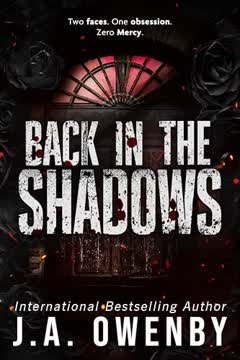
Plot Summary
Family's Fragile Bliss Unravels
Ella Fletcher savors fleeting moments of happiness in her secluded home, basking in love with her husband Sebastian, and their twin babies. But beneath the tranquil setting, Ella nurses insecurities about her postpartum body, clinging to the affirmations of a devoted partner. Sebastian's headaches and temperature with jewelry hint at deeper problems, while his visits from a dark alter ego, Death, inject an unsettling edge into their domestic rhythm. These transitions are not just quirks—they signal the cracks in their supposed sanctuary, foreshadowing a spiral that will uproot their fragile family routine and challenge all definitions of trust and safety.
Darkness Beneath Domesticity
Despite their passionate bond, secrets, and darkness fester. Sebastian's alter, Death, moves with hunger and violence. Ella recalls her own darkness—her past crime of killing her abuser to protect herself and others—hinting that the monsters in their family are not just outside the door but within. As Sebastian's pain intensifies, so does Death's dominance. Mutual fears rise: Will their children inherit this darkness? Is their love just a dance over a pit of chaos? The novel's emotional core here beats with paranoia, craving, and the desperate belief that love might contain the monstrous within.
Secrets, Scars, Submission
When Death discovers Ella's investigation into his past, the dynamic explodes into violence and submission. Their relationship, already tinged with dominance and games, is pushed to boundaries involving real peril. Ella's compulsion to understand Death's nature and the connection their children may have to the darkness strains their marriage. The punishment is exacted both sexually and emotionally: submission is demanded, and secrets must be confessed. Here, love and terror are inseparable, the lines between protector and predator vanishing as both grapple with truth and the cost of knowing.
The Monster Within Awakes
Sebastian and Death are forced to confront each other's existence. Through psychological unraveling, Sebastian learns from friends that he has a dissociative identity: Death is real, a legacy of surviving his parents' murder. His loyal allies, Kip and Dope, reveal their roles not just as friends but enablers and cover-up artists for Death's vigilantism. Sebastian's exhaustion is not just fatigue but amnesia—the monster within is as much a protector as a threat. This revelation binds Sebastian to Ella and their friends in a pact of dangerous secrets, testing the limits of loyalty.
Stolen in Broad Daylight
Ella's abduction from her home—well planned and brutal—catapults the story into a race against time. Drugged and powerless, she is taken while Sebastian and friends scramble to track her. In the aftermath, Death emerges, raging with protective fury. Their network of allies mobilizes, but the incident lays bare the dangers their dangerous lives bring home, especially to their children. The sense of dread is palpable, and terror fuses with the guilt each carries for exposing loved ones to such lethal threats.
Predator's Cage, Lamb's Fear
Imprisoned by Xavier, a twisted collector of human "trophies," Ella is forced into a glass cage among spiders and preserved corpses. Her abductor's delusions and trauma—mirroring her own abuser's legacy—turn captivity into psychological torture. Manipulation, games for survival, and the threat of imminent violation keep Ella teetering between resilience and breakdown. The theme of predators and prey is literalized; the horror is not just physical but existential as Ella must use her mind and empathy, even toward her captor, to survive.
Bloodlines and Broken Minds
Revelations about Xavier—that he may be Death's brother, also stolen as a child and warped by an abuser—deepens the story's obsession with inherited evil, nurture vs. nature, and the randomness of fate. Both men are products of trauma and childhood theft, their manhoods sculpted by violence. Xavier's insistence that Ella is "the same" and his obsession with her become a grotesque reflection of Death's own possessiveness, showing how cycles of abuse are not so easily broken. Blood ties, it turns out, are as much a curse as a comfort.
The Hunt Begins Anew
Sebastian, Death, and their close network of operatives and friends race to decrypt clues, hack footage, bribe authorities, and follow connections that might reveal Ella's location. The revelation of Sebastian's split identity forces his allies to admit how far they've gone to protect him—including murder and hacking. Layers of deception are dissected and found necessary for survival. It's a story of found family, where trust is forged not by birth but by complicity in each other's darkness.
Trapped: Shadows and Spiders
Ella's survival becomes a battle of brains and nerves. She manipulates Xavier with feigned affection, exploits his need for connection, and discovers clues about his relationship with a mysterious "boss." Paranoia and horror spike as the threat of violation looms, but it is ultimately her resourcefulness that secures her escape—from drugging her captor to harnessing knowledge about physics to shatter her cage. Yet, victory comes at the cost of trauma, the scars of which will haunt every subsequent moment.
The Other Half Revealed
The story's mysteries tighten: the mastermind, the Pied Piper, is unmasked as the force behind old wounds and new ones. In a climactic confrontation, Death faces the killer of his adoptive parents, learning he and Xavier are brothers stolen from their biological family. The Pied Piper offers protection—but at the price of Xavier's life. Through this, the lines blur: who is victim, who is monster, who is shaped and who shapes? Vengeance is complicated by truth, and survival now depends on moral ambiguity.
Allies, Betrayals, Broken Trust
Amid revelations, the supporting cast is stressed to breaking: Cami, Ella's best friend, must decide between loyalty and conscience. Ryan, the cop, must reconcile legal duty with his allegiance to family. Their entanglement shows that survival in the shadows is not just about weapons and wit—it's about the willingness to do the unthinkable for the ones you love. Everyone must accept their own compromised morality, and paranoia becomes the cost of intimacy.
Double Lives, Fractured Selves
Sebastian and Death achieve a tenuous, necessary detente for Ella's sake; they are two sides of one man, each essential. Ella, too, must face her appetite for darkness, her complicity and enjoyment of violence, and her needs only Death can fulfill. Their relationship carves new rules: submission, ferocity, and love become indistinguishable, as marriage vows are renewed not just as a legal bond but as an acceptance of every shadow between them.
Into the Replicated Hell
Ella and Death confront their pasts in a perfect replica of Sebastian's childhood home—site of past trauma and present reckoning. This space of horror, both real and symbolic, serves as a crucible in which old wounds are surfaced and new ones formed. Trauma is not just relived but actively destroyed—literalized as the couple burns the house to the ground, purging, if only briefly, the ghosts that have dictated so much of their lives.
Escaping Death, Facing Truth
Ella's rescue is hard-won—she must rely on her own violence to fight free, slashing her way through would-be captors. The act is both liberation and rebirth; it signals not a return to innocence but an embrace of her own capacity for brutality. In this world, no one remains untouched, nor can purity be preserved—those who survive must meet violence with violence, and the only solace is found in shared darkness.
Reunion's Pain, Roles Reversed
Ella's return is marked by PTSD, flashbacks, and scars no lover's touch can erase. Sebastian, haunted now not just by what happened to her but what she is becoming, grapples with his own worthiness and the possibility of leaving to protect them from himself. The family strives to re-knit, with support from friends, but the cost of survival is ongoing vigilance and newfound honesty.
Settling Scores in Blood
Death celebrates his and Ella's reunion—and her survival—by gifting her the very man who facilitated her abuse. Ella, now transformed, takes violent revenge in a scene charged with equal parts lust, horror, and empowerment. Their sexual union after the murder—soaked in blood, half-devotional, half-monstrous—crystallizes the radical, disturbing acceptance at the heart of their marriage: they are partners not just in life, but in blood and death.
The Pied Piper's Offer
With Xavier handed over as payment, the Pied Piper offers them safety—but the cost comes due. He reveals a menace not just to the couple but to their next generation, singling out their daughter Verity as the next dark prodigy. For Ella, the threat is existential and maternal, and she is forced to accept a secret burden: she must protect her child from a predatory world that sees darkness as an inheritance, not an abomination.
Tradeoffs, Threats, and Survival
The family's freedom is predicated on compliance, and Ella learns that survival means carrying secrets and betrayals she can never confess. They flee New York, redefine home as whatever place allows vigilance, and channel their pain into new rituals: burning the past, consolidating family, and making pragmatic peace with monsters both inside and out. Safety, if it exists, is not innocence restored but power successfully claimed.
Marriage of Light and Shadow
In a symbolic wedding, Death and Ella formally unite as equals in darkness. Their vows articulate their commitment not just to love but to shared monstrosity. Their connection is so absolute it transcends bodies, names, and conscience. Their children grow up not shielded from evil but taught its rules. As the narrative closes, a truce exists—fragile, dangerous, loving—and the only promise is that, whatever comes, light and shadow are fused forever.
Analysis
Back In the Shadows is an unflinching, provocative study of trauma, inheritance, and the radical ways we make family from brokenness. Its core lesson is that survival, especially for those marked by violence early in life, does not mean returning to innocence or wholesomeness, but adapting, negotiating, and sometimes embracing the monsters within to protect what matters. For readers, Ella and Sebastian's journey has no illusions about rescue or salvation: love is not antidote to darkness, but partnership within it. The book's willingness to intertwine sexual fulfillment with violence and to root marital vows in complicity and mutual monstrosity is both its most disturbing and daring narrative choice. By giving the next generation (Verity and Alaric) uncertain futures—monstrous, perhaps, but deeply loved—the novel extends its theme: there is no safe place, only the ever-renegotiated truce between shadow and light, self and other. In the end, the characters are not redeemed—they choose, fiercely and knowingly, to live.
Review Summary
Back In the Shadows is a dark romance sequel that continues the story of Ella, Sebastian, and Death. Readers praise its intense plot twists, character development, and spicy scenes. The book explores themes of kidnapping, psychological struggles, and obsessive love. Many reviewers found it even more gripping than the first installment, though some felt the ending left unanswered questions. Overall, fans of dark romance and morally grey characters highly recommend this book, noting its ability to keep readers on the edge of their seats.
People Also Read



Characters
Ella Fletcher
Ella, the heart of the narrative, is both victim and predator, a woman shaped by childhood abuse, violence, and the need to protect. She believes at first that love and domesticity can heal her, but the story strips that illusion away: her survival depends on her willingness to embrace darkness. As a mother, she is fierce, but also haunted by the prospect that her children may inherit not just trauma, but a taste for it. Her relationship with Sebastian/Death is complex—she is both prey and partner, and gradually becomes an equal in violence and secrecy. Her ability to manipulate, survive, and finally thrive in darkness makes her both deeply tragic and a figure of gothic liberation.
Sebastian Fletcher
Sebastian, outwardly loving and stable, is revealed to be living with Dissociative Identity Disorder, his alter ego Death an outgrowth of unspeakable childhood trauma. His journey is one from ignorance and self-deception to painful knowledge—and, eventually, to uneasy acceptance. As Death, he is a vigilante serial killer, enacting brutal justice and pushing loved ones to the edge of what they can endure in the name of protection. His struggle is not just external but deeply internal, as he fears the next generation and grapples with whether he is fit to be husband or father. In the end, his strength is his ability to endure and adapt, and his weakness is his certainty that he is irredeemable.
Death
Death is not just Sebastian's other self but an avatar of violence and desire, embodying protective rage and sexual dominance. He is self-aware, cunning, and often cold, but his devotion to Ella is total—possessive, absolute, and frequently toxic. Death's journeys into violence are both service and self-justification; he is both what Sebastian cannot face and what is most needed for the family's survival. His evolving relationship with Ella echoes a mythic union—each finds in the other a partner equal to their darkness.
Xavier Hyde
Xavier, Ella's captor, is a study in how trauma twists destiny. Stolen as a child, abused, and driven to madness, he is both a monster and a brother to Sebastian/Death. His obsession with taxidermied family and captive brides shows desire for control in a life without safety, and his lust for Ella mirrors Death's own possessiveness—rendered more pathetic, more desperate. However, his villainy is always shaded with pity; the narrative never lets us forget he is as much made by others' sins as by his own actions.
The Pied Piper
The Pied Piper stands as the book's ultimate force of manipulation, a legendary serial killer, cult leader, and the architect behind both Sebastian's and Xavier's traumas. Charming, all-knowing, and chilling, he orchestrates events from the shadows—offering protection for a price, always revealing just enough to torment and control. His interest in the next generation—Verity—suggests evil is legacy, not exception. To Ella and Death, he forces terrible bargains, showing how, in a world ruled by trauma, power is the only shield against predation.
Kip
Kip is a steadfast figure—Sebastian's childhood friend, partner in crime, and the man responsible for cleaning up Death's messes. He brings humor, pragmatism, and deep loyalty to a group constantly at the edge of collapse. His own backstory, hinted at but never fully revealed, suggests darkness of his own, and his pragmatic morality is emblematic of the book's refusal to judge those who break laws in the service of family.
Dope (Hal)
Dope is the technological backbone, a hacker who monitors cameras, handles false identities, and provides logistical support. Though occasionally comic, he is also presented as deeply anxious and caring. Dope's presence in Ella and Sebastian's life is proof of the story's thesis: even the most lawless, dark families are constructed by choice and self-sacrifice, not blood alone.
Ryan
Ryan, once an outside observer, is rapidly drawn into the core group, his law enforcement background a tool for both crime and cover-up. His willingness to betray his badge for friendship demonstrates the story's insistence that loyalty outstrips morality, and his failed relationship with Cami shows how corrosive the group's secrets can be even to the best intentions.
Cami
Cami, Ella's confidante, is the everywoman pulled into the orbit of darkness. Her journey from horror to acceptance parallels that of the reader, and her struggle with boundaries, betrayal, and her own conscience reflects the book's persistent question: when is love for a friend more important than personal safety or the law?
Verity and Alaric
The twins, especially Verity, embody the next generation: objects of love, but also of fear and obsession. The horror that they may inherit—or already possess—the family darkness is a persistent, chilling undercurrent. They are both hope and threat, unknowing yet unignorable, and serve as the emotional crux for Ella and Sebastian's most desperate actions.
Plot Devices
Dissociative Identity Disorder (DID)
The book's emotional and narrative engine is Sebastian/Death's DID. This device allows for not just unreliable narration—missing time, sudden shifts in tone, and split loyalty—but serves as a metaphor for how trauma splinters identity, and how violence and tenderness can be inseparable in survival. The shifting perspectives deepen suspense and draw the reader into a reality where internal struggles literally become life-and-death battles.
Gothic and Psychological Horror
The story's horror is psychological as much as physical: the constant threat of predators, the literalization of childhood fear in taxidermied corpses and glass cages, and the symbolic burning of the haunted home all create a world where landscapes and minds are equally terror-filled. Trauma is not just past but ever-present—a living character.
Vigilantism and Moral Ambiguity
Death's killings—and Ella's eventual violent acts—are justified by the insufficiency of law and the demands of survival. The plot re-situates justice away from institutions and into the fraught realm of found family, complicity, and necessity. The group's willingness to break laws for each other asks the reader to confront their own boundaries of acceptable violence.
Sexual Power Dynamics
Sexual encounters in the novel are not merely titillating but thematically loaded—they express power, surrender, and mutual recognition of darkness. Consent is complicated, rigid boundaries are constantly tested and sometimes deliberately erased, and love is always tangled with violence—a structure that matches the broader plot's refusal to separate safety and threat.
Generational and Inherited Evil
The revelation that the Pied Piper and his cult both instigated and orchestrated trauma for multiple generations turns individual suffering into an intergenerational curse. The question of whether the twins, and especially Verity, carry the same darkness sharpens every parental decision into a wager on fate.
Ritual and Symbolic Purging
Dramatic, ritualistic acts—renewal of vows, destruction of the haunted house, presentation of body parts as tokens—literalize the characters' attempts to control or symbolically end trauma. Yet the story resists easy closure; each ritual brings new dangers and consequences, suggesting that in a world governed by trauma, there are no permanent victories.








































