Key Takeaways
1. Trees: Masters of Adaptation and Diversity
The world’s trees are astonishingly diverse – we now know that there are at least 60,000 distinct species.
Remarkable adaptations. Trees, unable to flee predators or escape harsh conditions, have evolved an incredible array of survival strategies over millions of years. From the baobab's ability to store thousands of litres of water in its pulpy trunk to the jojoba's taproots reaching 10 metres underground, each species is a testament to nature's ingenuity in adapting to environmental niches. These adaptations allow trees to thrive in diverse climates, from the freezing Siberian taiga to scorching deserts and waterlogged swamps.
Specialized structures. Many trees develop unique physical features to cope with their environment. The Dahurian larch, for instance, sheds its needles in winter to reduce water loss and builds up turpentine in its bark as antifreeze. The bald cypress grows distinctive "knees" from its roots to absorb oxygen in waterlogged mud, while the red mangrove's stilt-like roots anchor it against tides and desalinate water through its leaves. These specialized structures are crucial for survival in extreme habitats.
Diverse forms and functions. Trees exhibit a vast spectrum of forms, from the slender, fan-shaped Traveller's Tree of Madagascar to the colossal Coastal Redwood, the world's tallest tree. Their leaves vary from the tiny, waxy scales of the holm oak, designed to reduce evaporation, to the broad, deeply lobed leaves of the breadfruit. This immense diversity underscores their ability to occupy almost every terrestrial environment, each species playing a unique role in its ecosystem.
2. Trees as Architects of Human Civilization
Virtually every story about a plant was part of a wider one about animals or people.
Foundations of society. Trees have profoundly shaped human history, providing essential resources that enabled the rise of civilizations. The durable, fragrant wood of the Cedar of Lebanon was crucial for temples, palaces, and ships in ancient Mesopotamia and Phoenicia, facilitating trade and empire-building. The alder's water-resistant timber literally underpinned Venice, its piles supporting grand buildings and its charcoal fueling the city's formidable Arsenale, producing gunpowder and smelting iron.
Economic engines. Many trees became valuable commodities, driving exploration, trade routes, and even conflicts. The Silk Road, for example, was established to transport luxurious silk, produced by caterpillars fed on the White Mulberry. Brazilwood, prized for its vibrant red dye, led to the naming of Brazil and sparked intense competition among European powers. These trees were not just resources; they were catalysts for economic and geopolitical development.
Shaping daily life. Beyond grand narratives, trees have intimately influenced daily human life. The Sweet Chestnut was a staple food in mountainous regions of Europe, ground into flour for bread and polenta. The Paper Mulberry provided fibre for tapa cloth in Tonga, used for clothing and ceremonial gifts. From the London Plane symbolizing urban grandeur to the Horse Chestnut inspiring hope in Anne Frank's diary, trees are woven into the fabric of human existence, providing sustenance, shelter, and cultural identity.
3. The Hidden Chemistry and Physics of Trees
Trees did not evolve to satisfy human demand, however. Over millions of years they adapted to environmental niches, to defend themselves and to ensure the survival and dispersal of the next generation.
Chemical arsenals. Trees produce an astonishing array of chemicals, primarily for their own defense, which humans have ingeniously repurposed. The Rowan's unripe berries contain sorbic acid, a natural antifungal and antibacterial agent now used as a food preservative. The Willow's bark yields salicin, the precursor to aspirin, used for millennia to treat pain and fever. The Neem tree's leaves and oil contain a biochemical battery of insect repellents and growth disruptors, offering a biodegradable alternative to synthetic pesticides.
Physical marvels. The physical properties of tree materials are equally remarkable.
- Cork Oak: Its thick, impermeable bark, evolved to protect against fire, is perfect for wine stoppers and even insulated NASA's Space Shuttle.
- Norway Spruce: Its "tonewood," with extraordinary stiffness for its light weight, is essential for the soundboards of the world's most valuable stringed instruments, like Stradivarius violins.
- Lignum Vitae: The hardest and heaviest wood, it is self-lubricating and was crucial for propeller shaft bearings in ships, including the first nuclear submarine.
- Balsa: Despite its featherlight weight, its dried cell structure is surprisingly stiff, making it ideal for model aircraft, wind turbine blades, and even Thor Heyerdahl's Kon-Tiki raft.
Ingenious dispersal. Trees employ fascinating physical mechanisms for seed dispersal. The Sandbox tree's fruit pods explode with a loud bang, ejecting seeds at over 240 km/h, optimizing their trajectory for maximum distance. The Coco-de-mer, with the world's heaviest seeds, developed an underground shoot that grows 3.5 metres away from the mother tree before sprouting, avoiding competition. These adaptations highlight the intricate interplay of physics and biology in tree survival.
4. Intricate Ecological Partnerships: Trees and Their Allies
The most satisfying tree stories are the ones in which a piece of plant science has surprising human ramifi cations.
Symbiotic relationships. Trees are rarely solitary entities; they often form complex, mutually beneficial partnerships with other organisms. Many tree species, like the Silver Birch, engage in mycorrhizal relationships with fungi, which extend their root systems to extract nutrients in exchange for sugars. The Alder hosts nitrogen-fixing bacteria in its root nodules, enriching infertile, waterlogged soils.
Pollination specialists. Pollination is a delicate dance, often involving highly specialized partners. The Fig tree relies entirely on tiny female Blastophaga wasps, which enter the fig fruit to lay eggs and pollinate flowers, sacrificing themselves in the process. The Durian's large, buttery-smelling flowers are pollinated by bats, which travel long distances for its copious nectar. The Traveller's Tree of Madagascar depends on the black-and-white ruffed lemur, which transfers pollen on its fur while feeding on nectar.
Defense alliances. Some trees enlist animals for protection. The Whistling Thorn of Kenya provides prefabricated hollow thorns (domatia) and sweet nectar to ant colonies, which fiercely defend the tree from herbivores with their bites and alarm pheromones. This intricate defense mechanism even includes the tree's whistling sound, potentially an auditory warning to large animals. These partnerships demonstrate the sophisticated co-evolutionary strategies in the natural world.
5. Cultural Roots: Trees as Symbols and Sacred Beings
My mother was right. There was a whole world in that tree, and so there is in every tree. They warrant our appreciation, and many of them need our protection.
Spiritual significance. Trees hold deep spiritual and symbolic meaning across diverse cultures, often revered as sacred entities. The Peepul (Sacred Bo) tree is holy to Buddhists, Hindus, and Jains, with Siddhartha Gautama achieving enlightenment under its shade. Hindus believe the peepul embodies the three principal gods and that the goddess Lakshmi bestows fortune on devotees who tie threads around its trunk.
Symbols of identity and emotion. Trees frequently symbolize national identity, resilience, or profound human emotions. The London Plane, with its towering height and urban adaptability, became a symbol of British imperial confidence. Japan's Yoshino Cherry (sakura) embodies mono no aware, the poignant beauty of transience, celebrated in annual hanami festivals. The Horse Chestnut, seen by Anne Frank from her hiding place, became a beacon of hope during Europe's darkest hour.
Myth and folklore. Many trees are steeped in myth and folklore, reflecting ancient human connections to the natural world. The Dragon's Blood tree of Socotra, with its eerie, blood-red resin, is linked to a legendary fight between an elephant and a dragon. The Baobab's bulbous shape is explained by folk tales of the Creator flinging it upside down. These stories highlight how trees have inspired human imagination and provided narratives to understand the world.
6. The Double-Edged Sword: Human Exploitation and Tree Resilience
The relationship between humans, goats and argan is complicated. The extra income from oil exportation is not necessarily good for the trees, because when business booms, a traditional store of wealth in the region is … goats.
Unintended consequences. Human interaction with trees often presents a paradox: while we rely on them, our actions can inadvertently harm them. The Argan tree, whose oil supports millions in Morocco, faces increased damage from goats when oil demand rises, as more goats are kept as a store of wealth. The Cork Oak's sustainable montado ecosystem is threatened by the shift to artificial wine stoppers, removing the economic incentive to maintain these biodiverse forests.
Over-exploitation and depletion. Historically, many valuable tree species have been decimated by insatiable human demand. The Cedar of Lebanon, once covering vast swathes of the eastern Mediterranean, was over-exploited for millennia, its timber used for empires and embalming. Gutta-percha, crucial for insulating telegraph cables, led to millions of trees being felled until regulations forced leaf harvesting. The Tanoak, a vital food source for Native Americans, was later exploited for tannin, leading to its decline.
Resilience and adaptation. Despite human pressures, trees demonstrate remarkable resilience. The Elm, devastated by Dutch Elm disease, has seen pockets survive due to meticulous human intervention and the development of resistant cultivars. The Quaking Aspen, though vulnerable to shade, rapidly repopulates fire-cleared ground, often forming vast, genetically identical clones like Utah's Pando, one of the heaviest living organisms. These examples show trees' capacity to endure and regenerate, sometimes with human help.
7. A Call to Action: Protecting Our Arboreal Heritage
Scepticism about climate change is worth mentioning because mistrust of climate science, whether wilful or misguided, has a bearing on the survival of many tree species.
Threats from climate change. Trees, despite their resilience, are increasingly vulnerable to rapid climate change exacerbated by human activities. Earlier blossoming can disrupt pollination cycles if specific pollinators aren't present. Mild winters allow pests like the mountain pine beetle to decimate Lodgepole Pine forests, as seen in Canada, where millions of hectares have been affected. These cascading effects highlight the delicate balance of ecosystems.
Loss of genetic diversity. Modern agricultural practices, focusing on a few high-yield cultivars, have drastically reduced the genetic diversity of many tree species. Wild apples, for instance, are crucial reservoirs of genetic information that could provide resistance to new diseases or adapt to warming climates. The Wollemi Pine, a "living fossil" with almost no genetic variation, is terrifyingly susceptible to new pathogens introduced by humans.
The imperative of conservation. Protecting trees is not just about preserving individual species; it's about safeguarding the intricate web of life they support and the vital services they provide. Mangrove forests, for example, stabilize coastlines, protect against storm surges, and nurture a wealth of aquatic life, yet they are threatened by coastal development and shrimp farming. The book implicitly argues that understanding the profound value and interconnectedness of trees should inspire us to act responsibly and protect these essential components of our planet.
Review Summary
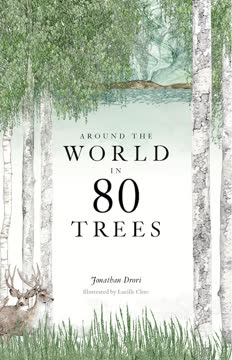
Reviewers overwhelmingly praise Around the World in 80 Trees as a beautiful, informative, and engaging read. The exquisite botanical illustrations by Lucille Clerc are frequently highlighted as exceptional. Readers appreciate Drori's accessible, witty writing style, which blends scientific facts, cultural history, and personal anecdotes. Many note learning surprising facts about familiar and exotic trees alike. Several reviewers emphasize the book's environmental message regarding deforestation and species loss. The format — two pages per tree organized by geographic region — is consistently praised for being digestible yet rich in content.
People Also Read