Key Takeaways
1. The Epidemic of Mental Illness: A Modern Paradox
As the psychopharmacology revolution has unfolded, the number of disabled mentally ill in the United States has skyrocketed.
A startling rise. Despite the widespread belief in psychiatric progress over the last fifty years, the number of Americans disabled by mental illness has dramatically increased. This paradox is evident in federal disability statistics, which show a sixfold increase in disabled mentally ill individuals since 1955. This surge has accelerated since the introduction of "second-generation" psychiatric drugs like Prozac.
Disability numbers soar. In 1955, 1 in every 468 Americans was hospitalized due to mental illness; by 2007, 1 in every 76 Americans received federal disability payments for mental illness. This increase is not just in overall numbers but also in specific diagnoses:
- Major depression and bipolar illness, once less disabling, now account for an estimated 1.4 million adults receiving federal payments.
- The number of children under 18 receiving SSI for serious mental illness rose thirty-five-fold in twenty years, from 16,200 in 1987 to 561,569 in 2007.
- Mental illness is now the leading cause of disability in children.
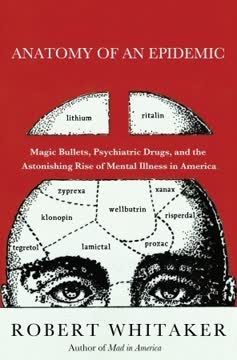
A critical question. This alarming trend prompts a crucial, yet heretical, question: Could our drug-based paradigm of care, in some unforeseen way, be fueling this modern-day plague? The book aims to explore this possibility by examining the scientific literature on the long-term effects of psychiatric medications.
2. Psychiatric Drugs: Not "Magic Bullets" or Chemical Correctors
The psychopharmacology revolution was born from one part science and two parts wishful thinking.
Accidental discoveries. Unlike antibiotics, which were developed to target known disease-causing microbes, the first psychiatric drugs (Thorazine, Miltown, Marsilid) were discovered serendipitously. They were initially compounds for other purposes—anesthetics or anti-infectives—whose "side effects" on mood and behavior were then repurposed for psychiatric use. For example, Thorazine was first noted to induce a "euphoric quietude" in surgical patients.
Retroactive theories. The "chemical imbalance" theories (low serotonin for depression, high dopamine for schizophrenia) were developed after the drugs were found to affect these neurotransmitters. This was an attempt to fit the drugs into the "magic bullet" model of medicine, implying they corrected a specific biological deficit. However, extensive research from the 1970s and 80s, including studies by the NIMH, consistently failed to find evidence of these pre-existing imbalances in unmedicated patients.
Creating imbalances. Instead of correcting imbalances, these drugs create them. As former NIMH director Steven Hyman explained, psychotropic drugs "create perturbations in neurotransmitter functions." The brain then undergoes compensatory adaptations to counteract the drug's effects, leading to a state "qualitatively as well as quantitatively different from the normal state." The drugs don't normalize brain chemistry; they disturb it.
3. Antipsychotics: Worsening Schizophrenia's Long-Term Course
We raise the possibility that antipsychotic medication may make some schizophrenic patients more vulnerable to future relapse than would be the case in the natural course of the illness.
A paradoxical effect. Early NIMH studies hinted at a paradox: while antipsychotics reduced symptoms short-term, drug-treated patients had higher rehospitalization rates after one year. Later research, including the work of Guy Chouinard and Barry Jones, proposed "supersensitivity psychosis," where drugs induce dopamine receptor hypersensitivity, making patients more vulnerable to severe psychosis upon withdrawal or even with continued use.
Evidence of harm:
- Pre-drug era outcomes: In the late 1940s/early 1950s, 65-75% of first-episode schizophrenia patients were discharged within 12-36 months, with many never relapsing.
- WHO studies: Consistently found better long-term outcomes (asymptomatic, employed) in "developing countries" where antipsychotic use was minimal (e.g., 16% regular use) compared to "rich countries" with high usage (61%).
- Longitudinal studies: Courtenay Harding's Vermont study found 34% recovery in chronic patients, with those recovered having "long since stopped taking medications." Martin Harrow's 15-year study showed 40% recovery for unmedicated patients versus 5% for medicated, and a threefold higher rate of "uniformly poor outcomes" for medicated patients.
- Brain changes: MRI studies show antipsychotics cause brain shrinkage (frontal lobes) and swelling (basal ganglia), which correlate with worsening symptoms and cognitive decline.
The "clinician's illusion." Clinicians often see only those who relapse after stopping medication, reinforcing the belief that drugs are essential. However, Harrow's research suggests that many who successfully stop medication "leave the system" and recover, never returning to clinical view.
4. Benzodiazepines: The Trap of Short-Term Relief
What seemed so good about the benzodiazepines when I was playing with them was that it seemed like we really did have a drug that didn’t have many problems. But in retrospect it’s difficult to put a spanner into a wristwatch and expect that it won’t do any harm.
Fading efficacy, rising dependence. Initially hailed as "happy pills" and "pure anxiety relief," benzodiazepines like Miltown and Valium quickly lost their luster. Clinical trials showed their anti-anxiety effects often disappeared after 4-6 weeks, and they were found to be highly addictive, leading to severe withdrawal symptoms. The U.S. Justice Department classified them as Schedule IV drugs in 1975, revealing their addictive potential.
The "benzo trap":
- Rebound anxiety: Withdrawal often leads to anxiety far worse than baseline, along with insomnia, tremors, headaches, and perceptual distortions.
- Protracted withdrawal: Some users suffer symptoms for months or years, with a small percentage never fully recovering, suggesting permanent brain changes.
- Long-term harm: Continuous use is linked to increased anxiety, depression, cognitive impairment (memory, problem-solving), and functional decline. Studies show long-term users are "markedly ill to extremely ill."
Societal impact. Despite warnings and scientific evidence, benzodiazepine prescriptions remain high (83 million in 2007). The "Valiumania" of the 1960s and 70s saw patient care episodes for mental health soar threefold. Today, over 300,000 adults are disabled by anxiety, roughly sixty times the number of "psychoneurotics" hospitalized in 1955.
5. Antidepressants: Fueling Chronic Depression and Disability
Antidepressant drugs in depression might be beneficial in the short term, but worsen the progression of the disease in the long term, by increasing the biochemical vulnerability to depression.
Limited short-term efficacy. Early trials of antidepressants (MAOIs, tricyclics) showed only modest benefits over placebo, often no better than an "active" placebo (one with side effects). The "wonder drug" narrative for SSRIs like Prozac was largely built on biased trial designs and selective reporting, with many trials failing to show significant clinical benefit.
Increased chronicity:
- Relapse risk: Patients on antidepressants are at high risk of relapse upon withdrawal, with longer treatment periods linked to higher relapse rates.
- "Tardive dysphoria": Long-term use can lead to a chronic, treatment-resistant depressive state, where the brain develops an "oppositional tolerance" to the drug.
- Worsened outcomes: Studies show medicated patients are depressed for more weeks per year than unmedicated patients. The NIMH's STAR*D study, a "real-world" trial, found only a 3% remission and sustained well-being rate after one year.
A transformed illness. Depression, once considered a relatively rare and self-limiting illness with good prognosis (85% spontaneous recovery within a year), is now described by the NIMH as a "highly recurrent and pernicious disorder" affecting 15 million Americans annually, with 60% "severely impaired." This dramatic shift in the illness's course coincides with the widespread use of antidepressants.
6. The Bipolar Boom: An Iatrogenic Epidemic in Adults and Children
The illness is not what Kraepelin described anymore, and the biggest factor, I think, is that most patients who have the illness get an antidepressant before they ever get exposed to a mood stabilizer.
A rare illness made common. Bipolar disorder, once a rare condition affecting perhaps 1 in 10,000 people with good long-term outcomes (85% returning to work), now affects 1 in 40 adults, with 83% "severely impaired." This dramatic increase is largely iatrogenic, driven by psychiatric drugs and diagnostic expansion.
Drug-induced bipolarity:
- Antidepressants: Routinely induce manic episodes and rapid cycling in adults and children, effectively "unmasking" or creating bipolar illness. Studies show 20-40% of unipolar depressed patients convert to bipolar after antidepressant exposure.
- Stimulants: ADHD medications like Ritalin can trigger manic or psychotic episodes, especially in children, leading to a bipolar diagnosis. The daily "crash" from stimulants mimics bipolar symptoms.
- Diagnostic expansion: Broadening criteria (e.g., "severe irritability" as a sign of bipolarity in children) further fuels the epidemic.
Deteriorating outcomes. Modern bipolar patients, especially those with early onset, suffer more frequent and severe episodes, mixed states, and rapid cycling—a course rarely seen in the pre-drug era. They experience significant cognitive impairment, often similar to medicated schizophrenia patients, and a high rate of physical comorbidities, leading to a 15-25 year reduction in life expectancy.
7. Children: A New Market for Drug-Induced Disability
For many parents and families, the experience [of having a child diagnosed with a mental illness] can be a disaster; we must say that.
The "discovery" of childhood mental illness. Prior to 1980, few children were diagnosed with mental illness. The narrative shifted to claim that children suffer from "brain diseases" like ADHD, depression, and bipolar disorder, which require "neuroprotective" drugs. This coincided with aggressive marketing to expand the pediatric market.
Stimulants: No long-term benefit. Ritalin and other ADHD drugs reliably subdue children, making them "passive, submissive, and socially withdrawn," but studies show no long-term benefits for academic performance, peer relationships, or behavior. The NIMH's MTA study found that "medication use was a significant marker not of beneficial outcome, but of deterioration" at 3 and 6 years, with medicated children showing worse symptoms and functional impairment.
Antidepressants: Ineffective and harmful. Most pediatric antidepressant trials failed to show efficacy, and many were manipulated. The FDA acknowledged a heightened suicide risk, leading to warnings. SSRIs can trigger mania, psychosis, hostility, and an "apathy syndrome" in children, potentially causing permanent brain changes.
The tragic outcome. The medicating of children has led to a crisis:
- 561,569 psychiatrically disabled children on SSI in 2007 (35x increase since 1987).
- One in fifteen young adults (18-26) is "seriously mentally ill."
- Children on drug cocktails are often groomed for lifelong medication, leading to chronic illness and disability.
8. The "Partnership" of Deception: Selling a False Narrative
It is the task of the APA to protect the earning power of psychiatrists.
Rebranding psychiatry. Facing an "identity crisis" in the 1970s, the American Psychiatric Association (APA) embraced a "medical model," publishing DSM-III to define mental disorders as distinct diseases. This was a strategic move to "remedicalize" psychiatry and assert its authority over non-physician therapists.
A powerful coalition. A "four-part harmony" emerged to promote this narrative:
- Pharmaceutical companies: Provided financial muscle, sponsoring symposiums, educational programs, and direct payments to "thought leaders."
- APA: Actively marketed the medical model, trained members in media relations, and published textbooks reinforcing the narrative.
- NIMH: Launched public awareness campaigns (e.g., DART for depression) to "educate" the public about the prevalence and treatability of mental disorders with drugs.
- NAMI: A grassroots advocacy group, eagerly embraced the "brain disease" message, providing moral authority and lobbying for increased biomedical research funding, often receiving substantial pharma funding.
The "broken brain" myth. This coalition successfully convinced the public that mental illnesses were "brain diseases" caused by "chemical imbalances," even though scientific evidence for this was lacking. Books like Nancy Andreasen's "The Broken Brain" popularized this narrative, despite her own admissions that the biological underpinnings were still unknown.
9. Financial Incentives: Driving the Drug-Based Paradigm
Receiving $750 checks for chatting with some doctors during a lunch break was such easy money that it left me giddy.
Profits over science. The "psychopharmacology revolution" is, at its core, a business triumph. From 1985 to 2008, U.S. outpatient sales of antidepressants and antipsychotics soared from $503 million to $24.2 billion—a nearly fiftyfold increase. Total psychotropic drug sales topped $40 billion in 2008, with one in eight Americans regularly taking a psychiatric drug.
The money trail:
- Drug companies: Experience massive revenue growth (e.g., Eli Lilly's value jumped from $10 billion to $90 billion with Prozac and Zyprexa).
- Academic psychiatrists ("KOLs"): Receive millions in payments (consulting fees, speaking engagements, research grants) from drug companies, often failing to disclose these conflicts of interest. These "thought leaders" act as key salesmen, shaping medical opinion and public perception.
- Advocacy groups: NAMI and others receive substantial funding from pharmaceutical companies, aligning their "educational" efforts with market expansion goals.
The "drug trap" as a business model. The narrative of "chemical imbalances" encourages lifelong drug use. Drugs also create new problems (side effects, withdrawal symptoms, new diagnoses), leading to polypharmacy and further market expansion. This system ensures customer retention and increased product sales, prioritizing profit over patient well-being.
10. Silencing Dissent: Suppressing Unwelcome Truths
The thought-control aspect of things in psychiatry today is like old-style Eastern European social control.
Punishing critics. To maintain the dominant narrative, psychiatry actively suppressed dissenting voices. Loren Mosher, head of schizophrenia studies at the NIMH, was ousted for his successful non-drug Soteria Project. Peter Breggin, a psychiatrist who spoke out about drug harms, faced attempts to revoke his medical license. David Healy, a prominent historian of psychopharmacology, lost a job offer after presenting research on SSRI-induced suicide risk.
Targeting researchers. Psychologists like Nadine Lambert (Ritalin and cocaine abuse) and Gretchen LeFever (ADHD overdiagnosis) had their federal funding cut or careers derailed after publishing inconvenient research. This created a chilling effect, discouraging critical inquiry.
Scientology as a foil. Conveniently, criticism of psychiatric drugs became associated with Scientology, a controversial group with an "extraterrestrial" creation myth and a history of attacking psychiatry. This allowed the psychiatric establishment to dismiss legitimate scientific concerns as "nonsense" from a "cult," effectively discrediting any opposition in the public eye.
A "bad idea to speak out." The message to anyone in the field was clear: questioning the efficacy or safety of psychiatric drugs, especially long-term, would jeopardize one's career. This environment fostered a lack of critical self-reflection within the profession.
11. Hiding the Evidence: A Deliberate Information Blackout
The psychiatric establishment has thoroughly succeeded in keeping this information from the public.
Suppressed research. A vast body of scientific literature detailing the poor long-term outcomes of psychiatric drugs has been systematically kept from the public. This includes studies showing:
- Antidepressants lead to worse long-term depression outcomes than psychotherapy or no treatment.
- Antipsychotics worsen schizophrenia outcomes, with higher recovery rates for unmedicated patients.
- Benzodiazepines cause increased anxiety, depression, and cognitive impairment with long-term use.
- Stimulants for ADHD offer no long-term benefits and can worsen symptoms and functional impairment.
Media manipulation. Medical news is often generated by press releases from scientific journals, NIH, medical schools, and pharmaceutical companies. Studies with negative or paradoxical findings are rarely publicized. When forced to comment, experts spin the results (e.g., NIMH's MTA study on ADHD, WHO schizophrenia study).
Internal censorship. The APA's own textbooks for medical students omit or misrepresent this critical outcomes history. They fail to discuss "supersensitivity psychosis," the depressogenic effects of antidepressants, or the dramatic worsening of bipolar outcomes. This ensures that new generations of psychiatrists remain unaware of the full scientific record.
A conscious process. This systematic suppression of information is not accidental. It is a "willful, conscious process" designed to protect the image of psychiatric drugs and the financial interests of the industry and its allies, at the cost of public health.
12. Blueprints for Reform: Embracing Honesty and Alternatives
We need to become informed about the long-term outcomes literature reviewed in this book, and then we need to ask the NIMH, NAMI, the APA, and all those who prescribe the medications to address the many questions raised by that literature.
The call for honesty. The "MindFreedom Six" hunger strike in 2003 highlighted the psychiatric establishment's inability to provide scientific evidence for its "brain disease" and "chemical imbalance" claims. This demonstrated the urgent need for honesty and transparency in discussing mental health care.
Evidence-based alternatives:
- Cautious drug use: Psychiatrists like David Healy advocate for "watch and wait" approaches, using drugs cautiously, in low doses, and for limited durations, especially for first-episode patients.
- Open Dialogue (Finland): This model for first-episode psychosis involves immediate, collaborative family meetings, minimal or no initial medication, and a focus on restoring social connections. It has achieved remarkable results: 79% asymptomatic, 80% working, and a 90% drop in new schizophrenia cases in Western Lapland.
- Exercise for depression: Recognized in the UK as a first-line treatment for mild-to-moderate depression, exercise offers significant short-term efficacy and numerous long-term "side benefits" without the risks of medication.
- Medication withdrawal programs: Initiatives like the Seneca Center in California (for severely troubled children) and Advocates in Massachusetts (for adults) focus on safely withdrawing patients from drug cocktails, allowing them to "come alive" and develop coping mechanisms.
Legal and societal pressure. Legal challenges, like Jim Gottstein's work in Alaska, are pushing for patient rights to refuse forced medication by highlighting the drugs' potential harms. A broader societal conversation, informed by honest science, is crucial to shift away from the current drug-based paradigm and embrace more effective, less harmful approaches.
Review Summary
Reviews of Anatomy of an Epidemic are polarized. Many praise it as a must-read, citing compelling evidence that psychiatric drugs worsen long-term mental health outcomes and that the "chemical imbalance" theory lacks scientific support. Critics argue Whitaker presents a one-sided, agenda-driven narrative, cherry-picks studies, and uses manipulated data. Mental health professionals note real-world value in psychiatric medications despite overuse. Common ground exists around concerns of overprescription, pharmaceutical industry influence, and the need for alternative treatments alongside or before medication.