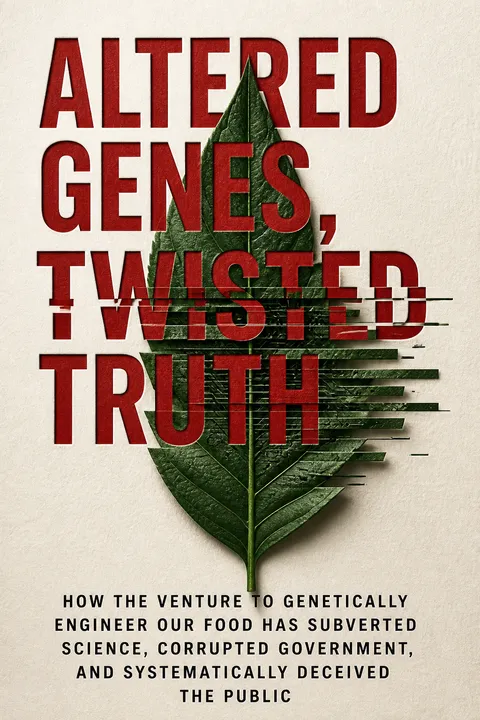
Key Takeaways
1. Genetic engineering is fundamentally different from, and far more disruptive than, traditional breeding.
Recombinant DNA technology faces our society with problems unprecedented not only in the history of science, but of life on the Earth.
A radical departure. Proponents of biotechnology often claim that genetic engineering is merely a modern extension of traditional breeding. However, this is a profound misrepresentation of biological reality. Traditional breeding relies on the natural recombination of genes within a species' established boundaries, preserving the genome's structural integrity. In contrast, genetic engineering forcibly breaches these species barriers, splicing foreign DNA into random locations within a host genome.
Uncontrolled genomic disruption. The process of gene-splicing is inherently chaotic and imprecise. When biotechnicians insert a gene cassette, they cannot control where it lands, often causing massive deletions, rearrangements, and mutations in the surrounding host DNA. To force the foreign gene to express itself, scientists must attach a hyper-active viral promoter (typically the cauliflower mosaic virus 35S promoter). This promoter operates completely outside the cell's natural regulatory network, forcing the plant to produce foreign proteins 24/7.
The myth of precision. The biological reality of genetic engineering is characterized by:
- Random insertion of foreign DNA cassettes into the host genome.
- Widespread collateral mutations and "genomic shock" caused by tissue culture.
- The use of aggressive viral promoters that override the host's natural feedback loops.
- The potential activation of dormant, cryptic metabolic pathways that can produce unexpected toxins.
2. The early "scientific consensus" on GMO safety was a political illusion manufactured to avoid regulation.
It was very obviously a political meeting... We were being used in the name of being a disinterested group of virologists but it was fairly clear by the end of the meeting that [the organizers] wanted to go back with a result that could be exploited for deregulation.
The birth of molecular politics. In the early 1970s, molecular biologists initially expressed deep concern about the potential biohazards of recombinant DNA, even calling for a voluntary moratorium. However, as the commercial potential of the technology became apparent, the scientific establishment shifted its stance. To prevent Congress from passing restrictive laws, key players organized private, invitation-only conferences at Bethesda, Falmouth, and Ascot to manufacture a false narrative of safety.
Choreographed consensus. These meetings were highly controlled public relations exercises rather than objective scientific forums. Speculative assertions and theoretical assumptions were spun as hard empirical evidence. The focus was systematically narrowed to weakened laboratory strains of bacteria like E. coli K-12, which could not survive outside the lab. The promoters then illegitimately extrapolated these narrow findings to claim that all genetic engineering, including agricultural applications, was inherently safe.
Lobbying and leverage. Armed with this manufactured consensus, prominent scientists launched a massive lobbying campaign on Capitol Hill. They successfully convinced legislators, including Senator Edward Kennedy, that new regulations were unnecessary. This political maneuver established a dangerous precedent:
- Shifting the burden of proof from the biotech industry to the public.
- Treating speculative safety claims as established scientific facts.
- Excluding ecologists and organismal biologists from the risk-assessment process.
3. The FDA committed regulatory fraud by ignoring its own scientists' warnings to usher GMOs onto the market.
The processes of genetic engineering and traditional breeding are different, and according to the technical experts in the agency, they lead to different risks.
Silencing the experts. In the early 1990s, the FDA's own scientific task force repeatedly warned administrators about the unique hazards of genetically engineered foods. Experts like Dr. Louis Pribyl and Dr. E.J. Matthews pointed out that gene-splicing could produce unexpected allergens, novel toxins, and nutritional imbalances. They insisted that these products must undergo rigorous, case-by-case toxicological testing. However, political appointees, led by Deputy Commissioner for Policy Michael Taylor (a former attorney for Monsanto), completely ignored these warnings.
A policy built on lies. The FDA's final 1992 policy statement was a masterpiece of deception. It declared that the agency was "not aware of any information" showing that GE foods differ from conventional foods in any meaningful way. This was a flat-out lie; the administrators were fully aware of their own scientists' extensive, written objections. By hiding these internal memos, the FDA was able to classify GE foods as "Generally Recognized as Safe" (GRAS), allowing them onto the market without any mandatory safety testing.
Violating federal law. The FDA's actions violated the Food, Drug, and Cosmetic Act, which mandates that new food additives must be proven safe before commercialization. To bypass this, the FDA used a series of legal sleights of hand:
- Creating a completely voluntary consultation process for biotech companies.
- Allowing companies to perform their own safety assessments without submitting raw data.
- Refusing to require labeling, thereby preventing the public from knowing they were consuming experimental foods.
4. The 1989 L-tryptophan epidemic was a deadly warning of genetic engineering's capacity to generate unexpected toxins.
The evidence points to Showa Denko product as the culprit and to the contaminants as the cause.
A lethal contamination. In 1989, a mysterious and excruciatingly painful disease called eosinophilia-myalgia syndrome (EMS) swept across the United States, killing dozens of people and permanently disabling thousands. Investigators traced the outbreak back to L-tryptophan food supplements manufactured by a single Japanese chemical company, Showa Denko. Crucially, Showa Denko had recently introduced a new, genetically engineered strain of bacteria (Strain V) to accelerate the production of the supplement.
The cover-up. The FDA and the biotech lobby immediately went into damage-control mode to protect the reputation of genetic engineering. They blamed the epidemic on a "manufacturing error" and "inadequate filtration," claiming that a reduction in the amount of charcoal used during purification was the sole culprit. However, this explanation was scientifically dishonest. The toxic contaminant, later identified as a novel, fat-soluble compound called AAA, was a direct byproduct of the engineered bacteria's disrupted metabolism, not the filtration process.
A suppressed warning. The FDA possessed evidence showing that Showa Denko had used genetically engineered bacteria for years prior to the epidemic, and that earlier engineered strains had also caused low-level, undetected cases of EMS. By hiding this information, the agency successfully:
- Exonerated genetic engineering in the eyes of the public and the media.
- Banned all over-the-counter L-tryptophan supplements, eliminating a cheap competitor to pharmaceutical antidepressants.
- Prevented the public from realizing that GE-derived food additives can contain highly toxic, unexpected contaminants.
5. "Substantial equivalence" is an unscientific loophole used globally to bypass rigorous safety testing.
The adoption of the concept of substantial equivalence by the governments of the industrialized countries signalled to the GM food industry that... their new GM products would be permitted without any safety or toxicology tests.
A convenient fiction. To facilitate the global commercialization of GMOs, international regulatory bodies adopted the concept of "substantial equivalence." This principle assumes that if a genetically engineered crop has a similar chemical composition to its conventional counterpart, it can be deemed as safe as the conventional crop. This approach is scientifically bankrupt because it focuses only on a few pre-selected nutrients and known toxins, completely ignoring the potential for unexpected, novel toxins or allergens created by the genetic disruption.
The illusion of rigor. Under the guise of substantial equivalence, regulators in Canada, Europe, and other regions have approved numerous GE crops based on incredibly flimsy data. Instead of testing the whole GE food on animals, manufacturers typically test only the isolated foreign protein, which is often produced in laboratory bacteria rather than the plant itself. This means that any harmful changes in the plant's own proteins, or any novel toxins created by the genomic disruption, are never evaluated.
A fatally flawed system. The unscientific nature of this regulatory framework is highlighted by:
- The Royal Society of Canada's denunciation of substantial equivalence as "scientifically unjustifiable."
- The practice of comparing GE crops to historical databases of conventional crops grown under completely different conditions to mask significant compositional differences.
- The complete lack of validated, standardized testing protocols to assess the safety of whole GE foods.
6. The widespread adoption of GMOs has dramatically increased pesticide use and created ecological superweeds.
The chemical arms race with weeds triggered by these HR crops entails an ever-escalating spiral of pesticide use and pollution, and attendant adverse impacts on public health and the environment.
The pesticide spiral. One of the primary promises of agricultural biotechnology was that it would reduce the use of chemical pesticides. The reality has been the exact opposite. The vast majority of commercialized GE crops are engineered to be "herbicide-tolerant" (specifically to Monsanto's Roundup®). This has allowed farmers to douse entire fields with glyphosate, leading to a massive, unprecedented increase in the volume of weed-killers applied to American farmland.
The rise of superweeds. This relentless chemical onslaught has triggered a rapid evolutionary response, spawning glyphosate-resistant "superweeds" that now infest millions of acres of cropland. To combat these aggressive new weeds, farmers are being forced to use even greater volumes of herbicides, as well as older, far more toxic chemicals like 2,4-D and dicamba. The biotech industry's response has been to engineer new crops resistant to these harsher chemicals, locking agriculture into an escalating chemical arms race.
Ecological disruption. The environmental consequences of this pesticide-heavy system are severe:
- The emergence of Bt-resistant insect pests, which undermines a safe, natural pesticide used by organic farmers.
- The contamination of non-GE and organic crops through wind-borne pollen drift, threatening the viability of organic farming.
- The toxic effects of plant-produced Bt toxins on soil ecology, beneficial insects, and aquatic life.
7. The mainstream media has actively suppressed critical reporting on GMO risks to protect corporate interests.
Only a free and unrestrained press can effectively expose deception in government.
A compliant press. The American public has been kept largely in the dark about the realities of genetically engineered foods due to the systematic failure of the mainstream media. While journalists eagerly reported on the corporate-sponsored promises of biotechnology, they consistently ignored or suppressed stories that raised serious safety concerns. This compliant attitude was driven by the media's heavy reliance on advertising revenue from major food and chemical corporations, as well as the pro-biotech bias of media executives.
Active censorship. The suppression of critical reporting has often been overt and aggressive. In 1997, a Fox-owned TV station in Florida tried to force investigative reporters Jane Akre and Steve Wilson to falsify a news report on Monsanto's genetically engineered bovine growth hormone (rBGH) after Monsanto threatened "dire consequences" for the network. When the reporters refused to lie, they were fired. Similarly, major newspapers like the New York Times and the Washington Post have repeatedly killed or heavily edited stories that exposed the FDA's internal scientific opposition to GMOs.
A stark contrast. The media's protective stance toward the biotech industry stands in sharp contrast to its historic role in exposing other government and corporate deceptions:
- The relentless, courageous reporting that exposed the Watergate cover-up.
- The publication of the classified Pentagon Papers despite threats of criminal prosecution.
- The ongoing, prominent coverage of FDA failures in other areas, such as medical devices, while maintaining a complete blackout on the agency's GE food fraud.
8. Independent studies showing GMO health risks have been systematically attacked and censored by the scientific establishment.
The work concerned one particular species of animal, when fed with one particular product modified by the insertion of one particular gene by one particular method.
The persecution of dissidents. Any scientist who publishes research indicating that genetically engineered foods can cause harm is immediately subjected to a vicious, coordinated campaign of character assassination and professional ruin. When the renowned nutritional expert Dr. Arpad Pusztai published a peer-reviewed study in The Lancet showing that GE potatoes caused immune system damage and abnormal cell growth in rats, he was abruptly fired from his institute, placed under a gag order, and his research team was disbanded.
The Séralini affair. A similar fate befell French professor Gilles-Eric Séralini when he published a two-year study in 2012 showing that rats fed Monsanto's NK603 maize developed severe liver and kidney damage, hormonal disruptions, and large tumors. The biotech lobby mounted an intense, highly organized campaign that pressured the journal Food and Chemical Toxicology into retracting the study on the unscientific grounds that the results were "inconclusive." The study was later republished by another peer-reviewed journal, vindicating its scientific validity.
A double standard. The scientific establishment's treatment of GMO safety research is characterized by a blatant double standard:
- Demanding absolute, flawless perfection from studies that detect harm, while uncritically accepting poorly designed, short-term studies funded by the biotech industry.
- Using the lack of long-term epidemiological studies as "proof" of safety, while actively working to prevent such studies from being conducted or funded.
- Ostracizing and denying tenure to university faculty who express any skepticism about the safety of agricultural biotechnology.
9. From a computer science perspective, genetic engineering is a reckless hack of an incredibly complex information system.
Tinkering with isolated parts of this machinery, as if it were merely some sort of wiki with articles open to anyone to edit, could have consequences we are utterly unable to predict.
The ultimate spaghetti code. DNA is frequently compared to computer software, but this analogy actually highlights the extreme recklessness of genetic engineering. In computer science, a program's code is designed to be as linear and modular as possible to prevent unintended interactions. The genome, however, is a massively parallel, non-linear information system where genes are highly interconnected and operate as a holistic network. It is the ultimate "spaghetti code," where altering one part can have unpredictable, cascading effects throughout the entire system.
Hacking, not engineering. Software engineers would never dream of revising a life-critical program in the way biotechnicians alter genomes. Programmers work at the highly abstract level of source code, with a complete understanding of the system's architecture. Genetic technicians, however, operate blindly at the level of machine code, randomly inserting foreign gene cassettes into a system whose organizing principles they do not comprehend. This is not precise engineering; it is a crude, haphazard hack.
Violating engineering standards. The genetic engineering of food violates the most basic safety standards of software engineering:
- The failure to perform "regression testing" to ensure that the insertion of new code has not disrupted existing, vital functions.
- The use of hyper-active viral promoters that override the host system's natural "buffering" and control mechanisms, creating "race conditions" and "buffer overflows."
- The complete absence of independent, rigorous verification processes that are mandatory for all other life-critical software systems.
10. Agroecology and sustainable farming are safer, more productive, and more viable than genetic engineering.
Today's scientific evidence demonstrates that agroecological methods outperform the use of chemical fertilizers in boosting food production where the hungry live...
The agroecological alternative. The biotech industry has successfully promoted the myth that genetic engineering is the only way to feed the world's growing population. However, a massive, UN-sponsored study (the IAASTD) conducted by over 400 global experts concluded that GMOs are not necessary to solve world hunger. Instead, the study called for a fundamental shift toward "agroecology"—a set of sustainable, resource-conserving farming practices that work in harmony with natural ecosystems.
Outperforming GMOs. Empirical evidence shows that agroecological methods consistently outperform both conventional and genetically engineered crops, especially in the developing world. In sub-Saharan Africa, the adoption of organic and agroecological practices has resulted in average crop yield increases of over 100%, far exceeding anything achieved by GE crops. These methods build soil fertility, conserve water, and reduce pest damage through natural biodiversity, making farms far more resilient to climate change.
A call for redirection. The continued focus on genetic engineering is a dangerous distraction that diverts vital resources away from truly sustainable solutions. To establish a secure and healthy food system, we must:
- Redirect public funding from biotechnology to agroecological research and training.
- Support smallholder farmers in developing nations with better information and ecological management techniques.
- Enforce existing food safety laws to remove illegally marketed GE crops from the food supply, clearing the way for safe, sustainable agriculture.
Download PDF
Download EPUB
.epub digital book format is ideal for reading ebooks on phones, tablets, and e-readers.








































