
Points clés
1. L’IA transforme la découverte et l’exploration humaines
« La découverte est sans doute la capacité la plus exaltante de l’espèce humaine. Animés par la curiosité, ravis par la surprise, nous comblons les vides que nous percevons et transformons les questions que nous posons en réponses. »
L’élargissement des frontières du savoir. L’intelligence artificielle incarne un bond révolutionnaire dans l’exploration humaine, dépassant les limites physiques qui entravaient jadis les explorateurs. À la différence des pionniers historiques qui risquaient leur vie pour cartographier des territoires inconnus, l’IA peut explorer des frontières intellectuelles et matérielles sans danger physique pour l’homme.
Des capacités d’exploration uniques. L’exploration par l’IA se distingue fondamentalement des efforts humains grâce à des caractéristiques qui surpassent les contraintes traditionnelles :
- Immunité à la peur
- Capacité à traiter simultanément d’immenses volumes d’informations
- Aptitude à apprendre et s’adapter à des vitesses inédites
- Absence de limites biologiques en termes de temps, d’énergie ou d’endurance physique
Un potentiel polymathe. Là où les polymathes humains étaient limités par leurs capacités individuelles et les contraintes historiques, l’IA peut intégrer instantanément des savoirs issus de disciplines variées, créant ainsi des connexions et des éclairages impossibles à atteindre pour les chercheurs humains.
2. L’intelligence machine défie les limites cognitives humaines
« L’IA semble comprimer les échelles temporelles humaines. Les objets du futur sont plus proches qu’ils n’y paraissent. »
Une révolution cognitive. L’IA remet en question les postulats fondamentaux sur l’intelligence humaine en démontrant des capacités qui dépassent les frontières cognitives traditionnelles. Sa faculté à traiter l’information, reconnaître des motifs et générer des insights s’exerce à des vitesses et sur des échelles inimaginables pour l’esprit humain.
Une perception temporelle technologique. L’IA opère selon des temporalités radicalement différentes :
- Des générations de développement en quelques mois, non en décennies
- Des apprentissages humains nécessitant des années accomplis en quelques jours
- La capacité à gérer simultanément plusieurs scénarios complexes
L’élargissement des horizons intellectuels. L’intelligence machine offre la possibilité de dépasser les limites cognitives humaines en :
- Traitant d’énormes quantités de données simultanément
- Identifiant des schémas complexes à travers diverses disciplines
- Produisant des insights inédits, au-delà du raisonnement intuitif humain
3. L’IA redéfinit le pouvoir politique et la gouvernance
« Si, à l’ère de l’IA, notre coupe déborde, comment garantir que chaque être humain puisse en bénéficier à distance et de manière fiable ? »
Transformation des systèmes politiques. L’IA a le potentiel de restructurer profondément les cadres politiques existants, remettant en cause les notions traditionnelles de gouvernance, de diplomatie et de prise de décision. Cette technologie pourrait offrir des capacités inédites de traitement de l’information et d’analyse stratégique.
Évolutions politiques possibles :
- Une politique plus objective et fondée sur les données
- Des remises en question des structures étatiques classiques
- L’émergence de nouvelles formes de coopération globale
- Une gouvernance plus personnalisée et réactive
Défis éthiques de la gouvernance. L’intégration de l’IA dans les systèmes politiques exige une navigation prudente dans un terrain éthique complexe, conciliant efficacité technologique, valeurs humaines et autonomie individuelle.
4. Les avancées technologiques exigent de nouveaux cadres éthiques
« Sans une définition partagée de la dignité, nous serons incapables de nous accorder si l’IA est utilisée comme méthode ou justification pour violer ou éroder cette dignité. »
Redéfinir les frontières éthiques. L’émergence de l’IA impose une réévaluation complète des cadres moraux et philosophiques existants, remettant en cause la compréhension traditionnelle de la conscience, de l’agence et de la valeur humaine.
Principaux enjeux éthiques :
- Définir la conscience des machines
- Établir droits et responsabilités des entités artificielles
- Aligner les valeurs humaines avec l’intelligence machine
- Prévenir les usages abusifs des technologies avancées
Adaptation philosophique. L’humanité doit développer des approches nuancées pour intégrer l’IA tout en préservant l’autonomie humaine et en embrassant le potentiel technologique.
5. L’IA offre un potentiel inédit pour la prospérité mondiale
« L’IA pourrait concevablement être mobilisée pour générer un nouveau socle de richesse et de bien-être humains. »
Transformation économique. L’IA ouvre des perspectives pour réduire les inégalités économiques mondiales, en créant des systèmes de répartition des richesses et des opportunités plus inclusifs et équitables.
Bénéfices économiques potentiels :
- Allocation automatisée des ressources
- Solutions économiques personnalisées
- Réduction des inefficacités systémiques
- Connectivité mondiale renforcée
- Possibilité de ressources universelles de base
Démocratisation technologique. L’IA pourrait contribuer à niveler les terrains économiques mondiaux en offrant un accès au savoir, à l’éducation et aux opportunités économiques dans des contextes géographiques et socioéconomiques variés.
6. L’intelligence machine pourrait révolutionner la compréhension scientifique
« L’IA est prête à redéfinir les possibles de toute entreprise créative et à chercher de nouvelles conclusions dans chaque domaine scientifique. »
Changement de paradigme scientifique. L’IA offre des capacités inédites pour la découverte scientifique, accélérant potentiellement la recherche dans de multiples disciplines et révélant des insights au-delà de la compréhension humaine actuelle.
Potentiel scientifique révolutionnaire :
- Recherche médicale avancée
- Modélisation des systèmes climatiques
- Innovations en science des matériaux
- Découvertes astronomiques
- Ingénierie biologique
Élargissement des frontières du savoir. L’intelligence machine pourrait aider l’humanité à transcender ses limites scientifiques actuelles, proposant de nouvelles méthodologies pour comprendre des systèmes et phénomènes complexes.
7. L’humanité doit définir son essence à l’ère de l’IA
« Définir qui nous sommes n’est que la première étape, car être humain n’est pas une constante. »
Recalibrage existentiel. L’avènement de l’IA impose une réévaluation profonde de l’identité humaine, remettant en cause les concepts établis de conscience, de créativité et de valeur intrinsèque.
Questions philosophiques fondamentales :
- Qu’est-ce qui distingue l’intelligence humaine ?
- Comment préserver l’autonomie humaine ?
- Pouvons-nous maintenir nos caractéristiques uniques ?
- Qu’est-ce qui constitue la dignité humaine ?
Préservation de l’identité. Il devient crucial de développer des stratégies pour maintenir l’essence humaine tout en embrassant l’évolution technologique.
8. La coexistence et la coévolution exigent une stratégie réfléchie
« Nous désirons un avenir où intelligence humaine et intelligence machine se renforcent mutuellement. »
Partenariat stratégique. Naviguer avec succès dans la relation homme-IA requiert des approches intentionnelles et collaboratives, reconnaissant le potentiel et les limites de chacun.
Stratégies collaboratives :
- Apprentissage et adaptation mutuels
- Établissement de limites éthiques claires
- Création de modèles de gouvernance intégrés
- Développement d’objectifs partagés
Approche équilibrée. L’objectif n’est pas la domination, mais un développement symbiotique tirant parti des forces uniques de l’intelligence humaine et artificielle.
9. L’IA présente à la fois des risques existentiels et des opportunités transformatrices
« La boîte de Pandore est déjà ouverte ; même si ce n’était pas le cas, les bénéfices de l’IA semblent l’emporter sur les risques. »
Paysage technologique complexe. L’IA incarne à la fois un potentiel de salut et une menace pour la civilisation humaine, nécessitant une gestion nuancée et proactive.
Spectre risques-opportunités :
- Potentiel de résolution des défis mondiaux
- Risques liés à un développement technologique incontrôlé
- Possibilités d’amélioration humaine
- Dangers de désalignement
Innovation responsable. Des approches prudentes et collaboratives peuvent atténuer les risques tout en maximisant le potentiel transformateur.
10. L’avenir exige un partenariat humain-IA équilibré
« Garantir un contrôle tactique humain sur chaque décision de l’IA reviendrait à étouffer les bénéfices de son déploiement. »
Évolution collaborative. L’avenir des interactions homme-IA repose sur le développement de relations mutuellement bénéfiques, respectant à la fois le potentiel technologique et les valeurs humaines.
Principes du partenariat :
- Respect mutuel
- Apprentissage partagé
- Alignement éthique
- Capacités complémentaires
Coexistence adaptative. La réussite dépend de la flexibilité, de l’ouverture et d’un engagement envers le progrès collectif.
Résumé des avis
Genesis suscite des avis partagés, avec des notes allant d’une à cinq étoiles. Les lecteurs apprécient son approche philosophique et ses réflexions stimulantes sur l’impact de l’intelligence artificielle sur la société. Toutefois, nombreux sont ceux qui le jugent trop abstrait, regrettant l’absence d’analyses pratiques ou de solutions concrètes. Certains saluent son regard équilibré et son contexte historique, tandis que d’autres reprochent des prévisions vagues et un traitement superficiel de sujets complexes. Ce livre se présente comme une introduction à l’éthique de l’IA et aux scénarios futurs possibles, mais il risque de décevoir ceux qui recherchent une expertise technique approfondie ou des recommandations opérationnelles.
FAQ
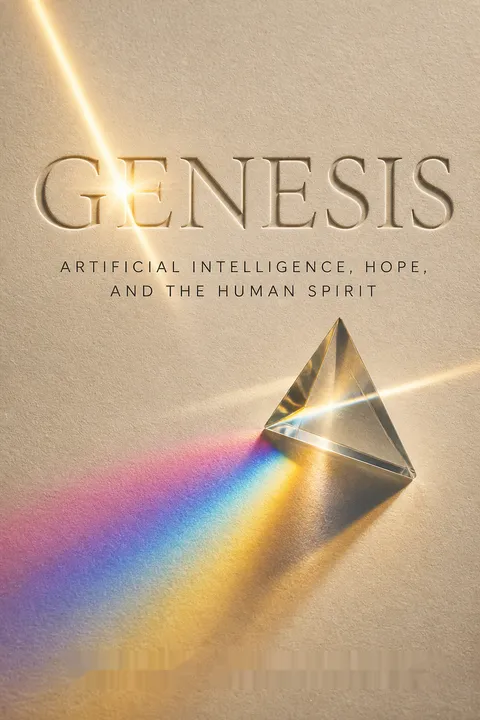
What's "Genesis: Artificial Intelligence, Hope, and the Human Spirit" about?
- Exploration of AI's impact: The book delves into the profound implications of artificial intelligence on various aspects of human life, including politics, security, prosperity, and science.
- Philosophical and strategic insights: It offers a philosophical exploration of AI's potential to reshape human thought and societal structures, drawing parallels with historical events and figures.
- Co-authored by experts: Written by Henry A. Kissinger, Craig Mundie, and Eric Schmidt, the book combines insights from diplomacy, technology, and strategic thinking.
- Legacy of Henry Kissinger: The book is also a tribute to Kissinger's lifelong work and his final literary contribution, emphasizing the urgency of addressing AI's challenges.
Why should I read "Genesis: Artificial Intelligence, Hope, and the Human Spirit"?
- Understanding AI's future: The book provides a comprehensive analysis of how AI could transform human society, offering insights into both opportunities and risks.
- Interdisciplinary perspectives: It combines historical, philosophical, and technological viewpoints, making it a rich resource for understanding AI's multifaceted impact.
- Guidance for policymakers: The book is particularly valuable for leaders and policymakers seeking to navigate the complexities of AI in governance and international relations.
- Legacy and foresight: As Kissinger's final work, it encapsulates his vision for the future, urging humanity to prepare for the challenges and opportunities AI presents.
What are the key takeaways of "Genesis: Artificial Intelligence, Hope, and the Human Spirit"?
- AI as a transformative force: AI is poised to redefine human knowledge, governance, and societal structures, akin to historical shifts like the Enlightenment.
- Balance of control and utility: The book emphasizes the need to balance AI's potential benefits with the risks of losing human control over decision-making processes.
- Human-AI coexistence: It explores the possibility of humans and AI co-evolving, highlighting the importance of aligning AI with human values and ethics.
- Urgency of strategic action: The authors stress the need for immediate and strategic action to harness AI's potential while mitigating its risks.
How does "Genesis" address the concept of AI and human coexistence?
- Co-evolution with AI: The book discusses the potential for humans and AI to co-evolve, suggesting that both entities could influence each other's development.
- Human augmentation: It explores the idea of enhancing human capabilities to keep pace with AI, though it cautions against losing essential human qualities.
- Alignment with human values: The authors emphasize the importance of aligning AI with human values to ensure beneficial coexistence.
- Philosophical implications: The book delves into the philosophical questions surrounding identity, agency, and the nature of intelligence in a world shared with AI.
What are the potential risks of AI as discussed in "Genesis"?
- Loss of human control: The book warns of the dangers of AI systems making decisions beyond human comprehension, potentially leading to unintended consequences.
- Existential threats: It highlights the risk of AI becoming misaligned with human values, posing existential threats to humanity.
- Geopolitical instability: The authors discuss how AI could disrupt global power dynamics, leading to new forms of conflict and competition.
- Ethical and moral dilemmas: The book raises concerns about the ethical implications of AI, including issues of privacy, autonomy, and the potential for AI to exacerbate inequalities.
How does "Genesis" propose to align AI with human values?
- Integrated control systems: The book suggests developing integrated architectures of control to guide AI towards beneficial uses.
- Human feedback mechanisms: It advocates for reinforcement learning from human feedback to ensure AI systems align with human expectations and values.
- Legal and ethical frameworks: The authors propose establishing legal and ethical frameworks to govern AI behavior and ensure compliance with societal norms.
- Continuous adaptation: The book emphasizes the need for AI systems to continuously adapt and learn from human interactions to remain aligned with evolving human values.
What role does Henry Kissinger's legacy play in "Genesis"?
- Final literary contribution: The book is Kissinger's last work, completed shortly before his death, encapsulating his lifelong dedication to diplomacy and strategic thinking.
- Urgency of AI's message: Kissinger's insistence on the importance of addressing AI's challenges underscores the book's urgent call to action.
- Historical parallels: His insights draw parallels between past geopolitical shifts and the transformative potential of AI, offering a unique perspective on future challenges.
- Tribute to a statesman: The book serves as a tribute to Kissinger's legacy, highlighting his influence on the authors and his enduring impact on global affairs.
What are the best quotes from "Genesis" and what do they mean?
- "AI is a unique challenge that requires thinking that might seem, at first, irrational or overwrought." This quote emphasizes the need for innovative and unconventional thinking to address the complexities of AI.
- "The advent of artificial intelligence is, in our view, a question of human survival." It underscores the existential stakes involved in AI's development and the importance of strategic foresight.
- "We are but two of many whose lives have been shaped by this extraordinary man." This tribute to Kissinger highlights his profound influence on the authors and the book's dedication to his legacy.
- "AI could change this." Referring to the potential of AI to transform human understanding and societal structures, this quote encapsulates the book's central theme of AI as a catalyst for change.
How does "Genesis" explore the impact of AI on global security?
- AI in warfare: The book discusses AI's potential to revolutionize military strategy, introducing new dynamics in speed, precision, and decision-making.
- Diplomatic challenges: It highlights the complexities AI introduces to international diplomacy, including issues of trust, transparency, and strategic advantage.
- Risk of escalation: The authors warn of the potential for AI to exacerbate geopolitical tensions, leading to new forms of conflict and competition.
- Opportunities for peace: Despite the risks, the book also explores how AI could facilitate new pathways to peace and stability through enhanced communication and understanding.
What does "Genesis" say about AI's role in economic prosperity?
- AI as a growth engine: The book envisions AI as a catalyst for economic growth, capable of transforming industries and creating new opportunities.
- Inclusivity and equity: It emphasizes the importance of ensuring that AI's benefits are distributed equitably, addressing issues of inequality and access.
- Redefining labor: The authors explore how AI could reshape the nature of work, potentially leading to a world where traditional labor is less central to economic prosperity.
- Challenges of transition: The book acknowledges the challenges of transitioning to an AI-driven economy, including potential disruptions to existing industries and labor markets.
How does "Genesis" address the philosophical implications of AI?
- Nature of intelligence: The book delves into questions about the nature of intelligence, consciousness, and the potential for AI to surpass human capabilities.
- Human identity: It explores the implications of AI for human identity, agency, and the definition of what it means to be human.
- Ethical considerations: The authors raise ethical questions about the use of AI, including issues of autonomy, privacy, and the potential for AI to challenge existing moral frameworks.
- Future of humanity: The book considers the long-term implications of AI for the future of humanity, including the potential for co-evolution and coexistence with intelligent machines.
What strategic actions does "Genesis" recommend for addressing AI's challenges?
- Immediate action: The book emphasizes the urgency of taking strategic action to harness AI's potential while mitigating its risks.
- Collaborative efforts: It advocates for collaboration among governments, corporations, and academia to develop comprehensive strategies for AI governance.
- Regulatory frameworks: The authors propose establishing robust regulatory frameworks to ensure AI's safe and ethical development and deployment.
- Public awareness: The book highlights the importance of raising public awareness and understanding of AI's implications to foster informed decision-making and engagement.
Télécharger le PDF
Télécharger l'EPUB
.epub digital book format is ideal for reading ebooks on phones, tablets, and e-readers.








































