Ideas clave
1. El Efecto Volante: Construyendo Impulso a Través del Esfuerzo Constante
"Empujando con gran esfuerzo, logras que el volante avance poco a poco. Sigues empujando, y con persistencia, consigues que el volante complete una vuelta entera. No te detienes. Sigues empujando."
El impulso se construye gradualmente. El efecto volante ilustra cómo las grandes empresas alcanzan el éxito no mediante una acción única y definitoria, sino a través de un esfuerzo constante a lo largo del tiempo. Como al empujar un volante pesado, el progreso inicial es lento y requiere gran esfuerzo. Sin embargo, a medida que continúas empujando, el volante gana velocidad e impulso.
Resultados acumulativos. Cada vuelta del volante se apoya en el trabajo previo, creando una serie de buenas decisiones y acciones que se acumulan con el tiempo. Este proceso conduce a:
- Retornos crecientes sobre el esfuerzo
- Impulso acelerado
- Rendimiento sobresaliente
El concepto del volante enfatiza la importancia de la constancia y la perseverancia para lograr el éxito a largo plazo, en lugar de depender de soluciones rápidas o intervenciones dramáticas.
2. Conceptualizando el Volante Único de Tu Organización
"Tu volante casi seguro no será idéntico al de Amazon, pero debe ser igual de claro y su lógica igualmente sólida."
Identifica tus componentes. Para crear el volante de tu organización, comienza analizando tus éxitos y fracasos. Busca patrones y elementos clave que contribuyan a tus mejores resultados. Por lo general, un volante consta de 4 a 6 componentes que siguen una secuencia lógica.
Asegura coherencia y causalidad. Tu volante debe:
- Tener un punto de partida claro
- Mostrar cómo cada componente conduce naturalmente al siguiente
- Demostrar cómo el ciclo se repite y gana impulso
Ejemplos de volantes efectivos:
- Amazon: Precios bajos → Más clientes → Más vendedores → Mayor eficiencia → Precios bajos (repetir)
- Vanguard: Costos bajos → Mejores rendimientos → Lealtad del cliente → Crecimiento de activos → Economías de escala → Costos bajos (repetir)
Recuerda, tu volante debe capturar la dinámica única de tu organización e industria.
3. Ejecutar, Innovar y Renovar: Manteniendo el Impulso del Volante
"El volante, cuando está bien concebido y ejecutado, crea tanto continuidad como cambio."
Ejecución implacable. Para mantener el impulso del volante, las organizaciones deben ejecutar consistentemente todos sus componentes. Un eslabón débil en cualquier parte del ciclo puede frenar el progreso. Apunta a un alto desempeño en todos los elementos de tu volante.
Innovación continua. Mientras mantienes la constancia, es crucial innovar y mejorar cada componente del volante. Este enfoque dual de continuidad y cambio permite a las organizaciones:
- Adaptarse a condiciones cambiantes del mercado
- Mantenerse por delante de la competencia
- Descubrir nuevas oportunidades de crecimiento
Renovación periódica. Evalúa regularmente tu volante para asegurarte de que siga siendo relevante y efectivo. Mantente abierto a:
- Ajustar componentes
- Refinar la secuencia
- Ampliar el alcance de tu volante
La clave es equilibrar estabilidad con adaptabilidad, preservando la lógica central de tu volante mientras permites su evolución y crecimiento.
4. Extender el Volante: Dispara Balas, Luego Cañonazos
"Dispara balas (experimentos de bajo costo, bajo riesgo y poca distracción) para descubrir qué funcionará—calibrando tu línea de visión con pequeños disparos. Luego, una vez que tengas validación empírica, disparas un cañonazo (concentrando recursos en una gran apuesta) en la línea calibrada."
Prueba y valida. Antes de hacer inversiones o cambios significativos, utiliza pequeños experimentos (balas) para probar nuevas ideas o mercados. Este enfoque te permite:
- Minimizar riesgos
- Reunir evidencia empírica
- Refinar tu estrategia
Escala los éxitos. Una vez que una bala demuestra ser exitosa, compromete recursos para escalar la iniciativa (dispara un cañonazo). Este método para extender tu volante:
- Reduce el riesgo de fracasos a gran escala
- Aumenta la probabilidad de una expansión exitosa
- Mantiene el enfoque en las fortalezas centrales mientras exploras nuevas oportunidades
Ejemplos de extensiones exitosas:
- Apple: De computadoras personales a iPod, iPhone y iPad
- Amazon: De librería en línea a plataforma integral de comercio electrónico y servicios en la nube
Siguiendo este enfoque, las organizaciones pueden extender su volante hacia nuevas áreas minimizando riesgos y maximizando las posibilidades de éxito.
5. El Peligro de Abandonar un Gran Volante
"Nunca subestimes el poder de un gran volante, especialmente cuando construye un impulso acumulativo durante mucho tiempo."
La persistencia da frutos. Un volante bien concebido puede impulsar el éxito durante décadas. Abandonarlo prematuramente puede significar perder impulso y oportunidades. Antes de desechar tu volante:
- Asegúrate de comprender completamente su arquitectura subyacente
- Considera si los problemas provienen de una mala ejecución y no de un concepto defectuoso
- Explora posibilidades de renovación y extensión
Ejemplo aleccionador: Circuit City. La caída de esta empresa ilustra los peligros de descuidar un volante exitoso:
- Distracción buscando la "Próxima Gran Cosa"
- Incapacidad para mantener e innovar el negocio principal
- Separación de CarMax, una extensión exitosa del volante
Lección aprendida: Antes de abandonar un volante probado, agota todas las opciones de renovación, innovación y extensión. No subestimes el poder del impulso a largo plazo.
6. Personas, Pensamiento y Acción Disciplinados: La Base de la Grandeza
"Para construir una gran organización duradera—ya sea en el sector empresarial o social—necesitas personas disciplinadas que se comprometan con un pensamiento disciplinado y tomen acciones disciplinadas para producir resultados superiores y generar un impacto distintivo en el mundo."
Personas disciplinadas. Las grandes organizaciones comienzan con el liderazgo y equipo adecuados:
- Líderes Nivel 5: Combinan humildad personal con voluntad profesional
- Primero Quién, Luego Qué: Consigue a las personas correctas antes de decidir la dirección
Pensamiento disciplinado. Las empresas exitosas realizan análisis y planificación rigurosos:
- Enfrenta los Hechos Brutales: Acepta la realidad mientras mantienes una fe inquebrantable
- Concepto del Erizo: Enfócate en la intersección de pasión, talento y motor económico
Acción disciplinada. Traducir el pensamiento en acciones consistentes y efectivas:
- Efecto Volante: Construye impulso mediante esfuerzo persistente
- Marcha de 20 Millas: Establece y cumple metas de desempeño constantes
- Dispara Balas, Luego Cañonazos: Prueba ideas antes de hacer grandes apuestas
Estos elementos forman la base para construir y sostener una gran organización, creando las condiciones para el éxito y el impacto a largo plazo.
7. De Bueno a Excelente: Un Marco para el Éxito Duradero
"De bueno a excelente nunca termina. No importa cuánto hayamos avanzado o logrado, somos apenas buenos en relación con lo que podemos hacer a continuación."
Mejora continua. El camino de bueno a excelente es constante, requiere esfuerzo y vigilancia permanentes. Los elementos clave para el éxito duradero incluyen:
- Paranoia Productiva: Prepárate para desafíos y cambios inesperados
- Construir Relojes, No Dar la Hora: Crea sistemas y cultura perdurables
- Preservar el Núcleo/Estimular el Progreso: Equilibra estabilidad con innovación
Midiendo la grandeza. Las organizaciones verdaderamente grandes se definen por:
- Resultados superiores: Desempeño consistentemente sobresaliente
- Impacto distintivo: Contribución única y valiosa a la sociedad
- Resistencia duradera: Capacidad para prosperar a lo largo del tiempo y superar desafíos
Evita la complacencia. Recuerda que la grandeza es un proceso dinámico, no un estado final. Esfuérzate continuamente por mejorar y adaptarte para mantener y ampliar el éxito con el tiempo.
Al adoptar estos principios y mantener un compromiso con el crecimiento y la excelencia constantes, las organizaciones pueden construir y sostener la grandeza frente a circunstancias y desafíos cambiantes.
Resumen de reseñas
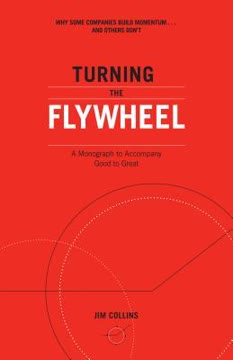
Girar el volante es una monografía concisa que amplía el concepto del volante presentado en "De bueno a grandioso". Los lectores valoran su brevedad y los ejemplos prácticos de empresas como Amazon y Vanguard. El libro explica cómo crear una estrategia empresarial que se refuerza a sí misma mediante componentes interconectados. Aunque algunos consideran que carece de consejos detallados para la implementación, muchos elogian su capacidad para destilar ideas complejas en conocimientos aplicables. Los críticos señalan su dependencia de obras anteriores, pero en general, se considera un recurso valioso para líderes empresariales que buscan un éxito sostenible.
También leyeron
 Inmersivo
Preguntas frecuentes
What's "Turning the Flywheel" about?
- Concept of the Flywheel: The book explores the concept of the "flywheel effect," which is a metaphor for building momentum in business through a series of good decisions and actions that compound over time.
- Amazon Case Study: It uses Amazon as a primary example, illustrating how the company applied the flywheel concept to achieve sustained growth and success.
- Strategic Compounding: The book emphasizes the power of strategic compounding, where each turn of the flywheel builds upon previous efforts, leading to a breakthrough.
- Application Across Sectors: It provides insights into how the flywheel concept can be applied across various sectors, including business, education, and non-profits.
Why should I read "Turning the Flywheel"?
- Practical Insights: The book offers practical insights into how organizations can achieve sustained success by understanding and applying the flywheel concept.
- Real-World Examples: It includes real-world examples from companies like Amazon and Vanguard, making the concepts relatable and actionable.
- Strategic Framework: Readers gain a strategic framework for identifying and leveraging their own flywheel to drive growth and innovation.
- Leadership Lessons: It provides valuable lessons for leaders on how to maintain momentum and avoid common pitfalls that lead to decline.
What are the key takeaways of "Turning the Flywheel"?
- Momentum Building: Success is achieved through consistent, disciplined actions that build momentum over time, rather than through a single defining moment.
- Flywheel Architecture: Understanding the specific components and sequence of your flywheel is crucial for sustaining and extending its momentum.
- Innovation and Execution: Continuous innovation and flawless execution on each component of the flywheel are necessary to maintain momentum.
- Durability and Adaptation: A well-conceived flywheel can be remarkably durable, capable of carrying an organization through major disruptions if renewed and extended properly.
How does the flywheel concept apply to Amazon?
- Virtuous Cycle: Amazon's flywheel involves a virtuous cycle where lower prices lead to more customer visits, increasing sales volume and attracting more sellers, which in turn allows for further price reductions.
- Strategic Compounding: Each component of Amazon's flywheel builds on the previous one, creating a compounding effect that drives growth and efficiency.
- Innovation Within the Flywheel: Amazon continuously innovates within its flywheel, incorporating new technologies like AI and machine learning to enhance its momentum.
- Long-Term Success: The flywheel has been a key factor in Amazon's long-term success, helping it become one of the most successful companies from the dot-com era.
What is the "doom loop" and how does it contrast with the flywheel?
- Doom Loop Definition: The "doom loop" is a cycle where companies react to disappointing results without discipline, leading to further disappointment and decline.
- Lack of Discipline: Companies in the doom loop grasp for quick fixes, new saviors, or untested strategies, rather than building consistent momentum.
- Contrast with Flywheel: Unlike the flywheel, which builds momentum through disciplined actions, the doom loop results in a downward spiral due to lack of strategic focus.
- Avoiding the Doom Loop: The book advises companies to commit to their flywheel and innovate within it to avoid falling into the doom loop.
How can organizations identify their own flywheel?
- List Successes and Failures: Start by listing significant successes and failures to identify potential components of the flywheel.
- Sketch the Flywheel: Use identified components to sketch the flywheel, ensuring each component logically follows the previous one.
- Test and Validate: Validate the flywheel against past successes and failures, tweaking it until it explains both effectively.
- Align with Hedgehog Concept: Ensure the flywheel aligns with the organization's Hedgehog Concept, focusing on passion, potential for excellence, and economic drivers.
What role does leadership play in the flywheel concept?
- Level 5 Leadership: Effective flywheel execution often begins with Level 5 leaders who combine personal humility with professional will.
- Right People on the Bus: Leaders must focus on getting the right people involved who can adapt and perform well in uncertain conditions.
- Confronting Brutal Facts: Leaders need to confront brutal facts and maintain faith in the flywheel's potential to prevail.
- Sustaining Momentum: Leadership is crucial in sustaining flywheel momentum through disciplined thought and action.
How does the flywheel concept apply to non-business sectors?
- Education Example: The book provides an example of a school principal who applied the flywheel concept to improve student performance and school reputation.
- Nonprofit Application: Nonprofits can use the flywheel to build momentum by focusing on core values and mission-driven actions.
- Social Movements: The flywheel can drive social movements by creating a cycle of engagement, support, and impact.
- Adaptability: The concept is adaptable to various sectors, emphasizing the importance of understanding and leveraging specific flywheel components.
What are some examples of successful flywheel extensions?
- Apple's iPod to iPhone: Apple extended its flywheel from personal computers to smart handheld devices, significantly boosting momentum.
- Amazon Web Services: Amazon extended its flywheel into cloud services, creating a new revenue stream while maintaining its core business logic.
- 3M's Adhesives: 3M extended its flywheel from abrasives to adhesives, demonstrating the power of strategic extensions.
- Bullet-to-Cannonball Method: Successful extensions often follow the bullet-to-cannonball method, where small experiments lead to big bets.
What are the best quotes from "Turning the Flywheel" and what do they mean?
- "Beauty does not come from decorative effects but from structural coherence." This quote emphasizes the importance of a well-structured flywheel over superficial changes.
- "Never underestimate the power of a great flywheel." It highlights the long-term impact and compounding effect of a well-executed flywheel.
- "The greatest danger in business and life lies not in outright failure but in achieving success without understanding why you were successful in the first place." This warns against complacency and stresses the need for understanding the underlying factors of success.
- "Exit definitively or renew obsessively, but never—ever—neglect your flywheel." It underscores the importance of either fully committing to or consciously exiting a flywheel strategy.
How can organizations renew and extend their flywheel?
- Continuous Improvement: Organizations must continually improve each component of the flywheel to maintain momentum.
- Embrace the Genius of the AND: Balance consistency with change, sustaining the flywheel while innovating within it.
- Fire Bullets, Then Cannonballs: Use small experiments to validate new ideas before making significant investments.
- Diagnose Stalled Momentum: Determine if a stalled flywheel needs reinvigoration or if its underlying architecture requires change.
What lessons can be learned from companies that failed to maintain their flywheel?
- Circuit City's Demise: Circuit City failed to maintain its flywheel by neglecting its core business and not recognizing CarMax as an extension.
- Avoiding the Next Big Thing Trap: Companies should avoid being distracted by the search for the next big thing at the expense of their existing flywheel.
- Strategic Acumen: Recognizing and extending the underlying flywheel architecture is crucial for long-term success.
- Learning from Decline: Understanding the stages of decline can help organizations avoid the doom loop and maintain flywheel momentum.
Sobre el autor
Otros libros de Jim Collins
 Inmersivo