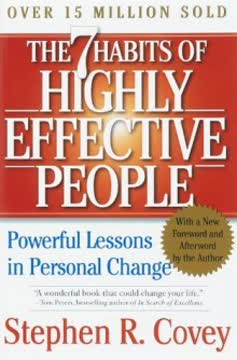
Ideas clave
1. Sé Proactivo: Asume la Responsabilidad de Tu Vida
"Entre el estímulo y la respuesta, el ser humano tiene la libertad de elegir."
La proactividad es la base de la efectividad. Significa tomar las riendas de tu vida, en lugar de culpar a las circunstancias o a los demás. Las personas proactivas comprenden que tienen el poder de elegir cómo responder ante cualquier situación, sin importar las condiciones externas.
Características de las personas proactivas:
- Se enfocan en su Círculo de Influencia (lo que pueden controlar)
- Usan un lenguaje proactivo: "Puedo," "Voy a," "Elijo"
- Toman la iniciativa y crean oportunidades
- Responden basándose en valores, no en emociones o circunstancias
Desarrollar la proactividad requiere autoconciencia y la capacidad de hacer una pausa entre el estímulo y la respuesta. Al aprovechar ese "espacio," podemos alinear nuestras acciones con nuestros valores y principios más profundos, lo que conduce a un comportamiento más intencional y efectivo.
2. Comienza con un Fin en Mente: Define Tu Misión Personal
"La forma más efectiva que conozco para comenzar con un fin en mente es desarrollar una declaración de misión personal, una filosofía o un credo."
La claridad de propósito es esencial para la efectividad. Este hábito te invita a imaginar tu futuro ideal y a definir tu misión personal. Al hacerlo, creas un sentido claro de dirección y propósito que guía tus decisiones y acciones diarias.
Pasos clave para comenzar con un fin en mente:
- Visualiza tu yo ideal y la vida que deseas
- Identifica tus valores y principios fundamentales
- Crea una declaración de misión personal
- Establece metas a largo plazo alineadas con tu misión
Tu declaración de misión personal funciona como una constitución para tu vida, proporcionando un estándar con el cual evaluar tus acciones y decisiones. Te ayuda a mantener el enfoque en lo que realmente importa, incluso en medio de los desafíos y distracciones cotidianas.
3. Pon Primero lo Primero: Prioriza lo que Realmente Importa
"La clave no es priorizar lo que está en tu agenda, sino agendar tus prioridades."
La gestión efectiva del tiempo se basa en la priorización. Este hábito se centra en organizar y actuar en torno a tus prioridades más importantes. Implica distinguir entre lo urgente y lo importante, y dedicar tu tiempo y energía a actividades de alto impacto.
La Matriz de Gestión del Tiempo:
- Cuadrante I: Urgente e Importante (crisis, problemas apremiantes)
- Cuadrante II: No Urgente pero Importante (planificación, prevención, construcción de relaciones)
- Cuadrante III: Urgente pero No Importante (interrupciones, algunas llamadas)
- Cuadrante IV: No Urgente y No Importante (trabajo trivial, pérdida de tiempo)
El objetivo es pasar más tiempo en el Cuadrante II, que incluye actividades importantes pero no necesariamente urgentes. Estas acciones, como planificar, prevenir y desarrollarse personalmente, conducen al éxito y equilibrio a largo plazo.
4. Piensa en Ganar-Ganar: Busca el Beneficio Mutuo en Todas las Interacciones
"Ganar-Ganar es una actitud de mente y corazón que busca constantemente el beneficio mutuo en todas las interacciones humanas."
Las soluciones mutuamente beneficiosas generan mejores resultados. Este hábito se basa en la creencia de que hay suficiente para todos y que el éxito de uno no debe ser a costa del otro. Se trata de encontrar soluciones que favorezcan a todas las partes involucradas.
Aspectos clave del pensamiento Ganar-Ganar:
- Carácter: Integridad, madurez y mentalidad de abundancia
- Relaciones: Confianza y credibilidad
- Acuerdos: Expectativas claras y responsabilidad mutua
- Sistemas: Estructuras y procesos de apoyo
- Procesos: Enfoque en resultados, no en métodos
Desarrollar una mentalidad Ganar-Ganar requiere combinar la consideración hacia los demás con el valor para expresar tus propias necesidades. A menudo implica resolver problemas creativamente para hallar soluciones que satisfagan a todos.
5. Busca Primero Entender, Luego Ser Entendido: Practica la Escucha Empática
"La mayoría de las personas no escuchan con la intención de entender; escuchan con la intención de responder."
La comunicación efectiva comienza con la escucha empática. Este hábito destaca la importancia de comprender verdaderamente a los demás antes de intentar ser comprendido. Implica escuchar con la intención de entender, no solo para responder o aconsejar.
Pasos para practicar la escucha empática:
- Escucha con tus oídos, ojos y corazón
- Refleja lo que escuchas y sientes
- Evita juzgar o evaluar
- Aclara y formula preguntas
- Resume y confirma la comprensión
Al buscar primero entender, construyes confianza, abres canales de comunicación y creas un ambiente donde tus ideas tienen más posibilidades de ser escuchadas y consideradas. Este enfoque conduce a una mejor resolución de problemas y relaciones más sólidas.
6. Sinergiza: Aprovecha las Diferencias para Crear Mejores Soluciones
"La sinergia es la actividad más elevada en toda la vida — la verdadera prueba y manifestación de todos los demás hábitos juntos."
La colaboración conduce a la innovación y mejores resultados. La sinergia consiste en valorar las diferencias y trabajar en conjunto para crear soluciones que superen lo que cualquier individuo podría lograr solo. Es el resultado de combinar las fortalezas de distintas personas o ideas.
Elementos clave de la sinergia:
- Mente abierta a nuevas posibilidades
- Respeto por perspectivas diversas
- Cooperación creativa
- Valorar las diferencias como oportunidades, no como obstáculos
La sinergia suele surgir cuando las personas se comunican abiertamente, comparten ideas libremente y aprovechan las fortalezas mutuas. Requiere confianza, empatía y disposición para explorar nuevos enfoques y soluciones.
7. Afila la Sierra: Renuévate Continuamente
"Afilar la sierra significa preservar y mejorar el mayor activo que tienes: tú mismo."
La renovación continua es vital para la efectividad a largo plazo. Este hábito subraya la importancia de renovarte regularmente en cuatro dimensiones clave: física, espiritual, mental y social/emocional. Al invertir en estas áreas, aumentas tu capacidad para enfrentar desafíos y aprovechar oportunidades.
Cuatro dimensiones de la renovación:
- Física: ejercicio, nutrición, manejo del estrés
- Espiritual: clarificación de valores, meditación, estudio
- Mental: lectura, visualización, planificación, escritura
- Social/Emocional: servicio, empatía, sinergia, seguridad interior
Renovarte regularmente en estas áreas ayuda a mantener el equilibrio, aumentar la energía y mejorar la efectividad general. Se trata de tomarte el tiempo para "afilar la sierra" y así ser más productivo y pleno en todas las áreas de tu vida.
Resumen de reseñas
Los Siete Hábitos de la Gente Altamente Efectiva y el Octavo Hábito es reconocido ampliamente como un libro de autoayuda transformador. Los lectores valoran sus consejos prácticos, sus principios atemporales y su enfoque en el crecimiento personal. Muchos lo consideran un cambio de vida, especialmente gracias a los primeros tres hábitos. Los conceptos del libro son aplicables a diversos ámbitos, sobre todo en el entorno profesional. Algunos lectores señalaron que su contenido puede resultar denso y, en ocasiones, algo prolijo, pero aun así encontraron valiosos los mensajes centrales. La inclusión del Octavo Hábito recibió opiniones divididas, ya que algunos lo percibieron con menos impacto que los siete originales.
Preguntas frecuentes
What's The Seven Habits of Highly Effective People about?
- Focus on Effectiveness: The book emphasizes personal and interpersonal effectiveness through seven key habits designed to help individuals achieve their goals and improve relationships.
- Principle-Centered Approach: Stephen R. Covey advocates for aligning actions with core values and principles rather than reacting to external circumstances.
- Inside-Out Philosophy: Covey introduces the concept of "Inside-Out," suggesting that true change starts from within oneself, focusing on personal growth before influencing others.
- Interdependence: The book explores how effective relationships and teamwork can lead to greater success than individual efforts alone.
Why should I read The Seven Habits of Highly Effective People?
- Timeless Principles: The book offers universal principles applicable across personal, family, and professional settings, remaining relevant despite changing circumstances.
- Transformative Impact: Many readers report significant positive changes in their lives after applying Covey's teachings, making it a valuable resource for personal improvement.
- Comprehensive Framework: It provides a structured approach to understanding and improving effectiveness, suitable for individuals at any stage of life or career.
- Practical Application: Covey's framework makes it easier for readers to implement the habits in their daily lives, encouraging a proactive mindset.
What are the key takeaways of The Seven Habits of Highly Effective People?
- Seven Habits: The book outlines seven essential habits: Be Proactive, Begin with the End in Mind, Put First Things First, Think Win-Win, Seek First to Understand, Then to Be Understood, Synergize, and Sharpen the Saw.
- Character vs. Personality Ethic: Covey distinguishes between principles-based character ethic and image-based personality ethic, arguing that true effectiveness comes from character.
- Paradigm Shifts: Emphasizes the importance of changes in perception to achieve personal growth and effectiveness.
- P/PC Balance: Introduces the concept of balancing production and production capability for long-term sustainability.
What is the Inside-Out approach in The Seven Habits of Highly Effective People?
- Self-Reflection: Encourages starting with self-awareness and personal values before attempting to influence others, focusing on understanding one's motivations and behaviors.
- Personal Responsibility: Promotes taking responsibility for actions and choices, rather than blaming external circumstances or other people.
- Foundation for Change: By focusing on internal change, individuals can create a solid foundation for external change, leading to more meaningful and lasting results.
What does Covey mean by "Begin with the End in Mind"?
- Mental Creation: Emphasizes visualizing desired outcomes before taking action, creating a clear mental picture of life goals.
- Personal Mission Statement: Encourages developing a personal mission statement reflecting values and goals, serving as a guiding framework for decision-making.
- Long-Term Perspective: By keeping the end in mind, individuals can prioritize actions to align with ultimate objectives, leading to greater effectiveness.
How does The Seven Habits of Highly Effective People define proactivity?
- Responsibility for Choices: Proactivity is about taking responsibility for one's life and actions, recognizing that behavior is a function of decisions rather than conditions.
- Focus on Circle of Influence: Proactive individuals focus on things they can change rather than worrying about things outside their control.
- Empowerment: This habit empowers individuals to take initiative and make things happen, rather than being reactive and allowing circumstances to dictate responses.
What is the Time Management Matrix in The Seven Habits of Highly Effective People?
- Quadrants of Activity: Categorizes activities into four quadrants based on urgency and importance: Quadrant I (urgent and important), Quadrant II (not urgent but important), Quadrant III (urgent but not important), and Quadrant IV (not urgent and not important).
- Focus on Quadrant II: Emphasizes spending time in Quadrant II, where activities are important but not urgent, to prevent crises and enhance effectiveness.
- Avoiding Crisis Management: Prioritizing Quadrant II activities reduces crises and improves overall productivity and satisfaction.
What is the Emotional Bank Account and how does it work?
- Trust Metaphor: Represents the trust and emotional capital built in relationships, where positive interactions (deposits) increase trust, and negative interactions (withdrawals) decrease it.
- Building Trust: Making deposits involves showing kindness, keeping commitments, and clarifying expectations, enhancing relationships and creating a safe environment for communication.
- Impact on Relationships: A high balance allows for more flexibility and understanding, making communication easier and more effective.
What does Covey mean by Think Win-Win?
- Mutual Benefit Philosophy: Seeks mutual benefit in all interactions, emphasizing collaboration over competition, believing success for one does not mean failure for another.
- Six Paradigms of Interaction: Outlines six paradigms: Win-Win, Win-Lose, Lose-Win, Lose-Lose, Win, and Win-Win or No Deal, reflecting different approaches to negotiation and relationships.
- Creating Synergy: Adopting a Win-Win approach fosters a cooperative environment, enhancing relationships and creating synergistic solutions.
How does Seek First to Understand, Then to Be Understood work?
- Empathic Listening: Emphasizes listening with the intent to understand rather than to reply, fully engaging with the speaker's perspective and feelings.
- Building Trust: Genuinely seeking to understand others creates a safe space for open communication, building trust and strengthening relationships.
- Effective Communication: Once understanding is established, expressing one's views becomes easier, leading to more productive discussions and better outcomes.
What is the significance of Synergize in The Seven Habits of Highly Effective People?
- Whole Greater than Parts: Synergize means combined efforts produce results greater than individual contributions, essential for effective teamwork and collaboration.
- Valuing Differences: Encourages valuing and respecting differences among team members, leveraging diverse perspectives for creative solutions.
- Creating Third Alternatives: Synergy allows for discovering Third Alternatives, solutions better for everyone involved, fostering a culture of collaboration and creativity.
What does Sharpen the Saw entail?
- Balanced Self-Renewal: Refers to self-renewal in four dimensions: physical, spiritual, mental, and social/emotional, enhancing overall effectiveness and well-being.
- Proactive Approach: Emphasizes taking time for self-care and personal development, encouraging proactive maintenance of health and mental clarity.
- Long-Term Benefits: Investing in self-renewal leads to greater productivity and effectiveness, preventing burnout and ensuring sustained performance.
Sobre el autor
Otros libros de Stephen R. Covey
 Inmersivo