Ideas clave
1. Génesis es un documento del Antiguo Oriente Próximo, no un manual científico moderno
"La Biblia no es un libro de ciencia. Es decir, la intención de Dios no es enseñar ciencia ni revelar conocimientos científicos."
Comunicación contextual antigua. El texto bíblico fue escrito para comunicarse eficazmente dentro de su contexto cultural original. Los autores antiguos usaron un lenguaje, conceptos y cosmovisiones familiares para su audiencia inmediata, que difieren notablemente de las perspectivas científicas actuales.
Acomodación divina. Dios se comunicó a través de autores humanos de manera comprensible para las personas de aquella época, usando su entendimiento del mundo. Esto significa que el texto refleja el entorno cognitivo de las culturas del Antiguo Oriente Próximo, no el conocimiento científico contemporáneo.
Principios clave para la interpretación:
- Reconocer el contexto cultural original del texto
- Entender que la comunicación era de alto contexto
- Evitar imponer expectativas científicas modernas a la literatura antigua
2. La creación bíblica trata de establecer un orden funcional, no los orígenes materiales
"En el mundo antiguo, la creación resuelve la ausencia de orden y no la ausencia de materia."
Orígenes funcionales versus materiales. El relato bíblico de la creación se centra principalmente en establecer orden, roles y funciones, más que en describir la producción material. Crear en el mundo antiguo significaba asignar significado, propósito y estructura organizativa al cosmos.
El orden como existencia. En el pensamiento antiguo, algo “existía” no cuando estaba presente materialmente, sino cuando tenía un propósito y función definidos dentro de un sistema mayor. Esto difiere radicalmente de las perspectivas materialistas modernas que equiparan existencia con presencia física.
Características de la creación:
- Enfocada en establecer roles cósmicos
- Enfatiza la intencionalidad divina
- Describe el orden mediante separación y nombramiento
- Prioriza las relaciones funcionales sobre la composición física
3. Los humanos fueron creados como representantes en un espacio sagrado, no como progenitores biológicos
"Adán fue el ‘primer’ hombre, con la oportunidad de dar vida, pero no logró alcanzar ese objetivo."
Representación arquetípica. Adán y Eva no son solo figuras históricas individuales, sino sacerdotes representativos asignados para servir en un espacio sagrado. Su papel era mediar entre Dios y la creación, representando la relación potencial de la humanidad con lo divino.
Función sacerdotal. Su propósito principal era preservar el espacio sagrado, mantener el orden y extender la presencia de Dios. Esta comprensión desplaza el foco de los orígenes biológicos hacia las responsabilidades espirituales y la relación con Dios.
Perspectivas teológicas clave:
- Humanos como portadores de la imagen divina
- Espacio sagrado como concepto relacional
- Roles espirituales que trascienden limitaciones biológicas
4. El Jardín del Edén representa un espacio sagrado, no un paraíso perfecto
"El jardín es más un espacio sagrado que un espacio verde. Es el centro del orden, no de la perfección, y su significado tiene más que ver con la presencia divina que con un paraíso humano."
Concepto de espacio sagrado. El Jardín del Edén simboliza un lugar de presencia divina y orden, no un entorno idílico libre de dolor. Representa el sitio donde la presencia de Dios establece equilibrio cósmico y significado.
Simbolismo teológico. Los árboles y la disposición del jardín comunican verdades espirituales sobre la vida, la sabiduría y la relación con Dios, más que describir un paisaje literal y perfecto. Los árboles simbolizan dones divinos y la potencial conexión humana con Dios.
Elementos interpretativos:
- La presencia divina como principio organizador central
- Representación simbólica de relaciones espirituales
- Orden y propósito por encima de la perfección física
5. El pecado introdujo desorden en el cosmos al perturbar el orden divino
"No iniciaron una situación que no existiera; simplemente no lograron alcanzar una solución que estaba a su alcance."
Desorden versus ausencia de orden. El pecado se entiende como la introducción activa de desorden cósmico, no simplemente como la creación de un problema donde no existía ninguno. El mundo ya contenía elementos de no-orden, y la tarea humana era traer resolución y orden divino.
Implicaciones cósmicas. La caída representa el intento humano de establecerse como centro de sabiduría y orden, perturbando así el plan divino. Esta acción introdujo responsabilidad y separó a la humanidad del diseño relacional que Dios había previsto.
Perspectivas transformadoras:
- El pecado como ruptura del orden cósmico
- Responsabilidad humana en mantener el equilibrio divino
- La relación con Dios como la resolución última
6. Adán y Eva fueron figuras históricas con significado arquetípico
"Podemos sostener que Adán y Eva tienen importancia teológica e histórica aun si no fueron los primeros humanos."
Comprensión histórica compleja. Adán y Eva pueden ser vistos como individuos históricos reales que desempeñaron un papel representativo crucial, sin necesidad de ser los primeros humanos absolutos ni progenitores biológicos de toda la humanidad.
Representación teológica. Su importancia radica en sus funciones espirituales y representativas más que en su singularidad biológica. Encarnan el potencial y fracaso de la humanidad en su relación con Dios.
Matices interpretativos:
- Realidad histórica más allá de restricciones biológicas literales
- Representación arquetípica del potencial humano
- Significado espiritual que trasciende la línea genética
7. La teología debe adaptarse a nuevos entendimientos sin comprometer la autoridad bíblica
"No estamos obligados a hacer que la Biblia se conforme ni con su contexto cultural ni con la ciencia moderna."
Flexibilidad hermenéutica. La interpretación teológica debe permanecer abierta a nuevas perspectivas sin perder el mensaje bíblico esencial. Esto requiere distinguir entre verdades teológicas fundamentales y interpretaciones condicionadas culturalmente.
Revelación continua. Comprender la Escritura es un proceso dinámico que exige diálogo con el conocimiento contemporáneo, preservando el mensaje espiritual fundamental del texto. La interpretación fiel implica confrontar nueva información.
Principios interpretativos:
- Mantener los principios centrales de la autoridad bíblica
- Estar abiertos a nuevas perspectivas textuales
- Distinguir entre lo esencial y lo culturalmente condicionado
8. La evidencia científica y la interpretación bíblica pueden coexistir en armonía
"Si ni la exégesis ni la teología exigen conclusiones que contradigan el consenso científico moderno basado en el descendiente común, no tenemos razón para oponernos a la ciencia."
Perspectivas complementarias. Los descubrimientos científicos y la interpretación bíblica no son inherentemente contradictorios, sino que pueden ofrecer visiones complementarias sobre la existencia humana y el orden cósmico.
Apertura teológica. Una lectura fiel de la Escritura no requiere rechazar la evidencia científica, sino invita a un compromiso matizado que respete tanto la observación científica como la verdad espiritual.
Enfoque integrador:
- Reconocer las limitaciones de las perspectivas científica y teológica
- Mantener humildad en la interpretación
- Buscar comprensión más que certeza absoluta
9. La distinción humana es espiritual, no puramente biológica
"La imagen de Dios no es neurológica ni materialmente definida... es un don directo y espiritualmente definido de Dios a los humanos."
Singularidad espiritual. Los seres humanos se distinguen por características espirituales que trascienden la composición biológica, incluyendo la capacidad de relación con Dios, conciencia moral y propósito.
Don divino. La “imagen de Dios” representa una dotación especial que no puede explicarse mediante procesos evolutivos o biológicos, enfatizando el potencial espiritual único de la humanidad.
Características definitorias:
- Naturaleza espiritual más allá de la existencia material
- Capacidad para la relación divina
- Conciencia moral y propósito
10. El enfoque principal de la Biblia es la relación con Dios, no la explicación científica
"Quizás nos ayude recordar que la salvación se trata más de aquello a lo que somos salvados (acceso renovado a la presencia de Dios y relación con él) que de aquello de lo que somos salvados."
Teología relacional. La narrativa bíblica se centra fundamentalmente en la relación de la humanidad con Dios, enfocándose en la restauración, el propósito y la comunión divina, más que en ofrecer documentación científica o histórica.
Perspectiva redentora. La interpretación de las Escrituras debe priorizar la comprensión de la obra continua de Dios en la reconciliación y relación, por encima de defender afirmaciones científicas o históricas específicas.
Temas teológicos centrales:
- La persistente búsqueda de Dios por la relación humana
- Restauración del orden divino
- Transformación mediante la conexión espiritual
Resumen de reseñas
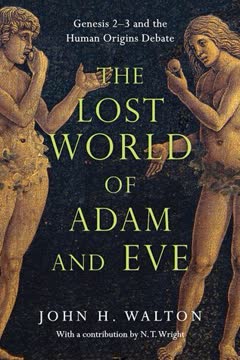
El mundo perdido de Adán y Eva desafía las interpretaciones tradicionales de Génesis 2-3, proponiendo que Adán y Eva fueron figuras históricas, pero no necesariamente los primeros seres humanos. Walton sostiene que es fundamental leer Génesis en su contexto del antiguo Cercano Oriente, sugiriendo que el texto se centra en la funcionalidad más que en los orígenes materiales. Mientras que algunos lectores valoran esta perspectiva renovadora y su intento de reconciliar la fe con la ciencia, otros consideran sus argumentos especulativos y potencialmente perjudiciales para la teología tradicional. El libro recibe elogios por su enfoque académico, aunque también críticas por las implicaciones que plantea respecto al pecado original y el origen de la humanidad.
También leyeron
Preguntas frecuentes
What is The Lost World of Adam and Eve by John H. Walton about?
- Ancient Context Focus: The book explores Genesis 2–3 through the lens of its ancient Near Eastern context, emphasizing that the biblical text communicates differently than modern scientific or historical narratives.
- Theological and Literary Emphasis: Walton argues that Genesis is primarily about order, sacred space, and human roles, rather than material origins or scientific details.
- Archetypal Representation: Adam and Eve are presented as archetypal representatives, embodying all humanity and serving as priests in sacred space.
- Reframing the Human Origins Debate: The book contends that the perceived conflict between the Bible and science on human origins is largely a misunderstanding of the text’s purpose and context.
Why should I read The Lost World of Adam and Eve by John H. Walton?
- Bridges Faith and Science: Walton offers a fresh approach that respects both biblical authority and scientific discoveries, helping readers navigate the human origins debate without unnecessary conflict.
- Ancient Near Eastern Insight: The book provides extensive comparative studies of ancient literature and culture, enriching understanding of Genesis and its original meaning.
- Theological Depth and Clarity: It challenges common assumptions about creation, Adam and Eve, and sin, offering nuanced views that preserve core theology while opening interpretive possibilities.
- Pastoral and Evangelistic Value: Walton’s approach helps prevent unnecessary conflicts that can alienate believers, scientists, and seekers, encouraging a faith that embraces both Scripture and science.
What are the key takeaways from The Lost World of Adam and Eve by John H. Walton?
- Genesis as Order, Not Material Origins: Genesis 1–3 is about God ordering the cosmos as sacred space, with humans as vice-regents, not about the material creation of the universe.
- Adam and Eve as Archetypes: They serve as archetypal representatives and priests, embodying all humanity rather than being solely the first biological humans.
- Sin as Disorder: Sin is reframed as humanity’s attempt to be the center of wisdom and order, resulting in disorder and alienation from God.
- Compatibility with Science: The book argues that biblical claims about human origins do not necessarily conflict with scientific understandings such as common descent or genetic diversity.
What is John H. Walton’s method for interpreting Genesis in The Lost World of Adam and Eve?
- High-Context Communication: Walton stresses that the Bible’s original authors communicated within a shared cultural and linguistic context, requiring readers to infer meaning based on ancient environment.
- Accommodation Principle: God’s revelation is accommodated to the ancient audience’s worldview, so biblical descriptions reflect ancient cognitive categories rather than modern scientific concepts.
- Focus on Intended Message: Biblical authority attaches to the intended message of the human authors inspired by God, not to incidental ancient scientific ideas embedded in the text.
- Comparative Ancient Near Eastern Studies: Walton uses extensive comparisons with ancient Near Eastern literature to illuminate the original meaning of Genesis.
How does The Lost World of Adam and Eve by John H. Walton redefine the concept of "creation" in Genesis 1?
- Creation as Ordering: Walton argues that creation in Genesis focuses on establishing order, assigning roles and functions, rather than material origins or manufacturing of physical objects.
- Nonexistence as Non-Order: The pre-creation state is described as "formless and empty," meaning lacking order and function, not lacking material substance.
- Functional Causation: The Hebrew verbs for "create" and "make" often refer to functional causation and ordering, emphasizing God’s role in establishing a functional cosmos.
- Cosmos as Sacred Space: The ordered cosmos is presented as sacred space for God’s presence and human relationship.
What does John H. Walton say about the seven-day creation account in The Lost World of Adam and Eve?
- Temple Inauguration Parallel: The seven-day structure parallels ancient Near Eastern temple-building and inauguration rituals, with the seventh day representing God’s rest and taking up residence in sacred space.
- Day Seven as Climax: God’s rest is not mere cessation of work but the establishment of sacred space where God dwells and rules, giving full meaning to the previous six days.
- Creation as Sacred Space: The cosmos is ordered as sacred space for God’s presence and human relationship, not merely a material universe.
- Functional, Not Material, Focus: The account is about assigning functions and roles, not about the material origins of the universe.
How does The Lost World of Adam and Eve interpret Adam and Eve’s identity and role?
- Archetypal and Representative: Adam and Eve are presented as archetypal representatives or priests in sacred space, embodying all humanity rather than solely being the first biological humans.
- Priestly Function: They are assigned priestly roles, mediating the relationship between God and creation within the sacred space of the garden.
- Not Necessarily First Humans: The biblical text does not explicitly claim Adam and Eve were the first or only humans; Genesis 2 may be a sequel to an en masse creation in Genesis 1.
- Theological, Not Biological, Emphasis: Their primary significance lies in their theological role regarding sin and alienation, not in their biological origins.
What is John H. Walton’s interpretation of the "forming from dust" and "rib" narratives in Genesis 2?
- Archetypal, Not Material: The Hebrew verb for "form" does not necessarily imply material crafting; it can refer to ordaining roles or functions, as seen in other biblical uses.
- Dust as Mortality Symbol: "Dust" in Genesis 2:7 is best understood as a metaphor for human mortality, not a scientific statement about material composition.
- "Rib" Means "Side": The Hebrew word often translated as "rib" likely means "side," and Adam’s deep sleep is interpreted as a visionary experience revealing ontological truths about woman’s identity as man’s equal.
- Archetypal Truths: Both forming from dust and the rib/side narrative convey archetypal truths about humanity’s identity and role, not unique material origins of Adam and Eve.
How does The Lost World of Adam and Eve by John H. Walton interpret the concept of sin and the fall?
- Sin as Disequilibrium: Sin is described as disequilibrium in a system designed for order, where humanity fails to reflect its divine calling and forgets its creaturely limitations.
- Not Just Disobedience: The fall is not merely about eating forbidden fruit but about Adam and Eve’s choice to make themselves the center of wisdom and order, thereby admitting disorder into the cosmos.
- Corporate and Archetypal Effects: Sin’s effects are corporate and cumulative, affecting all humanity and creation, with Adam and Eve as archetypal representatives whose failure brought disorder.
- Alienation, Not Inherited Guilt: The Old Testament focuses on alienation and loss of sacred space rather than inherited guilt or the term “the fall.”
How does The Lost World of Adam and Eve by John H. Walton address the relationship between the Bible and modern science on human origins?
- No Contradiction with Genetics: Walton argues that the Bible does not make definitive claims that contradict scientific evidence for common descent or genetic diversity.
- Adam and Eve Among Many: It is possible that Adam and Eve were part of a larger population, not the sole progenitors of all humans, which aligns with genetic evidence.
- Spiritual Uniqueness: Humans are uniquely created spiritually, possessing the image of God, which is a non-material gift that distinguishes them regardless of biological ancestry.
- Freedom to Integrate Science: The book encourages openness to scientific findings without compromising biblical faith, suggesting that theology and exegesis do not mandate rejection of evolutionary or genetic science.
What is imagistic thinking, and how does it relate to Genesis in The Lost World of Adam and Eve by John H. Walton?
- Definition of Imagistic Thinking: Imagistic thinking uses symbolic, metaphorical, and visual imagery to convey theological truths rather than literal historical or scientific facts.
- Genesis as Imagistic History: Walton compares Genesis to a painting rather than a photograph, emphasizing that it uses imagery and symbolism to communicate enduring truths about God, humanity, and the cosmos.
- Symbolic Elements: Elements like the trees and the serpent in Genesis are understood as symbolic representations, not literal botanical or zoological entities.
- Avoiding Mythology Label: Recognizing imagistic thinking helps avoid labeling Genesis as mythology; instead, it is a different mode of communication that conveys theological realities in ancient Near Eastern context.
How does The Lost World of Adam and Eve by John H. Walton explain the role of Jesus in relation to Adam and the fall?
- Jesus as the Better Adam: Jesus is portrayed as the true image of God who fulfills the role Adam failed to achieve, restoring order and life through his death and resurrection.
- Center and Source of Order: Christ is the center and source of order, holding all things together and reconciling creation to God, thus reversing the disorder introduced by Adam’s sin.
- Fulfillment of Covenants and Creation: Jesus fulfills the law, the covenant, and creation’s purpose, inaugurating new creation characterized by perfect order and restored relationship with God.
- New Sacred Space: Through incarnation, death, resurrection, and the sending of the Holy Spirit, Jesus re-establishes God’s presence among people, replacing the temple and enabling the church as the new sacred space.