Ideas clave
1. La testosterona no es una simple "hormona sexual masculina"
"No hay una sola testosterona: T es una multiplicidad."
Complejidad de la identidad hormonal. La testosterona es mucho más compleja que la narrativa tradicional que la considera exclusivamente una "hormona masculina". Existen múltiples formas de testosterona, se produce en varios sistemas del cuerpo y desempeña roles críticos en diversas funciones corporales para todos los humanos.
Conceptos erróneos sobre la testosterona:
- Se produce en múltiples sistemas del cuerpo, no solo en los testículos
- Está presente tanto en hombres como en mujeres
- Es crucial para varios procesos fisiológicos más allá de las características sexuales
- Los niveles y la efectividad varían drásticamente entre individuos
Matices científicos. Los autores enfatizan que las acciones de la testosterona dependen del contexto, con efectos que varían según la fisiología individual, la sensibilidad de los receptores y las interacciones ambientales. La narrativa simplista de la "hormona masculina" oculta su verdadera complejidad y naturaleza multifacética.
2. La testosterona es fundamentalmente receptiva a los contextos sociales
"T siempre está incrustada en relaciones sociales y otros asuntos."
Molécula biológica dinámica. La testosterona no es una sustancia estática, sino un agente molecular que responde y cambia en reacción a entornos sociales, estados emocionales y experiencias individuales. Representa una interacción dinámica entre la biología y el contexto social.
Mecanismos de respuesta social:
- Aumenta y disminuye con los desafíos sociales
- Influenciada por la competencia y las interacciones de estatus
- Afectada por experiencias emocionales
- Modulada por relaciones interpersonales
Enredo biosocial. La investigación demuestra que la testosterona no es simplemente un motor de comportamiento, sino que se ve simultáneamente moldeada por y moldea las interacciones sociales, desafiando los modelos tradicionales unidireccionales de las relaciones entre hormonas y comportamiento.
3. Los hechos científicos sobre la testosterona son construcciones culturales
"La ciencia no es unitaria, y tampoco lo son los hechos que emergen de ciencias específicas."
Proceso de producción del conocimiento. La comprensión científica de la testosterona está profundamente influenciada por suposiciones culturales, ideologías de género y narrativas preexistentes sobre la masculinidad y el comportamiento humano.
Factores que moldean la interpretación científica:
- Antecedentes culturales de los investigadores
- Estereotipos de género existentes
- Prioridades de investigación institucional
- Interpretación selectiva de datos
- Paradigmas científicos históricos
Enfoque crítico. Los autores abogan por una metodología científica más matizada que reconozca cómo las suposiciones culturales se infiltran en la investigación supuestamente objetiva, reconociendo que los "hechos" científicos son inherentemente contextuales y construidos.
4. La testosterona afecta a múltiples sistemas del cuerpo de manera diferente
"Los efectos de T se logran a través de múltiples vías, algunas de las cuales contribuyen sinérgicamente... y algunas de las cuales incluso podrían restar valor a ello."
Impacto fisiológico multifacético. La testosterona influye en numerosos sistemas del cuerpo de maneras complejas y no lineales, con efectos que varían entre diferentes tejidos, cuerpos individuales y contextos ambientales.
Interacciones fisiológicas diversas:
- Desarrollo muscular
- Densidad ósea
- Procesos reproductivos
- Funciones metabólicas
- Respuestas neurológicas
Variabilidad individual. La investigación enfatiza que los efectos de la testosterona son altamente personalizados, dependiendo de factores como la sensibilidad de los receptores, el entorno hormonal general y las características fisiológicas individuales.
5. La raza y la clase son frecuentemente biologizadas a través de la investigación sobre la testosterona
"La investigación sobre la testosterona convierte la raza en hormonal."
Racialización científica. Muchos estudios sobre la testosterona refuerzan, de manera inadvertida o intencionada, estereotipos raciales y de clase al presentar variaciones biológicas como diferencias inherentes entre grupos en lugar de fenómenos sociales complejos.
Patrones de investigación problemáticos:
- Muestreo selectivo de poblaciones de investigación
- Sesgos raciales implícitos en el diseño del estudio
- Naturalización de desigualdades sociales a través de explicaciones biológicas
- Ignorar factores sociales estructurales
Perspectiva crítica. Los autores desafían a los investigadores a reconocer cómo la investigación científica aparentemente objetiva puede perpetuar jerarquías raciales y sociales dañinas a través de narrativas biológicas aparentemente neutrales.
6. Las experiencias personales con la testosterona están mediadas por narrativas culturales
"La experiencia personal está tan mediada por marcos epistémicos y especificidades históricas y socioculturales como lo está otra evidencia."
Influencia narrativa. Las experiencias individuales con la testosterona están moldeadas por historias culturales preexistentes sobre la masculinidad, el rendimiento y el potencial biológico.
Mecanismos de mediación de la experiencia:
- Expectativas culturales existentes sobre los efectos de las hormonas
- Marcos narrativos de la masculinidad
- Anticipación psicológica de cambios
- Interpretación social de transformaciones corporales
Complejidad subjetiva. La investigación destaca que las experiencias personales con la testosterona no son puramente biológicas, sino que están profundamente entrelazadas con interpretaciones culturales y marcos psicológicos individuales.
7. Las hormonas son moléculas complejas y multifuncionales
"T es una hormona trascendental y multifuncional que se ha adaptado para una amplia gama de usos en prácticamente todos los cuerpos."
Más allá de la clasificación binaria. Las hormonas como la testosterona no pueden reducirse a definiciones categóricas simples de "masculino" o "femenino", sino que representan sistemas moleculares sofisticados con funciones diversas.
Características de las hormonas:
- Responsivas a múltiples señales ambientales
- Operando en diferentes sistemas del cuerpo
- Variando en efectividad entre individuos
- Sirviendo múltiples propósitos biológicos
Complejidad adaptativa. La investigación retrata a las hormonas como moléculas flexibles y dependientes del contexto que participan en procesos biológicos y sociales intrincados.
8. La práctica científica moldea nuestra comprensión de las moléculas biológicas
"El conocimiento científico es siempre una construcción material-semiótica."
Dinámicas de producción del conocimiento. Los métodos, suposiciones y contextos culturales de la investigación científica moldean fundamentalmente cómo entendemos moléculas biológicas como la testosterona.
Influencias de la práctica científica:
- Formulación de preguntas de investigación
- Selección de sujetos
- Técnicas de medición
- Interpretación de datos
- Construcción narrativa
Reflexividad metodológica. Los autores abogan por un enfoque científico más autocrítico que reconozca cómo las prácticas de investigación crean versiones específicas de la comprensión biológica.
9. La testosterona no puede ser utilizada como una simple herramienta de "mejora del rendimiento"
"T es maleable, pero nuestra capacidad para moldear deliberadamente nuestras vidas y el mundo a través de T es limitada."
Potencial tecnológico limitado. Contrario a la creencia popular, la testosterona no puede ser controlada con precisión para producir resultados específicos de comportamiento o rendimiento.
Complejidad de la intervención hormonal:
- Respuestas individuales impredecibles
- Efectos dependientes del contexto
- Interacción con sistemas fisiológicos más amplios
- Factores placebo y psicológicos
Limitaciones tecnológicas. La investigación demuestra que la testosterona no es un simple "interruptor de rendimiento", sino un sistema molecular complejo con efectos matizados y variables.
10. Las diferencias biológicas son más matizadas de lo que sugieren los estereotipos culturales
"La aparente simplicidad de esta molécula es una ilusión."
Más allá del determinismo biológico. Las diferencias biológicas entre individuos son mucho más complejas y contextuales de lo que sugieren las narrativas culturales simplistas.
Comprensión biológica matizada:
- La variación individual es más significativa que las diferencias grupales
- Los rasgos biológicos son dinámicamente interactivos
- Los factores ambientales influyen profundamente en la expresión biológica
- Los estereotipos simplifican realidades biológicas complejas
Perspectiva holística. Los autores abogan por una comprensión más sofisticada de la variación biológica humana que respete la complejidad individual y las influencias contextuales.
Resumen de reseñas
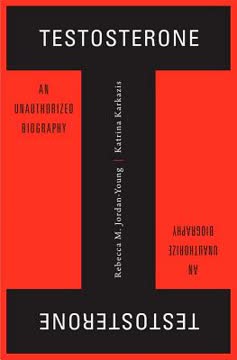
Testosterona: Una Biografía No Autorizada explora los conceptos erróneos de la sociedad sobre la testosterona, desafiando creencias comunes acerca de sus efectos en el comportamiento, el atletismo y el género. El libro critica las metodologías de investigación defectuosas y resalta cómo los sesgos culturales influyen en los estudios científicos. Mientras que algunos lectores lo encontraron esclarecedor y provocador de pensamientos, otros sintieron que carecía de respuestas claras y que en ocasiones resultaba repetitivo o denso. El exhaustivo análisis de los autores sobre el papel complejo de la testosterona en la biología humana y la sociedad impresionó a muchos lectores, aunque algunos desearon conclusiones más concretas.
Preguntas frecuentes
1. What’s Testosterone: An Unauthorized Biography by Rebecca M. Jordan-Young about?
- Critical examination of testosterone: The book challenges the traditional view of testosterone (T) as the singular “male sex hormone” responsible for masculinity, aggression, and athleticism, revealing it as a complex, multipurpose hormone with diverse effects.
- Interdisciplinary analysis: Drawing from science and technology studies, endocrinology, anthropology, and feminist theory, the authors explore how scientific facts about T are constructed and circulated.
- Focus on social context: The narrative highlights how “T talk”—the discourse around testosterone—shapes and is shaped by cultural beliefs, reinforcing social hierarchies related to gender, race, and class.
- Unauthorized biography approach: Instead of reinforcing familiar testosterone lore, the book dwells on the unexpected, confounding, and messy aspects of T, combining scientific evidence with cultural analysis.
2. Why should I read Testosterone: An Unauthorized Biography by Rebecca M. Jordan-Young?
- Debunks myths and stereotypes: The book critically examines entrenched assumptions about testosterone’s role in human behavior, showing that many popular beliefs are not supported by robust scientific evidence.
- Illuminates science-culture interplay: It reveals how scientific research on T is influenced by cultural narratives, and how these narratives, in turn, shape social understandings of masculinity, power, and inequality.
- Informs debates on gender and sports: The book provides a detailed critique of sports regulations and policies that limit women athletes’ participation based on natural T levels, exposing scientific uncertainties and ethical issues.
- Encourages critical thinking: Readers are invited to question received wisdom about testosterone and appreciate the complexity of biological and social factors that shape human traits and behaviors.
3. What are the key takeaways from Testosterone: An Unauthorized Biography by Rebecca M. Jordan-Young?
- Testosterone is not a simple cause: T does not directly cause behaviors like aggression or dominance; its effects are diffuse, context-dependent, and mediated by social and environmental factors.
- Multiplicity and measurement: There are multiple forms of T (free, bound, bioavailable), and its measurement varies by method and context, complicating straightforward interpretations.
- Social and cultural entanglement: T’s production and effects are deeply intertwined with social situations, gender norms, and cultural meanings, making it a “social molecule.”
- Challenge to reductionism: The book argues against simplistic cause-effect models, emphasizing T’s responsiveness to social contexts and individual variability.
4. What is “T talk” as defined in Testosterone: An Unauthorized Biography by Rebecca M. Jordan-Young?
- Definition of T talk: “T talk” refers to the web of direct claims and indirect associations about testosterone as both a material substance and a cultural symbol, blending folklore with science.
- Rooted in sex hormone concept: It is based on the idea that testosterone and estrogen are binary, sex-exclusive hormones, which oversimplifies their biological roles.
- Functions of T talk: T talk lends “truthiness” to arguments, serves scientism by elevating scientific authority even without solid evidence, and animates testosterone as a willful agent, often reinforcing gender and racial stereotypes.
5. How does Testosterone: An Unauthorized Biography by Rebecca M. Jordan-Young explain the multiplicity and complexity of testosterone?
- Multiple forms and pathways: Testosterone exists in different chemical forms (free, bound to proteins), in various bodily media (blood, saliva, urine), and acts through multiple biological pathways.
- Measurement complexities: Researchers’ choices about which form of T to measure, when, and how, affect study outcomes and interpretations.
- Contextual effects: Statements like “testosterone increases aggression” must be qualified by specifying which testosterone, which aggression, and in what context, highlighting the hormone’s complexity and variability.
6. What does Testosterone: An Unauthorized Biography by Rebecca M. Jordan-Young reveal about testosterone’s role in female reproduction and ovulation?
- Testosterone’s positive role: The book presents emerging evidence that testosterone and other androgens are crucial for early stages of follicle development and ovulation in women.
- Challenging binary hormone concepts: It critiques the traditional classification of hormones as strictly “male” or “female,” showing that T plays essential roles in female fertility.
- Enactment and ignorance: The authors use the concept of “enactment” to show how scientific practices produce different versions of T’s role, and how cultural and scientific biases have maintained ignorance about T’s importance in female ovulation.
7. How does Testosterone: An Unauthorized Biography by Rebecca M. Jordan-Young address the relationship between testosterone and aggression or violence?
- Weak and inconsistent links: The book demonstrates that scientific evidence linking T to aggression or violent behavior is weak, inconsistent, and often confounded by social and environmental factors.
- Zombie fact of T and aggression: Persistent but unsupported claims about T and aggression continue to influence public and scientific discourse despite contradictory evidence.
- Role of race and class: Research on T and violence often racializes and classifies certain groups as biologically predisposed to aggression, reinforcing stereotypes and obscuring structural inequalities.
8. What does Testosterone: An Unauthorized Biography by Rebecca M. Jordan-Young say about testosterone and athleticism, especially regarding women athletes and sports regulations?
- No simple link to performance: The book emphasizes that T is neither a necessary nor sufficient factor for athletic success; studies show mixed and context-specific relationships between T levels and performance.
- Critique of sports regulations: It critically examines policies by sports authorities that restrict women athletes with naturally high T, revealing scientific uncertainties and ethical concerns.
- Multiplicity and variability: T’s effects on muscle mass, strength, and competition are highly variable across individuals and contexts, undermining the notion of a fixed “male advantage” based solely on T.
9. What is the “challenge hypothesis” and how is it critiqued in Testosterone: An Unauthorized Biography by Rebecca M. Jordan-Young?
- Definition and origin: The challenge hypothesis, developed in birds, posits that T levels rise during mating competition and fall during parenting, supporting reproductive strategies.
- Application to humans questioned: The book critiques extending this hypothesis to humans, noting that evidence linking T to mating effort behaviors is weak or inconsistent.
- Racial and cultural biases: The hypothesis has been used to frame racialized narratives about parenting and mating strategies, often pathologizing marginalized populations.
- Alternative models: Researchers like Sari van Anders propose more nuanced models emphasizing T’s role in social bonds and nurturance.
10. How does Testosterone: An Unauthorized Biography by Rebecca M. Jordan-Young explore the racialization of testosterone research?
- Ghost variables of race and class: The book reveals how race and class often operate implicitly in T research, shaping sample selection and interpretation, and reinforcing stereotypes.
- Misuse of evolutionary theory: Some researchers misapply r/K selection theory to argue for racial differences in reproductive strategies linked to T, supporting white supremacist narratives.
- Triangulation of T, race, and behavior: Studies often link T to behaviors stereotypically associated with racial groups, naturalizing race as biology and obscuring social determinants.
- Critique of scientific complicity: The authors argue that even well-meaning researchers contribute to racialized science by failing to critically engage with the social and historical contexts of their work.
11. What new frameworks or theories about testosterone are introduced or highlighted in Testosterone: An Unauthorized Biography by Rebecca M. Jordan-Young?
- Steroid/peptide theory of social bonds: Proposed by Sari van Anders, this theory integrates T with other hormones like oxytocin and vasopressin, focusing on social bonds beyond traditional mating-parenting dichotomies.
- Testosterone as a social molecule: The book emphasizes T’s intra-action with social contexts, meaning T is both shaped by and shapes social interactions, emotions, and environments.
- Beyond masculinity: The authors challenge the framing of T as inherently masculine, showing it operates across genders and social roles, supporting both competition and nurturance.
- Multiplicity and context-dependence: T’s effects vary by individual biology, receptor sensitivity, social environment, and cultural meanings, requiring complex, non-linear models.
12. What are the ethical and social implications of testosterone research and discourse discussed in Testosterone: An Unauthorized Biography by Rebecca M. Jordan-Young?
- Impact on marginalized groups: T talk often pathologizes women with naturally high T, black men, and poor communities, leading to harmful policies, medical interventions, and social stigmatization.
- Sports and gender policing: Regulations based on T levels enforce narrow gender binaries, disproportionately affecting intersex and transgender athletes, raising concerns about bodily autonomy and fairness.
- Naturalizing inequality: The book shows how T research can reinforce sexist, racist, and classist ideologies by attributing social disparities to biology rather than structural factors.
- Call for interdisciplinary approaches: The authors advocate integrating social theory with biological research to responsibly explore T’s complexities and avoid reproducing social biases.








































